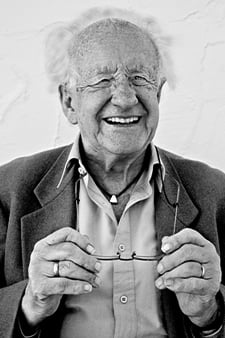
johangaltung

On the table are some old clippings mainly from that remarkable paper; in my mind the International Herald Tribune, IHT, from 1857 and a part of my reality for about fifty years. Maybe an addiction? Hard to live without. The recent name change to International New York Times was understandable but too specific geographically, not global. The Honolulu papers, well located, are often more global.

Why homage? Not for the news coverage; usually the news “fit to print”. The news that do not contradict too openly the world views carried by US and Israeli foreign policies, even if this has improved considerably recently. Nor for the editorials, they are usually on the same line and also, sorry, frankly, often boring.

No, the homage is for the articles, essays even, at a very high level in what is after all a newspaper, a paper with news. Those essays often carry discourses that are wide ranging, way back into the past, far into the future. We are not talking about agree-disagree but about broadness, openness, even globally.

Take William Safire 30 September, 1991 on “the difference between federation and confederation hinging on the question of sovereignty”. As he points out, the former is “a single sovereign power”, the latter is “an association of sovereign states”. He also warns against filling the latter with content from the US South and the Civil War. Very useful distinction as the world is dealing with so many countries where colonial powers wrapped together very different nations in one unitary state and, when “troubles” show up, does not have enough alternatives. In fact, devolution-federation-confederation is a good range, and there are or could be in-betweens. But Washington seems to have only maps of states, never maps of nations, hanging on walls and minds, and is, hence, unprepared for “troubles”. Relax, there are alternatives, in Iraq, Afghanistan, Syria. Even in the United States.

Thus, Scott Shane reports in the Honolulu Advertiser 19 June, 1988 from Moscow that the Party under Gorbachev supports union of Nagorno-Karabagh with Armenia–the Party in Azerbaijan indeed against. The problem has not been solved, but the article explores that state-nation contradiction in the Soviet Union. One day also in the USA?

The leading Soviet specialist on the USA, Georgi Arbatov of the Soviet Academy of Sciences, had an article 20 May, 1988, also in the Honolulu Advertiser: “US problems call for glasnost, perestroika“, meaning open debate giving voice to all, and structural change. He challenges “myths and illusions”, “American exceptionalism”. He reminds the readers of the “vivid symbol” of the need for basic change: the October 19, 1987 stock exchange crash. Of course, no change came–more crashes came, indeed–but the point is that the paper opened for this perspective. Most did not; some do.

The Honolulu Advertiser also featured “Singapore’s Lee: Decline of America” (Richard Reeve reporting from Singapore 29 November, 1989. “Now we are into a multi-polar world. America is still the biggest player, but not the dominant player that she was”. Lee’s focus was only on the economy, and the challenge from Western Europe and Japan–for which he also fears military growth–no word on the China Lee had given advice). American dominance cannot be restored, and Americans are not “emotionally ready for it”. William Safire of the NYT was in the audience and opined that “he is just wrong. American diversity and creativity will prevail”. Well, maybe violence rather.

Trends have proven Lee right even if wrong on Western Europe and Japan: he failed to see BRICS coming. But, again the same: the paper gives ample space to a forecast for which the USA was not prepared.

Back to IHT: Tamotsu Sengoku, 1 December, 1987, gives voice to a major Japanese problem, the manga, the comic strip as communication at the expense of depth, now getting worse; and this paper mentioned it.

In a series of impressive dispatches “Plutonium on the Seas” (4-17-28/29 November, 1992 and 6 January, 1993) the paper reported critically about the shipment from France to Japan of above a ton of plutonium for Japanese breeder reactors. We know what happened some twenty years later: Fukushima, just going on and on. Had some top decision-makers taken those dispatches seriously–well, that did not happen–the paper, however, did its job, impressively; not only reporting but analyzing the implications in detail.

But the paper also has space for the light shed on the future by distant history, like Barry James 30 July, 1990 on “The Dark Side of 1492; Spain’s Eviction of Jews”. Well, there were other dark sides, like what happened to indigenous South America in the process of becoming Latin America, and to the Moors when driven out. But many are not aware of the position of Jews, even as a vizier in a Muslim state, Granada (in 1027), nor that after the most brutal expulsion by Catholic kings it was in Muslim–post-1453 victory over the East Roman Empire–Istanbul, and Ottoman lands that the Jews were welcomed.

No doubt much of that old history is still alive in the deeper recesses of present reality. The Sephardic Jews are now welcomed back again to Spain, including to full citizenship. There are still links between Turkey and Jews in the sense of Israel. Maybe Israel’s future is in the past, not on collision course with Islam in general, not only Palestinians and not building on US evangelicals who may one day turn against them? The article opens for such reflections.

A remarkable paper, mobilizing talent from all over the world. The choice of articles quoted above is biased; but much more biased would be papers with no such discourses, perspectives, at all. One could wish for more eye-openers for broader ranges of alternatives, for more articles putting the finger on aching contradictions not readily admitted. Work on it, dear INYT–and thanks that you exist.

The original published at Transcend Media Service here.
Related Posts

It’s a matter of principles, courage, vision and pulling together – while the militarist world is falling apart… Peter Langille October 3, 2026 “Here, then, is the problem which we present to you, stark and dreadful and inescapable: Shall we put an end to the human race; or shall mankind renounce war?”The Bertrand Russell—Albert Einstein Manifesto, July 9, 1955 ⁕ The forecast for what’s ahead is worrisome. The sharp rise in armed conflicts over the past three years is adding to what was already the highest level in over seventy years. Genocides, which should be prevented are supported. A shared climate emergency that jeopardises survival is ignored. Diverse polls now suggest that people are war-weary, worried and interested in a more effective United Nations. And, there are viable policy options for a more secure world! Yet governments are doubling-down, betting on more war and investing heavily. If current trends persist,...
Johan Galtung 1930-2024October 2015 Published here on October 3, 2026 Let us focus on Civilization for conflict analysis and remedies. Major forms of disorder use violence; war is state organized violence. The most belligerent states are the United States of America and Israel, both with civilization roots. National Evangelism, the US Protestant Christian civilization– more national than evangelical–justifies US warfare as exceptionalism of a people chosen by God, with a manifest destiny to run the world. Orthodox Judaism justifies Israeli warfare to conquer and expand from Nile to Euphrates as a religious right and duty to the Eternal One. The third most belligerent country, the UK, no longer believes it is God-chosen but chosen by the USA; not quite the same but something. But the root cause of global disorder lies in the Occident–with Islam–seeing itself as the single, universal civilization valid for all at all times, all others being...
The agreement is catastrophic both because of what it says and what it doesn’t mention. It reduces further the major asset of security policies: Freedom of action. Jan Oberg TFF director September 25, 2026 A couple of hours before the agreement was signed on September 22, 2026, I published the following 13 hypotheses about what it would most likely contain on TFF Substack (in English). I was wrong on only the first point. Contrary to what Trump had written on his Truth Social platform, it does not appear to come into force immediately. In fact, it turned out to be worse than even I had anticipated. After these hypotheses now come a number of reflections in light of what the agreement actually contains, and does not contain, as well as the way in which it has generally been presented by major media outlets and by the public-service broadcaster DR. My...

Recent Articles

Tony Robinson October 4, 2026 Violence is easy to recognise when someone is being beaten, shot or killed. It becomes more difficult when nobody is holding a weapon. Poverty, discrimination, exploitation and repression can restrict a human life just as effectively, although they do so in very different ways and with very different consequences. Simply adding more categories to an ever-growing list of forms of violence does not really solve the problem. The more interesting question is what all these different situations have in common and why it makes sense to describe them using the same word. Human beings do not simply react to what happens around them. They remember the past, imagine things that do not yet exist, make plans and undertake projects. Workers organise because they imagine different working conditions; people migrate because they imagine another life somewhere else; social movements emerge because people refuse to accept the...
It’s a matter of principles, courage, vision and pulling together – while the militarist world is falling apart… Peter Langille October 3, 2026 “Here, then, is the problem which we present to you, stark and dreadful and inescapable: Shall we put an end to the human race; or shall mankind renounce war?”The Bertrand Russell—Albert Einstein Manifesto, July 9, 1955 ⁕ The forecast for what’s ahead is worrisome. The sharp rise in armed conflicts over the past three years is adding to what was already the highest level in over seventy years. Genocides, which should be prevented are supported. A shared climate emergency that jeopardises survival is ignored. Diverse polls now suggest that people are war-weary, worried and interested in a more effective United Nations. And, there are viable policy options for a more secure world! Yet governments are doubling-down, betting on more war and investing heavily. If current trends persist,...
Johan Galtung 1930-2024October 2015 Published here on October 3, 2026 Let us focus on Civilization for conflict analysis and remedies. Major forms of disorder use violence; war is state organized violence. The most belligerent states are the United States of America and Israel, both with civilization roots. National Evangelism, the US Protestant Christian civilization– more national than evangelical–justifies US warfare as exceptionalism of a people chosen by God, with a manifest destiny to run the world. Orthodox Judaism justifies Israeli warfare to conquer and expand from Nile to Euphrates as a religious right and duty to the Eternal One. The third most belligerent country, the UK, no longer believes it is God-chosen but chosen by the USA; not quite the same but something. But the root cause of global disorder lies in the Occident–with Islam–seeing itself as the single, universal civilization valid for all at all times, all others being...

TFF on Substack

Discover and subscribe to more peace materials on TFF Substack

Most Popular

Tony Robinson October 4, 2026 Violence is easy to recognise when someone is being beaten, shot or killed. It becomes more difficult when nobody is holding a weapon. Poverty, discrimination, exploitation and repression can restrict a human life just as effectively, although they do so in very different ways and with very different consequences. Simply adding more categories to an ever-growing list of forms of violence does not really solve the problem. The more interesting question is what all these different situations have in common and why it makes sense to describe them using the same word. Human beings do not simply react to what happens around them. They remember the past, imagine things that do not yet exist, make plans and undertake projects. Workers organise because they imagine different working conditions; people migrate because they imagine another life somewhere else; social movements emerge because people refuse to accept the...
It’s a matter of principles, courage, vision and pulling together – while the militarist world is falling apart… Peter Langille October 3, 2026 “Here, then, is the problem which we present to you, stark and dreadful and inescapable: Shall we put an end to the human race; or shall mankind renounce war?”The Bertrand Russell—Albert Einstein Manifesto, July 9, 1955 ⁕ The forecast for what’s ahead is worrisome. The sharp rise in armed conflicts over the past three years is adding to what was already the highest level in over seventy years. Genocides, which should be prevented are supported. A shared climate emergency that jeopardises survival is ignored. Diverse polls now suggest that people are war-weary, worried and interested in a more effective United Nations. And, there are viable policy options for a more secure world! Yet governments are doubling-down, betting on more war and investing heavily. If current trends persist,...
Johan Galtung 1930-2024October 2015 Published here on October 3, 2026 Let us focus on Civilization for conflict analysis and remedies. Major forms of disorder use violence; war is state organized violence. The most belligerent states are the United States of America and Israel, both with civilization roots. National Evangelism, the US Protestant Christian civilization– more national than evangelical–justifies US warfare as exceptionalism of a people chosen by God, with a manifest destiny to run the world. Orthodox Judaism justifies Israeli warfare to conquer and expand from Nile to Euphrates as a religious right and duty to the Eternal One. The third most belligerent country, the UK, no longer believes it is God-chosen but chosen by the USA; not quite the same but something. But the root cause of global disorder lies in the Occident–with Islam–seeing itself as the single, universal civilization valid for all at all times, all others being...
Read More
Living-Peace-Sign-Budapest-copy
Tony Robinson October 4, 2026 Violence is easy to recognise when someone is being beaten, shot or killed. It becomes more difficult when nobody is holding a weapon. Poverty, discrimination, exploitation and repression can restrict a human life just as effectively, although they do so in very different ways and with very different consequences. Simply adding more categories to an ever-growing list of forms of violence does not really solve the problem. The more interesting question is what all these different situations have in common and why it makes sense to describe them using the same word. Human beings do not simply react to what happens around them. They remember the past, imagine things that do not yet exist, make plans and undertake projects. Workers organise because they imagine different working conditions; people migrate because they imagine another life somewhere else; social movements emerge because people refuse to accept the...
b54a1f10-8c65-4f0b-9dd5-4abc0a7d04cc_2659x2659
It’s a matter of principles, courage, vision and pulling together – while the militarist world is falling apart… Peter Langille October 3, 2026 “Here, then, is the problem which we present to you, stark and dreadful and inescapable: Shall we put an end to the human race; or shall mankind renounce war?”The Bertrand Russell—Albert Einstein Manifesto, July 9, 1955 ⁕ The forecast for what’s ahead is worrisome. The sharp rise in armed conflicts over the past three years is adding to what was already the highest level in over seventy years. Genocides, which should be prevented are supported. A shared climate emergency that jeopardises survival is ignored. Diverse polls now suggest that people are war-weary, worried and interested in a more effective United Nations. And, there are viable policy options for a more secure world! Yet governments are doubling-down, betting on more war and investing heavily. If current trends persist,...
010
Johan Galtung 1930-2024October 2015 Published here on October 3, 2026 Let us focus on Civilization for conflict analysis and remedies. Major forms of disorder use violence; war is state organized violence. The most belligerent states are the United States of America and Israel, both with civilization roots. National Evangelism, the US Protestant Christian civilization– more national than evangelical–justifies US warfare as exceptionalism of a people chosen by God, with a manifest destiny to run the world. Orthodox Judaism justifies Israeli warfare to conquer and expand from Nile to Euphrates as a religious right and duty to the Eternal One. The third most belligerent country, the UK, no longer believes it is God-chosen but chosen by the USA; not quite the same but something. But the root cause of global disorder lies in the Occident–with Islam–seeing itself as the single, universal civilization valid for all at all times, all others being...
Screenshot 2026-10-02 011738
Jan ObergPhD, director, The Transnational Foundation for Peace and Future Research, TFFLund, Sweden October 2, 2026 This is my full original manuscript. The Chinese Academy of Social Science, CASS, makes two publications out if it. 1. China’s Five-year plan emphasized the capabilities of basic research and original innovation. It is regarded as the goal of the future social development, which, as required, should be significantly enhanced. Can you comment on the importance of original innovation in research and academic study? I believe it is easier to define “original innovation” in the natural sciences than in social sciences. The breaking points of what constitutes something new, or innovative, are not quite as sharp in the latter. But in both fields it is about opening up something that was closed, unseen, unexplored before – making manifest what was earlier latent. Innovations come in many forms and shapes – naming something that was not...
arctic-circle-map
The agreement is catastrophic both because of what it says and what it doesn’t mention. It reduces further the major asset of security policies: Freedom of action. Jan Oberg TFF director September 25, 2026 A couple of hours before the agreement was signed on September 22, 2026, I published the following 13 hypotheses about what it would most likely contain on TFF Substack (in English). I was wrong on only the first point. Contrary to what Trump had written on his Truth Social platform, it does not appear to come into force immediately. In fact, it turned out to be worse than even I had anticipated. After these hypotheses now come a number of reflections in light of what the agreement actually contains, and does not contain, as well as the way in which it has generally been presented by major media outlets and by the public-service broadcaster DR. My...
girl-5894831_1280
Below are TFF-related media mentions, comments, videos and social media posts published elsewhere but not on this homepage. We happen to catch and list only a fraction. Regarding video comments and debates, we recommend that you go to the TFF Video Channel on Substack where many of them are reproduced. Jan Oberg is a contributor to China Daily – 52 million daily clicks – and Global Times, CGTN and CCTV (the national television), China Investment, Xinhua News Agency and several others. Articles and videos on these media very often multiply into countless Chinese (and Western media) that re-post them from these main media. Thanks to The China Academy, his analyses, interviews and comments are frequently posted on YouTube channels such as Thinkers Forum and Wave Media. These videos are often re-posted on Bilibili (China’s YouTube), the China Content Center on TikTok, and on the Chinese edition of TikTok, Douyin.com. This means reaching hundreds of millions of viewers worldwide over a year. While there are too many to catch on all these...