
Citizens versus subjects in a democratic society: The American case

“Have we agreed to so many wars that we can’t

Escape from silence?…”

Robert Bly, “Call and Answer”

In my understanding silence is passivity as a way of being. Silence can be much more than the avoidance of speech and utterance, and is most poignantly expressed through evasions of body, heart, and soul. Despite the frustrations and defeats of the period, America was different during the years of the Vietnam War and the civil rights movement.

It was then that alienated gun-wielders assassinated those among us who were sounding the clearest calls for justice and sending messages of hope. In a perverse reaction, Washington’s custodians of our insecurity went to work, and the sad result is this deafening silence!

I have long felt that most American ‘citizens’ increasingly behave as ‘subjects,’ blithely acting as if a love of country is exhibited more by obedience than conscience.

In my view the opportunity to be a citizen is a precious reality, a byproduct of past struggles. Genuine citizenship remains possible in the United States, but has become marginal, and is not much in evidence these days. I am identifying the citizen as an ethically sensitive and responsible member of a political community, most significantly of a sovereign state. In contrast, the subject conceives of upright standing in a political community by the willingness to go along with the group and to obey the directives of government and those exercising formal authority.

The moral substance at the core of genuine citizenship only exists if the political structure allows opposition without imposing a severe punishment. If citizenship is possible, then it automatically gives rise to responsibility to act accordingly, that is, by honoring the imperatives of conscience.

Unfortunately, considerations of prudence, career, and social propriety make it more attractive these days for most Americans to behave as subjects living within a rigid set of constraints. Citizens are those who not only proclaim the virtues of freedom, but act responsively to the vectors of conscience even if these go against the established public order and prevailing cultural norms.

Thomas Jefferson at the birth of the republic understood that liberty is a process, not an event, which can only flourish if the citizenry as a whole is actively engaged, and above all is vigilant in relation to abuses attributable to the state. Citizenship was better understood in the late 18th century when the struggle against the pretensions of monarchy was vibrant.

Today it is irresistibly tempting for ambitious political leaders to encroach upon the liberties of the people by insisting that national ‘unity’ and ‘patriotism’ are practical necessities at times when the country is at war or confronting enemies. And by a convenient Orwellian trope, wartime has become the norm rather than the exception, and peacetime is mainly a memory of ancient times that even the oldest citizen now alive never really experienced.

Arguably, the attack on Pearl Harbor in 1941 ended once and for all the illusions of peace as the normal condition of a democratic society. Even the collapse of the Soviet Union did not restore ‘peace’ except in the misleading senses of the absence of war. This enthronement of war in the permanent collective imagination of the country was vividly re-inscribed by the 9/11 attacks and the Bush response of declaring a global war on terror and terrorists.

Bush’s instinctive stroke of political ingenuity was to devise a new kind of war that never needs to end. Obama despite some ritual reassurances to the contrary has not broken faith with the militarist mentality and seems comfortable with treating war as the new normal.

This vulnerability of democracy to the siren song of security has been effectively exploited by power-wielders for decades in the United States. Not only do politicians and militarists sing this song, but also private sector moguls whose primary amoral motivation seems to be the maximization of profits. This weakening of the substance, structures, and spirit of American democracy partly reflected the militarizing impacts of World War II and its Cold War sequel, but also the related extension of the American sphere of direct concern and involvement to all corners of the earth.

This unprecedented global force projection coincided with the collapse of European colonialism, the ideological consensus affirming neoliberalism, and the backdrop of a globalizing world in which critical resources, sea lanes, and markets needed to be protected if the world economy was to flourish.

This American transformation from being ‘a hemispheric state’ to becoming ‘a global state’ has had an extraordinary impact on national identity, especially giving rise to a self-anointing mission of global leadership that depends on military dominance. Such a mission has also witnessed a promiscuous reliance on ‘American exceptionalism,’ often at the expense of respect for the authority of the United Nations and international law. The claim is that America can set aside rules of behavior at will to meet the challenges confronting the country and the world, but that antagonistic others cannot.

It is true that early in the American experience the proclamation of the Monroe Doctrine (1823) signaled a national ambition to reign supreme in the Western Hemisphere (except for Canada), which expressed an early refusal by the U.S. Government to confine its definition of national interests to the territorial boundaries associated with being a normal sovereign state. But the strains of extra-territoriality were minimal compared what they became in the 20th century, especially with the onset of World War II.

For one thing, the challenge of imposing control was far simpler and cheaper in the era of ‘gunboat diplomacy,’ which enabled a small input of military power to achieve the political objectives of intervention under most circumstances. Since 1945 the mobilization of national resistance around the world has been very effective in raising the costs and risks of intervention, and neutralizing many of the advantages that had made it so easy to translate military superiority into desired political results during the colonial era.

Also relevant for a discussion of the deteriorating quality of democratic life in the United States are expansions of scale and surveillance as byproducts of becoming a global state.

To project power globally requires a global network of military bases numbering in the hundreds, a navy that patrols every ocean, missiles that can strike the most distant targets, attack drones that can be programmed to kill anyone anywhere on the planet, and the most extensive information-gathering capability that technology can provide and money can buy. This raises to astronomic levels the investment of energy and resources in sustaining such a global role.

Unsurprisingly there are byproducts, including a militarized state at home and the assumption of associated custodial duties related to the protection of the American people against real and imagined enemies and the pursuit of national interests relating to wealth, influence, and prestige. To enhance security in this global setting pushes surveillance toward totalization as the Snowden disclosures began to reveal. It also creates a logic that views domestic opposition with grave suspicion, and leads to finding and destroying ‘the enemy within’ before it gains the leverage to unleash its assault of the established order.

The American global state is different than past empires, which were explicit in projecting their hard power, and insisting upon overt allegiance of those whom they rule. As Rumsfeld succinctly remarked some years ago, “we do not do empire.” What do we do? It is to manage a global state that seeks to meet hostile challenges wherever they emerge, and give a high priority to the maintenance of a trade, investment, and navigational framework that reflects the guiding assumptions of neoliberalism in the networked digital age.

And because the most threatening hostile challenges seem currently mounted by non-state actors that have no particular territorial base of operations, the battlefield has been quietly globalized to encompass the economy, the surveillance panopticon, and the counter-terrorism and counter-proliferation sites of intervention and resistance.

What then does American citizenship mean under these altered domestic and global conditions?

It should be acknowledged that not all recent developments are negative with respect to the quality of democratic life in America: slavery was overcome, racism diminished, women’s rights strengthened, sexual preferences increasingly respected. Taking these concerns into account has meant that there many avenues that remain open for the expression of conscience in the United States, which entails the non-acceptance of various facets of the status quo: struggles against militarism, surveillance, plutocracy, global warming, poverty, inequality, human insecurity, class warfare, as well as the residues of racism and patriarchy.

Citizens should be selectively active in response to these challenges, while the subject is passive or a regressive champion of the status quo, and at best an advocate of incremental change (as Yeats reminded the world almost a century ago, “The best lack all conviction, while the worst are full of passionate intensity.” The most effective forms of citizen action depend on popular mobilization and the adoption of nonviolent forms of collective action. The subject stands by sullenly, applauding the suppression of dissent and resistance by security forces.

The French philosopher, Jacques Derrida, referred to ‘the democracy to come’ as achieving a far higher degree of social justice than has ever existed in any country. In my view, fulfilling this potentiality would mean the enlargement of the role of the citizen, the decline of the subject, and a much more critical interplay between society and the state, making democracy a participatory process that did not consider itself fulfilled by periodic free elections and functioning representative institutions.

Such practices associated with procedural democracy have recently lost most of their charm due to deforming impacts of money, lobbying by special interests, and the virtual disappearance from the political landscape of a progressive option. In effect, the future of American democracy will necessarily now depend on the activity of people of conscience, and the rebirth of a progressive vision that is made attractive across class, race, and geographic lines.

Such a prescription for hope has its own shortcomings and difficulties.

Are not the members of the Tea Party composed of those whose conscience leads them to defy the state? Are they not fulfilling the role of citizen, shunning the passivity of the subject? There exists an inevitable clash of values between those who seek a compassionate government that is inclusive as to its nonviolent ethos of hospitality and those who seek an ethnically delimited social order that is xenophobic, exclusivist, and militia-minded in its orientation. In the end such a clash involves sorting out the balance of passions that shape the political culture at a given point in an unfolding national narrative. And this balance may not turn out very well for progressive citizens of conscience, depending on the mix of attitudes and fears that animate the masses at a given historical time.

There is one further consideration bearing on the democracy to come. It must not only be spatially minded about the world, it must also be temporally oriented about past and future. It must learn from the glorious and inglorious episodes of the past, but even more importantly, be alert to the need to live beyond the present, to take responsibility for ensuring that the future is not being diminished in serious and irreversible ways by current policies and practices.

Such temporal urgency is currently especially compelling in relation to the environment, the treatment of animals, and above all, the multiple challenges of climate change. Humanity is faced at this juncture with a choice of heeding the scientific consensus on the need to reduce sharply the emission of greenhouse gasses or to live in the false consciousness of pretending that the future can be safely secured by either a technological fix (often described as geo-engineering) or by a guardian god or gods that will not permit an apocalyptic catastrophe to doom the human species. In other words, the conscience of the progressive citizen in our time must not only be globalized in the form of being a ‘world citizen;’ it must also be projected through time, adopting futurist modes of feeling, thinking, and acting,

It is against this background that I have previously suggested an identity shaped through an appreciative reference to ‘the citizen pilgrim,’ that is, to the citizen whose conscience is directed at others without heeding boundaries of space or time, or such contingent features of identity as nationality, ethnicity, race, religion, gender, class.

The citizen pilgrim is embarked upon what is essentially a spiritual journey or pilgrimage, seeking an inspirational future that seems neither feasible nor impossible. Such an inspirational dedication also minimizes the imaginative foreclosures of mortality, making the certainty of death a part of life, and accepting this destiny without seeking the comfort of metaphysical fictions, and thus not deeply disconcerted by ‘the dying of the light.’
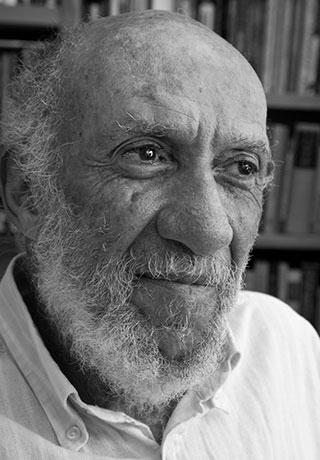

Professor Falk became an adviser to TFF when it was established in 1985.

Related Posts

Tony Robinson October 4, 2026 Violence is easy to recognise when someone is being beaten, shot or killed. It becomes more difficult when nobody is holding a weapon. Poverty, discrimination, exploitation and repression can restrict a human life just as effectively, although they do so in very different ways and with very different consequences. Simply adding more categories to an ever-growing list of forms of violence does not really solve the problem. The more interesting question is what all these different situations have in common and why it makes sense to describe them using the same word. Human beings do not simply react to what happens around them. They remember the past, imagine things that do not yet exist, make plans and undertake projects. Workers organise because they imagine different working conditions; people migrate because they imagine another life somewhere else; social movements emerge because people refuse to accept the...
It’s a matter of principles, courage, vision and pulling together – while the militarist world is falling apart… Peter Langille October 3, 2026 “Here, then, is the problem which we present to you, stark and dreadful and inescapable: Shall we put an end to the human race; or shall mankind renounce war?”The Bertrand Russell—Albert Einstein Manifesto, July 9, 1955 ⁕ The forecast for what’s ahead is worrisome. The sharp rise in armed conflicts over the past three years is adding to what was already the highest level in over seventy years. Genocides, which should be prevented are supported. A shared climate emergency that jeopardises survival is ignored. Diverse polls now suggest that people are war-weary, worried and interested in a more effective United Nations. And, there are viable policy options for a more secure world! Yet governments are doubling-down, betting on more war and investing heavily. If current trends persist,...
Johan Galtung 1930-2024October 2015 Published here on October 3, 2026 Let us focus on Civilization for conflict analysis and remedies. Major forms of disorder use violence; war is state organized violence. The most belligerent states are the United States of America and Israel, both with civilization roots. National Evangelism, the US Protestant Christian civilization– more national than evangelical–justifies US warfare as exceptionalism of a people chosen by God, with a manifest destiny to run the world. Orthodox Judaism justifies Israeli warfare to conquer and expand from Nile to Euphrates as a religious right and duty to the Eternal One. The third most belligerent country, the UK, no longer believes it is God-chosen but chosen by the USA; not quite the same but something. But the root cause of global disorder lies in the Occident–with Islam–seeing itself as the single, universal civilization valid for all at all times, all others being...

Recent Articles

Tony Robinson October 4, 2026 Violence is easy to recognise when someone is being beaten, shot or killed. It becomes more difficult when nobody is holding a weapon. Poverty, discrimination, exploitation and repression can restrict a human life just as effectively, although they do so in very different ways and with very different consequences. Simply adding more categories to an ever-growing list of forms of violence does not really solve the problem. The more interesting question is what all these different situations have in common and why it makes sense to describe them using the same word. Human beings do not simply react to what happens around them. They remember the past, imagine things that do not yet exist, make plans and undertake projects. Workers organise because they imagine different working conditions; people migrate because they imagine another life somewhere else; social movements emerge because people refuse to accept the...
It’s a matter of principles, courage, vision and pulling together – while the militarist world is falling apart… Peter Langille October 3, 2026 “Here, then, is the problem which we present to you, stark and dreadful and inescapable: Shall we put an end to the human race; or shall mankind renounce war?”The Bertrand Russell—Albert Einstein Manifesto, July 9, 1955 ⁕ The forecast for what’s ahead is worrisome. The sharp rise in armed conflicts over the past three years is adding to what was already the highest level in over seventy years. Genocides, which should be prevented are supported. A shared climate emergency that jeopardises survival is ignored. Diverse polls now suggest that people are war-weary, worried and interested in a more effective United Nations. And, there are viable policy options for a more secure world! Yet governments are doubling-down, betting on more war and investing heavily. If current trends persist,...
Johan Galtung 1930-2024October 2015 Published here on October 3, 2026 Let us focus on Civilization for conflict analysis and remedies. Major forms of disorder use violence; war is state organized violence. The most belligerent states are the United States of America and Israel, both with civilization roots. National Evangelism, the US Protestant Christian civilization– more national than evangelical–justifies US warfare as exceptionalism of a people chosen by God, with a manifest destiny to run the world. Orthodox Judaism justifies Israeli warfare to conquer and expand from Nile to Euphrates as a religious right and duty to the Eternal One. The third most belligerent country, the UK, no longer believes it is God-chosen but chosen by the USA; not quite the same but something. But the root cause of global disorder lies in the Occident–with Islam–seeing itself as the single, universal civilization valid for all at all times, all others being...

TFF on Substack

Discover and subscribe to more peace materials on TFF Substack

Most Popular

Tony Robinson October 4, 2026 Violence is easy to recognise when someone is being beaten, shot or killed. It becomes more difficult when nobody is holding a weapon. Poverty, discrimination, exploitation and repression can restrict a human life just as effectively, although they do so in very different ways and with very different consequences. Simply adding more categories to an ever-growing list of forms of violence does not really solve the problem. The more interesting question is what all these different situations have in common and why it makes sense to describe them using the same word. Human beings do not simply react to what happens around them. They remember the past, imagine things that do not yet exist, make plans and undertake projects. Workers organise because they imagine different working conditions; people migrate because they imagine another life somewhere else; social movements emerge because people refuse to accept the...
It’s a matter of principles, courage, vision and pulling together – while the militarist world is falling apart… Peter Langille October 3, 2026 “Here, then, is the problem which we present to you, stark and dreadful and inescapable: Shall we put an end to the human race; or shall mankind renounce war?”The Bertrand Russell—Albert Einstein Manifesto, July 9, 1955 ⁕ The forecast for what’s ahead is worrisome. The sharp rise in armed conflicts over the past three years is adding to what was already the highest level in over seventy years. Genocides, which should be prevented are supported. A shared climate emergency that jeopardises survival is ignored. Diverse polls now suggest that people are war-weary, worried and interested in a more effective United Nations. And, there are viable policy options for a more secure world! Yet governments are doubling-down, betting on more war and investing heavily. If current trends persist,...
Johan Galtung 1930-2024October 2015 Published here on October 3, 2026 Let us focus on Civilization for conflict analysis and remedies. Major forms of disorder use violence; war is state organized violence. The most belligerent states are the United States of America and Israel, both with civilization roots. National Evangelism, the US Protestant Christian civilization– more national than evangelical–justifies US warfare as exceptionalism of a people chosen by God, with a manifest destiny to run the world. Orthodox Judaism justifies Israeli warfare to conquer and expand from Nile to Euphrates as a religious right and duty to the Eternal One. The third most belligerent country, the UK, no longer believes it is God-chosen but chosen by the USA; not quite the same but something. But the root cause of global disorder lies in the Occident–with Islam–seeing itself as the single, universal civilization valid for all at all times, all others being...
Read More
Living-Peace-Sign-Budapest-copy
Tony Robinson October 4, 2026 Violence is easy to recognise when someone is being beaten, shot or killed. It becomes more difficult when nobody is holding a weapon. Poverty, discrimination, exploitation and repression can restrict a human life just as effectively, although they do so in very different ways and with very different consequences. Simply adding more categories to an ever-growing list of forms of violence does not really solve the problem. The more interesting question is what all these different situations have in common and why it makes sense to describe them using the same word. Human beings do not simply react to what happens around them. They remember the past, imagine things that do not yet exist, make plans and undertake projects. Workers organise because they imagine different working conditions; people migrate because they imagine another life somewhere else; social movements emerge because people refuse to accept the...
b54a1f10-8c65-4f0b-9dd5-4abc0a7d04cc_2659x2659
It’s a matter of principles, courage, vision and pulling together – while the militarist world is falling apart… Peter Langille October 3, 2026 “Here, then, is the problem which we present to you, stark and dreadful and inescapable: Shall we put an end to the human race; or shall mankind renounce war?”The Bertrand Russell—Albert Einstein Manifesto, July 9, 1955 ⁕ The forecast for what’s ahead is worrisome. The sharp rise in armed conflicts over the past three years is adding to what was already the highest level in over seventy years. Genocides, which should be prevented are supported. A shared climate emergency that jeopardises survival is ignored. Diverse polls now suggest that people are war-weary, worried and interested in a more effective United Nations. And, there are viable policy options for a more secure world! Yet governments are doubling-down, betting on more war and investing heavily. If current trends persist,...
010
Johan Galtung 1930-2024October 2015 Published here on October 3, 2026 Let us focus on Civilization for conflict analysis and remedies. Major forms of disorder use violence; war is state organized violence. The most belligerent states are the United States of America and Israel, both with civilization roots. National Evangelism, the US Protestant Christian civilization– more national than evangelical–justifies US warfare as exceptionalism of a people chosen by God, with a manifest destiny to run the world. Orthodox Judaism justifies Israeli warfare to conquer and expand from Nile to Euphrates as a religious right and duty to the Eternal One. The third most belligerent country, the UK, no longer believes it is God-chosen but chosen by the USA; not quite the same but something. But the root cause of global disorder lies in the Occident–with Islam–seeing itself as the single, universal civilization valid for all at all times, all others being...
Screenshot 2026-10-02 011738
Jan ObergPhD, director, The Transnational Foundation for Peace and Future Research, TFFLund, Sweden October 2, 2026 This is my full original manuscript. The Chinese Academy of Social Science, CASS, makes two publications out if it. 1. China’s Five-year plan emphasized the capabilities of basic research and original innovation. It is regarded as the goal of the future social development, which, as required, should be significantly enhanced. Can you comment on the importance of original innovation in research and academic study? I believe it is easier to define “original innovation” in the natural sciences than in social sciences. The breaking points of what constitutes something new, or innovative, are not quite as sharp in the latter. But in both fields it is about opening up something that was closed, unseen, unexplored before – making manifest what was earlier latent. Innovations come in many forms and shapes – naming something that was not...
arctic-circle-map
The agreement is catastrophic both because of what it says and what it doesn’t mention. It reduces further the major asset of security policies: Freedom of action. Jan Oberg TFF director September 25, 2026 A couple of hours before the agreement was signed on September 22, 2026, I published the following 13 hypotheses about what it would most likely contain on TFF Substack (in English). I was wrong on only the first point. Contrary to what Trump had written on his Truth Social platform, it does not appear to come into force immediately. In fact, it turned out to be worse than even I had anticipated. After these hypotheses now come a number of reflections in light of what the agreement actually contains, and does not contain, as well as the way in which it has generally been presented by major media outlets and by the public-service broadcaster DR. My...
girl-5894831_1280
Below are TFF-related media mentions, comments, videos and social media posts published elsewhere but not on this homepage. We happen to catch and list only a fraction. Regarding video comments and debates, we recommend that you go to the TFF Video Channel on Substack where many of them are reproduced. Jan Oberg is a contributor to China Daily – 52 million daily clicks – and Global Times, CGTN and CCTV (the national television), China Investment, Xinhua News Agency and several others. Articles and videos on these media very often multiply into countless Chinese (and Western media) that re-post them from these main media. Thanks to The China Academy, his analyses, interviews and comments are frequently posted on YouTube channels such as Thinkers Forum and Wave Media. These videos are often re-posted on Bilibili (China’s YouTube), the China Content Center on TikTok, and on the Chinese edition of TikTok, Douyin.com. This means reaching hundreds of millions of viewers worldwide over a year. While there are too many to catch on all these...




