Democracy in Crisis

Category

Year

Author / Contributor

Region

Sort by

Showing 1-10 of 105 stories

5043c092c025673c100aac9dc0c02a89_L
TFF Associate, professor The objective of this paper is to outline and analyse the manner in which governments on the EU’s southeastern periphery (i.e. the Western Balkans) responded to the COVID-19 pandemic and its possible after-effects. The author seeks to shed light on three particular aspects of the crisis: the (de)securitization process of COVID-19, the geopolitics of the EU enlargement process in the post-corona world, and the Balkan way of dealing with the pandemic. Following a prologue that tries to decipher what is behind the façade of this dramatic episode, the article proceeds to characterize both the securitization of COVID-19 and the “gaslighting turnaround”. It then looks at the Balkan version of the so-called “COVID-1984”, i.e. the autocratic tendencies that have blossomed amid (and thanks to) strong security concerns.The central premise is that although the current crisis seems to have been provoked by the spread of an unprecedented disease, COVID-19,...
bigstock-Woman-changing-reality-091013
Karel Van Wolferen November 17th, 2020 In a famous exchange between a high official at the court of George W. Bush and journalist Ron Susskind, the official – later acknowledged to have been Karl Rove – takes the journalist to task for working in “the reality-based community.” He defined that as believing “that solutions emerge from your judicious study of discernible reality.” Rove then asserted that this was no longer the way in which the world worked. “We’re an empire now, and when we act, we create our own reality. And while you’re studying that reality – judiciously, as you will – we’ll act again, creating other new realities, which you can study too, and that’s how things will sort out. We’re history’s actors . . . and you, all of you, will be left to just study what we do.” (Ron Suskind, NYTimes Magazine, Oct. 17, 2004). Originally posted on Karel...

conspir
Ignas Kalpokas November 19th, 2020 In A Lot of People Are Saying: The New Conspiracism and the Assault on Democracy, Russell Muirhead and Nancy L. Rosenblum identify and outline the emergence of a new type of conspiracist thinking in our contemporary moment, showing it to pose a fundamental threat to democratic functioning. While questioning whether the book ascribes too much intentionality to those engaging in ‘the new conspiracism’, this is nonetheless a timely and important conceptualisation, writes Ignas Kalpokas.  A Lot of People Are Saying: The New Conspiracism and the Assault on Democracy. Russell Muirhead and Nancy L. Rosenblum. Princeton University Press. 2019. Originally posted on LSE’s blog “Impact of Social Science” July 7, 2020 During the past few years at least, there has been a growing discourse on the ‘end’ or ‘crisis’ of democracy. Not least among the concerns leading to such dire insights is the emergence of conspiratorial, fake news or post-truth campaigning as...
US-VOTE-TRUMP
Photo credit: Donald Trump at a rally in Montoursville, Pennsylvania. Source: AFP/Getty Images/sbs.com The Frankfurt School on the appeal of authoritarianism – and how to counteract it. By Charles H. Clavey* November 5, 2020 A number of recent books have put the methods of the social sciences in the service of understanding Trump, his movement, and his enablers, from Russell Muirhead and Nancy Rosenblum’s A Lot of People Are Saying (2019) to Jennifer Mercieca’s Demagogue for President (2020). But it may be equally constructive to examine the older works of social science and theory upon which these new studies, at least implicitly, rest. On this list would be canonical sociological studies such as Max Weber’s Economy and Society (1922) and historical essays such as Richard Hofstadter’s “The Paranoid Style in American Politics” (1964) as well as the radically interdisciplinary projects undertaken by the researchers and theorists who comprised the Frankfurt School—Max Horkheimer, Theodor Adorno, and Herbert...
weyant
Peter Isackson November 10, 2020 The chaos of this year’s election may well be enough to dispel all remaining illusions about American democracy. A functioning democracy requires an educated, informed population that understands its role in the processes that define how the democratic nation is governed. Ordinary citizens have two opportunities for actively participating in those processes. They can run for office or help those who are running for office get elected. And they can vote. Most people settle for voting. Actually, in the best of years, only slightly more than the majority of eligible voters actually vote. American democracy has never fired on all its cylinders. Originally posted on Fair Observer on October 14, 2020. The failure of half of Americans to participate is surprising because America has sedulously made the effort to educate its future voters. From day one, every schoolchild in the United States learns not only...
Inequality-3
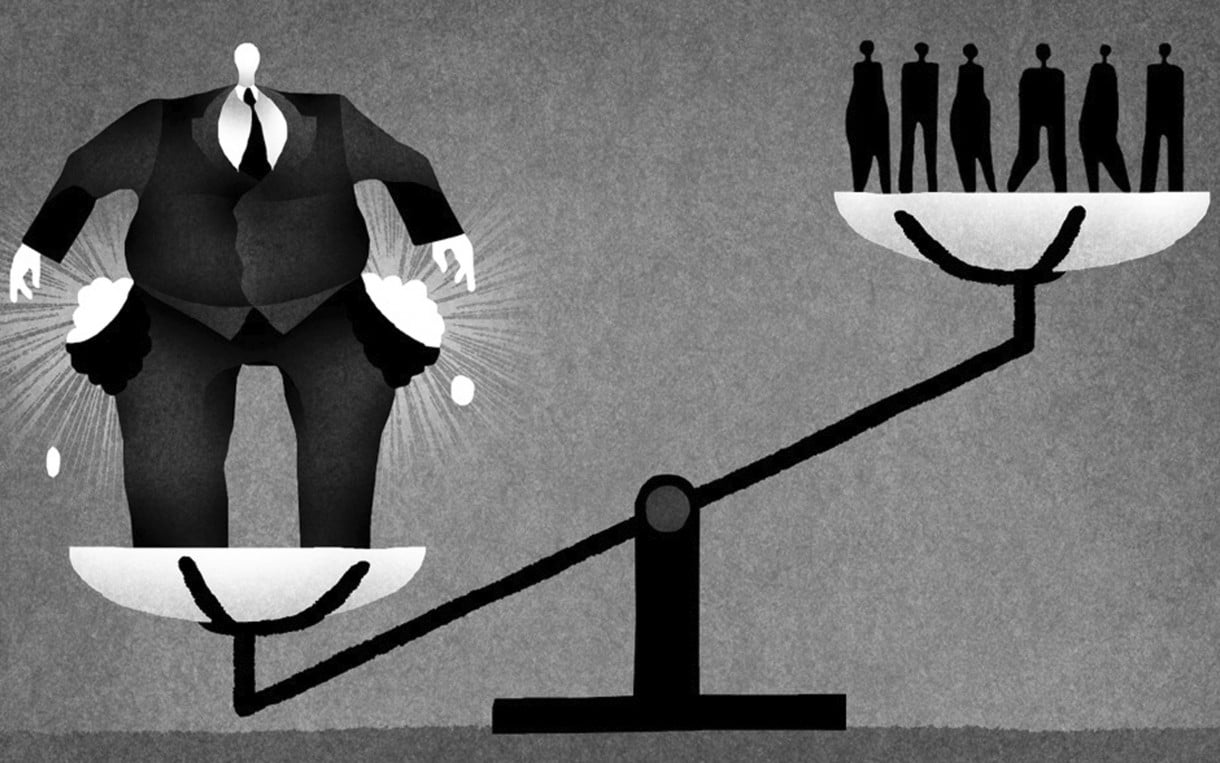
A new freely downloadable book I would like to announce the publication of a new book, which discusses the question of how oligarchs maintain their grasp on an excessive share of wealth and power when, as Shelley pointed out, the have-nots are many, while the power-holders are few. Please click to access “Ye Are Many They Are Few” The Peterloo Massacre Rise, like lions after slumberIn unvanquishable number!Shake your chains to earth like dewWhich in sleep had fallen on you:Ye are many, they are few! Percy Bysshe Shelley wrote his poem “The Masque of Anarchy”, from which the above quotation is taken, in response to the Peterloo Massacre, which took place at St. Peter’s field in Manchester on the 16th of August 1819. Cavalry soldiers of the government charged a crowd of 60,000 citizens who were peacefully assembled to ask for better representation in Parliament. They were suffering from unemployment...
865691-25234-csstcagzbx-1512048462
Idag, den 7. september 2020, i London starter en retssag, som får betydning for den frie presse i vesten i fremtiden. Sagen drejer sig om journalist og stifter af mediet WikiLeaks – Julian Assange – som er tiltalt for overtrædelse af den amerikanske spionagelov i forbindelse med at indhente og offentliggøre fortrolige militære- og diplomatiske dokumenter. Retten i London skal tage stilling til, om Julian Assange skal udleveres til USA til retsforfølgelse og potentielt 175 års fængsel. Men hvorfor har denne retssag betydning for hele den frie presse i vesten og for vores danske demokrati? Sagen og historien om Julian Assange og WikiLeaks er lang og kompliceret, og de fleste danske medier ser ud til at have opgivet at følge den til dørs. Men jeg vil forsøge at opsummere sagen kort, og forklare hvorfor den er relevant for dig som borger i Danmark. Demokrati bygger grundlæggende på at flertallet af...
serious-security
Jørgen Johansen argues that, like terrorism before it, the Covid-19 pandemic is being used by politicians across the world to normalise exceptional restrictions on basic rights with political consequences that will long outlast the health emergency. In his book State of Exception, Giorgio Agamben examined the consequences of policies and regulations introduced in exceptional circumstances, which then become institutionalised as ’normal’, the state of exception becomes the rule. An illustration might be the USA’s Patriot Act of 2001, enacted after the 9/11 attack, which resulted in a massive expansion of government surveillance. Likewise, the Guantanamo Bay detention camp set up in 2002 as part of George W. Bush’s war on terror, where detainees have been held for indefinite periods without trial and subjected to torture. Originally published at rethinkingsecurity.org Proponents of such exceptional measures justified them by reference to the extraordinary context in which they were introduced – they were...
Imagen-thumbnail-The-Transnational
During the height of the Cold War when it was viewed as disloyal and compromising to show a sympathetic interest in Marxism or sympathies with Soviet ideology, someone at the U.S. military base at Frankfurt distributed to the soldiers stationed there, a handwritten version of the Bill of Rights, the first ten amendments of the U.S. Constitution, in the form of petition. Very few of the soldiers approached were willing to affix their signatures, most alleging that this seemed a subversive document circulated by enemies of the United States, and was Soviet propaganda. Somehow the Western propaganda message that the Cold War was about the defense of ‘the free world’ against a totalitarian enemy had made no impact, or alternatively, that the free world had nothing to do with the substantive elements of freedom as social practice. Originally posted on Richard Falk’s personal blog on August 8, 2020 here For...
96f258eb81837d6ccb7088f100f6aebd
May 25, 2020 Dr. Lawrence Wittner Decades ago, when I began teaching international history, I used to ask students if they thought it was possible for nations to end their fighting of wars against one another. Their responses varied. But the more pessimistic conclusions were sometimes tempered by the contention that, if the world’s nations faced a common foe, such as an invasion from another planet, this would finally pull them together. Originally published on Counterpunch on April 14, 2020 here I was reminded of this on March 23, when the UN Secretary-General, António Guterres, called for “an immediate global ceasefire.” The time had come, he said, to “end the sickness of war and fight the disease that is ravaging our world.” A UN summary noted that the Secretary-General had “urged warring parties across the world to lay down their weapons in support of the bigger battle against COVID-19: the...
Robert-Jay-Liftonm-700x350-1
Renowned psychiatrist Robert Jay Lifton on the Goldwater Rule: We have a duty to warn if someone may be dangerous to others. 23 april, 2020 Bill Moyers There will not be a book published this fall more urgent, important, or controversial than The Dangerous Case of Donald Trump, the work of 27 psychiatrists, psychologists and mental health experts to assess President Trump’s mental health. They had come together last March at a conference at Yale University to wrestle with two questions. One was on countless minds across the country: “What’s wrong with him?” The second was directed to their own code of ethics: “Does Professional Responsibility Include a Duty to Warn” if they conclude the president to be dangerously unfit? Originally published at billmoyers.com, September 14, 2017 As mental health professionals, these men and women respect the long-standing “Goldwater rule” which inhibits them from diagnosing public figures whom they have...
cultignorance
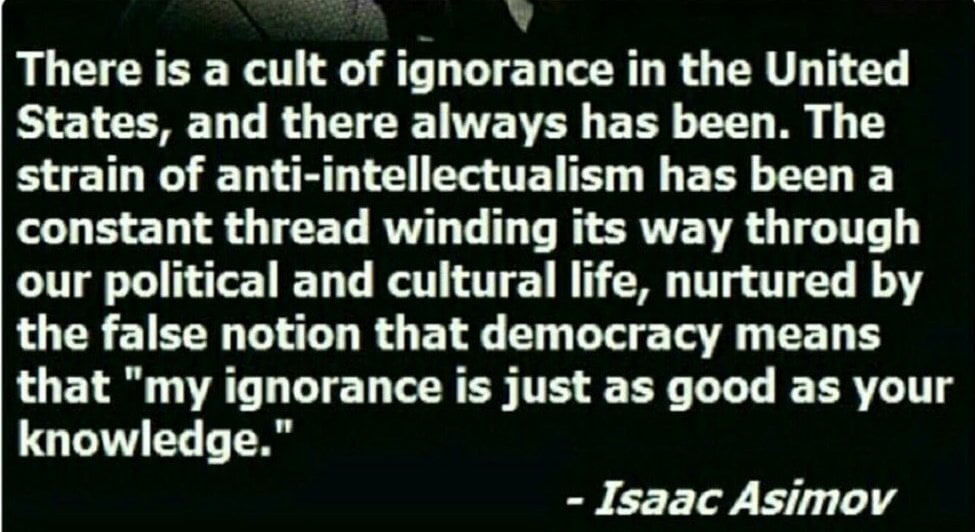
By Jason Hirthler April 21, 2020 Author David Foster Wallace once said that America is, “One enormous engine and temple of self-gratification and self-advancement.” The spectacle of American consumerism comes galloping to mind. But the pageant of gluttony with which we sate ourselves on a weekly basis is a pale reflection, at least in its intensity, of American foreign policy. Like our national addiction to guns mirrors our international addiction to bombs, so too our appetitive instincts at home merely reflect those same greedy impulses writ large in the global arena. From the soul of the gourmand to the surface-to-air missile, the attitude to the world is the same: take what ye would, all else be damned. Originally posted on Counterpunch’s official website on April 02, 2020 But while consumers might bankrupt themselves on needless consumption, it is the imperial arm of the state that visits mass suffering on innocents...
Categories

Year

Author / Contributor

Region