Cold War – Old and New

Category

Year

Author / Contributor

Region

Sort by

Showing 1-10 of 177 stories

Lieven-Ukraine-ftr_img
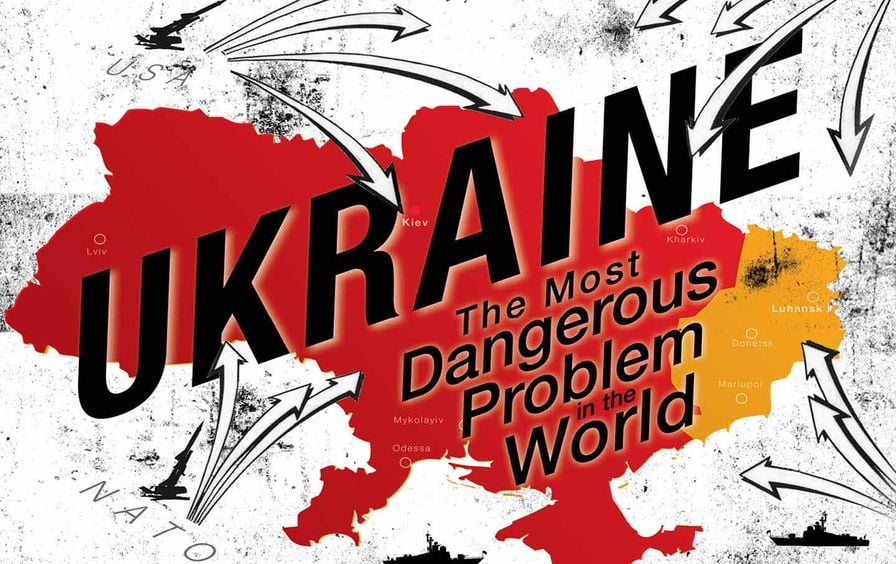
But there’s already a solution. Anatol Lieven January 19, 2022 Amid the public storm in America over the fall of Kabul, it is important not to lose sight of other looming crises around the world – some of them potentially much more dangerous than Afghanistan. For if the US political elites were so surprised by the speed of the Afghan state’s collapse, that was largely because the US media stopped paying attention to developments on the ground in Afghanistan once most US forces withdrew and Americans stopped dying there in large numbers. Originally published at The Nation in November 2021 Of these potential crises, one of the most menacing is the armed standoff between the Ukrainian military and Russian-supported separatist forces in eastern Ukraine. Limited numbers of Russian troops (lightly disguised as “volunteers”) are stationed in the Donbas region, and Russia has deployed large forces in southern Russia to defend...
maskingA
Secretary of State Antony Blinken and NATO’s chief Jens Stoltenberg January 13, 2022 Jan Oberg To deceive, telling half-truths, or a complete lie is nothing new in politics, particularly security in politics. But until some 20-30 years ago, I would – perhaps naively – see it as an exception. Tragically – and perhaps to many readers’ surprise – it is now the rule. At least in U.S. and NATO circles, and that is particularly regrettably since The West professes to be a democratic system with specific values and even a moral leader to The Rest. Lying systematically about facts – historical facts – and other countries and cultures should be incompatible with The West’s perception of itself. But, today, it isn’t. Lies are widespread in so-called security politics when some militarist project doesn’t make any (common) sense to intelligent people, when the real motives have to be covered up and...
1_naples_1994_
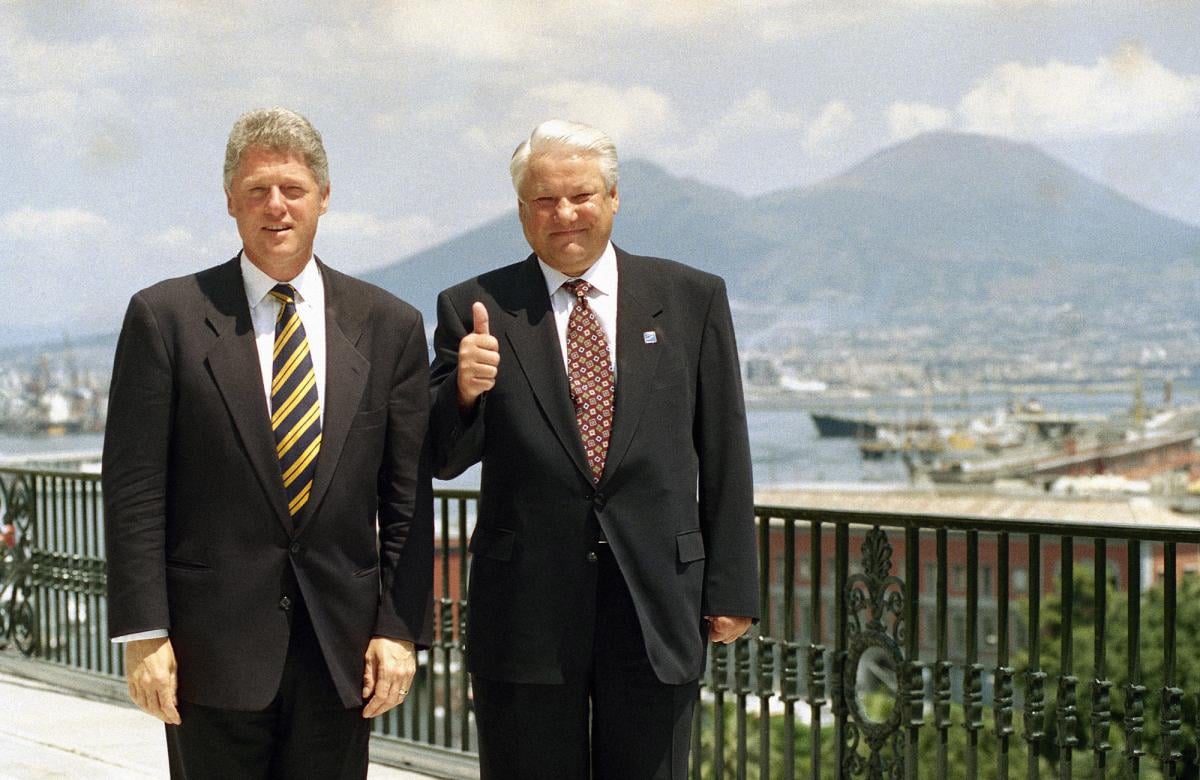
Clinton and Yeltsin in Naples, July 10, 1994.  Dormant Vesuvius is in the background.  (Eruption wouldn’t happen until Budapest).  Source:  Inosmi.ru Declassified documents show security assurances against NATO expansion to Soviet leaders from Baker, Bush, Genscher, Kohl, Gates, Mitterrand, Thatcher, Hurd, Major, and Woerner Slavic Studies Panel Addresses “Who Promised What to Whom on NATO Expansion?” By Svetlana Savranskaya and Tom Blanton (Compiled and edited) January 7, 2022 Washington, D.C., November 24, 2021 – The biggest train wreck on the track to NATO expansion in the 1990s – Boris Yeltsin’s “cold peace” blow up at Bill Clinton in Budapest in December 1994 – was the result of “combustible” domestic politics in both the U.S. and Russia, and contradictions in the Clinton attempt to have his cake both ways, expanding NATO and partnering with Russia at the same time, according to newly declassified U.S. documents published today by the National Security Archive....

photo-ukraine-eu-us-rf-2
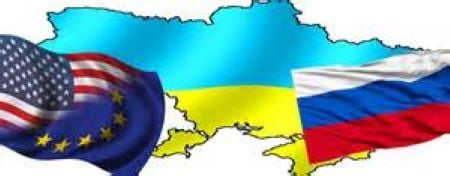
By Gordon M. Hahn December 15, 2021 It is now quite clear, as I have stated for decades, that NATO expansion is the main cause of U.S.-Russian and WesternRussian tensions, and the Russian Angst over said expansion is the cause of the Ukrainian crisis sparked in winter 2013-2014. It appears that Putin is escalating the stakes in the Ukrainian crisis in an effort to solve it and the overall problem of NATO expansion and European security. The positioning of Russian troops closer to the Ukrainian border – not on the border as is being reported – is an attempt to concentrate the minds of the West and bring the main driver of the Ukrainian crisis on the Western side – the U.S. – into the Minsk 2 process directly or otherwise. His highlighting the issue has the important side benefit of putting the issue in a central place before Western...
88ac4373e00144709addd67d57871bc2-1920
The embassy of the People’s Republic of China in the United States of America 10 December 2021 This Joint Article was published on ”The National Interest”. Qin Gang is the Chinese Ambassador to the United States. Anatoly Antonov is the Russian Ambassador to the United States. We publish it here on The Transnational because we believe it is a historic document both because of China-Russia cooperation which is increasing rapidly and because it makes the important point that the US no longer has any legitimate – or exceptionalist – right to tell others how to operate. The upcoming American-led online Summit for Democracy will stoke ideological confrontation. Faced with an array of global challenges, countries urgently need to strengthen coordination and cooperation for common progress. The United States will be hosting the online Summit for Democracy on December 9-10, 2021, empowering itself to define who is to attend the event and who is not, who is a “democratic country” and who is not eligible for such status. An evident...
ChiUS-kopia
Carlos Martinez November 16, 2021 Since the launch of Obama’s ‘Pivot to Asia’ in 2012, the US has prioritised China containment over all other foreign policy commitments. This includes steadily increasing its presence in the South China Sea and encouraging China’s neighbours in their various territorial claims. Obama also initiated an expansion of US military, diplomatic and economic cooperation with other countries in the region. The overarching strategic goal of the proposed Trans-Pacific Partnership (TPP) was to isolate China and to draw East and Southeast Asia back into the US economic – and ideological – orbit. The Trump administration, while dropping the TPP due to its domestic unpopularity, escalated the Pivot in other respects: launching a trade war in January 2018, imposing a ban on Huawei, attempting to ban TikTok and WeChat, spreading conspiracy theories about the origins of Covid-19, and turning ‘decoupling’ into a buzzword. Anti-China propaganda became –...
World-Nuclear-Forces-Map-YB2020
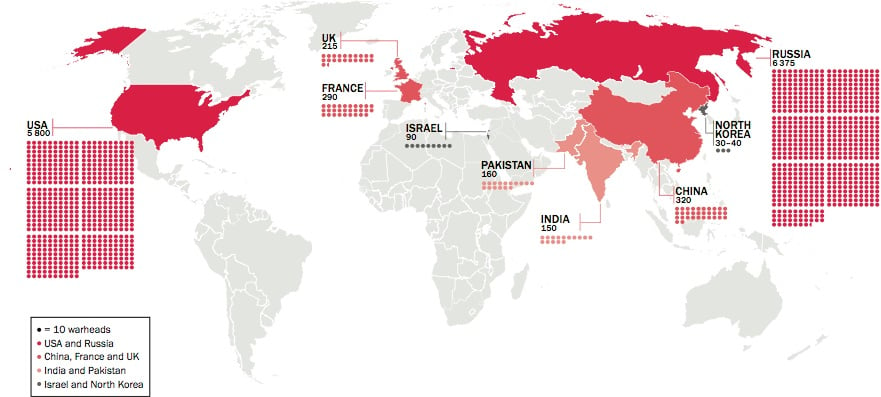
Omri Walach October 21, 2021 Originally posted on Visual Capitalist’s homepage on September 30, 2021 Which Countries Have the Most Nuclear Weapons? In theory, nuclear weapon stockpiles are closely held national secrets. The leading countries have rough estimates that aren’t regularly updated, newly nuclear countries keep their capabilities vague and unclear, and Israel has never officially confirmed a nuclear weapons program. But thanks to limited disclosures, records, and leaks, we can visualize the full extent* of the world’s nuclear arsenal. This graphic uses estimated nuclear warhead inventories from the Federation of American Scientists as of August 2021. Based on these estimates, there are just nine countries with nuclear weapons in the world. Editor’s note: Exact numbers of nuclear warheads possessed by countries are closely guarded state secrets, with the FAS estimate being the closest, most-used, and most-trusted international approximation available. Nuclear Weapons, by Country The nuclear arms race has always centered around the U.S. and Russia. After the end of World...
Screenshot
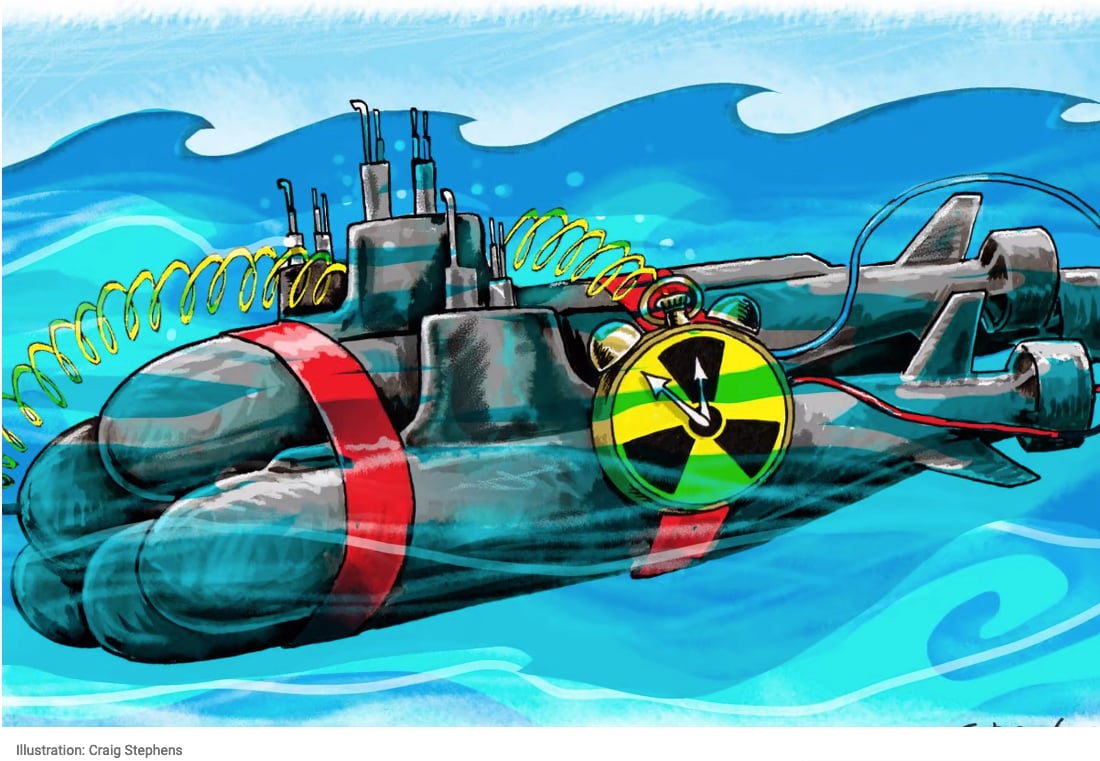
Introduction by Jan Oberg October 14, 2021 This South China Morning Post article by Mark. J. Valencia is very informative about the larger perspective surrounding the US “Connecticut” submarine that hit and was damaged by something “unidentified” in the South China Sea on October 2, 2021 – a story that the US Navy cared about to tell the world only five days later. You should read also this article and this one. This incident – whatever it really was – is an integral part of the ongoing China Cold War Agenda of the US that TFF has issued a large report about – Behind The Smokescreen. Perhaps naturally, our media – as well as virtually everybody else – focus on conflicts and wars on land. It is systematically forgotten that conflicts and, to some extent, wars are permanently fought in the world’s oceans, the main weapons being submarines, including nuclear...
China-US-buildingbridge
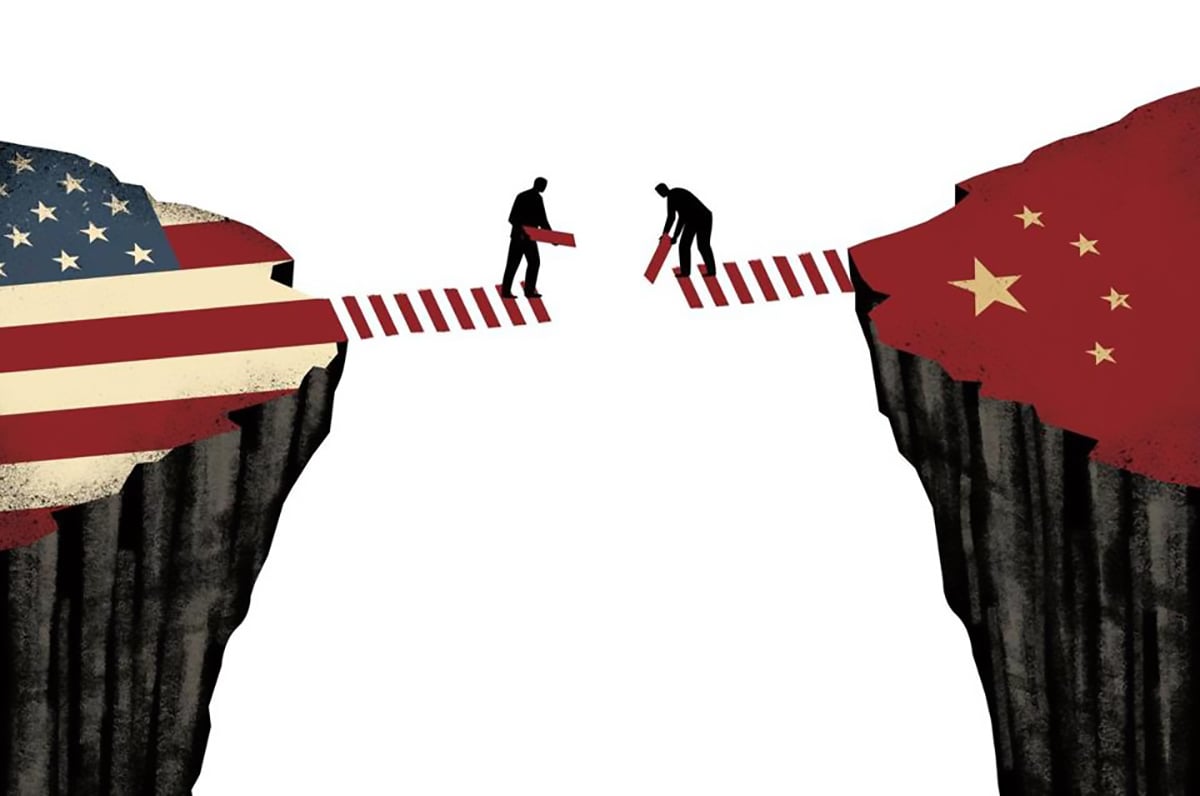
Meryem Betul Kebap October 5, 2021 Following the Cold War, the victorious USA became the hegemony power of the world. Unrivalled in many respects, the United States played a role as a superpower in international politics. As a result of the policies, it put into practice in the 1950s, China gained the power to compete with the USA in many aspects as a rising commercial power against the USA today. Originally posted on Asia Today on August 4th, 2021 This led the two powers to compete in slew parts of the world. Furthermore, relations between the two states have been stretched during the reign of former US President Donald Trump. However, with Joe Biden’s administration assuming power, there was a softening in bilateral relations. Recently, US Deputy Secretary of State visited China and met with the Chinese Foreign Minister. Although this visit was expected to reduce the tension between the...
shubham-dhage-MNOPbe4XmxU-unsplash
Artwork by Shubham Dhage Jim Lobe October 4, 2021 But there’s a prevailing view that the EU is more aligned with Washington’s military competition with China and Russia. Even as President Joe Biden insisted at the United Nations this week that he seeks cooperation with potential foreign rivals, most Europeans believe that the United States is already engaged in a new “cold war” with China and Russia, they feel their own nations are not involved, according to a new survey of respondents in 12 EU countries released Tuesday by the European Council on Foreign Relations. Originally published at Responsible Statecraft on September 23, 3021 However, they see their own European institutions, notably the European Union, as somewhat more invested in aligning the continent with Washington’s perceived interest in such a conflict, according to the report which warned that there appears to be a growing gap between the EU’s national publics and the EU leadership,...
2D3CC331-64D5-45DE-B53D-A361772DAC1C
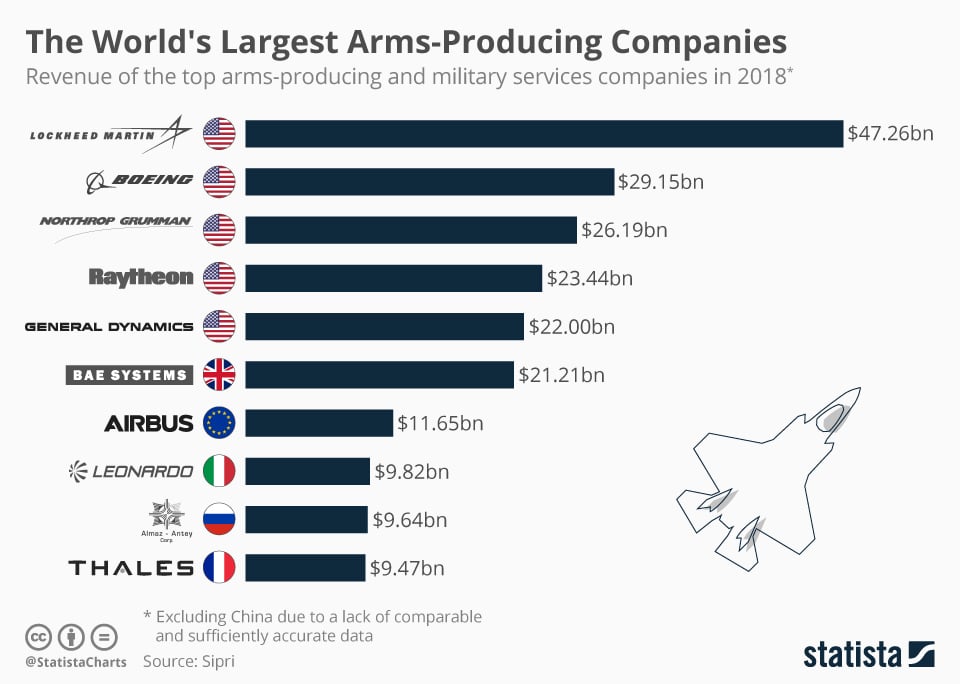
Listen to this article here With the end of the failed ‘forever war’ in Afghanistan, the US military-industrial complex needs to find another struggle to further enrich itself, and China now fits that bill Alex Lo September 24, 2021 “In the councils of government, we must guard against the acquisition of unwarranted influence, whether sought or unsought, by the military-industrial complex. The potential for the disastrous rise of misplaced power exists and will persist.” – President Dwight D. Eisenhower, farewell address, 1961 The “potential” of the military-industrial complex for mischief that Eisenhower warned against in his famous speech is now actual; indeed, it has been for some time now. Much of the “war on terror”, including the occupations of Iraq and Afghanistan, have been a gravy train for private contractors and arms makers. “The Forever War” may not have made America and Americans safer, but it has made the military-industrial complex...
ungraph1
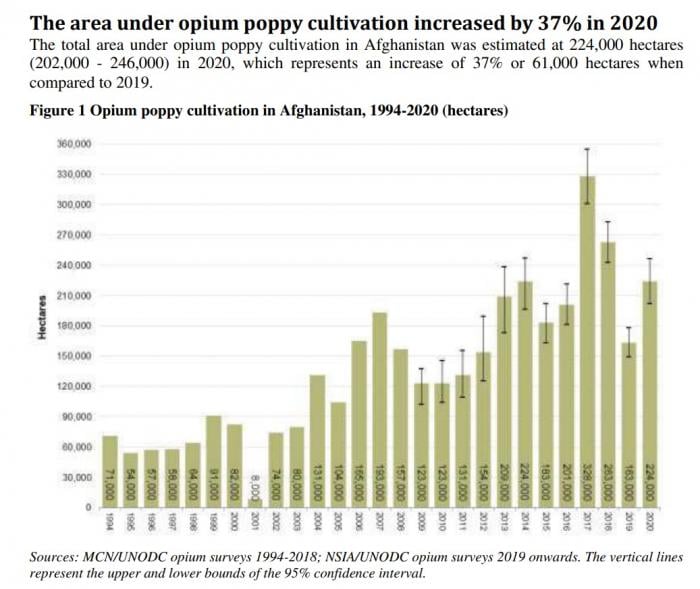
Pepe Escobar August 25, 2021 The Persian Gulf harbors an array of extremely compromising secrets. Near the top is the Afghan heroin ratline – with the United Arab Emirates (UAE) positioned as the golden node of a transnational, trillion dollar heroin money laundering operation. Originally posted on LewRockwell homepage on January 18, 2021 In this 21st century Opium War, crops harvested in Afghanistan are essentially feeding the heroin market not only in Russia and Iran but especially in the US. Up to 93% of the world’s opium comes from Afghanistan. Contrary to predominant Western perception, this is not an Afghan Taliban operation. The key questions — never asked by Atlanticist circles — are who buys the opium harvests; refines them into heroin; controls the export routes; and then sell them for humongous profit compared to what the Taliban have locally imposed in taxes. The hegemonic narrative rules that Washington bombed Afghanistan in 2001 in “self-defense” after 9/11; installed a “democratic” government; and after 16 years never de facto left because this is a key node...
Categories

Year

Author / Contributor

Region