Cold War – Old and New

Category

Year

Author / Contributor

Region

Sort by

Showing 1-10 of 177 stories

china-sep2020-845x550-1-720x469-1
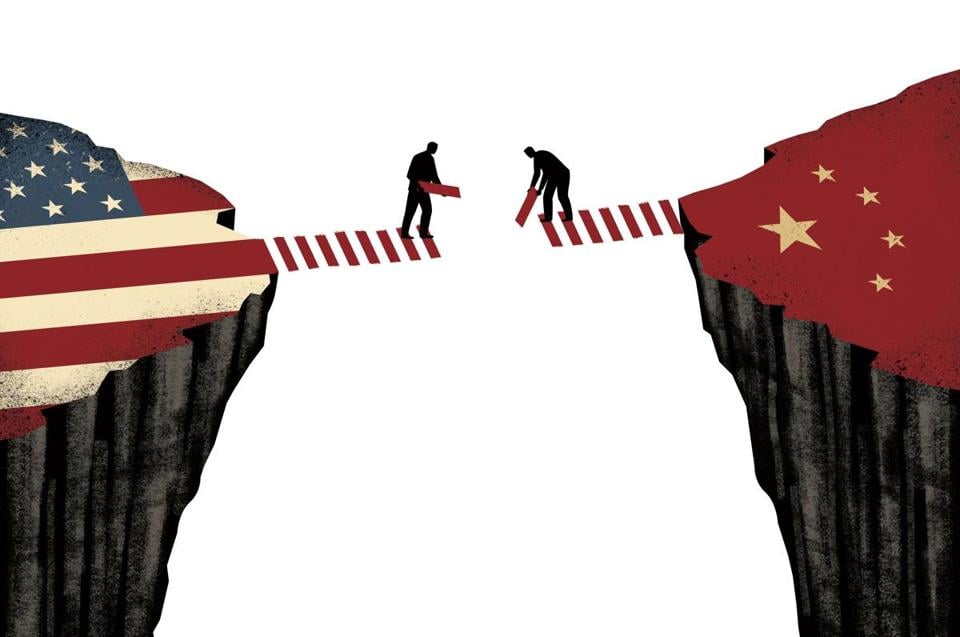
Image by Stock File Madison Tang and Jodie Evans May 23, 2021 U.S. President Joe Biden’s budget proposal for the next fiscal year was recently announced, and it requests $715 billion for his first Pentagon budget, 1.6 percent more than the $704 billion enacted under Trump’s administration. The outline states that the primary justification for this increase in military spending is to counter the threat of China, and identifies China as the U.S.’s “top challenge.” Within the proposal is an endorsement of U.S. Indo-Pacific Command head Admiral Philip Davidson’s request for $4.7 billion for the “Pacific Deterrence Initiative,” which will increase U.S. military capabilities in Guam and the surrounding region. The Indo-Pacific Command is also requesting $27 billion in additional spending between 2022 and 2027 to build a network of precision-strike missiles along the islands surrounding Beijing. This article was originally published at Pressenza The U.S.’s unilateral aggression toward China—in...
PutinJinping
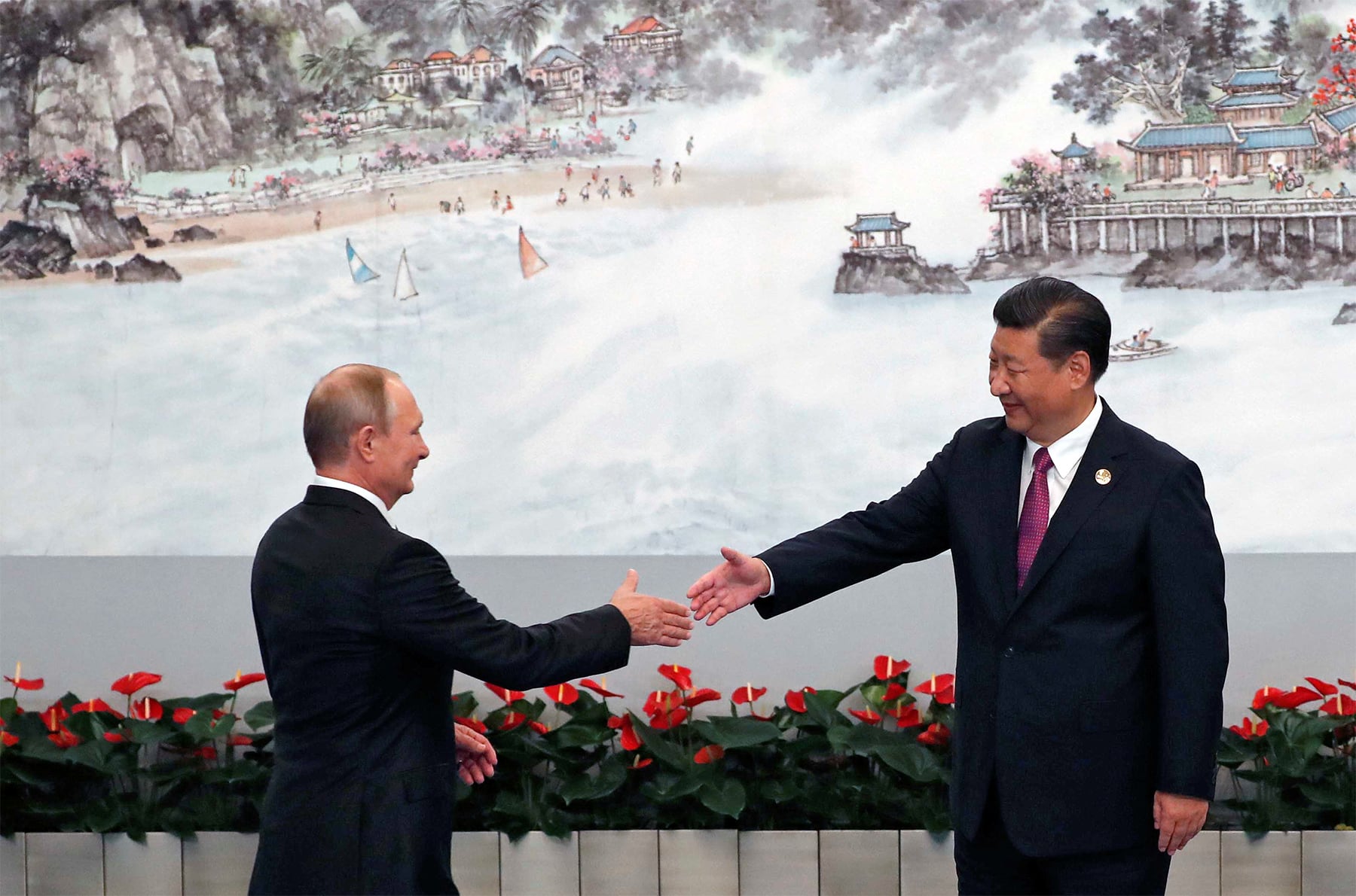
In separate incidents, Moscow and Beijing sent a strong message that they will not tolerate being told what to do or how to behave Tony Kevin April 26, 2021 The past week has marked a watershed moment in Russia’s relations with the West – and the US in particular. In two dramatic, televised moments, US President Joe Biden and Russian President Vladimir Putin changed the dynamics between their countries, perhaps irrevocably. Originally posted on Asia Times on March 26, 2021 Most commentators in the West have focused on Putin’s “trolling” of Biden by dryly – though, according to Putin, unironically – wishing his American counterpart “good health.” This, of course, came after Biden called Putin a “killer.” But a more careful and complete reading of Putin’s message to the US is necessary to understand how a Russian leader is, finally, ready to tell the US: Do not judge us by...
new-Cold-War_
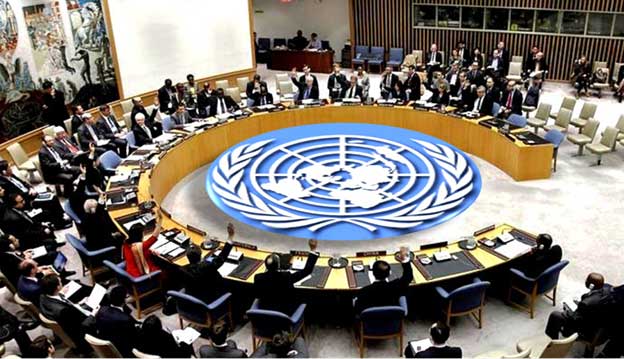
Photo credit: The United Nations The UN Security Council is now the battleground for a new Cold War between the US and China Thalif Deen April 23, 2021 UNITED NATIONS, Apr 14 2021 (IPS) – A new Cold War – this time, between the US and China —is threatening to paralyze the UN’s most powerful body, even as military conflicts and civil wars are sweeping across the world, mostly in Africa, the Middle East and Latin America. The growing criticism against the Security Council is directed largely at its collective failures to resolve ongoing conflicts and political crises in several hot spots, including Syria, Yemen, Afghanistan, Iraq, Myanmar, Somalia, South Sudan, Ukraine and Libya — and its longstanding failure over Palestine. The sharp divisions between China and Russia, on one side, and the Western powers on the other, are expected to continue, triggering the question: Has the Security Council outlived its...

itp-cra-china-march2017
The world’s rising powerhouse In 1986 on returning for my first 3-week visit to China, I wrote an article, “China: Key Player in a New World Game” in The Futurist, December 1986. I had been invited by China’s State Council at the recommendation of my good friends, Alvin and Heidi Toffler, best-selling authors of Future Shock (1970), who both had, and still, have a big following in China. This surprise invitation was to speak at “The First International Conference on Creativity”, co-sponsored by the United Nations Education & Scientific Cooperation Organization (UNESCO), along with Edward de Bono of Britain and US psychologist/philosopher Jean Houston, author of The Possible Human (1982). Mystified, I called the phone number in China of Professor Xu, the convenor at Shanghai-based Jiaotong University, and asked why I had been invited to this event, all expenses paid. Professor Xu replied in perfect English, “In China, you are a great scholar and your...
image_551d8f68
Image Credit: The Watson Institute for International and Public Affairs April 8, 2021 The Brown Political Review is a non-partisan political publication that seeks to promote ideological diversity. All of the views reflected in BPR’s content are views held by authors and not reflective of the views held by the wider organization or the Executive Board. This conversation was published by the Brown Political Review on March 31, 2021 Sam Kolitch Ambassador Chas Freeman is a retired career diplomat who served as Assistant Secretary of Defense for International Security Affairs from 1993-1994, Ambassador to Saudi Arabia from 1989-1992 during operations Desert Shield and Desert Storm, Principal Deputy Assistant Secretary of State for African Affairs from 1986-1989 during the Cuban troop withdrawal from Angola and the U.S. mediation of Namibian independence from South Africa, Deputy Chief of Mission and Chargé d’Affaires in the American embassies at Bangkok from 1984-1986 and at...
Ablinken
Edward Lozansky April 8th, 2021 Apology and humanitarian help are a better start In his recent speech outlining the new U.S. foreign policy vision Secretary of State Antony J. Blinken made a really sensational statement: “We will not promote democracy through costly military interventions or by attempting to overthrow authoritarian regimes by force. We have tried these tactics in the past. However well intentioned, they haven’t worked.”  Originally posted on US-Russia.org’s website on March 15th, 2021 After hearing this from someone who not only enthusiastically supported the wars in Iraq, Libya, Syria and Ukraine, I had to reread his speech a couple of times to make sure that I wasn’t hallucinating.  Some skeptics, after seeing in this speech the usual lines about “renewing America’s strength” and that only the United States can “lead” the world, shrugged off Mr. Blinken’s disavowing many decades of U.S. forceful changes of unsuitable foreign regimes.  For...
the-long-telegram-l
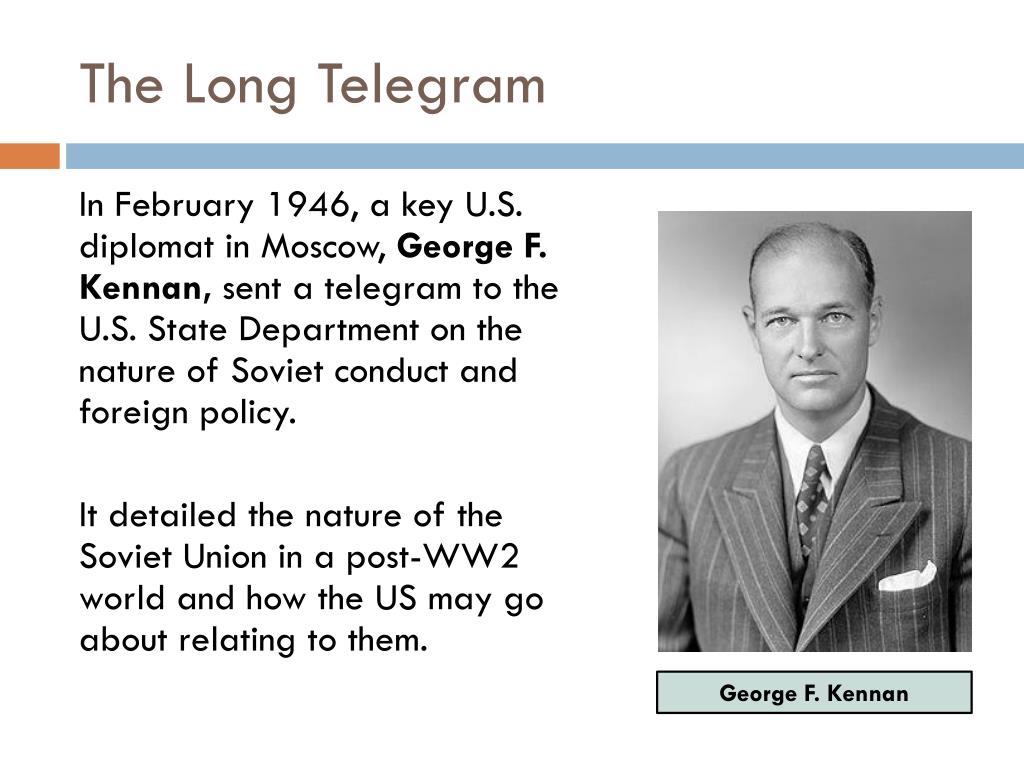
Natylie Baldwin March 15, 2021 February 22nd marks 75 years since George F. Kennan sent his famous “Long Telegram” to the State Department in which he provided an assessment of the Soviet Union that led to the U.S. containment policy of the Cold War. The Cold War, in turn, saw various conflicts, scores of covert operations, regime changes, and a nuclear arms race.  Conventional wisdom generally has it that Kennan’s assessment of the Soviet government was accurate.  But was it?  And if it wasn’t accurate, why has it been treated as a brilliant analysis that underpinned a policy still characterized as an inevitable necessity? In order to answer those questions, it is necessary to look at who George F. Kennan was, what the main points of his analysis were and how they have held up to the historical facts, as well as the political context in which his assessment was...
human-rights-hands
The United States, Britain and European nations have a history of ‘weaponising’ human rights in foreign policy. Throughout late imperial history, China has rarely blamed other nations, their religion or race, for domestic problems. Martin PowersAn opinion piece in South China Morning PostMarch 4, 2021 The term “human rights” is properly a feature of the modern world, but people have been calling out cruelty for centuries. Who gets blamed for human tragedy reveals a lot about how a nation values human life. Western nations, chief among them the United States, have long assumed the promotion of human rights as one of their natural duties, but in recent years some have questioned their qualifications for doing so. Last Fall in the journal Foreign Affairs James Goldgeier and Bruce W. Jentleson itemised the failures of America’s “tarnished model”, taking note of that “internationally controversial war in Iraq” and a major financial crisis in 2008. Following a...
US-ChinaCoop
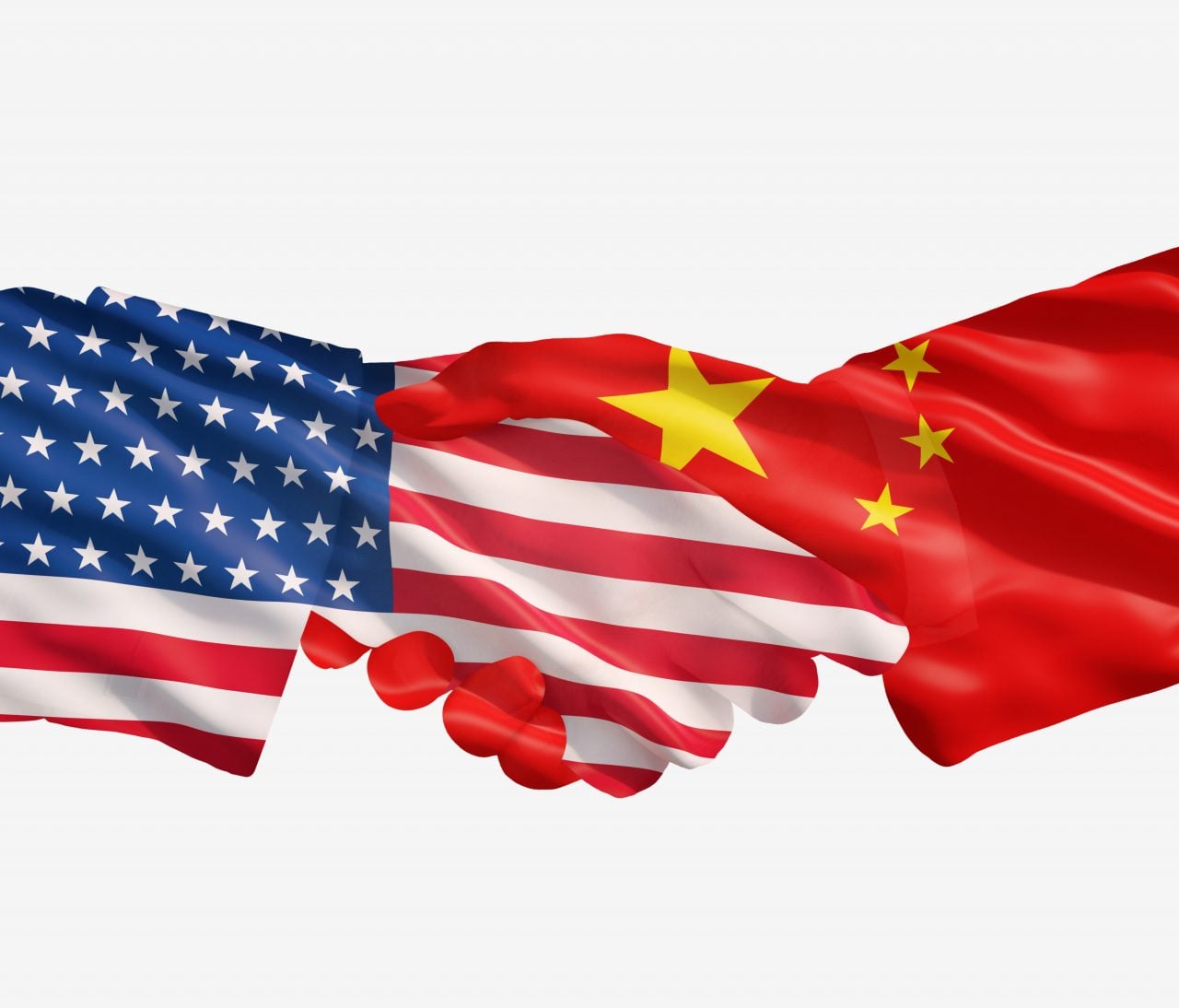
Cooperation would be much better for all, more desirable and perfectly possible. But some want confrontation. Roberto Savio February 2, 2020 It will be quite different from the Cold War with the Soviet Union… While the Coronavirus has rightly taken much of our attention, a fundamental geopolitical realignment has been taking shape in the world, and it will become clearer in 2021. The realignment is the start of a Second Cold War, which hopefully will not become a ‘hot’ war. The new Cold War will be between China and the West, but it will be quite different from the one with the Soviet Union. The world has changed significantly since 1989, the year of the fall of the Berlin Wall. Originally posted on Wall Street International, December 29, 2020 The gap between the two opposing camps is now much smaller. The Soviet Union, a military giant with little industrial development,...
Sergi-Delgado-artwork-865x577-1
Pankaj Mishra January 13, 2020 It’s time to abandon the intellectual narcissism of cold war Western liberalism. In Radical Hope: Ethics in the Face of Cultural Devastation (2006), Jonathan Lear writes of the intellectual trauma of the Crow Indians. Forced to move in the mid-nineteenth century from a nomadic to a settled existence, they catastrophically lost not only their immemorial world but also “the conceptual resources” to understand their past and present. The problem for a Crow Indian, Lear writes, wasn’t just that “my way of life has come to an end.” It was that “I no longer have the concepts with which to understand myself or the world…. I have no idea what is going on.” It is no exaggeration to say that many in the Anglo-American intelligentsia today resemble the Crow Indians, after being successively blindsided by far-right insurgencies, an uncontainable pandemic, and political revolts by disenfranchised minorities. For nearly three decades...
0406davideforweb
 Jeff J. Brown and Jeremy Kuzmarov 15 December, 2020 On July 4, 2020, the U.S. Navy dispatched an unprecedented two aircraft carriers and four other warships to the South China Sea for naval manoeuvres in waters claimed by China. Secretary of State Mike Pompeo subsequently broke with the official U.S. policy of neutrality in territorial conflicts in the South China Sea and declared that China’s claims to most of the Sea were “completely unlawful,” though many of the disputed territories had been part of China prior to being taken over by Japan in the 1895 Sino-Japanese War.[1] World War III nearly erupted on August 25, 2020, when a U.S. spy plane flew into Chinese air space while the People’s Liberation Army (PLA) was conducting drills.[2] Conversely, in 1963 and 1965, China shot down U2 spy planes, while capturing and imprisoning the pilots, though this time, with the international stakes much higher,...
China
By Gordon Dumoulin TFF Associate in Beijing December 14, 2020 When numbers do not add up anymore, people turn to faith… I couldn’t suppress the feeling of a sense of a religious undertone when I went through the following report of more than 70 pages, released a little while ago by the US Secretary of State: The Elements of the China Challenge. It’s a 10-step blueprint for confronting the ‘China Challenge’ or maybe better phrased the 10 Commandments to counter the severe threat of China to the current world order – ‘the free world’. A senior administration official told the Washington Examiner that “over the coming weeks, the Trump administration will continue to expand the depth and breadth of the historic actions it has taken over the past four years to protect the vital interests of the United States and its allies countering Beijing’s predatory and coercive behaviors”. Originally published at Gordon...
Categories

Year

Author / Contributor

Region