China and Silk

Category

Year

Author / Contributor

Region

Sort by

Showing 1-10 of 181 stories

image_551d8f68
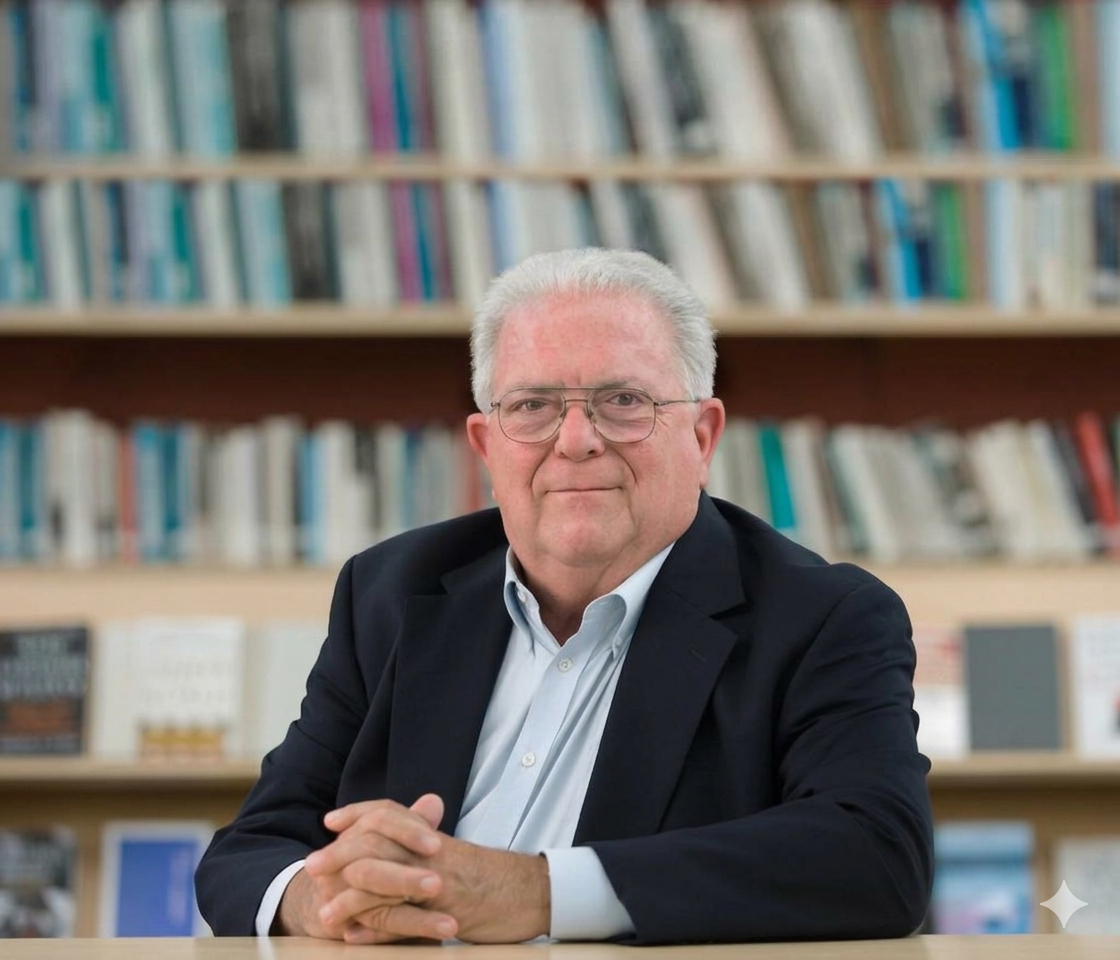
Image Credit: The Watson Institute for International and Public Affairs April 8, 2021 The Brown Political Review is a non-partisan political publication that seeks to promote ideological diversity. All of the views reflected in BPR’s content are views held by authors and not reflective of the views held by the wider organization or the Executive Board. This conversation was published by the Brown Political Review on March 31, 2021 Sam Kolitch Ambassador Chas Freeman is a retired career diplomat who served as Assistant Secretary of Defense for International Security Affairs from 1993-1994, Ambassador to Saudi Arabia from 1989-1992 during operations Desert Shield and Desert Storm, Principal Deputy Assistant Secretary of State for African Affairs from 1986-1989 during the Cuban troop withdrawal from Angola and the U.S. mediation of Namibian independence from South Africa, Deputy Chief of Mission and Chargé d’Affaires in the American embassies at Bangkok from 1984-1986 and at...
human-rights-hands
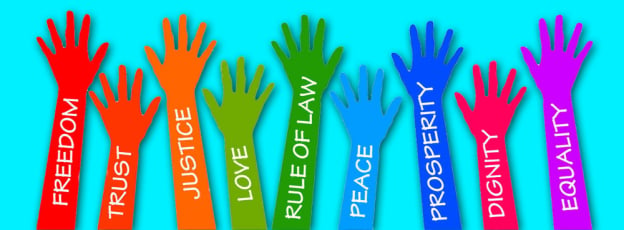
The United States, Britain and European nations have a history of ‘weaponising’ human rights in foreign policy. Throughout late imperial history, China has rarely blamed other nations, their religion or race, for domestic problems. Martin PowersAn opinion piece in South China Morning PostMarch 4, 2021 The term “human rights” is properly a feature of the modern world, but people have been calling out cruelty for centuries. Who gets blamed for human tragedy reveals a lot about how a nation values human life. Western nations, chief among them the United States, have long assumed the promotion of human rights as one of their natural duties, but in recent years some have questioned their qualifications for doing so. Last Fall in the journal Foreign Affairs James Goldgeier and Bruce W. Jentleson itemised the failures of America’s “tarnished model”, taking note of that “internationally controversial war in Iraq” and a major financial crisis in 2008. Following a...
WomanOnRoad_90cm_2000_150dpi-kopia
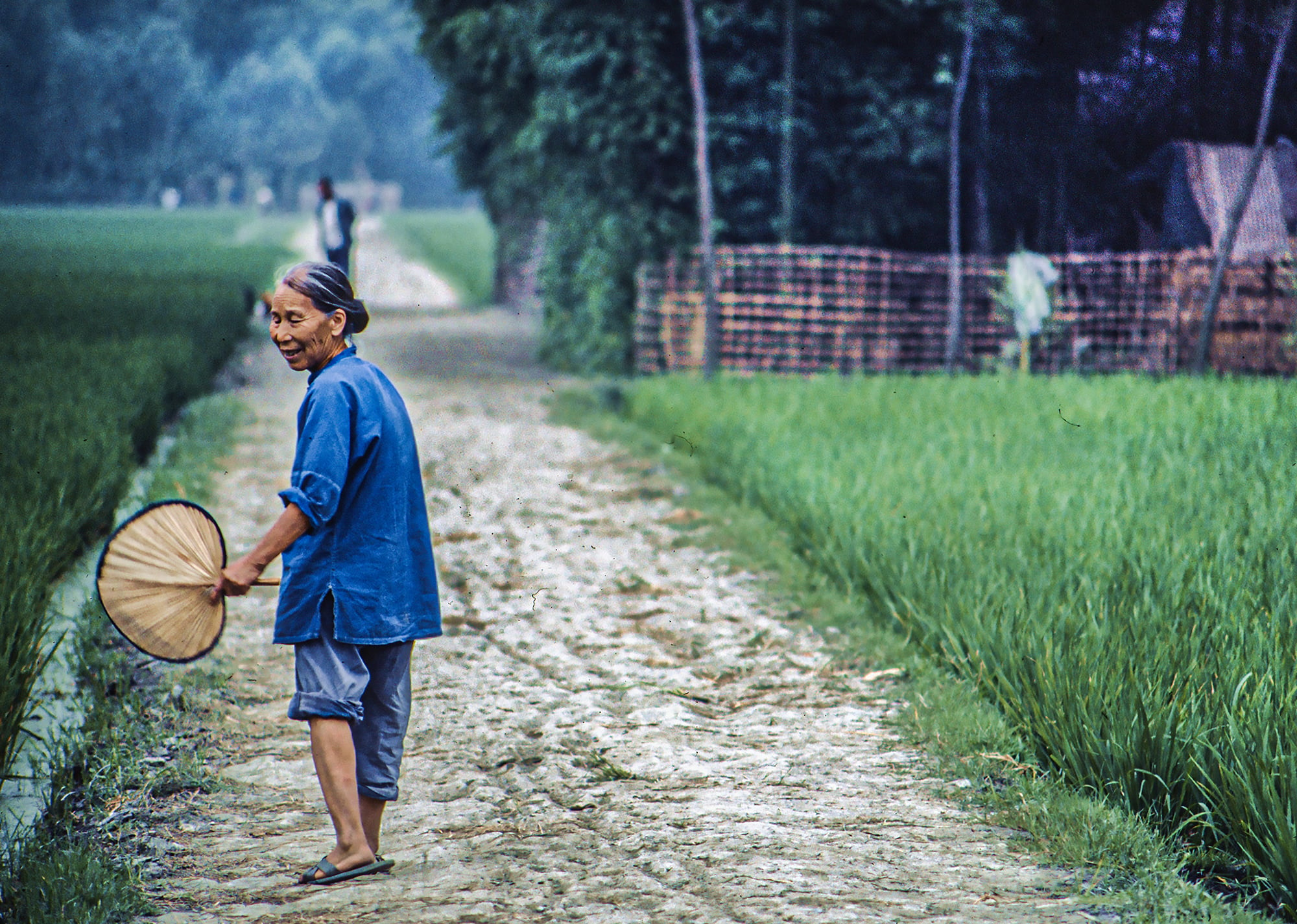
China 1983 © Jan Oberg, Oberg PhotoGraphics Documentary with Lawrence Robert Kuhn January 6, 2021 When the history of the 21st century is to be written, there is no doubt that the story of China’s eradication of poverty – i.e. lifting about 700 million people out of it – will be seen as a milestone, a turning point for humanity. China’s poverty rate fell from 88 per cent in 1981 to 0.7 per cent in 2015, as measured by the percentage of people living on the equivalent of US$1.90 or less per day in 2011 purchasing price parity terms. On November 23rd 2020, China announced that it had eliminated absolute poverty nationwide by uplifting all of its citizens beyond its set ¥2,300 (CNY) per year, or less than a dollar per day poverty line. This result has been achieved within just four decades, after Chinese leader Deng Xiaoping declared the...
Xi
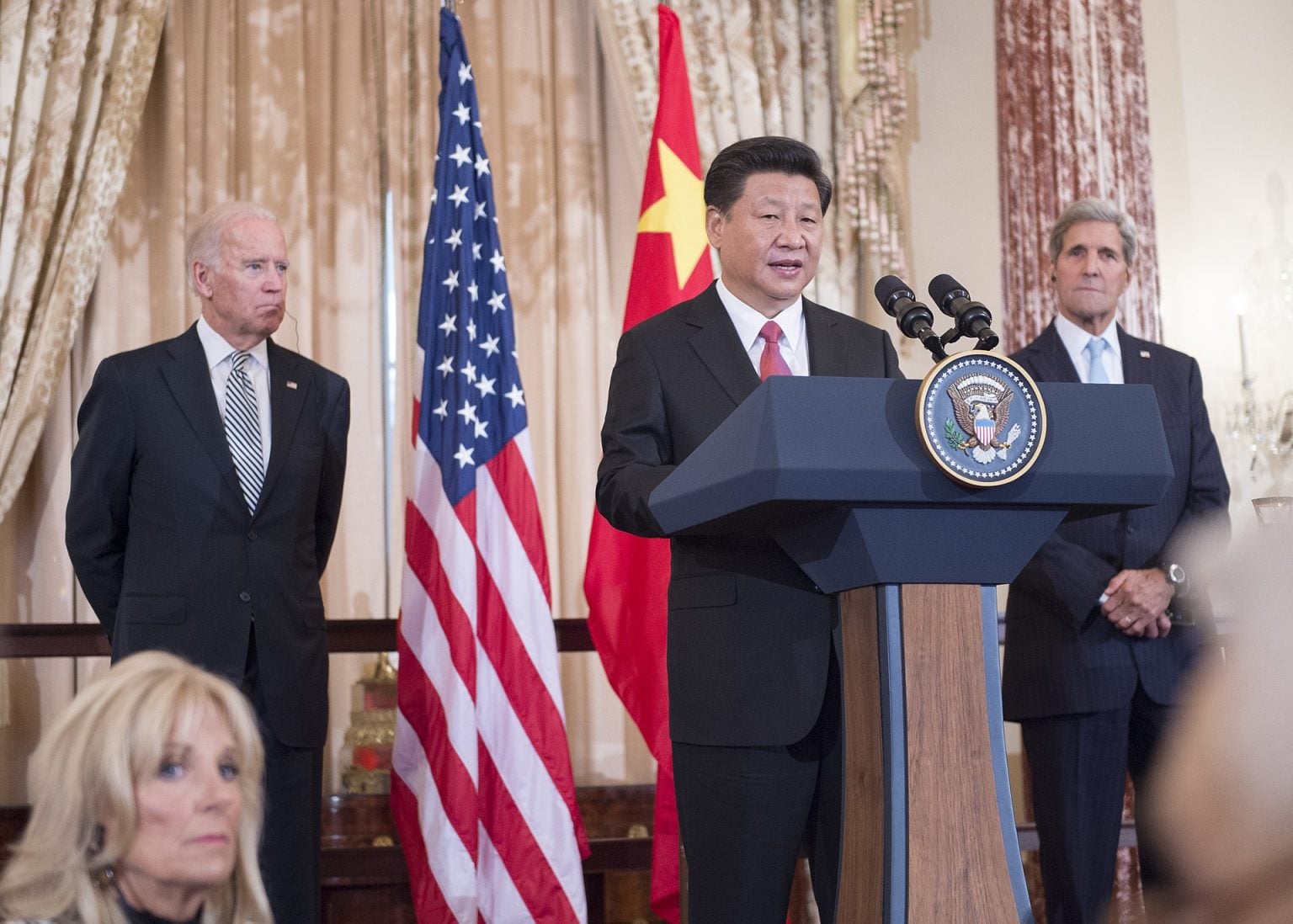
U.S. Department of State/Chinese President Xi Delivers Remarks at a State Luncheon in His Honor at the State Department December 29, 2020 Richard Hanania Across the political spectrum, there is widespread agreement that America must get serious about the threat posed by China. As the Trump administration comes to a close, the State Department has just released a document called ‘The Elements of the China Challenge’. A distillation of conventional wisdom among national security experts and government officials, it argues that the U.S. needs a concerted effort to push back against Beijing. On its first page, the document tells us that “the Chinese Communist Party (CCP) has triggered a new era of great-power competition.” If there was a major intellectual thread running through Trump’s foreign policy, or at least that of the people he appointed, it was that confronting China was the national security issue of our time. America during...
China
By Gordon Dumoulin TFF Associate in Beijing December 14, 2020 When numbers do not add up anymore, people turn to faith… I couldn’t suppress the feeling of a sense of a religious undertone when I went through the following report of more than 70 pages, released a little while ago by the US Secretary of State: The Elements of the China Challenge. It’s a 10-step blueprint for confronting the ‘China Challenge’ or maybe better phrased the 10 Commandments to counter the severe threat of China to the current world order – ‘the free world’. A senior administration official told the Washington Examiner that “over the coming weeks, the Trump administration will continue to expand the depth and breadth of the historic actions it has taken over the past four years to protect the vital interests of the United States and its allies countering Beijing’s predatory and coercive behaviors”. Originally published at Gordon...
US-EU-China
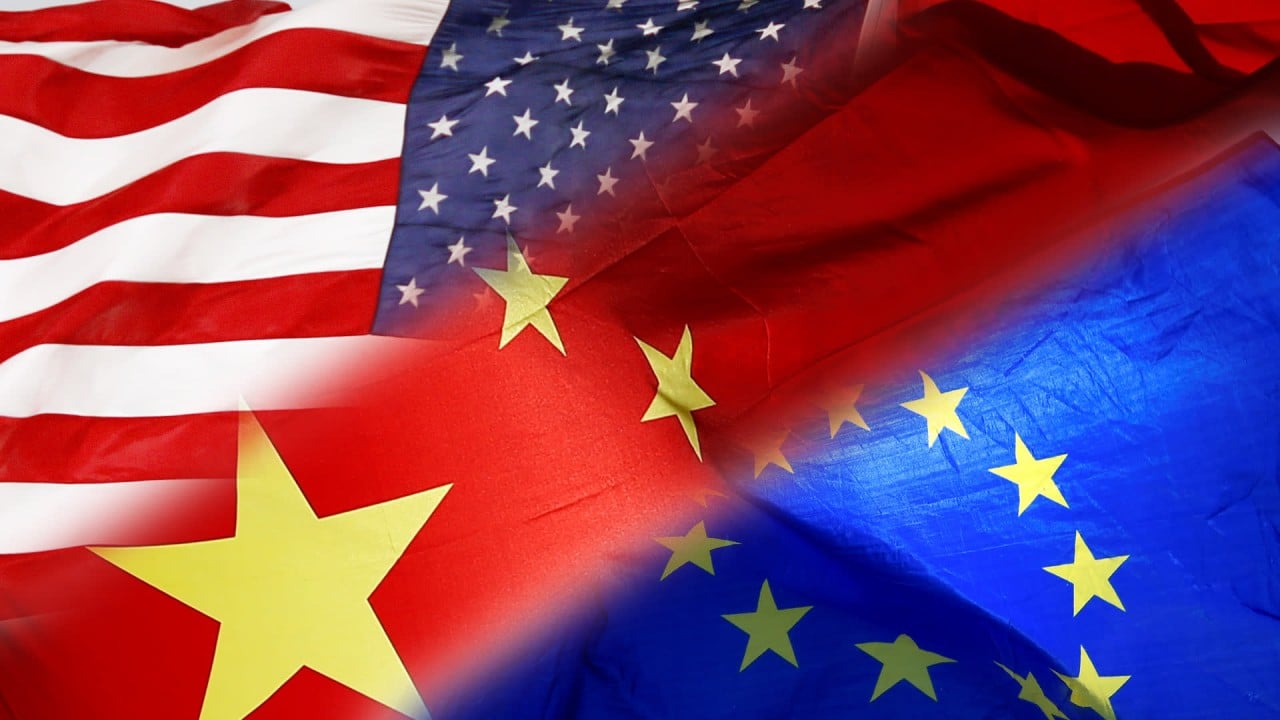
TFF Associate Not a day goes by without China appearing in Western news or social media. Almost exclusively with negative reports of human rights violations in Xinjiang or the security law in Hong Kong, government propaganda, or serious concerns that China and its communism will take over the world. Many reports and opinions from Western think tanks and researchers have been published this year about what is happening in China and how China should be approached or dealt with. The contents range from high vigilance to direct attacks in which China is labeled as a serious threat to the future of the “free world”. These pieces are widely reported in the media and often taken over by politicians for their China policy in a considerable number of Western governments. Alternative reports with different sounds or perspectives are snowed under or beaten down. As a result, the perception of China in...
china-Iran
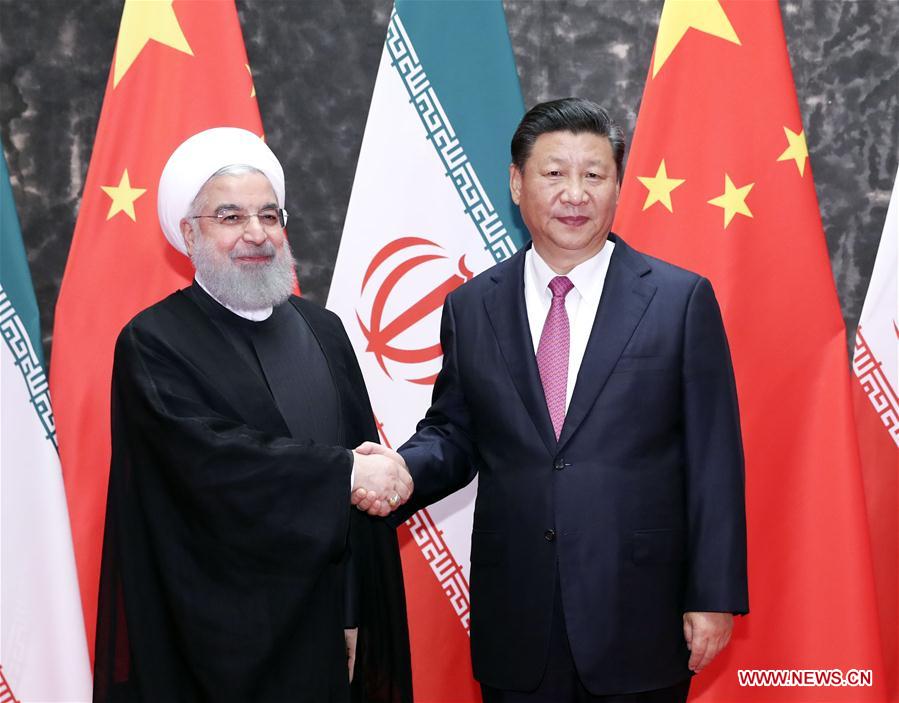
Chinese President Xi Jinping (R) holds talks with his Iranian counterpart Hassan Rouhani in Qingdao, east China’s Shandong Province, June 10, 2018. (Xinhua/Ding Lin) August 31, 2020 By Niranjan Jose The relationship between China and Iran has been in the spotlight recently. A huge, 25-year deal is reportedly being considered that would see $400 billion of Chinese investment in Iranian energy and transport infrastructure. The deal is the latest effort by Beijing to expand from a regional hegemon into a global power through the Belt and Road Initiative (BRI) which aims to reshape regional economic topographies in its favour. Beijing has ostensibly undertaken to make such a massive investment in key sectors of Iran’s economy in return for an assured supply of Iranian fuel for the next 25 years. The proposed investment is the biggest China has ever pledged to any country as a part of the BRI and envisages huge expenditure in building Iran’s...
FOREIGN201909291828000359668581517-kopia
Pepe Escobar August 26, 2020 Let’s start with the story of an incredibly disappearing summit. Every August, the leadership of the Chinese Communist Party (CCP) converges to the town of Beidaihe, a seaside resort some two hours away from Beijing, to discuss serious policies that then coalesce into key planning strategies to be approved at the CCP Central Committee plenary session in October. The Beidaihe ritual was established by none other than Great Helmsman Mao, who loved the town where, not by accident, Emperor Qin, the unifier of China in the 3rd century B.C., kept a palace. 2020 being, so far, a notorious Year of Living Dangerously, it’s no surprise that in the end Beidaihe was nowhere to be seen. Yet Beidaihe’s invisibility does not mean it did not happen. Exhibit 1 was the fact that Premier Li Keqiang simply disappeared from public view for nearly two weeks – after...
Screenshot
August 24, 2020 Michael Wong Vice President of Veterans For Peace, Chapter 69 America vs. China: “A Clash of Civilizations” Hillary Clinton famously said, “’I don’t want my grandchildren to live in a world dominated by the Chinese.”   During his tenure, President Obama launched his “Pivot to Asia,” moving 60% of US naval power to bases surrounding China, developing the Trans Pacific Partnership treaty specifically to economically isolate China, making Air-Sea Battle the official US doctrine explicitly to contain China militarily, and announcing boldly that his aim was to contain China’s economic rise.  Not surprisingly, China reacted with alarm. The Cold War was long over, China’s economic rise was a peaceful one, it had no aggressive intentions towards the US or anyone, and prior to Obama’s “Pivot to Asia,” relations had been stable and tension low, China argued. Such arguments from China, however, were dismissed by US leaders.    Originally published at peacepivot.org...

0-1-4
Gordon Dumoulin July 27, 2020 While most people all over the world are debating the current health, geopolitical, and economic developments in the COVID19-era, the history train has already left the station quite some time ago for a drastic new destination as this era is a transformative time for humanity and earth; whether we like it or not, the train is already moving and shall not stop for a while – hopefully as that would not be good, to say the least. Although each cultural and geopolitical region having their own wagon and nations having their compartments, we are all onboard the same train. While people are discussing if tea or coffee should be served on the train, whether the train should run electrically or on fuel or if and how WIFI should be allowed, few people talk about the train’s destination. However, the destination will be the historical event...
ObergComment_OnSite
Some may remember way back when US President Obama said that the US had now isolated Iran. The only problem was that on the very same day, some 130 leaders from the Non-Aligned Movement, NAM, were meeting in Tehran. The more the US withdraws from international treaties, imposes sanctions, threatens wars and otherwise antagonizes the rest of the world, the more that rest will search – and find – new partners and create a future world order that is not Western- or US-dominated. That’s what Iran is now doing. After sanctions since 1979, verbal harassment, a broken JCPOA (nuclear deal), accusations of being the world’s leading supporter of terrorism, maximal pressure policies, threat of massive war, bombings, liquidation of a top government representative, infiltrations and much else – why on earth should the leaders in Tehran (no matter what you may think about them and their policies) continue to seek...
Xi-Jinping
China has learned from its own rich history and is applying those lessons to re-emerge as a major 21st century power May 20, 2020 Pepe Escobar With hybrid warfare 2.0 against China reaching fever pitch, the New Silk Roads, or Belt and Road Initiative, will continue to be demonized 24/7 as the proverbial evil communist plot for economic and geopolitical domination of the “free” world, boosted by a sinister disinformation campaign.  It’s idle to discuss with simpletons. In the interest of an informed debate, what matters is to find the deeper roots of Beijing’s strategy – what the Chinese learned from their own rich history and how they are applying these lessons as a re-emerging major power in the young 21st century.  Originally published by Asia Times on May 11, 2020, here Let’s start with how East and West used to position themselves at the center of the world.  The first...
Categories

Year

Author / Contributor

Region