Archive 1986 – 2017

Category

Year

Author / Contributor

Region

Sort by

Showing 1-10 of 3510 stories

ObergPhoto2cmB-W-3
Krisen i provinsen Kosovo i det nya Jugoslavien står efter Daytonavtalet åter i fokus. Konflikten är gammal och känsloladdad. Det finns inga bra lösningar. Ändå måste något göras, eftersom alla förlorar på ett krig, som därtill kan spridas till grannländerna. Fredsforskaren Jan Øberg ger här ett konkret förslag på vad det internationella samfundet skulle kunna göra i våldsförebyggande syfte, bland annat genom utplacering av en civil FN-styrka. Förslaget bygger på fyra års arbete och dialog med parterna. Efter Dayton-avtalet om Bosnien har Kosovo-frågan fått ny aktualitet. Kosovo är en region inom Serbien och med många staters, även Sveriges, erkännande av det nya Jugoslavien har man tagit ställning för att så ska det förbli. Kosovo-albanernas moderata, icke-våldspolitik under Dr Ibrahim Rugova, president för den självutropade Republiken Kosova, kommer nu att utsättas för ett ökande tryck; en majoritet av de 2 miljoner albanerna frågar sig varför den utlovade Kosova-republiken förblir en symbol...
ObergPhoto2cmB-W-3
Efter Dayton-aftalen om Bosnien har Kosovo-spørgsmålet fået fornyet aktualitet. Kosovo er en region inden for Serbien og med mange staters, herunder Danmarks, anerkendelse af det nye Jugoslavien har man taget stilling for at det skal den forblive at være. Kosovo-albanernes moderate ikkevoldspolitik under Dr. Ibrahim Rugova, præsident for den selvudråbte republik Kosova, blir nu udsat for et voksende pres: en majoritet af de to millioner albanere spørger sig selv hvorfor den udlovede Kosova-republik forblir et symbol snarere end en realitet. Det kan lede til en omlægning i retning af en mere militant holdning; dén vil serbiske ekstremister vide at udnytte i forhold til præsident Slobodan Milosevic’ moderate politik. Man kan også tænke sig et andet scenario: udviklingen i Bosnien og det internationale samfunds håndtering af den kan efterhånden medføre et sådant pres på Serbien at borgerkrigslignende forhold opstår. I en sådan situation kan albanske og serbiske yderliggående grupper i en...
Imagen-thumbnail-The-Transnational-1
Abolition 2000 Statement April 25, 1995 Statement of the Non-Governmental Organization (NGO) Abolition Caucus at the Nuclear Non-Proliferation Treaty (NPT) Review and Extension Conference A secure and livable world for our children and grandchildren and all future generations requires that we achieve a world free of nuclear weapons and redress the environmental degradation and human suffering that is the legacy of fifty years of nuclear weapons testing and production. Further, the inextricable link between the “peaceful” and warlike uses of nuclear technologies and the threat to future generations inherent in creation and use of long-lived radioactive materials must be recognized. We must move toward reliance on clean, safe, renewable forms of energy production that do not provide the materials for weapons of mass destruction and do not poison the environment for thousands of centuries. The true “inalienable” right is not to nuclear energy, but to life, liberty and security of...
Imagen-thumbnail-The-Transnational-1
By Michel Chossudovsky Professor of Economics at the University of Ottawa and author of The Globalization of Poverty, Impacts of IMF and World Bank Reforms, Third World Network, Penang and Zed Books, London, 1997. The author is also TFF adviser. In preparing the Seattle Millennium meetings, Washington in consultation with Brussels and the WTO in Geneva, is set on weakening and dividing social movements and citizens’ groups which have converged on Seattle from all over the World. Meanwhile, local organisers are busy –together with the FBI and the Seattle Police Department (SPD)– in carefully planning “security arrangements” for the official venue. An extensive police apparatus has been set motion. Special Forces from the FBI, the CIA and other federal agencies will be on the scene. “Trouble-makers” are to be held at bay, well equipped riot police are on hand including Gang Squads and SWAT teams of the Tactical Operations Divisions...
Imagen-thumbnail-The-Transnational-1
Visit to Chiapas This report is based on a visit to San Cristûbal de las Casas and Acteal in the state of Chiapas, in the Mexican Republic, during the month of July of 1999. It accounts for my experience, views and encounters with different sides of the ongoing conflict in this part of the country. To share these observations and conclusions is an attempt to seek peace in Chiapas and a concern for peace in the world. We have to unlearn we are disempowered, realize the importance of our resources and the responsibility we have toward peace as individuals, citizens, researchers, activists, and, most importantly, as human beings. “Our power to empower is perhaps the most important role we can play in the 21st century. The more individuals who feel empowered to work in their own systems for peace and conflict transformation, the closer the world comes to that critical...
Imagen-thumbnail-The-Transnational-1
TFF’s Report from 1992Executive Summary This is an interim report by a conflict-mitigation mission from the Transnational Foundation for Peace and Future Research, TFF, in Lund, Sweden visiting Kosovo* &endash; Prishtina and Mitrovica &endash; for the third time this year, from May 29 to 31, 1992. We conducted a series of interviews with representatives of the Serbian and Albanian communities there and in Belgrade. The report is sent to a number of Nordic and international organizations and individuals, particularly at the UN, as a service to those working with conflict-resolution and humanitarian aid planning. It starts head on with the conflict assesses the risk that it will turn into large-scale warfare and addresses &endash; in an exploratory manner &endash; possible solutions. Furthermore, it describes our impressions from talks with the Kosovan leadership on ways of defining a new type of independent state. The Appendices offer a background to the conflict....
Imagen-thumbnail-The-Transnational-1
Kerstin Schultz, fredsforskare knuten till COPRI i Köpenhamn, har besökt Kroatien tio år efter krigsutbrottet 1991 och rapporterar här i 4 artiklar särskilt om hur kriget bröt ut. Artikel 1 Varför blir det krig? Kroatien år 10 Hur kan det bli krig? Hur uppstår krig? Vad händer med människor i övergången från normalitet och fred till rädsla och krig? Tillsammans med två amerikanska forskare har jag arbetat med frågor om varför det blev krig. De förklaringsmodeller vi vanligtvis använder har ett uppifrån perspektiv och ger inga förklaringar till hur människor som så uppenbart levt tillsammans som vänner och grannar så snabbt kunde bli fiender. Vi studerar krigsutbrottet ur civilbefolkningens perspektiv. Hösten 2001 är jag tillbaka i Pakrac, en liten stad 12 mil sydöst om Zagreb i Kroatien. Det är tio år sedan krigen i Jugoslavien började och många menar att det var här allt började när serbiska polismän i mars...
Imagen-thumbnail-The-Transnational-1
THE GLOBALIZATION OF POVERTYThe late 20th Century will go down in World history as a period of global impoverishment marked by the collapse of productive systems in the developing World, the demise of national institutions and the disintegration of health and educational programs. This “globalization of poverty” –which has largely reversed the achievements of post-war decolonization–, was initiated in the Third World coinciding with the onslaught of the debt crisis. Since the 1990s, it has extended its grip to all major regions of the World including North America, Western Europe, the countries of the former Soviet block and the Newly Industrialised Countries (NICs) of South East Asia and the Far East. In the 1990s, local level famines have erupted in Sub-Saharan Africa, South Asia and parts of Latin America; health clinics and schools have been closed down, hundreds of millions of children have been denied the right to primary education....
ObergPhoto2cmB-W-3
“The US-Iraqi conflict soap-opera is becoming acivilizational tragedy. The cock-fight between Tariq Azizand Richard Butler is pathetic beyond words. The easyargument, held by Washington and its allies and uncriticallypromoted in leading media, is that Iraq must be punished forsuspending cooperation with UNSCOM albeit it continues itwith IAEA. But this whole inspection enterprise is foundedon logical contradictions, and it is intellectually andethically flawed. After years of inspection and sanctions,no solution is in sight, because there can be no solutiondown THIS road. The West never thought of how to end thisconflict, and without a sanctions lifting plan, it’s boundto produce more violence and create ever more hate againstthe Western world,” states Dr. Jan Oberg, director ofTFF. 1) UNSCOM searches not only for weapons of massdestruction but for the capacity to manufacture them. Itlooks for agents, components, research, development andmanufacturing of materials necessary to produce the agents.Potentially every corner of the Iraqi society...

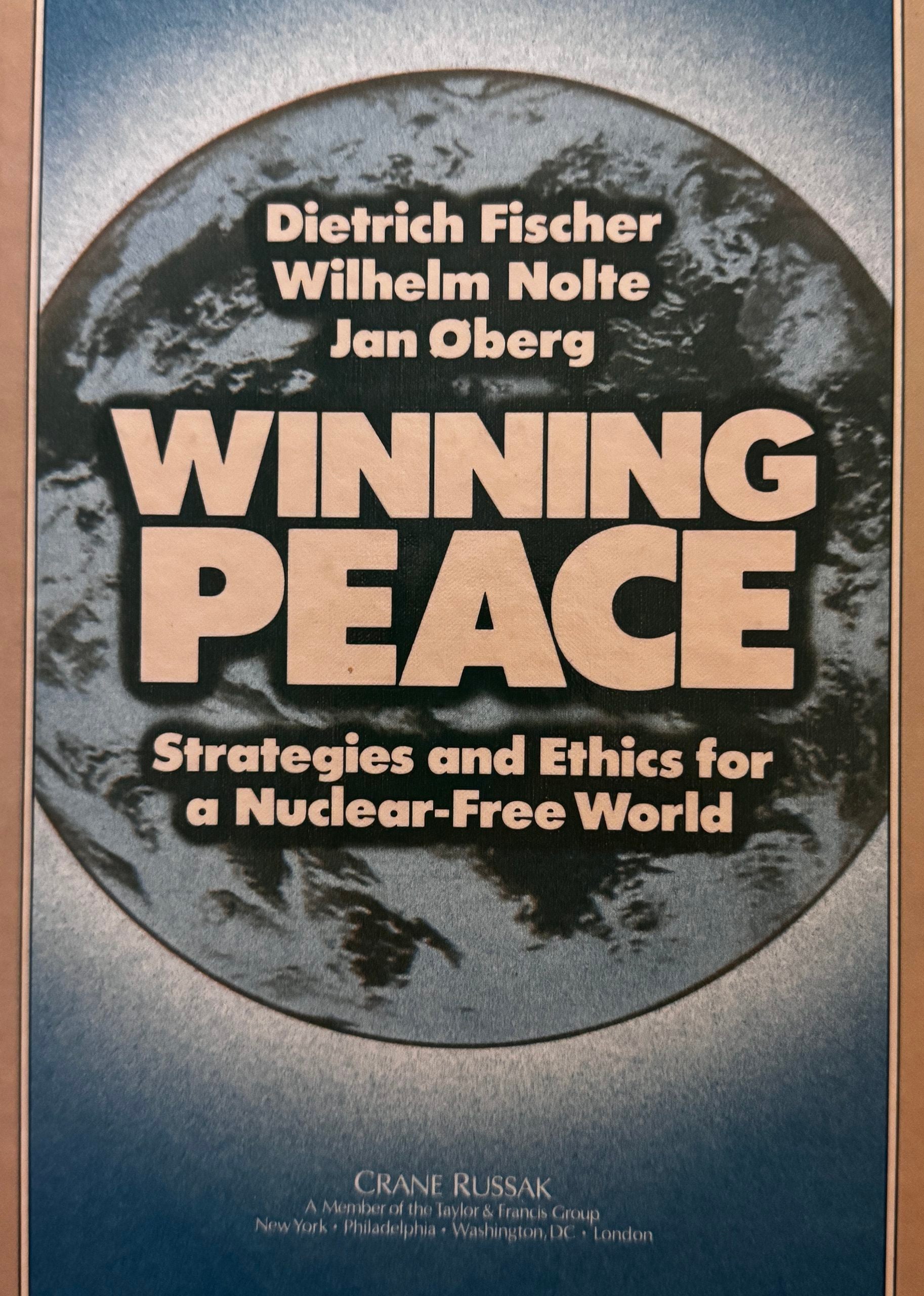
WinningPeace
1989 – book by Fischer, Nolte and Oberg. Amazon: Winning Peace. Strategies and Ethics for a Nuclear-Free World,   Internet Archive: Winning Peace. Strategies and Ethics for a Nuclear-Free World.
Imagen-thumbnail-The-Transnational-1
“The restructuring of global financial markets and institutions has enabled the accumulation of vast amounts of private wealth, a large portion of which has been amassed as a result of strictly speculative transactions. The number of billionaires in the US alone increased from 13 in 1982 to 149 in 1996. The “Global Billionaires Club” (with some 450 members) has a total Worldwide wealth well in excess of the combined GDP of the group of low income countries with 56 percent of the World’s population (Forbes Magazine, International Billionaires, the World’s Richest People, 1997. The data is based on recorded wealth. It tends to grossly underestimate the concentration of global wealth). Family fortunes are in some case in excess of the GDP of countries (for instance, the private wealth of the Walton Family owners of Walmart (27 billion), is of the same order of magnitude as the GDP of Bangladesh with...
ObergPhoto2cmB-W-3
and later associate professor in peace studies (“docent” in Swedish) – was also head of the Lund University Peace Research Institute, LUPRI – succeeding the legendary peace researcher and Lund public figure, Haakan Wiberg (1942-2010). Regrettably, the university’s social science faculty got the – even at the time bizarre – idea to close down all inter-disciplinary units and departments such as environment, human anthropology, gender studies, human rights and peace and conflict research. Neither academic quality nor productivity in terms of courses given, students passing exams, research carried out etc. played any role. The overarching idea was that Lund University should remain a traditional ”discipline university” as it was argued. The decision to close down peace research was also taken because the similar peace research institutions in Gothenburg and Uppsala seem to have had closer connections with the Ministry of Education than the researchers in Lund and had received full...
Categories

Year

Author / Contributor

Region