
Anatol Lieven: For years, Putin did not invade Ukraine. What made him finally snap in 2022?

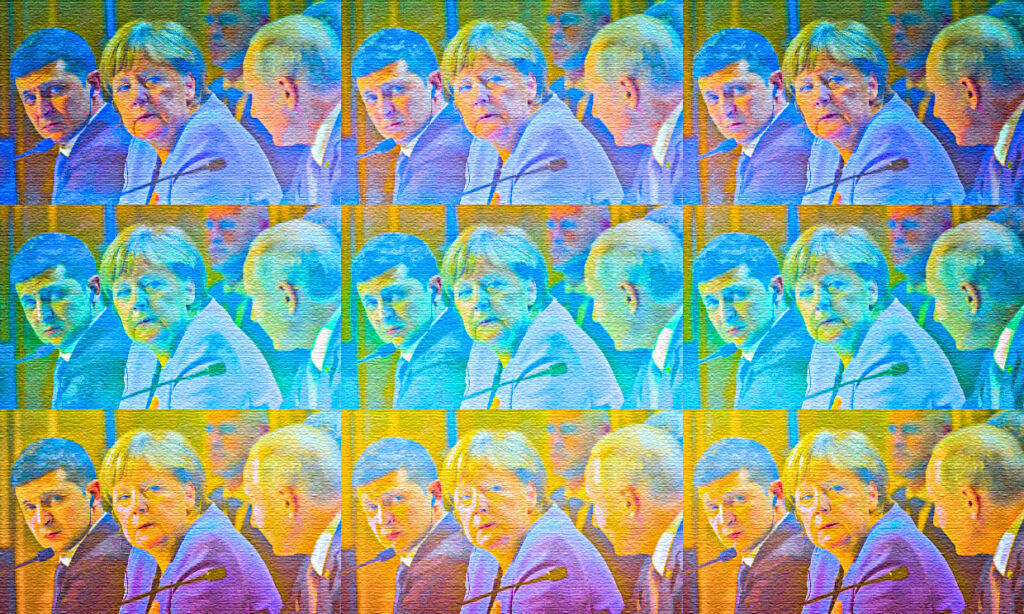
Photo collage by Jan Oberg 2023

Anatol Lieven

March 11, 2023

Why did Vladimir Putin invade Ukraine and try to capture Kyiv in February 2022, and not years earlier? Moscow has always wanted to dominate Ukraine, and Putin has given the reasons for this in his speeches and writings. Why then did he not try to take all or most of the country after the Ukrainian revolution of 2014, rather than only annexing Crimea, and giving limited, semi-covert help to separatists in the Donbas?

On Friday’s one-year anniversary of Russia’s criminal invasion of Ukraine, it is worth thinking about precisely how we got to this point – and where things might be going.

Indeed, Russian hardliners spent years criticising their leader for not invading sooner. In 2014, the Ukrainian army was hopelessly weak; in Viktor Yanukovych, the Russians had a pro-Russian, democratically elected Ukrainian president; and incidents like the killing of pro-Russian demonstrators in Odesa provided a good pretext for action.

This article was originally published by The Guardian on February 24, 2023

The reason for Putin’s past restraint lies in what was a core part of Russian strategy dating back to the 1990s: trying to wedge more distance between Europe and the United States, and ultimately to create a new security order in Europe with Russia as a full partner and respected power. It was always clear that a full-scale invasion of Ukraine would destroy any hope of rapprochement with the western Europeans, driving them for the foreseeable future into the arms of the US. Simultaneously, such a move would leave Russia diplomatically isolated and dangerously dependent on China.

This Russian strategy was correctly seen as an attempt to split the west, and cement a Russian sphere of influence in the states of the former Soviet Union. However, having a European security order with Russia at the table would also have removed the risk of a Russian attack on Nato, the EU, and most likely, Ukraine; and allowed Moscow to exert a looser influence over its neighbours – closer perhaps to the present approach of the US to Central America – rather than gripping them tightly. It was an approach that had roots in Mikhail Gorbachev’s idea – welcomed in the west at the time – of a “common European home”.

At one time, Putin subscribed to this idea. He wrote in 2012 that: “Russia is an inseparable, organic part of Greater Europe, of the wider European civilisation. Our citizens feel themselves to be Europeans.” This vision has now been abandoned in favour of the concept of Russia as a separate “Eurasian civilisation”.

Between 1999, when Putin came to power, and 2020, when Biden was elected president of the US, this Russian strategy experienced severe disappointments, but also enough encouraging signs from Paris and Berlin to keep it alive.

The most systematic Russian attempt to negotiate a new European security order came with the interim presidency of Dmitry Medvedev from 2008 to 2012. With Putin’s approval, he proposed a European security treaty that would have frozen Nato enlargement, effectively ensured the neutrality of Ukraine and other states, and institutionalised consultation on equal terms between Russia and leading western countries. But western states barely even pretended to take these proposals seriously.

In 2014, it appears to have been Chancellor Angela Merkel’s warnings of “massive damage” to Russia and German-Russian relations that persuaded Putin to call a halt to the advance of the Russian-backed separatists in the Donbas. In return, Germany refused to arm Ukraine, and with France, brokered the Minsk 2 agreement, whereby the Donbas would return to Ukraine as an autonomous territory.

In 2016, Russian hopes of a split between western Europe and the United States were revived by the election of Donald Trump – not because of any specific policy, rather because of the strong hostility that he provoked in Europe. But Biden’s election brought the US administration and west European establishments back together again. These years also saw Ukraine refuse to guarantee autonomy for the Donbas, and western failure to put any pressure on Kyiv to do so.

This was accompanied by other developments that made Putin decide to bring matters concerning Ukraine to a head. These included the US-Ukrainian Strategic Partnership of November 2021, which held out the prospect of Ukraine becoming a heavily armed US ally in all but name, while continuing to threaten to retake the Donbas by force.

In recent months, the German and French leaders in 2015, Merkel and François Hollande, have declared that the Minsk 2 agreement on Donbas autonomy was only a manoeuvre on their part to allow the Ukrainians the time to build up their armed forces. This is what Russian hardliners always believed, and by 2022, Putin himself seems to have come to the same conclusion.

Nonetheless, almost until the eve of invasion, Putin continued unsuccessfully to press the French president, Emmanuel Macron, in particular to support a treaty of neutrality for Ukraine and negotiate directly with the separatist leaders in the Donbas. We cannot, of course, say for sure if this would have led Putin to call off the invasion; but since it would have opened up a deep split between Paris and Washington, such a move by Macron might well have revived in Putin’s mind the old and deeply held Russian strategy of trying to divide the west and forge agreement with France and Germany.
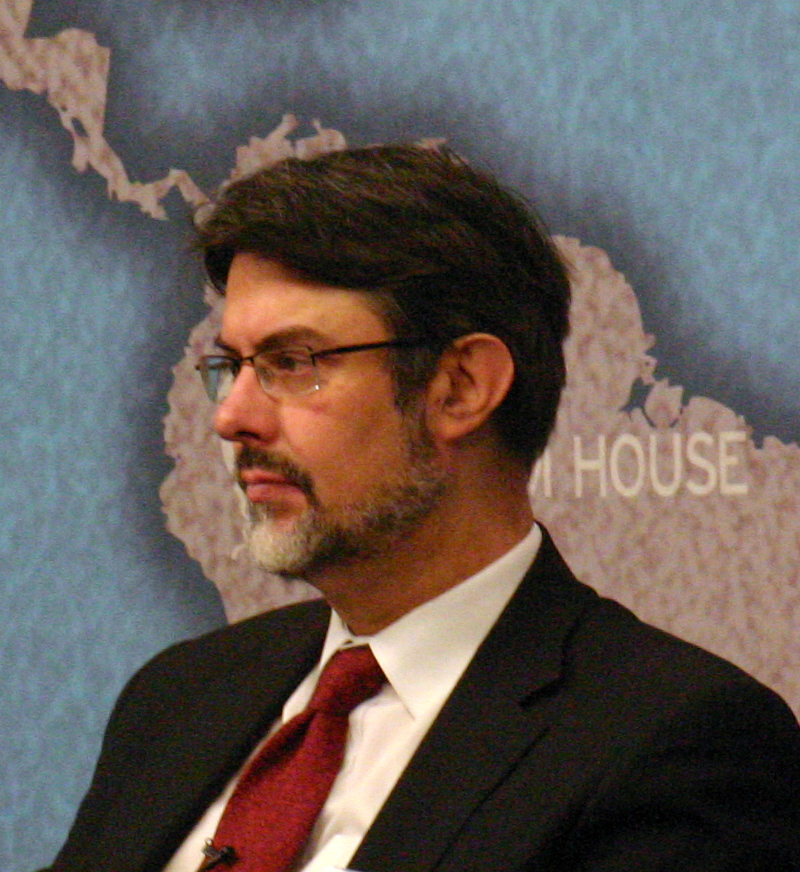
The author and here his homepage

Putin now seems to agree fully with Russian hardline nationalists that no western government can be trusted, and that the west as a whole is implacably hostile to Russia. He remains, however, vulnerable to attack from those same hardliners, both because of the deep incompetence with which the invasion was conducted, and because their charge that he was previously naive about the hopes of rapprochement with Europe appears to have been completely vindicated.

It is from this side, not the Russian liberals, that the greatest threat to his rule now comes; and of course this makes it even more difficult for Putin to seek any peace that does not have some appearance, at least, of Russian victory.

Meanwhile, the Russian invasion and its accompanying atrocities have destroyed whatever genuine sympathy for Russia existed in the French and German establishments. A peaceful and consensual security order in Europe looks very far away. But while Putin and his criminal invasion of Ukraine are chiefly responsible for this, we should also recognise that western and central Europeans also did far too little to try to keep Gorbachev’s dream of a common European home alive.


3 Responses

  1. While I appreciate the points made in the article, it also completely avoids to mention, that NATO had been surging the Ukraine army since 2014 and that days prior to russias invasion, Ukraine had both declared their intention to invade donbass and had substantially increased their bombardment of Donbass in preparation. this both constituted an aggression against the ethnic russians of Donbass and a threat of NATO nazi-dominated proxies completely advanced to Russias border. Hence I must regard the article as blind-sided.

  2. I disagree strongly. Russia tried peaceful means for years before finally observing the strong actions in the Donbass as the Uke forces prepared an attack early February 2022. The Russians were ready and the West kept goading them from late 2021 when Russia made its very reasonable demands to NATO/US for security. Levin repeats the Western lies on “annexation of Crimea”, “Russian invasion and its accompanying atrocities ” which were concocted by Uke sources, “invade Ukraine and try to capture Kyiv ” when that was a feint and a chance for Ukraine to talk, which of course it refused. The Minsk agreements were to be based on talks held by Ukraine with the LPR and DPR, but as we see, the “government” of “free independent democratic Ukraine!!” made no attempt to try, and instead built up troops and fortifications inside the republics which have taken up to now for the Russians to dismantle and try to avoid deaths.

  3. Thanks, and we know also from Ms Merkel that the West saw the Minsk process merely as a way to buy time for Ukraine to arms and fight more down there. I find, however, that there are many valuable points in what Anatol Lieven writes and what he says is a valid counter-statement to virtually all we see in the mainstream media. Let’s not denounce a whole article even though there may be some formulation here or there that neither you nor I agree 100% with. My best – Jan

Related Posts

The MSC’s closed groupthink militarism offers only one prescription — more weapons — even as record military expenditures, squeezed from taxpayers in economic crisis, destroy diplomacy and drive escalation to the highest war risks in decades. Jan Oberg TFF director February 13, 2026 From Dialogue Forum to Militarised Ritual For decades, the Munich Security Conference (MSC) – which opened today and runs till Sunday – was one of the few places where adversaries could meet without theatrics. Founded in 1963 as the Wehrkundetagung, it served as a discreet Cold War dialogue forum between NATO and the Warsaw Pact. Even at moments of high tension, Soviet and later Russian representatives were present, and Munich allowed uncomfortable messages to be delivered directly rather than through press releases or military manoeuvres. That era has vanished. The MSC has become something entirely different: a €13–20 million annual gathering of a closed Western security elite, a polished meeting...
PART 2 — Diplomacy, Law and Nonviolent Power By Jan ObergTFF co-founder and director January 26, 2026 This is the second of four TFF-created idea portfolios designed to curb the global reach of the United States and, in both the short and long term, help catalyse a worldwide nonviolent resistance to what many observers describe as the Trump administration’s uniquely confrontational, destructive and world-threatening policies. These portfolios outline what governments and citizens across the world can do through dynamic diplomacy, creative initiatives, and strictly nonviolent means. They are typical TFF works in that we do not only tell what the problem is and how bad it will go – as 90+% of all commentators, experts and scholars do – we tell what we think can be done, inviting you to think of what you think you can do. It seems painfully clear to me that the current political dynamics in Washington increasingly resemble the most dangerous...
TFF’s comprehensive proposal for dialogue about true peace in Ukraine is due in a day or two Jan Oberg November 20, 2025 What is being whispered through diplomatic corridors today is not peace, but quackery. The alleged 28‑point plan drafted in Washington and Moscow is mentioned as a solution to the Ukraine war. It is being negotiated by US businessman, real estate developer and Trump ally, Steve Witkoff, and by Kirill Dmitriev, who is CEO of the Russian Direct Investment Fund and a close ally of Putin, according to India’s Economic Times. For presumably good reasons, their education, qualifications and experience in international conflict analysis and peace-making remain untold. They look like surgeons who have never opened a medical textbook. It is nothing more than a mirage: a framework of concessions imposed on Ukraine’s citizens, negotiated without Kyiv, and excluding Europe. Like Gaza, it promises “peace” while institutionalising injustice. If half of what is available about...

Recent Articles

Tony Robinson October 4, 2026 Violence is easy to recognise when someone is being beaten, shot or killed. It becomes more difficult when nobody is holding a weapon. Poverty, discrimination, exploitation and repression can restrict a human life just as effectively, although they do so in very different ways and with very different consequences. Simply adding more categories to an ever-growing list of forms of violence does not really solve the problem. The more interesting question is what all these different situations have in common and why it makes sense to describe them using the same word. Human beings do not simply react to what happens around them. They remember the past, imagine things that do not yet exist, make plans and undertake projects. Workers organise because they imagine different working conditions; people migrate because they imagine another life somewhere else; social movements emerge because people refuse to accept the...
It’s a matter of principles, courage, vision and pulling together – while the militarist world is falling apart… Peter Langille October 3, 2026 “Here, then, is the problem which we present to you, stark and dreadful and inescapable: Shall we put an end to the human race; or shall mankind renounce war?”The Bertrand Russell—Albert Einstein Manifesto, July 9, 1955 ⁕ The forecast for what’s ahead is worrisome. The sharp rise in armed conflicts over the past three years is adding to what was already the highest level in over seventy years. Genocides, which should be prevented are supported. A shared climate emergency that jeopardises survival is ignored. Diverse polls now suggest that people are war-weary, worried and interested in a more effective United Nations. And, there are viable policy options for a more secure world! Yet governments are doubling-down, betting on more war and investing heavily. If current trends persist,...
Johan Galtung 1930-2024October 2015 Published here on October 3, 2026 Let us focus on Civilization for conflict analysis and remedies. Major forms of disorder use violence; war is state organized violence. The most belligerent states are the United States of America and Israel, both with civilization roots. National Evangelism, the US Protestant Christian civilization– more national than evangelical–justifies US warfare as exceptionalism of a people chosen by God, with a manifest destiny to run the world. Orthodox Judaism justifies Israeli warfare to conquer and expand from Nile to Euphrates as a religious right and duty to the Eternal One. The third most belligerent country, the UK, no longer believes it is God-chosen but chosen by the USA; not quite the same but something. But the root cause of global disorder lies in the Occident–with Islam–seeing itself as the single, universal civilization valid for all at all times, all others being...

TFF on Substack

Discover and subscribe to more peace materials on TFF Substack

Most Popular

Tony Robinson October 4, 2026 Violence is easy to recognise when someone is being beaten, shot or killed. It becomes more difficult when nobody is holding a weapon. Poverty, discrimination, exploitation and repression can restrict a human life just as effectively, although they do so in very different ways and with very different consequences. Simply adding more categories to an ever-growing list of forms of violence does not really solve the problem. The more interesting question is what all these different situations have in common and why it makes sense to describe them using the same word. Human beings do not simply react to what happens around them. They remember the past, imagine things that do not yet exist, make plans and undertake projects. Workers organise because they imagine different working conditions; people migrate because they imagine another life somewhere else; social movements emerge because people refuse to accept the...
It’s a matter of principles, courage, vision and pulling together – while the militarist world is falling apart… Peter Langille October 3, 2026 “Here, then, is the problem which we present to you, stark and dreadful and inescapable: Shall we put an end to the human race; or shall mankind renounce war?”The Bertrand Russell—Albert Einstein Manifesto, July 9, 1955 ⁕ The forecast for what’s ahead is worrisome. The sharp rise in armed conflicts over the past three years is adding to what was already the highest level in over seventy years. Genocides, which should be prevented are supported. A shared climate emergency that jeopardises survival is ignored. Diverse polls now suggest that people are war-weary, worried and interested in a more effective United Nations. And, there are viable policy options for a more secure world! Yet governments are doubling-down, betting on more war and investing heavily. If current trends persist,...
Johan Galtung 1930-2024October 2015 Published here on October 3, 2026 Let us focus on Civilization for conflict analysis and remedies. Major forms of disorder use violence; war is state organized violence. The most belligerent states are the United States of America and Israel, both with civilization roots. National Evangelism, the US Protestant Christian civilization– more national than evangelical–justifies US warfare as exceptionalism of a people chosen by God, with a manifest destiny to run the world. Orthodox Judaism justifies Israeli warfare to conquer and expand from Nile to Euphrates as a religious right and duty to the Eternal One. The third most belligerent country, the UK, no longer believes it is God-chosen but chosen by the USA; not quite the same but something. But the root cause of global disorder lies in the Occident–with Islam–seeing itself as the single, universal civilization valid for all at all times, all others being...
Read More
Living-Peace-Sign-Budapest-copy
Tony Robinson October 4, 2026 Violence is easy to recognise when someone is being beaten, shot or killed. It becomes more difficult when nobody is holding a weapon. Poverty, discrimination, exploitation and repression can restrict a human life just as effectively, although they do so in very different ways and with very different consequences. Simply adding more categories to an ever-growing list of forms of violence does not really solve the problem. The more interesting question is what all these different situations have in common and why it makes sense to describe them using the same word. Human beings do not simply react to what happens around them. They remember the past, imagine things that do not yet exist, make plans and undertake projects. Workers organise because they imagine different working conditions; people migrate because they imagine another life somewhere else; social movements emerge because people refuse to accept the...
b54a1f10-8c65-4f0b-9dd5-4abc0a7d04cc_2659x2659
It’s a matter of principles, courage, vision and pulling together – while the militarist world is falling apart… Peter Langille October 3, 2026 “Here, then, is the problem which we present to you, stark and dreadful and inescapable: Shall we put an end to the human race; or shall mankind renounce war?”The Bertrand Russell—Albert Einstein Manifesto, July 9, 1955 ⁕ The forecast for what’s ahead is worrisome. The sharp rise in armed conflicts over the past three years is adding to what was already the highest level in over seventy years. Genocides, which should be prevented are supported. A shared climate emergency that jeopardises survival is ignored. Diverse polls now suggest that people are war-weary, worried and interested in a more effective United Nations. And, there are viable policy options for a more secure world! Yet governments are doubling-down, betting on more war and investing heavily. If current trends persist,...
010
Johan Galtung 1930-2024October 2015 Published here on October 3, 2026 Let us focus on Civilization for conflict analysis and remedies. Major forms of disorder use violence; war is state organized violence. The most belligerent states are the United States of America and Israel, both with civilization roots. National Evangelism, the US Protestant Christian civilization– more national than evangelical–justifies US warfare as exceptionalism of a people chosen by God, with a manifest destiny to run the world. Orthodox Judaism justifies Israeli warfare to conquer and expand from Nile to Euphrates as a religious right and duty to the Eternal One. The third most belligerent country, the UK, no longer believes it is God-chosen but chosen by the USA; not quite the same but something. But the root cause of global disorder lies in the Occident–with Islam–seeing itself as the single, universal civilization valid for all at all times, all others being...
Screenshot 2026-10-02 011738
Jan ObergPhD, director, The Transnational Foundation for Peace and Future Research, TFFLund, Sweden October 2, 2026 This is my full original manuscript. The Chinese Academy of Social Science, CASS, makes two publications out if it. 1. China’s Five-year plan emphasized the capabilities of basic research and original innovation. It is regarded as the goal of the future social development, which, as required, should be significantly enhanced. Can you comment on the importance of original innovation in research and academic study? I believe it is easier to define “original innovation” in the natural sciences than in social sciences. The breaking points of what constitutes something new, or innovative, are not quite as sharp in the latter. But in both fields it is about opening up something that was closed, unseen, unexplored before – making manifest what was earlier latent. Innovations come in many forms and shapes – naming something that was not...
arctic-circle-map
The agreement is catastrophic both because of what it says and what it doesn’t mention. It reduces further the major asset of security policies: Freedom of action. Jan Oberg TFF director September 25, 2026 A couple of hours before the agreement was signed on September 22, 2026, I published the following 13 hypotheses about what it would most likely contain on TFF Substack (in English). I was wrong on only the first point. Contrary to what Trump had written on his Truth Social platform, it does not appear to come into force immediately. In fact, it turned out to be worse than even I had anticipated. After these hypotheses now come a number of reflections in light of what the agreement actually contains, and does not contain, as well as the way in which it has generally been presented by major media outlets and by the public-service broadcaster DR. My...
girl-5894831_1280
Below are TFF-related media mentions, comments, videos and social media posts published elsewhere but not on this homepage. We happen to catch and list only a fraction. Regarding video comments and debates, we recommend that you go to the TFF Video Channel on Substack where many of them are reproduced. Jan Oberg is a contributor to China Daily – 52 million daily clicks – and Global Times, CGTN and CCTV (the national television), China Investment, Xinhua News Agency and several others. Articles and videos on these media very often multiply into countless Chinese (and Western media) that re-post them from these main media. Thanks to The China Academy, his analyses, interviews and comments are frequently posted on YouTube channels such as Thinkers Forum and Wave Media. These videos are often re-posted on Bilibili (China’s YouTube), the China Content Center on TikTok, and on the Chinese edition of TikTok, Douyin.com. This means reaching hundreds of millions of viewers worldwide over a year. While there are too many to catch on all these...



