
The Munich ‘Security’ Conference (MSC) – the West’s premier – has become a €20‑Million militarist echo chamber

The MSC’s closed groupthink militarism offers only one prescription — more weapons — even as record military expenditures, squeezed from taxpayers in economic crisis, destroy diplomacy and drive escalation to the highest war risks in decades.

Jan Oberg

TFF director

February 13, 2026

From Dialogue Forum to Militarised Ritual

For decades, the Munich Security Conference (MSC) – which opened today and runs till Sunday – was one of the few places where adversaries could meet without theatrics. Founded in 1963 as the Wehrkundetagung, it served as a discreet Cold War dialogue forum between NATO and the Warsaw Pact. Even at moments of high tension, Soviet and later Russian representatives were present, and Munich allowed uncomfortable messages to be delivered directly rather than through press releases or military manoeuvres.

That era has vanished. The MSC has become something entirely different: a €13–20 million annual gathering of a closed Western security elite, a polished meeting of governments, defence industries, major media and aligned think tanks, all wrapped in the language of dialogue but operating as a self‑reinforcing militarist echo chamber. It is the Military-Industrial-Media Academic Complex, MIMAC, that meets here.

•

A €20‑Million Structure That Predetermines Its Outcome

The MSC’s financing reveals its orientation more clearly than any mission statement. Roughly €5–7 million comes from the German federal government; €6–10 million from corporate sponsors, including major defence and security companies; and €2–3 million from foundations and institutional partners.

When governments and arms‑industry actors are the primary funders, the gravitational pull inevitably shifts toward military‑centric definitions of security, technological solutions, alliance cohesion and deterrence doctrines, while peacebuilding, conflict transformation, diplomacy, mediation and non‑military approaches — which lack comparable financial backers — quietly disappear from the agenda.

In consequence, the MSC will be devoid of free thinking, alternative non-military security measures and every vision of a better world.

•

Speaking About the World, Not With It

The MSC’s agenda is curated by a tight circle of leadership, advisory‑council members, government partners, corporate sponsors and security‑aligned think tanks. Each layer reinforces the others, producing a remarkably coherent worldview in which the same actors define the problems, propose the solutions and moderate the discussions.

Panels are dominated by Western officials, military leaders and analysts funded by the same governments and industries that support the MSC; moderators from major Western media outlets reinforce prevailing assumptions rather than interrogating them.

The result is predictable: panels on Russia without Russians; panels on China with only one Chinese representative (its foreign minister whose different perspectives are hardly ever quoted by Western media); panels on peace without peace researchers; panels on the Global South without Global South voices.

Thanks to remarkable intellectual inbreeding, the MSC increasingly speaks about adversaries, about diplomacy, about peace — but not with the actors concerned, nor with those who work professionally on conflict resolution, least of all the UN.

This is an intentional architecture crafted by the congregation of the NATO Church, and so it is only logical that its former Secretary‑General, Jens Stoltenberg, now takes over as its presiding priest.

•

The Only Prescription: More Weapons

Across the MSC, the policy prescriptions are strikingly uniform: more weapons, stronger deterrence, longer‑range strike capabilities, higher military spending, deeper alliance integration.

The logic is circular: insecurity is met with more armament, which produces more insecurity, which justifies more armament. Offensive long‑range deterrence is a 100 percent predictable insecurity generator, because the opponent sees it as a threat, not reassurance – no matter your argument that you have no bad intentions.

Furthermore, the world has never spent more on weaponry than it does today, yet the objective risk of a major war is rising, not falling. Citizens facing economic crises are told to pay through their noses for “security” that demonstrably increases their risk.

In any rational forum, someone would stand up and say: Something must be wrong: let us stop and think. At Munich, no one does.

The Kabuki theatre must continue. Remember, anyone can start a fight in a bar – or a war – but it requires a few capacities to avoid war and create peaceful coexistence.

•

From Dialogue to Narrative Consolidation

Since the Obama-orchestrated Maidan regime-change in Kiev on 22 February 2014 and Russia’s Crimea annexation of 18 March 2014, the MSC has steadily closed the door on dialogue with Russia — a far cry from 2007 when Putin gave his now historic low-key speech in which he asked what had happened to the promises given to Gorbachev about not expanding NATO one inch.

The MSC has aligned itself fully with the strategic posture of NATO and the EU. Dialogue with adversaries has been replaced by discussions about adversaries; panels on Russia or China are framed entirely through Western threat lenses; and the conference has become a stage where governments, industries, media and aligned academics reinforce a single worldview that defines security almost exclusively in military terms and is unable to see the larger world and its opportunities.

The tragedy is not that the MSC has a perspective; the tragedy is that it has only one. And it is anything but trust, confidence, conflict-resolution and peace.

•

The Missing Counterpart: A Global Peace Conference

The MSC’s official prominence and media attention highlights a deeper structural absence: there is no equivalent high‑level forum for peace. No annual gathering where peace researchers, mediators, peace workers, conflict‑resolution practitioners, civil society, Global South voices, non‑aligned states and humanitarian actors and people of culture meet to explore non‑military approaches to security.

The most unrealistic and debunked assumption is that security is about arms and more arms lead to more stability, security and peace – the mantra of the NATO Church, no matter what the alliance does, including violating it own treaty 24/7 since bombing Yugoslavia in 1999.

There is no €20‑million (or cheaper) platform for diplomacy, prevention, reconciliation or structural peacebuilding; no global stage where peace is treated with the same seriousness, resources and media attention as deterrence, rearmament and unlimited militarist thinking.

The imbalance is not accidental; it reflects political priorities and the MIMAC‑shaped worldview that now dominates Western security thinking.

It is dead dangerous for you and me – in substance and because of its own self-affirming blindness.

•

Understanding Munich for What It Has Become

The Munich Security Conference no longer functions as a platform for dialogue between adversaries or as a space for exploring diverse approaches to security. Instead, it has become a high‑profile meeting point for a closed security groupthink — a place where elite interests converge, narratives are synchronised and the boundaries of acceptable discourse are tightly managed.

It is time understand it honestly. It is time for free media (if they still exist) to have a critical perspective. Will they, or have they been co-opted completely?

Until someone invests in a serious, well‑funded, global peace conference — something with the scale, visibility and ambition of Munich — the imbalance will remain. And so will the risks of warfare.

Perhaps it is time for BRICS, the Belt & Road Initiative, a coalition of peace-willing in cooperation with the United Nations and non-Western regions and actors – governments and citizens – to arrange a conference for true peace and human security where the military dimension has its proper – minimal – place.

We must never accept that violence becomes the first resort. It should always be the last resort after everything else has been tried and found in vain.

•

P.S. A conference that invites María Corina Machado to speak about Venezuela, Lindsey Graham to speak about Russia, Tony Blair to speak about peace, and uses only conservative Western media as moderators, documents not global security thinking but the intellectual and ethical disarmament of a declining West and – who knows? – a disintegrating EU and NATO.
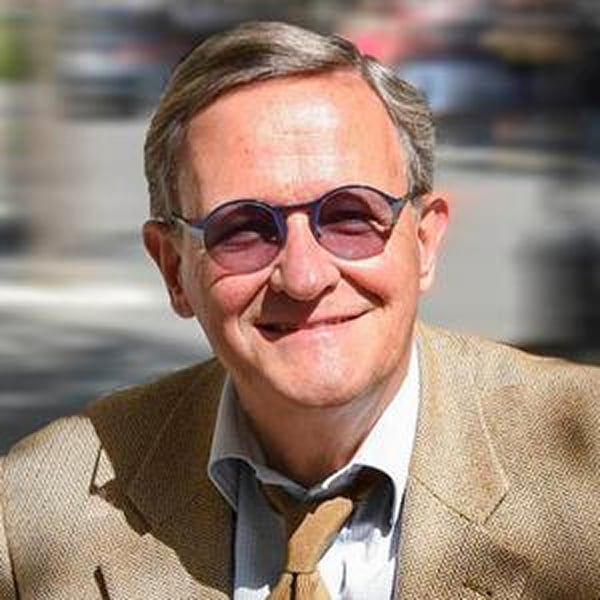

Peace & future researcher + ‌Art Photographer

Related Posts

It’s a matter of principles, courage, vision and pulling together – while the militarist world is falling apart… Peter Langille October 3, 2026 “Here, then, is the problem which we present to you, stark and dreadful and inescapable: Shall we put an end to the human race; or shall mankind renounce war?”The Bertrand Russell—Albert Einstein Manifesto, July 9, 1955 ⁕ The forecast for what’s ahead is worrisome. The sharp rise in armed conflicts over the past three years is adding to what was already the highest level in over seventy years. Genocides, which should be prevented are supported. A shared climate emergency that jeopardises survival is ignored. Diverse polls now suggest that people are war-weary, worried and interested in a more effective United Nations. And, there are viable policy options for a more secure world! Yet governments are doubling-down, betting on more war and investing heavily. If current trends persist,...
Johan Galtung 1930-2024October 2015 Published here on October 3, 2026 Let us focus on Civilization for conflict analysis and remedies. Major forms of disorder use violence; war is state organized violence. The most belligerent states are the United States of America and Israel, both with civilization roots. National Evangelism, the US Protestant Christian civilization– more national than evangelical–justifies US warfare as exceptionalism of a people chosen by God, with a manifest destiny to run the world. Orthodox Judaism justifies Israeli warfare to conquer and expand from Nile to Euphrates as a religious right and duty to the Eternal One. The third most belligerent country, the UK, no longer believes it is God-chosen but chosen by the USA; not quite the same but something. But the root cause of global disorder lies in the Occident–with Islam–seeing itself as the single, universal civilization valid for all at all times, all others being...
Jan ObergPhD, director, The Transnational Foundation for Peace and Future Research, TFFLund, Sweden October 2, 2026 This is my full original manuscript. The Chinese Academy of Social Science, CASS, makes two publications out if it. 1. China’s Five-year plan emphasized the capabilities of basic research and original innovation. It is regarded as the goal of the future social development, which, as required, should be significantly enhanced. Can you comment on the importance of original innovation in research and academic study? I believe it is easier to define “original innovation” in the natural sciences than in social sciences. The breaking points of what constitutes something new, or innovative, are not quite as sharp in the latter. But in both fields it is about opening up something that was closed, unseen, unexplored before – making manifest what was earlier latent. Innovations come in many forms and shapes – naming something that was not...

Recent Articles

Tony Robinson October 4, 2026 Violence is easy to recognise when someone is being beaten, shot or killed. It becomes more difficult when nobody is holding a weapon. Poverty, discrimination, exploitation and repression can restrict a human life just as effectively, although they do so in very different ways and with very different consequences. Simply adding more categories to an ever-growing list of forms of violence does not really solve the problem. The more interesting question is what all these different situations have in common and why it makes sense to describe them using the same word. Human beings do not simply react to what happens around them. They remember the past, imagine things that do not yet exist, make plans and undertake projects. Workers organise because they imagine different working conditions; people migrate because they imagine another life somewhere else; social movements emerge because people refuse to accept the...
It’s a matter of principles, courage, vision and pulling together – while the militarist world is falling apart… Peter Langille October 3, 2026 “Here, then, is the problem which we present to you, stark and dreadful and inescapable: Shall we put an end to the human race; or shall mankind renounce war?”The Bertrand Russell—Albert Einstein Manifesto, July 9, 1955 ⁕ The forecast for what’s ahead is worrisome. The sharp rise in armed conflicts over the past three years is adding to what was already the highest level in over seventy years. Genocides, which should be prevented are supported. A shared climate emergency that jeopardises survival is ignored. Diverse polls now suggest that people are war-weary, worried and interested in a more effective United Nations. And, there are viable policy options for a more secure world! Yet governments are doubling-down, betting on more war and investing heavily. If current trends persist,...
Johan Galtung 1930-2024October 2015 Published here on October 3, 2026 Let us focus on Civilization for conflict analysis and remedies. Major forms of disorder use violence; war is state organized violence. The most belligerent states are the United States of America and Israel, both with civilization roots. National Evangelism, the US Protestant Christian civilization– more national than evangelical–justifies US warfare as exceptionalism of a people chosen by God, with a manifest destiny to run the world. Orthodox Judaism justifies Israeli warfare to conquer and expand from Nile to Euphrates as a religious right and duty to the Eternal One. The third most belligerent country, the UK, no longer believes it is God-chosen but chosen by the USA; not quite the same but something. But the root cause of global disorder lies in the Occident–with Islam–seeing itself as the single, universal civilization valid for all at all times, all others being...

TFF on Substack

Discover and subscribe to more peace materials on TFF Substack

Most Popular

Tony Robinson October 4, 2026 Violence is easy to recognise when someone is being beaten, shot or killed. It becomes more difficult when nobody is holding a weapon. Poverty, discrimination, exploitation and repression can restrict a human life just as effectively, although they do so in very different ways and with very different consequences. Simply adding more categories to an ever-growing list of forms of violence does not really solve the problem. The more interesting question is what all these different situations have in common and why it makes sense to describe them using the same word. Human beings do not simply react to what happens around them. They remember the past, imagine things that do not yet exist, make plans and undertake projects. Workers organise because they imagine different working conditions; people migrate because they imagine another life somewhere else; social movements emerge because people refuse to accept the...
It’s a matter of principles, courage, vision and pulling together – while the militarist world is falling apart… Peter Langille October 3, 2026 “Here, then, is the problem which we present to you, stark and dreadful and inescapable: Shall we put an end to the human race; or shall mankind renounce war?”The Bertrand Russell—Albert Einstein Manifesto, July 9, 1955 ⁕ The forecast for what’s ahead is worrisome. The sharp rise in armed conflicts over the past three years is adding to what was already the highest level in over seventy years. Genocides, which should be prevented are supported. A shared climate emergency that jeopardises survival is ignored. Diverse polls now suggest that people are war-weary, worried and interested in a more effective United Nations. And, there are viable policy options for a more secure world! Yet governments are doubling-down, betting on more war and investing heavily. If current trends persist,...
Johan Galtung 1930-2024October 2015 Published here on October 3, 2026 Let us focus on Civilization for conflict analysis and remedies. Major forms of disorder use violence; war is state organized violence. The most belligerent states are the United States of America and Israel, both with civilization roots. National Evangelism, the US Protestant Christian civilization– more national than evangelical–justifies US warfare as exceptionalism of a people chosen by God, with a manifest destiny to run the world. Orthodox Judaism justifies Israeli warfare to conquer and expand from Nile to Euphrates as a religious right and duty to the Eternal One. The third most belligerent country, the UK, no longer believes it is God-chosen but chosen by the USA; not quite the same but something. But the root cause of global disorder lies in the Occident–with Islam–seeing itself as the single, universal civilization valid for all at all times, all others being...
Read More
Living-Peace-Sign-Budapest-copy
Tony Robinson October 4, 2026 Violence is easy to recognise when someone is being beaten, shot or killed. It becomes more difficult when nobody is holding a weapon. Poverty, discrimination, exploitation and repression can restrict a human life just as effectively, although they do so in very different ways and with very different consequences. Simply adding more categories to an ever-growing list of forms of violence does not really solve the problem. The more interesting question is what all these different situations have in common and why it makes sense to describe them using the same word. Human beings do not simply react to what happens around them. They remember the past, imagine things that do not yet exist, make plans and undertake projects. Workers organise because they imagine different working conditions; people migrate because they imagine another life somewhere else; social movements emerge because people refuse to accept the...
b54a1f10-8c65-4f0b-9dd5-4abc0a7d04cc_2659x2659
It’s a matter of principles, courage, vision and pulling together – while the militarist world is falling apart… Peter Langille October 3, 2026 “Here, then, is the problem which we present to you, stark and dreadful and inescapable: Shall we put an end to the human race; or shall mankind renounce war?”The Bertrand Russell—Albert Einstein Manifesto, July 9, 1955 ⁕ The forecast for what’s ahead is worrisome. The sharp rise in armed conflicts over the past three years is adding to what was already the highest level in over seventy years. Genocides, which should be prevented are supported. A shared climate emergency that jeopardises survival is ignored. Diverse polls now suggest that people are war-weary, worried and interested in a more effective United Nations. And, there are viable policy options for a more secure world! Yet governments are doubling-down, betting on more war and investing heavily. If current trends persist,...
010
Johan Galtung 1930-2024October 2015 Published here on October 3, 2026 Let us focus on Civilization for conflict analysis and remedies. Major forms of disorder use violence; war is state organized violence. The most belligerent states are the United States of America and Israel, both with civilization roots. National Evangelism, the US Protestant Christian civilization– more national than evangelical–justifies US warfare as exceptionalism of a people chosen by God, with a manifest destiny to run the world. Orthodox Judaism justifies Israeli warfare to conquer and expand from Nile to Euphrates as a religious right and duty to the Eternal One. The third most belligerent country, the UK, no longer believes it is God-chosen but chosen by the USA; not quite the same but something. But the root cause of global disorder lies in the Occident–with Islam–seeing itself as the single, universal civilization valid for all at all times, all others being...
Screenshot 2026-10-02 011738
Jan ObergPhD, director, The Transnational Foundation for Peace and Future Research, TFFLund, Sweden October 2, 2026 This is my full original manuscript. The Chinese Academy of Social Science, CASS, makes two publications out if it. 1. China’s Five-year plan emphasized the capabilities of basic research and original innovation. It is regarded as the goal of the future social development, which, as required, should be significantly enhanced. Can you comment on the importance of original innovation in research and academic study? I believe it is easier to define “original innovation” in the natural sciences than in social sciences. The breaking points of what constitutes something new, or innovative, are not quite as sharp in the latter. But in both fields it is about opening up something that was closed, unseen, unexplored before – making manifest what was earlier latent. Innovations come in many forms and shapes – naming something that was not...
arctic-circle-map
The agreement is catastrophic both because of what it says and what it doesn’t mention. It reduces further the major asset of security policies: Freedom of action. Jan Oberg TFF director September 25, 2026 A couple of hours before the agreement was signed on September 22, 2026, I published the following 13 hypotheses about what it would most likely contain on TFF Substack (in English). I was wrong on only the first point. Contrary to what Trump had written on his Truth Social platform, it does not appear to come into force immediately. In fact, it turned out to be worse than even I had anticipated. After these hypotheses now come a number of reflections in light of what the agreement actually contains, and does not contain, as well as the way in which it has generally been presented by major media outlets and by the public-service broadcaster DR. My...
girl-5894831_1280
Below are TFF-related media mentions, comments, videos and social media posts published elsewhere but not on this homepage. We happen to catch and list only a fraction. Regarding video comments and debates, we recommend that you go to the TFF Video Channel on Substack where many of them are reproduced. Jan Oberg is a contributor to China Daily – 52 million daily clicks – and Global Times, CGTN and CCTV (the national television), China Investment, Xinhua News Agency and several others. Articles and videos on these media very often multiply into countless Chinese (and Western media) that re-post them from these main media. Thanks to The China Academy, his analyses, interviews and comments are frequently posted on YouTube channels such as Thinkers Forum and Wave Media. These videos are often re-posted on Bilibili (China’s YouTube), the China Content Center on TikTok, and on the Chinese edition of TikTok, Douyin.com. This means reaching hundreds of millions of viewers worldwide over a year. While there are too many to catch on all these...




