
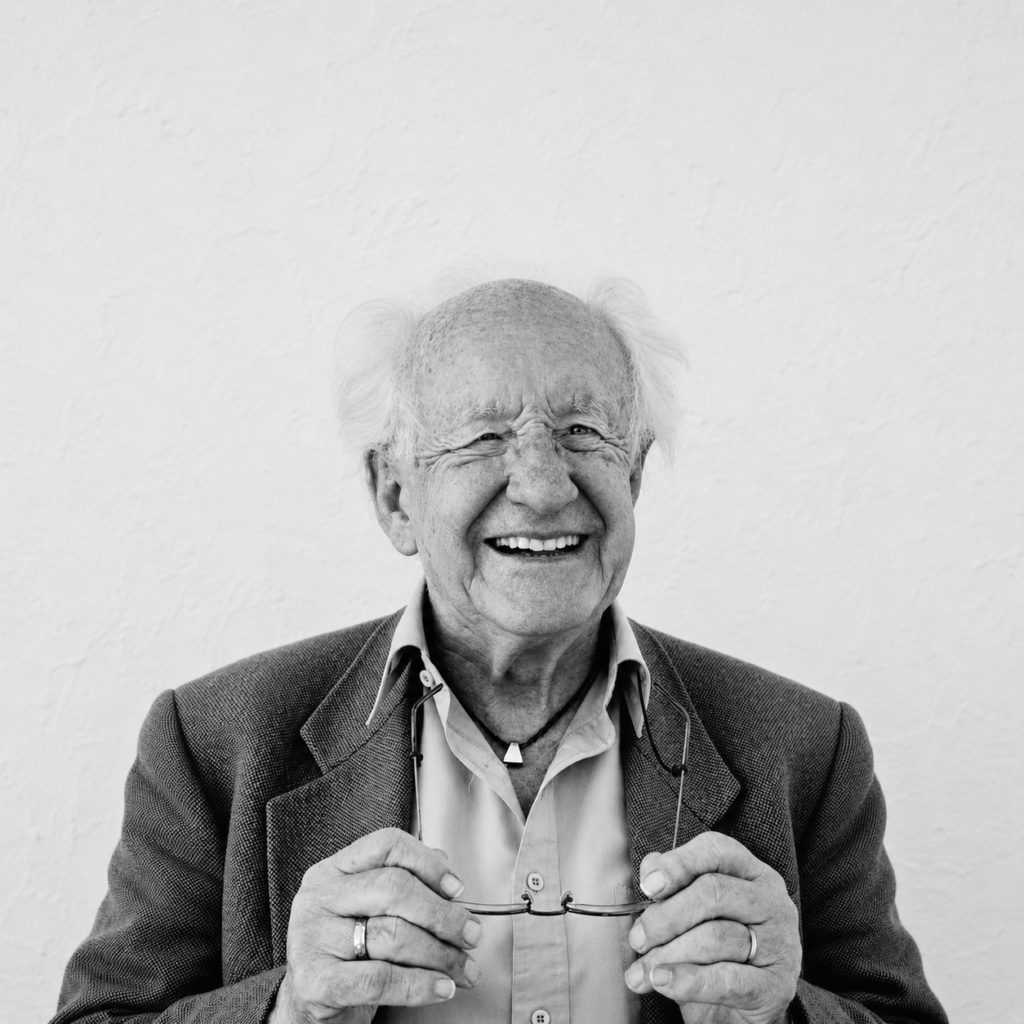
Today marks the 15th Anniversary of the US invasion of Iraq.
Neither solid analyses, moral reasoning and decent argument nor history’s probably largest pre-war, anti-war demonstrations worldwide had any discernible impact on the Bush and Blair Administrations’ decision to go to war and do so on a false pretext. Neither could major allies like France and Germany by their opposition to the war on Iraq persuade Washington and London to first try a peaceful resolution in accordance with the UN Charter provisions.
TFF was deeply engaged in preventing this war – also by being on the ground in Iraq – and wants to a) document the research we did and how we argued back then and b) contribute to this tragedy never being forgotten.
We also want to place our analyses and debate articles at the disposal – in one place – of the students, researchers, concerned citizens and others who are willing to spend the time and energy in understanding it more in depth and from a peace and conflict-resolution perspective – which is still far from known in the public debate, politics and media.
We are not – out of what would be false, misplaced modesty – seeking to hide the fact that we made a much more comprehensive conflict analysis and produced much better predictions than the intelligence services, foreign ministries and foreign policy institutes of Western interventionist governments and, grosso modo, the Western mainstream media and their commentator experts (few of whom had, of course, ever set foot on Iraq’s dry soil).
In short, there were alternative modes of understanding back then – and there are in today’s wars too. It would have been possible to solve the conflicts without causing the unspeakable human suffering we see still today – as would the later conflicts.
Wars take place because somebody wants them to be fought for this or that reason – and never the reasons offered to the public. And while wars may also sometimes be seen as mistakes, as wrong means-end calculations – repeated wars are not mistakes.
They are produced by elites who benefit from them being fought and who turn warfare into their nation’s lifestyle, or addiction.
Photo © Jan Oberg: The little boy was photographed in 2002 in the book market of old Baghdad. He must be about 20 years old today. If he is still alive. From the Iraq Photo Series
The invasion, occupation, mismanagement and the 13 years of sanctions destroyed large parts of an ancient civilisation and took the lives of about 1 million people. How many have been wounded in their body and souls? How many have committed suicide during these 15 years? How many became clinically traumatized? How many will hate the US and other West for the rest of their lives?
Well, who knows?
We only know that the whole interventionist, militarist enterprise achieved none of its official goals – deliberately deceptive as they were – outlined as helping to bring about democracy, freedom, development, human rights, the liberation of women – and, of course, stabilisation and peace.
This invasion killed many more innocent Iraqis than Saddam Hussein had ever managed to kill. The one thing morally corrupt Western leaders have argued ever since is of course “that we did get rid of the dictator.” The human, social and cultural price for that – minor – achievement was totally out of proportion of any possible legal and moral consideration, devoid as it also was of a need for a fair trial or any other fairness. And they built on the conflict illiterate assumption that conflicts are mainly about individuals.
Additionally, the way it was done built on the a culturally arrogant right to limitless killing in a foreign land – and deliberately of innocent civilians who were already sitting inside Saddam’s cage.
There are words for that: Terrorism – state terrorism. Racism and de-humanisation.
Like is usually stated about Hiroshima and Nagasaki: It must never be forgotten and never repeated.
Tragically, it already has in Libya from 2011 and in Syria from the same year. And the war on Afghanistan – 10/7 in unjustified response to 9/11 – is still on, no exit strategy and no end to the misery in sight.
The United States of today seems constitutionally unable to learn anything from its own history, its failures and deliberate mass killing wars and will, eventually, therefore consume itself in geopolitical overreach and addiction to the militarism that already President Eisenhower warned against and which, in the shape of the much more cancer-like US MIMAC – Military-Industrial-Media-Academic Complex, dominates US foreign policy and undermines, bit-by-bit, what good the US has stood for since 1945 in the eyes of the world.
• •
conducted
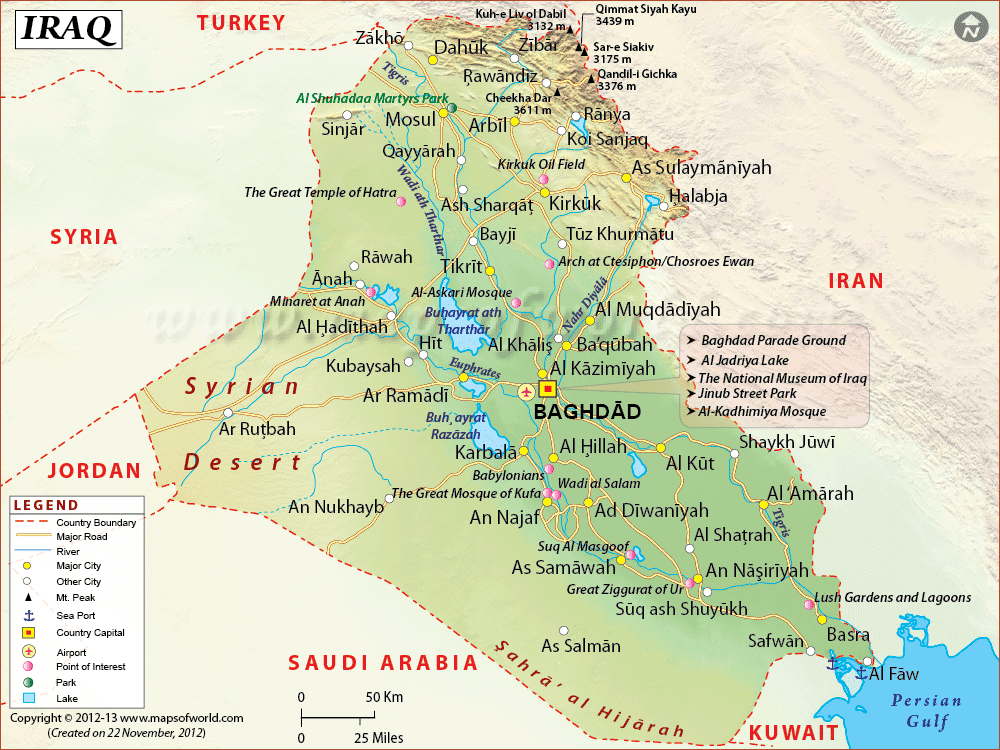
TFF did two fact-finding mission before the war – in 2002 and 2003, the latter ending less than a month before the invasion. We conducted about 165 interviews in Baghdad, Babylon and Basra in the south and with top officials of the UNIKOM mission at the demilitarized zone at the border between Iraq and Kuwait.
We talked with high-level politicians, 5 hours with Number Three man in the system, Dr Tariq Aziz, with Saddam’s primary weapons adviser and liaison with the international missions, Parliamentarians, Baath Party officials, CSOs – civil society organisations, and one intellectual in house arrest. We interviewed the heads of all UN missions present. And we were generously invited to give lectures at the House of Friendship for dignitaries, field marshalls, Baath Party members etc.
At no point were we “misused” by anyone to appear in radio or television.
In between our meetings – some arranged by the tiny Swedish-Iraqi Friendship Association, official meetings by the Ministry of Foreign Affairs and other meetings freely by ourselves – we explored the mentioned cities, their marketplaces, mosques, historical sites, museums etc. and talked with people in shops who invited us in for a cup of tea, with people in the streets who stopped us and wanted to tell us what they felt about the situation, conversed with families enjoying their Friday, visitors to Baghdad’s oldest café, bookstore owners, bakers, hotel owners, taxi drivers and, of course, some foreign diplomats too. (See the photo series mentioned above).
No, we were not experts on Iraq and were not in command of the Arab language. But we were open, intensely listening and dialoguing about possible ways to avoid the invasion that everybody feared would happen anytime. We tried to understand this conflict from “the other” side. Top officials at the Ministry of Foreign Affairs granted us late evening meetings, eager to tell us everything – because of having been systematically deprived of all options to interact with Western political circles. The West did not answer letters from Baghdad.
We felt – deeply – the civilisation, the hospitality and the special heart-warming, genuine welcome the foreigner would get in this amazing culture – in contrast to what the author had, almost simultaneously, experienced with Israeli security people at Tel Aviv’s airport or how the foreigner is met in today’s Europe, particularly if being a Muslim.
It deserves mention that although every Iraqi knew that the risk of the US starting a war was high and increasing (and sanctions had been strangulating the country for years) – and they knew the West better than the West knew Iraq – we who looked Western and could just as well have been perceived as Americans when walking the streets did not experience as much as one instance of unfriendly or threatening attitudes or utterances. Kindness and decency all around.
There are experiences in one’s international life that compels one to reflect on the deeper meaning of concepts such as decency, civilisation and generosity and to compare them with how they are expressed in our own Western societies.
• •
TFF is a network of peace and conflict researchers, theoreticians and practitioners. It’s people-financed and, therefore, independent of government and corporate funding. It’s all-volunteer and operating on a shoestring budget.
We are not – out of what would be false, misplaced modesty – trying to hide the fact that we made a much more comprehensive conflict analysis and produced much better predictions than the intelligence services, foreign ministries and foreign policy institutes of the Western interventionist governments and, grosso modo, the Western mainstream media and their commentator experts (few of whom had, of course, ever set foot on Iraq’s dry soil).
It’s up to anyone in doubt about the validity of this statement to read the materials on the links below – but we are not publishing them here for that reason.
We based our analyses and predictions on these four elements:
a) our fact-finding visits;
b) some reading about Iraq and the region;
c) knowledge and practical experience from decades of work in the field of peace and conflict studies and
d) on-the-ground experience from numerous conflict zones such as Yugoslavia, Georgia, Somalia and many other places our team members had work (mostly in UN missions).
• •
We take pride in producing analyses as things happen and not, as most academics, publish studies years after things have happened. And in doing both diagnosis, prognosis and coming up with peace proposals when they matter most. Being critical and constructive years later may be helpful for research and public education but much less so for the people whose lives are acutely at stake.
And it is before the violence breaks out that lively public debates and intelligent ideas about violence-prevention and peace-making are most needed.
Here is a selection of writings by TFF Associates at the time and as they were written at the time
1. 30 TFF PressInfos
January 30, 2002
Bush’s State of War Address
February 22, 2002
McNamara’s blueprint for a new U.S. policy: Listen Mr Bush!
June 7, 2002
A U.S. war against Iraq must be prevented now
July 19, 2002
No need for war against Iraq
August 9, 2002
Visit Iraq!
“If TFF can go there, so can thousands of other citizens, NGOs, media people, scholars and diplomats. Please do, and find out about the other angles you never get here.”
August 23, 2001
The sanctions against Iraq and the consequences of the Oil-For-Food programme
August 30, 2002
EU countries must act now to break out of the US/Iraq diplomatic blackout
September 10, 2002
Denmark, the vassal state: Foreign policy and research at a crossroads
November 12, 2002
Swedish foreign minister Anna Lindh’s regrettable speech on Iraq
November 25, 2002
The West does not understand Iraq: Perhaps we need an intellectual Intifada?
December 6, 2002
Iraq – Twelve years of sanctions: Justified punishment or illegal treatment?
December 28, 2002
A UN mandate does not make war on Iraq right!
Written in December 2002
A Road to Peace With Iraq – Europe’s Choice
“This comprehensive peace proposal was submitted to feature editor Robert Donahue, the International Herald Tribune, on December 5. On December 19, Donahue accepted the article for publication in an e-mail. Then nothing happened.
On February 6, however, Mr Donahue told us that he had let another editor read the article. This editor “didn’t like the article and thought that many of its points were unrealistic – and I respect my colleague,” he said over the phone. And hoped we would accept his and the paper’s apology.
The International Herald Tribune made a politically motivate turnaround and effectively wasted two months of this proposal’s life in the public debate.
We are proud to publish the original manuscript with all its “unrealistic” points intact.
Censorship and politically correct editing of media prior to, during and after a war isn’t anything new.
February 22, 2003
Peace in Baghdad, a story of hope
March 4, 2003
Sanctions – our moral problem
March 10, 2003
Dan Rather-a-Joke – Or the free press at its best
March 12, 2003
The US and Kuwait undermine the UN by entering the demilitarised zone on the Kuwait-Iraq border
March 12, 2003
Why the UN Security Council will never lift the sanctions on Iraq
March 18, 2003
Did Kofi Annan miss an opportunity to stop the war?
March 26, 2003
Shock but now Awe
April 2, 2003
Losing all three wars on Iraq
April 15, 2003
A personal view on Iraq: Where is the truth?
April 24, 2003
Burger philosophy to quick fix Iraq’s education system
May 14, 2003
Do you want to know who the American running Iraq really are – Part 1, 2 and 3
August 18, 2003
Iraqi Freedom August 17, 2003. Six News Poems
September 18, 2003
Neo-Cons, Fundies, Feddies and Con-Artists
June 2004
What’s wrong with Kerry’s foreign and domestic policy…So far?
August 18, 2004
Debating the morality of going to war
November 4, 2003
Why Bush won? Fear-ology and the lack of alternatives
November 17, 2004
Mourning Margaret Hassen: Who and What Killed Her?
2. TFF Backgrounds, debate articles, analyses, appeals 2002-2005
Here is where you find everything we have published – and the best of what others have said:
From Global Issues April 6, 2006
The Iraq Crisis – the Effects of Sanctions
An incredible collection of all the relevant documents by a leading website on international affairs. We link to it here because the cruel sanctions that killed around 1 million Iraqis (and destroyed so much in former Yugoslavia too) must not be forgotten and because there is talk again about sanctions, this time against Iran. Sanctions is a Weapon of Mass Destruction and, as such, should never be used!
TFF PressInfo 230, TFF Associate Richard Falk, December 4, 2005
Ending the war on Iraq
The solutions proposed in the American political mainstream are not convincing: wait until the Iraq military can bring stability to the country seems like waiting for Godot. We should have learned better from our Vietnam experience. Mobilise the U.S. anti-war opinion, help Iraqi reconciliation and consider the 8 balanced steps that must be taken now to get us out and reshape our policies in the region.
By Richard Falk.
Hans von Sponeck, TFF Associate, December 4, 2005
Iraq – the burden of sanctions
The fate of a people became collateral damage, a euphemism for death and destitution. Important and final facts have now become available for the period of the oil-for-food programme. As the Volcker committee’s report occupies the headlines it is important to remember that the original crime was the indiscriminate use of sanctions against the people of Iraq.
Hans von Sponeck, TFF Associate, November 8, 2005
Iraq: Humanitarian Issues and Tensions in the Oil-for-Food Programme 1998-2000 and Beyond
The authoritative study with the needed documentation by the person who knows because he was there – a person whose commitment to the welfare and dignity of the Iraqi people can not be disputed.
In parts, it summarizes the content of von Sponeck’s new book in German, Ein anderer Krieg. Das Sanktionsregime der UNO im Irak (Hamburger Edition, 2005).
The US/UK led sanctions killed many times more people than the war has. While the debate on fraud within the UN dominates the media, we forget that the real issue ought to be: why did the UN Security Council members persist in upholding a sanctions regime full well knowing that its effects amounted to one of the largest genocides in modern times? This article and von Sponeck’s new book help you understand exactly why.
Hans von Sponeck, TFF Associate, September 21, 2005
To an unknown Iraqi (2003)
As predicted the most uneven war in history did not last long. While we continued our lives in the comfort of peace, we watched you suffering the horror of war. Will you every forgive us? Sadly even truer now two years later.
Johan Galtung, TFF Associate, July 15, 2005
Human rights and the illegal US/UK attack on Iraq
By some counts, the attack on Iraq is US aggression no. 239 after the Thomas Jefferson start in the early 19th century and no. 69 after the Second world war; with between 12 and 16 million killed in that period alone. All of it is in flagrant contradiction of the most basic human rights, like the “right to life, liberty and security of persons” (Universal Declaration, UD:3) and the condemnation of the “cruel, inhuman or degrading treatment or punishment” (UD:5).
Hans von Sponeck, TFF Associate, July 15, 2005
The conduct of the UN before and after the 2003 invasion
von Sponeck’s statement at the World Tribunal on Iraq
TFF Associates, July 8, 2005
Keynote speakers at the recent World Tribunal on Iraq
– Richard Falk:
Opening Speech on behalf of the Panel of Advocates: Macro approach to the system; the “moral” responsibility underlying the constitution of the UN; the limits to the exercise of power for the states; violation of international law.
– Hans von Sponeck:
The conduct of the UN before and after the 2003 invasion
– Johan Galtung:
Human Rights and the U.S./U.K. Illegal Attack on Iraq
– and all the other contributions, the Preliminary Declaration of the Jury of Conscience, press releases etc – all here.
– And this is what John Pilger had to say about the Tribunal.
TFF Feature Collection, February 1, 2005
Iraq Analyses: The resistance & the elections
Plus human rights, WMDs, the occupation in a wider strategic perspective and the destruction of Babylon
Some 40 articles on aspects we should keep in mind in the future. They offer perspectives on what to learn and what to remember when they build up the next crisis…
Hans von Sponeck, January 27, 2005
Iraq and the United Nations: Dilemmas of the Future
With his 32 years of service in the UN – of which two as a humanitarian co-ordinator in Iraq – von Sponeck’s soft-spoken knowledge of the issues and his humane visions make a must-read for anyone concerned with international affairs. Later this year he publishes “Iraq Autopsy” – probably the most insightful analysis so far of these complex issues.
Farhang Jahanpour, January 14, 2005
The Iraqi elections must go ahead as scheduled: the alternative is much worse
There are four main groups inside Iraq who oppose the elections. In spite of spiralling violence, elections should be held. Jahanpour argues postponing the elections does not promise a better situation later. He also analyses the regional aspects, the relations between Iran and Iraq and outlines what the U.S. must do, including leaving Iraq.
Francis A. Boyle, January 5, 2005
The legal elite and the Iraq war: The Nazis had their law professors, too. From Counterpunch.
See his book, Destroying World Order
Brian Martin, January 5, 2005
Iraq attack backfire
Attacks of all sorts can backfire, especially when they are perceived as unjust. But as well as being a potential outcome of an attack, backfire can be studied as a process. Attackers often seek to prevent backfire, whereas opponents of the attack seek to magnify it. Backfire is an ongoing struggle, a sort of game. The key is to understand the rules of the game.
3. War Diary in 53 Articles
Operation Think Freely About Iraq # 3
Operation Think Freely About Iraq # 2
Operation Think Freely About Iraq # 1
Comments about Operation Iraqi Freedom and about the media.
By TFF’s Iraq Conflict-Mitigation team & Associates
TFF’s Old Site – Focus Iraq 2002-2005
4. Photo Series from Iraq
“Iraq’s Faces And Surfaces”
20+ unique photo series by Jan Oberg
5. Book in Danish by Jan Oberg 2004
Forudsigelig Fiasko. Konflikten med Irak og Danmark som besættelsesmagt
(“Predictable Fiasco. The Conflict With Iraq and Denmark As An Occupying Power”).
*) This article can also be identified as TFF PressInfo # 448.






4 Responses
Thank you for reminding and giving informations
Today at the 15th Anniversary of the US invasion of Iraq the western world once again is lured into aggression on a false pretext orchestrated by the English government and supported by questionable allegations repeated again on the state-owned media throughout Europe, manipulating the general opinion to believe that Russia is threatening our security and freedom. Today the Danish state-owned media has repeatedly stated that “We (all inhabitants in Denmark) fear Russia. That “we” feel that Russia is at threat and that Putin has masterminded the murder by poison of a former spy within the English national borders and that “we” must take action to protect our democracy for being undermined by Putin”. “We, the well informed, do most certainly not!!”- We are just being silenced by the huge state-owned media DR, which we are forced to finance!! Is that a free and democratic approach? Today on the basis of the experiences that led to the invasion in Iraq 15 years ago and the millions of casualties and refuges that became the consequence, we MUST oppose against this misinformation from a state-owned media, to which all inhabitants are forced to pay a small fortune to receive. It is called “Public service” and is supposed to provide non biased and objective information to our citizens in order to avoid the population to be misled whilst forming knowledge based and well informed opinions and reactions. The exact opposite took place 15 years ago. Now it is being repeated! Once more we face tremendous consequences responding on the basis of an unfunded allegation.
Thank you for remembering the immense tragedy of the Iraqi people. Over 2 million Iraqis died due to this ILLEGAL WAR OF AGGRESSION BASED ON LIES. In Fallujah babies continue to be born with grave anomalies due to the use of Depleted Uranium weapons by the U.S. military. See birth defects in fallujah العيوب الخلقية في مدينة الفلوجة on FB.
Lis Lendal Det var nok nærmere hans vicepræsident, der jo havde en “speciel aftale” med Bush om arbejdsfordelingen. Vicepræsidenten troede, at “man” kunne overtage Iraks olie. Det kunne de ikke: Der var indgået kontrakter med købere, så en besættelsesmagt kunne ikke beslaglægge olien.