PressInfo #170 – A Road to Peace With Iraq – Europe’s Choice

This comprhensive peace proposal was submitted to Feature editor Robert Donahue, the International Herald Tribune on December 5. On December 19, Donahue accepted the article for publication by e-mail. Then nothing happened. On February 6, however, Mr. Donahue told us that he had let another editor read the article. This editor “didn’t like the article and thought that many of its points were unrealistic – and I respect my colleague,” he said over the phone. So the International Herald Tribune changed its mind and hoped we would accept their apology. On February 17, the European Council of the EU came together and began formulating a common foreign policy in relation to the Iraq crisis.

The International Herald Tribune made a politically motivated turnaround and effectively wasted exactly two months of this proposal’s life in the public debate. We are proud to publish the original manuscript with all its “unrealistic” points intact:

Unfortunately, UN Security Council Resolution 1441 does not free concerned citizens from thinking of alternatives to the planned war against and occupation of Iraq. Even in the unlikely event of a complete Iraqi compliance acceptable to the United States, the resolution, unlike earlier ones, does not promise Iraq the lifting or even the suspension of sanctions.

As long as war is “the only plan in town” there is a grave danger that war will be seen as a solution. Given our experience with the Iraqi people, the UN, and conflict-mitigation in various parts of the world, we object to war being the only option. In fact, it is no solution at all. A pre-emptive war will be a clear-cut violation of the UN Charter and international law, both in its letter and spirit, and of humanity’s intellectual and moral capacity. In short, a legal and moral defeat for those who start it.

The real intellectual, political and moral challenge is this: What can be done to move towards a genuine solution of this manifest conflict other than war and occupation? Or, more philosophically, how do we learn to clash as civilised human beings rather than as brutes?

What follows are suggestions that we see as relevant to a European debate. We identify these out of protest over the prospect of mass killing and intensified suffering of the Iraqi people, combat soldiers of Iraq, US and other nationalities, and citizens of neighbouring countries.*

1. Safeguards must be identified for the UN arms inspectors to be able to do their work without external or internal interference. Should interference occur, it must be reported to the UN Security Council. UN arms inspectors providing intelligence services to governments must be dismissed immediately.

2. The free press and non-governmental organisations must significantly step up their analysis and reporting to challenge war propaganda and disinformation of the ground realities in Iraq. In almost all nations, there are now clear majorities against a war. Democracies need honest information and open debates, not disinformation and psycho-warfare against their citizens.

3. If Western governments refuse to listen to Iraqi arguments, they must at least listen to the Arab League, which is clearly against war as a means to solve the conflict.

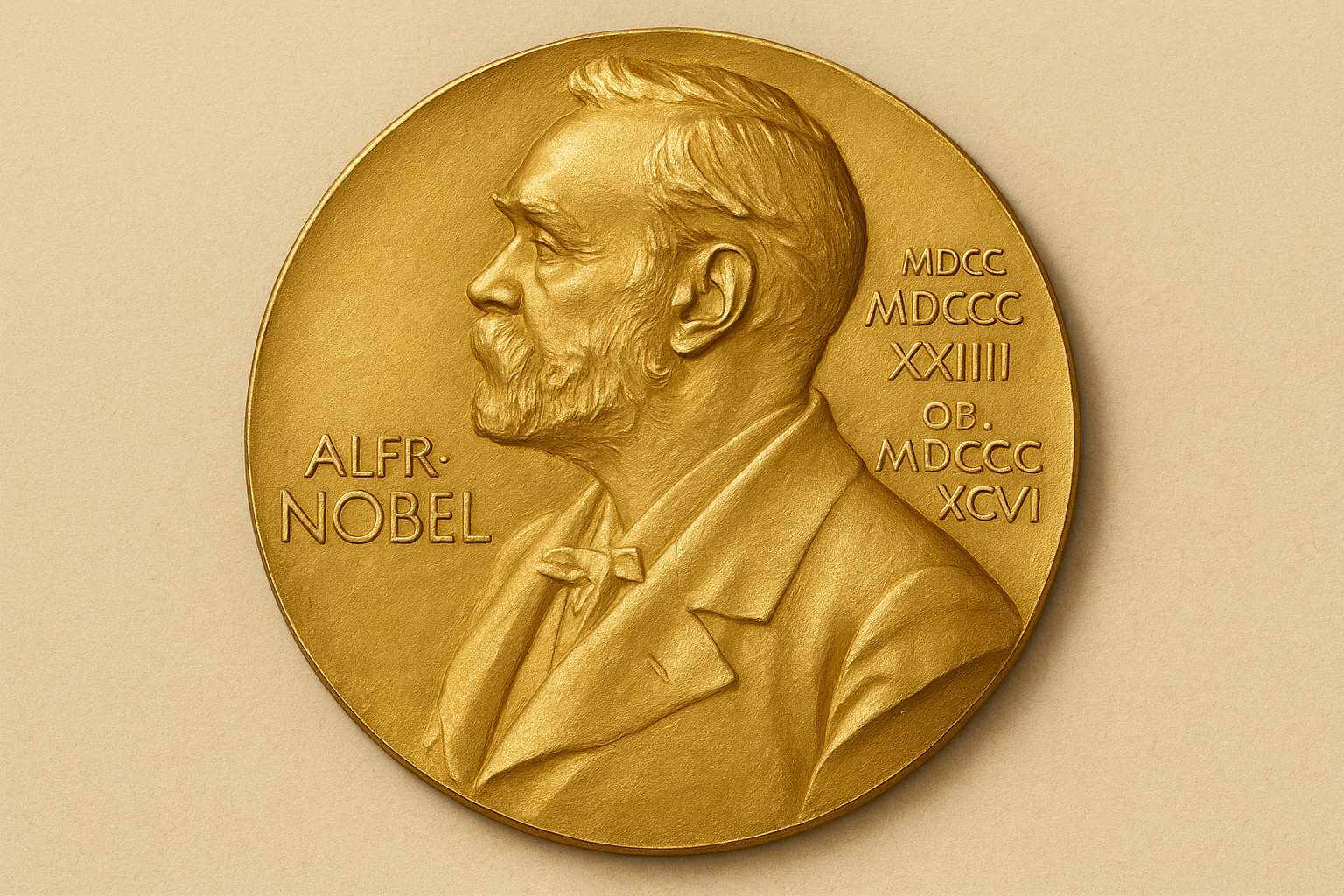
4. There is a strong argument for dialogue, explorative talks, and later structured negotiations between the US or other Western countries and Iraq. The Secretary-General of the United Nations, recipient of the Nobel Peace Prize, must take such a step now. He can do so according to Article 99 of the Charter and he is obliged by Article 100 to not seek instructions from any government. The UN must be reminded of its essential peace mission to “save succeeding generations from the scourge of war” and never serve to legitimise wars before everything else has been tried. A consistent, visionary mediation and negotiation process has not been tried by any government or organisation thus far.

5. The European Union professes to have a common foreign and security policy as well as a new conflict-management unit. But this does not seem to apply to the case of Iraq. Prime Minister Blair supports the war option, President Chirac rejects “automaticity” in the UN Security Council, while Chancellor Schroeder says no to the military option. Sweden endorses war if based on a future UN mandate. Denmark, which presently holds the Presidency, will participate in a war provided there is a UN mandate. Neither Denmark nor Sweden has a diplomatic presence in Baghdad.

In short, the EU as an inter-governmental body has no policy! But it could.

Two EU hearings on Iraq in 2001 – 2 have not produced a European Iraq policy that has made any difference to the international debate. This is worrisome, particularly since European political and economic stability and the future of the anti-terrorism coalition are at stake. The EU is internationally increasingly perceived as a ‘follower’ instead of as a leader in the discussion of global issues. Disappointment about European Union complacency is growing, particularly in the Middle East.

There are a number of steps which the EU and individual member governments would have to take to show that the political will and determination exist to make a difference in dealing with issues so vital to peace and security. The EU simply cannot sit, wait, and watch the United States go it alone like in the Balkans and Afghanistan. Its creative “niche” is genuinely political, peace by peaceful means as stated in the UN Charter, not to imitate the military might of the U.S. It won’t be able to match the US in that respect, and it should not. This is what the EU – and other concerned governments – could do and should do quickly:

6. Encourage media and parliamentary delegations to visit Baghdad and see and listen and dialogue with Iraqis at various levels. Iraq is not one man, it is 23 million fellow citizens. They have points of views, hopes, and fears like all of us.

7. Move towards re-establishing embassies. It is a scandal that many government do not have any representation and, thus, cannot collect first-hand facts and impressions and make their own independent analyses on which to base their policies.

8. Encourage trade and investments with Iraq first inside the sanctions framework, and later outside it, should the United States and others uphold the sanctions regime ad absurdum.

9. Establish a contact group, perhaps in liaison with China, Russia, and others who want to prevent war and find peaceful solutions. Apart from mitigating the conflict and establishing some initial trust between the world and Iraq, the group should plan for a comprehensive regional conferences, somewhat like the OSCE process for Europe that had such ground-breaking results from its start almost 30 years ago.

10. Work for a just peace in the Middle East in general and in the Israeli-Palestinian conflict. The Iraq issue is not unrelated to it. Acknowledge that US initiatives have failed and that we need other completely impartial mediators in that process.

11. Develop a new security regime for the whole region and honour, finally, UN SC Resolution 687 that requires that the Middle East shall become a zone free of weapons of mass destruction. On a more general level, it is time to realise that the threat of WMD will only increase as long as holders of nuclear weapons ignore their obligations to completely disarm their nuclear arsenals according to the Non-Proliferation Treaty of 1968. Full compliance and access to nuclear sites everywhere would be a natural corollary to preventing new states from acquiring WMD.

12. Develop a new security regime that would include economic, political, environmental, and other essential aspects of security and prohibit new military trade and establishment of bases in this already grotesquely over-militarised region.

13. Inform the United States about all such initiatives when they are launched but develop them independently. The EU should not be deterred if the United States objects to them.

14. What about Saddam Hussein and regime change? This is not part of our program. This is for the people of Iraq to decide. But if they want to oust the President, contemporary history makes one thing abundantly clear: such changes succeed only with non-violent struggle, civil disobedience, and alternative government based on integrity and participation; in short, democracy with democratic means. Violence will only replace one authoritarian elite with another.

Peace is possible. Peace can be learnt. Peace is the only battle worth waging, as Albert Camus once said. And we must find peace with fellow global citizens. We plead to the United States government to be with the world and not against it.

* A US-led attack on Iraq could kill between 48,000 and 260,000 civilians and combatants in just the first three months of conflict, according to a study by medical and public health experts. Post-war health effects could take an additional 200,000 lives. (The report, “Collateral Damage: The Health and Environmental Costs of War on Iraq,” was issued by International Physicians for the Prevention of Nuclear War (IPPNW), recipient of the 1985 Nobel Peace Prize, and produced by Medact, the organisation’s United Kingdom affiliate.) The study adds that if the conflict spreads to Israel-Palestine and if weapons of mass destruction are used, there could be 3,9 million dead. No political, economic or psychological motive can ever legitimate that!

Related Posts

The agreement is catastrophic both because of what it says and what it doesn’t mention. It reduces further the major asset of security policies: Freedom of action. Jan Oberg TFF director September 25, 2026 A couple of hours before the agreement was signed on September 22, 2026, I published the following 13 hypotheses about what it would most likely contain on TFF Substack (in English). I was wrong on only the first point. Contrary to what Trump had written on his Truth Social platform, it does not appear to come into force immediately. In fact, it turned out to be worse than even I had anticipated. After these hypotheses now come a number of reflections in light of what the agreement actually contains, and does not contain, as well as the way in which it has generally been presented by major media outlets and by the public-service broadcaster DR. My...
Below are TFF-related media mentions, comments, videos and social media posts published elsewhere but not on this homepage. We happen to catch and list only a fraction. Regarding video comments and debates, we recommend that you go to the TFF Video Channel on Substack where many of them are reproduced. Jan Oberg is a contributor to China Daily – 52 million daily clicks – and Global Times, CGTN and CCTV (the national television), China Investment, Xinhua News Agency and several others. Articles and videos on these media very often multiply into countless Chinese (and Western media) that re-post them from these main media. Thanks to The China Academy, his analyses, interviews and comments are frequently posted on YouTube channels such as Thinkers Forum and Wave Media. These videos are often re-posted on Bilibili (China’s YouTube), the China Content Center on TikTok, and on the Chinese edition of TikTok, Douyin.com. This means reaching hundreds of millions of viewers worldwide over a year. While there are too many to catch on all these...
Jan Oberg May 15, 2026 Go to this Fox News page and scroll the whole way down: President Donald Trump tells the world that his meeting with President Xi Jinping yielded a lot of very concrete political and economic results – of course, only where the Chinese side, according to him, agreed with him. He does not mention the Taiwan issue, but Secretary of State, Marco Rubio, says that it did not feature prominently in their talks and that the US policy on Taiwan has not changed. Then go to China Daily – or Global Times – and you will see that for the Chinese it is framework, principles, structure of cooperation etc. that matters – all embedded in the overall idea of “constructive bilateral relationship of strategic stability.” Nowhere is any concrete agreement or deal – all that Trump refers to – mentioned. At the general level, this gives you insights into the very different social...

Recent Articles

Tony Robinson October 4, 2026 Violence is easy to recognise when someone is being beaten, shot or killed. It becomes more difficult when nobody is holding a weapon. Poverty, discrimination, exploitation and repression can restrict a human life just as effectively, although they do so in very different ways and with very different consequences. Simply adding more categories to an ever-growing list of forms of violence does not really solve the problem. The more interesting question is what all these different situations have in common and why it makes sense to describe them using the same word. Human beings do not simply react to what happens around them. They remember the past, imagine things that do not yet exist, make plans and undertake projects. Workers organise because they imagine different working conditions; people migrate because they imagine another life somewhere else; social movements emerge because people refuse to accept the...
It’s a matter of principles, courage, vision and pulling together – while the militarist world is falling apart… Peter Langille October 3, 2026 “Here, then, is the problem which we present to you, stark and dreadful and inescapable: Shall we put an end to the human race; or shall mankind renounce war?”The Bertrand Russell—Albert Einstein Manifesto, July 9, 1955 ⁕ The forecast for what’s ahead is worrisome. The sharp rise in armed conflicts over the past three years is adding to what was already the highest level in over seventy years. Genocides, which should be prevented are supported. A shared climate emergency that jeopardises survival is ignored. Diverse polls now suggest that people are war-weary, worried and interested in a more effective United Nations. And, there are viable policy options for a more secure world! Yet governments are doubling-down, betting on more war and investing heavily. If current trends persist,...
Johan Galtung 1930-2024October 2015 Published here on October 3, 2026 Let us focus on Civilization for conflict analysis and remedies. Major forms of disorder use violence; war is state organized violence. The most belligerent states are the United States of America and Israel, both with civilization roots. National Evangelism, the US Protestant Christian civilization– more national than evangelical–justifies US warfare as exceptionalism of a people chosen by God, with a manifest destiny to run the world. Orthodox Judaism justifies Israeli warfare to conquer and expand from Nile to Euphrates as a religious right and duty to the Eternal One. The third most belligerent country, the UK, no longer believes it is God-chosen but chosen by the USA; not quite the same but something. But the root cause of global disorder lies in the Occident–with Islam–seeing itself as the single, universal civilization valid for all at all times, all others being...

TFF on Substack

Discover and subscribe to more peace materials on TFF Substack

Most Popular

Tony Robinson October 4, 2026 Violence is easy to recognise when someone is being beaten, shot or killed. It becomes more difficult when nobody is holding a weapon. Poverty, discrimination, exploitation and repression can restrict a human life just as effectively, although they do so in very different ways and with very different consequences. Simply adding more categories to an ever-growing list of forms of violence does not really solve the problem. The more interesting question is what all these different situations have in common and why it makes sense to describe them using the same word. Human beings do not simply react to what happens around them. They remember the past, imagine things that do not yet exist, make plans and undertake projects. Workers organise because they imagine different working conditions; people migrate because they imagine another life somewhere else; social movements emerge because people refuse to accept the...
It’s a matter of principles, courage, vision and pulling together – while the militarist world is falling apart… Peter Langille October 3, 2026 “Here, then, is the problem which we present to you, stark and dreadful and inescapable: Shall we put an end to the human race; or shall mankind renounce war?”The Bertrand Russell—Albert Einstein Manifesto, July 9, 1955 ⁕ The forecast for what’s ahead is worrisome. The sharp rise in armed conflicts over the past three years is adding to what was already the highest level in over seventy years. Genocides, which should be prevented are supported. A shared climate emergency that jeopardises survival is ignored. Diverse polls now suggest that people are war-weary, worried and interested in a more effective United Nations. And, there are viable policy options for a more secure world! Yet governments are doubling-down, betting on more war and investing heavily. If current trends persist,...
Johan Galtung 1930-2024October 2015 Published here on October 3, 2026 Let us focus on Civilization for conflict analysis and remedies. Major forms of disorder use violence; war is state organized violence. The most belligerent states are the United States of America and Israel, both with civilization roots. National Evangelism, the US Protestant Christian civilization– more national than evangelical–justifies US warfare as exceptionalism of a people chosen by God, with a manifest destiny to run the world. Orthodox Judaism justifies Israeli warfare to conquer and expand from Nile to Euphrates as a religious right and duty to the Eternal One. The third most belligerent country, the UK, no longer believes it is God-chosen but chosen by the USA; not quite the same but something. But the root cause of global disorder lies in the Occident–with Islam–seeing itself as the single, universal civilization valid for all at all times, all others being...
Read More
Living-Peace-Sign-Budapest-copy
Tony Robinson October 4, 2026 Violence is easy to recognise when someone is being beaten, shot or killed. It becomes more difficult when nobody is holding a weapon. Poverty, discrimination, exploitation and repression can restrict a human life just as effectively, although they do so in very different ways and with very different consequences. Simply adding more categories to an ever-growing list of forms of violence does not really solve the problem. The more interesting question is what all these different situations have in common and why it makes sense to describe them using the same word. Human beings do not simply react to what happens around them. They remember the past, imagine things that do not yet exist, make plans and undertake projects. Workers organise because they imagine different working conditions; people migrate because they imagine another life somewhere else; social movements emerge because people refuse to accept the...
b54a1f10-8c65-4f0b-9dd5-4abc0a7d04cc_2659x2659
It’s a matter of principles, courage, vision and pulling together – while the militarist world is falling apart… Peter Langille October 3, 2026 “Here, then, is the problem which we present to you, stark and dreadful and inescapable: Shall we put an end to the human race; or shall mankind renounce war?”The Bertrand Russell—Albert Einstein Manifesto, July 9, 1955 ⁕ The forecast for what’s ahead is worrisome. The sharp rise in armed conflicts over the past three years is adding to what was already the highest level in over seventy years. Genocides, which should be prevented are supported. A shared climate emergency that jeopardises survival is ignored. Diverse polls now suggest that people are war-weary, worried and interested in a more effective United Nations. And, there are viable policy options for a more secure world! Yet governments are doubling-down, betting on more war and investing heavily. If current trends persist,...
010
Johan Galtung 1930-2024October 2015 Published here on October 3, 2026 Let us focus on Civilization for conflict analysis and remedies. Major forms of disorder use violence; war is state organized violence. The most belligerent states are the United States of America and Israel, both with civilization roots. National Evangelism, the US Protestant Christian civilization– more national than evangelical–justifies US warfare as exceptionalism of a people chosen by God, with a manifest destiny to run the world. Orthodox Judaism justifies Israeli warfare to conquer and expand from Nile to Euphrates as a religious right and duty to the Eternal One. The third most belligerent country, the UK, no longer believes it is God-chosen but chosen by the USA; not quite the same but something. But the root cause of global disorder lies in the Occident–with Islam–seeing itself as the single, universal civilization valid for all at all times, all others being...
Screenshot 2026-10-02 011738
Jan ObergPhD, director, The Transnational Foundation for Peace and Future Research, TFFLund, Sweden October 2, 2026 This is my full original manuscript. The Chinese Academy of Social Science, CASS, makes two publications out if it. 1. China’s Five-year plan emphasized the capabilities of basic research and original innovation. It is regarded as the goal of the future social development, which, as required, should be significantly enhanced. Can you comment on the importance of original innovation in research and academic study? I believe it is easier to define “original innovation” in the natural sciences than in social sciences. The breaking points of what constitutes something new, or innovative, are not quite as sharp in the latter. But in both fields it is about opening up something that was closed, unseen, unexplored before – making manifest what was earlier latent. Innovations come in many forms and shapes – naming something that was not...
arctic-circle-map
The agreement is catastrophic both because of what it says and what it doesn’t mention. It reduces further the major asset of security policies: Freedom of action. Jan Oberg TFF director September 25, 2026 A couple of hours before the agreement was signed on September 22, 2026, I published the following 13 hypotheses about what it would most likely contain on TFF Substack (in English). I was wrong on only the first point. Contrary to what Trump had written on his Truth Social platform, it does not appear to come into force immediately. In fact, it turned out to be worse than even I had anticipated. After these hypotheses now come a number of reflections in light of what the agreement actually contains, and does not contain, as well as the way in which it has generally been presented by major media outlets and by the public-service broadcaster DR. My...
girl-5894831_1280
Below are TFF-related media mentions, comments, videos and social media posts published elsewhere but not on this homepage. We happen to catch and list only a fraction. Regarding video comments and debates, we recommend that you go to the TFF Video Channel on Substack where many of them are reproduced. Jan Oberg is a contributor to China Daily – 52 million daily clicks – and Global Times, CGTN and CCTV (the national television), China Investment, Xinhua News Agency and several others. Articles and videos on these media very often multiply into countless Chinese (and Western media) that re-post them from these main media. Thanks to The China Academy, his analyses, interviews and comments are frequently posted on YouTube channels such as Thinkers Forum and Wave Media. These videos are often re-posted on Bilibili (China’s YouTube), the China Content Center on TikTok, and on the Chinese edition of TikTok, Douyin.com. This means reaching hundreds of millions of viewers worldwide over a year. While there are too many to catch on all these...