PressInfo #159 – Denmark, the vassal state: foreign policy and researchat a crossroads

Denmark, like many traditional allies of the United States, will have to rethink and reorient its foreign and security policies away from dependence upon the United States. For countries that have held the United States as their role model and authority in security affairs – and as a sort of protective father figure – the rapid demise of the United States as a responsible and respected super power is so shocking that it is likely to be denied.

The regime of George W. Bush represents a very dangerous combination of historically overwhelming physical power, intellectual poverty, and decreasing legitimacy in the eyes of the rest of the world. Responsible powers, big or small, look in vain to Washington for leadership or vision. They must begin to learn to stand on their own feet.

At the end of the old cold war, a wealth of new possibilities arose to create a peaceful, united Europe, to resolve conflicts with a minimum of violence, and to eliminate nuclear weapons. With the dissolution of the Soviet Union and the Warsaw Pact, which were NATO’s official “raison d’etre”, the dissolution of NATO should have been the natural course of events, and it could have opened doors to something completely new. With this and many other opportunities lost, the world has become a much more dangerous place without leadership.

Denmark’s missed opportunities at the end of the Cold War

Analyses of alternatives to NATO and of peaceful conflict resolution in the EU region weren’t performed. Successive Danish governments, dominated by Social Democrats, handed Denmark the role of going out in the world as a hyperactive interventionist and loyal mini-militarist. Denmark supported NATO’s expansion to “Greater NATO” without a doubt and refrained from pushing for a change to the alliance’s absurd, undemocratic nuclear strategy which is also contrary to international law. And it supported humanitarian interventions, as they were euphemistically called.

While during the Cold War Denmark was a “footnote nation”, that could among other things work towards nuclear weapons-free zones and had her own opinions in quite a few respects, in the 1990s the discrete critical thought and voice of the Danes became silent. Paradoxically, that was exactly when it had become much more possible to bring it forth.

Bombing, interventions and follow-my-leader

It must be seen as a fundamental breach of the decades of peace politics – and as quite non-Danish – that Denmark de facto went to war for the first time since 1945 when her F16 planes took part in the shameful bombing of Yugoslavia. This occurred after 8-9 years of conflict between the various parties in former Yugoslavia, during which self-contained conflict analysis was completely ignored by Danish foreign policy decision-making circles. Denmark could have taken Danish or joint Nordic peace initiatives, in that Denmark enjoyed special goodwill in the Balkans. It didn’t do so.

Instead Denmark backed up the US and called up Brussels to find out what the heavyweights running the Common Foreign and Security Policies of the EU felt that Danish opinion should be. Denmark was told, among other things, to be of the opinion that a premature and selective recognition of Slovenia and Croatia (against which the UN Secretary-General and leading international diplomats in Yugoslavia warned in the strongest terms) was the correct course. It ensured that Bosnia-Herzegovina was doomed to inevitable warfare.

Naturally, self-contained analysis and attempts at mediation could also have brought Denmark into disfavour with the EU, NATO and Washington. Denmark’s loyalty, it appears, lay with these organisations, rather than with those who suffered in the Balkans. It was a policy based upon intellectual complacency, bordering on defeatism. The consequences are well-known but little discussed; where the West has intervened, it is now more ethnically clean than previously, few refugees have returned home, and there is talk of “peace” only under heavy international military control. In Kosovo, the international community has put itself in prison and co-operates daily with extremists and presumed Albanian war criminals, who are hardly without connections to Europe’s drug dealers and Afghanistan.

In the wake of the bombings of Yugoslavia came EU militarisation. The main cause was that the U.S. through its infiltration (OSCE, CIA, MPRI, NATO-KLA ) had taught Europe a lesson: after ten years Europe could obviously not clear up the problems in its own backyard by itself. That humiliation, along with those earlier in Bosnia and Croatia, sits deep within EU foreign policy leaders who like to envision the EU’s future as that of a super power in the world community.

The EU’s foreign policy administration includes Javier Solana, who as NATO’s then secretary-general bears the highest civil responsibility for the bombings of Yugoslavia. These bombings were contrary to international law. The proportion of the Yugoslav population that was killed was three times greater than the proportion of the American population that died in the terrorist activities of 11 September. In any case, it can be expected that it is now just a question of time before the Danish legendary reservation against participating in military EU co-operation is extinguished, particularly since the Socialist People’s Party (SF) and the Unity List (Enhedslisten) party seem to have also decided to throw out all alternate ideas.

Greenland, BMD and Echelon: don’t ask questions!

Denmark has also chosen to practise compliance by not expressing misgivings over the idea of a ballistic missile defence, BMD, over the United States. Those who have understood the fundamentals of strategic theory, including former US Secretary of Defence McNamara in his eminent book Wilson’s Ghost, know that there is only one thing to say about the consequence of such an insane idea – namely, that it will only increase the risk of a new nuclear arms race, nuclear proliferation and nuclear war.

Denmark is in a particularly advantageous position to oppose this mad policy since, as is a well-known fact, the BMD project relies on the Thule facility in Greenland. But it doesn’t oppose it. However, this is a continuation of Denmark’s policies as she doesn’t distance herself from being a host country for Echelon and other electronic listening posts, which affronts a series of moral standards including those of personal privacy. (One must take for granted that this manuscript will be registered by American intelligence agencies, when it is sent as an e-mail and posted on the Internet. The same applies to all fax and phone communication, in practice every time you use them).

The roles of Danish security intellectuals

An extremely good opportunity for a more stable international system and genuine peace in Europe was wasted on hurried new experiments. Very few intellectuals were granted (or took) the chance to generate a variety of models for how the new Europe could develop. The old cold war mentality remained deeply entrenched in both foreign ministerial and academic circles. There were even those who believed that the war and the weapons had changed character, had become purely symbolic or would lose their importance; warfare would belong to a kind of “discourse” but would not have a real political or military meaning. L’art pour l’art, one might say – not only practically useless, but directly legitimising the development of the global serial war we are now witnessing.

The architects of rearmament and war must have been amused by the declarations of irrelevancy issued by these intellectuals in one of the most crucial moments of contemporary history.

Danish mainstream foreign and security policy decision-making circles – diplomats, intellectuals and journalists – had basically studied only American textbooks on international politics and strategic problems. They had either studied in the USA or had been on delegation/study visits to NATO’s headquarters or to any of the other centres of power that not only controlled the weapons and policies but also (possibly for the most part) influenced the minds and shaped the politically correct views of the vassal states. Independent minds and free voices were few and far between.

Another group within the present security policy elite grew out of the antinuclear, green and pacifist movements’ “rebellion” in the 1970s and the 1980s. With the cold war’s end they swung, as did for example the present German foreign minister Fischer, 180 degrees and supported the new foreign and security policy’s philosophy. They saw the war as unthinkable, symbolic or as discourse and therefore, they saw it, as an opportunity for them to play both Real politicians and humanists. Humanitarian intervention became a nice opportunity to preserve some idealism and make a career in the foreign policy establishment. This project has now been capsized by the Western elite’s own balkanisation and its new cold war against terrorism, which has replaced the old one against communism. It goes without saying that few of these intellectuals ever contemplated going to war zones to find out facts and form their own perspectives. Acquiescing states know how to nurture and reward their acquiescing scholars.

Separation anxiety at the crossroads

The rift over the Atlantic grows day by day. Popular protests and peace movements, although they are still like Davids vis-à-vis the Goliath of propaganda, are mobilising (even if you don’t see it in your local daily). The American solo approach has not only humiliated the EU but also NATO, an alliance presently in a deep identity crisis. The father figure is turning ugly.

If the Bush regime pushes the United States further towards the right, towards potential fascism, towards isolationism, nuclearism, interventionism and war, it will, sooner or later along this slide, become politically and ethically impossible for countries like Denmark to follow the US line with the same obedience. Independent analyses that take into account other perspectives than US-Western ones and which are deeply respectful of other cultures and religions will be dearly needed in the field of foreign and security policy research.

Danish ministry staff and experts are badly prepared for this rapid global change. They have never gained knowledge about or empathy for non-Western dimensions of security and foreign affairs. They have not explored other ways of seeing global problems and the role of their own countries as seen by others living in the world. In the past, there was basically one politically correct mode of explanation – one that served status quo and Western interests. The US was Europe’s protector, which one really shouldn’t provoke.

After 1989, the USA was also the only superpower. That represented an attractive truth; if, as a politician and intellectual, you could repeat the Master’s lesson correctly and with academic weight you would be rewarded, included, and gain status as well as grants.

All this had a price, of course: the negation of the free mind and intellectualism itself, and the merger of intellectualism/expertise and the power of the State. It served the old paradigm, the old legitimacy and the old status quo. There was only one problem ahead: what if the world out there suddenly changes? And that’s exactly what it did.

(To be continued in PressInfo # 160)

Translation by Theresa Marlan and Sara E. Ellis
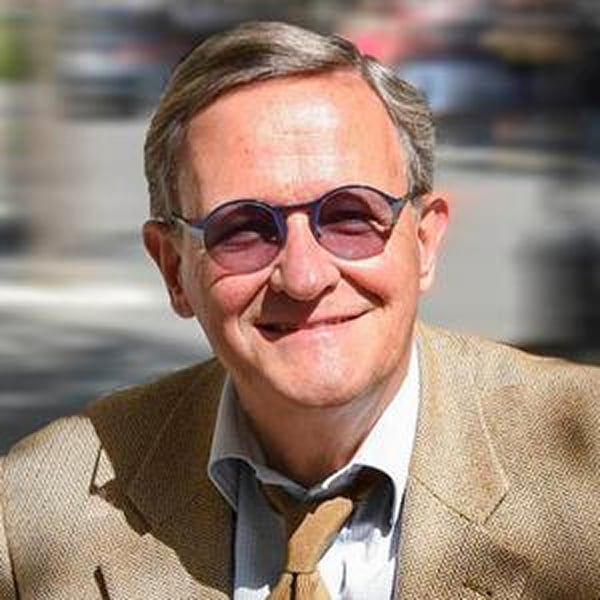
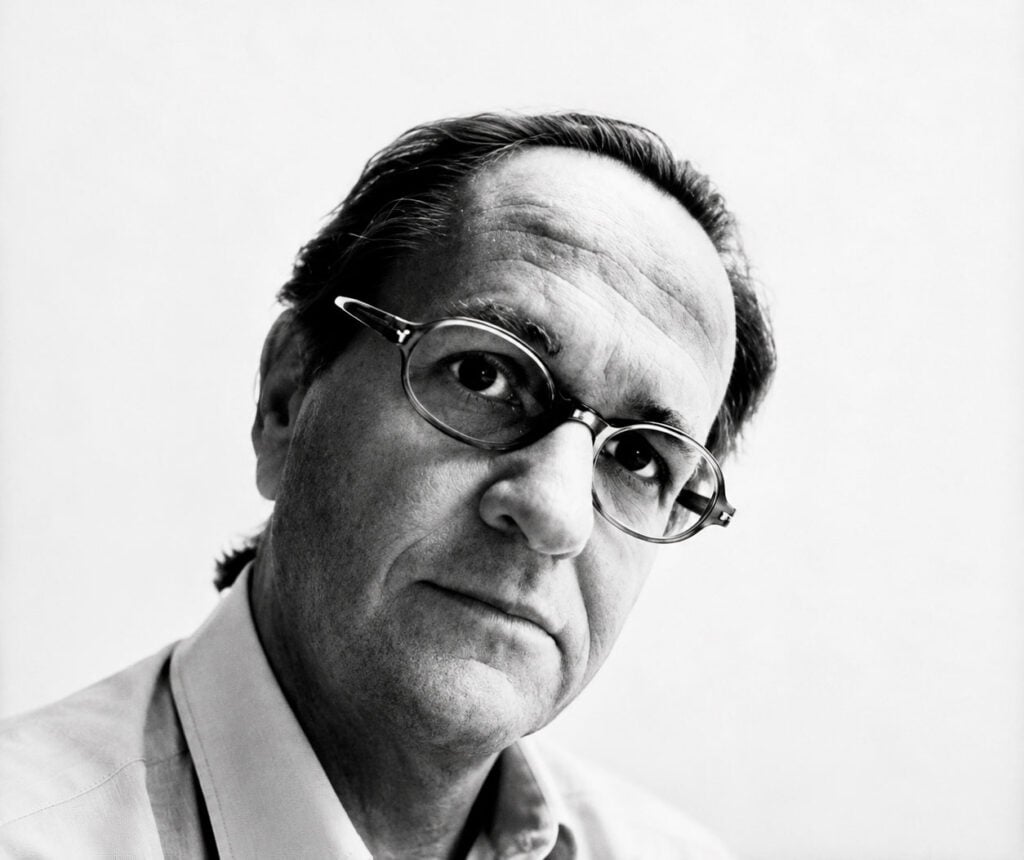
Peace & future researcher + ‌Art Photographer

Related Posts

The agreement is catastrophic both because of what it says and what it doesn’t mention. It reduces further the major asset of security policies: Freedom of action. Jan Oberg TFF director September 25, 2026 A couple of hours before the agreement was signed on September 22, 2026, I published the following 13 hypotheses about what it would most likely contain on TFF Substack (in English). I was wrong on only the first point. Contrary to what Trump had written on his Truth Social platform, it does not appear to come into force immediately. In fact, it turned out to be worse than even I had anticipated. After these hypotheses now come a number of reflections in light of what the agreement actually contains, and does not contain, as well as the way in which it has generally been presented by major media outlets and by the public-service broadcaster DR. My...
Below are TFF-related media mentions, comments, videos and social media posts published elsewhere but not on this homepage. We happen to catch and list only a fraction. Regarding video comments and debates, we recommend that you go to the TFF Video Channel on Substack where many of them are reproduced. Jan Oberg is a contributor to China Daily – 52 million daily clicks – and Global Times, CGTN and CCTV (the national television), China Investment, Xinhua News Agency and several others. Articles and videos on these media very often multiply into countless Chinese (and Western media) that re-post them from these main media. Thanks to The China Academy, his analyses, interviews and comments are frequently posted on YouTube channels such as Thinkers Forum and Wave Media. These videos are often re-posted on Bilibili (China’s YouTube), the China Content Center on TikTok, and on the Chinese edition of TikTok, Douyin.com. This means reaching hundreds of millions of viewers worldwide over a year. While there are too many to catch on all these...
Jan Oberg May 15, 2026 Go to this Fox News page and scroll the whole way down: President Donald Trump tells the world that his meeting with President Xi Jinping yielded a lot of very concrete political and economic results – of course, only where the Chinese side, according to him, agreed with him. He does not mention the Taiwan issue, but Secretary of State, Marco Rubio, says that it did not feature prominently in their talks and that the US policy on Taiwan has not changed. Then go to China Daily – or Global Times – and you will see that for the Chinese it is framework, principles, structure of cooperation etc. that matters – all embedded in the overall idea of “constructive bilateral relationship of strategic stability.” Nowhere is any concrete agreement or deal – all that Trump refers to – mentioned. At the general level, this gives you insights into the very different social...

Recent Articles

Tony Robinson October 4, 2026 Violence is easy to recognise when someone is being beaten, shot or killed. It becomes more difficult when nobody is holding a weapon. Poverty, discrimination, exploitation and repression can restrict a human life just as effectively, although they do so in very different ways and with very different consequences. Simply adding more categories to an ever-growing list of forms of violence does not really solve the problem. The more interesting question is what all these different situations have in common and why it makes sense to describe them using the same word. Human beings do not simply react to what happens around them. They remember the past, imagine things that do not yet exist, make plans and undertake projects. Workers organise because they imagine different working conditions; people migrate because they imagine another life somewhere else; social movements emerge because people refuse to accept the...
It’s a matter of principles, courage, vision and pulling together – while the militarist world is falling apart… Peter Langille October 3, 2026 “Here, then, is the problem which we present to you, stark and dreadful and inescapable: Shall we put an end to the human race; or shall mankind renounce war?”The Bertrand Russell—Albert Einstein Manifesto, July 9, 1955 ⁕ The forecast for what’s ahead is worrisome. The sharp rise in armed conflicts over the past three years is adding to what was already the highest level in over seventy years. Genocides, which should be prevented are supported. A shared climate emergency that jeopardises survival is ignored. Diverse polls now suggest that people are war-weary, worried and interested in a more effective United Nations. And, there are viable policy options for a more secure world! Yet governments are doubling-down, betting on more war and investing heavily. If current trends persist,...
Johan Galtung 1930-2024October 2015 Published here on October 3, 2026 Let us focus on Civilization for conflict analysis and remedies. Major forms of disorder use violence; war is state organized violence. The most belligerent states are the United States of America and Israel, both with civilization roots. National Evangelism, the US Protestant Christian civilization– more national than evangelical–justifies US warfare as exceptionalism of a people chosen by God, with a manifest destiny to run the world. Orthodox Judaism justifies Israeli warfare to conquer and expand from Nile to Euphrates as a religious right and duty to the Eternal One. The third most belligerent country, the UK, no longer believes it is God-chosen but chosen by the USA; not quite the same but something. But the root cause of global disorder lies in the Occident–with Islam–seeing itself as the single, universal civilization valid for all at all times, all others being...

TFF on Substack

Discover and subscribe to more peace materials on TFF Substack

Most Popular

Tony Robinson October 4, 2026 Violence is easy to recognise when someone is being beaten, shot or killed. It becomes more difficult when nobody is holding a weapon. Poverty, discrimination, exploitation and repression can restrict a human life just as effectively, although they do so in very different ways and with very different consequences. Simply adding more categories to an ever-growing list of forms of violence does not really solve the problem. The more interesting question is what all these different situations have in common and why it makes sense to describe them using the same word. Human beings do not simply react to what happens around them. They remember the past, imagine things that do not yet exist, make plans and undertake projects. Workers organise because they imagine different working conditions; people migrate because they imagine another life somewhere else; social movements emerge because people refuse to accept the...
It’s a matter of principles, courage, vision and pulling together – while the militarist world is falling apart… Peter Langille October 3, 2026 “Here, then, is the problem which we present to you, stark and dreadful and inescapable: Shall we put an end to the human race; or shall mankind renounce war?”The Bertrand Russell—Albert Einstein Manifesto, July 9, 1955 ⁕ The forecast for what’s ahead is worrisome. The sharp rise in armed conflicts over the past three years is adding to what was already the highest level in over seventy years. Genocides, which should be prevented are supported. A shared climate emergency that jeopardises survival is ignored. Diverse polls now suggest that people are war-weary, worried and interested in a more effective United Nations. And, there are viable policy options for a more secure world! Yet governments are doubling-down, betting on more war and investing heavily. If current trends persist,...
Johan Galtung 1930-2024October 2015 Published here on October 3, 2026 Let us focus on Civilization for conflict analysis and remedies. Major forms of disorder use violence; war is state organized violence. The most belligerent states are the United States of America and Israel, both with civilization roots. National Evangelism, the US Protestant Christian civilization– more national than evangelical–justifies US warfare as exceptionalism of a people chosen by God, with a manifest destiny to run the world. Orthodox Judaism justifies Israeli warfare to conquer and expand from Nile to Euphrates as a religious right and duty to the Eternal One. The third most belligerent country, the UK, no longer believes it is God-chosen but chosen by the USA; not quite the same but something. But the root cause of global disorder lies in the Occident–with Islam–seeing itself as the single, universal civilization valid for all at all times, all others being...
Read More
Living-Peace-Sign-Budapest-copy
Tony Robinson October 4, 2026 Violence is easy to recognise when someone is being beaten, shot or killed. It becomes more difficult when nobody is holding a weapon. Poverty, discrimination, exploitation and repression can restrict a human life just as effectively, although they do so in very different ways and with very different consequences. Simply adding more categories to an ever-growing list of forms of violence does not really solve the problem. The more interesting question is what all these different situations have in common and why it makes sense to describe them using the same word. Human beings do not simply react to what happens around them. They remember the past, imagine things that do not yet exist, make plans and undertake projects. Workers organise because they imagine different working conditions; people migrate because they imagine another life somewhere else; social movements emerge because people refuse to accept the...
b54a1f10-8c65-4f0b-9dd5-4abc0a7d04cc_2659x2659
It’s a matter of principles, courage, vision and pulling together – while the militarist world is falling apart… Peter Langille October 3, 2026 “Here, then, is the problem which we present to you, stark and dreadful and inescapable: Shall we put an end to the human race; or shall mankind renounce war?”The Bertrand Russell—Albert Einstein Manifesto, July 9, 1955 ⁕ The forecast for what’s ahead is worrisome. The sharp rise in armed conflicts over the past three years is adding to what was already the highest level in over seventy years. Genocides, which should be prevented are supported. A shared climate emergency that jeopardises survival is ignored. Diverse polls now suggest that people are war-weary, worried and interested in a more effective United Nations. And, there are viable policy options for a more secure world! Yet governments are doubling-down, betting on more war and investing heavily. If current trends persist,...
010
Johan Galtung 1930-2024October 2015 Published here on October 3, 2026 Let us focus on Civilization for conflict analysis and remedies. Major forms of disorder use violence; war is state organized violence. The most belligerent states are the United States of America and Israel, both with civilization roots. National Evangelism, the US Protestant Christian civilization– more national than evangelical–justifies US warfare as exceptionalism of a people chosen by God, with a manifest destiny to run the world. Orthodox Judaism justifies Israeli warfare to conquer and expand from Nile to Euphrates as a religious right and duty to the Eternal One. The third most belligerent country, the UK, no longer believes it is God-chosen but chosen by the USA; not quite the same but something. But the root cause of global disorder lies in the Occident–with Islam–seeing itself as the single, universal civilization valid for all at all times, all others being...
Screenshot 2026-10-02 011738
Jan ObergPhD, director, The Transnational Foundation for Peace and Future Research, TFFLund, Sweden October 2, 2026 This is my full original manuscript. The Chinese Academy of Social Science, CASS, makes two publications out if it. 1. China’s Five-year plan emphasized the capabilities of basic research and original innovation. It is regarded as the goal of the future social development, which, as required, should be significantly enhanced. Can you comment on the importance of original innovation in research and academic study? I believe it is easier to define “original innovation” in the natural sciences than in social sciences. The breaking points of what constitutes something new, or innovative, are not quite as sharp in the latter. But in both fields it is about opening up something that was closed, unseen, unexplored before – making manifest what was earlier latent. Innovations come in many forms and shapes – naming something that was not...
arctic-circle-map
The agreement is catastrophic both because of what it says and what it doesn’t mention. It reduces further the major asset of security policies: Freedom of action. Jan Oberg TFF director September 25, 2026 A couple of hours before the agreement was signed on September 22, 2026, I published the following 13 hypotheses about what it would most likely contain on TFF Substack (in English). I was wrong on only the first point. Contrary to what Trump had written on his Truth Social platform, it does not appear to come into force immediately. In fact, it turned out to be worse than even I had anticipated. After these hypotheses now come a number of reflections in light of what the agreement actually contains, and does not contain, as well as the way in which it has generally been presented by major media outlets and by the public-service broadcaster DR. My...
girl-5894831_1280
Below are TFF-related media mentions, comments, videos and social media posts published elsewhere but not on this homepage. We happen to catch and list only a fraction. Regarding video comments and debates, we recommend that you go to the TFF Video Channel on Substack where many of them are reproduced. Jan Oberg is a contributor to China Daily – 52 million daily clicks – and Global Times, CGTN and CCTV (the national television), China Investment, Xinhua News Agency and several others. Articles and videos on these media very often multiply into countless Chinese (and Western media) that re-post them from these main media. Thanks to The China Academy, his analyses, interviews and comments are frequently posted on YouTube channels such as Thinkers Forum and Wave Media. These videos are often re-posted on Bilibili (China’s YouTube), the China Content Center on TikTok, and on the Chinese edition of TikTok, Douyin.com. This means reaching hundreds of millions of viewers worldwide over a year. While there are too many to catch on all these...