May 18, 2023
Traditional Chinese values directly influence China’s foreign policy and create a novel approach to resolving conflicts and conducting international affairs.
Originally published at Carnegie Endowment on November 21, 2013
China’s traditional cultural values
The cultural values of a country influence its national psychology and identity. Citizens’ values and public opinions are conveyed to state leaders through the media and other information channels, both directly and indirectly influencing decisions on foreign policy. The traditional cultural values that influence the psyche of the Chinese people are harmony, benevolence, righteousness, courtesy, wisdom, honesty, loyalty, and filial piety.
Of these, the core value is harmony. Harmony means “proper and balanced coordination between things” and encompasses rationale, propriety, and compatibility. Rationale refers to acting according to objective laws and truths. Propriety indicates suitability and appropriateness. The value of harmony advocates “harmony but not uniformity.”
Properly coordinating different things by bringing them together in the appropriate manner allows them to develop from an uncoordinated state to one of coordination; from asymmetry to symmetry; and from imbalance to balance. Modern Chinese society tries to maintain harmony between humankind and nature; between people and society; between members of different communities; and between mind and body.
Benevolence, the core value of Confucianism, extends from the importance of familial ties and blood connections and is held in high esteem by the Chinese. “A peaceful family will prosper (jiahe wanshi xing, 家和万事兴)” is a famous and widely embraced saying. This benevolence, although based in familial ties, extends to friendships and social relationships, producing a full set of values that include justice, courtesy, wisdom, honesty, loyalty, self-discipline, and commitment.
Righteousness refers to justice and correctness. As Confucius said, “the gentleman understands what is moral; the small man understands what is profitable (junzi yu yu yi, xiaoren yu yu li, 君子喻于义,小人喻于利).” There are not only individual benefits but also collective and social benefits. All people should seek what benefits both the individual and the society.
As two Chinese sayings put it, “Everybody is responsible for the rise or fall of the country (tianxia xingwang, pifu youze, 天下兴亡,匹夫有责)” and “Be the first to show concern and the last to enjoy yourself (xian tianxia zhi you er you, hou tianxia zhi le er le, 先天下之忧而忧,后天下之乐而乐).” If the country suffers foreign invasions and perils, the people should “expel the foreign invaders [and] resuscitate the Chinese nation (quchu dalu, huifu zhonghua, 驱除鞑虏,恢复中华),” brandishing their weapons and struggling for the glory of the country.
Courtesy stresses modesty and prudence. It is about respecting laws and preventing misconduct. Traditional Chinese culture respects the importance of rites and has special rites for various occasions, such as the emperor’s sacrifice to heaven, the common people’s sacrifice to ancestors, weddings, funerals, and courteous exchanges. As the saying goes, “It is impolite not to return what one receives (lai er buwang fei li ye, 来而不往非礼也).” Confucius particularly stressed courtesy in daily life.
Wisdom requires that one distinguish right from wrong, place capable people in suitable positions, know oneself, and be resourceful. Confucius said, “Benevolence means to love and wisdom means to understand others renzhe airen, zhizhe zhiren, 仁者爱人,智者知人).” One must have a loving heart to love others, and one must have wisdom to understand others. People should have not only a loving heart but also wisdom to distinguish good from evil and right from wrong. They should have the wisdom and resourcefulness to control evil and promote good.
A number of prominent figures who loved and understood others have carved their names into Chinese history, such as Wei Qing (卫青), the Han dynasty general during the reign of Emperor Wudi; Wei Zheng (魏征), the Tang dynasty prime minister during the reign of Emperor Taizong; Hai Rui (海瑞), an honest and upright Ming dynasty official; Qi Jiguang (戚继光), a famous Ming dynasty general who fought Japanese pirates; and two upright Northern Song dynasty officials, Kou Zhun (寇准) and Bao Zheng (包拯).
Honesty refers to trustworthiness, integrity, and credibility. “People should obtain their fortunes reasonably and properly through their labor,” said Confucius, “and not through fraudulence and cheating.” He emphasized honesty in daily behavior. Honesty is a moral virtue greatly valued by the Chinese. Many Confucian businessmen insisted on the principle of honesty in running enterprises in the past and established time-honored brands.
Loyalty stresses service to the motherland. It is an emotion and a value that evolves from blood ties and means that in cases of foreign invasion citizens should exert all efforts to protect their country as they would protect their own homes. Loyalty also means faithfulness to family and friends.
Filial piety is another important value in Confucianism. According to Confucius, “Respecting and supporting the family’s senior members and handling their funeral affairs (zunlao, jinglao, yanglao, songlao, 尊老、敬老、养老、送老)” are duties of younger generations, and “caring for the old and nurturing the young (lao you duo yang, shao you suo yi, 老有所养,少有所依)” are fundamental family virtues.
Harmony in China’s foreign relations
The Chinese traditional cultural values of harmony, benevolence, righteousness, courtesy, wisdom, honesty, loyalty, and filial piety are embodied in China’s diplomacy through the concept of harmony, the most important Chinese traditional value.
HARMONY BUT NOT UNIFORMITY
According to the concept of harmony, the universe unites diversity. Difference does not necessarily equal contradiction. Differences sometimes evolve into contradictions, but sometimes they constitute a necessary condition for harmony. There are many examples in which differences complement each other in nature and society. Uniting diversity is the basis for the generation of new things. Confucius said, “The gentleman aims at harmony, and not at uniformity (junzi he er bu tong, 君子和而不同).” Thus, a gentleman may hold different views, but he does not blindly follow others. Instead, he seeks to coexist harmoniously with them.
In the 1950s, the People’s Republic of China put forward the Five Principles of Peaceful Coexistence—mutual respect for territorial integrity and sovereignty; mutual nonaggression; noninterference in each other’s internal affairs; equality and mutual benefit; and peaceful coexistence. These principles show how China’s diplomatic strategy embodies the value of harmony. Over the past five decades, the Five Principles of Peaceful Coexistence have been widely accepted by most countries and have become important criteria for standardizing international relationships.
On December 24, 2002, former Chinese president Jiang Zemin visited the United States and delivered a speech on China’s diplomatic concept of harmony but not uniformity. Jiang said, “More than 2,000 years ago, the Chinese thinker Confucius brought forward the idea that ‘the gentleman aims at harmony, and not at uniformity.’ It meant that harmony promotes coexistence and co-prosperity whereas differences complement and support each other.”
The law of harmony but not uniformity is important for social development and as a standard for people’s conduct. It is also the foundation for coordinating the development of civilizations. All the world’s civilizations, social systems, and development modes should communicate with and learn from each other through peaceful competition. They should pursue co-development by seeking commonalities while preserving their differences.
At the end of 2003, then Chinese premier Wen Jiabao spoke at Harvard University and said, “‘Harmony without uniformity’ is a great idea put forth by ancient Chinese thinkers. It means harmony without sameness and difference without conflict. Harmony entails coexistence and co-prosperity, while difference conduces to mutual complementation and mutual support.” In May 2005, then Chinese president Hu Jintao advanced the concept of a “harmonious world” at a high-level UN meeting.
Noninterference in other countries’ internal affairs is an important foreign policy directive for the Chinese government. When one country has problems in its internal affairs, China believes that interfering, such as stirring up trouble by supporting one side in attacking another, is immoral. In recent centuries, China suffered invasions, humiliation, and much interference in its internal affairs, most notably by Western powers that forced China to sign a series of unequal treaties. The Chinese are thus opposed to the interference of other countries in a nation’s internal affairs.
From these current examples, it is clear that the concept of harmony has an impact on China’s modern-day diplomacy. It is also paramount in guiding the Five Principles of Peaceful Coexistence and China’s policy on intervention—both cornerstones of China’s foreign relations today.
Mutual respect between countries
According to Lao Tse’s Tao Te Ching (Dao De Jing, 道德经), “A great state is like a low-lying, downward-flowing stream; it becomes the center to which tend all the small states under heaven. . . . Stillness may be considered a sort of abasement. Thus it is that a great state, by putting itself on a lower level than small states, wins them over and that small states, by showing their deference to a great state, win it over. For the great state, showing humility leads to gaining adherents.
For the small states, it leads to procuring favor. A great state only wants to unite and nourish people; a small state only wants to be received by, and to serve, the other. Each gets what it desires, but the great state must learn to show deference.”1
This means a bigger state should win the trust of a smaller state by acting modestly and vice versa. So the great state should not have an excessive desire to control the small one, and the small one should not grovel to the greater one. To achieve their respective goals, the great state should be particularly modest.
Lao Tse also said, “The rivers and seas are paid tribute by all the streams because of their skill in being lower than the streams—it is thus that they are the kings of them all.2 So it is that the sage ruler, wishing to be above men, puts himself by his words below them. . . . Therefore all in the world delight to exalt him and do not weary of him. Because he does not strive, no one finds it possible to strive against him.”3 This implies that if only people could turn away from fighting and internecine strife and instead make a concerted effort to move toward cooperating on coexistence and mutual development, human society could have a promising future.
This view applies to China’s foreign strategy because China sees all countries, big or small, as equal. Big and powerful countries should not bully small and weak ones. Big countries should not measure other countries against their own values and political systems nor should they despise, attack, or even exterminate those countries that do not comply with their own values and world view. Regardless of size, all countries should respect each other, learn from each other, and pursue coexistence and mutual development.
China’s Foreign Ministry spokesperson delivered a speech in 2012 on the EU’s ban prohibiting its members from importing oil from Iran and imposing sanctions on Iran’s Central Bank. He said that China insists on solving international disputes through dialogue and consultation. China is opposed to the unilateral sanctions on Iran and particularly disapproves of the expansion of these sanctions.
Pressure and sanctions cannot solve the problems in Iran. On the contrary, they will make the issues more complicated and severe by intensifying antagonism and disturbing regional peace and stability. The parties involved should strengthen dialogue and cooperation to solve the Iran issues through negotiations.
China’s aid, investment, and trade to African countries do not attach any political conditions, a practice that demonstrates how a big country can show respect for smaller and poorer countries. China has endured many unequal treaties and has had conditions added on to loans by foreign powers. As a result, China opposes investment and loans to developing countries that carry additional political conditions. It tries to go by the traditional tenet, “Do not do to others what you would not like to be done to you.”
As for China’s relationship with its neighbors, the government pursues a policy of “fostering a harmonious, secure, and prosperous neighboring environment.” For instance, the Chinese government has pushed forward the Six-Party Talks on North Korea’s nuclear-weapons program and played the role of mediator in resolving U.S.–North Korean disputes.
Based on the principles of mutual benefit, cooperation, and win-win development, the Shanghai Cooperation Organization was established by China, Russia, and the five Central Asian countries. It has racked up impressive achievements over the past ten years. China also exchanges and cooperates with the Association of Southeast Nations, India, Pakistan, and other neighboring countries equally. All these initiatives reflect the principle that big countries should respect small ones.
Lonely at the top
The value of harmony stresses a comprehensive and logical view of every issue. The Qian Diagram (qian gua, 乾卦) in the Book of Changes (yi jing, 《易经》) says, “the proud dragon repents (kang long you hui, 亢龙有悔).” This means that things in the extreme do not last long, just as dragons suffocate, freeze, and fall when they fly too high. And according to Lao Tse’s Dao De Jing (Dao De Jing, 《道德经》), “When things have attained their maturity, they become old (wu zhuang ze lao, 物壮则老).” According to these golden sayings, big countries should not go to extremes or pursue ultimate power.
At a press conference on March 14, 2010, Wen Jiabao said, “China’s development will not impact any other country. China does not seek hegemony when it is developing, and China will never seek hegemony even if it is developed in the future.” Wen’s words embody the concept of it being lonely at the top (gao chu bu sheng han, 高处不胜寒).
Lao Tse said, “He who stands on his tiptoes does not stand firm; he who stretches his legs does not walk easily. He who displays himself does not shine; he who asserts his own views is not distinguished; he who vaunts himself does not find his merit acknowledged; he who is conceited has no superiority allowed to him.”4 According to this line of thought, when a country grows more powerful, it should not become arrogant and conceited, nor should it aim to be a superpower.
As for China’s relationship with the United States, China does not challenge the United States’ position of primacy or seek to directly counter the United States on issues that do not involve China’s core interests. China’s skill in balancing and coordinating interests and contradictions between the two countries and maintaining a neutral, “neither friend nor enemy” relationship with the United States indicates that China’s political practices encompass this wisdom.
Reasonable struggle
The value of harmony insists that nonantagonistic conflicts should be handled through consultation, coordination, and balanced means to achieve equilibrium. But in certain cases, such as foreign invasions, one should firmly fight back in self-defense and counter injustice with a just war. As the old Chinese saying goes, “Those who do not offend will not be offended. Those who offend will be offended (ren bu fan wo wo bu fan ren, ren ruo fan wo wo bi fan ren, 人不犯我我不犯人,人若犯我我必犯人).”
In the face of insults, oppression, and aggression from other countries, people should be brave and succeed in their struggles by leveraging political wisdom and other means. Sun Tzu’s The Art of War (Sunzi bingfa, 《孙子兵法》) elaborates on using wisdom to fight against the enemy. Thus, traditional Chinese culture includes not only Confucianism, which focuses on the cultivation of virtues and the maintenance of ethics, but also the Art of War for military strategy and tactics.
For instance, in the case of the South China Sea, where the Philippines’ provocations threatened China’s territorial sovereign right to the islands, the Chinese government tried to solve the issue via diplomatic means and peaceful negotiations. However, to defend the integrity of state sovereignty, territorial waters, islands, and islets, China may engage in struggle if necessary.
A world of universal harmony
The ideal society according to traditional Chinese cultural values is “a world for all (shi jie da tong, 世界大同) and a world of universal harmony (tian xia wei gong, 天下为公).” In order to realize this ideal, the value of harmony advocates mutual respect, peace, cooperation, coexistence, and win-win development, which are embodied in China’s diplomatic policies.
Since the beginning of the new century, peaceful development, harmonious society, mutual benefit, and win-win development have become China’s diplomatic maxims. On September 23, 2009, Hu Jintao advanced the notion of “[fostering] a new security concept featuring mutual trust, mutual benefit, equality, and coordination” at a UN conference.
The aim of building a harmonious world advanced by Hu Jintao directly embodies China’s traditional value of harmony, which is an unprecedented concept in international society. Building a harmonious world requires making civilizations coexist. The idea of building a harmonious world is completely distinct from the values of the “law of the jungle,” or power politics, and presents a new way to solve international conflicts.
1大邦者下流,天下之交也,天下之牝,牝常以静胜牡,以静为下。故大邦以下小邦,则取小邦;小邦以下大邦,则取大邦。故或下以取,或下而取。大邦不过欲兼畜人,小邦不过欲入事人。夫两者各得其所欲,大者宜为下。
2 江海所以能为百谷王者,以其善下之,故能为百谷王。
3 以其不争,故天下莫能与之争。
4 企者不立,跨者不行。自见者不明;自是者不彰;自伐者无功;自矜者不长。
This article was published as part of the Window into China series
Originally published at Carnegie Endowment on November 21, 2013
About the author
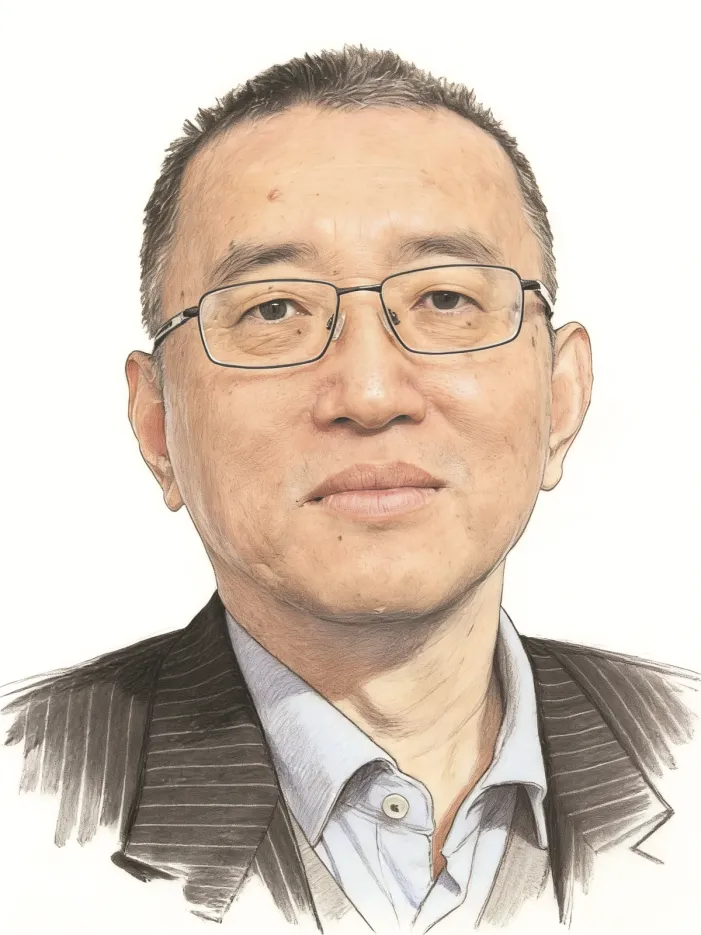
Zhang Lihua was a resident scholar at the Carnegie-Tsinghua Center until June 2020.
Please help TFF remain truly independent by contributing if you benefited from this article