Zero Dark Thirty – ZD30 – and American exceptionalism

ZD30 is the film narrative that tells the dramatic story of the special forces operation that on May 2, 2011 located and killed Osama Bin Laden in a compound on the outskirts of the Pakistani city of Abbottabad, which is not far from Islamabad.

It is directed by the prominent director, Kathryn Bigelow, who had won big Hollywood awards for her brilliant 2008 film, Hurt Locker, about the impact of combat experience in Iraq on the American soldiers taking part. She knows her craft, and ZD30 is captivates an audience due to its screenplay, virtuoso acting, taut plot, vividly contoured characters, insight into the mentality of CIA operatives and their bosses, and the evidently realistic portrayal of grisly torture scenes.

These filmic virtues have been displaced by a raging controversy as to whether ZD30 endorses torture as a valued and effective tool against extremist enemies of the United States and seems to imply that torture was instrumental in the successful hunt for Bin Laden.

Certainly President Obama claimed and received much credit in the United States for executing this mission, and it has received very little critical scrutiny. It is hard to calculate the impact of this strike that killed Bin Laden on the 2012 election, but it many believe it made a crucial difference, at least psychologically, and particularly in relation to the outcome in swing states and with respect to the last minute decisions reached by independent voters.

Such a success against Al Qaeda was registered as a major victory despite the absence of evidence that Bin Laden has been playing any significant role in Al Qaeda activities during recent years, including that of their so-called affiliates, in such countries as Yemen, Iraq, and Mali, and he was so removed from the scene of the conflict that there was serious speculation that he had died or was incapacitated long before 2011.

As it did with the 9/11 attacks, the U.S. government fans the flames of suspicion by refusing to disclose the evidence relied upon to identify that the person killed at the compound in Abbottabad was indeed Bin Laden and by the related refusal even to allow journalists or others to see the body before it was unceremoniously dumped at sea (although after administering Muslim burial rituals and obtaining a quiet approval from the Saudi government, his birthplace).

The deeper questions, of course, are the conduct of such a military mission without the permission, or even the knowledge, of the territorial sovereign; indeed there were American military units standing by in case Pakistan found out while the operation was underway and used its own military capabilities to abort it. Also, was it legally and morally appropriate to kill Osama Bin Laden despite his being unarmed when confronted in the compound and at that point in the raid there was no resistance?

It would seem clear that it would not be acceptable to the U.S. Government for other governments to carry out such an extra-judicial killing to eliminate an enemy leader living in a distant country. Would not many governments have a comparable security argument if faced with real or imagined overseas enemies? Arguably, the immensity of the 9/11 crimes and the grandiosity of Osama Bin Laden’s self-declared war against ‘the crusader’ forces of the West set him apart to some extent.

Yet, it would still seem that the particulars of this Operation Neptune Spear (the US Government code name) are ventures that only the United States, and possibly Israel, would undertake, and that their unabashed victory claim, is a notorious instance of American Exceptionalism, namely, an assertion that the United States can do what others must not dare to do, and can even provide for itself a legal rationale with the arrogant label ‘not for use by others,’ as has been the implicit message of the American debate, such as it is, about the legality of attack drones.

With a posture of post-colonial insensitivity the United States is currently openly discussing ‘establishing’ a military base for drone aircraft in Africa as if such a decision could be made solely in Washington without regard for the precedent being set or the regional attitudes toward the reassertion of a Western military presence.

The discussion generated by the movie is misleadingly framed as a kind of quarrel between those who insist on ‘political correctness’ when it comes to torture and militarism and those who champion freedom of speech and the amoral conscience of the artist.

Matt Taibbi ends an otherwise stellar, provocative review in Rolling Stone of ZD30 with what he must regard as an ironic closing line that speculates on how Dick Cheney would respond, as if that clinches the anti-Bigelow arguments: “Isn’t it just a crazy coincidence that he’s probably going to love it?” Bigelow doesn’t do much to unmuddy the waters by declaring herself to be “a lifelong pacifist’ and then in the same LA Times op/ed (Jan. 15, 2013) ending with what sounds to me like a ringing statement of approval of what the film depicts, including its torture sequences.

In Bigelow’s words, “Bin Laden wasn’t defeated by superheroes zooming down from the sky; he was defeated by ordinary Americans who fought bravely even as they sometimes crossed moral lines, who labored greatly and intently, who gave all of themselves in both victory and defeat, in life and in death, for the defense of this nation.”

Besides being quite a stark departure from pacifism this observation contradicts her earlier dismissal of moral criticism: “Those of us who work in the arts know that depiction is not endorsement. It fit was, no artist would be able to paint inhumane practices, no author could write about them, and no filmmaker could delve into the thorny subjects of our time.”

In the abstract, there can be no quibble with such sentiments, but let’s suppose that Picasso had coupled the unveiling of his Guernica with a glowing commentary that praised what Hitler’s and Mussolini’s pilots had accomplished by their attack on a Spanish village, insisting that the bombing of a defenseless village showed courage and resolve of the pilots who risked all in the defense of Franco’s Fascist side in the Spanish Civil War!

By her insistence on being both an amoral filmmaker and an American patriot she attempts to please everyone, but ends up satisfying no one, least of all someone trying to decipher her true beliefs about such a course of behavior.

Despite purporting to be non-committal, seeking only to tell the true story of the struggle to catch Bin Laden, the film does come down quite strongly in support of those who have long contended that torture works. On the one side the movie better than any other film I have seen, makes the undertaking of torture a distasteful enterprise in the extreme that sullies the torturer along with the victim (although the film suppresses any recognition of this blowback).

At the same time ZD30 normalizes torture as part of the routine of anti-terrorist warfare, and it scandalizes the torturers in the manner of Abu Ghraib, by merging brutality toward those who are helpless with humiliation that disgusts: forcing the Muslim victim to expose his genitals in the presence of females and leading the prisoners around with a dog leash in the manner given global notoriety by Lynndie England in an Iraq prison. Anyone who sees ZD30 will at least no longer be able to take refuge behind the euphemisms of the Bush Era that denied ‘torture’ ever took place, acknowledging only what it called ‘enhanced interrogation techniques,’ practices falsely alleged to be fully consistent with international humanitarian law.

The film handles well the intense bureaucratic pressures on CIA operatives from higher up to find some ‘actionable intelligence’ and making reliance on torture part of the job description. ZD30 also conveys the atmosphere within government, or at least the CIA, as one that takes it for granted that torture elicits reliable and valuable intelligence. There is no strong countervailing pressures evident except the vague appreciation that after Bush the new man in the White House, namely Obama, genuinely dislikes torture, and is unwilling to sweep the issue under the rug of mystification by calling torture enhanced interrogation techniques.

There is a derisive implication in the movie that to the extent the governmental wind is blowing in a slightly different direction in Washington the ongoing global work of imperial America will grow more difficult. There is no suggestion in ZD30 or in other contexts that Obama seeks to dismantle the American overseas empire or even to revise the role of military force in the grand strategy of the country.

The question of torture has been much discussed over the course of the last decade. It is usually defended by invoking an extreme situation, saving a city from a ‘ticking bomb’ or to locate someone about to massacre a school full of children, implying that torture will only be used when confronted by situations of exceptional and imminent danger. But the practice of torture become much more generalized once exceptions are made, as always in dealing with violent crime and politics, there is the possibility, however remote that access to information could avoid a disaster. Yet the taint of torture is not removable, and spreads; for this reason, only an unconditional prohibition, as written into international human rights law, is worthy of our moral, and political, respect.

For me more disturbing even than the indirect whitewashing of torture is the nationalization of a worldview that pervades the film (as well as the media and the political culture). There is no sense whatsoever that those who are killed or tortured might be innocent or have had unheeded grievances or that the American response to 9/11 was killing and wounding many more thousands than had been killed by Al Qaeda, a set of responses in which whole societies being torn asunder for little or no gain in American security, in effect, massive forms of collective punishment.

There is a monumental insensitivity to the sovereign rights of other states, most obviously Iraq, Pakistan, and Afghanistan. The American military is understandably focused on operational effectiveness , while it is less understandable that its political leaders remain oblivious to the rights and well-being of others. Implicitly, in the film and in American statecraft the lives of others are simply stage props on the geopolitical stage of political violence.

In this sense, objectively considered, the killing of Bin Laden seems little more than a costly and risky venture in vengeance that glorifies a militarist conception of security that can only bring massive doses of grief to societies around the world, and does great harm to the many young Americans being asked to put their mental and physical health in mortal jeopardy for very questionable purposes that are only marginally related to the defense and security of the country.

The historically high suicide, crime, and social dislocation among war veterans coming home from Iraq and Afghanistan should be heeded as a scream from the depths of the political culture rather than be treated as an awkward embarrassment that should not even factored into discussions of the costs of war.
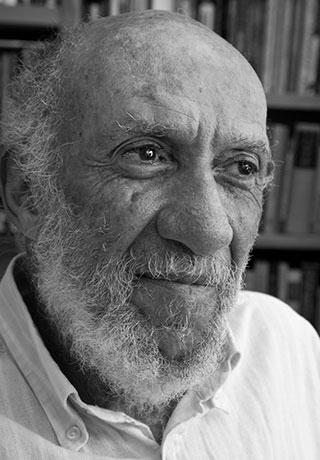

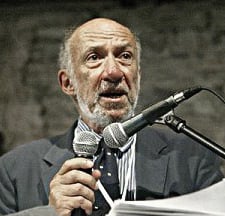
Professor Falk became an adviser to TFF when it was established in 1985.

Related Posts

Photos © TFF 2000 Read PressInfo 90 “Lift the Sanctions and Bring More Aid to Yugoslavia” See Pictures from Belgrade © TFF 2000 Please reprint, copy, archive, quote or re-post this item, but please retain the source.
PART 2 — Diplomacy, Law and Nonviolent Power By Jan ObergTFF co-founder and director January 26, 2026 This is the second of four TFF-created idea portfolios designed to curb the global reach of the United States and, in both the short and long term, help catalyse a worldwide nonviolent resistance to what many observers describe as the Trump administration’s uniquely confrontational, destructive and world-threatening policies. These portfolios outline what governments and citizens across the world can do through dynamic diplomacy, creative initiatives, and strictly nonviolent means. They are typical TFF works in that we do not only tell what the problem is and how bad it will go – as 90+% of all commentators, experts and scholars do – we tell what we think can be done, inviting you to think of what you think you can do. It seems painfully clear to me that the current political dynamics in Washington increasingly resemble the most dangerous...
TFF’s comprehensive proposal for dialogue about true peace in Ukraine is due in a day or two Jan Oberg November 20, 2025 What is being whispered through diplomatic corridors today is not peace, but quackery. The alleged 28‑point plan drafted in Washington and Moscow is mentioned as a solution to the Ukraine war. It is being negotiated by US businessman, real estate developer and Trump ally, Steve Witkoff, and by Kirill Dmitriev, who is CEO of the Russian Direct Investment Fund and a close ally of Putin, according to India’s Economic Times. For presumably good reasons, their education, qualifications and experience in international conflict analysis and peace-making remain untold. They look like surgeons who have never opened a medical textbook. It is nothing more than a mirage: a framework of concessions imposed on Ukraine’s citizens, negotiated without Kyiv, and excluding Europe. Like Gaza, it promises “peace” while institutionalising injustice. If half of what is available about...

Recent Articles

Tony Robinson October 4, 2026 Violence is easy to recognise when someone is being beaten, shot or killed. It becomes more difficult when nobody is holding a weapon. Poverty, discrimination, exploitation and repression can restrict a human life just as effectively, although they do so in very different ways and with very different consequences. Simply adding more categories to an ever-growing list of forms of violence does not really solve the problem. The more interesting question is what all these different situations have in common and why it makes sense to describe them using the same word. Human beings do not simply react to what happens around them. They remember the past, imagine things that do not yet exist, make plans and undertake projects. Workers organise because they imagine different working conditions; people migrate because they imagine another life somewhere else; social movements emerge because people refuse to accept the...
It’s a matter of principles, courage, vision and pulling together – while the militarist world is falling apart… Peter Langille October 3, 2026 “Here, then, is the problem which we present to you, stark and dreadful and inescapable: Shall we put an end to the human race; or shall mankind renounce war?”The Bertrand Russell—Albert Einstein Manifesto, July 9, 1955 ⁕ The forecast for what’s ahead is worrisome. The sharp rise in armed conflicts over the past three years is adding to what was already the highest level in over seventy years. Genocides, which should be prevented are supported. A shared climate emergency that jeopardises survival is ignored. Diverse polls now suggest that people are war-weary, worried and interested in a more effective United Nations. And, there are viable policy options for a more secure world! Yet governments are doubling-down, betting on more war and investing heavily. If current trends persist,...
Johan Galtung 1930-2024October 2015 Published here on October 3, 2026 Let us focus on Civilization for conflict analysis and remedies. Major forms of disorder use violence; war is state organized violence. The most belligerent states are the United States of America and Israel, both with civilization roots. National Evangelism, the US Protestant Christian civilization– more national than evangelical–justifies US warfare as exceptionalism of a people chosen by God, with a manifest destiny to run the world. Orthodox Judaism justifies Israeli warfare to conquer and expand from Nile to Euphrates as a religious right and duty to the Eternal One. The third most belligerent country, the UK, no longer believes it is God-chosen but chosen by the USA; not quite the same but something. But the root cause of global disorder lies in the Occident–with Islam–seeing itself as the single, universal civilization valid for all at all times, all others being...

TFF on Substack

Discover and subscribe to more peace materials on TFF Substack

Most Popular

Tony Robinson October 4, 2026 Violence is easy to recognise when someone is being beaten, shot or killed. It becomes more difficult when nobody is holding a weapon. Poverty, discrimination, exploitation and repression can restrict a human life just as effectively, although they do so in very different ways and with very different consequences. Simply adding more categories to an ever-growing list of forms of violence does not really solve the problem. The more interesting question is what all these different situations have in common and why it makes sense to describe them using the same word. Human beings do not simply react to what happens around them. They remember the past, imagine things that do not yet exist, make plans and undertake projects. Workers organise because they imagine different working conditions; people migrate because they imagine another life somewhere else; social movements emerge because people refuse to accept the...
It’s a matter of principles, courage, vision and pulling together – while the militarist world is falling apart… Peter Langille October 3, 2026 “Here, then, is the problem which we present to you, stark and dreadful and inescapable: Shall we put an end to the human race; or shall mankind renounce war?”The Bertrand Russell—Albert Einstein Manifesto, July 9, 1955 ⁕ The forecast for what’s ahead is worrisome. The sharp rise in armed conflicts over the past three years is adding to what was already the highest level in over seventy years. Genocides, which should be prevented are supported. A shared climate emergency that jeopardises survival is ignored. Diverse polls now suggest that people are war-weary, worried and interested in a more effective United Nations. And, there are viable policy options for a more secure world! Yet governments are doubling-down, betting on more war and investing heavily. If current trends persist,...
Johan Galtung 1930-2024October 2015 Published here on October 3, 2026 Let us focus on Civilization for conflict analysis and remedies. Major forms of disorder use violence; war is state organized violence. The most belligerent states are the United States of America and Israel, both with civilization roots. National Evangelism, the US Protestant Christian civilization– more national than evangelical–justifies US warfare as exceptionalism of a people chosen by God, with a manifest destiny to run the world. Orthodox Judaism justifies Israeli warfare to conquer and expand from Nile to Euphrates as a religious right and duty to the Eternal One. The third most belligerent country, the UK, no longer believes it is God-chosen but chosen by the USA; not quite the same but something. But the root cause of global disorder lies in the Occident–with Islam–seeing itself as the single, universal civilization valid for all at all times, all others being...
Read More
Living-Peace-Sign-Budapest-copy
Tony Robinson October 4, 2026 Violence is easy to recognise when someone is being beaten, shot or killed. It becomes more difficult when nobody is holding a weapon. Poverty, discrimination, exploitation and repression can restrict a human life just as effectively, although they do so in very different ways and with very different consequences. Simply adding more categories to an ever-growing list of forms of violence does not really solve the problem. The more interesting question is what all these different situations have in common and why it makes sense to describe them using the same word. Human beings do not simply react to what happens around them. They remember the past, imagine things that do not yet exist, make plans and undertake projects. Workers organise because they imagine different working conditions; people migrate because they imagine another life somewhere else; social movements emerge because people refuse to accept the...
b54a1f10-8c65-4f0b-9dd5-4abc0a7d04cc_2659x2659
It’s a matter of principles, courage, vision and pulling together – while the militarist world is falling apart… Peter Langille October 3, 2026 “Here, then, is the problem which we present to you, stark and dreadful and inescapable: Shall we put an end to the human race; or shall mankind renounce war?”The Bertrand Russell—Albert Einstein Manifesto, July 9, 1955 ⁕ The forecast for what’s ahead is worrisome. The sharp rise in armed conflicts over the past three years is adding to what was already the highest level in over seventy years. Genocides, which should be prevented are supported. A shared climate emergency that jeopardises survival is ignored. Diverse polls now suggest that people are war-weary, worried and interested in a more effective United Nations. And, there are viable policy options for a more secure world! Yet governments are doubling-down, betting on more war and investing heavily. If current trends persist,...
010
Johan Galtung 1930-2024October 2015 Published here on October 3, 2026 Let us focus on Civilization for conflict analysis and remedies. Major forms of disorder use violence; war is state organized violence. The most belligerent states are the United States of America and Israel, both with civilization roots. National Evangelism, the US Protestant Christian civilization– more national than evangelical–justifies US warfare as exceptionalism of a people chosen by God, with a manifest destiny to run the world. Orthodox Judaism justifies Israeli warfare to conquer and expand from Nile to Euphrates as a religious right and duty to the Eternal One. The third most belligerent country, the UK, no longer believes it is God-chosen but chosen by the USA; not quite the same but something. But the root cause of global disorder lies in the Occident–with Islam–seeing itself as the single, universal civilization valid for all at all times, all others being...
Screenshot 2026-10-02 011738
Jan ObergPhD, director, The Transnational Foundation for Peace and Future Research, TFFLund, Sweden October 2, 2026 This is my full original manuscript. The Chinese Academy of Social Science, CASS, makes two publications out if it. 1. China’s Five-year plan emphasized the capabilities of basic research and original innovation. It is regarded as the goal of the future social development, which, as required, should be significantly enhanced. Can you comment on the importance of original innovation in research and academic study? I believe it is easier to define “original innovation” in the natural sciences than in social sciences. The breaking points of what constitutes something new, or innovative, are not quite as sharp in the latter. But in both fields it is about opening up something that was closed, unseen, unexplored before – making manifest what was earlier latent. Innovations come in many forms and shapes – naming something that was not...
arctic-circle-map
The agreement is catastrophic both because of what it says and what it doesn’t mention. It reduces further the major asset of security policies: Freedom of action. Jan Oberg TFF director September 25, 2026 A couple of hours before the agreement was signed on September 22, 2026, I published the following 13 hypotheses about what it would most likely contain on TFF Substack (in English). I was wrong on only the first point. Contrary to what Trump had written on his Truth Social platform, it does not appear to come into force immediately. In fact, it turned out to be worse than even I had anticipated. After these hypotheses now come a number of reflections in light of what the agreement actually contains, and does not contain, as well as the way in which it has generally been presented by major media outlets and by the public-service broadcaster DR. My...
girl-5894831_1280
Below are TFF-related media mentions, comments, videos and social media posts published elsewhere but not on this homepage. We happen to catch and list only a fraction. Regarding video comments and debates, we recommend that you go to the TFF Video Channel on Substack where many of them are reproduced. Jan Oberg is a contributor to China Daily – 52 million daily clicks – and Global Times, CGTN and CCTV (the national television), China Investment, Xinhua News Agency and several others. Articles and videos on these media very often multiply into countless Chinese (and Western media) that re-post them from these main media. Thanks to The China Academy, his analyses, interviews and comments are frequently posted on YouTube channels such as Thinkers Forum and Wave Media. These videos are often re-posted on Bilibili (China’s YouTube), the China Content Center on TikTok, and on the Chinese edition of TikTok, Douyin.com. This means reaching hundreds of millions of viewers worldwide over a year. While there are too many to catch on all these...