
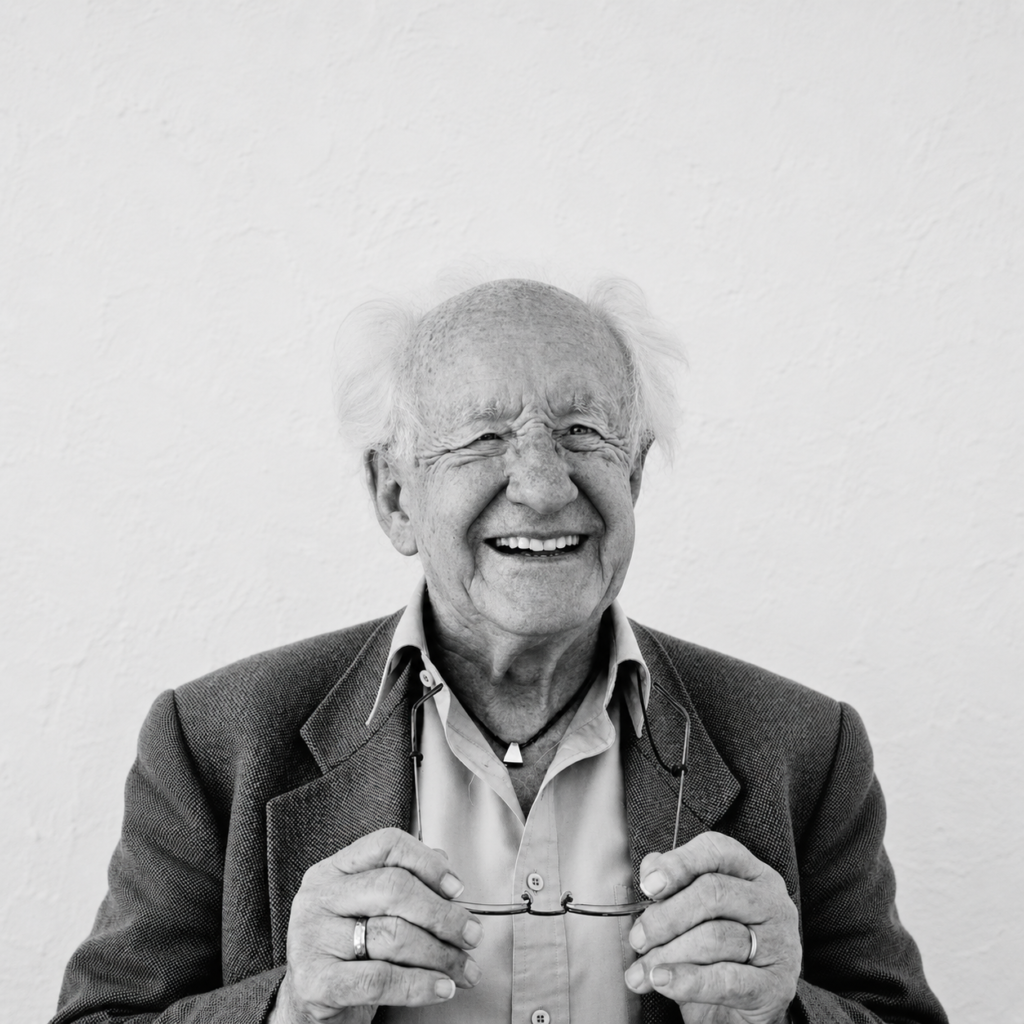
johangaltung

 In my columns, “The Year 2015-What Are We in For?”, I identified four unfolding, dramatic processes: the West will continue fighting unsuccessfully and violently to keep their world grip; Eurasia will expand and consolidate successfully and nonviolently; Islam will expand and consolidate partly violently; Latin America and Africa will expand and consolidate, spearheaded by Brazil, South Africa, BRICS.

A third of the year 2015 has now passed; let us take stock.

Headlines in the International New York Times tell the story:

18-19 April 2015: “U.S. is said to risk losing economic leadership”; “–a divided nation shedding hard-won clout”, “We’re withdrawing from the central place we had on the world stage”.

And for the UK: 29 April: “Britain’s drift from the world stage looms over the vote”.

These are statements about leadership, about being the center as a model to emulate; controlling world stage politics; not about economic growth. Losing leadership and drifting away may actually increase growth: control is a costly, non-productive endeavor for most businesses. Sensing that may accelerate the decline as world power.

However, the West fights and trains Afghans, Iraqis, Syrians to kill their compatriots. They take the money and the arms, fight miserably, not at all, or join the revolts. The West builds alliances to sow ISIS corpses for peace, and harvests more fighters. Better use their forces defensively, to protect groups exposed to terrible ISIS violence – maybe even as a neutral zone between Sunni and Shia, rather than using one against the other; now this one, now that one.

Moscow took the 1954 Crimea gift back without war, but fights to protect Russians near the Ukraine border – with less violence than Kiev bombing – in favor of federation and ceasefire. They got ceasefire in Minsk by excluding USA that wants war. NATO cracking weakens the West further; also over USA using the allies’ spy agencies – to spy on allies!

At the same time Eurasia is consolidating, negatively helped by the USA-EU sanctions against Russia, positively by Eurasia-building. The AIIP (Asia Industrial Infrastructure Bank) has many more USA-leaning founding members than USA is able to get together in TPP-Trans Pacific Partnership.

Nevertheless, more telling is the major infrastructure breakthrough: the (so far only freight) railroad newly opened from East China to Madrid (and on to Cadiz-Sevilla, for both Africa and Latin America); connecting eight countries: China-Kazakhstan-Russia-Belorussia-Poland-Germany-France-Spain. The president of China follows the rails, now signing treaties of friendship and cooperation with the first three, aiming at the next four along this aorta for the Eurasia organism.

How about these four EU members along the “silk railroad”?

Where are bold initiatives to project economic leadership and clout – even if the infrastructure is built by China it is but open to all? Beyond Spanish wine-olive oil-ham? Why did they not build that railroad long ago? Probably because they think too much North-South and too small, too bilaterally, too divide et impera.

They did not even build the Cairo-Cape Town railroad. The Chinese now seem to add that to the railroad from one ocean to the other, East-West, as they are behind the Nicaragua canal project – for the end of 2015. We shall soon see; the Chinese strategy is clearly to build infrastructure on the ground.

China is proactive in the EU and US “backyards”; making gains nonviolently when others lose violently by inaction and exploitation. Why? Maybe China sees rising Africa-Latin America as more competitive than declining EU-USA; thinking big, long term, as they do.

However, China may underestimate the two continents: their populations exceed that of China and are much younger. Even if the Chinese are better at making productive use of older people than the EU and USA, that counts. And sooner or later both will get single currencies, development banks and monetary funds: Gaddafi’s unfulfilled dream; killed by the West.

What’s the background of all of this?

A major factor was the USA seeing the Cold War as something they won because the Soviet Union broke down, treating Yeltsin-Russia as a defeated country; appointing Islam as the new enemy; encircling Russia-China, coming very close, just off the coast (imagine Chinese warships off Los Angeles); getting former Soviet countries into NATO, inviting Ukraine and Georgia.

Till China and Russia said Stop!, said Shanghai Cooperation Organisation (SCO), and gave a huge Muslim (70%) country, Kazakhstan, a major role. Russia played down the violence in Chechnya, China tries unsuccessfully so far in Xinjiang, while USA is stepping up anti-Black violence from city to city. The world watches.

What remains of the US empire is less NATO and more re-confirmed USA-Japan alliance, opening for Japanese combat support if the USA so wishes anywhere in the world. The economic infrastructure for this asymmetry is Japan enrolled in TPP. Will it ever get off the ground?

A major factor is illegitimate Chinese maritime policy in the East and South China Sea and along its ancient “silk” lane from East China to East Africa. China behaves as if the UN Law of the Sea, initiated with the UNCLOS-United Nations Conferences on the Law of the Sea in Caracas in 1974, does not exist. Nevertheless, military posturing is still far away from bombing-droning-sniping.

China could manage disputed waters-islands-shoals in South China Sea jointly with ASEAN, and East China Sea islands with Japan. USA needs these conflicts for their military projection. If China solves them, as they solved problems with Russia, the US military role dissolves, as it does in Ukraine. Maybe also the US-Japan alliance?

Being more guided by reason than the USA, removing the issues may be the Chinese way out. Like Russia-France-Germany try in Ukraine.

What about Israel? Watching with one concern: itself. Forecast: change of alliance partner, to solvent China, also with one concern: itself. A foothold gained for China, and lost for the USA. In the Middle East.

Will the next two thirds of 2015 be equally dramatic? At least!

Originally published by Transcend Media Service here.

Related Posts

What the West Borrowed from Asia and What It Left Behind Jan Krikke October 8, 2026 The article was originally published here In the late 1960s, the musical Hair announced that the Age of Aquarius was dawning. Its opening anthem promised a transformation of human consciousness: an era of peace, harmony and understanding. Half a century later, a familiar echo of that promise is a meditation app offered by your employer. You can find it in the same list of benefits as the pension plan and the gym discount. How did a spiritual revolution become an employee benefit? The answer lies in the history of the movement known as New Age: where it came from, what it borrowed from Asia, and why the meaning of what it borrowed changed in the process. Two definitions will help. New Age is a loose label for a wide range of spiritual practices and...
It’s a matter of principles, courage, vision and pulling together – while the militarist world is falling apart… Peter Langille October 3, 2026 “Here, then, is the problem which we present to you, stark and dreadful and inescapable: Shall we put an end to the human race; or shall mankind renounce war?”The Bertrand Russell—Albert Einstein Manifesto, July 9, 1955 ⁕ The forecast for what’s ahead is worrisome. The sharp rise in armed conflicts over the past three years is adding to what was already the highest level in over seventy years. Genocides, which should be prevented are supported. A shared climate emergency that jeopardises survival is ignored. Diverse polls now suggest that people are war-weary, worried and interested in a more effective United Nations. And, there are viable policy options for a more secure world! Yet governments are doubling-down, betting on more war and investing heavily. If current trends persist,...
The agreement is catastrophic both because of what it says and what it doesn’t mention. It reduces further the major asset of security policies: Freedom of action. Jan Oberg TFF director September 25, 2026 A couple of hours before the agreement was signed on September 22, 2026, I published the following 13 hypotheses about what it would most likely contain on TFF Substack (in English). I was wrong on only the first point. Contrary to what Trump had written on his Truth Social platform, it does not appear to come into force immediately. In fact, it turned out to be worse than even I had anticipated. After these hypotheses now come a number of reflections in light of what the agreement actually contains, and does not contain, as well as the way in which it has generally been presented by major media outlets and by the public-service broadcaster DR. My...

Recent Articles

Photo above: Carl Fredrik Reuterswärd’s Non-Violence outside UN Headquarters in New York. Kirill Levin, CC BY-NC-SA 2. Jan Oberg November 3, 2026 I am happy to be published in Horizons which is produced by the Center for International Relations and Sustainable Development, CIRSD, in Belgrade. My contribution brings out a radical re-thinking of what concepts such as defence, security, deterrence – and peace – may mean if we want to create a more peaceful world. It also summarises a few things I have been working with the last few decades. Please read it here Og her er den på dansk, takket være Johnny Baltzersens lynhurtige oversættelse
UNITE-tillid, DREAM-velstand og andre konstruktive komponenter Normally we publish articles in English here. But this is a translation of a very important TFF document that should reach as many as possible in Denmark since this country’s government has been one of the most hardline in Europe and, up till now at least, has refused to use diplomacy and, instead, spent tremendous sums on arming Ukraine with the express goal of defeating Russia. Thus this – unique – article is in Danish. Vi er Johnny Baltzersen og hans Fælles Sikkerhed – Fælles Fremtid på Substack overmåde taknemmelige for at have oversat og publiceret TFF’s 2025-portfølje for fredsidéer med henblik på Ukraines fremtid. Vi håber den nu kan nå mange flere danskere – som også vil sprede den og skabe debat – nu den danske regerings og folketingspartiernes politik på dette område siden 2022 står nu – forudsigeligt – ved vejs ende....
Jan Oberg TFF director October 28, 2026 Exactly one month has now passed since I published my criticism of the introduction to the special issue on Johan Galtung published by the Journal of Global Security Studies, JoGSS, and of Tor Egil Førland’s chapter about Galtung which serves as a preview to his forthcoming biography of Galtung to be published by PRIO. See the original on The Transnational here and the same article on TFF Substack with many general and critical comments and, in particular, the people who decided to withdraw from the biography project in protest. The special issue itself was extraordinary. It was devoted to the intellectual legacy of one of the founders of peace research and contained a number of strong assessments of his personality, scholarship, intellectual trajectory, and public role. Such assessments are, of course, entirely legitimate. No scholar is beyond criticism, and neither was Johan Galtung....

TFF on Substack

Discover and subscribe to more peace materials on TFF Substack

Most Popular

Photo above: Carl Fredrik Reuterswärd’s Non-Violence outside UN Headquarters in New York. Kirill Levin, CC BY-NC-SA 2. Jan Oberg November 3, 2026 I am happy to be published in Horizons which is produced by the Center for International Relations and Sustainable Development, CIRSD, in Belgrade. My contribution brings out a radical re-thinking of what concepts such as defence, security, deterrence – and peace – may mean if we want to create a more peaceful world. It also summarises a few things I have been working with the last few decades. Please read it here Og her er den på dansk, takket være Johnny Baltzersens lynhurtige oversættelse
UNITE-tillid, DREAM-velstand og andre konstruktive komponenter Normally we publish articles in English here. But this is a translation of a very important TFF document that should reach as many as possible in Denmark since this country’s government has been one of the most hardline in Europe and, up till now at least, has refused to use diplomacy and, instead, spent tremendous sums on arming Ukraine with the express goal of defeating Russia. Thus this – unique – article is in Danish. Vi er Johnny Baltzersen og hans Fælles Sikkerhed – Fælles Fremtid på Substack overmåde taknemmelige for at have oversat og publiceret TFF’s 2025-portfølje for fredsidéer med henblik på Ukraines fremtid. Vi håber den nu kan nå mange flere danskere – som også vil sprede den og skabe debat – nu den danske regerings og folketingspartiernes politik på dette område siden 2022 står nu – forudsigeligt – ved vejs ende....
Jan Oberg TFF director October 28, 2026 Exactly one month has now passed since I published my criticism of the introduction to the special issue on Johan Galtung published by the Journal of Global Security Studies, JoGSS, and of Tor Egil Førland’s chapter about Galtung which serves as a preview to his forthcoming biography of Galtung to be published by PRIO. See the original on The Transnational here and the same article on TFF Substack with many general and critical comments and, in particular, the people who decided to withdraw from the biography project in protest. The special issue itself was extraordinary. It was devoted to the intellectual legacy of one of the founders of peace research and contained a number of strong assessments of his personality, scholarship, intellectual trajectory, and public role. Such assessments are, of course, entirely legitimate. No scholar is beyond criticism, and neither was Johan Galtung....
Read More
knotted gun
Photo above: Carl Fredrik Reuterswärd’s Non-Violence outside UN Headquarters in New York. Kirill Levin, CC BY-NC-SA 2. Jan Oberg November 3, 2026 I am happy to be published in Horizons which is produced by the Center for International Relations and Sustainable Development, CIRSD, in Belgrade. My contribution brings out a radical re-thinking of what concepts such as defence, security, deterrence – and peace – may mean if we want to create a more peaceful world. It also summarises a few things I have been working with the last few decades. Please read it here Og her er den på dansk, takket være Johnny Baltzersens lynhurtige oversættelse
TFFPortfolioVign
UNITE-tillid, DREAM-velstand og andre konstruktive komponenter Normally we publish articles in English here. But this is a translation of a very important TFF document that should reach as many as possible in Denmark since this country’s government has been one of the most hardline in Europe and, up till now at least, has refused to use diplomacy and, instead, spent tremendous sums on arming Ukraine with the express goal of defeating Russia. Thus this – unique – article is in Danish. Vi er Johnny Baltzersen og hans Fælles Sikkerhed – Fælles Fremtid på Substack overmåde taknemmelige for at have oversat og publiceret TFF’s 2025-portfølje for fredsidéer med henblik på Ukraines fremtid. Vi håber den nu kan nå mange flere danskere – som også vil sprede den og skabe debat – nu den danske regerings og folketingspartiernes politik på dette område siden 2022 står nu – forudsigeligt – ved vejs ende....
JoGSS-Silent
Jan Oberg TFF director October 28, 2026 Exactly one month has now passed since I published my criticism of the introduction to the special issue on Johan Galtung published by the Journal of Global Security Studies, JoGSS, and of Tor Egil Førland’s chapter about Galtung which serves as a preview to his forthcoming biography of Galtung to be published by PRIO. See the original on The Transnational here and the same article on TFF Substack with many general and critical comments and, in particular, the people who decided to withdraw from the biography project in protest. The special issue itself was extraordinary. It was devoted to the intellectual legacy of one of the founders of peace research and contained a number of strong assessments of his personality, scholarship, intellectual trajectory, and public role. Such assessments are, of course, entirely legitimate. No scholar is beyond criticism, and neither was Johan Galtung....
Screenshot 2026-10-26 115647
An aspect of Iran’s culture and civilisation you’ve probably never heard about. Don’t be surprised if the US and Israel also try to bomb them. Jan ObergTFF director October 26, 2026 Today – under the “USraeli” threat of new “annihilating” bombings – opens the 7th International Conference on Peace and Conflict Resolution at Tehran’s University. As far as I can tell, this is the only permanent, advanced peace research institution in West Asia/the Middle East. Perhaps more countries in that region could be inspired? I mean, how many military “security” institutes and military academies do they have? Many peace research institutes and university departments have been established since the 1950s in the West. They are now all under attack; some have closed down, some have gone mainstream, yet others kept the name but do nothing to research peace and disseminate results or advice; instead, they cooperate with militarism’s platforms such...
Screenshot 2026-10-15 141837
Let’s discuss using AI to create peace – in contrast to boring geopolitics devoid of creative healing and visions. Jan Oberg TFF director October 15, 2026 I asked VEED to create a short video exemplifying how peace is preferable to war, then chose the lady as a template. Simple as that. In less than a minute, it produced this video, which any peace-loving person would appreciate. The only problem is that human intelligence (HI), at least the one that exists among Western decision-makers, isn’t half as moral or smart as AI. I have used AI to dialogue about peace and peace plans, creative conflict resolution and visions of a better future for humankind. It so happens that I am having more stimulating, intelligent, creative and moral discussions with AI than I could possibly have with any EU or NATO leader today. Yes, AI has very problematic and dangerous aspects; used...
girl-5894831_1280
Below are TFF-related media mentions, comments, videos and social media posts published elsewhere but not on this homepage. We happen to catch and list only a fraction. Regarding video comments and debates, we recommend that you go to the TFF Video Channel on Substack where many of them are reproduced. Jan Oberg is a contributor to China Daily – 52 million daily clicks – and Global Times, CGTN and CCTV (the national television), China Investment, Xinhua News Agency and several others. Articles and videos on these media very often multiply into countless Chinese (and Western media) that re-post them from these main media. Thanks to The China Academy, his analyses, interviews and comments are frequently posted on YouTube channels such as Thinkers Forum and Wave Media. These videos are often re-posted on Bilibili (China’s YouTube), the China Content Center on TikTok, and on the Chinese edition of TikTok, Douyin.com. This means reaching hundreds of millions of viewers worldwide over a year. While there are too many to catch on all these...





