
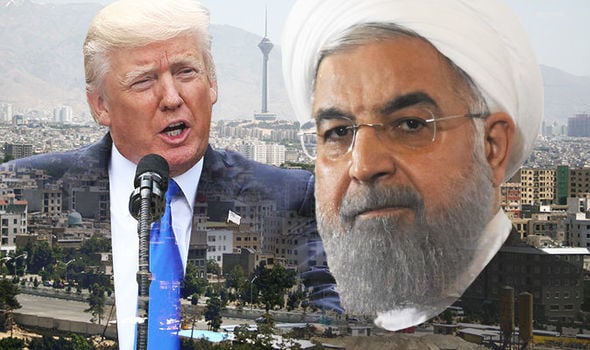
The US is sleepwalking into a real war with Iran

August 3, 2019

By Prabir Purkayastha

The U.S. plans for a naval armada in Hormuz will run against the Laws of Seas and Iran’s sovereignty over its territorial waters. We are now sleepwalking to a new war in the region with disastrous consequences.

The stage is now set for a disastrous collision between the U.S.-UK navies and Iran in the busy waters of the Strait of Hormuz. The Strait connects the Persian Gulf to the Arabian Sea and makes up the world’s major oil choke point, carrying about 30-35 percent of total traded oil.

The latest move of the U.S. and UK—to provide “protection” with their warships to merchant vessels in the Strait of Hormuz—is an assertion of imperial rights over Iran’s territorial waters. In other words, this is what would have been called, in an earlier era, gunboat diplomacy.

Iran will not accept this.

Originally published at citizentruth.org

This round of escalation began with the seizure of tankers, first by the UK and later by Iran. Both seizures took place in waterways so narrow that they are within the 12-nautical mile limit of territorial waters of the countries bordering them.

The Strait of Gibraltar is only 7 nautical miles wide, while the Strait of Hormuz is 21 nautical miles wide. If vessels are to transit using only international waters, a waterway must have a width of at least 24 nautical miles plus another 6. The additional 6 nautical miles have to provide two lanes for traffic each way, with each lane 2 nautical miles wide, and a 2-nautical mile channel separating the two lanes.

What happens if waterways such as the Strait of Hormuz are so narrow that they do not have international waters for the passage of ships? Can Iran then claim, as a coastal state, that it has the right to decide who uses the strait since it falls under its territorial waters?

This is one of the issues addressed by the UN Convention on the Law of the Sea (UNCLOS), which was adopted in 1982 and came into effect in 1994. It allows innocent passage of ships—both civilian and military—through such straits.

The catch is “innocent passage,” as defined in Article 19(2). If Iran deems that the U.S.-UK warships “protecting” tankers are, in fact, threatening Iran, or are involved in spying missions, or are interfering with its communication systems, it has the right to bar their passage.

Iran is a signatory to UNCLOS with the caveat that it will not extend the rights under the treaty to non-signatories. The U.S., though fully involved in the negotiations, refused to sign or ratify UNCLOS.

The Paris Climate Change Agreement and the Joint Comprehensive Plan of Action (JCPOA) are not the only treaties that the U.S. negotiated only to walk out of them.

So what does the U.S. accept as its navigation rights? The U.S. does pay lip service to UNCLOS. But in 1982, the same year UNCLOS was signed, the U.S. drew up a set of rights based on what it calls customary rights.

It “implements” these rights under a Freedom of Navigation (FON) Program and conducts Operations (FONOPS) in any part of the world it deems fit. It’s as if the U.S. is asserting its “right,” as the preeminent naval power in the world, to do what it wants anywhere.

In the colonial era, “enforcing” such rights of imperial powers used to be called gunboat diplomacy. Now it is called FONOPS.

The attempt by the U.S. and UK to control the Strait of Hormuz with its warships challenges Iran’s rights over the strait. Under UNCLOS, Iran can claim that the U.S. and UK warships cannot exercise the right of innocent passage through the strait in the name of providing security to merchant vessels.

Simply put, no country can seize Iran’s ships, stop its oil exports, and yet claim that it can post a naval armada in Iran’s territorial waters under the guise of innocent passage.

Of course, Iran’s larger logic articulated by President Hassan Rouhani is quite simple: either all countries have security for their oil exports through the strait, or no country will.

This brings us back to the start of the new tanker war. It began with the UK’s seizure of the tanker Grace 1 with 2 million barrels of crude oil in the Strait of Gibraltar, claiming EU Sanctions.

Iran responded by capturing a UK-flagged tanker, Stena Impero, in the Strait of Hormuz, claiming violations of maritime law.

The UK claims that it seized Grace 1 under EU sanctions on Syria, the same EU that it is Brexiting in a hurry. Most commentators now accept that the UK acted to implement the U.S. sanctions on Iran, not EU sanctions.

The UK’s legal right to seize either ships or goods in transit through the Strait of Gibraltar is highly debatable. It is Iran’s oil; and even if it is going to Syria as the UK claims, Syria is not under UN sanctions, the only legal international sanctions that count.

The European External Action Service, the EU body responsible for its foreign policy, was deafening in its silence on the UK action, supposedly taken to enforce EU sanctions.

Even Carl Bildt, the co-chair of the European Council on Foreign Relations, was constrained to tweet, “…One refers to EU sanctions against Syria, but Iran is not a member of EU. And EU as a principle doesn’t impose its sanctions on others. That’s what the US does.”

Iran has claimed that Stena Impero, the British tanker, was seized as it hit a fishing boat, seriously injured fishermen and ignored the boat’s distress calls. When confronted by Iranian patrol boats, Stena Impero illegally switched off its transponder, and attempted a U-turn that took it on the opposite side of the transit channel, endangering other ships.

Hence the Iranian Guards seized the ship to face charges in Iranian courts for violating maritime law and rules of transit in the strait.

Are the Iranian claims credible? Or have the facts been “manufactured” to justify a tit-for-tat response to the UK? Iran at least has jurisdiction if there was indeed a maritime violation in the strait.

The UK’s jurisdiction for seizing Grace 1 rests on far more tenuous grounds.

The current Iran crisis may have begun with Trump pulling out of the Iran nuclear deal. But his reason for abandoning the deal is neither Iran’s nuclear capability nor its nuclear energy program.

Trump believes that the U.S., through “maximum pressure”—read economic war—can force Iran to surrender.

The three demands at the core of the Trump-Pompeo twelve demands are: 1) give up nuclear technology; 2) give up missile capability; 3) withdraw support to countries or groups outside your borders.

This is asking Iran to disarm; not develop any advanced technology as nuclear and missile technologies are both dual-use technologies; and abandon its right to conduct an independent foreign policy.

In other words, the demands spell out the death knell of Iran as an independent nation.

The U.S. proposed a new “coalition of the willing” to create a naval armada to control the Strait of Hormuz. Its European allies—even the UK—are wary of joining such an armada.

Though the UK is talking about protecting its ships independent of the U.S., its navy today is too weak to perform this task: it cannot match Iran’s firepower in Iranian waters.

However, the UK does have a symbolic value if it joins the U.S. naval operations. With a hard Brexit looming over the horizon, the UK desperately needs a favorable U.S. trade deal; this may force it to join the U.S. naval misadventure in the straits.

Why do I call it a naval misadventure? I do not believe that the U.S., in a conventional war, can fully neutralize Iranian missile batteries, submarines and naval boats, and establish complete control over the straits.

Iran can fight an asymmetric war—in which its only objective is to close the straits, not “win.” The U.S. will not only have to keep the straits open, but also protect all the shipping including the 15-odd Very Large Crude Carriers (VLCCs) that transit the straits every day.

Even if one of these tankers is hit, the impact will be catastrophic—not only on the marine environment, but also on shippers and their insurance. Gunboat diplomacy can only take the U.S. so far.

In today’s interdependent world, the only recourse is real diplomacy.

Are we close to a war over the U.S.-Iran standoff? If we follow the Doomsday Clock of the Atomic Scientists with a similar one for oil, we are probably one minute to midnight.

For the world, particularly South, Southeast and East Asia, a war in the region that provides the bulk of its oil will be devastating.

Why then are we sleepwalking into another war there?

Originally published at citizentruth.org

About the author

Prabir Purkayastha is the founder and editor in chief of Newsclick. He is the president of the Free Software Movement of India and is an engineer and a science activist.


One Response

  1. As this excellent article points out, the United States and the United Kingdom are returning the world to the era of gunboat diplomacy. The Trump administration is imposing an economic blockade on Iran, preventing her from selling her oil, and openly announcing that it wants to bring Iran’s oil exports to zero, and yet US officials expect Iran to meekly accept this form of economic terrorism. The Security Council that unanimously endorsed the JCPOA (Iran’s nuclear deal) with Resolution 2231 lifted all sanctions on Iran and called on all the signatories of the deal to cooperate in good faith enabling Iran to receive the economic benefits of the deal. Yet by ditching that agreement and imposing sanctions on Iran, Trump has acted illegally and is forcing other countries to do the same. The violation of international law and imposing extraterritorial sanctions is not something that concerns Iran alone, but it undermines the basis of a rule-based international order. It is incumbent upon all countries that respect the rule of law and cherish their own independence to rise up against US’s bullying tactics and violations of international law. As the article points out, the seizing of Grace 1 was wrong for a number of reasons. It was sailing in international waters and had the right of innocent passage. Iran is not bound by EU sanctions as she is not an EU member, and in any case the sanctions do not prohibit the sale of oil to Syria. They only prohibit the sale of jet fuel for military purposes. The EU had not called on the UK to send dozens of marines to Gibraltar to seize a tanker in waters that are claimed by Spain. Gibraltar authorities changed their law the night before seizing the ship in order to justify their illegal action. Spanish foreign minister has stated that the seizing of the tanker was not done at the EU request but was demanded by the Trump administration that had been tracking the tanker. Immediately after the sizing of the tanker John Bolton in a tweet congratulated British marines for seizing the tanker, calling it an excellent news. Therefore, contrary to her claims, Britain has become a party to Trump’s illegal sanctions on Iran. If EU countries do not take a strong stance on this issue of naval piracy and if they do not object to the formation of either a US or EU-led naval force to harass Iranian ships in the Persian Gulf they will be guilty of collusion with an act of aggression by a country that regards itself to be above the rule of law. That failure will have enormous negative consequences for the world, including the EU, and will pose a serious threat to international peace and security.

Related Posts

The agreement is catastrophic both because of what it says and what it doesn’t mention. It reduces further the major asset of security policies: Freedom of action. Jan Oberg TFF director September 25, 2026 A couple of hours before the agreement was signed on September 22, 2026, I published the following 13 hypotheses about what it would most likely contain on TFF Substack (in English). I was wrong on only the first point. Contrary to what Trump had written on his Truth Social platform, it does not appear to come into force immediately. In fact, it turned out to be worse than even I had anticipated. After these hypotheses now come a number of reflections in light of what the agreement actually contains, and does not contain, as well as the way in which it has generally been presented by major media outlets and by the public-service broadcaster DR. My...
A friendly quarrel while we agree that the US sanctions are a weapon of mass destruction and kill more people than wars do. And that we must talk much more about sanctions than we have so far. Jan Oberg, TFF director March 16, 2026 John Mearsheimer recently stated that U.S. sanctions murdered around 38 million people between 1971 and 2021 – see the video below. It is a dramatic figure, and it has spread quickly because it captures, in one sentence, the enormous human cost of modern sanctions. I share his concern about the destructive effects of economic coercion. But the specific number he cites — and the way he attributes it — deserves a friendly academic clarification. The figure comes from a 2023 Lancet Global Health article estimating the mortality effects of unilateral U.S. and EU sanctions over the past half‑century. This is the first point where Mearsheimer’s shorthand diverges from the text: the study...
This is not another geopolitical commentary on the Arctic. It is a visionary peace proposal that can save the region from militarised rivalry and ecological ruin. A blueprint for shared security, sustainable development, and human dignity — benefitting Greenland, the Arctic, and the rest of us. Jan Oberg TFF director Lund, Sweden, February 17, 2026 I. Four Principles for a New Arctic Vision The Arctic is often framed as a cold arena of rivalry — a place where great powers test each other’s resolve. But this worldview is outdated, unimaginative, and ultimately self‑defeating. The Arctic is not a vacuum waiting to be militarised; it is a living region, a climate stabiliser, and a cultural homeland whose future will shape the future of humanity. If we begin from that understanding, a far more rational Arctic order becomes possible — one that is peaceful, cooperative, and centred on the people who actually live there. This vision rests...

Recent Articles

An aspect of Iran’s culture and civilisation you’ve probably never heard about. Don’t be surprised if the US and Israel also try to bomb them. Jan ObergTFF director October 26, 2026 Today – under the “USraeli” threat of new “annihilating” bombings – opens the 7th International Conference on Peace and Conflict Resolution at Tehran’s University. As far as I can tell, this is the only permanent, advanced peace research institution in West Asia/the Middle East. Perhaps more countries in that region could be inspired? I mean, how many military “security” institutes and military academies do they have? Many peace research institutes and university departments have been established since the 1950s in the West. They are now all under attack; some have closed down, some have gone mainstream, yet others kept the name but do nothing to research peace and disseminate results or advice; instead, they cooperate with militarism’s platforms such...
Let’s discuss using AI to create peace – in contrast to boring geopolitics devoid of creative healing and visions. Jan Oberg TFF director October 15, 2026 I asked VEED to create a short video exemplifying how peace is preferable to war, then chose the lady as a template. Simple as that. In less than a minute, it produced this video, which any peace-loving person would appreciate. The only problem is that human intelligence (HI), at least the one that exists among Western decision-makers, isn’t half as moral or smart as AI. I have used AI to dialogue about peace and peace plans, creative conflict resolution and visions of a better future for humankind. It so happens that I am having more stimulating, intelligent, creative and moral discussions with AI than I could possibly have with any EU or NATO leader today. Yes, AI has very problematic and dangerous aspects; used...
Below are TFF-related media mentions, comments, videos and social media posts published elsewhere but not on this homepage. We happen to catch and list only a fraction. Regarding video comments and debates, we recommend that you go to the TFF Video Channel on Substack where many of them are reproduced. Jan Oberg is a contributor to China Daily – 52 million daily clicks – and Global Times, CGTN and CCTV (the national television), China Investment, Xinhua News Agency and several others. Articles and videos on these media very often multiply into countless Chinese (and Western media) that re-post them from these main media. Thanks to The China Academy, his analyses, interviews and comments are frequently posted on YouTube channels such as Thinkers Forum and Wave Media. These videos are often re-posted on Bilibili (China’s YouTube), the China Content Center on TikTok, and on the Chinese edition of TikTok, Douyin.com. This means reaching hundreds of millions of viewers worldwide over a year. While there are too many to catch on all these...

TFF on Substack

Discover and subscribe to more peace materials on TFF Substack

Most Popular

An aspect of Iran’s culture and civilisation you’ve probably never heard about. Don’t be surprised if the US and Israel also try to bomb them. Jan ObergTFF director October 26, 2026 Today – under the “USraeli” threat of new “annihilating” bombings – opens the 7th International Conference on Peace and Conflict Resolution at Tehran’s University. As far as I can tell, this is the only permanent, advanced peace research institution in West Asia/the Middle East. Perhaps more countries in that region could be inspired? I mean, how many military “security” institutes and military academies do they have? Many peace research institutes and university departments have been established since the 1950s in the West. They are now all under attack; some have closed down, some have gone mainstream, yet others kept the name but do nothing to research peace and disseminate results or advice; instead, they cooperate with militarism’s platforms such...
Let’s discuss using AI to create peace – in contrast to boring geopolitics devoid of creative healing and visions. Jan Oberg TFF director October 15, 2026 I asked VEED to create a short video exemplifying how peace is preferable to war, then chose the lady as a template. Simple as that. In less than a minute, it produced this video, which any peace-loving person would appreciate. The only problem is that human intelligence (HI), at least the one that exists among Western decision-makers, isn’t half as moral or smart as AI. I have used AI to dialogue about peace and peace plans, creative conflict resolution and visions of a better future for humankind. It so happens that I am having more stimulating, intelligent, creative and moral discussions with AI than I could possibly have with any EU or NATO leader today. Yes, AI has very problematic and dangerous aspects; used...
Below are TFF-related media mentions, comments, videos and social media posts published elsewhere but not on this homepage. We happen to catch and list only a fraction. Regarding video comments and debates, we recommend that you go to the TFF Video Channel on Substack where many of them are reproduced. Jan Oberg is a contributor to China Daily – 52 million daily clicks – and Global Times, CGTN and CCTV (the national television), China Investment, Xinhua News Agency and several others. Articles and videos on these media very often multiply into countless Chinese (and Western media) that re-post them from these main media. Thanks to The China Academy, his analyses, interviews and comments are frequently posted on YouTube channels such as Thinkers Forum and Wave Media. These videos are often re-posted on Bilibili (China’s YouTube), the China Content Center on TikTok, and on the Chinese edition of TikTok, Douyin.com. This means reaching hundreds of millions of viewers worldwide over a year. While there are too many to catch on all these...
Read More
Screenshot 2026-10-26 115647
An aspect of Iran’s culture and civilisation you’ve probably never heard about. Don’t be surprised if the US and Israel also try to bomb them. Jan ObergTFF director October 26, 2026 Today – under the “USraeli” threat of new “annihilating” bombings – opens the 7th International Conference on Peace and Conflict Resolution at Tehran’s University. As far as I can tell, this is the only permanent, advanced peace research institution in West Asia/the Middle East. Perhaps more countries in that region could be inspired? I mean, how many military “security” institutes and military academies do they have? Many peace research institutes and university departments have been established since the 1950s in the West. They are now all under attack; some have closed down, some have gone mainstream, yet others kept the name but do nothing to research peace and disseminate results or advice; instead, they cooperate with militarism’s platforms such...
Screenshot 2026-10-15 141837
Let’s discuss using AI to create peace – in contrast to boring geopolitics devoid of creative healing and visions. Jan Oberg TFF director October 15, 2026 I asked VEED to create a short video exemplifying how peace is preferable to war, then chose the lady as a template. Simple as that. In less than a minute, it produced this video, which any peace-loving person would appreciate. The only problem is that human intelligence (HI), at least the one that exists among Western decision-makers, isn’t half as moral or smart as AI. I have used AI to dialogue about peace and peace plans, creative conflict resolution and visions of a better future for humankind. It so happens that I am having more stimulating, intelligent, creative and moral discussions with AI than I could possibly have with any EU or NATO leader today. Yes, AI has very problematic and dangerous aspects; used...
girl-5894831_1280
Below are TFF-related media mentions, comments, videos and social media posts published elsewhere but not on this homepage. We happen to catch and list only a fraction. Regarding video comments and debates, we recommend that you go to the TFF Video Channel on Substack where many of them are reproduced. Jan Oberg is a contributor to China Daily – 52 million daily clicks – and Global Times, CGTN and CCTV (the national television), China Investment, Xinhua News Agency and several others. Articles and videos on these media very often multiply into countless Chinese (and Western media) that re-post them from these main media. Thanks to The China Academy, his analyses, interviews and comments are frequently posted on YouTube channels such as Thinkers Forum and Wave Media. These videos are often re-posted on Bilibili (China’s YouTube), the China Content Center on TikTok, and on the Chinese edition of TikTok, Douyin.com. This means reaching hundreds of millions of viewers worldwide over a year. While there are too many to catch on all these...
Nobel-Prize-Plaque
Jan Oberg TFF director October 13, 2026 According to Alfred Nobel’s will, the Nobel Peace Prize shall be awarded: ”to the person who has done the most or best to advance fellowship among nations, the abolition or reduction of standing armies, and the establishment and promotion of peace congresses.” Further down, he also expresses how the prize for the “champions of peace” shall be decided: “that for champions of peace by a committee of five persons to be selected by the Norwegian Storting. Alfred Nobel’s will is remarkably short and clear. But few seem to have read it. Nobel did not say that the committee itself should consist of members of parliament. He entrusted the Storting with appointing five persons. In principle, it could have selected diplomats, mediators, peace researchers, conflict-resolution specialists, or other individuals with recognised expertise in matters of peace from around the world. Instead, the Storting gradually...
law-419057_1280
The Quest for Humane Survival Richard Falk Professor emeritus, Princeton UniversityTFF Associate since 1986October 12, 2026 After decades of teaching and writing about international law in academic frameworks that were not institutionally situated within law school environments—at Princeton and the University of California, Santa Barbara—I found myself most receptive to the TWAIL outlook. It has been especially illuminating in clarifying the extent to which international law evolved as a dialogical critique of Europe’s efforts to legitimize its colonial undertakings. In particular, TWAIL has exposed how international law has functioned to legalize the subjugation of Third World peoples, securing conditions for exploitative investment and trade relations, the coercive enforcement of public debts, and an ideology of cultural superiority. TWAIL’s exposure of these economic legacies of colonialism has influenced my understanding of the history and development of international law, broadly conceived, as an ideological project of the Western sub-system of the world...
images-2
Advocates of nuclear disarmament are regularly dismissed by the champions of nuclear deterrence as naïve and unrealistic, utopian or even irresponsible. Yet this ‘doctrine’ of deterrence, regarded by France as the ‘cornerstone’ of its national security, is based on quasi-religious beliefs, a theory that cannot be proven, risky gambles and fragile assumptions. So much so that one might legitimately ask which side the ‘Care Bears’ are on. Marc FinaudVice-President of Initiatives for Nuclear Disarmament (IDN) October 9, 2026 This article was originally published on Pressenza When it comes to these things being treated as religious concepts, look here. Idealists and realists It was Hubert Védrine, François Mitterrand’s former Foreign Minister, who repeatedly coined the phrase: ‘Europeans are a sort of Care Bears who don’t realise they’re living in Jurassic Park’. He applies this reference to the cartoon for well-behaved children not only to what he regards as weakness or idealism...



