
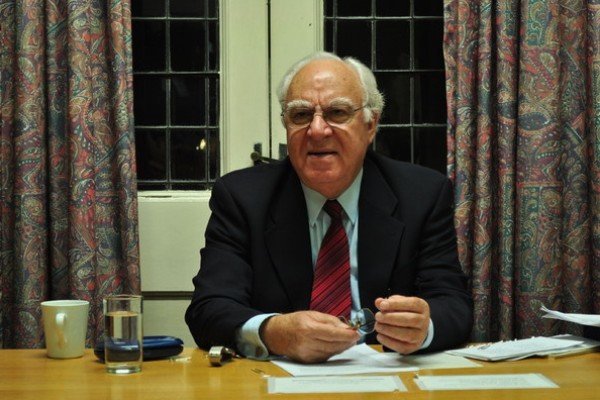
By Farhang Jahanpour

November 2, 2018

On Tuesday 30 October, Denmark announced that a suspected Iranian government intelligence service had tried to carry out a plot to assassinate an Iranian Arab opposition activist on its soil.

Without providing any evidence, Denmark’s foreign minister said he believed the Iranian government was behind the alleged plot, and called for fresh European-wide sanctions against Iran.

Reuters reported that a Norwegian citizen of Iranian background had been arrested in Sweden on Oct. 21 in connection with the plot and extradited to Denmark.

According to Danish intelligence chief Finn Borch Andersen, the attack was meant to target the leader of the Danish branch of an Arab separatist movement, Arab Struggle Movement for the Liberation of Ahvaz (ASMLA).

However, Andersen added that the arrested Norwegian citizen had denied the charges in court of helping a foreign intelligence service plot an assassination in Denmark.

So far, the only evidence provided against the Norwegian suspect is that he had been observed photographing and watching the Danish home of the ASMLA leader.

ASMLA is a small, radical movement that calls for the independence of Iranian province of Khuzestan. In the past, the Arab secessionist movement in Khuzestan received support from Saddam Hussein, and it is now believed to be supported by the Saudis, especially Saudi Crown Prince Mohammed bin Salman who has promised to take the war to Iran.

During the past few months, Iran has been the target of a number of terrorist attacks by Kurdish, Baloch and Arab ethnic groups backed by Saudi Arabia. On 16 October, at least 12 Iranian border guards were abducted on the Iranian side of the Pakistani-Iranian border by Jaish al-Adl, a militant Baloch group, allegedly linked to Saudi Arabia.

It is interesting that the statement about their abduction was issued in Arabic, rather than in Baloch language as is normally done.

Last year, ISIS claimed responsibility for a terrorist attack on Iranian parliament and Ayatollah Khomeini’s shrine, killing at least 12 and injuring many more. US government did not condemn that attack, but instead blamed Iran for it.

On 22 September, a major terrorist attack was launched at a military parade in Ahvaz, the capital of Khuzestan province, which incidentally was marking the anniversary of the Iran-Iraq War.

In that attack, 29 people, mainly civilians watching the parade, were killed and about 70 others were injured. Both ISIS and ASMLA claimed responsibility for that terrorist act.

Following those attacks, tens of thousands of people in Ahvaz took part in the funerals of those who had been killed, showing that ASMLA was almost totally isolated.

Following that incident, Iran summoned the ambassadors of the Netherlands, Denmark and Britain to the Iranian Ministry of Foreign Affairs, protesting against the presence of some leading members of that terrorist group in those countries.

Danish Prime Minister Lars Lokke Rasmussen called the alleged attack against an ASMLA leader “totally unacceptable” and said British Prime Minister Theresa May had voiced her support for Denmark during a meeting in Oslo.

Danish Foreign Minister Anders Samuelsen told a press conference he believed the Iranian government was behind the attempted attack. “In light of the latest development, Denmark will now push for a discussion in the EU on the need for further sanctions against Iran,” Samuelsen said.

Denmark’s ambassador in Tehran had been recalled for consultations, Samuelsen added.

Although it is very difficult to make a definitive judgement about this alleged plot, and Danish authorities may provide more convincing evidence about their claims in the coming day, it is perhaps fair to say that at this point it does not pass the smell test and it may be wise to reserve judgement about it. There are a number of factors that seem to have contributed to the story about this plot.

Sunday, 4th November, marks the 39th anniversary of the storming of the US embassy in Tehran by radical students shortly after the Iranian revolution, and holding 55 US diplomats hostage for 444 days.

Here is not a place to discuss the consequences of that terrible act by a bunch of revolutionary zealots, but it cost Iran very dear. Many scholars believe that the hostage crisis was the main motive behind US support for Saddam Hussein’s invasion of Iran which killed and wounded nearly a million people and did hundreds of billions of dollars of economic damage to Iran.

It also gave rise to crippling US sanctions against Iran that have continued to the present time. Those who still wish to take revenge from Iran for the hostage crisis choose to ignore all those facts, but still remember that single event.

None of the hostages was harmed and their mistreatment only started after the failed rescue attempt by the Carter administration that would have cost many lives had it gone ahead. The planned attack on Tehran was aborted as the result of a sandstorm in Tabas in Eastern Iranian desert where US forces had landed and planned to carry out their daring rescue attempt.

Nevertheless, the hostage crisis seems to have affected the collective American psyche only next to the September 11 attacks on the Twin Towers and the Pentagon.

After President Trump’s withdrawal from the Iranian nuclear deal, he imposed a series of unprecedented sanctions on Iran, which had been lifted as the result of the agreement. As it happens, the second round of the more devastating US sanctions are to be imposed on Iran on 4th November, the anniversary of the hostage taking.

Although other partners to the nuclear deal have so far refused to follow America’s lead, both Secretary of State Mike Pompeo and National Security Advisor John Bolton have said that they will not take no for an answer and intend to bring Iran’s oil exports to zero.

The Israeli press has reported that Mossad tipped off the Danes about the Iranian plot. This reminds one of tons of false propaganda that the Israelis have provided regarding Iran’s nuclear programme The Israelis and the Saudis are the main backers of President Trump’s sanctions on Iran and the efforts to get European countries in line with those sanctions too.

The sudden flurry of activity by Danish officials regarding the alleged plot evoked immediate praise by US Secretary of State Mike Pompeo who is pushing to isolate Iran and to bring Iran’s oil exports to zero.

In a tweet, he wrote “We congratulate the government of Denmark on its arrest of an Iranian regime assassin.” He added: “We call on our allies and partners to confront the full range of Iran’s threats to peace and security.”

The sudden coordination between various European countries and the calls for sanctions on the mere suspicion of the planning of a terrorist act looks very suspicious and seems to be a part of the efforts of the Trump administration to put maximum pressure on Iran.

It also stands in sharp contrast to the muted reaction by the United States and many European countries to the killing and dismemberment of Jamal Khashoggi, a Saudi journalist who lived in exile in the United States and who was a Washington Post columnist.

In his case, the Saudis first denied the murder, then said it was due to a fistfight, then blamed some rogue elements, and finally they had to admit that it was a deliberate act of murder.

Still, we have not heard of any calls for sanctions on the Saudis either by the Trump administration or by the Danish, Swedish or Norwegian governments.

Iranian Foreign Minister Javad Zarif has said that the plot was mounted by Iran’s international opponents to drive a wedge between Tehran and the West.

The spokesman of Iranian Ministry of Foreign Affairs, Bahram Ghassemi, totally rejected the allegations, and said that at a time when EU leaders were trying to find mechanisms to support the Iranian nuclear agreement from which the United States has withdrawn, it would make no sense for Iran to engage in such an action.

He told Tasnim News Agency: “This is a continuation of enemies’ plots to damage Iranian relations with Europe at this critical time.”

However, we have to wait and see how the latest plot unfolds.
One Response

  1. Just like the “Skripal poisoning” and all the other false flags, this is again an attempt to pass on to others the blame for any action, usually carried out by “our allies” or unrelated persons.

Related Posts

Photo above: Carl Fredrik Reuterswärd’s Non-Violence outside UN Headquarters in New York. Kirill Levin, CC BY-NC-SA 2. Jan Oberg November 3, 2026 I am happy to be published in Horizons which is produced by the Center for International Relations and Sustainable Development, CIRSD, in Belgrade. My contribution brings out a radical re-thinking of what concepts such as defence, security, deterrence – and peace – may mean if we want to create a more peaceful world. It also summarises a few things I have been working with the last few decades. Please read it here Og her er den på dansk, takket være Johnny Baltzersens lynhurtige oversættelse
UNITE-tillid, DREAM-velstand og andre konstruktive komponenter Normally we publish articles in English here. But this is a translation of a very important TFF document that should reach as many as possible in Denmark since this country’s government has been one of the most hardline in Europe and, up till now at least, has refused to use diplomacy and, instead, spent tremendous sums on arming Ukraine with the express goal of defeating Russia. Thus this – unique – article is in Danish. Vi er Johnny Baltzersen og hans Fælles Sikkerhed – Fælles Fremtid på Substack overmåde taknemmelige for at have oversat og publiceret TFF’s 2025-portfølje for fredsidéer med henblik på Ukraines fremtid. Vi håber den nu kan nå mange flere danskere – som også vil sprede den og skabe debat – nu den danske regerings og folketingspartiernes politik på dette område siden 2022 står nu – forudsigeligt – ved vejs ende....
Jan Oberg TFF director October 28, 2026 Exactly one month has now passed since I published my criticism of the introduction to the special issue on Johan Galtung published by the Journal of Global Security Studies, JoGSS, and of Tor Egil Førland’s chapter about Galtung which serves as a preview to his forthcoming biography of Galtung to be published by PRIO. See the original on The Transnational here and the same article on TFF Substack with many general and critical comments and, in particular, the people who decided to withdraw from the biography project in protest. The special issue itself was extraordinary. It was devoted to the intellectual legacy of one of the founders of peace research and contained a number of strong assessments of his personality, scholarship, intellectual trajectory, and public role. Such assessments are, of course, entirely legitimate. No scholar is beyond criticism, and neither was Johan Galtung....

Recent Articles

Photo above: Carl Fredrik Reuterswärd’s Non-Violence outside UN Headquarters in New York. Kirill Levin, CC BY-NC-SA 2. Jan Oberg November 3, 2026 I am happy to be published in Horizons which is produced by the Center for International Relations and Sustainable Development, CIRSD, in Belgrade. My contribution brings out a radical re-thinking of what concepts such as defence, security, deterrence – and peace – may mean if we want to create a more peaceful world. It also summarises a few things I have been working with the last few decades. Please read it here Og her er den på dansk, takket være Johnny Baltzersens lynhurtige oversættelse
UNITE-tillid, DREAM-velstand og andre konstruktive komponenter Normally we publish articles in English here. But this is a translation of a very important TFF document that should reach as many as possible in Denmark since this country’s government has been one of the most hardline in Europe and, up till now at least, has refused to use diplomacy and, instead, spent tremendous sums on arming Ukraine with the express goal of defeating Russia. Thus this – unique – article is in Danish. Vi er Johnny Baltzersen og hans Fælles Sikkerhed – Fælles Fremtid på Substack overmåde taknemmelige for at have oversat og publiceret TFF’s 2025-portfølje for fredsidéer med henblik på Ukraines fremtid. Vi håber den nu kan nå mange flere danskere – som også vil sprede den og skabe debat – nu den danske regerings og folketingspartiernes politik på dette område siden 2022 står nu – forudsigeligt – ved vejs ende....
Jan Oberg TFF director October 28, 2026 Exactly one month has now passed since I published my criticism of the introduction to the special issue on Johan Galtung published by the Journal of Global Security Studies, JoGSS, and of Tor Egil Førland’s chapter about Galtung which serves as a preview to his forthcoming biography of Galtung to be published by PRIO. See the original on The Transnational here and the same article on TFF Substack with many general and critical comments and, in particular, the people who decided to withdraw from the biography project in protest. The special issue itself was extraordinary. It was devoted to the intellectual legacy of one of the founders of peace research and contained a number of strong assessments of his personality, scholarship, intellectual trajectory, and public role. Such assessments are, of course, entirely legitimate. No scholar is beyond criticism, and neither was Johan Galtung....

TFF on Substack

Discover and subscribe to more peace materials on TFF Substack

Most Popular

Photo above: Carl Fredrik Reuterswärd’s Non-Violence outside UN Headquarters in New York. Kirill Levin, CC BY-NC-SA 2. Jan Oberg November 3, 2026 I am happy to be published in Horizons which is produced by the Center for International Relations and Sustainable Development, CIRSD, in Belgrade. My contribution brings out a radical re-thinking of what concepts such as defence, security, deterrence – and peace – may mean if we want to create a more peaceful world. It also summarises a few things I have been working with the last few decades. Please read it here Og her er den på dansk, takket være Johnny Baltzersens lynhurtige oversættelse
UNITE-tillid, DREAM-velstand og andre konstruktive komponenter Normally we publish articles in English here. But this is a translation of a very important TFF document that should reach as many as possible in Denmark since this country’s government has been one of the most hardline in Europe and, up till now at least, has refused to use diplomacy and, instead, spent tremendous sums on arming Ukraine with the express goal of defeating Russia. Thus this – unique – article is in Danish. Vi er Johnny Baltzersen og hans Fælles Sikkerhed – Fælles Fremtid på Substack overmåde taknemmelige for at have oversat og publiceret TFF’s 2025-portfølje for fredsidéer med henblik på Ukraines fremtid. Vi håber den nu kan nå mange flere danskere – som også vil sprede den og skabe debat – nu den danske regerings og folketingspartiernes politik på dette område siden 2022 står nu – forudsigeligt – ved vejs ende....
Jan Oberg TFF director October 28, 2026 Exactly one month has now passed since I published my criticism of the introduction to the special issue on Johan Galtung published by the Journal of Global Security Studies, JoGSS, and of Tor Egil Førland’s chapter about Galtung which serves as a preview to his forthcoming biography of Galtung to be published by PRIO. See the original on The Transnational here and the same article on TFF Substack with many general and critical comments and, in particular, the people who decided to withdraw from the biography project in protest. The special issue itself was extraordinary. It was devoted to the intellectual legacy of one of the founders of peace research and contained a number of strong assessments of his personality, scholarship, intellectual trajectory, and public role. Such assessments are, of course, entirely legitimate. No scholar is beyond criticism, and neither was Johan Galtung....
Read More
knotted gun
Photo above: Carl Fredrik Reuterswärd’s Non-Violence outside UN Headquarters in New York. Kirill Levin, CC BY-NC-SA 2. Jan Oberg November 3, 2026 I am happy to be published in Horizons which is produced by the Center for International Relations and Sustainable Development, CIRSD, in Belgrade. My contribution brings out a radical re-thinking of what concepts such as defence, security, deterrence – and peace – may mean if we want to create a more peaceful world. It also summarises a few things I have been working with the last few decades. Please read it here Og her er den på dansk, takket være Johnny Baltzersens lynhurtige oversættelse
TFFPortfolioVign
UNITE-tillid, DREAM-velstand og andre konstruktive komponenter Normally we publish articles in English here. But this is a translation of a very important TFF document that should reach as many as possible in Denmark since this country’s government has been one of the most hardline in Europe and, up till now at least, has refused to use diplomacy and, instead, spent tremendous sums on arming Ukraine with the express goal of defeating Russia. Thus this – unique – article is in Danish. Vi er Johnny Baltzersen og hans Fælles Sikkerhed – Fælles Fremtid på Substack overmåde taknemmelige for at have oversat og publiceret TFF’s 2025-portfølje for fredsidéer med henblik på Ukraines fremtid. Vi håber den nu kan nå mange flere danskere – som også vil sprede den og skabe debat – nu den danske regerings og folketingspartiernes politik på dette område siden 2022 står nu – forudsigeligt – ved vejs ende....
JoGSS-Silent
Jan Oberg TFF director October 28, 2026 Exactly one month has now passed since I published my criticism of the introduction to the special issue on Johan Galtung published by the Journal of Global Security Studies, JoGSS, and of Tor Egil Førland’s chapter about Galtung which serves as a preview to his forthcoming biography of Galtung to be published by PRIO. See the original on The Transnational here and the same article on TFF Substack with many general and critical comments and, in particular, the people who decided to withdraw from the biography project in protest. The special issue itself was extraordinary. It was devoted to the intellectual legacy of one of the founders of peace research and contained a number of strong assessments of his personality, scholarship, intellectual trajectory, and public role. Such assessments are, of course, entirely legitimate. No scholar is beyond criticism, and neither was Johan Galtung....
Screenshot 2026-10-26 115647
An aspect of Iran’s culture and civilisation you’ve probably never heard about. Don’t be surprised if the US and Israel also try to bomb them. Jan ObergTFF director October 26, 2026 Today – under the “USraeli” threat of new “annihilating” bombings – opens the 7th International Conference on Peace and Conflict Resolution at Tehran’s University. As far as I can tell, this is the only permanent, advanced peace research institution in West Asia/the Middle East. Perhaps more countries in that region could be inspired? I mean, how many military “security” institutes and military academies do they have? Many peace research institutes and university departments have been established since the 1950s in the West. They are now all under attack; some have closed down, some have gone mainstream, yet others kept the name but do nothing to research peace and disseminate results or advice; instead, they cooperate with militarism’s platforms such...
Screenshot 2026-10-15 141837
Let’s discuss using AI to create peace – in contrast to boring geopolitics devoid of creative healing and visions. Jan Oberg TFF director October 15, 2026 I asked VEED to create a short video exemplifying how peace is preferable to war, then chose the lady as a template. Simple as that. In less than a minute, it produced this video, which any peace-loving person would appreciate. The only problem is that human intelligence (HI), at least the one that exists among Western decision-makers, isn’t half as moral or smart as AI. I have used AI to dialogue about peace and peace plans, creative conflict resolution and visions of a better future for humankind. It so happens that I am having more stimulating, intelligent, creative and moral discussions with AI than I could possibly have with any EU or NATO leader today. Yes, AI has very problematic and dangerous aspects; used...
girl-5894831_1280
Below are TFF-related media mentions, comments, videos and social media posts published elsewhere but not on this homepage. We happen to catch and list only a fraction. Regarding video comments and debates, we recommend that you go to the TFF Video Channel on Substack where many of them are reproduced. Jan Oberg is a contributor to China Daily – 52 million daily clicks – and Global Times, CGTN and CCTV (the national television), China Investment, Xinhua News Agency and several others. Articles and videos on these media very often multiply into countless Chinese (and Western media) that re-post them from these main media. Thanks to The China Academy, his analyses, interviews and comments are frequently posted on YouTube channels such as Thinkers Forum and Wave Media. These videos are often re-posted on Bilibili (China’s YouTube), the China Content Center on TikTok, and on the Chinese edition of TikTok, Douyin.com. This means reaching hundreds of millions of viewers worldwide over a year. While there are too many to catch on all these...





