The British Government’s Legal Justification for Bombing is Entirely False and Without Merit


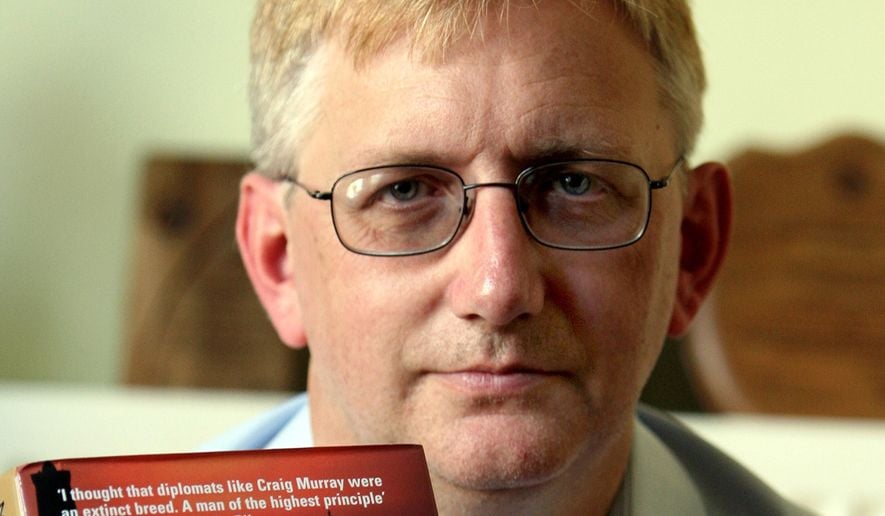
By Craig Murray

April 16, 2018

Theresa May has issued a long legal justification for UK participation in an attack on a sovereign state. This is so flawed as to be totally worthless. It specifically claims as customary international law practices which are rejected by a large majority of states and therefore cannot be customary international law. It is therefore secondary and of no consequence that the facts and interpretations the argument cites in this particular case are erroneous, but it so happens they are indeed absolutely erroneous.

Originally published at Craig Murray’s blog here

Let me put before you the government’s legal case in full:

1.This is the Government’s position on the legality of UK military action to alleviate the extreme humanitarian suffering of the Syrian people by degrading the Syrian regime’s chemical weapons capability and deterring their further use, following the chemical weapons attack in Douma on 7 April 2018.

2.The Syrian regime has been killing its own people for seven years. Its use of chemical weapons, which has exacerbated the human suffering, is a serious crime of international concern, as a breach of the customary international law prohibition on the use of chemical weapons, and amounts to a war crime and a crime against humanity.

3.The UK is permitted under international law, on an exceptional basis, to take measures in order to alleviate overwhelming humanitarian suffering. The legal basis for the use of force is humanitarian intervention, which requires three conditions to be met:

(i) there is convincing evidence, generally accepted by the international community as a whole, of extreme humanitarian distress on a large scale, requiring immediate and urgent relief;

(ii) it must be objectively clear that there is no practicable alternative to the use of force if lives are to be saved; and

(iii) the proposed use of force must be necessary and proportionate to the aim of relief of humanitarian suffering and must be strictly limited in time and in scope to this aim (i.e. the minimum necessary to achieve that end and for no other purpose).

4.The UK considers that military action met the requirements of humanitarian intervention in the circumstances of the present case:

(i) The Syrian regime has been using chemical weapons since 2013. The attack in Eastern Damascus on 21 August 2013 left over 800 people dead. The Syrian regime failed to implement its commitment in 2013 to ensure the destruction of its chemical weapons capability. The chemical weapons attack in Khan Sheikhoun in April 2017 killed approximately 80 people and left hundreds more injured. The recent attack in Douma has killed up to 75 people, and injured over 500 people. Over 400,000 people have now died over the course of the conflict in Syria, the vast majority civilians. Over half of the Syrian population has been displaced, with over 13 million people in need of humanitarian assistance. The repeated, lethal use of chemical weapons by the Syrian regime constitutes a war crime and a crime against humanity. On the basis of what we know about the Syrian regime’s pattern of use of chemical weapons to date, it was highly likely that the regime would seek to use chemical weapons again, leading to further suffering and loss of civilian life as well as the continued displacement of the civilian population.

(ii) Actions by the UK and its international partners to alleviate the humanitarian suffering caused by the use of chemical weapons by the Syrian regime at the UN Security Council have been repeatedly blocked by the regime’s and its allies’ disregard for international norms, including the international law prohibition on the use of chemical weapons. This last week, Russia vetoed yet another resolution in the Security Council, thwarting the establishment of an impartial investigative mechanism. Since 2013, neither diplomatic action, tough sanctions, nor the US strikes against the Shayrat airbase in April 2017 have sufficiently degraded Syrian chemical weapons capability or deterred the Syrian regime from causing extreme humanitarian distress on a large scale through its persistent use of chemical weapons. There was no practicable alternative to the truly exceptional use of force to degrade the Syrian regime’s chemical weapons capability and deter their further use by the Syrian regime in order to alleviate humanitarian suffering.

(iii) In these circumstances, and as an exceptional measure on grounds of overwhelming humanitarian necessity, military intervention to strike carefully considered, specifically identified targets in order effectively to alleviate humanitarian distress by degrading the Syrian regime’s chemical weapons capability and deterring further chemical weapons attacks was necessary and proportionate and therefore legally justifiable. Such an intervention was directed exclusively to averting a humanitarian catastrophe caused by the Syrian regime’s use of chemical weapons, and the action was the minimum judged necessary for that purpose.

14 April 2018

The first thing to note is that this “legal argument” cites no authority. It does not quote the UN Charter, any Security Council Resolution or any international treaty or agreement of any kind which justifies this action. This is because there is absolutely nothing which can be quoted – all the relevant texts say that an attack on another state is illegal without authorisation of the UN Security Council under Chapter VII of the UN Charter.

Nor does the government quote any judgement of the International Court of Justice, International Criminal Court or any other international legal authority. This is important because rather than any treatment, the government makes a specific claim its actions are justified by customary international law, which means accepted state practice. But the existence of such state practice is usually proven through existing court judgements, and there are no judgements that endorse the approach taken by the government in its argument.

The three “tests” set out under para 3 as to what is permitted under international law are not in fact a statement of anything other than the UK’s own position. These “tests” are specifically quoted by Ola Engdahl in Bailliet and Larsen (ed) “Promoting Peace Through International Law” (Oxford University Press 2015). Engdahl notes:

The UK position, that it is permitted to take coercive action under a doctrine of humanitarian intervention when certain conditions are met, is a minority view and does not reflect lex data on the prohibition of the use of force in international relations as expressed in article 2(4) of the UN Charter.

That is undeniably true, and as it is equally undeniably true that a minority view cannot be customary international law, the British government position is utterly devoid of merit.

The Government argument is a classic statement of the doctrine of “liberal intervention”, which is of course the mantra adopted by neo-conservatives over the last 30 years to justify resource grabs. It is not in any way accepted as customary international law. It is a doctrine opposed by a very large number of states, and certainly by the great majority of African, South American and Asian states. (African states have occasionally advocated the idea that UN Security Council authorisation may be replaced by the endorsement of a UN recognised regional authority such as ECOWAS or the African Union. This was the Nigerian position over Liberia 20 years ago. The Security Council authorised ECOWAS action anyway, so no discord arose. The current Nigerian government does not support intervention without security council authorisation).

The examples of “liberal intervention” most commonly used by its advocates are Sierra Leone and Libya. My book “The Catholic Orangemen of Togo” details my experiences as UK Representative at the Sierra Leone peace talks, and I hope will convince you that the accepted story of that war is a lie. Libya too has been a disaster, and it is not a precedent for the government’s legal argument as the western forces employed were operating under cover of a UN Security Council Resolution authorising force, albeit only to enforce a no fly zone.

In fact, if the British government were to offer examples of state practice to attempt to prove that the doctrine it outlines is indeed customary international law, the most appropriate recent examples are Russian military intervention in Ukraine and Georgia. I oppose those Russian interventions as I oppose the UK/US/French actions now. It is not a question of “sides” it is a question of the illegality of military action against other states.

The rest of the government’s argument is entirely hypothetical, because as the liberal intervention doctrine is not customary international law these arguments cannot justify intervention.

But the evidence that Assad used chemical weapons against Douma is non-existent, and the OPCW did not conclude that the Assad government was responsible for the attack on Khan Sheikhoun. There is no evidence whatsoever that military action was urgently required to avert another such “immediate” attack. Nor is it true that the UK’s analysis of the situation is “generally accepted” by the international community, as witness China and Russia voting together in the Security Council yesterday to condemn the attack.

So the British government sets up its own “three tests” which have no legal standing and are entirely a British concoction, yet still manages to fail them.


2 Responses

  1. Det er intet mindre end frygteligt. Vi, alle ordentlige mennesker, tvinges til at skulle ‘stå bag’ overgreb. Løgne. Og i sidste ende drab. Syrien er et suverænt land.

  2. “Hypocrisy is the compliment vice pays to virtue”. She knows very well she will fool only those who want to be fooled

Related Posts

It’s a matter of principles, courage, vision and pulling together – while the militarist world is falling apart… Peter Langille October 3, 2026 “Here, then, is the problem which we present to you, stark and dreadful and inescapable: Shall we put an end to the human race; or shall mankind renounce war?”The Bertrand Russell—Albert Einstein Manifesto, July 9, 1955 ⁕ The forecast for what’s ahead is worrisome. The sharp rise in armed conflicts over the past three years is adding to what was already the highest level in over seventy years. Genocides, which should be prevented are supported. A shared climate emergency that jeopardises survival is ignored. Diverse polls now suggest that people are war-weary, worried and interested in a more effective United Nations. And, there are viable policy options for a more secure world! Yet governments are doubling-down, betting on more war and investing heavily. If current trends persist,...
Johan Galtung 1930-2024October 2015 Published here on October 3, 2026 Let us focus on Civilization for conflict analysis and remedies. Major forms of disorder use violence; war is state organized violence. The most belligerent states are the United States of America and Israel, both with civilization roots. National Evangelism, the US Protestant Christian civilization– more national than evangelical–justifies US warfare as exceptionalism of a people chosen by God, with a manifest destiny to run the world. Orthodox Judaism justifies Israeli warfare to conquer and expand from Nile to Euphrates as a religious right and duty to the Eternal One. The third most belligerent country, the UK, no longer believes it is God-chosen but chosen by the USA; not quite the same but something. But the root cause of global disorder lies in the Occident–with Islam–seeing itself as the single, universal civilization valid for all at all times, all others being...
How Oxford University Press allowed a personality‑driven narrative to masquerade as scholarship. Jan Oberg, dr hc, TFF director This article has also been published on TFF Substack where more readers react and withdraw their interviews from the project. A Special Issue in a scholarly journal is not an ordinary publication. It is a collective, curated […]

Recent Articles

Tony Robinson October 4, 2026 Violence is easy to recognise when someone is being beaten, shot or killed. It becomes more difficult when nobody is holding a weapon. Poverty, discrimination, exploitation and repression can restrict a human life just as effectively, although they do so in very different ways and with very different consequences. Simply adding more categories to an ever-growing list of forms of violence does not really solve the problem. The more interesting question is what all these different situations have in common and why it makes sense to describe them using the same word. Human beings do not simply react to what happens around them. They remember the past, imagine things that do not yet exist, make plans and undertake projects. Workers organise because they imagine different working conditions; people migrate because they imagine another life somewhere else; social movements emerge because people refuse to accept the...
It’s a matter of principles, courage, vision and pulling together – while the militarist world is falling apart… Peter Langille October 3, 2026 “Here, then, is the problem which we present to you, stark and dreadful and inescapable: Shall we put an end to the human race; or shall mankind renounce war?”The Bertrand Russell—Albert Einstein Manifesto, July 9, 1955 ⁕ The forecast for what’s ahead is worrisome. The sharp rise in armed conflicts over the past three years is adding to what was already the highest level in over seventy years. Genocides, which should be prevented are supported. A shared climate emergency that jeopardises survival is ignored. Diverse polls now suggest that people are war-weary, worried and interested in a more effective United Nations. And, there are viable policy options for a more secure world! Yet governments are doubling-down, betting on more war and investing heavily. If current trends persist,...
Johan Galtung 1930-2024October 2015 Published here on October 3, 2026 Let us focus on Civilization for conflict analysis and remedies. Major forms of disorder use violence; war is state organized violence. The most belligerent states are the United States of America and Israel, both with civilization roots. National Evangelism, the US Protestant Christian civilization– more national than evangelical–justifies US warfare as exceptionalism of a people chosen by God, with a manifest destiny to run the world. Orthodox Judaism justifies Israeli warfare to conquer and expand from Nile to Euphrates as a religious right and duty to the Eternal One. The third most belligerent country, the UK, no longer believes it is God-chosen but chosen by the USA; not quite the same but something. But the root cause of global disorder lies in the Occident–with Islam–seeing itself as the single, universal civilization valid for all at all times, all others being...

TFF on Substack

Discover and subscribe to more peace materials on TFF Substack

Most Popular

Tony Robinson October 4, 2026 Violence is easy to recognise when someone is being beaten, shot or killed. It becomes more difficult when nobody is holding a weapon. Poverty, discrimination, exploitation and repression can restrict a human life just as effectively, although they do so in very different ways and with very different consequences. Simply adding more categories to an ever-growing list of forms of violence does not really solve the problem. The more interesting question is what all these different situations have in common and why it makes sense to describe them using the same word. Human beings do not simply react to what happens around them. They remember the past, imagine things that do not yet exist, make plans and undertake projects. Workers organise because they imagine different working conditions; people migrate because they imagine another life somewhere else; social movements emerge because people refuse to accept the...
It’s a matter of principles, courage, vision and pulling together – while the militarist world is falling apart… Peter Langille October 3, 2026 “Here, then, is the problem which we present to you, stark and dreadful and inescapable: Shall we put an end to the human race; or shall mankind renounce war?”The Bertrand Russell—Albert Einstein Manifesto, July 9, 1955 ⁕ The forecast for what’s ahead is worrisome. The sharp rise in armed conflicts over the past three years is adding to what was already the highest level in over seventy years. Genocides, which should be prevented are supported. A shared climate emergency that jeopardises survival is ignored. Diverse polls now suggest that people are war-weary, worried and interested in a more effective United Nations. And, there are viable policy options for a more secure world! Yet governments are doubling-down, betting on more war and investing heavily. If current trends persist,...
Johan Galtung 1930-2024October 2015 Published here on October 3, 2026 Let us focus on Civilization for conflict analysis and remedies. Major forms of disorder use violence; war is state organized violence. The most belligerent states are the United States of America and Israel, both with civilization roots. National Evangelism, the US Protestant Christian civilization– more national than evangelical–justifies US warfare as exceptionalism of a people chosen by God, with a manifest destiny to run the world. Orthodox Judaism justifies Israeli warfare to conquer and expand from Nile to Euphrates as a religious right and duty to the Eternal One. The third most belligerent country, the UK, no longer believes it is God-chosen but chosen by the USA; not quite the same but something. But the root cause of global disorder lies in the Occident–with Islam–seeing itself as the single, universal civilization valid for all at all times, all others being...
Read More
Living-Peace-Sign-Budapest-copy
Tony Robinson October 4, 2026 Violence is easy to recognise when someone is being beaten, shot or killed. It becomes more difficult when nobody is holding a weapon. Poverty, discrimination, exploitation and repression can restrict a human life just as effectively, although they do so in very different ways and with very different consequences. Simply adding more categories to an ever-growing list of forms of violence does not really solve the problem. The more interesting question is what all these different situations have in common and why it makes sense to describe them using the same word. Human beings do not simply react to what happens around them. They remember the past, imagine things that do not yet exist, make plans and undertake projects. Workers organise because they imagine different working conditions; people migrate because they imagine another life somewhere else; social movements emerge because people refuse to accept the...
b54a1f10-8c65-4f0b-9dd5-4abc0a7d04cc_2659x2659
It’s a matter of principles, courage, vision and pulling together – while the militarist world is falling apart… Peter Langille October 3, 2026 “Here, then, is the problem which we present to you, stark and dreadful and inescapable: Shall we put an end to the human race; or shall mankind renounce war?”The Bertrand Russell—Albert Einstein Manifesto, July 9, 1955 ⁕ The forecast for what’s ahead is worrisome. The sharp rise in armed conflicts over the past three years is adding to what was already the highest level in over seventy years. Genocides, which should be prevented are supported. A shared climate emergency that jeopardises survival is ignored. Diverse polls now suggest that people are war-weary, worried and interested in a more effective United Nations. And, there are viable policy options for a more secure world! Yet governments are doubling-down, betting on more war and investing heavily. If current trends persist,...
010
Johan Galtung 1930-2024October 2015 Published here on October 3, 2026 Let us focus on Civilization for conflict analysis and remedies. Major forms of disorder use violence; war is state organized violence. The most belligerent states are the United States of America and Israel, both with civilization roots. National Evangelism, the US Protestant Christian civilization– more national than evangelical–justifies US warfare as exceptionalism of a people chosen by God, with a manifest destiny to run the world. Orthodox Judaism justifies Israeli warfare to conquer and expand from Nile to Euphrates as a religious right and duty to the Eternal One. The third most belligerent country, the UK, no longer believes it is God-chosen but chosen by the USA; not quite the same but something. But the root cause of global disorder lies in the Occident–with Islam–seeing itself as the single, universal civilization valid for all at all times, all others being...
Screenshot 2026-10-02 011738
Jan ObergPhD, director, The Transnational Foundation for Peace and Future Research, TFFLund, Sweden October 2, 2026 This is my full original manuscript. The Chinese Academy of Social Science, CASS, makes two publications out if it. 1. China’s Five-year plan emphasized the capabilities of basic research and original innovation. It is regarded as the goal of the future social development, which, as required, should be significantly enhanced. Can you comment on the importance of original innovation in research and academic study? I believe it is easier to define “original innovation” in the natural sciences than in social sciences. The breaking points of what constitutes something new, or innovative, are not quite as sharp in the latter. But in both fields it is about opening up something that was closed, unseen, unexplored before – making manifest what was earlier latent. Innovations come in many forms and shapes – naming something that was not...
arctic-circle-map
The agreement is catastrophic both because of what it says and what it doesn’t mention. It reduces further the major asset of security policies: Freedom of action. Jan Oberg TFF director September 25, 2026 A couple of hours before the agreement was signed on September 22, 2026, I published the following 13 hypotheses about what it would most likely contain on TFF Substack (in English). I was wrong on only the first point. Contrary to what Trump had written on his Truth Social platform, it does not appear to come into force immediately. In fact, it turned out to be worse than even I had anticipated. After these hypotheses now come a number of reflections in light of what the agreement actually contains, and does not contain, as well as the way in which it has generally been presented by major media outlets and by the public-service broadcaster DR. My...
girl-5894831_1280
Below are TFF-related media mentions, comments, videos and social media posts published elsewhere but not on this homepage. We happen to catch and list only a fraction. Regarding video comments and debates, we recommend that you go to the TFF Video Channel on Substack where many of them are reproduced. Jan Oberg is a contributor to China Daily – 52 million daily clicks – and Global Times, CGTN and CCTV (the national television), China Investment, Xinhua News Agency and several others. Articles and videos on these media very often multiply into countless Chinese (and Western media) that re-post them from these main media. Thanks to The China Academy, his analyses, interviews and comments are frequently posted on YouTube channels such as Thinkers Forum and Wave Media. These videos are often re-posted on Bilibili (China’s YouTube), the China Content Center on TikTok, and on the Chinese edition of TikTok, Douyin.com. This means reaching hundreds of millions of viewers worldwide over a year. While there are too many to catch on all these...