

Russian and Western influence in Macedonia compared

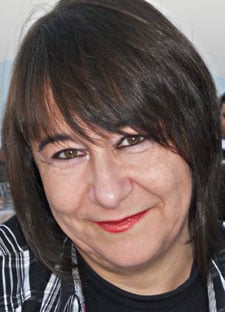
By Biljana Vankovska

Text of report by Macedonian newspaper Nova Makedonija on 12 June

Commentary by Biljana Vankovska: “Russia ante portas!”

The UK The Guardian recently issued a bombastic report based on certain intelligence leaks, apparently resembling WikiLeaks, that revealed the big and terrifying secret of the Russian bad boys working on Macedonia’s distancing from the West for nearly 10 years through the use of old-fashioned methods (strange and mysterious spies and conspirators) and sophisticated means of influence via public diplomacy and “soft power”.

This crown “evidence” has fitted in perfectly with the subtle campaign that a number of national media has been leading for a while now, promoting the “intimidating notion” of the Macedonians regarding Russia as a friendly country. An opinion poll on our foreign political orientations has indicated that as many as 17 per cent of the respondents have a positive view on Russia.

Imagine, these impertinent persons have dared reduce the incredible 95 per cent of people who support the West, which was typical only of [Albanian communist leader] Enver Hoxha’s Albania and Bulgaria during [Bulgarian communist leader] Zhivkov’s era!

This thesis is being reiterated ad nauseam and serves a double purpose: first, it should prove the harmful effects of the perfidious policies of the VMRO-DPMNE’s [Internal Macedonian Revolutionary Organization-Democratic Party for Macedonian National Unity] fake patriots and, second, such an approach of the journalists’ genuine shock and concern is a preventive disciplinary measure for those who – Heaven forbid – would dare criticise the West.

It is interesting that The Guardian report deals with the “self-leakage” of the Macedonian Counterintelligence Agency and that the text was prepared by famous Macedonian journalists.

The story of Russia’s clout, spread through the media propaganda of our journalists who think that it is virtuous to play into the West’s hands, has (once again) imposed our country as an instrument to settle a score between the great powers.

“The factory” – referring to past affair with orchestrated news reports – has created a piece of news and has issued it in the United Kingdom so that The Guardian can subsequently be quoted in our country! The circle is closed!

Scaremongering is a self-fulfilling prophecy! If Russia indeed wishes to impose its sway on Macedonia, such “news” is more of a free advertisement than vilification.

The accusations against Russia and its typical (as well as covert) diplomacy, but primarily its public diplomacy, are ridiculous – to say the least – for a number of reasons.

First, if anyone believes that embassies/diplomats exist for altruistic purposes and that they are working in the interest of the host country, then that person is incomprehensibly and totally ignorant and naive or hypocritical. It is our problem – rather than the problem of those who work on this in a systematic and premeditated manner – that we have voluntarily renounced our sovereignty and even our statehood and have become not only the West’s protectorate, but also its colony.

To blame Russia for some kind of conspiration-like interference in our (ostensibly) safe road towards NATO and the EU and even blocking it is also pathetic because we are nether on this road, let alone on the threshold of NATO and EU membership.

The internal rifts are solely our own doing, while our distancing from NATO/EU is progressing well enough even without Russia’s assistance, even though Athens’, Washington’s, and Brussels’ contribution should not be underestimated, either.

We – and not they – are to blame that foreign diplomats and intelligence officers act unrestrainedly in our country, which shows that they deserve every cent they earn.

The fact that our ambassadors and consuls think that they are on a few-year-long vacation in a foreign country is also our own problem.

Second, the presence of the great powers in the Balkans is as old as the Balkans itself. Its troublesome past is not accidental, but it is a consequence of their clash of interest.

The activities of the neighbouring countries’ intelligence services are also a historical fact, while their effects have been visible even since the Balkan wars.

Third, Russia is an amateur when it comes to diplomacy, especially public and cultural diplomacy.

The US ambassadors have made themselves at home here and are known to have a finger in every pie, but, if the Russian Foreign Ministry issues two announcements about certain dramatic events, this is regarded as a scandal and meddling in our internal affairs (while under internal affairs they mean the replacement of a regime with the West’s assistance).

No one criticises John Kerry for putting us on the line of fire with his Cold War rhetoric, but Russia is guilty for doing what great powers do: protecting their selfish interests.

As for public diplomacy, if orders of merit are awarded to people like Milenko and Mirka – pro-VMRO-DPMNE journalists – then it is as clear as crystal that they are shooting themselves in the (Russian) foot.

Someone may mention the orders of merit for Macedonian President Ivanov and the UKIM, Ss. Cyril and Methodius University rector, too, but what makes them different from, for example, the orders of bravery for the troops who have taken part in the imperialist operations in Iraq and Afghanistan?

Or what about the rewards for the Europhile journalists who wrote “investigative” reports whereby thereby they promoted the EU as Heaven on Earth?

When I read about the Russians’ horrifying plots, I have started to reexamine my views. You see, a few years ago I committed a capital sin against the West: I wrote a few columns for Russian Word –
the former Nova Makedonija weekly supplement. I am done with! My subversive activities in Russia’s favour have been unearthed.

I am especially famous for my anti-NATO stands (my columns are still available, but the stupid Russians have suspended this project after a few months, rather than pay me heaps of money to popularise them).

However, if UK opposition Labour Party leader, Jeremy Corbyn, is a Russian collaborator, then who am I to be spared?!

They have been reiterating the mantra of no other alternative but NATO and EU accession for decades now because “we have always been a part of the Western civilization.”

This is a refrain typical of so many countries that have distanced themselves from their “Eastern” past and culture and who have confirmed their historical closeness to the West. This is nothing new but self-acceptance of the Western stereotypes of the Orient (about which Edward Said wrote) and ourselves.

We put on makeup and deny our cultural identity ourselves hoping that the West will forgive us for being part of Byzantium, the Ottoman Empire, and the Socialist world.

In a world in which turbo-capitalism is gaining momentum it is absurd to talk about global divisions. Anti-capitalist tendencies are on the rise in the West from the inside and from its enclaves of poverty.

In the countries of the global South, corporatism is growing. Russia is no longer the East, let alone China and Japan. Theoreticians talk about the emergence of a multipolar order that contains some features of a new Cold War.

The leftist ideas are smirched to the point of impossible moral and political recovery, but Sanders and Corbyn are giving them some signs of (a new) life.

Our fans of the West have buried their heads in the sand and refuse to admit that the victory of the Capital [capitalization as published] is Pyrrhic because it leads to militarization, environmental destruction, and social injustice.

The most subversive idea today is to deconstruct the artificial division of East-West and North-South. This Manichean version of a world of the Good and the Bad is aimed at preventing us from seeing the global picture of humanity that is held hostage by the minority of the rich and the powerful.


Related Posts

The Quest for Humane Survival Richard Falk Professor emeritus, Princeton UniversityTFF Associate since 1986October 12, 2026 After decades of teaching and writing about international law in academic frameworks that were not institutionally situated within law school environments—at Princeton and the University of California, Santa Barbara—I found myself most receptive to the TWAIL outlook. It has been especially illuminating in clarifying the extent to which international law evolved as a dialogical critique of Europe’s efforts to legitimize its colonial undertakings. In particular, TWAIL has exposed how international law has functioned to legalize the subjugation of Third World peoples, securing conditions for exploitative investment and trade relations, the coercive enforcement of public debts, and an ideology of cultural superiority. TWAIL’s exposure of these economic legacies of colonialism has influenced my understanding of the history and development of international law, broadly conceived, as an ideological project of the Western sub-system of the world...
Tony Robinson October 4, 2026 Violence is easy to recognise when someone is being beaten, shot or killed. It becomes more difficult when nobody is holding a weapon. Poverty, discrimination, exploitation and repression can restrict a human life just as effectively, although they do so in very different ways and with very different consequences. Simply adding more categories to an ever-growing list of forms of violence does not really solve the problem. The more interesting question is what all these different situations have in common and why it makes sense to describe them using the same word. Human beings do not simply react to what happens around them. They remember the past, imagine things that do not yet exist, make plans and undertake projects. Workers organise because they imagine different working conditions; people migrate because they imagine another life somewhere else; social movements emerge because people refuse to accept the...
The agreement is catastrophic both because of what it says and what it doesn’t mention. It reduces further the major asset of security policies: Freedom of action. Jan Oberg TFF director September 25, 2026 A couple of hours before the agreement was signed on September 22, 2026, I published the following 13 hypotheses about what it would most likely contain on TFF Substack (in English). I was wrong on only the first point. Contrary to what Trump had written on his Truth Social platform, it does not appear to come into force immediately. In fact, it turned out to be worse than even I had anticipated. After these hypotheses now come a number of reflections in light of what the agreement actually contains, and does not contain, as well as the way in which it has generally been presented by major media outlets and by the public-service broadcaster DR. My...

Recent Articles

Photo above: Carl Fredrik Reuterswärd’s Non-Violence outside UN Headquarters in New York. Kirill Levin, CC BY-NC-SA 2. Jan Oberg November 3, 2026 I am happy to be published in Horizons which is produced by the Center for International Relations and Sustainable Development, CIRSD, in Belgrade. My contribution brings out a radical re-thinking of what concepts such as defence, security, deterrence – and peace – may mean if we want to create a more peaceful world. It also summarises a few things I have been working with the last few decades. Please read it here Og her er den på dansk, takket være Johnny Baltzersens lynhurtige oversættelse
UNITE-tillid, DREAM-velstand og andre konstruktive komponenter Normally we publish articles in English here. But this is a translation of a very important TFF document that should reach as many as possible in Denmark since this country’s government has been one of the most hardline in Europe and, up till now at least, has refused to use diplomacy and, instead, spent tremendous sums on arming Ukraine with the express goal of defeating Russia. Thus this – unique – article is in Danish. Vi er Johnny Baltzersen og hans Fælles Sikkerhed – Fælles Fremtid på Substack overmåde taknemmelige for at have oversat og publiceret TFF’s 2025-portfølje for fredsidéer med henblik på Ukraines fremtid. Vi håber den nu kan nå mange flere danskere – som også vil sprede den og skabe debat – nu den danske regerings og folketingspartiernes politik på dette område siden 2022 står nu – forudsigeligt – ved vejs ende....
Jan Oberg TFF director October 28, 2026 Exactly one month has now passed since I published my criticism of the introduction to the special issue on Johan Galtung published by the Journal of Global Security Studies, JoGSS, and of Tor Egil Førland’s chapter about Galtung which serves as a preview to his forthcoming biography of Galtung to be published by PRIO. See the original on The Transnational here and the same article on TFF Substack with many general and critical comments and, in particular, the people who decided to withdraw from the biography project in protest. The special issue itself was extraordinary. It was devoted to the intellectual legacy of one of the founders of peace research and contained a number of strong assessments of his personality, scholarship, intellectual trajectory, and public role. Such assessments are, of course, entirely legitimate. No scholar is beyond criticism, and neither was Johan Galtung....

TFF on Substack

Discover and subscribe to more peace materials on TFF Substack

Most Popular

Photo above: Carl Fredrik Reuterswärd’s Non-Violence outside UN Headquarters in New York. Kirill Levin, CC BY-NC-SA 2. Jan Oberg November 3, 2026 I am happy to be published in Horizons which is produced by the Center for International Relations and Sustainable Development, CIRSD, in Belgrade. My contribution brings out a radical re-thinking of what concepts such as defence, security, deterrence – and peace – may mean if we want to create a more peaceful world. It also summarises a few things I have been working with the last few decades. Please read it here Og her er den på dansk, takket være Johnny Baltzersens lynhurtige oversættelse
UNITE-tillid, DREAM-velstand og andre konstruktive komponenter Normally we publish articles in English here. But this is a translation of a very important TFF document that should reach as many as possible in Denmark since this country’s government has been one of the most hardline in Europe and, up till now at least, has refused to use diplomacy and, instead, spent tremendous sums on arming Ukraine with the express goal of defeating Russia. Thus this – unique – article is in Danish. Vi er Johnny Baltzersen og hans Fælles Sikkerhed – Fælles Fremtid på Substack overmåde taknemmelige for at have oversat og publiceret TFF’s 2025-portfølje for fredsidéer med henblik på Ukraines fremtid. Vi håber den nu kan nå mange flere danskere – som også vil sprede den og skabe debat – nu den danske regerings og folketingspartiernes politik på dette område siden 2022 står nu – forudsigeligt – ved vejs ende....
Jan Oberg TFF director October 28, 2026 Exactly one month has now passed since I published my criticism of the introduction to the special issue on Johan Galtung published by the Journal of Global Security Studies, JoGSS, and of Tor Egil Førland’s chapter about Galtung which serves as a preview to his forthcoming biography of Galtung to be published by PRIO. See the original on The Transnational here and the same article on TFF Substack with many general and critical comments and, in particular, the people who decided to withdraw from the biography project in protest. The special issue itself was extraordinary. It was devoted to the intellectual legacy of one of the founders of peace research and contained a number of strong assessments of his personality, scholarship, intellectual trajectory, and public role. Such assessments are, of course, entirely legitimate. No scholar is beyond criticism, and neither was Johan Galtung....
Read More
knotted gun
Photo above: Carl Fredrik Reuterswärd’s Non-Violence outside UN Headquarters in New York. Kirill Levin, CC BY-NC-SA 2. Jan Oberg November 3, 2026 I am happy to be published in Horizons which is produced by the Center for International Relations and Sustainable Development, CIRSD, in Belgrade. My contribution brings out a radical re-thinking of what concepts such as defence, security, deterrence – and peace – may mean if we want to create a more peaceful world. It also summarises a few things I have been working with the last few decades. Please read it here Og her er den på dansk, takket være Johnny Baltzersens lynhurtige oversættelse
TFFPortfolioVign
UNITE-tillid, DREAM-velstand og andre konstruktive komponenter Normally we publish articles in English here. But this is a translation of a very important TFF document that should reach as many as possible in Denmark since this country’s government has been one of the most hardline in Europe and, up till now at least, has refused to use diplomacy and, instead, spent tremendous sums on arming Ukraine with the express goal of defeating Russia. Thus this – unique – article is in Danish. Vi er Johnny Baltzersen og hans Fælles Sikkerhed – Fælles Fremtid på Substack overmåde taknemmelige for at have oversat og publiceret TFF’s 2025-portfølje for fredsidéer med henblik på Ukraines fremtid. Vi håber den nu kan nå mange flere danskere – som også vil sprede den og skabe debat – nu den danske regerings og folketingspartiernes politik på dette område siden 2022 står nu – forudsigeligt – ved vejs ende....
JoGSS-Silent
Jan Oberg TFF director October 28, 2026 Exactly one month has now passed since I published my criticism of the introduction to the special issue on Johan Galtung published by the Journal of Global Security Studies, JoGSS, and of Tor Egil Førland’s chapter about Galtung which serves as a preview to his forthcoming biography of Galtung to be published by PRIO. See the original on The Transnational here and the same article on TFF Substack with many general and critical comments and, in particular, the people who decided to withdraw from the biography project in protest. The special issue itself was extraordinary. It was devoted to the intellectual legacy of one of the founders of peace research and contained a number of strong assessments of his personality, scholarship, intellectual trajectory, and public role. Such assessments are, of course, entirely legitimate. No scholar is beyond criticism, and neither was Johan Galtung....
Screenshot 2026-10-26 115647
An aspect of Iran’s culture and civilisation you’ve probably never heard about. Don’t be surprised if the US and Israel also try to bomb them. Jan ObergTFF director October 26, 2026 Today – under the “USraeli” threat of new “annihilating” bombings – opens the 7th International Conference on Peace and Conflict Resolution at Tehran’s University. As far as I can tell, this is the only permanent, advanced peace research institution in West Asia/the Middle East. Perhaps more countries in that region could be inspired? I mean, how many military “security” institutes and military academies do they have? Many peace research institutes and university departments have been established since the 1950s in the West. They are now all under attack; some have closed down, some have gone mainstream, yet others kept the name but do nothing to research peace and disseminate results or advice; instead, they cooperate with militarism’s platforms such...
Screenshot 2026-10-15 141837
Let’s discuss using AI to create peace – in contrast to boring geopolitics devoid of creative healing and visions. Jan Oberg TFF director October 15, 2026 I asked VEED to create a short video exemplifying how peace is preferable to war, then chose the lady as a template. Simple as that. In less than a minute, it produced this video, which any peace-loving person would appreciate. The only problem is that human intelligence (HI), at least the one that exists among Western decision-makers, isn’t half as moral or smart as AI. I have used AI to dialogue about peace and peace plans, creative conflict resolution and visions of a better future for humankind. It so happens that I am having more stimulating, intelligent, creative and moral discussions with AI than I could possibly have with any EU or NATO leader today. Yes, AI has very problematic and dangerous aspects; used...
girl-5894831_1280
Below are TFF-related media mentions, comments, videos and social media posts published elsewhere but not on this homepage. We happen to catch and list only a fraction. Regarding video comments and debates, we recommend that you go to the TFF Video Channel on Substack where many of them are reproduced. Jan Oberg is a contributor to China Daily – 52 million daily clicks – and Global Times, CGTN and CCTV (the national television), China Investment, Xinhua News Agency and several others. Articles and videos on these media very often multiply into countless Chinese (and Western media) that re-post them from these main media. Thanks to The China Academy, his analyses, interviews and comments are frequently posted on YouTube channels such as Thinkers Forum and Wave Media. These videos are often re-posted on Bilibili (China’s YouTube), the China Content Center on TikTok, and on the Chinese edition of TikTok, Douyin.com. This means reaching hundreds of millions of viewers worldwide over a year. While there are too many to catch on all these...




