
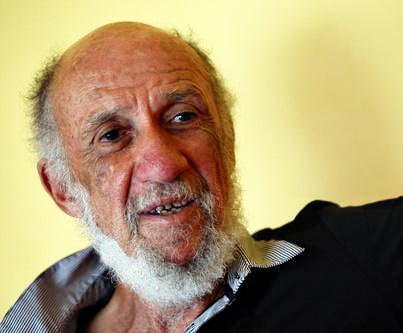
Remembering Yoshikazu Sakamoto 1927-2014 – also former TFF Associate

TFF wants to express its gratitude to Yoshikazu Sakamoto who served for many years as TFF Associate.

Prefatory Note

This post is dedicated to my remembrance of Yoshi Sakamoto who died recently. Yoshi was a deeply valued friend and an important public intellectual in Japan who exerted a strong influence on the post-war generation. His political orientation, rejecting extremes of right and left, while questioning the militarist premises of the Cold War and Japan’s willingness to become America’s Asian poodle, gave him a distinctive political profile.

I am sharing these words of appreciation, and hope that anyone from Japan who comes across this text will contact me, especially if they have a way of putting me in touch with either Yoshi’s family or Japanese media. I would like to believe that ‘an American appreciation’ of Professor Sakamoto would be of interest to those who knew and admired him.

I first met Yoshi in the mid-1960s when he came to visit me at Princeton, expressing his concern about the Vietnam War and knowing of my anti-war activism. We bonded quickly and marched in a peaceful demonstration in New York City a few days later, and somehow managed to keep in fairly consistent contact until Yoshi’s death on October 2nd.
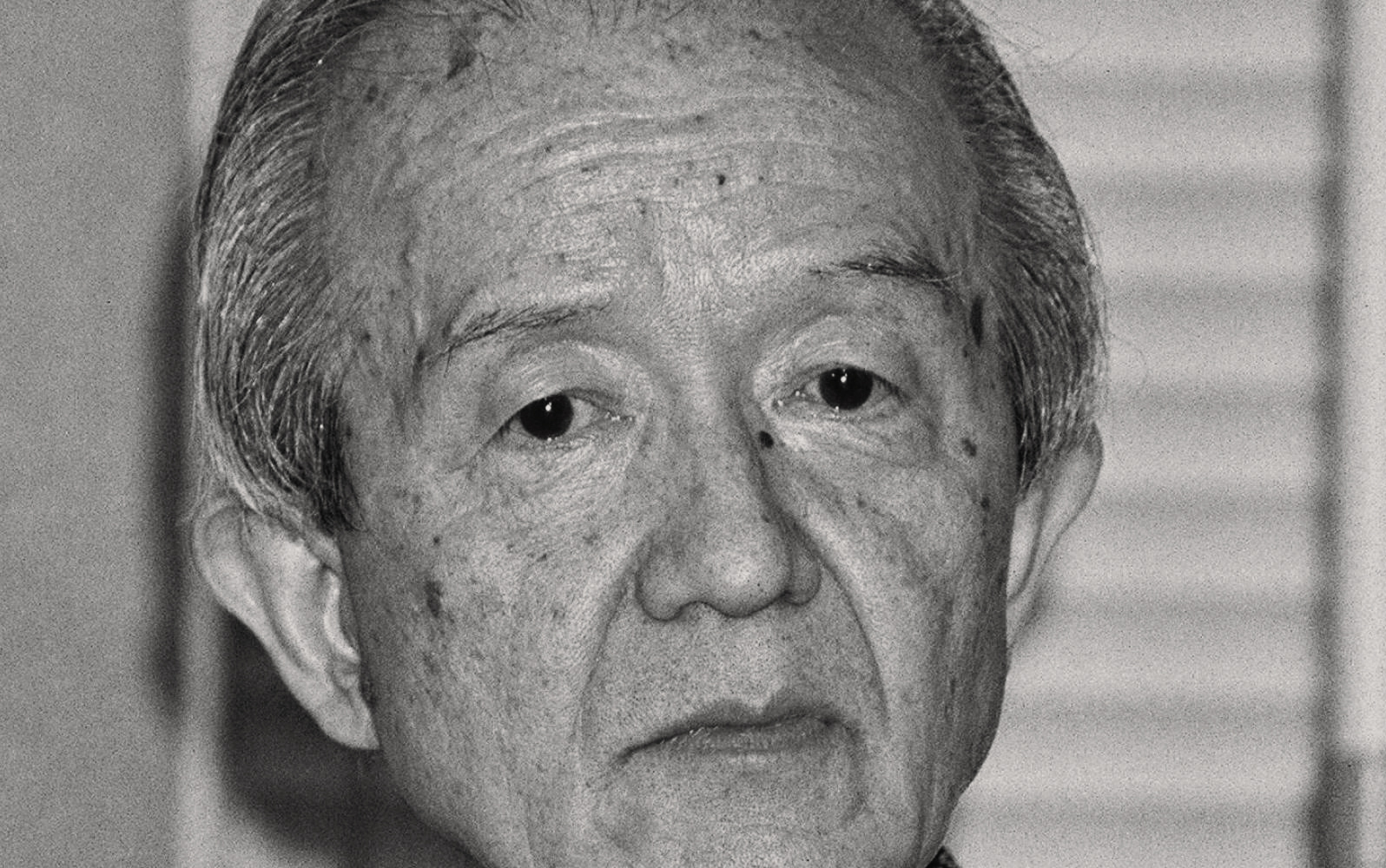
Yoshikazu Sakamoto 1927 – 2014

It was through our participation in the World Order Models Project (WOMP) over a period of about twenty years that we came to know each other best, meeting in different parts of the world every few months, and discussing the weighty issues of the day from time to time. Yoshi was one of the most principled and serious persons I have ever known, subjecting himself (and others) to the highest standards of performance and character from which he never deviated.

His work exhibited a perfectionist dedication to excellence that was very challenging to those of us who worked within the ambit of his influence. The majority of his publications were written in Japanese, meaning that the non-Japanese speaking world is so far deprived of much of his scholarship and is not aware of his sustained productivity over the years. His Japanese writings have been collected in six volumes published a few years ago.

The golden thread that was woven into the fabric of Yoshi’s life was his commitment to a peaceful world. He was highly critical of and affected by Japanese militarism of the 1930s and World War II that had shadowed his childhood, which he viewed as a betrayal of the Japanese people by the state, and its supportive established order.

When I first knew Yoshi he was struggling hard to find firm ground in Japanese political culture for a peaceful future, and was a strong believer in the peace constitution imposed upon the country after World War II, especially Article 9. He was, in the same spirit, opposed to Japanese complicity with American militarism during the Cold War period, and opposed having permanent American military bases on Japanese territory, including Okinawa.

Yoshi also favored what might be called peace diplomacy, especially in the Asian setting, working with progressive Japanese intellectuals to promote positive relations with both China and North Korea.

In the Japanese discourse Yoshi was often referred to as the leading ‘pacifist’ of ‘the post-war generation,’ and so he was, if pacifist is understood as essentially a synonym for ‘peace’ rather than as an affirmation of unconditional nonviolence in the Gandhi mode. Yoshi supported strongly efforts to achieve disarmament, especially nuclear disarmament, encouraged adherence to international law and respect for the United Nations, and endorsed what I have called ‘nonviolent geopolitics,’ but he was also a believer in human rights and could support ‘humanitarian intervention’ under exceptional circumstances, such as to prevent genocide, ethnic cleansing, and severe crimes against humanity.

In this regard, Yoshi tempered his quest for peace with the realization that under some circumstances oppressive violence must be countered by the enforcement of international criminal law. He was sophisticated about the risks entailed, well aware of the capacity of hegemonic actors to manipulate the language of intervention to serve their strategic purposes by hypocritically invoking humanitarianism.

Yoshi was critical of the way the superpowers behaved in the decades following the Second World War, and his sympathies clearly supported the struggles of Third World peoples to rid their countries of colonial rule in the spirit of self-determination. He favored reforms that would level the economic playing field, and facilitate the democratic development of the Third World. Apparently a legacy of Hans Morgenthau’s mentorship (as PhD advisor and friend), Yoshi tempered his ethical stance toward world politics with a keen awareness of the way sovereign states pursued their national interests as the expense of the public good.

I was struck also in the WOMP context by Yoshi’s emphasis on ‘identity’ as a crucial, often neglected, world order value. [See especially his seminal essay, “Toward Global Identity” in Saul H. Mendlovitz, ed., On the Creation of a Just World Order, 189-210 (1975). Yoshi affirmed that “[t]he need for a global coordinating body is unquestionable.” [193]

And yet he was keenly aware that the need by itself was insufficient to what he called “the organizational lag.” From this vantage point, he tried to think through why such a dysfunctional lag persisted in the age of scientific rationality, and how it might be overcome. In seeking understanding, Yoshi emphasized two factors: attachment by individuals to the nation-state as the political actor commanding loyalty unto death for most of its citizens, and existing as the outer limit of political community; the consequent need to construct identities that transcend nationalist boundaries if there ever was to emerge the political will required to support a stronger globalist institutional capacity.

With intellectual rigor, and a passion for practical theorizing (and a dislike of wishful thinking), Yoshi offered some guidelines: he expected to witness the growing transnationalization of international life amid increasing interdependence that would over time weaken nationalist attachments, especially as he foresaw the weakening of the geopolitical rivalries that were at the core of the Cold War.

He also affirmed the community-building potential of the United Nations, which he believed could be activated through the establishment of a UN Consultative Assembly “composed of representatives of the major political parties of each country.” [207] To ensure diversity and contestation, any party with 10% or more electoral support would be eligible to send delegates.

The underlying idea was to create a feeling for global community that would produce a greater appreciation of the need for a stronger global institutional presence. The animating idea was well articulated: “The crucial point here is that the UN system should act as a nucleus of community-building by serving as a vehicle for the creation of small-scale but open communities throughout the world, worldwide adoption of nondiscriminatory practices by the UN and related agencies would serve as a model for national and private organizations.”

It is worth observing that Yoshi, true to his training in international relations at the University of Chicago, insisted upon careful diagnosis of the existing situation, believing that the way forward in human affairs at this stage of history was to extend the domain of the feasible by stressing the social prerequisites of globally and ethically oriented political behavior.

He was institutionally cautious, and decidedly anti-utopian, and as such avoided the terminology of ‘world government,’ being content with the far more modest attainment of ‘a global coordinating body.’ And when it came to advocating a UN Consultative Assembly he deliberately held back from proposing a ‘global parliament’ or even ‘a global peoples assembly,’ presumably to discipline his normative imagination by adhering to the optic of ‘politics as the art of the possible.’

I confess that as I have grown older I do my best to heed the counter-wisdom of ‘politics as the art of the impossible.’ This reflects my judgment that the domain of the feasible, even if extended to the maximum, cannot address such global challenges as climate change and nuclear weapons in a sufficiently timely fashion.

In the WOMP experience, this kind of disciplined imagination clashed with the more idealized ambitions and beliefs of Saul Mendlovitz, outspokenly convinced that world government in some form was not only desirable, but well on its way to realization. And yet both listened to one another, and the rest of us positioned ourselves in the debate, siding in one way or another with Yoshi on the bottom line issue of what to expect, as well as what kind of process we should be encouraging and what sort of goals we should affirm.

Beyond WOMP, Yoshi was extremely influential on the progressive, anti-totalitarian side of the Japanese political spectrum.

He was a chief advisor to the governor of the Kanagawa prefecture within which the city of Yokohama was located, and helped organize annual conferences on the theme of ‘Yokohama and the World’ for several years in the 1980s. The intriguing sub-text, consistent with Yoshi’s call for the formation of new positive identities, was the premise that Tokyo and the national government were not necessarily speaking on behalf of the people of Yokohama (or for people in general), and that for this sub-state more cosmopolitan perspective to be properly shaped it was necessary to incorporate views from people outside of Japan.

Yoshi was especially affirmed the need of First World leaders to listen sympathetically to authentic Third World voices. I took part in these stimulating sessions, which were highlighted by the governor’s eagerness to normalize relations between the peoples of Japan and China through the vehicle of Yokohama’s initiative. This wish for reconciliation cut against the grain of the Japanese government’s disinclination at that time to take any foreign policy initiative that might displease its masters in Washington.

Yoshi was a loyal and attentive friend, but he was also formal in the traditional Japanese manner.

I am guessing that he wished that he had been culturally endowed with more lightness of being, and not quite as beholden to the strong constraints imposed of Japanese tradition.

Observing Yoshi through the years, he functioned both as a sort of ‘conscience’ for WOMP and a deterrent to sloppy, sentimental thinking on the part of the rest of us. As such Yoshi could be a rather intimidating presence, although his humanistic sensibility would not have considered this a compliment.

I for one feared displeasing or disappointing him, and felt that Yoshi regarded me as somewhat ‘flaky’ at times, despite sharing my political activist stances. As his devoted students confirmed over the years, Yoshi was a stern taskmaster, although the kindest and most loyal professor in their experience.

To remember Yoshikazu Sakamoto is to take note of a loss of someone that has made a lasting difference in my experience, and that of many others whose path he crossed. It was through Yoshi that I met with the venerable editor of Sekai and with Kenzaburo Oe, the winner of the 1994 Nobel Prize in Literature.

Both of these extraordinary individuals regarded Yoshi as their political guru, which is hardly surprising given his capacity to combine knowledge and wisdom, and to be totally trustworthy, beyond reproach on matters of character large and small. Writing this essay has made me realize how much I miss Yoshi, and his grounded cosmopolitanism, and how much the world we live in could benefit from his humane vision of how we on this planet should live together and also from his insistence that we must not indulge our desires without knowing how to navigate the treacherous course that leads from the precarious and unjust present to a more sustainable and just future.

Such a combination of qualities is not only greatly valued and desired, but it is extremely rare, especially as so graciously embodied as it was in the person of Yoshikazu Sakamoto.
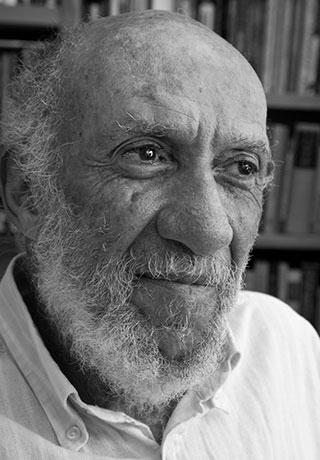

Professor Falk became an adviser to TFF when it was established in 1985.

Related Posts

Lena Petrova of “World Affairs In Context” with more than half a million subscribers on YouTube wanted to explore what a peace researcher like me has to say about, among other things, the First and the Second Cold War and why eethics has disappeared from politics. I am particularly happy about this conversation that also yielded an amazing number of very appreciative comments on YouTube. No doubt, people are longing for alternatives, including peace perspectives.
Jan Oberg, TFF director April 28, 2026 In this third TFF Peace Pulse, I make the important distinction between the violence and the conflict that violence is a symptom of. If you want peace, focus on the underlying conflict because that is the key to resolution, peacemaking, and a better future for the parties. The West is obsessed with violence, just look around you – and 90+ per cent of the public debate is about military issues and other violence – totally wasted for peace. These Peace Pulses will only be published here a few times. You will also not find them on YouTube and Vimeo because both platforms have blocked TFF and me; you know, peace is dangerous these days. Most TFF’s videos since 2007 are now on Rumble.
This is not another geopolitical commentary on the Arctic. It is a visionary peace proposal that can save the region from militarised rivalry and ecological ruin. A blueprint for shared security, sustainable development, and human dignity — benefitting Greenland, the Arctic, and the rest of us. Jan Oberg TFF director Lund, Sweden, February 17, 2026 I. Four Principles for a New Arctic Vision The Arctic is often framed as a cold arena of rivalry — a place where great powers test each other’s resolve. But this worldview is outdated, unimaginative, and ultimately self‑defeating. The Arctic is not a vacuum waiting to be militarised; it is a living region, a climate stabiliser, and a cultural homeland whose future will shape the future of humanity. If we begin from that understanding, a far more rational Arctic order becomes possible — one that is peaceful, cooperative, and centred on the people who actually live there. This vision rests...

Recent Articles

Tony Robinson October 4, 2026 Violence is easy to recognise when someone is being beaten, shot or killed. It becomes more difficult when nobody is holding a weapon. Poverty, discrimination, exploitation and repression can restrict a human life just as effectively, although they do so in very different ways and with very different consequences. Simply adding more categories to an ever-growing list of forms of violence does not really solve the problem. The more interesting question is what all these different situations have in common and why it makes sense to describe them using the same word. Human beings do not simply react to what happens around them. They remember the past, imagine things that do not yet exist, make plans and undertake projects. Workers organise because they imagine different working conditions; people migrate because they imagine another life somewhere else; social movements emerge because people refuse to accept the...
It’s a matter of principles, courage, vision and pulling together – while the militarist world is falling apart… Peter Langille October 3, 2026 “Here, then, is the problem which we present to you, stark and dreadful and inescapable: Shall we put an end to the human race; or shall mankind renounce war?”The Bertrand Russell—Albert Einstein Manifesto, July 9, 1955 ⁕ The forecast for what’s ahead is worrisome. The sharp rise in armed conflicts over the past three years is adding to what was already the highest level in over seventy years. Genocides, which should be prevented are supported. A shared climate emergency that jeopardises survival is ignored. Diverse polls now suggest that people are war-weary, worried and interested in a more effective United Nations. And, there are viable policy options for a more secure world! Yet governments are doubling-down, betting on more war and investing heavily. If current trends persist,...
Johan Galtung 1930-2024October 2015 Published here on October 3, 2026 Let us focus on Civilization for conflict analysis and remedies. Major forms of disorder use violence; war is state organized violence. The most belligerent states are the United States of America and Israel, both with civilization roots. National Evangelism, the US Protestant Christian civilization– more national than evangelical–justifies US warfare as exceptionalism of a people chosen by God, with a manifest destiny to run the world. Orthodox Judaism justifies Israeli warfare to conquer and expand from Nile to Euphrates as a religious right and duty to the Eternal One. The third most belligerent country, the UK, no longer believes it is God-chosen but chosen by the USA; not quite the same but something. But the root cause of global disorder lies in the Occident–with Islam–seeing itself as the single, universal civilization valid for all at all times, all others being...

TFF on Substack

Discover and subscribe to more peace materials on TFF Substack

Most Popular

Tony Robinson October 4, 2026 Violence is easy to recognise when someone is being beaten, shot or killed. It becomes more difficult when nobody is holding a weapon. Poverty, discrimination, exploitation and repression can restrict a human life just as effectively, although they do so in very different ways and with very different consequences. Simply adding more categories to an ever-growing list of forms of violence does not really solve the problem. The more interesting question is what all these different situations have in common and why it makes sense to describe them using the same word. Human beings do not simply react to what happens around them. They remember the past, imagine things that do not yet exist, make plans and undertake projects. Workers organise because they imagine different working conditions; people migrate because they imagine another life somewhere else; social movements emerge because people refuse to accept the...
It’s a matter of principles, courage, vision and pulling together – while the militarist world is falling apart… Peter Langille October 3, 2026 “Here, then, is the problem which we present to you, stark and dreadful and inescapable: Shall we put an end to the human race; or shall mankind renounce war?”The Bertrand Russell—Albert Einstein Manifesto, July 9, 1955 ⁕ The forecast for what’s ahead is worrisome. The sharp rise in armed conflicts over the past three years is adding to what was already the highest level in over seventy years. Genocides, which should be prevented are supported. A shared climate emergency that jeopardises survival is ignored. Diverse polls now suggest that people are war-weary, worried and interested in a more effective United Nations. And, there are viable policy options for a more secure world! Yet governments are doubling-down, betting on more war and investing heavily. If current trends persist,...
Johan Galtung 1930-2024October 2015 Published here on October 3, 2026 Let us focus on Civilization for conflict analysis and remedies. Major forms of disorder use violence; war is state organized violence. The most belligerent states are the United States of America and Israel, both with civilization roots. National Evangelism, the US Protestant Christian civilization– more national than evangelical–justifies US warfare as exceptionalism of a people chosen by God, with a manifest destiny to run the world. Orthodox Judaism justifies Israeli warfare to conquer and expand from Nile to Euphrates as a religious right and duty to the Eternal One. The third most belligerent country, the UK, no longer believes it is God-chosen but chosen by the USA; not quite the same but something. But the root cause of global disorder lies in the Occident–with Islam–seeing itself as the single, universal civilization valid for all at all times, all others being...
Read More
Living-Peace-Sign-Budapest-copy
Tony Robinson October 4, 2026 Violence is easy to recognise when someone is being beaten, shot or killed. It becomes more difficult when nobody is holding a weapon. Poverty, discrimination, exploitation and repression can restrict a human life just as effectively, although they do so in very different ways and with very different consequences. Simply adding more categories to an ever-growing list of forms of violence does not really solve the problem. The more interesting question is what all these different situations have in common and why it makes sense to describe them using the same word. Human beings do not simply react to what happens around them. They remember the past, imagine things that do not yet exist, make plans and undertake projects. Workers organise because they imagine different working conditions; people migrate because they imagine another life somewhere else; social movements emerge because people refuse to accept the...
b54a1f10-8c65-4f0b-9dd5-4abc0a7d04cc_2659x2659
It’s a matter of principles, courage, vision and pulling together – while the militarist world is falling apart… Peter Langille October 3, 2026 “Here, then, is the problem which we present to you, stark and dreadful and inescapable: Shall we put an end to the human race; or shall mankind renounce war?”The Bertrand Russell—Albert Einstein Manifesto, July 9, 1955 ⁕ The forecast for what’s ahead is worrisome. The sharp rise in armed conflicts over the past three years is adding to what was already the highest level in over seventy years. Genocides, which should be prevented are supported. A shared climate emergency that jeopardises survival is ignored. Diverse polls now suggest that people are war-weary, worried and interested in a more effective United Nations. And, there are viable policy options for a more secure world! Yet governments are doubling-down, betting on more war and investing heavily. If current trends persist,...
010
Johan Galtung 1930-2024October 2015 Published here on October 3, 2026 Let us focus on Civilization for conflict analysis and remedies. Major forms of disorder use violence; war is state organized violence. The most belligerent states are the United States of America and Israel, both with civilization roots. National Evangelism, the US Protestant Christian civilization– more national than evangelical–justifies US warfare as exceptionalism of a people chosen by God, with a manifest destiny to run the world. Orthodox Judaism justifies Israeli warfare to conquer and expand from Nile to Euphrates as a religious right and duty to the Eternal One. The third most belligerent country, the UK, no longer believes it is God-chosen but chosen by the USA; not quite the same but something. But the root cause of global disorder lies in the Occident–with Islam–seeing itself as the single, universal civilization valid for all at all times, all others being...
Screenshot 2026-10-02 011738
Jan ObergPhD, director, The Transnational Foundation for Peace and Future Research, TFFLund, Sweden October 2, 2026 This is my full original manuscript. The Chinese Academy of Social Science, CASS, makes two publications out if it. 1. China’s Five-year plan emphasized the capabilities of basic research and original innovation. It is regarded as the goal of the future social development, which, as required, should be significantly enhanced. Can you comment on the importance of original innovation in research and academic study? I believe it is easier to define “original innovation” in the natural sciences than in social sciences. The breaking points of what constitutes something new, or innovative, are not quite as sharp in the latter. But in both fields it is about opening up something that was closed, unseen, unexplored before – making manifest what was earlier latent. Innovations come in many forms and shapes – naming something that was not...
arctic-circle-map
The agreement is catastrophic both because of what it says and what it doesn’t mention. It reduces further the major asset of security policies: Freedom of action. Jan Oberg TFF director September 25, 2026 A couple of hours before the agreement was signed on September 22, 2026, I published the following 13 hypotheses about what it would most likely contain on TFF Substack (in English). I was wrong on only the first point. Contrary to what Trump had written on his Truth Social platform, it does not appear to come into force immediately. In fact, it turned out to be worse than even I had anticipated. After these hypotheses now come a number of reflections in light of what the agreement actually contains, and does not contain, as well as the way in which it has generally been presented by major media outlets and by the public-service broadcaster DR. My...
girl-5894831_1280
Below are TFF-related media mentions, comments, videos and social media posts published elsewhere but not on this homepage. We happen to catch and list only a fraction. Regarding video comments and debates, we recommend that you go to the TFF Video Channel on Substack where many of them are reproduced. Jan Oberg is a contributor to China Daily – 52 million daily clicks – and Global Times, CGTN and CCTV (the national television), China Investment, Xinhua News Agency and several others. Articles and videos on these media very often multiply into countless Chinese (and Western media) that re-post them from these main media. Thanks to The China Academy, his analyses, interviews and comments are frequently posted on YouTube channels such as Thinkers Forum and Wave Media. These videos are often re-posted on Bilibili (China’s YouTube), the China Content Center on TikTok, and on the Chinese edition of TikTok, Douyin.com. This means reaching hundreds of millions of viewers worldwide over a year. While there are too many to catch on all these...




