
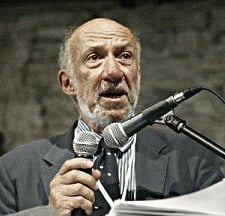
There is something particularly distressing about the ongoing debate on authorizing an internationally illegal and immoral military attack on Syria: a show of political support on the right. Such a ‘coming together’ of some of the center and much of the right in the American Congress has been sadly absent during Obama presidency until now, whether the issue was health, taxes, social services, keeping the government running, and immigration.

And this support emerges on the rare occasion when a majority of American citizens, not known for their cosmopolitan sentiments or affection for the UN Charter, oppose attacking Syria, as was the British Parliament, and as is public opinion throughout Europe. In such a setting, it is not only international law and the UN are being repudiated in a war/peace situation, but the whole fabric of democratic accountability to law and the judgment of the people.

At least we can conclude that the reactionary tendency in American political life over the course of the last decade or so is consistent in its adherence to irresponsible means in the pursuit of irresponsible ends. It appears that the real selling point for the looming attack on Syria is not for the sake of the Syrians, but to warn the leadership of Iran that it is next on the White House hit list unless it soon surrenders to Washington’s demands, echoing those more stridently made by Israel.

Is this what global leadership of the United States has come to mean? To let adversaries be reminded that the global bully means business.

And what about damaging the Obama legacy? There is a loss/loss feeling about the eventual attack, if indeed it should happen. If the attack on Syria is truly limited and does not produce many civilian casualties, his Republican champions, including such hawkish stalwarts as Senators McCain and Graham, will quickly change sides, arguing that doing such a slap on the wrist is worse than doing nothing. The broadening of the Congressional resolution suggests that the hawk support depends on launching a major attack that has much wider ambitions than what Obama seemed to favor in his call to Congress for authorization. Does he heed his earlier concept of the attack or go along with his more militarist supporters?

If, as seems probable, there are casualties, retaliations, escalation, diplomatic fallout, persisting civil strife, cross border spillover effects, then Obama is almost sure to face a grassroots protest movement expressing national and global disaffection, and including some of those Democrats who go along because a ‘red line’ once drawn by an American president needs to get respect, even if the cost of doing so is irresponsible, irrational, imprudent, illegal, and immoral.

Carrying out Obama’s preferred course of action would mean reverting to the once derided ‘Nixon madman’ approach to foreign policy, that is, inhibiting the Kremlin during the height of the Cold War by making their leaders believe that the American president was trigger-happy and crazy. Do whatever it takes to make sure else that America is feared around the world, endowing even its ill-advised threats with maximum potency.

This iron fist style of ‘keeping of the peace’ is totally divorced from adherence to international law and support for the UN. It excessively values keeping ‘the military option’ on the table at all times in the hope of either annihilating its enemies or make them suffer the consequences of opposition to Washington ideas about how to run the world.

If Congress responds with an authorization for force in Syria, and even in a form that exceeds what the president requested, it will no doubt recall the last major Congressional dark folly: the infamous Gulf of Tonkin resolution, giving Lyndon B. Johnson a blank check to widen the Vietnam War in ways of his devising. His first step was to escalate the American engagement by attacking North Vietnam from air and sea in 1965. It is never pleasant to revive bad memories except possibly to avoid another foreign policy fiasco, as well as to deepen the impression that America as a imperial superpower has lost its capacity to learn from past mistakes.

Dear friends, if the only way America can seem strong is to cast itself in the role of global bully, supplanting the earlier somewhat more understandable imperial cover of pax Americana, then the wise and virtuous will conclude, if they have not already, that America is actually weak.

In this century true strength will not be measured by degrees of military dominance and battlefield victories, but by helping to solve the growing agenda of national, regional, and global problems endangering the future of humanity.

Such a constructive path can only be taken if the major states show respect for international law and the UN Charter as the foundational premises of a sustainable world order. Thinking otherwise, that the history will be interpreted from the militarist perspectives of those who base human and societal security on a global war machine places global civilizations, and even the human species, on a slippery slope of extinction, nothing less! At this time, we need to fear more a clash of rationalities than a clash of civilizations, although both should be transcended.

Could it not be offered in response that such thoughts are a hysterical over-reaction to what will be at worst a flash flood soon to be forgotten? Along these lines, it is contended that any attack on Syria is likely to be over in several days (although the current language of the resolution offers a wide open window to war making by extending authorization to 90 days), the reaction by Syria and its friends, if any is forthcoming, will probably be muted, and life in America, the Middle East, and the world will return to what passes for ‘normalcy.’ Even if we assume that such a moderate unfolding is more or less accurate foretelling, yet even so, the effect would be deeply destructive. It will enable most of us to remain ignorant of an underlying frightening reality: our body politic suffers from this crippling disease of ‘martialitus’ for which there is no known cure, and at present not even a widely agreed upon diagnosis. Indeed, the disgraceful edifice of global surveillance may have as its primary task suppressing knowledge that our political leaders suffer from severe versions of this disease. Snowden, Manning, and Assange were likely seen to pose such a great danger because they were attempting to remove the geopolitical cataracts clouding our vision of such a distressing political reality. After such knowledge, there would be no forgiveness, only urgent responsibilities. Under these conditions cultivating the false consciousness of normalcy is itself an ominous sign of a collective refusal to acknowledge the disease, much less to begin treating it by such moves as a Congressional resolution requiring the president to obtain authorization for non-defensive force from the United Nations and under all circumstances act in accordance with the requirements of international law as objectively determined. It would be also important to insist that the government move toward fulfilling its obligations under the Nonproliferation Treaty of 1968 by tabling a proposal for phased and verified nuclear disarmament. It may also be appropriate to introduce a resolution in Congress that would make mandatory a declaration of war in all instances where international force was to be used by the United States other than in circumstances of genuinely imminent foreign attack.


Professor Falk became an adviser to TFF when it was established in 1985.

Related Posts

What the West Borrowed from Asia and What It Left Behind Jan Krikke October 8, 2026 The article was originally published here In the late 1960s, the musical Hair announced that the Age of Aquarius was dawning. Its opening anthem promised a transformation of human consciousness: an era of peace, harmony and understanding. Half a century later, a familiar echo of that promise is a meditation app offered by your employer. You can find it in the same list of benefits as the pension plan and the gym discount. How did a spiritual revolution become an employee benefit? The answer lies in the history of the movement known as New Age: where it came from, what it borrowed from Asia, and why the meaning of what it borrowed changed in the process. Two definitions will help. New Age is a loose label for a wide range of spiritual practices and...
It’s a matter of principles, courage, vision and pulling together – while the militarist world is falling apart… Peter Langille October 3, 2026 “Here, then, is the problem which we present to you, stark and dreadful and inescapable: Shall we put an end to the human race; or shall mankind renounce war?”The Bertrand Russell—Albert Einstein Manifesto, July 9, 1955 ⁕ The forecast for what’s ahead is worrisome. The sharp rise in armed conflicts over the past three years is adding to what was already the highest level in over seventy years. Genocides, which should be prevented are supported. A shared climate emergency that jeopardises survival is ignored. Diverse polls now suggest that people are war-weary, worried and interested in a more effective United Nations. And, there are viable policy options for a more secure world! Yet governments are doubling-down, betting on more war and investing heavily. If current trends persist,...
Johan Galtung 1930-2024October 2015 Published here on October 3, 2026 Let us focus on Civilization for conflict analysis and remedies. Major forms of disorder use violence; war is state organized violence. The most belligerent states are the United States of America and Israel, both with civilization roots. National Evangelism, the US Protestant Christian civilization– more national than evangelical–justifies US warfare as exceptionalism of a people chosen by God, with a manifest destiny to run the world. Orthodox Judaism justifies Israeli warfare to conquer and expand from Nile to Euphrates as a religious right and duty to the Eternal One. The third most belligerent country, the UK, no longer believes it is God-chosen but chosen by the USA; not quite the same but something. But the root cause of global disorder lies in the Occident–with Islam–seeing itself as the single, universal civilization valid for all at all times, all others being...

Recent Articles

A Message from Jan Oberg November 6, 2026 Over the past fifty years, I have devoted roughly 175,000 hours to research and public education for a more peaceful world: thinking, researching, writing, organising, publishing, debating, maintaining websites, corresponding, reaching out, leading a foundation, work in conflict and war zones, professorships, teaching courses and giving public lectures and doing media work. In short, ten hours a day, seven days a week, for half a century. The focus was on international political peace – analysing and trying to stop wars, address underlying conflicts and making alternative peace plans – at the desk and on the ground. Important as that has been and remains, it is only one kind of peace and it is now in a tragic militarist state compared with what it could have been.  Lately, however, I have found myself thinking about a concept from economics as well as everyday...
Photo above: Carl Fredrik Reuterswärd’s Non-Violence outside UN Headquarters in New York. Kirill Levin, CC BY-NC-SA 2. Jan Oberg November 3, 2026 I am happy to be published in Horizons which is produced by the Center for International Relations and Sustainable Development, CIRSD, in Belgrade. My contribution brings out a radical re-thinking of what concepts such as defence, security, deterrence – and peace – may mean if we want to create a more peaceful world. It also summarises a few things I have been working with the last few decades. Please read it here Og her er den på dansk, takket være Johnny Baltzersens lynhurtige oversættelse
UNITE-tillid, DREAM-velstand og andre konstruktive komponenter Normally we publish articles in English here. But this is a translation of a very important TFF document that should reach as many as possible in Denmark since this country’s government has been one of the most hardline in Europe and, up till now at least, has refused to use diplomacy and, instead, spent tremendous sums on arming Ukraine with the express goal of defeating Russia. Thus this – unique – article is in Danish. Vi er Johnny Baltzersen og hans Fælles Sikkerhed – Fælles Fremtid på Substack overmåde taknemmelige for at have oversat og publiceret TFF’s 2025-portfølje for fredsidéer med henblik på Ukraines fremtid. Vi håber den nu kan nå mange flere danskere – som også vil sprede den og skabe debat – nu den danske regerings og folketingspartiernes politik på dette område siden 2022 står nu – forudsigeligt – ved vejs ende....

TFF on Substack

Discover and subscribe to more peace materials on TFF Substack

Most Popular

A Message from Jan Oberg November 6, 2026 Over the past fifty years, I have devoted roughly 175,000 hours to research and public education for a more peaceful world: thinking, researching, writing, organising, publishing, debating, maintaining websites, corresponding, reaching out, leading a foundation, work in conflict and war zones, professorships, teaching courses and giving public lectures and doing media work. In short, ten hours a day, seven days a week, for half a century. The focus was on international political peace – analysing and trying to stop wars, address underlying conflicts and making alternative peace plans – at the desk and on the ground. Important as that has been and remains, it is only one kind of peace and it is now in a tragic militarist state compared with what it could have been.  Lately, however, I have found myself thinking about a concept from economics as well as everyday...
Photo above: Carl Fredrik Reuterswärd’s Non-Violence outside UN Headquarters in New York. Kirill Levin, CC BY-NC-SA 2. Jan Oberg November 3, 2026 I am happy to be published in Horizons which is produced by the Center for International Relations and Sustainable Development, CIRSD, in Belgrade. My contribution brings out a radical re-thinking of what concepts such as defence, security, deterrence – and peace – may mean if we want to create a more peaceful world. It also summarises a few things I have been working with the last few decades. Please read it here Og her er den på dansk, takket være Johnny Baltzersens lynhurtige oversættelse
UNITE-tillid, DREAM-velstand og andre konstruktive komponenter Normally we publish articles in English here. But this is a translation of a very important TFF document that should reach as many as possible in Denmark since this country’s government has been one of the most hardline in Europe and, up till now at least, has refused to use diplomacy and, instead, spent tremendous sums on arming Ukraine with the express goal of defeating Russia. Thus this – unique – article is in Danish. Vi er Johnny Baltzersen og hans Fælles Sikkerhed – Fælles Fremtid på Substack overmåde taknemmelige for at have oversat og publiceret TFF’s 2025-portfølje for fredsidéer med henblik på Ukraines fremtid. Vi håber den nu kan nå mange flere danskere – som også vil sprede den og skabe debat – nu den danske regerings og folketingspartiernes politik på dette område siden 2022 står nu – forudsigeligt – ved vejs ende....
Read More
AbstractVision_2017_#1_800 (kopia)
A Message from Jan Oberg November 6, 2026 Over the past fifty years, I have devoted roughly 175,000 hours to research and public education for a more peaceful world: thinking, researching, writing, organising, publishing, debating, maintaining websites, corresponding, reaching out, leading a foundation, work in conflict and war zones, professorships, teaching courses and giving public lectures and doing media work. In short, ten hours a day, seven days a week, for half a century. The focus was on international political peace – analysing and trying to stop wars, address underlying conflicts and making alternative peace plans – at the desk and on the ground. Important as that has been and remains, it is only one kind of peace and it is now in a tragic militarist state compared with what it could have been.  Lately, however, I have found myself thinking about a concept from economics as well as everyday...
knotted gun
Photo above: Carl Fredrik Reuterswärd’s Non-Violence outside UN Headquarters in New York. Kirill Levin, CC BY-NC-SA 2. Jan Oberg November 3, 2026 I am happy to be published in Horizons which is produced by the Center for International Relations and Sustainable Development, CIRSD, in Belgrade. My contribution brings out a radical re-thinking of what concepts such as defence, security, deterrence – and peace – may mean if we want to create a more peaceful world. It also summarises a few things I have been working with the last few decades. Please read it here Og her er den på dansk, takket være Johnny Baltzersens lynhurtige oversættelse
TFFPortfolioVign
UNITE-tillid, DREAM-velstand og andre konstruktive komponenter Normally we publish articles in English here. But this is a translation of a very important TFF document that should reach as many as possible in Denmark since this country’s government has been one of the most hardline in Europe and, up till now at least, has refused to use diplomacy and, instead, spent tremendous sums on arming Ukraine with the express goal of defeating Russia. Thus this – unique – article is in Danish. Vi er Johnny Baltzersen og hans Fælles Sikkerhed – Fælles Fremtid på Substack overmåde taknemmelige for at have oversat og publiceret TFF’s 2025-portfølje for fredsidéer med henblik på Ukraines fremtid. Vi håber den nu kan nå mange flere danskere – som også vil sprede den og skabe debat – nu den danske regerings og folketingspartiernes politik på dette område siden 2022 står nu – forudsigeligt – ved vejs ende....
JoGSS-Silent
Jan Oberg TFF director October 28, 2026 Exactly one month has now passed since I published my criticism of the introduction to the special issue on Johan Galtung published by the Journal of Global Security Studies, JoGSS, and of Tor Egil Førland’s chapter about Galtung which serves as a preview to his forthcoming biography of Galtung to be published by PRIO. See the original on The Transnational here and the same article on TFF Substack with many general and critical comments and, in particular, the people who decided to withdraw from the biography project in protest. The special issue itself was extraordinary. It was devoted to the intellectual legacy of one of the founders of peace research and contained a number of strong assessments of his personality, scholarship, intellectual trajectory, and public role. Such assessments are, of course, entirely legitimate. No scholar is beyond criticism, and neither was Johan Galtung....
Screenshot 2026-10-26 115647
An aspect of Iran’s culture and civilisation you’ve probably never heard about. Don’t be surprised if the US and Israel also try to bomb them. Jan ObergTFF director October 26, 2026 Today – under the “USraeli” threat of new “annihilating” bombings – opens the 7th International Conference on Peace and Conflict Resolution at Tehran’s University. As far as I can tell, this is the only permanent, advanced peace research institution in West Asia/the Middle East. Perhaps more countries in that region could be inspired? I mean, how many military “security” institutes and military academies do they have? Many peace research institutes and university departments have been established since the 1950s in the West. They are now all under attack; some have closed down, some have gone mainstream, yet others kept the name but do nothing to research peace and disseminate results or advice; instead, they cooperate with militarism’s platforms such...
Screenshot 2026-10-15 141837
Let’s discuss using AI to create peace – in contrast to boring geopolitics devoid of creative healing and visions. Jan Oberg TFF director October 15, 2026 I asked VEED to create a short video exemplifying how peace is preferable to war, then chose the lady as a template. Simple as that. In less than a minute, it produced this video, which any peace-loving person would appreciate. The only problem is that human intelligence (HI), at least the one that exists among Western decision-makers, isn’t half as moral or smart as AI. I have used AI to dialogue about peace and peace plans, creative conflict resolution and visions of a better future for humankind. It so happens that I am having more stimulating, intelligent, creative and moral discussions with AI than I could possibly have with any EU or NATO leader today. Yes, AI has very problematic and dangerous aspects; used...




