New EU sanctions on Iran: The plank in your own eyes

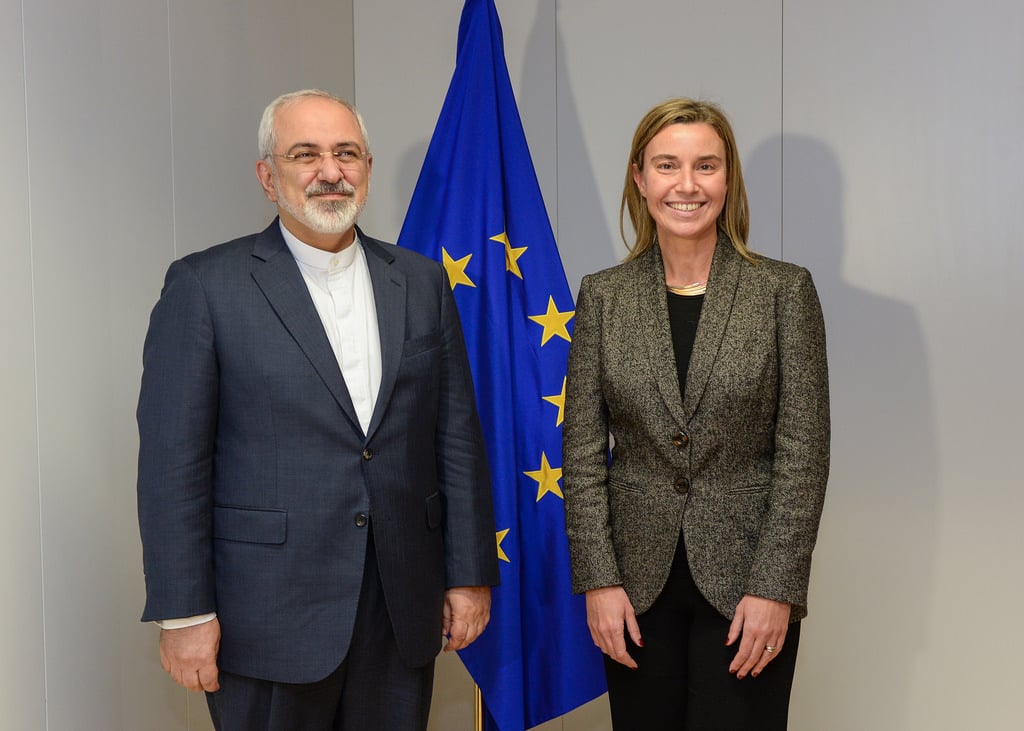
Iranian foreign minister Javad Zarif and the EU Foreign Policy chief Frederica Mogherini

UPI writes that the European Union issues sanctions on Iran over assassination plots on January 8, 2019. And US Secretary of State, Pompeo, fully supports them.

The move puts the Iranian individuals and intelligence unit on the EU terrorist list – freezing their financial assets.

It’s a brilliant example of Matthew 7:3-6: “Why do you look at the speck of sawdust in your brother’s eye and pay no attention to the plank in your own eye?”

Which, it seems, is now a standard operating policy by the Western world.

Or, one may say, an example of psycho-political projection of the West’s own dark sides onto this enemy today and that enemy tomorrow.

Here some arguments in support of that – perhaps to some – provocative statement:

1) It should be clear from contemporary history’s records that countries such as the UK, France and the US do infinitely more of what Iran is accused of here. (See point 4 below).

2) “Alleged”, “accused of attempting” and “strong evidence” are the words used by all. In other words, not a shred of hard evidence and punishment before proof. It’s no good for legal states in which anyone is to be considered innocent until the opposite has been proven. Thus, basic legal principles – not to speak of ethics – are set aside by politicians who, on a daily basis, teach others about what is unacceptable, or what they should do.

3) The self-same countries have put economic sanctions on Iran for not one good reason beyond orders issues by the US. The basic sanctions installed – in various forms and shapes since 1979 – can be categorized as terrorism as they deliberately target and hit the millions of innocent Iranian citizens.

4) Has the US and all EU countries not been fighting what they consider terrorist – the Global War on Terrorism – since September 11, 2001? Don’t they use tools such as CIA, special operating forces, agents to hunt down and kill those they consider a threat to their country – and don’t they do so on any other country’s territory if they deem it necessary – say Somalia, Afghanistan, Pakistan (Osama bin Laden), or the US in Syria against its self-created ISIS – to just mention a few among many since 1945?

Indeed, isn’t international politics filled with such cases, including systematic attempts in dozens of countries of killing people, including heads of state – Allende, Saddam Hussein, Gaddafi?

5) Iran is the victim of primary sanctions by the US and EU – has been for years. And it’s a victim of secondary sanctions – those that are applications of US law in other countries implying that if the US has put up sanctions against Iran, then it will punish countries – such as the EU, China, Russia – if they uphold their economic and cultural relations with Iran.

And the EU has been woefully split on the issue too, even unable to develop an alternative to Trumpist-CIA-State Department-Deep state constantly self-contradictory, confusing and unprincipled policies.

And why is Iran and its people targeted? Because the Islamic Revolution in 1979 had forced out the Shah who had been installed through the US/UK coup d’etat in 1953 against democratically elected Mossadegh. Since Ayatollah Khomeni took over, Iran has been considered a pariah state by the US and other Western countries and demonised ad absurdum.

Anybody who, like the author, has visited Iran and spoken with people at different levels and walks of life, know that the Western image of Iran has frighteningly little to do with the reality there: Fake and omission united.

That is the general background – “we don’t like them and what they do to our world leadership”. Simple as that.

The present specific sanctions have been installed in the wake of the US violating international law by leaving the JCPOA agreement about Iran’s nuclear policies – perhaps the single most important piece of international diplomacy and negotiated solution to a problem that could otherwise have caused war. (And it is not that there is any hard evidence that Iran attempted to acquire nuclear weapons, but so it is “alleged”, not the least by Israel and the US as pointed out so thoroughly by TFF Associate Gareth Porter).

The JCPOA is embedded in a UN Security Council resolution (2231) and, thus, a piece of international law. So, it’s the US, not Iran, that should be punished.

all these issues are so important for understanding the conflict between Iran and the West. And why sanctions, demonization and constant threats issued (also against the UN Charter) is probably all part of a build-up to some kind of violent action on Iran.

And, thus, you won’t find such arguments in the Western mainstream media. News journalists and selected experts are either conveniently ignorant about them or know how to practise self-censorship through something much much more important than fake – namely omission.

That is, the omission of facts, of conflict analysis, of the perspectives of “the others”, of peace perspectives and of even the slightest criticism of the West’s policies.

One reason, of course, is that these media and experts are dependent on being politically correct for their survival on corporate and state support.

And when the states plot wars in foreign lands, mainstream media follow His Master’s Voice.

 

PhD, Peace & future researcher + ‌Art Photographer, Professor Emeritus and media commentator

One Response

  1. There are many things wrong with Iran, as there are with many other countries. However, the excuse for these sanctions is very thin. When the Trump administration violated the Security Council Resolution 2231 and withdrew from the landmark Iranian nuclear deal, it was initially hoped that the EU which was a party to that agreement would put principle and its own economic and political interests above the desire to appease the current ultra-rightwing US government. Unfortunately, the latest decision shows that those hopes were misplaced and Europe lacks the backbone to stand up to illegal US demands and has decided to surrender to US Israeli diktat. This is a bad day not only for Iran, but also for the EU, for the rule of law and for international relations, and will only force Iran to turn to the East. The EU has refused to impose sanctions on Saudi Arabia after the barbaric murder and dismemberment of a respected journalist in its consulate in Istanbul or for its war crimes in Yemen that have resulted in tens of thousands of deaths and the near starvation of millions. The latest EU decision is not a sign of strength, but a sign of pitiful weakness in the face of an aggressive superpower, and it will not bode well for the future.

Related Posts

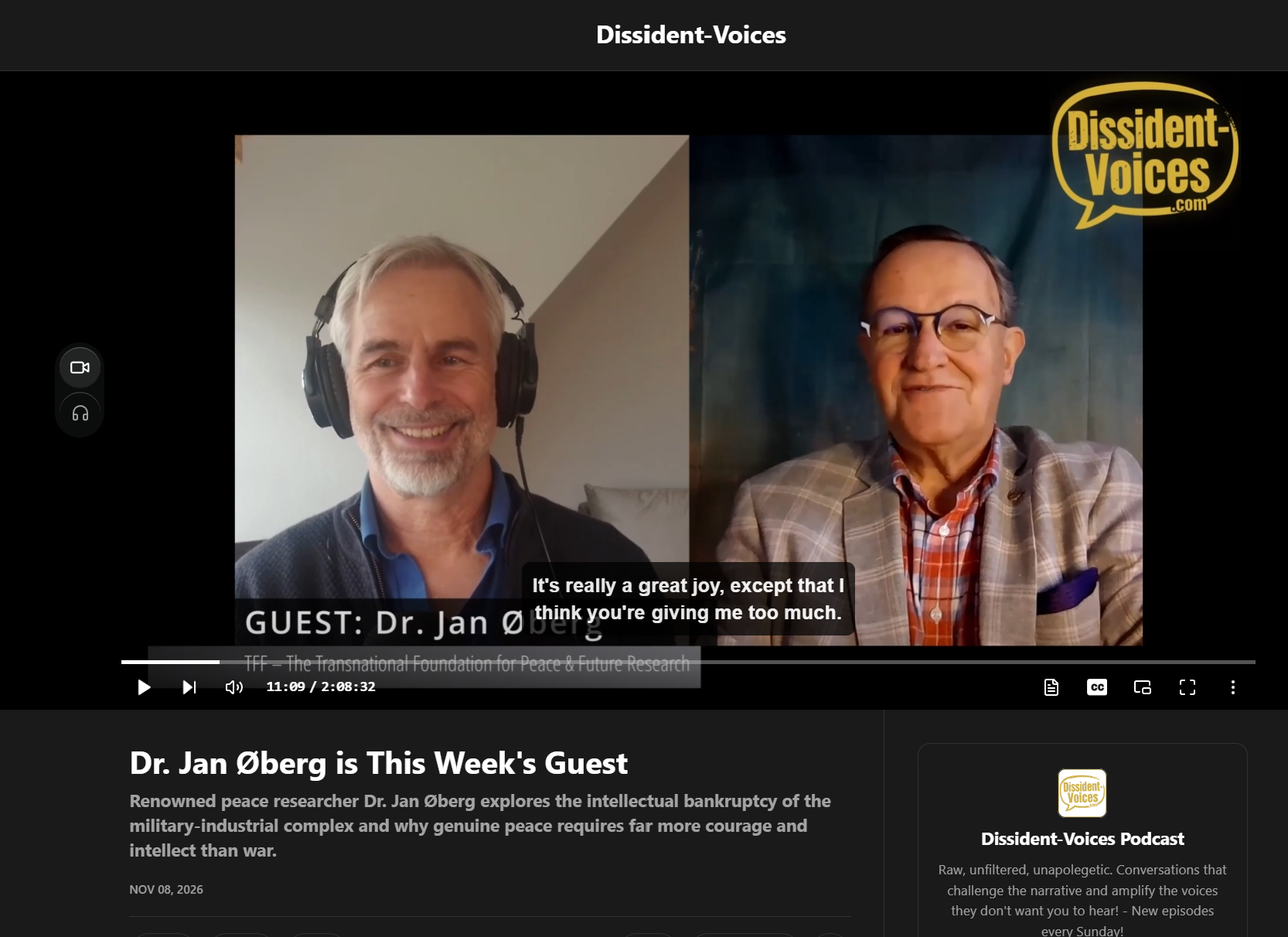
A Message from Jan Oberg November 6, 2026 Over the past fifty years, I have devoted roughly 175,000 hours to research and public education for a more peaceful world: thinking, researching, writing, organising, publishing, debating, maintaining websites, corresponding, reaching out, leading a foundation, work in conflict and war zones, professorships, teaching courses and giving public lectures and doing media work. In short, ten hours a day, seven days a week, for half a century. The focus was on international political peace – analysing and trying to stop wars, address underlying conflicts and making alternative peace plans – at the desk and on the ground. Important as that has been and remains, it is only one kind of peace and it is now in a tragic militarist state compared with what it could have been.  Lately, however, I have found myself thinking about a concept from economics as well as everyday...
Photo above: Carl Fredrik Reuterswärd’s Non-Violence outside UN Headquarters in New York. Kirill Levin, CC BY-NC-SA 2. Jan Oberg November 3, 2026 I am happy to be published in Horizons which is produced by the Center for International Relations and Sustainable Development, CIRSD, in Belgrade. My contribution brings out a radical re-thinking of what concepts such as defence, security, deterrence – and peace – may mean if we want to create a more peaceful world. It also summarises a few things I have been working with the last few decades. Please read it here Og her er den på dansk, takket være Johnny Baltzersens lynhurtige oversættelse
UNITE-tillid, DREAM-velstand og andre konstruktive komponenter Normally we publish articles in English here. But this is a translation of a very important TFF document that should reach as many as possible in Denmark since this country’s government has been one of the most hardline in Europe and, up till now at least, has refused to use diplomacy and, instead, spent tremendous sums on arming Ukraine with the express goal of defeating Russia. Thus this – unique – article is in Danish. Vi er Johnny Baltzersen og hans Fælles Sikkerhed – Fælles Fremtid på Substack overmåde taknemmelige for at have oversat og publiceret TFF’s 2025-portfølje for fredsidéer med henblik på Ukraines fremtid. Vi håber den nu kan nå mange flere danskere – som også vil sprede den og skabe debat – nu den danske regerings og folketingspartiernes politik på dette område siden 2022 står nu – forudsigeligt – ved vejs ende....

Recent Articles

Serious but also a lot of laughs and positive energy. Because peace is also about conviviality and enchantment… Jan Oberg, TFF director November 16, 2026 This is a long (129 minutes) conversation with me. We cover very many, also personal, issues that makes a somewhat unusual media event. I am very grateful to Flemming Blicher for giving me this opportunity. I can’t remember any channel or editor who spent as much time as he did preparing it – including also asking me to answer a series of pre-interview questions, which are now posted under the conversation. If you sympathise with its content, please share it. Watch it here
A Message from Jan Oberg November 6, 2026 Over the past fifty years, I have devoted roughly 175,000 hours to research and public education for a more peaceful world: thinking, researching, writing, organising, publishing, debating, maintaining websites, corresponding, reaching out, leading a foundation, work in conflict and war zones, professorships, teaching courses and giving public lectures and doing media work. In short, ten hours a day, seven days a week, for half a century. The focus was on international political peace – analysing and trying to stop wars, address underlying conflicts and making alternative peace plans – at the desk and on the ground. Important as that has been and remains, it is only one kind of peace and it is now in a tragic militarist state compared with what it could have been.  Lately, however, I have found myself thinking about a concept from economics as well as everyday...
Photo above: Carl Fredrik Reuterswärd’s Non-Violence outside UN Headquarters in New York. Kirill Levin, CC BY-NC-SA 2. Jan Oberg November 3, 2026 I am happy to be published in Horizons which is produced by the Center for International Relations and Sustainable Development, CIRSD, in Belgrade. My contribution brings out a radical re-thinking of what concepts such as defence, security, deterrence – and peace – may mean if we want to create a more peaceful world. It also summarises a few things I have been working with the last few decades. Please read it here Og her er den på dansk, takket være Johnny Baltzersens lynhurtige oversættelse

TFF on Substack

Discover and subscribe to more peace materials on TFF Substack

Most Popular

Serious but also a lot of laughs and positive energy. Because peace is also about conviviality and enchantment… Jan Oberg, TFF director November 16, 2026 This is a long (129 minutes) conversation with me. We cover very many, also personal, issues that makes a somewhat unusual media event. I am very grateful to Flemming Blicher for giving me this opportunity. I can’t remember any channel or editor who spent as much time as he did preparing it – including also asking me to answer a series of pre-interview questions, which are now posted under the conversation. If you sympathise with its content, please share it. Watch it here
A Message from Jan Oberg November 6, 2026 Over the past fifty years, I have devoted roughly 175,000 hours to research and public education for a more peaceful world: thinking, researching, writing, organising, publishing, debating, maintaining websites, corresponding, reaching out, leading a foundation, work in conflict and war zones, professorships, teaching courses and giving public lectures and doing media work. In short, ten hours a day, seven days a week, for half a century. The focus was on international political peace – analysing and trying to stop wars, address underlying conflicts and making alternative peace plans – at the desk and on the ground. Important as that has been and remains, it is only one kind of peace and it is now in a tragic militarist state compared with what it could have been.  Lately, however, I have found myself thinking about a concept from economics as well as everyday...
Photo above: Carl Fredrik Reuterswärd’s Non-Violence outside UN Headquarters in New York. Kirill Levin, CC BY-NC-SA 2. Jan Oberg November 3, 2026 I am happy to be published in Horizons which is produced by the Center for International Relations and Sustainable Development, CIRSD, in Belgrade. My contribution brings out a radical re-thinking of what concepts such as defence, security, deterrence – and peace – may mean if we want to create a more peaceful world. It also summarises a few things I have been working with the last few decades. Please read it here Og her er den på dansk, takket være Johnny Baltzersens lynhurtige oversættelse
Read More
Screenshot 2026-11-10 174455
Serious but also a lot of laughs and positive energy. Because peace is also about conviviality and enchantment… Jan Oberg, TFF director November 16, 2026 This is a long (129 minutes) conversation with me. We cover very many, also personal, issues that makes a somewhat unusual media event. I am very grateful to Flemming Blicher for giving me this opportunity. I can’t remember any channel or editor who spent as much time as he did preparing it – including also asking me to answer a series of pre-interview questions, which are now posted under the conversation. If you sympathise with its content, please share it. Watch it here
AbstractVision_2017_#1_800 (kopia)
A Message from Jan Oberg November 6, 2026 Over the past fifty years, I have devoted roughly 175,000 hours to research and public education for a more peaceful world: thinking, researching, writing, organising, publishing, debating, maintaining websites, corresponding, reaching out, leading a foundation, work in conflict and war zones, professorships, teaching courses and giving public lectures and doing media work. In short, ten hours a day, seven days a week, for half a century. The focus was on international political peace – analysing and trying to stop wars, address underlying conflicts and making alternative peace plans – at the desk and on the ground. Important as that has been and remains, it is only one kind of peace and it is now in a tragic militarist state compared with what it could have been.  Lately, however, I have found myself thinking about a concept from economics as well as everyday...
knotted gun
Photo above: Carl Fredrik Reuterswärd’s Non-Violence outside UN Headquarters in New York. Kirill Levin, CC BY-NC-SA 2. Jan Oberg November 3, 2026 I am happy to be published in Horizons which is produced by the Center for International Relations and Sustainable Development, CIRSD, in Belgrade. My contribution brings out a radical re-thinking of what concepts such as defence, security, deterrence – and peace – may mean if we want to create a more peaceful world. It also summarises a few things I have been working with the last few decades. Please read it here Og her er den på dansk, takket være Johnny Baltzersens lynhurtige oversættelse
TFFPortfolioVign
UNITE-tillid, DREAM-velstand og andre konstruktive komponenter Normally we publish articles in English here. But this is a translation of a very important TFF document that should reach as many as possible in Denmark since this country’s government has been one of the most hardline in Europe and, up till now at least, has refused to use diplomacy and, instead, spent tremendous sums on arming Ukraine with the express goal of defeating Russia. Thus this – unique – article is in Danish. Vi er Johnny Baltzersen og hans Fælles Sikkerhed – Fælles Fremtid på Substack overmåde taknemmelige for at have oversat og publiceret TFF’s 2025-portfølje for fredsidéer med henblik på Ukraines fremtid. Vi håber den nu kan nå mange flere danskere – som også vil sprede den og skabe debat – nu den danske regerings og folketingspartiernes politik på dette område siden 2022 står nu – forudsigeligt – ved vejs ende....
JoGSS-Silent
Jan Oberg TFF director October 28, 2026 Exactly one month has now passed since I published my criticism of the introduction to the special issue on Johan Galtung published by the Journal of Global Security Studies, JoGSS, and of Tor Egil Førland’s chapter about Galtung which serves as a preview to his forthcoming biography of Galtung to be published by PRIO. See the original on The Transnational here and the same article on TFF Substack with many general and critical comments and, in particular, the people who decided to withdraw from the biography project in protest. The special issue itself was extraordinary. It was devoted to the intellectual legacy of one of the founders of peace research and contained a number of strong assessments of his personality, scholarship, intellectual trajectory, and public role. Such assessments are, of course, entirely legitimate. No scholar is beyond criticism, and neither was Johan Galtung....
Screenshot 2026-10-26 115647
An aspect of Iran’s culture and civilisation you’ve probably never heard about. Don’t be surprised if the US and Israel also try to bomb them. Jan ObergTFF director October 26, 2026 Today – under the “USraeli” threat of new “annihilating” bombings – opens the 7th International Conference on Peace and Conflict Resolution at Tehran’s University. As far as I can tell, this is the only permanent, advanced peace research institution in West Asia/the Middle East. Perhaps more countries in that region could be inspired? I mean, how many military “security” institutes and military academies do they have? Many peace research institutes and university departments have been established since the 1950s in the West. They are now all under attack; some have closed down, some have gone mainstream, yet others kept the name but do nothing to research peace and disseminate results or advice; instead, they cooperate with militarism’s platforms such...