In defence of Greta Thunberg and her nonviolent action

is likely to be seen by future generations as pathbreaking or, as they say today, iconic.

One of several reasons she attracts so much attention is that she combines three factors that, in these dark times, seldom go together but which – undoubtedly – people worldwide long for: knowledge (facts), passion/emotions and a commitment to nonviolence.

While politicians go populist, nationalist and militarist and many individuals tend to be obsessed with themselves, their body – looks, food, weight, ways to relate and how to show off (inner emptiness) – here is a 16-year young woman who speaks on behalf of humanity and does so as if she was Nature’s appointed ambassador too.

She operates in a world in which there is more and more fake – and more important, omission – in which it’s great to keep cool and unemotional in public (and often say nothing of interest but delivering standard, politically correct and non-provocative speeches) and in a world in which violent demonstrations – from Hong Kong to threats with nuclear weapons – is considered normal modes of operation that don’t need scrutinization.

Gandhian and Greta-ian nonviolence

Those of us who have devoted ourselves to nonviolence – to the UN Charter norm of making peace by peaceful means (Article 1) – allow ourselves to celebrate the strength of nonviolent action for constructive change that is Greta.

It’s deplorable that that particular – and obvious – dimension of her campaigning is hardly even mentioned. Media and others don’t see her campaign for global change in harmony with Nature as a major example of the strength of nonviolent philosophy and action.

Gandhi’s formulation was that “the means are the goals in-the-making” – in other words, choose the right, good means and you will arrive at good goals.

Imagine in that perspective that Greta had chosen to smash some shop windows in Stockholm carrying a sign that we must save the Earth or something. The media of course would have been there, she would have been arrested and – that would have been it.

Fortunately, instead she wisely chose the classical nonviolent sit-down action, with a sign (“School Strike for the Climate”), she chose to strike and – very importantly and in the spirit of Gandhi – chose self-suffering, to suffer by abstaining from school. As she says in that remarkable, moving speech at the UN: “This is all wrong. I shouldn’t be up here. I should be back in school on the other side of the ocean.”

In a nutshell, she broke the norm and law (about going to school) for a higher cause, one way beyond herself but also her own.

And again, not without parallels to Gandhi as well as many great artists, she has converted an inner problem into a mission of doing something good for the world and humanity.

Apart from her young age, Greta Thunberg is also an interesting socio-political figure in global politics in the sense that she proves what the single individual can achieve if a) willing to focus on the world and not only I, me and myself… b) do things with determination and c) build on a strong knowledge base.

She did not start out setting up an NGO, finance it by support from the Swedish government (which would have confined and made her politically correct, sooner or later) and she did not put that organisation with money into the hands of a marketing company.

In that sense, she demonstrates an important nonviolent principle – you must take personal responsibility for a cause much bigger than yourself and remain independent. (People who know me well know that for years I have ended my public speeches with “Every human being is a potential peace movement whereas I don’t believe much in movements.”).

Greta has millions of followers – for instance over 6 million on Instagram – but no organisation with a board and hierarchy and power struggles.

I hope she will never go NGO in that sense. I hope she will remain an unconstituted leader – as was Gandhi who was never elected to any position.

This is the constructive individual(ism) that permits a collective of millions to thrive and develop and be inventive – not dis- but un-organised with no bylaws or party program that stifle the passion and the creativity. There can be no coup against her precisely because there is no organisation with a power structure and funds or fame to grab.

The nasty attacks on Greta Thunberg

But she will be attacked – and has been. Increasingly so. She is considered a huge challenge to powers that be in a very broad sense.

She is living the wrong way, doing wrong things in contravention of what she works for, or she is misguided and doesn’t know what she talks about. Or she does not write her speeches herself, or that she meets the wrong people. On and on…

There are all kinds of ill-willed accusations and conspiracies about “who is really behind her,” about being misused by her parents to get famous, about her being just a mentally sick girl you should not listen to, etc. Here is how Fox News did it but, in all fairness, apologized for it.

Here is how Mr Trump obviously felt so threatened by her that he had to ridicule her. And Russia Today has chosen to publish only suspicion-throwing articles which accuse her of being nothing but a tool in the hands of a new green capitalism and worse.

And here is the argument by a former deputy member of the Nobel Committee, Sverre Lodgaard, that her shaming of people who pollute the environment is not a constructive feeling and brings her chances to receive that prize down.

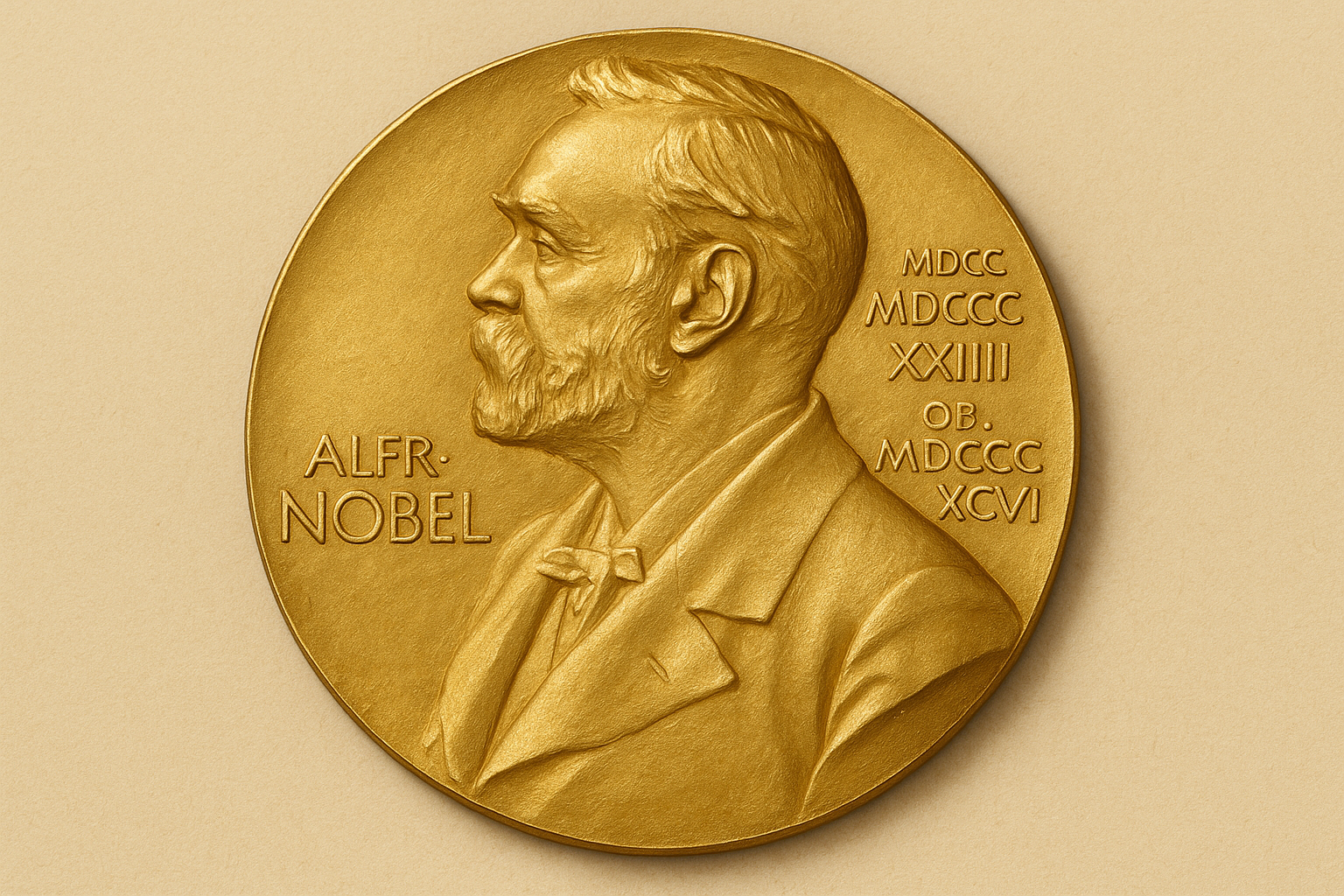
It would be more appropriate if Lodgaard had pointed out that, in spite of her amazing work for the environment, Greta Thunberg has done nothing that qualifies her to receive the Nobel Peace Prize as it is a prize that shall be awarded “the person who has done the most or best to advance fellowship among nations, the abolition or reduction of standing armies, and the establishment and promotion of peace congresses.” – read Alfred Nobel’s will here.

And of course, there is mean and lousy Breitbart.

Great if Greta also took up the huge military destruction of the environment

Greta undoubtedly knows where she wants to go in the future. At the moment, she is strongest on diagnosis and prognosis, so to speak, but one would wish she had a bit more of Gandhi’s constructive program, of treatment: What shall we do (and not only abstain from), who can do it, how and when can it be done – in short, a strategy.

Secondly, I for one would hope that she would attempt to become a kind of bridge-builder between the two huge challenges humankind is facing – environmental destruction (about which there is a lot of talk) and large-scale war, including nuclear war (about which there is woefully little and unqualified talk).

The two are intimately connected. The military pollutes the cities, agricultural lands, seas and the air – both for exercise, training and transport in peace time and directly, of course, in times of war. It shuffles soldiers and materiél around the world, mostly on a rotational basis – by air, sea and land. It consumes incredible amounts of oil – as does, at the earlier stages, the production and export of weapons.

And there is the whole field of environmental warfare – technologies for deliberately destroying the environment of the enemy.

And should just one nuclear weapons be used – by accident or deliberate political decision – we can forget about most, if not all, of what Greta Thunberg and the millions of environmentalists are struggling to preserve. The climate consequences of that will dwarf all we subsume under “climate change” and environmental destruction today.

A 2019 study concludes, among other things, that “the US military is one of the largest polluters in history, consuming more liquid fuels and emitting more climate-changing gases than most medium-sized countries. If the US military were a country, its fuel usage alone would make it the 47th largest emitter of greenhouse gases in the world, sitting between Peru and Portugal.” (Read about the study at The Conversation).

As the headline goes: US military is a bigger polluter than as many as 140 countries – shrinking this war machine is a must.

“Its fuels usage alone”… by the US alone. Yes, it stands for about 40% of the world’s military expenditures but add to that what the rest of the world’s military – some 180 – does to the environment and you can only ask one question: How dare you ignore the military destruction of the environment in the global climate change debates?

It would be great if Greta Thunberg would point her finger at that major environmental destroyer – which does this violence to Nature in order to be able to do violence to everything else where it operates.

Violence against Nature is fundamentally connected to violence against humans, societies, countries, and cultures. And that fundamental connector is the – basically Western – civilisational acceptance of and obsession with the mentality, research, technology and policies of violence.

Burning passion and detachment

Fortunately, Greta seems totally unimpressed with her status of intellectual and political celebrity, created in just about a year. I’m reminded of Gandhi’s statement that “A burning passion coupled with absolute detachment is the key to all success” – where detachment means detachment from the fruits of the action, to not do things in order to become rich or famous or otherwise benefit oneself.

I hope by all my heart that she and her parents will remain strong and “detached” and stay the course for the cause. That the nasty critics will not be able to wear her down. Fortunately, she seems strong and perhaps her Asperger “problem” is actually a help here.

The world needs Greta more than it needs the majority of its present decision-makers.

So let us wish her luck and support her cause. She brings hope, knowledge, passion and – yes, anger too – into global politics.

It could well be that Greta Thunberg develops into a modern day Gandhi-in-the-making. I would not exclude it and I am sure Gandhi would have welcomed her into his ashram.

Recommended

There are lots of videos with Greta Thunberg. Here is one of the many that also shows that she does not need a manuscript to say what she needs to say and one about the movement:

And here a fine interview with Canada’s National Observer.

Finally, The Transnational Foundation will soon launch a Militarism and the Environment Magazine on Flipboard. We’ll tell you when it takes place but until further, go and browser – and follow – our Transnational Peace Affairs magazine there.

Editor’s note

Although we are trying hard to persuade readers on our social media to conduct the debate here, under the article – which is the natural place if you have read the article – most seem ignorant and write their comments on Facebook. Thereby they endorse Facebook’s tracking and censorship and give this flawed media a virtually global monopoly on debates.
We do not want to contribute to that.
However, if you want to see that debate on Facebook – also the continued nasty attacks on Greta and her person and role, you may read it here.
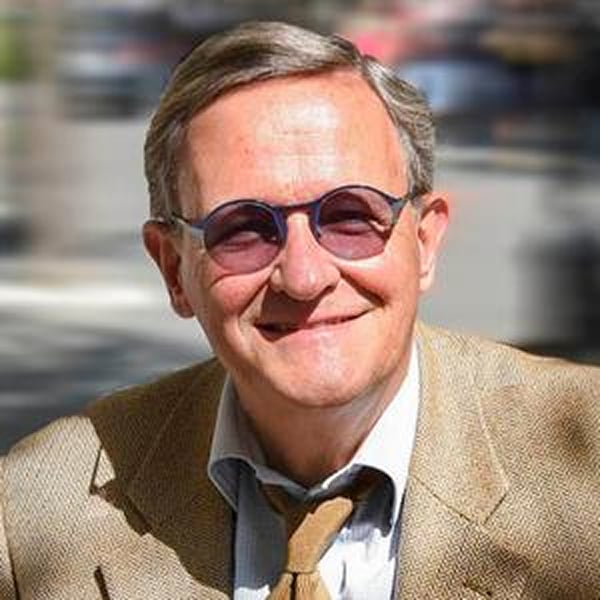

Peace & future researcher + ‌Art Photographer

5 Responses

  1. Thank you, Jan Öberg, for your clear and central points: 1) chosing the non-violent way 2) including the war-machine as one of the biggest polluter 3) presenting a program connecting environment and peace. Thank you

  2. You asked me to read the whole thing and put my comments here… I did not read every word but scanned through… you wanted me to comment here and not in the facebook… here it is ”nothing against her reminding us all to do something to help our planet and its people, and all life to survive.. however it does not really help when she goes ”overboard” in hysterics.. very likely pushed by all the capital and questionable NGOs behind her… and it does not help when she actually does not know what she is talking about… CO2 is hardly the villain she is making it… we have had climate change for billions of years.. … we do need to clean up our planet as there is too many poisons that make it hard for life to survive… in the air, in the ground and in the water… She should study up on what role the sun has in our climate, and the whole cosmos… ” I do not see her as you do!

Related Posts

Below are TFF-related media mentions, comments, videos and social media posts published elsewhere but not on this homepage. We happen to catch and list only a fraction. Regarding video comments and debates, we recommend that you go to the TFF Video Channel on Substack where many of them are reproduced. Jan Oberg is a contributor to China Daily – 52 million daily clicks – and Global Times, CGTN and CCTV (the national television), China Investment, Xinhua News Agency and several others. Articles and videos on these media very often multiply into countless Chinese (and Western media) that re-post them from these main media. Thanks to The China Academy, his analyses, interviews and comments are frequently posted on YouTube channels such as Thinkers Forum and Wave Media. These videos are often re-posted on Bilibili (China’s YouTube), the China Content Center on TikTok, and on the Chinese edition of TikTok, Douyin.com. This means reaching hundreds of millions of viewers worldwide over a year. While there are too many to catch on all these...
Jan Oberg TFF director October 13, 2026 According to Alfred Nobel’s will, the Nobel Peace Prize shall be awarded: ”to the person who has done the most or best to advance fellowship among nations, the abolition or reduction of standing armies, and the establishment and promotion of peace congresses.” Further down, he also expresses how the prize for the “champions of peace” shall be decided: “that for champions of peace by a committee of five persons to be selected by the Norwegian Storting. Alfred Nobel’s will is remarkably short and clear. But few seem to have read it. Nobel did not say that the committee itself should consist of members of parliament. He entrusted the Storting with appointing five persons. In principle, it could have selected diplomats, mediators, peace researchers, conflict-resolution specialists, or other individuals with recognised expertise in matters of peace from around the world. Instead, the Storting gradually...
The Quest for Humane Survival Richard Falk Professor emeritus, Princeton UniversityTFF Associate since 1986October 12, 2026 After decades of teaching and writing about international law in academic frameworks that were not institutionally situated within law school environments—at Princeton and the University of California, Santa Barbara—I found myself most receptive to the TWAIL outlook. It has been especially illuminating in clarifying the extent to which international law evolved as a dialogical critique of Europe’s efforts to legitimize its colonial undertakings. In particular, TWAIL has exposed how international law has functioned to legalize the subjugation of Third World peoples, securing conditions for exploitative investment and trade relations, the coercive enforcement of public debts, and an ideology of cultural superiority. TWAIL’s exposure of these economic legacies of colonialism has influenced my understanding of the history and development of international law, broadly conceived, as an ideological project of the Western sub-system of the world...

Recent Articles

Below are TFF-related media mentions, comments, videos and social media posts published elsewhere but not on this homepage. We happen to catch and list only a fraction. Regarding video comments and debates, we recommend that you go to the TFF Video Channel on Substack where many of them are reproduced. Jan Oberg is a contributor to China Daily – 52 million daily clicks – and Global Times, CGTN and CCTV (the national television), China Investment, Xinhua News Agency and several others. Articles and videos on these media very often multiply into countless Chinese (and Western media) that re-post them from these main media. Thanks to The China Academy, his analyses, interviews and comments are frequently posted on YouTube channels such as Thinkers Forum and Wave Media. These videos are often re-posted on Bilibili (China’s YouTube), the China Content Center on TikTok, and on the Chinese edition of TikTok, Douyin.com. This means reaching hundreds of millions of viewers worldwide over a year. While there are too many to catch on all these...
Jan Oberg TFF director October 13, 2026 According to Alfred Nobel’s will, the Nobel Peace Prize shall be awarded: ”to the person who has done the most or best to advance fellowship among nations, the abolition or reduction of standing armies, and the establishment and promotion of peace congresses.” Further down, he also expresses how the prize for the “champions of peace” shall be decided: “that for champions of peace by a committee of five persons to be selected by the Norwegian Storting. Alfred Nobel’s will is remarkably short and clear. But few seem to have read it. Nobel did not say that the committee itself should consist of members of parliament. He entrusted the Storting with appointing five persons. In principle, it could have selected diplomats, mediators, peace researchers, conflict-resolution specialists, or other individuals with recognised expertise in matters of peace from around the world. Instead, the Storting gradually...
The Quest for Humane Survival Richard Falk Professor emeritus, Princeton UniversityTFF Associate since 1986October 12, 2026 After decades of teaching and writing about international law in academic frameworks that were not institutionally situated within law school environments—at Princeton and the University of California, Santa Barbara—I found myself most receptive to the TWAIL outlook. It has been especially illuminating in clarifying the extent to which international law evolved as a dialogical critique of Europe’s efforts to legitimize its colonial undertakings. In particular, TWAIL has exposed how international law has functioned to legalize the subjugation of Third World peoples, securing conditions for exploitative investment and trade relations, the coercive enforcement of public debts, and an ideology of cultural superiority. TWAIL’s exposure of these economic legacies of colonialism has influenced my understanding of the history and development of international law, broadly conceived, as an ideological project of the Western sub-system of the world...

TFF on Substack

Discover and subscribe to more peace materials on TFF Substack

Most Popular

Below are TFF-related media mentions, comments, videos and social media posts published elsewhere but not on this homepage. We happen to catch and list only a fraction. Regarding video comments and debates, we recommend that you go to the TFF Video Channel on Substack where many of them are reproduced. Jan Oberg is a contributor to China Daily – 52 million daily clicks – and Global Times, CGTN and CCTV (the national television), China Investment, Xinhua News Agency and several others. Articles and videos on these media very often multiply into countless Chinese (and Western media) that re-post them from these main media. Thanks to The China Academy, his analyses, interviews and comments are frequently posted on YouTube channels such as Thinkers Forum and Wave Media. These videos are often re-posted on Bilibili (China’s YouTube), the China Content Center on TikTok, and on the Chinese edition of TikTok, Douyin.com. This means reaching hundreds of millions of viewers worldwide over a year. While there are too many to catch on all these...
Jan Oberg TFF director October 13, 2026 According to Alfred Nobel’s will, the Nobel Peace Prize shall be awarded: ”to the person who has done the most or best to advance fellowship among nations, the abolition or reduction of standing armies, and the establishment and promotion of peace congresses.” Further down, he also expresses how the prize for the “champions of peace” shall be decided: “that for champions of peace by a committee of five persons to be selected by the Norwegian Storting. Alfred Nobel’s will is remarkably short and clear. But few seem to have read it. Nobel did not say that the committee itself should consist of members of parliament. He entrusted the Storting with appointing five persons. In principle, it could have selected diplomats, mediators, peace researchers, conflict-resolution specialists, or other individuals with recognised expertise in matters of peace from around the world. Instead, the Storting gradually...
The Quest for Humane Survival Richard Falk Professor emeritus, Princeton UniversityTFF Associate since 1986October 12, 2026 After decades of teaching and writing about international law in academic frameworks that were not institutionally situated within law school environments—at Princeton and the University of California, Santa Barbara—I found myself most receptive to the TWAIL outlook. It has been especially illuminating in clarifying the extent to which international law evolved as a dialogical critique of Europe’s efforts to legitimize its colonial undertakings. In particular, TWAIL has exposed how international law has functioned to legalize the subjugation of Third World peoples, securing conditions for exploitative investment and trade relations, the coercive enforcement of public debts, and an ideology of cultural superiority. TWAIL’s exposure of these economic legacies of colonialism has influenced my understanding of the history and development of international law, broadly conceived, as an ideological project of the Western sub-system of the world...
Read More
girl-5894831_1280
Below are TFF-related media mentions, comments, videos and social media posts published elsewhere but not on this homepage. We happen to catch and list only a fraction. Regarding video comments and debates, we recommend that you go to the TFF Video Channel on Substack where many of them are reproduced. Jan Oberg is a contributor to China Daily – 52 million daily clicks – and Global Times, CGTN and CCTV (the national television), China Investment, Xinhua News Agency and several others. Articles and videos on these media very often multiply into countless Chinese (and Western media) that re-post them from these main media. Thanks to The China Academy, his analyses, interviews and comments are frequently posted on YouTube channels such as Thinkers Forum and Wave Media. These videos are often re-posted on Bilibili (China’s YouTube), the China Content Center on TikTok, and on the Chinese edition of TikTok, Douyin.com. This means reaching hundreds of millions of viewers worldwide over a year. While there are too many to catch on all these...
Nobel-Prize-Plaque
Jan Oberg TFF director October 13, 2026 According to Alfred Nobel’s will, the Nobel Peace Prize shall be awarded: ”to the person who has done the most or best to advance fellowship among nations, the abolition or reduction of standing armies, and the establishment and promotion of peace congresses.” Further down, he also expresses how the prize for the “champions of peace” shall be decided: “that for champions of peace by a committee of five persons to be selected by the Norwegian Storting. Alfred Nobel’s will is remarkably short and clear. But few seem to have read it. Nobel did not say that the committee itself should consist of members of parliament. He entrusted the Storting with appointing five persons. In principle, it could have selected diplomats, mediators, peace researchers, conflict-resolution specialists, or other individuals with recognised expertise in matters of peace from around the world. Instead, the Storting gradually...
law-419057_1280
The Quest for Humane Survival Richard Falk Professor emeritus, Princeton UniversityTFF Associate since 1986October 12, 2026 After decades of teaching and writing about international law in academic frameworks that were not institutionally situated within law school environments—at Princeton and the University of California, Santa Barbara—I found myself most receptive to the TWAIL outlook. It has been especially illuminating in clarifying the extent to which international law evolved as a dialogical critique of Europe’s efforts to legitimize its colonial undertakings. In particular, TWAIL has exposed how international law has functioned to legalize the subjugation of Third World peoples, securing conditions for exploitative investment and trade relations, the coercive enforcement of public debts, and an ideology of cultural superiority. TWAIL’s exposure of these economic legacies of colonialism has influenced my understanding of the history and development of international law, broadly conceived, as an ideological project of the Western sub-system of the world...
images-2
Advocates of nuclear disarmament are regularly dismissed by the champions of nuclear deterrence as naïve and unrealistic, utopian or even irresponsible. Yet this ‘doctrine’ of deterrence, regarded by France as the ‘cornerstone’ of its national security, is based on quasi-religious beliefs, a theory that cannot be proven, risky gambles and fragile assumptions. So much so that one might legitimately ask which side the ‘Care Bears’ are on. Marc FinaudVice-President of Initiatives for Nuclear Disarmament (IDN) October 9, 2026 This article was originally published on Pressenza When it comes to these things being treated as religious concepts, look here. Idealists and realists It was Hubert Védrine, François Mitterrand’s former Foreign Minister, who repeatedly coined the phrase: ‘Europeans are a sort of Care Bears who don’t realise they’re living in Jurassic Park’. He applies this reference to the cartoon for well-behaved children not only to what he regards as weakness or idealism...
8824b09f-33a5-43f9-9fd0-550f28cda24d_1536x1024
What the West Borrowed from Asia and What It Left Behind Jan Krikke October 8, 2026 The article was originally published here In the late 1960s, the musical Hair announced that the Age of Aquarius was dawning. Its opening anthem promised a transformation of human consciousness: an era of peace, harmony and understanding. Half a century later, a familiar echo of that promise is a meditation app offered by your employer. You can find it in the same list of benefits as the pension plan and the gym discount. How did a spiritual revolution become an employee benefit? The answer lies in the history of the movement known as New Age: where it came from, what it borrowed from Asia, and why the meaning of what it borrowed changed in the process. Two definitions will help. New Age is a loose label for a wide range of spiritual practices and...
Screenshot 2026-10-04 210142
Small and different + among the 10% most active + 9,000 texts + 150 Associates + 60 000 a day — and a stubborn belief that peace is smarter and must be secured by peaceful means. In 2026, the Transnational Foundation for Peace and Future Research (TFF) turns 40. On Monday, October 5, 2026, a new TFF homepage will go live — a new gateway to more than 9,000 articles, analyses, research papers and other contributions produced over four decades of independent peace research. But this is not simply a new website. For four decades, TFF has worked from a simple conviction: peace is smarter than militarism and can be brought about by peaceful means. This is not merely an aspiration. It is the principle expressed in the UN Charter and the Gandhian tradition that has guided our work from the beginning. TFF is a research-based, independent and people-financed foundation....