How US Sanctions are Hurting Iran: A Firsthand Report

April 4, 2019

By Medea Benjamin

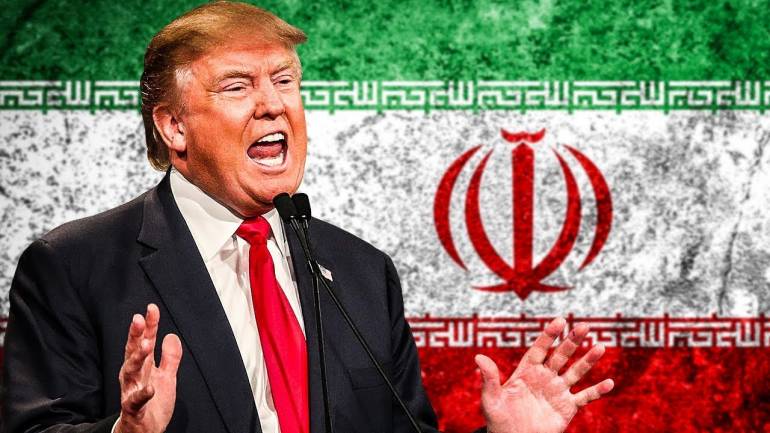
Trump’s economic strangulation is having devastating people on the Iranian people.

On a recent delegation to Iran, we experienced first-hand the legendary Iranian hospitality. Iranians are particularly thrilled to meet Americans, but as we discovered, our government’s policies are hurting the very people who want to be our friends.

As our 28-person delegation traveled through the country wearing messages on our jackets proclaiming “Peace with Iran” in English and Farsi, we were surrounded by people – from schoolchildren to storekeepers – who wanted to practice their English and talk to us.

Their eyes lit up when they heard we were from America. We were constantly posing for photos and exchanging Instagram accounts. We were offered endless cups of sweet tea and showered with more gifts than we could fit in our suitcases.

Originally published on March 11, 2019 by Common Dreams.org

A frequent refrain we heard was, “Americans good, Trump bad.” We did meet a few Trump supporters. At one roadside shop outside Tehran, we were shocked to find an entire collection of Donald Trump’s books for sale, in Farsi.

One book buyer said Trump was good because would help get rid of the awful clerics who were running Iran.

Most people, however, whether they liked or hated their own government, complained that US policies were not hurting the government or the wealthy, but the middle class and the poor.

In May 2018, President Trump’s unilaterally withdrew from the Iran nuclear agreement, followed by an imposition of draconian sanctions that not only prohibit U.S. companies from doing business in Iran but threaten all foreign companies and international banks that trade with Iran.

The sanctions also severely limit Iran’s ability to sell its major source of revenue: oil.

The U.S. sanctions, along with mismanagement and corruption, has decimated the value of the rial and sent the prices of consumer goods soaring. As one of our guides told us, “Our bank savings have been wiped out, rents go up every month, and the price of food increases every single day, while most salaries stay the same.”

At a roadside stop outside the Tomb of Cyrus the Great, the wife of the tea vendor told us how her family’s standard of living has plummeted in the past year. “We used to be able to afford a car, now we can’t even afford a refrigerator,” she lamented.

Visiting a school for poor children in the southern part of Tehran, we learned that the number of street children has increased, particularly in households headed by single women.
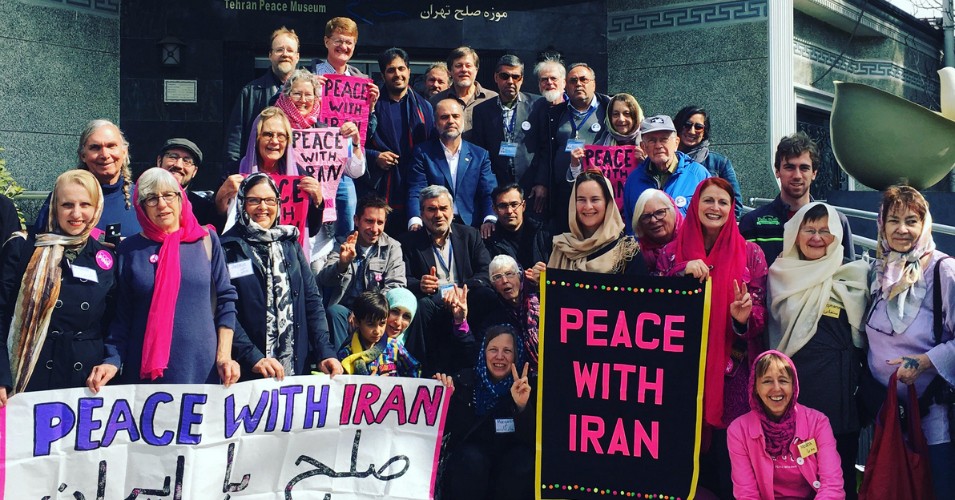
The delegation outside the Tehran Peace Museum

Sanctions are suffocating people’s life choices. A young woman who had been accepted to college in London with a full scholarship had to decline the offer because her family could no longer even afford her plane ticket. “I had so many hopes and dreams,” she said. “Now I have nothing.”

A young man told us he cancelled his plans to get married because the couple can’t afford the wedding costs. He is not alone. “The families of many girls can’t afford a decent dowry, which is our custom here,” he explained, “while many young men feel their salaries are no longer sufficient to provide for a family.”

The US government says medicines are exempt from sanctions but with banks, shipping and insurance companies unwilling to risk doing business with Iran, certain life-saving drugs have become scarce. Our interpreter teared up when an elderly man in the marketplace told us his wife has cancer and he can no longer find the interferon she desperately needs.

A man with diabetes said he can’t find the medicine to lower his glucose levels and now must undergo painful dialysis treatments to stay alive.

“If Trump thinks he is hurting our government, he is wrong. Rouhani can eat meat every day and so can the clerics,” a father of three told me. “I’m lucky if I can give my children a decent meal once a week. It is one thing for governments to have differences, but why impose hardships on innocent people?”

The Trump administration’s gamble that tough sanctions will either topple the government or force it to change its regional policies is not working.

It certainly seems like the Islamic government, which just celebrated 40 years in power, is not about to fall.

Caught between a well-oiled repressive apparatus and fear of a Syria-type upheaval, most people we met preferred reforms within the present system to an abrupt regime change that might plunge the country into chaos – and they certainly did not want a US-military intervention.

Trump’s policies, however, are putting the reformers under siege.

When our group met with Foreign Minister Javad Zarif on February 25, the day before his short-lived resignation, he made it clear that he was under intense pressure to show positive results from his outreach to the West.

Trump’s economic strangulation is hurting all those who, like Zarif, staked their reputations on negotiations and it is shoring up hardliners who always insisted that talks with the West were futile. With new parliamentary elections coming up on 2020, these hardliners may well take power.

U.S. warhawks like John Bolton, and Trump’s Israeli and Saudi allies, could use their return to power as a reason to push for a U.S. military attack on Iran.

Rejoining the Iran nuclear agreement, lifting sanctions, and developing normal trade and diplomatic relations with Iran would empower the reformists and engage Iran in solving the conflicts that continue to plague the region.

It would also ease the hardships affecting the extraordinarily gracious people who welcomed us with such open arms.

Originally published on March 11, 2019 at Common Dreams.org

Medea Benjamin is co-founder of Global Exchange and CODEPINK: Women for Peace, is the author of the new book, Inside Iran: The Real History and Politics of the Islamic Republic of Iran. Her previous books include: Kingdom of the Unjust: Behind the U.S.-Saudi Connection; Drone Warfare: Killing by Remote Control; Don’t Be Afraid Gringo: A Honduran Woman Speaks from the Heart, and (with Jodie Evans) Stop the Next War Now (Inner Ocean Action Guide).

Top photo credit: Moneycontrol.com


Related Posts

A friendly quarrel while we agree that the US sanctions are a weapon of mass destruction and kill more people than wars do. And that we must talk much more about sanctions than we have so far. Jan Oberg, TFF director March 16, 2026 John Mearsheimer recently stated that U.S. sanctions murdered around 38 million people between 1971 and 2021 – see the video below. It is a dramatic figure, and it has spread quickly because it captures, in one sentence, the enormous human cost of modern sanctions. I share his concern about the destructive effects of economic coercion. But the specific number he cites — and the way he attributes it — deserves a friendly academic clarification. The figure comes from a 2023 Lancet Global Health article estimating the mortality effects of unilateral U.S. and EU sanctions over the past half‑century. This is the first point where Mearsheimer’s shorthand diverges from the text: the study...
PART 2 — Diplomacy, Law and Nonviolent Power By Jan ObergTFF co-founder and director January 26, 2026 This is the second of four TFF-created idea portfolios designed to curb the global reach of the United States and, in both the short and long term, help catalyse a worldwide nonviolent resistance to what many observers describe as the Trump administration’s uniquely confrontational, destructive and world-threatening policies. These portfolios outline what governments and citizens across the world can do through dynamic diplomacy, creative initiatives, and strictly nonviolent means. They are typical TFF works in that we do not only tell what the problem is and how bad it will go – as 90+% of all commentators, experts and scholars do – we tell what we think can be done, inviting you to think of what you think you can do. It seems painfully clear to me that the current political dynamics in Washington increasingly resemble the most dangerous...
PART 1 — Media, Culture and Information Sovereignty By Jan ObergTFF co-founder and director January 20, 2026 This is the first of four TFF-created idea portfolios designed to curb the global reach of the United States and, in both the short and long term, help catalyse a worldwide nonviolent resistance to what many observers describe as the Trump administration’s uniquely confrontational, destructive and world-threatening policies. These portfolios outline what governments and citizens across the world can do through dynamic diplomacy, creative initiatives, and strictly nonviolent means. They are typical TFF works in that we do not only tell what the problem is and how bad it will go – as 90+% of all commentators, experts and scholars do – we tell what we think can be done, inviting you to think of what you think you can do. It seems painfully clear to me that the current political dynamics in Washington increasingly resemble the most...

Recent Articles

Tony Robinson October 4, 2026 Violence is easy to recognise when someone is being beaten, shot or killed. It becomes more difficult when nobody is holding a weapon. Poverty, discrimination, exploitation and repression can restrict a human life just as effectively, although they do so in very different ways and with very different consequences. Simply adding more categories to an ever-growing list of forms of violence does not really solve the problem. The more interesting question is what all these different situations have in common and why it makes sense to describe them using the same word. Human beings do not simply react to what happens around them. They remember the past, imagine things that do not yet exist, make plans and undertake projects. Workers organise because they imagine different working conditions; people migrate because they imagine another life somewhere else; social movements emerge because people refuse to accept the...
It’s a matter of principles, courage, vision and pulling together – while the militarist world is falling apart… Peter Langille October 3, 2026 “Here, then, is the problem which we present to you, stark and dreadful and inescapable: Shall we put an end to the human race; or shall mankind renounce war?”The Bertrand Russell—Albert Einstein Manifesto, July 9, 1955 ⁕ The forecast for what’s ahead is worrisome. The sharp rise in armed conflicts over the past three years is adding to what was already the highest level in over seventy years. Genocides, which should be prevented are supported. A shared climate emergency that jeopardises survival is ignored. Diverse polls now suggest that people are war-weary, worried and interested in a more effective United Nations. And, there are viable policy options for a more secure world! Yet governments are doubling-down, betting on more war and investing heavily. If current trends persist,...
Johan Galtung 1930-2024October 2015 Published here on October 3, 2026 Let us focus on Civilization for conflict analysis and remedies. Major forms of disorder use violence; war is state organized violence. The most belligerent states are the United States of America and Israel, both with civilization roots. National Evangelism, the US Protestant Christian civilization– more national than evangelical–justifies US warfare as exceptionalism of a people chosen by God, with a manifest destiny to run the world. Orthodox Judaism justifies Israeli warfare to conquer and expand from Nile to Euphrates as a religious right and duty to the Eternal One. The third most belligerent country, the UK, no longer believes it is God-chosen but chosen by the USA; not quite the same but something. But the root cause of global disorder lies in the Occident–with Islam–seeing itself as the single, universal civilization valid for all at all times, all others being...

TFF on Substack

Discover and subscribe to more peace materials on TFF Substack

Most Popular

Tony Robinson October 4, 2026 Violence is easy to recognise when someone is being beaten, shot or killed. It becomes more difficult when nobody is holding a weapon. Poverty, discrimination, exploitation and repression can restrict a human life just as effectively, although they do so in very different ways and with very different consequences. Simply adding more categories to an ever-growing list of forms of violence does not really solve the problem. The more interesting question is what all these different situations have in common and why it makes sense to describe them using the same word. Human beings do not simply react to what happens around them. They remember the past, imagine things that do not yet exist, make plans and undertake projects. Workers organise because they imagine different working conditions; people migrate because they imagine another life somewhere else; social movements emerge because people refuse to accept the...
It’s a matter of principles, courage, vision and pulling together – while the militarist world is falling apart… Peter Langille October 3, 2026 “Here, then, is the problem which we present to you, stark and dreadful and inescapable: Shall we put an end to the human race; or shall mankind renounce war?”The Bertrand Russell—Albert Einstein Manifesto, July 9, 1955 ⁕ The forecast for what’s ahead is worrisome. The sharp rise in armed conflicts over the past three years is adding to what was already the highest level in over seventy years. Genocides, which should be prevented are supported. A shared climate emergency that jeopardises survival is ignored. Diverse polls now suggest that people are war-weary, worried and interested in a more effective United Nations. And, there are viable policy options for a more secure world! Yet governments are doubling-down, betting on more war and investing heavily. If current trends persist,...
Johan Galtung 1930-2024October 2015 Published here on October 3, 2026 Let us focus on Civilization for conflict analysis and remedies. Major forms of disorder use violence; war is state organized violence. The most belligerent states are the United States of America and Israel, both with civilization roots. National Evangelism, the US Protestant Christian civilization– more national than evangelical–justifies US warfare as exceptionalism of a people chosen by God, with a manifest destiny to run the world. Orthodox Judaism justifies Israeli warfare to conquer and expand from Nile to Euphrates as a religious right and duty to the Eternal One. The third most belligerent country, the UK, no longer believes it is God-chosen but chosen by the USA; not quite the same but something. But the root cause of global disorder lies in the Occident–with Islam–seeing itself as the single, universal civilization valid for all at all times, all others being...
Read More
Living-Peace-Sign-Budapest-copy
Tony Robinson October 4, 2026 Violence is easy to recognise when someone is being beaten, shot or killed. It becomes more difficult when nobody is holding a weapon. Poverty, discrimination, exploitation and repression can restrict a human life just as effectively, although they do so in very different ways and with very different consequences. Simply adding more categories to an ever-growing list of forms of violence does not really solve the problem. The more interesting question is what all these different situations have in common and why it makes sense to describe them using the same word. Human beings do not simply react to what happens around them. They remember the past, imagine things that do not yet exist, make plans and undertake projects. Workers organise because they imagine different working conditions; people migrate because they imagine another life somewhere else; social movements emerge because people refuse to accept the...
b54a1f10-8c65-4f0b-9dd5-4abc0a7d04cc_2659x2659
It’s a matter of principles, courage, vision and pulling together – while the militarist world is falling apart… Peter Langille October 3, 2026 “Here, then, is the problem which we present to you, stark and dreadful and inescapable: Shall we put an end to the human race; or shall mankind renounce war?”The Bertrand Russell—Albert Einstein Manifesto, July 9, 1955 ⁕ The forecast for what’s ahead is worrisome. The sharp rise in armed conflicts over the past three years is adding to what was already the highest level in over seventy years. Genocides, which should be prevented are supported. A shared climate emergency that jeopardises survival is ignored. Diverse polls now suggest that people are war-weary, worried and interested in a more effective United Nations. And, there are viable policy options for a more secure world! Yet governments are doubling-down, betting on more war and investing heavily. If current trends persist,...
010
Johan Galtung 1930-2024October 2015 Published here on October 3, 2026 Let us focus on Civilization for conflict analysis and remedies. Major forms of disorder use violence; war is state organized violence. The most belligerent states are the United States of America and Israel, both with civilization roots. National Evangelism, the US Protestant Christian civilization– more national than evangelical–justifies US warfare as exceptionalism of a people chosen by God, with a manifest destiny to run the world. Orthodox Judaism justifies Israeli warfare to conquer and expand from Nile to Euphrates as a religious right and duty to the Eternal One. The third most belligerent country, the UK, no longer believes it is God-chosen but chosen by the USA; not quite the same but something. But the root cause of global disorder lies in the Occident–with Islam–seeing itself as the single, universal civilization valid for all at all times, all others being...
Screenshot 2026-10-02 011738
Jan ObergPhD, director, The Transnational Foundation for Peace and Future Research, TFFLund, Sweden October 2, 2026 This is my full original manuscript. The Chinese Academy of Social Science, CASS, makes two publications out if it. 1. China’s Five-year plan emphasized the capabilities of basic research and original innovation. It is regarded as the goal of the future social development, which, as required, should be significantly enhanced. Can you comment on the importance of original innovation in research and academic study? I believe it is easier to define “original innovation” in the natural sciences than in social sciences. The breaking points of what constitutes something new, or innovative, are not quite as sharp in the latter. But in both fields it is about opening up something that was closed, unseen, unexplored before – making manifest what was earlier latent. Innovations come in many forms and shapes – naming something that was not...
arctic-circle-map
The agreement is catastrophic both because of what it says and what it doesn’t mention. It reduces further the major asset of security policies: Freedom of action. Jan Oberg TFF director September 25, 2026 A couple of hours before the agreement was signed on September 22, 2026, I published the following 13 hypotheses about what it would most likely contain on TFF Substack (in English). I was wrong on only the first point. Contrary to what Trump had written on his Truth Social platform, it does not appear to come into force immediately. In fact, it turned out to be worse than even I had anticipated. After these hypotheses now come a number of reflections in light of what the agreement actually contains, and does not contain, as well as the way in which it has generally been presented by major media outlets and by the public-service broadcaster DR. My...
girl-5894831_1280
Below are TFF-related media mentions, comments, videos and social media posts published elsewhere but not on this homepage. We happen to catch and list only a fraction. Regarding video comments and debates, we recommend that you go to the TFF Video Channel on Substack where many of them are reproduced. Jan Oberg is a contributor to China Daily – 52 million daily clicks – and Global Times, CGTN and CCTV (the national television), China Investment, Xinhua News Agency and several others. Articles and videos on these media very often multiply into countless Chinese (and Western media) that re-post them from these main media. Thanks to The China Academy, his analyses, interviews and comments are frequently posted on YouTube channels such as Thinkers Forum and Wave Media. These videos are often re-posted on Bilibili (China’s YouTube), the China Content Center on TikTok, and on the Chinese edition of TikTok, Douyin.com. This means reaching hundreds of millions of viewers worldwide over a year. While there are too many to catch on all these...