

Hana Shalabi’s hunger strike has ended, but not her punishment

As with Khader Adnan, Israel supposedly compromised with Hana Shalabi on the 43rd day of her hunger strike in protest against administrative detention and her abysmal treatment. But Israel’s concept of ‘compromise’ if considered becomes indistinguishable from the imposition of a further ‘vindictive punishment.’

How else to interpret Israel’s unlawful order to coercively exile (not technically deportation because she is being sent to a location within occupied Palestine) Hana Shalabi for three years to the Gaza Strip, far from her home village of Burqin in the northern part of the West Bank, and more significantly, far from her grief-struck family?

Her older sister Zahra was quoted a few days ago as saying “I don’t want to immortalize her, I just want her to live.” We can join her in being relieved that Hana Shalabi did not join the Palestinian honor roll of martyrs, yet to transfer someone who is in critical medical condition to a slightly more open prison than what is experienced as an Israeli detainee, which is how Gaza has been described during its years of isolation and blockade. To call this release ‘freedom’ is to make a mockery of the word, even to call it ‘release’ is misleading.

Hana Shalabi is now being compared to Winnie Mandela who was also exiled to the remote town of Branford in South Africa, forbidden to leave, as a punishment for her nonviolent and militant resistance to the apartheid regime that had imprisoned her then husband, Nelson Mandela.

When I had the opportunity to meet and spend time with her in 1968, a couple of years prior to her exile, she was a wonderfully radiant and magnetic personality with a deep political commitment to justice and emancipation from racism, yet a joyful presence who despite living under apartheid, was life-affirming and inspiring.

When she returned from exile, she was radicalized, embittered, joined in some violent oppositional tactics, seemingly exhibiting the alienating impact of the punitive effort by the South African government to diminish and marginalize her. This part of Winnie Mandela’s post-exile story should not be forgotten, nor should it ignored that she was not exiled when confronting the sort of life-threatening situation that Hana Shalabi faces as she seeks to recover from this long hunger strike.

Also, at least, Winnie Mandela’s youngest daughter, Zinzi, was allowed to accompany her, which was at least made an exception to the total separation from loved ones that has been decreed for Hana Shalabi, who in her current condition cannot even be considered a ‘political’ threat, much less a ‘security’ threat.

Israel has compounded the crime of administrative detention with this shamefully gratuitous act of vindictiveness.

Article 49(1) of the Fourth Geneva Convention reads as follows: “Individual or mass forcible transfers, as well as deportations of protected persons from occupied territory to the territory of the Occupying Power or to that of any other country, occupied or not, are prohibited, regardless of their motive.”

The intent here is clear, even though the language leave room for lawyers’ quibbles: is the Gaza Strip another country? Israel itself claims that its 2005 disengagement from Gaza relieves it of responsibility. In any event, Israel’s order of banishment will be doubly enforced, neither allowing Hana Shalabi to leave Gaza nor to enter the West Bank where her family lives. As well, given mobility restrictions her family will not be able to visit her in Gaza.

Furthermore, it should be appreciated that this is a form of ‘collective punishment’ as it also adds to the pain and grief of Hana Shalabi’s family who will be denied even the opportunity to provide help and love that are obviously needed during what will be at best a long and difficult recovery period.

In this sense, the spirit and letter of Article 27 of Geneva IV has also been violated in her arrest, detention, and now in this release: “Protected persons are entitled, in all circumstances, to respect for their persons, their honour, their family rights, their religious conviction and practices, and their manners and customs. They shall at all times be humanely treated, and shall be protected especially against all acts of violence or threats thereof and against insults and public curiosity.”

Denying Hana Shalabi’s any visitation rights while confided to an Israeli prison hospital prior to the time her order of ‘deportation’ is implemented, as well as denying the Physicians for Human Rights – Israel or Addameer the opportunity to examine and talk with her underscores the stone coldness of the Israeli prison administration.

It is up to the Palestinian solidarity movement to not let this experience of Palestinian hunger strikes be in vain. At best, it might be later seen as one of the earlier expressions of a Palestinian Spring. At the very least, it should become a key moment in an intensifying campaign against the practice of administrative detention in Occupied Palestine, as well as against abusive arrest procedures and general prison conditions that are habitually relied upon by Israeli military authorities.

Finally, this ambiguous punitive release of Hana Shalabi was apparently agreed upon not only on the 43rd day of her hunger strike, but on the eve of the 36th commemoration of Land Day by Palestinian activists within Israel and in Occupied Palestine.

It is important for all of us to recall that it was on this day in 1976 that Israel killed six Palestinian citizens of Israel who were protesting, in violation of a curfew then in effect, Israel’s expropriation of their land. The protests on Land Day 2012, especially near the Qalandiya Checkpoint have been met with tear gas, rubber bullets, and water cannon, apparently with some Palestinian injuries.

Two Palestinian activists, Sam Bahour and Jafar Farah, living in the West Bank summarized the situation with these words: “After the Arab revolutions, there’s awareness of the importance of popular participation. This has rattled the Arab regimes, and now it’s frightening the Israeli government.”

It does appear that these hunger strikes, augmented by sympathetic and symbolic strikes within Israeli jails, in Palestine, and around the world, as well as vibrant protests on Land Day, and a worldwide BDS movement are all signs of a Palestinian reawakening that will gather political leverage as its momentum builds.

This is my hope for the year ahead.
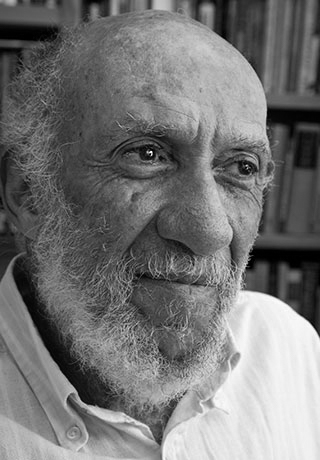
Professor Falk became an adviser to TFF when it was established in 1985.

Related Posts

The agreement is catastrophic both because of what it says and what it doesn’t mention. It reduces further the major asset of security policies: Freedom of action. Jan Oberg TFF director September 25, 2026 A couple of hours before the agreement was signed on September 22, 2026, I published the following 13 hypotheses about what it would most likely contain on TFF Substack (in English). I was wrong on only the first point. Contrary to what Trump had written on his Truth Social platform, it does not appear to come into force immediately. In fact, it turned out to be worse than even I had anticipated. After these hypotheses now come a number of reflections in light of what the agreement actually contains, and does not contain, as well as the way in which it has generally been presented by major media outlets and by the public-service broadcaster DR. My...
This is not another geopolitical commentary on the Arctic. It is a visionary peace proposal that can save the region from militarised rivalry and ecological ruin. A blueprint for shared security, sustainable development, and human dignity — benefitting Greenland, the Arctic, and the rest of us. Jan Oberg TFF director Lund, Sweden, February 17, 2026 I. Four Principles for a New Arctic Vision The Arctic is often framed as a cold arena of rivalry — a place where great powers test each other’s resolve. But this worldview is outdated, unimaginative, and ultimately self‑defeating. The Arctic is not a vacuum waiting to be militarised; it is a living region, a climate stabiliser, and a cultural homeland whose future will shape the future of humanity. If we begin from that understanding, a far more rational Arctic order becomes possible — one that is peaceful, cooperative, and centred on the people who actually live there. This vision rests...
Photos © TFF 2000 Read PressInfo 90 “Lift the Sanctions and Bring More Aid to Yugoslavia” See Pictures from Belgrade © TFF 2000 Please reprint, copy, archive, quote or re-post this item, but please retain the source.

Recent Articles

An aspect of Iran’s culture and civilisation you’ve probably never heard about. Don’t be surprised if the US and Israel also try to bomb them. Jan ObergTFF director October 26, 2026 Today – under the “USraeli” threat of new “annihilating” bombings – opens the 7th International Conference on Peace and Conflict Resolution at Tehran’s University. As far as I can tell, this is the only permanent, advanced peace research institution in West Asia/the Middle East. Perhaps more countries in that region could be inspired? I mean, how many military “security” institutes and military academies do they have? Many peace research institutes and university departments have been established since the 1950s in the West. They are now all under attack; some have closed down, some have gone mainstream, yet others kept the name but do nothing to research peace and disseminate results or advice; instead, they cooperate with militarism’s platforms such...
Let’s discuss using AI to create peace – in contrast to boring geopolitics devoid of creative healing and visions. Jan Oberg TFF director October 15, 2026 I asked VEED to create a short video exemplifying how peace is preferable to war, then chose the lady as a template. Simple as that. In less than a minute, it produced this video, which any peace-loving person would appreciate. The only problem is that human intelligence (HI), at least the one that exists among Western decision-makers, isn’t half as moral or smart as AI. I have used AI to dialogue about peace and peace plans, creative conflict resolution and visions of a better future for humankind. It so happens that I am having more stimulating, intelligent, creative and moral discussions with AI than I could possibly have with any EU or NATO leader today. Yes, AI has very problematic and dangerous aspects; used...
Below are TFF-related media mentions, comments, videos and social media posts published elsewhere but not on this homepage. We happen to catch and list only a fraction. Regarding video comments and debates, we recommend that you go to the TFF Video Channel on Substack where many of them are reproduced. Jan Oberg is a contributor to China Daily – 52 million daily clicks – and Global Times, CGTN and CCTV (the national television), China Investment, Xinhua News Agency and several others. Articles and videos on these media very often multiply into countless Chinese (and Western media) that re-post them from these main media. Thanks to The China Academy, his analyses, interviews and comments are frequently posted on YouTube channels such as Thinkers Forum and Wave Media. These videos are often re-posted on Bilibili (China’s YouTube), the China Content Center on TikTok, and on the Chinese edition of TikTok, Douyin.com. This means reaching hundreds of millions of viewers worldwide over a year. While there are too many to catch on all these...

TFF on Substack

Discover and subscribe to more peace materials on TFF Substack

Most Popular

An aspect of Iran’s culture and civilisation you’ve probably never heard about. Don’t be surprised if the US and Israel also try to bomb them. Jan ObergTFF director October 26, 2026 Today – under the “USraeli” threat of new “annihilating” bombings – opens the 7th International Conference on Peace and Conflict Resolution at Tehran’s University. As far as I can tell, this is the only permanent, advanced peace research institution in West Asia/the Middle East. Perhaps more countries in that region could be inspired? I mean, how many military “security” institutes and military academies do they have? Many peace research institutes and university departments have been established since the 1950s in the West. They are now all under attack; some have closed down, some have gone mainstream, yet others kept the name but do nothing to research peace and disseminate results or advice; instead, they cooperate with militarism’s platforms such...
Let’s discuss using AI to create peace – in contrast to boring geopolitics devoid of creative healing and visions. Jan Oberg TFF director October 15, 2026 I asked VEED to create a short video exemplifying how peace is preferable to war, then chose the lady as a template. Simple as that. In less than a minute, it produced this video, which any peace-loving person would appreciate. The only problem is that human intelligence (HI), at least the one that exists among Western decision-makers, isn’t half as moral or smart as AI. I have used AI to dialogue about peace and peace plans, creative conflict resolution and visions of a better future for humankind. It so happens that I am having more stimulating, intelligent, creative and moral discussions with AI than I could possibly have with any EU or NATO leader today. Yes, AI has very problematic and dangerous aspects; used...
Below are TFF-related media mentions, comments, videos and social media posts published elsewhere but not on this homepage. We happen to catch and list only a fraction. Regarding video comments and debates, we recommend that you go to the TFF Video Channel on Substack where many of them are reproduced. Jan Oberg is a contributor to China Daily – 52 million daily clicks – and Global Times, CGTN and CCTV (the national television), China Investment, Xinhua News Agency and several others. Articles and videos on these media very often multiply into countless Chinese (and Western media) that re-post them from these main media. Thanks to The China Academy, his analyses, interviews and comments are frequently posted on YouTube channels such as Thinkers Forum and Wave Media. These videos are often re-posted on Bilibili (China’s YouTube), the China Content Center on TikTok, and on the Chinese edition of TikTok, Douyin.com. This means reaching hundreds of millions of viewers worldwide over a year. While there are too many to catch on all these...
Read More
Screenshot 2026-10-26 115647
An aspect of Iran’s culture and civilisation you’ve probably never heard about. Don’t be surprised if the US and Israel also try to bomb them. Jan ObergTFF director October 26, 2026 Today – under the “USraeli” threat of new “annihilating” bombings – opens the 7th International Conference on Peace and Conflict Resolution at Tehran’s University. As far as I can tell, this is the only permanent, advanced peace research institution in West Asia/the Middle East. Perhaps more countries in that region could be inspired? I mean, how many military “security” institutes and military academies do they have? Many peace research institutes and university departments have been established since the 1950s in the West. They are now all under attack; some have closed down, some have gone mainstream, yet others kept the name but do nothing to research peace and disseminate results or advice; instead, they cooperate with militarism’s platforms such...
Screenshot 2026-10-15 141837
Let’s discuss using AI to create peace – in contrast to boring geopolitics devoid of creative healing and visions. Jan Oberg TFF director October 15, 2026 I asked VEED to create a short video exemplifying how peace is preferable to war, then chose the lady as a template. Simple as that. In less than a minute, it produced this video, which any peace-loving person would appreciate. The only problem is that human intelligence (HI), at least the one that exists among Western decision-makers, isn’t half as moral or smart as AI. I have used AI to dialogue about peace and peace plans, creative conflict resolution and visions of a better future for humankind. It so happens that I am having more stimulating, intelligent, creative and moral discussions with AI than I could possibly have with any EU or NATO leader today. Yes, AI has very problematic and dangerous aspects; used...
girl-5894831_1280
Below are TFF-related media mentions, comments, videos and social media posts published elsewhere but not on this homepage. We happen to catch and list only a fraction. Regarding video comments and debates, we recommend that you go to the TFF Video Channel on Substack where many of them are reproduced. Jan Oberg is a contributor to China Daily – 52 million daily clicks – and Global Times, CGTN and CCTV (the national television), China Investment, Xinhua News Agency and several others. Articles and videos on these media very often multiply into countless Chinese (and Western media) that re-post them from these main media. Thanks to The China Academy, his analyses, interviews and comments are frequently posted on YouTube channels such as Thinkers Forum and Wave Media. These videos are often re-posted on Bilibili (China’s YouTube), the China Content Center on TikTok, and on the Chinese edition of TikTok, Douyin.com. This means reaching hundreds of millions of viewers worldwide over a year. While there are too many to catch on all these...
Nobel-Prize-Plaque
Jan Oberg TFF director October 13, 2026 According to Alfred Nobel’s will, the Nobel Peace Prize shall be awarded: ”to the person who has done the most or best to advance fellowship among nations, the abolition or reduction of standing armies, and the establishment and promotion of peace congresses.” Further down, he also expresses how the prize for the “champions of peace” shall be decided: “that for champions of peace by a committee of five persons to be selected by the Norwegian Storting. Alfred Nobel’s will is remarkably short and clear. But few seem to have read it. Nobel did not say that the committee itself should consist of members of parliament. He entrusted the Storting with appointing five persons. In principle, it could have selected diplomats, mediators, peace researchers, conflict-resolution specialists, or other individuals with recognised expertise in matters of peace from around the world. Instead, the Storting gradually...
law-419057_1280
The Quest for Humane Survival Richard Falk Professor emeritus, Princeton UniversityTFF Associate since 1986October 12, 2026 After decades of teaching and writing about international law in academic frameworks that were not institutionally situated within law school environments—at Princeton and the University of California, Santa Barbara—I found myself most receptive to the TWAIL outlook. It has been especially illuminating in clarifying the extent to which international law evolved as a dialogical critique of Europe’s efforts to legitimize its colonial undertakings. In particular, TWAIL has exposed how international law has functioned to legalize the subjugation of Third World peoples, securing conditions for exploitative investment and trade relations, the coercive enforcement of public debts, and an ideology of cultural superiority. TWAIL’s exposure of these economic legacies of colonialism has influenced my understanding of the history and development of international law, broadly conceived, as an ideological project of the Western sub-system of the world...
images-2
Advocates of nuclear disarmament are regularly dismissed by the champions of nuclear deterrence as naïve and unrealistic, utopian or even irresponsible. Yet this ‘doctrine’ of deterrence, regarded by France as the ‘cornerstone’ of its national security, is based on quasi-religious beliefs, a theory that cannot be proven, risky gambles and fragile assumptions. So much so that one might legitimately ask which side the ‘Care Bears’ are on. Marc FinaudVice-President of Initiatives for Nuclear Disarmament (IDN) October 9, 2026 This article was originally published on Pressenza When it comes to these things being treated as religious concepts, look here. Idealists and realists It was Hubert Védrine, François Mitterrand’s former Foreign Minister, who repeatedly coined the phrase: ‘Europeans are a sort of Care Bears who don’t realise they’re living in Jurassic Park’. He applies this reference to the cartoon for well-behaved children not only to what he regards as weakness or idealism...





