
George Floyd’s killing and its international repercussions: Part 1

Part One – Part 2 here

The gruesome killing of George Floyd in Minneapolis, Minnesota, on 25 May 2020 has given rise to an unprecedented campaign against police brutality in the United States, and in turn has acted as a fuse for a worldwide uprising against racism and inequality. Floyd’s killing triggered massive demonstrations in more than 350 cities in the United States and around the world, and has probably started a movement that goes well beyond the civil rights movement of the 1960’s and may prove to be a turning point in human history.

What is remarkable is that those who have taken part in those massive demonstrations are not all black and ethnic people, but they have been joined by millions of white people who are ashamed of the legacy of slavery and are determined to help their fellow human beings to achieve the dignity and equality that they deserve. They know that a society that is built on exploitation, discrimination and inequality diminishes us all.

George Floyd was arrested, handcuffed and pushed faced down to the ground while Derek Chauvin, a white police officer, pressed his knee on his neck for almost nine minutes, despite the fact that Floyd kept saying that he could not breathe, until his body became motionless.

Clearly, the policeman’s behaviour was not the case of a “bad apple”, but was typical of the militaristic and high-handed manner in which the  US police treat all US citizens, but predominantly African-Americans and other ethnic groups.

Derek Chauvin did not act alone, but while Floyd was being choked to death, a second and a third officer held him down, while a fourth officer prevented bystanders from intervening.

Floyd’s murder was the fourth time in recent months that an unarmed innocent black man had been murdered by white policemen in Minnesota. In none of those previous cases were the policemen responsible for the murders punished.

In the United States the laws generally favour policemen. All a policeman has to say is that the victim had threatened him, so he or she had to be shot, and the law protects the policeman. They can even say that the victim had resisted arrest, and again they are covered by law.

To provide just a simple example of the grotesque disparity between the behaviour of the US police and police forces in other democracies, it is enough to point out that on average every year US police forces kill between 1,000 and 1,400 people, nearly half of them blacks.[1] However, in the United Kingdom the average number of people killed as the result of a police shooting is three.[2]

The figures for the rest of Europe are also similar to those in Britain. In all European states the figures are in single digits.[3] In other words, the US police shoot dead more people on a single day than police in different European countries kill in a whole year.

Of course, a part of this huge disparity is due to the fact that most Americans have access to firearms while in Europe and other democracies the possession of firearms is strictly controlled. That is an important issue that needs to be addressed in a democracy and in a law-abiding country.

In any country that is run on the basis of the rule of law, the citizens should rely on their police forces to protect them rather than act as armed militia for their protection which results in a situation as in the United States.

However, we must sadly confront the fact that the United States is still a racist society. The entire economy of the American South was dependent on slavery, and culturally still many white people regard black Americans if not as slaves but at least as inferior citizens. Various civil rights movements since 1960s have tried to bring about some fundamental change but, despite some improvements, the curse of racism has not yet been lifted.

Apart from the legacy of racism, black and ethnic minorities provide a ready scapegoat for the economic and social problems that afflict the society. Added to these factors is a fear of the white majority that soon they will lose their privileged status. Recently white populations in many parts of the country have lost their majority. In some parts of the Southwest, Hispanic Americans outnumber non-Hispanic Americans, and in Washington D.C., the nation’s capital, African-Americans form a majority, as they do in many other US cities.

As a result, the white population is in a state of panic. They fear that in 20 years the United States as a whole will be a nation with a majority of non-white people. This is part of Trump’s appeal to his White Supremacist base who hate the thought of being in the minority. Many of them would like the black and brown and non-Christian people to disappear or at least be kept down.

When President Trump bans travel from six Muslim-majority countries or refers to some racist thugs as “very good people” it is not surprising that his followers follow the lead of the president and regard blacks, Latinos, other ethnic groups and Muslims as inferior people to be shunned and persecuted.

It is often not realised that even some of those who fought against slavery during the Civil War believed that black people had to be sent back to “their countries”. They argued that it was easy for some British abolitionists to call for an end to slavery because they did not have to live with them, as most slaves lived in British colonies and very few of them actually lived in Britain, while Americans had to live with their former slaves after abolishing slavery.

It is important to remember all this in order to understand the depth of hatred and extreme violence against the black and ethnic groups in the United States. So, what we are witnessing is a revolution which requires not only the change of a few laws or “defunding the police” but a complete transformation of the attitude of those who have had the culture of racism ingrained in them.

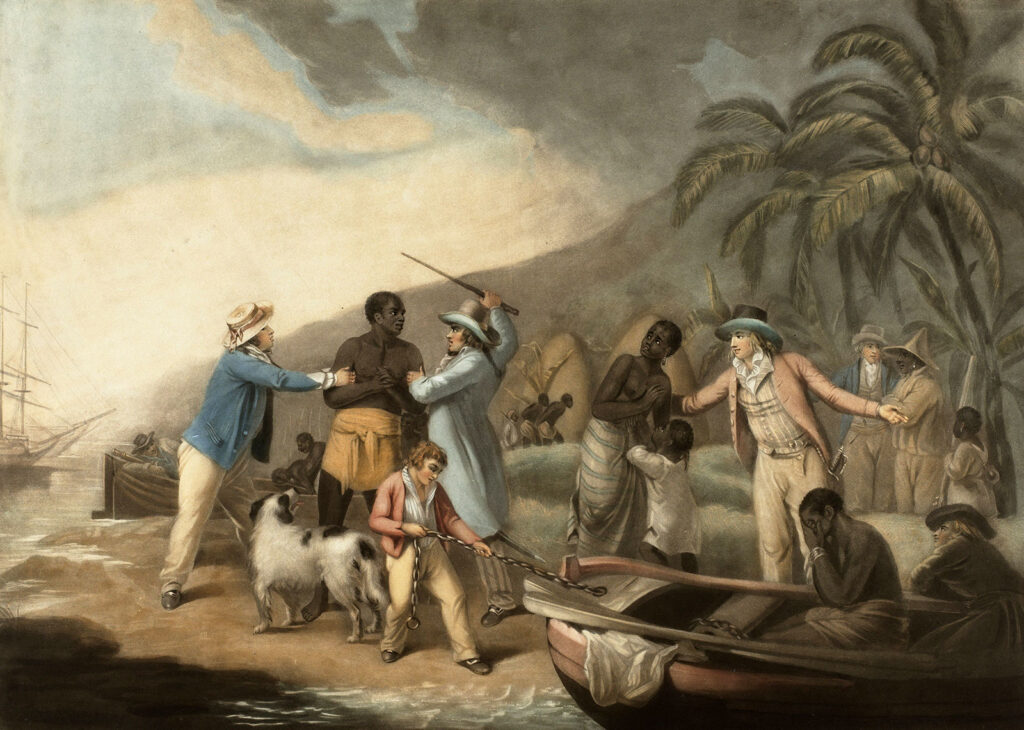
Most people are unaware of the extent of the crimes associated with slavery. Although some form of slavery had existed from the beginning of human history, with the rise of European powers and the need for cheap labour in the New World, slavery assumed industrial proportions, involving millions of people being grabbed and uprooted from their homes and shipped across the world to work in inhumane conditions on plantations.[4]

The largest slave trade in history was carried out by Europeans, mainly to serve in the New World. Before it was over, tens of millions of Africans would be killed for the profit of white colonialists. White colonialists armed with superior weapons would invade some African countries, pull young men and young women out of the embrace of their loved ones, put them in chains and transport them to the other side of the world to be sold as slaves. The “voyages of discovery” were not as benign as they have been made out, but were money-making enterprises with the natives and black slaves paying the biggest cost.[5]

A main reason for the high death toll among the slaves was the tidal wave of war and desolation that the slave trade unleashed in the heart of Africa. While both Europe’s and Asia’s populations nearly doubled between 1600 and 1800, Africa’s population dropped from 114 million in 1600 to 107 million in 1800.[6]

Some scholars estimate that some 30 to 60 million Africans were enslaved. Out of those captured Africans, between 12,000,000-15,000,000 survived the ordeal of forced migration to become plantation labourers in North and South America and the Caribbean.

There was a 50% mortality rate among new slaves while being gathered and stored in Africa, a 10% mortality rate among the survivors while crossing the ocean, and another 50% mortality rate in the first “seasoning” phase of slave labour. Overall, some scholars estimate a 75-80% mortality rate in transit and among the survivors.[7]

In order to get an idea of the way the slaves were treated on plantations one has to read Charles Dickens’s “American Notes” which provide the details of what he saw with his own eyes during his trip to the United States. He quotes some advertisements published in some US newspapers for recapturing the slaves who had fled:

‘‘Ran away, a negro man named Henry; his left eye out, some scars from a dirk on and under his left arm, and much scarred with the whip.’

‘One hundred dollars reward, for a negro fellow, Pompey, 40 years old.  He is branded on the left jaw.’

‘Ran away, a negro woman named Rachel.  Has lost all her toes except the large one.’

‘Ran away, Sam.  He was shot a short time since through the hand, and has several shots in his left arm and side.’

‘Ran away, my negro man Dennis.  Said negro has been shot in the left arm between the shoulder and elbow, which has paralysed the left hand.’

‘Ran away, my negro man named Simon.  He has been shot badly, in his back and right arm.’

‘Ran away, a negro named Arthur.  Has a considerable scar across his breast and each arm, made by a knife; loves to talk much of the goodness of God.’

 ‘Committed to jail, a man who calls his name John.  He has a clog of iron on his right foot which will weigh four or five pounds.’

‘Detained at the police jail, the negro wench, Myra.  Has several marks of lashing, and has irons on her feet.’

‘Twenty-five dollars reward for my man Isaac.  He has a scar on his forehead, caused by a blow; and one on his back, made by a shot from a pistol.’

‘Ran away, a negro girl called Mary.  Has a small scar over her eye, a good many teeth missing, the letter A is branded on her cheek and forehead.’

These are just a few examples of many more that he quotes. These horrendous facts and figures must bring tears to the eyes of every decent person.

It is time to look at history as it was, be brave enough to admit and condemn historical injustices, make sure that we move forward with a different attitude and celebrate our common humanity.

Former US President Jimmy Carter issued a statement shortly after George Floyd’s killing and nationwide demonstrations. What he said must act as a wakeup call to all of us:

‘… As a white male of the South, I know all too well the impact of segregation and injustice to African Americans. As a politician, I felt a responsibility to bring equity to my state and our country. In my 1971 inaugural address as Georgia’s governor, I said: “The time for racial discrimination is over.” With great sorrow and disappointment, I repeat those words today, nearly five decades later. Dehumanizing people debases us all; humanity is beautifully and almost infinitely diverse. The bonds of our common humanity must overcome the divisiveness of our fears and prejudices….’[8]

For ‘George Floyd’s killing – Part 2’, click here

Please help TFF remain truly independent here if you benefited from this article
Farhang Jahanpour is a former professor and dean of the Faculty of Languages at the University of Isfahan, and a former Senior Research Scholar at Harvard.
He is also a TFF Associate and former Board member of the foundation.
For the past 30 years, he has been teaching courses on the Middle East at the Department of Continuing Education and is a member of Kellogg College at the University of Oxford.

Notes

[1] See David Leonhardt, “The Persistence of Police Killings, The New York Times, May 29, 2020. According to this source the number of police killings by year in the U.S. are: In 2013: 1,111; 2014: 1.059; 2015: 1.103; 2016: 1,071; 2018: 1,143; 2019: 1,099.

[2] See Statista: “Number of fatal shooting by police in England and Wales from 2004/05 to 2018/19”. Corresponding figures for UK from 2012/13 to 2018/19 have been: 0, 0, 1, 3, 6, 4. 3.

[3] For a comparative list of killings by police in different countries see: “List of killings by law-enforcement officers by country” at Wikipedia.

[4] David Keys, “Details of horrific first voyages in transatlantic slave trade revealed”, The Independent, 17 August 2018.

[5] See “The true legacy of Christopher Columbus: ‘Western Civilisation’ | George Monbiot”

[6] “Death Toll from the Slave Trade: The African Holocaust”, World Future Fund.

[7] David Stannard, American Holocaust: The Conquest of the New World (Oxford University Press, 1993), pp. 317-18.

[8] See “Statement from Former U.S. President Jimmy Carter”

Photo on top
John Raphael Smith: Slave TradeSlave Trade, print on paper by John Raphael Smith after George Morland, 1762–1812; in the Rijksmuseum, Amsterdam.Courtesy of the Rijksmuseum, Amsterdam (RP-P-1969-83)


Related Posts

Photo above: Carl Fredrik Reuterswärd’s Non-Violence outside UN Headquarters in New York. Kirill Levin, CC BY-NC-SA 2. Jan Oberg November 3, 2026 I am happy to be published in Horizons which is produced by the Center for International Relations and Sustainable Development, CIRSD, in Belgrade. My contribution brings out a radical re-thinking of what concepts such as defence, security, deterrence – and peace – may mean if we want to create a more peaceful world. It also summarises a few things I have been working with the last few decades. Please read it here Og her er den på dansk, takket være Johnny Baltzersens lynhurtige oversættelse
UNITE-tillid, DREAM-velstand og andre konstruktive komponenter Normally we publish articles in English here. But this is a translation of a very important TFF document that should reach as many as possible in Denmark since this country’s government has been one of the most hardline in Europe and, up till now at least, has refused to use diplomacy and, instead, spent tremendous sums on arming Ukraine with the express goal of defeating Russia. Thus this – unique – article is in Danish. Vi er Johnny Baltzersen og hans Fælles Sikkerhed – Fælles Fremtid på Substack overmåde taknemmelige for at have oversat og publiceret TFF’s 2025-portfølje for fredsidéer med henblik på Ukraines fremtid. Vi håber den nu kan nå mange flere danskere – som også vil sprede den og skabe debat – nu den danske regerings og folketingspartiernes politik på dette område siden 2022 står nu – forudsigeligt – ved vejs ende....
Jan Oberg TFF director October 28, 2026 Exactly one month has now passed since I published my criticism of the introduction to the special issue on Johan Galtung published by the Journal of Global Security Studies, JoGSS, and of Tor Egil Førland’s chapter about Galtung which serves as a preview to his forthcoming biography of Galtung to be published by PRIO. See the original on The Transnational here and the same article on TFF Substack with many general and critical comments and, in particular, the people who decided to withdraw from the biography project in protest. The special issue itself was extraordinary. It was devoted to the intellectual legacy of one of the founders of peace research and contained a number of strong assessments of his personality, scholarship, intellectual trajectory, and public role. Such assessments are, of course, entirely legitimate. No scholar is beyond criticism, and neither was Johan Galtung....

Recent Articles

Photo above: Carl Fredrik Reuterswärd’s Non-Violence outside UN Headquarters in New York. Kirill Levin, CC BY-NC-SA 2. Jan Oberg November 3, 2026 I am happy to be published in Horizons which is produced by the Center for International Relations and Sustainable Development, CIRSD, in Belgrade. My contribution brings out a radical re-thinking of what concepts such as defence, security, deterrence – and peace – may mean if we want to create a more peaceful world. It also summarises a few things I have been working with the last few decades. Please read it here Og her er den på dansk, takket være Johnny Baltzersens lynhurtige oversættelse
UNITE-tillid, DREAM-velstand og andre konstruktive komponenter Normally we publish articles in English here. But this is a translation of a very important TFF document that should reach as many as possible in Denmark since this country’s government has been one of the most hardline in Europe and, up till now at least, has refused to use diplomacy and, instead, spent tremendous sums on arming Ukraine with the express goal of defeating Russia. Thus this – unique – article is in Danish. Vi er Johnny Baltzersen og hans Fælles Sikkerhed – Fælles Fremtid på Substack overmåde taknemmelige for at have oversat og publiceret TFF’s 2025-portfølje for fredsidéer med henblik på Ukraines fremtid. Vi håber den nu kan nå mange flere danskere – som også vil sprede den og skabe debat – nu den danske regerings og folketingspartiernes politik på dette område siden 2022 står nu – forudsigeligt – ved vejs ende....
Jan Oberg TFF director October 28, 2026 Exactly one month has now passed since I published my criticism of the introduction to the special issue on Johan Galtung published by the Journal of Global Security Studies, JoGSS, and of Tor Egil Førland’s chapter about Galtung which serves as a preview to his forthcoming biography of Galtung to be published by PRIO. See the original on The Transnational here and the same article on TFF Substack with many general and critical comments and, in particular, the people who decided to withdraw from the biography project in protest. The special issue itself was extraordinary. It was devoted to the intellectual legacy of one of the founders of peace research and contained a number of strong assessments of his personality, scholarship, intellectual trajectory, and public role. Such assessments are, of course, entirely legitimate. No scholar is beyond criticism, and neither was Johan Galtung....

TFF on Substack

Discover and subscribe to more peace materials on TFF Substack

Most Popular

Photo above: Carl Fredrik Reuterswärd’s Non-Violence outside UN Headquarters in New York. Kirill Levin, CC BY-NC-SA 2. Jan Oberg November 3, 2026 I am happy to be published in Horizons which is produced by the Center for International Relations and Sustainable Development, CIRSD, in Belgrade. My contribution brings out a radical re-thinking of what concepts such as defence, security, deterrence – and peace – may mean if we want to create a more peaceful world. It also summarises a few things I have been working with the last few decades. Please read it here Og her er den på dansk, takket være Johnny Baltzersens lynhurtige oversættelse
UNITE-tillid, DREAM-velstand og andre konstruktive komponenter Normally we publish articles in English here. But this is a translation of a very important TFF document that should reach as many as possible in Denmark since this country’s government has been one of the most hardline in Europe and, up till now at least, has refused to use diplomacy and, instead, spent tremendous sums on arming Ukraine with the express goal of defeating Russia. Thus this – unique – article is in Danish. Vi er Johnny Baltzersen og hans Fælles Sikkerhed – Fælles Fremtid på Substack overmåde taknemmelige for at have oversat og publiceret TFF’s 2025-portfølje for fredsidéer med henblik på Ukraines fremtid. Vi håber den nu kan nå mange flere danskere – som også vil sprede den og skabe debat – nu den danske regerings og folketingspartiernes politik på dette område siden 2022 står nu – forudsigeligt – ved vejs ende....
Jan Oberg TFF director October 28, 2026 Exactly one month has now passed since I published my criticism of the introduction to the special issue on Johan Galtung published by the Journal of Global Security Studies, JoGSS, and of Tor Egil Førland’s chapter about Galtung which serves as a preview to his forthcoming biography of Galtung to be published by PRIO. See the original on The Transnational here and the same article on TFF Substack with many general and critical comments and, in particular, the people who decided to withdraw from the biography project in protest. The special issue itself was extraordinary. It was devoted to the intellectual legacy of one of the founders of peace research and contained a number of strong assessments of his personality, scholarship, intellectual trajectory, and public role. Such assessments are, of course, entirely legitimate. No scholar is beyond criticism, and neither was Johan Galtung....
Read More
knotted gun
Photo above: Carl Fredrik Reuterswärd’s Non-Violence outside UN Headquarters in New York. Kirill Levin, CC BY-NC-SA 2. Jan Oberg November 3, 2026 I am happy to be published in Horizons which is produced by the Center for International Relations and Sustainable Development, CIRSD, in Belgrade. My contribution brings out a radical re-thinking of what concepts such as defence, security, deterrence – and peace – may mean if we want to create a more peaceful world. It also summarises a few things I have been working with the last few decades. Please read it here Og her er den på dansk, takket være Johnny Baltzersens lynhurtige oversættelse
TFFPortfolioVign
UNITE-tillid, DREAM-velstand og andre konstruktive komponenter Normally we publish articles in English here. But this is a translation of a very important TFF document that should reach as many as possible in Denmark since this country’s government has been one of the most hardline in Europe and, up till now at least, has refused to use diplomacy and, instead, spent tremendous sums on arming Ukraine with the express goal of defeating Russia. Thus this – unique – article is in Danish. Vi er Johnny Baltzersen og hans Fælles Sikkerhed – Fælles Fremtid på Substack overmåde taknemmelige for at have oversat og publiceret TFF’s 2025-portfølje for fredsidéer med henblik på Ukraines fremtid. Vi håber den nu kan nå mange flere danskere – som også vil sprede den og skabe debat – nu den danske regerings og folketingspartiernes politik på dette område siden 2022 står nu – forudsigeligt – ved vejs ende....
JoGSS-Silent
Jan Oberg TFF director October 28, 2026 Exactly one month has now passed since I published my criticism of the introduction to the special issue on Johan Galtung published by the Journal of Global Security Studies, JoGSS, and of Tor Egil Førland’s chapter about Galtung which serves as a preview to his forthcoming biography of Galtung to be published by PRIO. See the original on The Transnational here and the same article on TFF Substack with many general and critical comments and, in particular, the people who decided to withdraw from the biography project in protest. The special issue itself was extraordinary. It was devoted to the intellectual legacy of one of the founders of peace research and contained a number of strong assessments of his personality, scholarship, intellectual trajectory, and public role. Such assessments are, of course, entirely legitimate. No scholar is beyond criticism, and neither was Johan Galtung....
Screenshot 2026-10-26 115647
An aspect of Iran’s culture and civilisation you’ve probably never heard about. Don’t be surprised if the US and Israel also try to bomb them. Jan ObergTFF director October 26, 2026 Today – under the “USraeli” threat of new “annihilating” bombings – opens the 7th International Conference on Peace and Conflict Resolution at Tehran’s University. As far as I can tell, this is the only permanent, advanced peace research institution in West Asia/the Middle East. Perhaps more countries in that region could be inspired? I mean, how many military “security” institutes and military academies do they have? Many peace research institutes and university departments have been established since the 1950s in the West. They are now all under attack; some have closed down, some have gone mainstream, yet others kept the name but do nothing to research peace and disseminate results or advice; instead, they cooperate with militarism’s platforms such...
Screenshot 2026-10-15 141837
Let’s discuss using AI to create peace – in contrast to boring geopolitics devoid of creative healing and visions. Jan Oberg TFF director October 15, 2026 I asked VEED to create a short video exemplifying how peace is preferable to war, then chose the lady as a template. Simple as that. In less than a minute, it produced this video, which any peace-loving person would appreciate. The only problem is that human intelligence (HI), at least the one that exists among Western decision-makers, isn’t half as moral or smart as AI. I have used AI to dialogue about peace and peace plans, creative conflict resolution and visions of a better future for humankind. It so happens that I am having more stimulating, intelligent, creative and moral discussions with AI than I could possibly have with any EU or NATO leader today. Yes, AI has very problematic and dangerous aspects; used...
girl-5894831_1280
Below are TFF-related media mentions, comments, videos and social media posts published elsewhere but not on this homepage. We happen to catch and list only a fraction. Regarding video comments and debates, we recommend that you go to the TFF Video Channel on Substack where many of them are reproduced. Jan Oberg is a contributor to China Daily – 52 million daily clicks – and Global Times, CGTN and CCTV (the national television), China Investment, Xinhua News Agency and several others. Articles and videos on these media very often multiply into countless Chinese (and Western media) that re-post them from these main media. Thanks to The China Academy, his analyses, interviews and comments are frequently posted on YouTube channels such as Thinkers Forum and Wave Media. These videos are often re-posted on Bilibili (China’s YouTube), the China Content Center on TikTok, and on the Chinese edition of TikTok, Douyin.com. This means reaching hundreds of millions of viewers worldwide over a year. While there are too many to catch on all these...




