
TFF Associate
September 26, 2022
The story of Iranian women’s struggle for their right to choose what they wear is not a new story and, believe it or not, it is older than the Islamic Revolution in 1979 and includes thousands of Iranian female activists. This article is neither going to discuss this history in full detail nor do I intend to promote women’s right and their autonomy. Not the former because this history is long, and retelling it would overshadow the current developments happening in the name of Mahsa Amini. And not the latter because I believe there are enough resources available for it.
I merely wish to reflect on the current situation and some of the root causes for those who are interested but might not have a source they can trust. This article will be in two parts. Part 1 which you are reading will map out the events leading to the death of Mahsa Amini and Part 2 will cover her story, what is happening in Iran and my speculations for the future.
Let’s begin with a short history tour. Women were legally free to wear their dress of choice in Iran although, in such a religiously conservative society, a full hijab (Chador and veil) was required by social norms for many women. That is, up until 8 January 1936 when Reza Shah (1) banned all forms of headscarves and veils in public as a means to promote development and involved the police force in implementing it. Since then, women’s outwear has been an inseparable part of anything political in the country.
The Shah’s decision was not welcomed in a conservative religious Iran and led to many conflicts, and in fact more restrictions for some women who had to limit their social presence as they wished to wear the hijab. Years later and around 1979, all groups of women were involved in efforts for the revolution, though hijab was not among the top demands. Of all the groups involved in the revolution, Islamists led by Ayatollah Khomeini took the power and a new government in what was then called the Islamic Republic started its work in 1979.
The hijab was announced compulsory by Ayatollah Khomeini right after the revolution on March 7, 1979. This announcement was not welcomed by people, especially women, and led to widespread protests and strikes by women and men. The protests lasted for five days, especially on March 8th, International Women’s Day, and thousands of people all around the country attended it. As a result, some clerics and Ayatollah Khomeini said that this has been merely a recommendation and there can be no force for religious practices. This reaction satisfied the protesters and the issue was left alone for almost two years until July 1980 when Ayatollah Khomeini strongly criticized the government for the slow process of Islamisation of the country.
In a few days, instructions were sent to offices saying women without hijab could not enter. This time for many reasons including the establishment of a strong state, terrorist attacks by MEK and tensions in the borders, the instruction was not objected to widely, and armed forces took the task of implementing hijab rules in any public space. Then, following the ratification of the new penal code, not having hijab by women was criminalized.
Currently, the only legislation from the parliament about hijab is article 638 of the penal code which is about committing acts of Haram in public, and its second part states that any woman (2) who appears in public without religious hijab shall be sentenced to prison from 10 days to two months (3) or to fines.
There are other policy guidelines or regulations from numerous organs within the government with published and unpublished codes about hijab and how to enforce or promote it. However, article 638 of the penal code is the only one passed by the parliament.
Before getting to today, I’d like to clarify my terminology in this article. “Gashte Ershad” which literally translates to “Guidance Patrol” is mostly used by the Iranian public for the vans and staff that arrest women and are the enforcer of the compulsory hijab law. They are commonly translated to Morality Police in English referring to the organizational structure of it within police forces. In this piece, I will use Gashte Ershad itself, since I don’t see any morality in the work they do and I like to keep using the words Iranians use.
The Islamic Republic Komite patrols (4) and Jondollah patrols (5) were Gashte Ershad’s predecessors which tried to enforce morality with mandates to some extent similar to Gashte Ershad. They were active up until the formation of the modern police force in 1989 when they both were merged into the police. Komite used to force women to wear hijabs or even arrest men and women who were together in the streets but were not legally/religiously related. They even used to force men to a certain code of dress such as only long-sleeve shirts. However, these mandates were gradually transformed. Enforcing hijab rules was implemented by the police through various programs and plans after 1989 until summer 2006 when Gashte Ershad officially started its work.
For years, Gashte Ershad and their work have been under strong criticism in Iran. For years, Iranian women, especially in bigger cities have been approached by its staff (6) while walking in the streets. The officers could ask women to cover their hair more, close their coats, wipe off their makeup and then be set free. Sometimes after this warning, they would check the national ID to see if there was any previous history and to decide accordingly. The last resort would be to arrest them and take them to the HQ in the infamous Vozara Street. There their photos would be taken, they would fill out a commitment form, and they were set free to go only after a family or friend brought them some “more appropriate” clothing. There is no formal standard for “appropriate” in terms of length, cover or colour, and it can vary in time or by the officer enforcing it.
From the women’s point of view, this process has always been accompanied by systematic humiliation and fear. Some women could even face domestic violence or honour killing after being released due to the embarrassment, trouble or dishonour they had caused. In addition to this “legal” process, there have been numerous narratives and video documentation of using force during the arrests or after it, especially on women who resist.
According to reports (7), many women have experienced PTSD due to their arrest and have been seeking help much more recently as well as after the new wave of firmer implementation of the Hijab law by Gashte Ershad. Many women on social media have shared their stories of experiencing or witnessing panic attacks during their arrests.
A more recent addition to enforcing the hijab happened in April 2019 when the police announced that from this date, car owners who have been reported to have women with inappropriate hijab in their cars (as driver or passenger) will receive hijab SMS – which means that they have to turn up in person to Vozara HQ for a re-education class for the first and second occurrence and fines for the third time. Failure to do so three times will result in the police taking the car. It is still not fully clear if the reports of such incidents are only delivered by police officers or if ordinary citizens can contribute (which will open the doors for various cases of abuse). This procedure also has caused conflicts within some conservative or religious families or between drivers and passengers.
There has always been this argument that the police should never be the organ to decide or implement a sentence resulting from a violation of the law. This should only be the right of a court after a fair trial according to Article 36 of Iran’s constitution followed by Articles 37 and 38 which ban torture and any violation of someone’s dignity while in custody. Therefore, Gashte Ershad and its procedure can hardly be legally justified even within Iran’s legal framework.
Such problems have been the topic of struggle in the country for years, but there have been no major changes.
Some believe that the president can affect the scope of Gashte Ershad’s activity (8), to decrease their number and to make them more lenient and flexible. However, no government has been able to fully eliminate it or to ask for the elimination of the compulsory hijab despite the fact that many of them – including Ahmadinejad and Raisi – have stated explicitly that their government will have other priorities and more important problems to deal with if they were elected.
The current supreme leader, Ayatollah Khamenei has had various wordings in his speeches about compulsory hijab including the necessity of promoting hijab through cultural work and not through force. However, the common understating is that he is strongly in favour of it and therefore supports Gashte Ershad.
In fact, it has been stated numerous times by various authorities that the hijab is the flag of the Islamic Republic and inseparable from its political identity. With Raisi coming to power in August 2021 with only 48.88% of people participating in the election (an all-time low in I.R. Iran’s history) things started to get even worse.
Now, let’s get to this year and everything that happened that led to where we are today. This has not been a good year for Iranian women.
In late 2021, the “Family and Youth Population Protection” law came into force. This legislation banned all forms of official sex education in health centres, limited access to birth control methods and restricted abortion even more in an already restricted context.
In February 2022, Mona Heidari, a very young woman was killed by her husband, an honour killing. Mona had fled the country in fear of her husband and had come back only after she was reassured by her father that she would be protected. The video of the husband with Mona’s head in his hand went viral and caused a social media storm reviving all other honour killings and the inefficiency of law and police in dealing with such murders. The husband was quickly arrested, but the public outrage and demand that authorities speed up the bill to protect women from all forms of violence continued.
In June 2022, Shargh Newspaper published an article by Ms Niloufar Hamedi about a couple being shot by Gashte Ershad in Pardisan Park in Tehran in April. The couple were jogging with their 11-month-old baby when they were approached by Gashte Ershad. When the husband, a national athlete, tried to prevent the officers from taking his wife, the officers used pepper spray on all three family members during the struggle and then shot the husband in the leg. The couple made the incident public in an interview because they felt that the legal process was not moving fast enough. The next day, their lawyers were informed that the proceedings of their case had been accelerated in the martial court.
In July 2022, a video went viral of a heated argument onboard a bus in Tehran. A woman in chador had asked a woman whose scarf was on her shoulders to wear it properly. The woman without Hijab had refused, leading to a fight and exchanging threats from both sides about sending videos to the social media and IRGC (9). In the video, the lady with the chador was thrown out of the bus by other women travelling on the bus. Soon, the woman without hijab was identified as Sepide Rashnou, an Iranian author, and she was arrested. The next time she was heard from was a few weeks later in an interview on national TV in which she was seated beside her attacker; there she confessed that she had been deceived and motivated by certain foreign parties. Many believed that traces of torture were visible on her face. This method of arrest and forced confession before the trial has been used numerous times on many activists and, hence, it backfired. Sepide was bailed out after that show and has been silent on her social media, apparently awaiting her trial.
The next incident happened a few weeks ago, when another video went viral, this time of a mother who was standing in front of a Gashte Ershad van trying to stop it while crying and asking them to release her daughter because she was sick. The video caused anger in many groups of Iranians even those in favour of the compulsory Hijab. Soon, the police released a statement that the police chief has met with the mother and daughter and he had apologized to them for the behaviour of the police officers. However, he did not comment on any changes in Gashte Ershad’s methods, and therefore public dissatisfaction continued.
And finally, on September 3, Shalir Rasouli, a Kurd woman in Marivan in the west of Iran, jumped out of a window in an effort to save herself from being raped by a neighbour. Witnesses say that she was screaming for help, people gathered to help, and the police were called. However, while they were waiting for a judge’s permission to enter, Shalir committed suicide. Her death caused various reactions in Marivan. Women organized rallies to object to the slow response and to commemorate her as a woman who had protected her “dignity”. This wording which was re-used by some officials while they were expressing their sympathy and sadness and promised a fair trial, as well as the lack of sufficient laws to protect women from sexual crimes, led to outrage on social media as well.
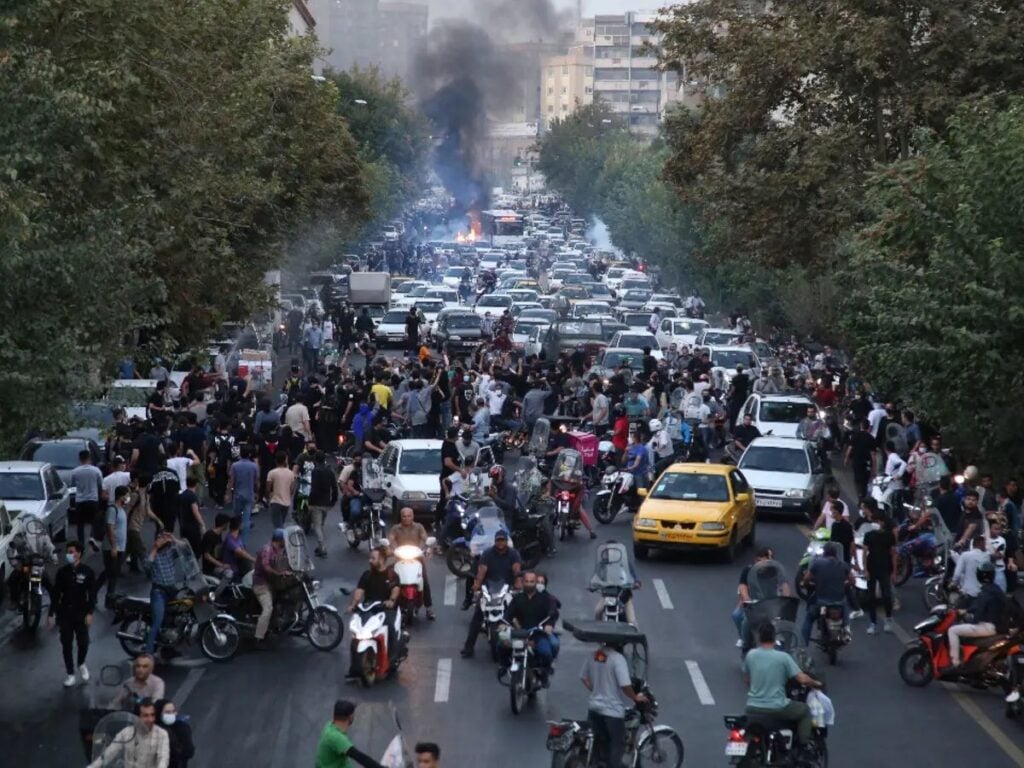
Understanding all these incidents is necessary to understand people’s sensitivity to violence against women and the accumulated anger on this topic in days leading to news about Mahsa Amini’s death.
Although Iran’s protests are known by Mahsa’s story, it is wrong to believe that it was a single incident. Mahsa’s death was the last straw for women already filled with anger and humiliation from years of deprivation of their rights as well as for many men who support women and believe in gender equality or at least recognize women’s rights and dignity in this matter.
In the second part, Mahsa’s story and Iran’s today protests will be discussed.
Notes
(1) Reza Shah was the founder of Pahlavi dynasty in 1925 and the first Pahlavi Shah (king). His son Mohammad Reza was the last Shah of Iran who fled the country before the revolution. Mohammad Reza’s son, Reza who was the crown prince at the time, lives in the e USA.
(2) Farsi does not have gendered pronouns, and this section of the article is specified by the use of the word “women”.
(3) Any prison sentence less than three months will be automatically converted to fines.
(4) Armed Forces formed immediately after the revolution by Ayatollah Khomeini which were connected to religious organs such as mosques.
(5) Formed within official police force then called Jandarmeri (Gendarmerie in French).
(6) Mostly women officers accompanied by one or two male officers.
(7) See this here.
(8) Armed forces including morality police are under direct supervision of the leader and therefore, the president does not have any direct authority on it.
(9) Islamic Revolutionary Guard Corps.
Please support TFF’s work for peace through research and public education. We are all-volunteer, people-financed and do not accept money from governments or corporations. In other words, one of the very last free research think tanks in this world – and for a noble purpose: Peace by peaceful – intelligent – means. It is fast, easy and secure. Click here. Thanks!








One Response
Thank you for this clear exposition of what goes on in Iran in the name of safeguarding women’s chastity! Many people outside Iran do not know the full extent of the savagery and oppression to which women have been subjected. The current tyrannical regime in Iran has lost any legitimacy and it is time for it to go, peacefully if possible, but violently if necessary. This brutal regime has been given many chances to reform itself and become more humane and democratic, but so far to no avail. The current Iranian rulers should know that change is inevitable and Iranian people and world public opinion will not put up with this situation for much longer. This change can come about peacefully, but if the regime blocks any peaceful change the demand for democracy and human rights will inevitably become violent. There is still time for them to do the right thing, allow free elections under international supervision to decide the nature of change in Iran. There should be some form of “truth and reconciliation commission” to show mercy and forgiveness to those who have not committed criminal acts and to reform the society, on South Africa’s model after apartheid. But the continuation of the current oppressive practices is unacceptable, and it must end.