World future

Category

Year

Author / Contributor

Region

Sort by

Showing 1-10 of 193 stories

71de2133-5ae9-45ef-80a0-c1b5d0bb5ec0
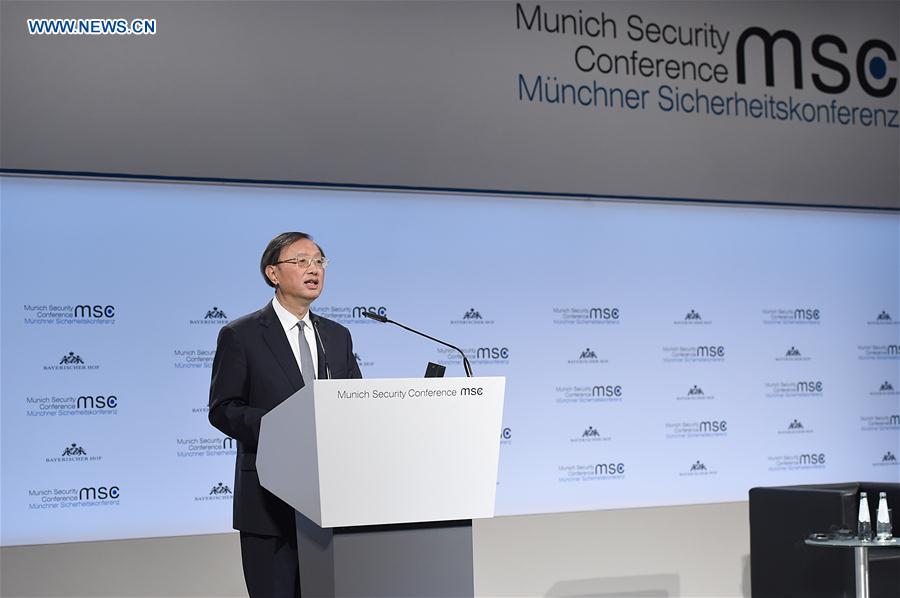
“Working for a Community with a Shared Future for Mankind by Promoting International Cooperation and Multilateralism” By Yang Jiechi February 18, 2019 MUNICH, Germany, Feb. 16 (Xinhua) – Yang Jiechi, a member of the Political Bureau of the Communist Party of China (CPC) Central Committee, Director of the Office of the Central Commission for Foreign Affairs, delivered China’s keynote speech on February 16, 2019 at the 55th Munich Security Conference. Italics added by The Transnational for pedagogical, easier-read reasons. This is the English translated version of the speech reprinted from China Org. cn here: Mr. Wolfgang Ischinger, Chairman of the Munich Security Conference, Ladies and Gentlemen, It is my great pleasure to join you at this year’s Munich Security Conference (MSC). As a global forum on security policy, the MSC provides an important platform for people around the world to express views and share insights on major issues concerning world...
Portable-War-Memorial
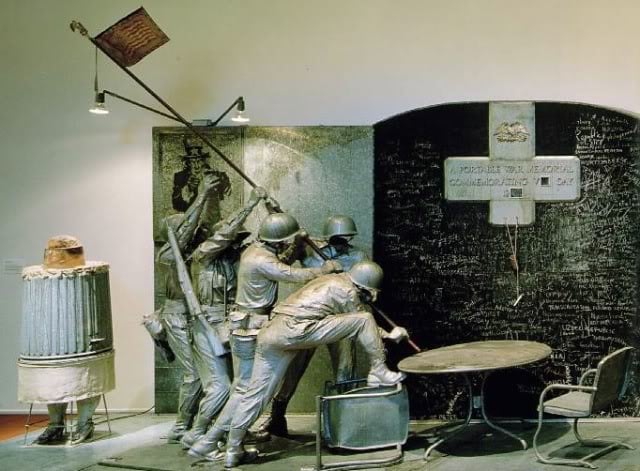
By Dragana Maksimovic January 28, 2019 The author, MA student at University of Belgrade, become a TFF Associate in 2018. More here. There is one thing about which many peace researchers disagree and constantly debate: Are we really living in the most peaceful era ever, or are we facing a dangerous era of conflicts and struggles for global supremacy – very often masked as a fight for human rights but which can lead to a global war? There are those who agree with Steven Pinker when he claims that “today we are living in a most peaceful time in our species’ existence” (1) or with Barack Obama, the 44th president of The United States, who wanted to highlight how “worth it is reminding ourselves of how lucky we are to be living in the most peaceful, most prosperous, most progressive era in human history.’’ (2) Trying to validate his claims,...
3943
Photograph: Bloomberg via Getty Images The world’s 26 richest people now own as much as poorest 50%. It creates huge problems, misery and conflicts. And it is caused by the West’s version of capitalism and is neither sustainable nor morally defensible, says Jan Oberg. By Oxfam  21 January 2019 Billionaire fortunes increased by 12 percent last year – or $2.5 billion a day – while the 3.8 billion people who make up the poorest half of humanity saw their wealth decline by 11 percent, reveals a new report from Oxfam today. The report is being launched as political and business leaders gather for the World Economic Forum in Davos, Switzerland. ‘Public Good or Private Wealth’ shows the growing gap between rich and poor is undermining the fight against poverty, damaging our economies and fuelling public anger across the globe.  It reveals how governments are exacerbating inequality by underfunding public services, such as healthcare and...
JeffSachs
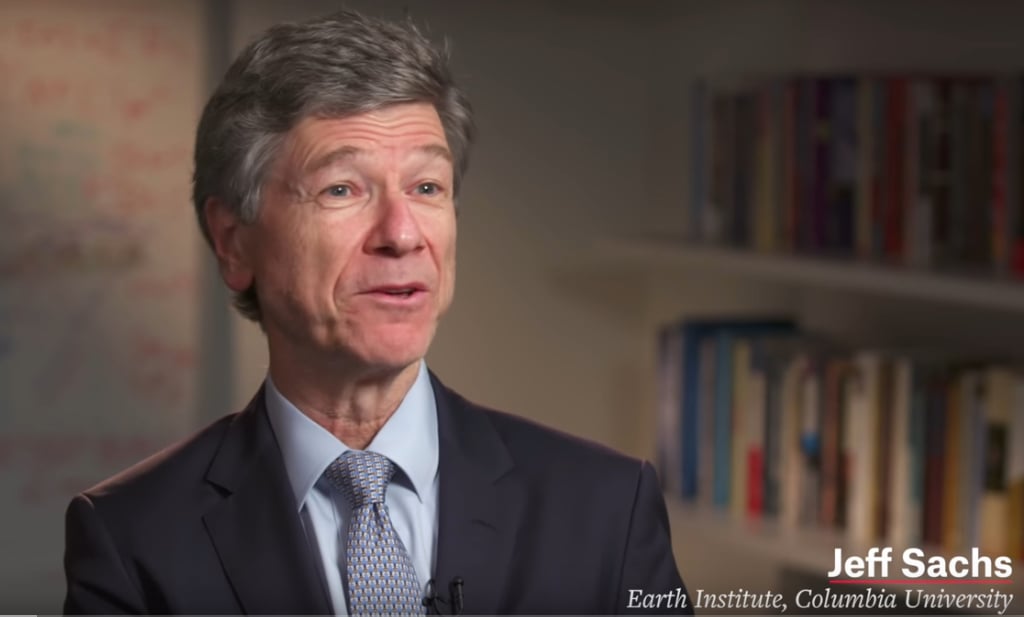
January 19, 2019 “The naive and dangerous idea that the U.S. is exceptional has made us a danger to ourselves.” Jeffrey Sachs sits down with Rob Johnson to discuss his new book, A New Foreign Policy: Beyond American Exceptionalism, Columbia University Press, 2018.
Global-Challenges
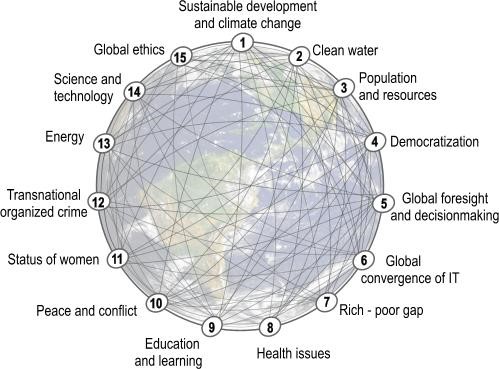
New networking by NGOs and individuals Three main challenges to humanity’s survival We are handing to the new generations three overriding dangers to the health and maybe survival of the entire human population: 1. Nuclear war. 2. Climate changes, and 3. Increasing class differences. This last danger, the consequences of the increasing economic differences, is a subject too political for this presentation, but I am of the opinion that if we do not stop the increasing social injustice it will be even more difficult to save the planet. Working against nuclear war “Nuclear war is the greatest danger to the health and survival of mankind”, according to the World Health Organization. Since 1981 I have worked with the organization International Physicians for the Prevention of Nuclear War, IPPNW. We believed that if we could just make people understand the consequences of nuclear war, understand that nuclear war might be the...
us-china-relations
The Ironies of a Successful U.S. China Policy Remarks to the National Committee for U.S.-China Relations   By Ambassador Chas W. Freeman, Jr. (USFS, Ret.)    Senior Fellow, Watson Institute for International and Public Affairs, Brown University New York, December 18, 2018 Three days ago, we celebrated the fortieth anniversary of Jimmy Carter’s and Deng Xiaoping’s politically courageous decision to normalize relations between the United States and the People’s Republic of China.  I have been involved in our relations with China in one way or another for fifty years.  Thinking about how China and the world as well as U.S. relations with both have changed over that period, I am struck by many ironies.  Originally published on Freeman’s blog here The United States sought to change China’s geopolitical position, not China’s socioeconomic system.  Yet our opening to China informed and enabled major changes in its domestic political economy.  When Washington first reached...
FOREIGN201812070833000277903577733
By Curtis Stone December 7, 2018 China went from being one of the poorest countries on the planet to one of the most powerful. China’s remarkable development has pulled hundreds of millions of its citizens out of poverty and greatly contributes to global peace and prosperity. Originally published by The People’s Daily Online, December 7, 2018 But this significant impact has also triggered a negative response in some quarters of the United States. In his book The Hundred-Year Marathon, Michael Pillsbury, director for Chinese strategy at the Hudson Institute, sounded a clarion call: China has a secret 100-year plan built on a series of strategic deceptions to supplant the United States as the world’s superpower. The rise of China, in his view, is a threat. In his book, Pillsbury writes that China experts have a duty to increase understanding between China and the United States, but ironically, his way of increasing...
FOREIGN201809041714000403314906740
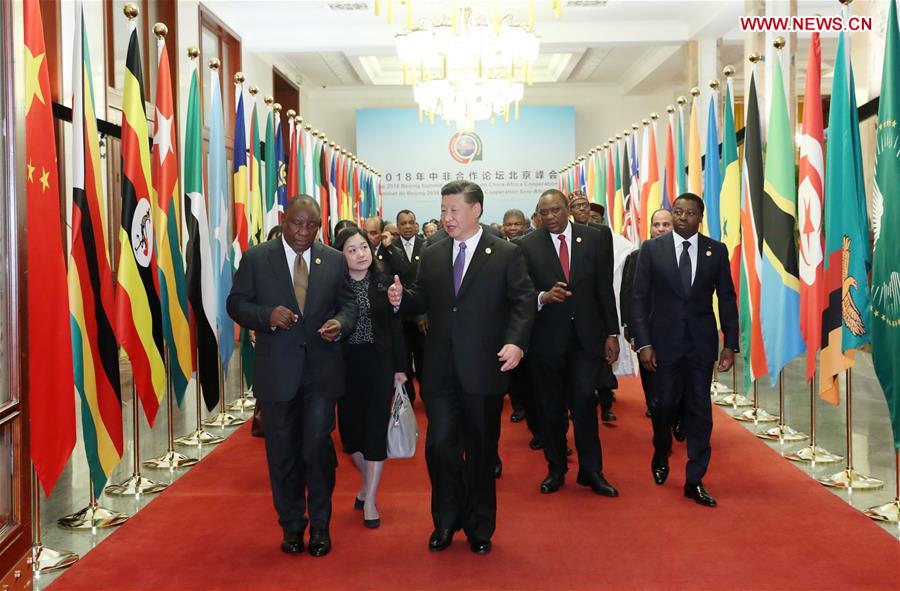
Chinese President Xi Jinping and foreign leaders attending the Beijing Summit of the Forum on China-Africa Cooperation (FOCAC) head for the venue of the summit’s opening ceremony at the Great Hall of the People in Beijing, capital of China, Sept. 3, 2018. (Xinhua/Pang Xinglei)   By Curtis Stone People’s Daily Online September 4, 2018   The 2018 Beijing Summit of the Forum on China-Africa Cooperation kicked off on Monday. At the opening ceremony, President Xi Jinping delivered an important speech that drew a warm round of applause from the audience. Xi said China will implement eight major initiatives with African countries in the next three years and beyond, covering fields such as industrial promotion, infrastructure connectivity, trade facilitation, and green development.   Originally published by The People’s Daily Online on September 4, 2018, here   In his speech, President Xi said China values sincerity, friendship, and equality in pursuing cooperation,...
China-US
  Thwarting the anti-dollar coalition should be Washington’s top national priority   By Gal Luft August 30, 2018   The United States is currently waging economic warfare against one tenth of the world’s countries with cumulative population of nearly 2 billion people and combined gross domestic product (GDP) of more than $15 trillion. These include Russia, Iran, Venezuela, Cuba, Sudan, Zimbabwe, Myanmar, the Democratic Republic of Congo, North Korea and others on which Washington has imposed sanctions over the years, but also countries like China, Pakistan and Turkey which are not under full sanctions but rather targets of other punitive economic measures. In addition, thousands of individuals from scores of countries are included in the Treasury Department’s list of Specially Designated Nationals who are effectively blocked from the U.S.-dominated global financial system. Many of those designated are either part of or closely linked to their countries’ leadership. Published by Yahoo...
nuclearism
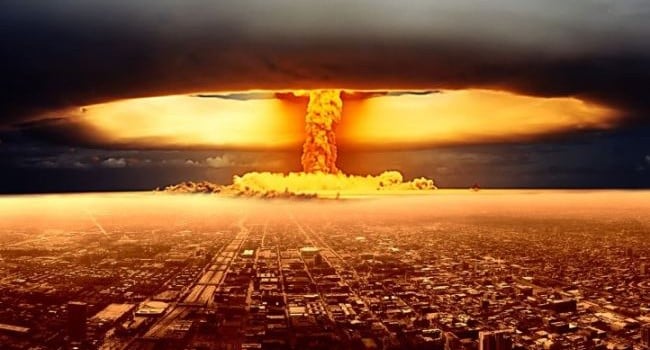
By David Krieger Nuclear Age Peace Foundation, NAPF August 2018 Nuclear weapons pose a grave threat to the future of civilization. As long as we allow these weapons to exist, we flirt with the catastrophe that they will be used, whether intentionally or accidentally. Meanwhile, nuclear weapons skew social priorities, create imbalances of power, and heighten geopolitical tension. Diplomacy has brought some noteworthy steps in curbing risks and proliferation, but progress has been uneven and tenuous. The ultimate aim of abolishing these weapons from the face of the earth—the “zero option”—faces formidable challenges of ignorance, apathy, and fatigue. Yet, the total abolition of nuclear weapons is essential for a Great Transition to a future rooted in respect for life, global solidarity, and ecological resilience. This will require an emboldened disarmament movement working synergistically with kindred movements, such as those fighting for peace, environmental sustainability, and economic justice, in pursuit of...

Imperialism_16
    From ancient Greece onward, the West has used the Eastern other as an enemy through which to identify itself.   Marco Carnelos August 22, 2018 US President Donald Trump’s administration seems to be intent on confronting the rest of the world. With a few exceptions, such as Russia (as far as Trump himself is concerned), Israel and Saudi Arabia, almost every other nation in the world has felt the rage and contempt of the current American president. Originally published on middleeasteye.net August 17, 2018 Bonds with traditional US allies have been questioned and the many principles, pillars, and rules of the liberal world order, itself conceived and shaped by the United States, are now disowned.   Little knowledge These developments can’t simply be attributed to Trump and Trump alone. The president’s thinking is shared by a significant section of the American people, who have little knowledge of the...
robert-j-burrowes
  August 14, 2018 By Robert J. Burrowes Given the overwhelming evidence that activist efforts are failing to halt the accelerating rush to extinction precipitated and maintained by dysfunctional human behavior, it is worth reflecting on why this is happening. Of course, you might say that the rush to extinction is being slowed. But is it? Even according to BP’s chief economist: ‘despite the extraordinary growth in renewables in recent years, and the huge policy efforts to encourage a shift away from coal into cleaner, lower carbon fuels, there has been almost no improvement in the power sector fuel mix over the past 20 years. The share of coal in the power sector in 1998 was 38% – exactly the same as in 2017…. this is one area where at the global level we haven’t even taken one step forward, we have stood still: perfectly still for the past 20 years....
Categories

Year

Author / Contributor

Region