
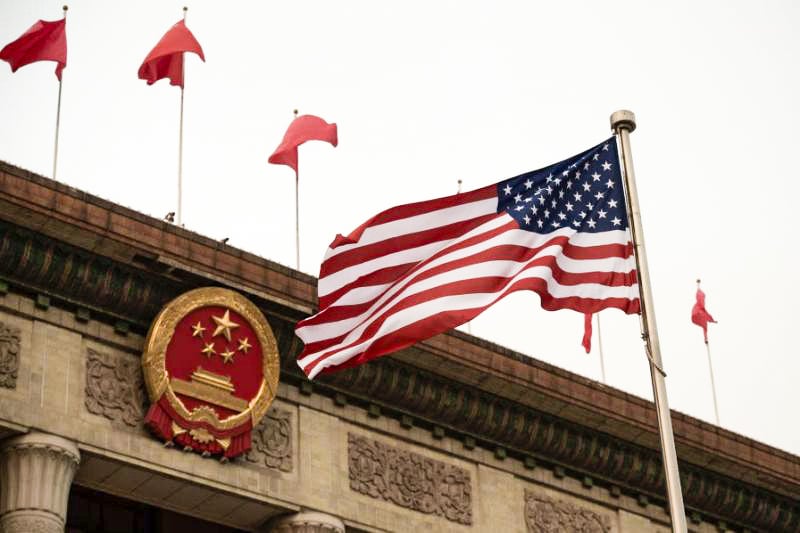
The anti-dollar awakening could be ruder and sooner than most economists predict


Thwarting the anti-dollar coalition should be Washington’s top national priority


By Gal Luft

August 30, 2018


The United States is currently waging economic warfare against one tenth of the world’s countries with cumulative population of nearly 2 billion people and combined gross domestic product (GDP) of more than $15 trillion.

These include Russia, Iran, Venezuela, Cuba, Sudan, Zimbabwe, Myanmar, the Democratic Republic of Congo, North Korea and others on which Washington has imposed sanctions over the years, but also countries like China, Pakistan and Turkey which are not under full sanctions but rather targets of other punitive economic measures.

In addition, thousands of individuals from scores of countries are included in the Treasury Department’s list of Specially Designated Nationals who are effectively blocked from the U.S.-dominated global financial system. Many of those designated are either part of or closely linked to their countries’ leadership.

Published by Yahoo Finance on August 27, 2018

From a U.S. perspective, each one of the economic entities is targeted for a good reason be it human rights violations, terrorism, crime, nuclear trade, corruption or in the case of China, unfair trade practices and intellectual property theft.

But in recent months it seems that America’s unwavering commitment to fight all of the world’s scourges has brought all those governments and the wealthy individuals who support them to a critical mass, joining forces to create a parallel financial system which would be out of reach of America’s long arm. Should they succeed, the impact on America’s global posture would be transformational.

America’s global supremacy has been made possible not only thanks to its military power and its alliance system but also due to its control over the plumbing of global finance and particularly the broad acceptance of the dollar as the world’s reserve currency. The unique status of the U.S. currency has anchored the global financial system since World War II.

Any transaction done in U.S. dollars or using a U.S. bank automatically brings the trading parties under American legal jurisdiction. When the U.S. decides to impose unilateral sanctions, as in the case of Iran, it essentially tells the world’s governments, corporations and individuals they must choose between halting business with the sanctioned country or be shut off from the world’s number one economy. This is a powerful stick.

Not many companies or banks can afford to give up on the U.S. market or be denied access to U.S. financial institutions.

Revisionist countries that wish to challenge the U.S.-led system see this as an affront to their economic sovereignty. Which is why both Russia and China have developed their own versions of the Society for Worldwide Interbank Financial Telecommunication (SWIFT), the global network that allows cross-border financial transactions among thousands of banks. Both countries are also urging their trading partners to ditch the dollar in their bilateral trade in favor of indigenous currencies.

This month Russia was quick to recruit Turkey into the anti-dollar bloc, announcing it would back non-dollar trade with it, after a financial feud between Ankara and Washington broke out. China for its part is using its trillion-dollar Belt and Road Initiative as a tool to compel countries to transact in yuan terms instead of dollars. Pakistan, the number one recipient of Belt and Road money, and Iran have already announced their intention to do just that.

Last month’s BRICS (Brazil, Russia, India, China, South Africa) summit in Johannesburg was a call to arms against the dollar hegemony with countries like Turkey, Jamaica, Indonesia, Argentina and Egypt invited to join in what is known as “BRICS plus” with the goal of creating a de-dollarized economy.

The main front where the future of the dollar will be decided is the global commodity market, especially the $1.7 trillion oil market. Ever since 1973, when President Richard Nixon unilaterally severed the U.S. dollar from the gold standard and convinced the Saudis and the rest of the OPEC countries to sell their oil only in dollars, the global oil trade has been linked to the American currency.

This paved the way for the rest of the commodities to be traded in dollars as well. The arrangement served America well. It created an ever growing demand for the greenback, which in turn enabled consecutive U.S. governments to freely run their growing deficits.

Not anymore. Because so many of the members of the anti-dollar alliance are exporters of commodities they no longer feel that their products should be either priced by a dollar-denominated benchmark like WTI and Brent or be traded in a currency they no longer crave.

For example, when China buys oil from Angola, gas from Russia, coal from Mongolia or soybeans from Brazil it prefers to do so in its own currency and thereby avoid unwanted exchange rate fees on both sides of the transaction. This is already beginning to happen.

Russia and China have agreed to transact some of their traded energy in yuan. China is pushing its main oil suppliers Saudi Arabia, Angola and Iran to receive yuans for their oil. And last year China introduced gold-backed futures contracts, dubbed “petro-yuan” in the Shanghai International Energy Exchange – the first non-dollar crude benchmark in Asia.

The gradual acceptance of digital currencies, backed by blockchain technology offers another way for the revisionists to ditch the dollar in their trading. The Russian central bank indicated that it was considering launching a national cryptocurrency called “cryptoruble” and in the interim it helped Venezuela’s launch of its own cryptocurrency, the “petro,” which is backed by the country’s vast oil reserves. Now BRICS members are discussing a BRICS-backed cryptocurrency.

All of those actions and others point to one direction: In the coming years the dollar will be facing a barrage of attacks with the goal of eroding its hegemony and the energy trading market will be one of the main battlefields where the future of America’s economic dominance will be decided. Any successful attempt to delink commodity trading from the dollar will have a cascading impact not only on the global economic system as we know it but also on America’s posture abroad.

With the overall positive state of the U.S. economy and the remarkable strength of the dollar compared to the currencies of the dollar-busters including the Russian ruble, the yuan, the Turkish lira and the Iranian rial it may be easy to sink into complacency and dismiss the actions of the revisionists as mere pinpricks.

But ignoring the growing anti-dollar coalition would be to America’s detriment. Bull markets eventually come to an end and with a national debt of $21 trillion and growing at a rate of a trillion dollars a year, the awakening could be ruder and sooner than most economists predict.

In the midst of America’s economic euphoria it is worth remembering that one of every four people on the planet lives today in a country whose government is committed to end the dollar hegemony.

Thwarting their effort should be Washington’s top national priority.


Gal Luft
– is co-director of the Institute for the Analysis of Global Security and senior advisor to the United States Energy Security Council.


Recommended reading

Cathrin Schaer
Making Europe financially independent, one transaction at a time



Related Posts

Photo above: Carl Fredrik Reuterswärd’s Non-Violence outside UN Headquarters in New York. Kirill Levin, CC BY-NC-SA 2. Jan Oberg November 3, 2026 I am happy to be published in Horizons which is produced by the Center for International Relations and Sustainable Development, CIRSD, in Belgrade. My contribution brings out a radical re-thinking of what concepts such as defence, security, deterrence – and peace – may mean if we want to create a more peaceful world. It also summarises a few things I have been working with the last few decades. Please read it here Og her er den på dansk, takket være Johnny Baltzersens lynhurtige oversættelse
UNITE-tillid, DREAM-velstand og andre konstruktive komponenter Normally we publish articles in English here. But this is a translation of a very important TFF document that should reach as many as possible in Denmark since this country’s government has been one of the most hardline in Europe and, up till now at least, has refused to use diplomacy and, instead, spent tremendous sums on arming Ukraine with the express goal of defeating Russia. Thus this – unique – article is in Danish. Vi er Johnny Baltzersen og hans Fælles Sikkerhed – Fælles Fremtid på Substack overmåde taknemmelige for at have oversat og publiceret TFF’s 2025-portfølje for fredsidéer med henblik på Ukraines fremtid. Vi håber den nu kan nå mange flere danskere – som også vil sprede den og skabe debat – nu den danske regerings og folketingspartiernes politik på dette område siden 2022 står nu – forudsigeligt – ved vejs ende....
Johan Galtung 1930-2024October 2015 Published here on October 3, 2026 Let us focus on Civilization for conflict analysis and remedies. Major forms of disorder use violence; war is state organized violence. The most belligerent states are the United States of America and Israel, both with civilization roots. National Evangelism, the US Protestant Christian civilization– more national than evangelical–justifies US warfare as exceptionalism of a people chosen by God, with a manifest destiny to run the world. Orthodox Judaism justifies Israeli warfare to conquer and expand from Nile to Euphrates as a religious right and duty to the Eternal One. The third most belligerent country, the UK, no longer believes it is God-chosen but chosen by the USA; not quite the same but something. But the root cause of global disorder lies in the Occident–with Islam–seeing itself as the single, universal civilization valid for all at all times, all others being...

Recent Articles

Photo above: Carl Fredrik Reuterswärd’s Non-Violence outside UN Headquarters in New York. Kirill Levin, CC BY-NC-SA 2. Jan Oberg November 3, 2026 I am happy to be published in Horizons which is produced by the Center for International Relations and Sustainable Development, CIRSD, in Belgrade. My contribution brings out a radical re-thinking of what concepts such as defence, security, deterrence – and peace – may mean if we want to create a more peaceful world. It also summarises a few things I have been working with the last few decades. Please read it here Og her er den på dansk, takket være Johnny Baltzersens lynhurtige oversættelse
UNITE-tillid, DREAM-velstand og andre konstruktive komponenter Normally we publish articles in English here. But this is a translation of a very important TFF document that should reach as many as possible in Denmark since this country’s government has been one of the most hardline in Europe and, up till now at least, has refused to use diplomacy and, instead, spent tremendous sums on arming Ukraine with the express goal of defeating Russia. Thus this – unique – article is in Danish. Vi er Johnny Baltzersen og hans Fælles Sikkerhed – Fælles Fremtid på Substack overmåde taknemmelige for at have oversat og publiceret TFF’s 2025-portfølje for fredsidéer med henblik på Ukraines fremtid. Vi håber den nu kan nå mange flere danskere – som også vil sprede den og skabe debat – nu den danske regerings og folketingspartiernes politik på dette område siden 2022 står nu – forudsigeligt – ved vejs ende....
Jan Oberg TFF director October 28, 2026 Exactly one month has now passed since I published my criticism of the introduction to the special issue on Johan Galtung published by the Journal of Global Security Studies, JoGSS, and of Tor Egil Førland’s chapter about Galtung which serves as a preview to his forthcoming biography of Galtung to be published by PRIO. See the original on The Transnational here and the same article on TFF Substack with many general and critical comments and, in particular, the people who decided to withdraw from the biography project in protest. The special issue itself was extraordinary. It was devoted to the intellectual legacy of one of the founders of peace research and contained a number of strong assessments of his personality, scholarship, intellectual trajectory, and public role. Such assessments are, of course, entirely legitimate. No scholar is beyond criticism, and neither was Johan Galtung....

TFF on Substack

Discover and subscribe to more peace materials on TFF Substack

Most Popular

Photo above: Carl Fredrik Reuterswärd’s Non-Violence outside UN Headquarters in New York. Kirill Levin, CC BY-NC-SA 2. Jan Oberg November 3, 2026 I am happy to be published in Horizons which is produced by the Center for International Relations and Sustainable Development, CIRSD, in Belgrade. My contribution brings out a radical re-thinking of what concepts such as defence, security, deterrence – and peace – may mean if we want to create a more peaceful world. It also summarises a few things I have been working with the last few decades. Please read it here Og her er den på dansk, takket være Johnny Baltzersens lynhurtige oversættelse
UNITE-tillid, DREAM-velstand og andre konstruktive komponenter Normally we publish articles in English here. But this is a translation of a very important TFF document that should reach as many as possible in Denmark since this country’s government has been one of the most hardline in Europe and, up till now at least, has refused to use diplomacy and, instead, spent tremendous sums on arming Ukraine with the express goal of defeating Russia. Thus this – unique – article is in Danish. Vi er Johnny Baltzersen og hans Fælles Sikkerhed – Fælles Fremtid på Substack overmåde taknemmelige for at have oversat og publiceret TFF’s 2025-portfølje for fredsidéer med henblik på Ukraines fremtid. Vi håber den nu kan nå mange flere danskere – som også vil sprede den og skabe debat – nu den danske regerings og folketingspartiernes politik på dette område siden 2022 står nu – forudsigeligt – ved vejs ende....
Jan Oberg TFF director October 28, 2026 Exactly one month has now passed since I published my criticism of the introduction to the special issue on Johan Galtung published by the Journal of Global Security Studies, JoGSS, and of Tor Egil Førland’s chapter about Galtung which serves as a preview to his forthcoming biography of Galtung to be published by PRIO. See the original on The Transnational here and the same article on TFF Substack with many general and critical comments and, in particular, the people who decided to withdraw from the biography project in protest. The special issue itself was extraordinary. It was devoted to the intellectual legacy of one of the founders of peace research and contained a number of strong assessments of his personality, scholarship, intellectual trajectory, and public role. Such assessments are, of course, entirely legitimate. No scholar is beyond criticism, and neither was Johan Galtung....
Read More
knotted gun
Photo above: Carl Fredrik Reuterswärd’s Non-Violence outside UN Headquarters in New York. Kirill Levin, CC BY-NC-SA 2. Jan Oberg November 3, 2026 I am happy to be published in Horizons which is produced by the Center for International Relations and Sustainable Development, CIRSD, in Belgrade. My contribution brings out a radical re-thinking of what concepts such as defence, security, deterrence – and peace – may mean if we want to create a more peaceful world. It also summarises a few things I have been working with the last few decades. Please read it here Og her er den på dansk, takket være Johnny Baltzersens lynhurtige oversættelse
TFFPortfolioVign
UNITE-tillid, DREAM-velstand og andre konstruktive komponenter Normally we publish articles in English here. But this is a translation of a very important TFF document that should reach as many as possible in Denmark since this country’s government has been one of the most hardline in Europe and, up till now at least, has refused to use diplomacy and, instead, spent tremendous sums on arming Ukraine with the express goal of defeating Russia. Thus this – unique – article is in Danish. Vi er Johnny Baltzersen og hans Fælles Sikkerhed – Fælles Fremtid på Substack overmåde taknemmelige for at have oversat og publiceret TFF’s 2025-portfølje for fredsidéer med henblik på Ukraines fremtid. Vi håber den nu kan nå mange flere danskere – som også vil sprede den og skabe debat – nu den danske regerings og folketingspartiernes politik på dette område siden 2022 står nu – forudsigeligt – ved vejs ende....
JoGSS-Silent
Jan Oberg TFF director October 28, 2026 Exactly one month has now passed since I published my criticism of the introduction to the special issue on Johan Galtung published by the Journal of Global Security Studies, JoGSS, and of Tor Egil Førland’s chapter about Galtung which serves as a preview to his forthcoming biography of Galtung to be published by PRIO. See the original on The Transnational here and the same article on TFF Substack with many general and critical comments and, in particular, the people who decided to withdraw from the biography project in protest. The special issue itself was extraordinary. It was devoted to the intellectual legacy of one of the founders of peace research and contained a number of strong assessments of his personality, scholarship, intellectual trajectory, and public role. Such assessments are, of course, entirely legitimate. No scholar is beyond criticism, and neither was Johan Galtung....
Screenshot 2026-10-26 115647
An aspect of Iran’s culture and civilisation you’ve probably never heard about. Don’t be surprised if the US and Israel also try to bomb them. Jan ObergTFF director October 26, 2026 Today – under the “USraeli” threat of new “annihilating” bombings – opens the 7th International Conference on Peace and Conflict Resolution at Tehran’s University. As far as I can tell, this is the only permanent, advanced peace research institution in West Asia/the Middle East. Perhaps more countries in that region could be inspired? I mean, how many military “security” institutes and military academies do they have? Many peace research institutes and university departments have been established since the 1950s in the West. They are now all under attack; some have closed down, some have gone mainstream, yet others kept the name but do nothing to research peace and disseminate results or advice; instead, they cooperate with militarism’s platforms such...
Screenshot 2026-10-15 141837
Let’s discuss using AI to create peace – in contrast to boring geopolitics devoid of creative healing and visions. Jan Oberg TFF director October 15, 2026 I asked VEED to create a short video exemplifying how peace is preferable to war, then chose the lady as a template. Simple as that. In less than a minute, it produced this video, which any peace-loving person would appreciate. The only problem is that human intelligence (HI), at least the one that exists among Western decision-makers, isn’t half as moral or smart as AI. I have used AI to dialogue about peace and peace plans, creative conflict resolution and visions of a better future for humankind. It so happens that I am having more stimulating, intelligent, creative and moral discussions with AI than I could possibly have with any EU or NATO leader today. Yes, AI has very problematic and dangerous aspects; used...
girl-5894831_1280
Below are TFF-related media mentions, comments, videos and social media posts published elsewhere but not on this homepage. We happen to catch and list only a fraction. Regarding video comments and debates, we recommend that you go to the TFF Video Channel on Substack where many of them are reproduced. Jan Oberg is a contributor to China Daily – 52 million daily clicks – and Global Times, CGTN and CCTV (the national television), China Investment, Xinhua News Agency and several others. Articles and videos on these media very often multiply into countless Chinese (and Western media) that re-post them from these main media. Thanks to The China Academy, his analyses, interviews and comments are frequently posted on YouTube channels such as Thinkers Forum and Wave Media. These videos are often re-posted on Bilibili (China’s YouTube), the China Content Center on TikTok, and on the Chinese edition of TikTok, Douyin.com. This means reaching hundreds of millions of viewers worldwide over a year. While there are too many to catch on all these...




