World future

Category

Year

Author / Contributor

Region

Sort by

Showing 1-10 of 193 stories

gr1
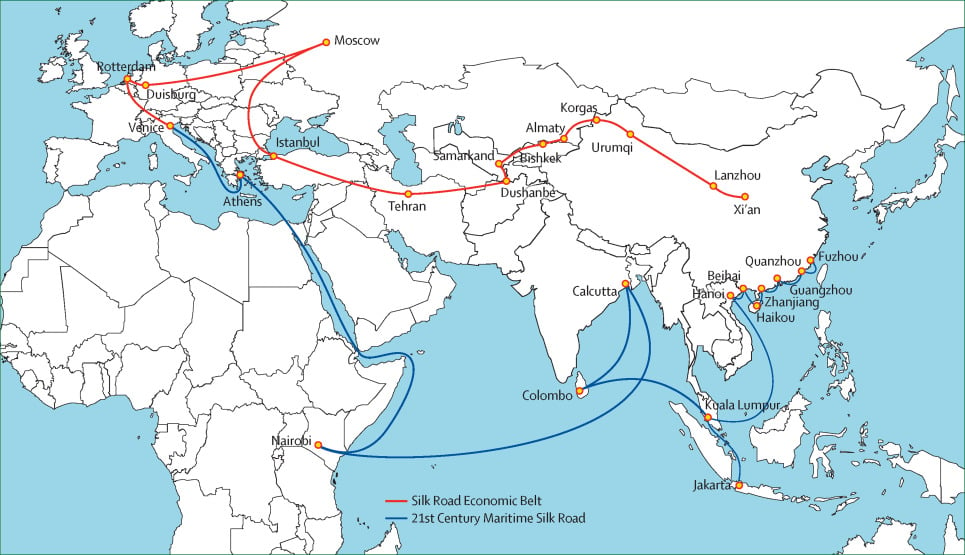
By Hussein Askary April 22, 2020 When China was fighting alone against the Corona virus in January and February, Western media mocked China and its leadership for mismanaging the health affairs of the nation. A Danish newspapers gleefully published a cynical cartoon of the Chinese flag with a cluster of Corona viruses instead of the stars. Others called the COVID-19, a “Chinese virus” and “Wuhan virus”. China was described as “Asia’s sick man” in the Wall Street Journal. Chinese and Asian nationals suffered racist attacks in Europe and the United States. Orginally posted on Brix’s official website on March 21, 2020 The Chinese people and their leadership were busy fighting ferociously, making huge sacrifices in lives and wealth to control the epidemic. Their fight was praised by the World Health Organization (WHO), which called on the other nations of the world to learn from China in dealing with the outbreak...
cultignorance
By Jason Hirthler April 21, 2020 Author David Foster Wallace once said that America is, “One enormous engine and temple of self-gratification and self-advancement.” The spectacle of American consumerism comes galloping to mind. But the pageant of gluttony with which we sate ourselves on a weekly basis is a pale reflection, at least in its intensity, of American foreign policy. Like our national addiction to guns mirrors our international addiction to bombs, so too our appetitive instincts at home merely reflect those same greedy impulses writ large in the global arena. From the soul of the gourmand to the surface-to-air missile, the attitude to the world is the same: take what ye would, all else be damned. Originally posted on Counterpunch’s official website on April 02, 2020 But while consumers might bankrupt themselves on needless consumption, it is the imperial arm of the state that visits mass suffering on innocents...
pic-from-ecohustler-1080x675-1
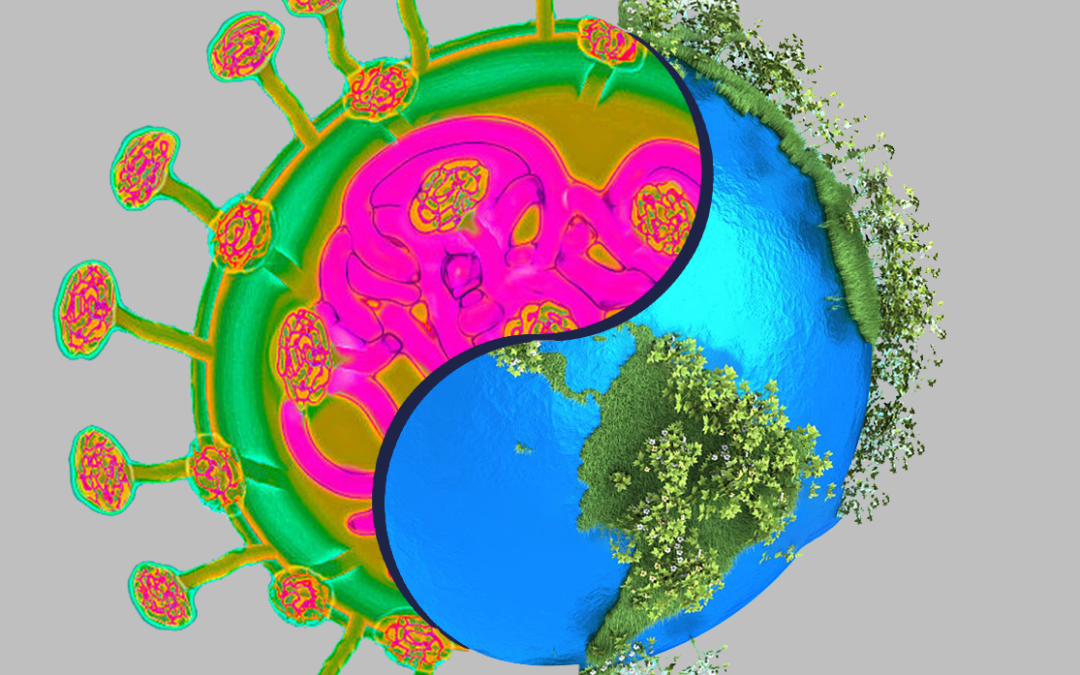
Imagine, it is the year 2050 and we are looking back to the origin and evolution of the coronavirus pandemic over the last three decades.  Extrapolating from recent events, we offer the following scenario for such a view from the future. As we move into the second half of our twenty-first century, we can finally make sense of the origin and impact of the coronavirus that struck the world in 2020 from an evolutionary systemic perspective. Today, in 2050, looking back on the past 40 turbulent years on our home planet, it seems obvious that the Earth had taken charge of teaching our human family. Our planet taught us the primacy of understanding of our situation in terms of whole systems, identified by some far-sighted thinkers as far back as the mid-nineteenth century.  This widening human awareness revealed how the planet actually functions, its living biosphere systemically powered by the...
Abby-Brockway
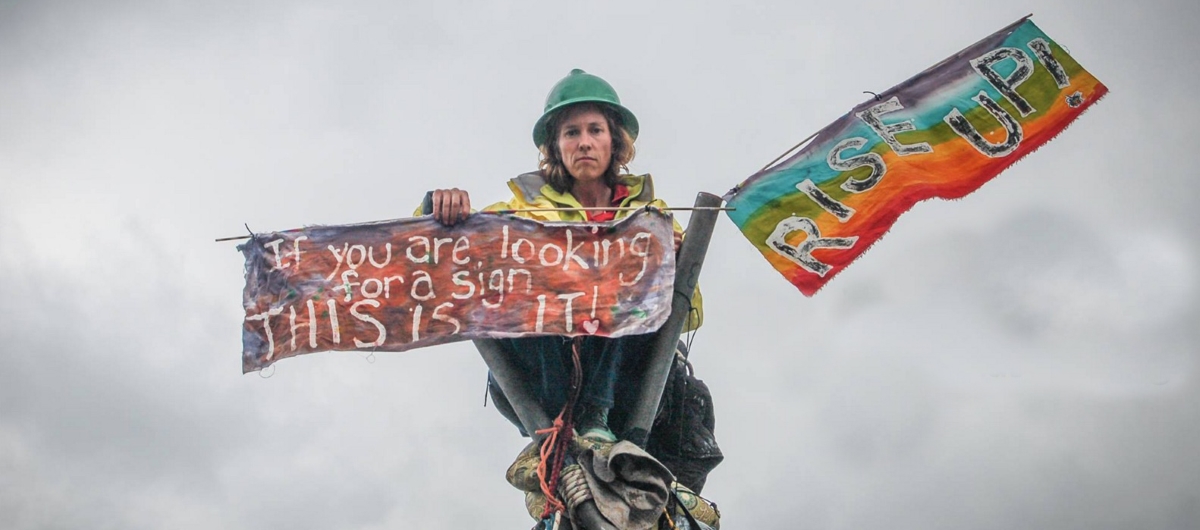
Jeff McMahon March 20, 2020 In a new book, the woman who led the negotiations for the Paris Agreement calls for civil disobedience to force institutions to respond to the climate crisis. Originally posted on Transcend.org on February 24, 2020, here “It’s time to participate in non-violent political movements wherever possible,” Christiana Figueres writes in “The Future We Choose: Surviving the Climate Crisis,” which will be released tomorrow by Knopf. Figueres served as executive secretary of the United Nations Framework Convention on Climate Change (UNFCCC) from 2010-16. She co-authored the book with her strategic advisor, Tom Rivett-Carnac. The two also support voting: “Large numbers of people must vote on climate change as their number one priority,” they write. “As we are in the midst of the most dire emergency, we must urgently demand that those who seek high office offer solutions commensurate with the scale of the problem.” But they...
soldiersnature
By Judith Deutsch March 10, 2020 The world situation is much worse than generally acknowledged. This December, the coinciding meetings of NATO and of the climate change Conference of the Parties (COP25) were barely reported, much less analyzed, even though the delegates held the fate of humanity in their hands. To some degree, both meetings are secret, and their unelected delegates are not accountable to the public. COP has met far from the ‘maddening crowd’ ever since the large protests at Copenhagen COP15. NATO provides credibility, flexibility, and anonymity in equal doses and shields member states from legal and political accountability. NATO policy is not to reveal which member state participated in a military operation.(1) NATO countries refuse to sign the nuclear ban treaty and now legitimize a nuclear-weapons first strike. To judge by the results delegates in both organizations chose to ignore both science and the human situation. Originally...
us-china-relations
Ambassador Chas W. Freeman, Jr. (USFS, Ret.) Senior Fellow, Watson Institute for International and Public Affairs, Brown University Washington, DC  29 November 2018 Ladies and Gentlemen: You have asked me to say a few words about China’s rise and its role in the post-American world.  There is a lot of nonsense being voiced on this topic at present.  It’s timely to address it.  I played a minor part in the original opening of China to the West.  Somewhat like Leonard Zelig or Forrest Gump in other contexts, over the course of fifty years as China returned to wealth and power, I was often on or in the scene.   I am happy to share some impressions with you. Originally posted on Chas W. Freeman, Jr.’s personal blog on November 29, 2018 here After serving in India, working to keep China out of the United Nations, and studying Chinese in Taiwan, I...
mills-1
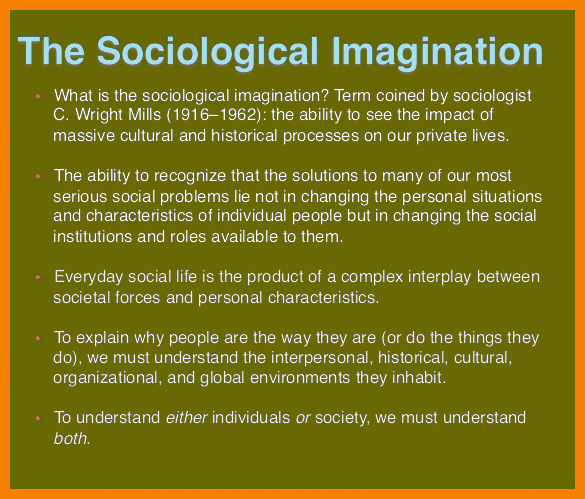
Bits of the sociological imagination at work By Jan Oberg March 5, 2020 Researchers are citizens too – some with a sociological imagination Like everybody else, social scientists are citizens. We live a private life and a professional life and there is a tradition-based rule of thumb that the two should be kept apart in writing – like: ”Oh, the things I experience in my private sphere are just small issues that probably only I have encountered; my scattered everyday observations are not interesting or “scientific” so I ought not bother others with them.” But wait! Isn’t it part of a social scientist’s writing to be concrete, build on empirical facts and observations? To tell how it really is also on the micro-level – also when s/he does not attempt to develop big explanatory theories around such unsystematic observations or try to prove something empirically? Isn’t it important to observe...
Imagen-thumbnail-The-Transnational
By Dean Baker Last month George Soros had a New York Times column arguing that Mark Zuckerberg should not be running Facebook. (Does the NYT reserve space on its opinion page for billionaires?) The gist of Soros’ piece is that Zuckerberg has made a deal with Trump. He will allow all manner of outrageous lies to be spread on Facebook to benefit Trump’s re-election campaign. In exchange, Trump will defend Zuckerberg from efforts to regulate Facebook. Originally posted in Counterpunch.org on February 18, 2020, here Soros is of course right. Zuckerberg has said that Facebook will not attempt to verify the accuracy of the political ads that it runs. This is a green light for any sleazebag to push the most outrageous claims that they want in order to further the election of their favoured candidate. This will almost certainly benefit Donald Trump’s re-election since the one area where he...
david-loy
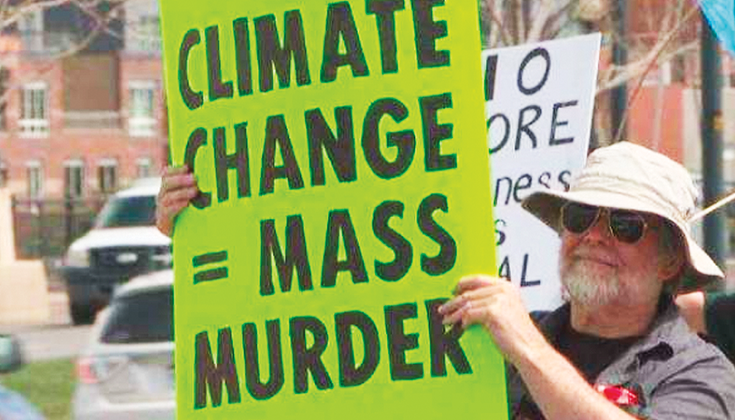
Photo: David Loy at an Extinction Rebellion protest in Denver. Photo by denver.cbslocal.com How do bodhisattvas respond to the greatest crisis of our time? Appropriately, says Buddhist teacher, activist and TFF Associate, David Loy. By David Loy One of my favorite Zen stories is short and simple. A student asks the master, “What is the constant activity of all the buddhas and bodhisattvas?” In other words, what’s special about the day-to-day lives of awakened people? The master replies: “Responding appropriately.” That’s all. No special powers, except being fully attentive to what’s actually happening and acting accordingly. “We don’t know what is possible, we don’t know what will work, but we do our best.” That’s an easy thing to do in a monastery. When the bell rings, you put on your robe and go to the Buddha Hall for meditation. But what about when one leaves the monastery gates and steps...
photo-rus-china
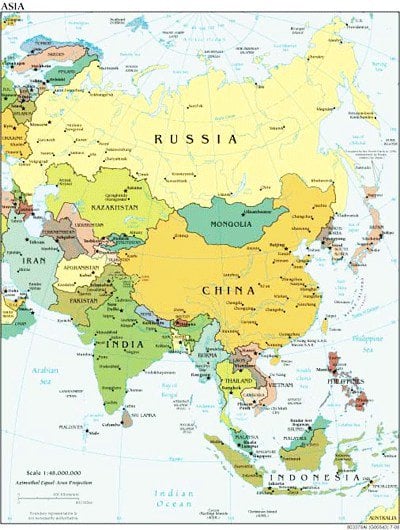
By Gordon M. Hahn January 30, 2020 The apparent overreaction by the U.S. to Iranian provocations represented by the assassination of Revolutionary Guards Corps Commander Qassem Soleiman is one of the stronger blows to hit one of the most important nails in the coffin of U.S.-Russian relations: the revival of Russian-Western geopolitical competition outside Russia’s immediate central Eurasian sphere of influence. At the same, time it is also one of the most important turning points in the formation of an anti-Western Eurasian axis that will shape the 21st century’s geopolitics. The outcome of the political struggle may well rest on Europe and whether or not it decides to stick to its American ally in the latter’s efforts to stave off the end of its unipolar hegemony through greater NATO and EU expansion or abandon at least the former project and positively contribute to the reordering of the international system in...
RichardFalk
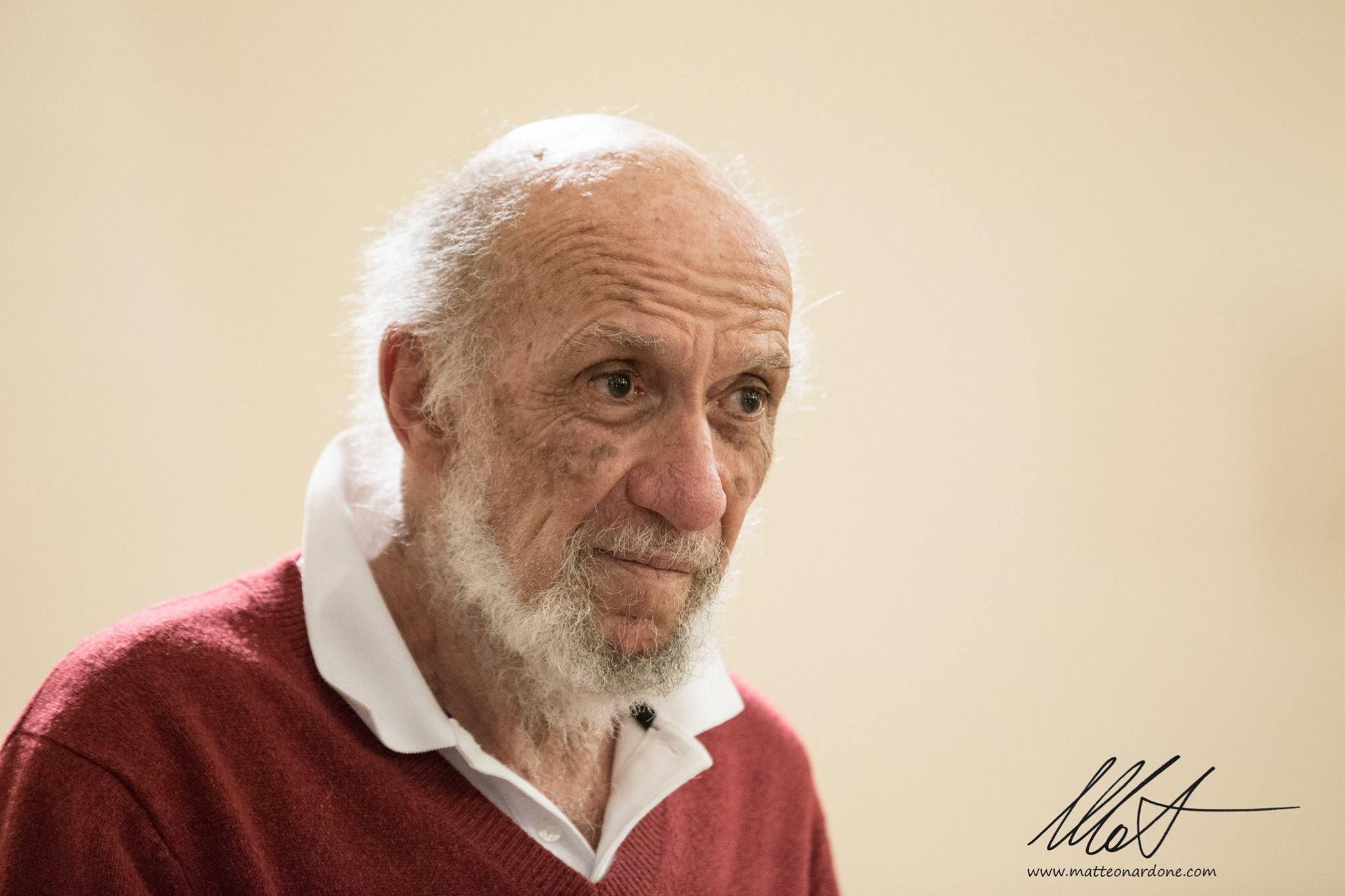
By Richard Falk, TFF Associate Januar 22, 2020 Prefatory Note: The post below is a somewhat amplified version of an interview with C. J. Polychroniou, journalist and professor of political economy at West Chester University, which was published on January 7, 2020, in the online journal, Global Policy. As the interview was conducted in December 2019, it fails to address the various disruptive consequences of the assassination of Qasem Soleimani, including the violation of Iraqi sovereignty, Baghdad being the site of the drone attack, as well as the risks of war arising from an escalating tit-for-tat cycle of actions and reactions. Given growing tensions between the interconnectedness of the world and the state-centric character of international law, including contradictions between totalizing and disregarding territorial sovereignty, state-centric world order is being increasingly marginalized by geopolitical behaviour that both generates and suppresses transnational political violence. A normative crisis with structural implications exists,...

Screenshot
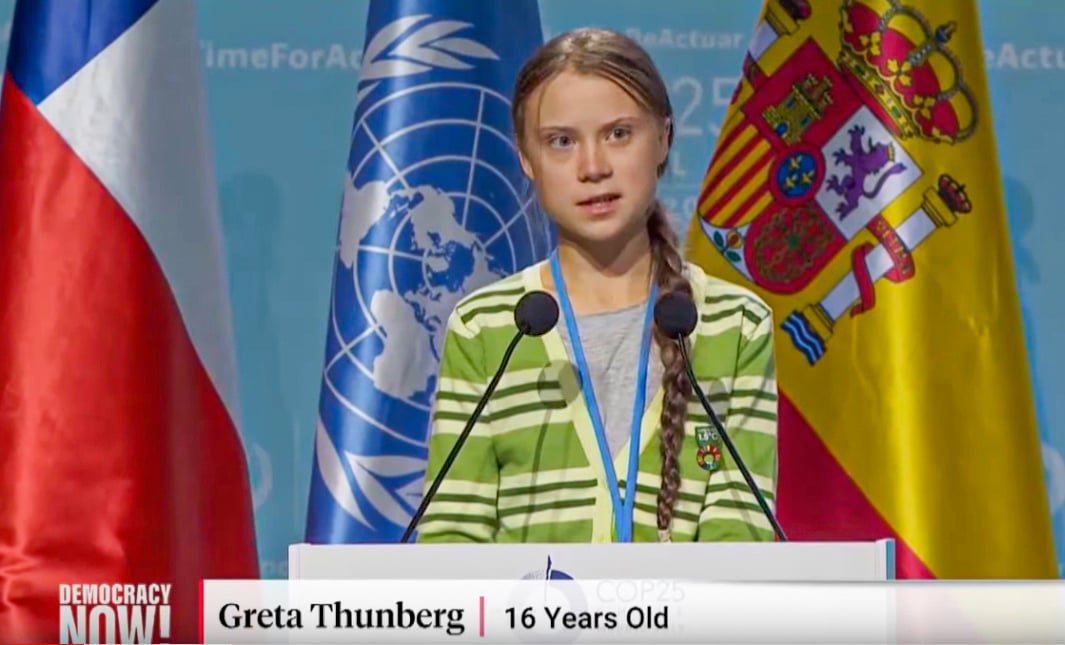
Here is a good backgrounder with her speech and an interview at COP 25 in Madrid: Greta Thunberg Slams COP25, Says Response to Climate Crisis Is “Clever Accounting and Creative PR” What she says in her intro is really important, important as a criticism of the world’s media: If she does not say something personal and emotional, few will listen. This fact-oriented speech has received much less media attention – proving her important point: When you speak facts, rely on research and appear “dull”, the media cannot get their satisfaction in terms of drama, individual story/identity, smashing superficial headlines and sensationalism. While one can certainly point out that she says less-thought-through things about democracy and the Free World towards the end of this speech, she is growing better and better – and she obviously knows more than anyone in decision-making positions. And in the mainstream media. Now, what does that...
Categories

Year

Author / Contributor

Region