

We shouldn’t have to beg Mark Zuckerberg to respect democracy

By Dean Baker

Last month George Soros had a New York Times column arguing that Mark Zuckerberg should not be running Facebook. (Does the NYT reserve space on its opinion page for billionaires?) The gist of Soros’ piece is that Zuckerberg has made a deal with Trump. He will allow all manner of outrageous lies to be spread on Facebook to benefit Trump’s re-election campaign. In exchange, Trump will defend Zuckerberg from efforts to regulate Facebook.

Originally posted in Counterpunch.org on February 18, 2020, here

Soros is of course right. Zuckerberg has said that Facebook will not attempt to verify the accuracy of the political ads that it runs. This is a green light for any sleazebag to push the most outrageous claims that they want in order to further the election of their favoured candidate.

This will almost certainly benefit Donald Trump’s re-election since the one area where he can legitimately take credit is in pushing outlandish lies. No one has pushed more lies more effectively than Donald Trump. The free rein promised by Zuckerberg is a re-election campaign contribution of enormous value.

While Soros is right on the substance of the issue, he is wrong to focus on the personality of Mark Zuckerberg. It would be good if we had a responsible forward-thinking person, who cared about the future of democracy, running Facebook, but that is not the normal course of things in a capitalist economy.

Businesses are run to make money. And, the bottom line here is that Facebook stands to make much more money spreading outlandish lies that help Trump’s campaign, than screening ads for their veracity.

In this context, we should not be surprised that Facebook is taking the lie-spreading route. The problem is not that Zuckerberg is acting like a normal businessperson, the problem is that we made the lie-spreading route profitable.

In this respect, it is worth pointing out that we don’t have the same problem with other media outlets. We don’t have to beg CNN, the New York Times, and other major news outlets to not take ads that they know to be false. They won’t do it, perhaps in part out of principle, but also because they could be sued for libel if they spread claims that were false and damaging.

For example, if I wanted to take out an ad asserting that Donald Trump is a rapist (which is likely true), most major news outlets would refuse to run it. Donald Trump could not only sue me for libel, he could also sue any news outlet that carried the ad. If I could not show that the claim was true, the news outlet that published the ad could be forced to pay substantial damages. For this reason, traditional news outlets do try to screen political ads for accuracy, and will not run an ad that they know to be false.

Facebook does not feel the same need to protect against libel because a law passed by Congress exempts it from the same sort of liability faced by traditional media outlets. Section 230 of the 1996 Communications Decency Act, protects Internet intermediaries from the liability rules that apply to traditional media outlets.

The logic that was used to justify this provision is that Internet intermediaries should be treated the same way as common carriers, like a phone company or the mail service. A common carrier does not have control over the content it carries, nor does it profit from specific content, except insofar as it increases demand for its service.

This was arguably an accurate description of Internet intermediaries in the early years of the web. For example, we would not have expected AOL to be responsible for whatever people chose to post in its chatrooms. But the web in general, and Facebook in particular, have evolved hugely in the years since Section 230 was put into law.

Facebook has complete control over the content. It allows people to pay to have their posts sent to as many people as they choose. It allows them to target the recipients, based on location, age, education, gender, and any number of other characteristics.

It is very hard to see how an outlet like CNN or the NYT can be held responsible for spreading libellous material, but Facebook should be exempt.

Whether or not Section 230 made sense in 1996, it clearly does not in era of Facebook. In effect, it gives Facebook, and other Internet outlets, a special privilege that is not available to their broadcast or print competitors.

Of course, Zuckerberg will claim that it is not possible for Facebook to monitor the hundreds of millions of items that get posted every day. But the standard need not be that Facebook prevents libellous material from being posted. Rather, Facebook can be required to remove libellous material after it has been called to its attention. Furthermore, since Facebook’s system allows it to know exactly who has opened a post, it can be required to send a correction to anyone who originally received the libellous material.

Zuckerberg has also argued that they cannot be responsible for preventing false material from being spread through Facebook because they shouldn’t be in the position of determining what is true. Determining truth may seem hard for Zuckerberg, but this is precisely what every traditional media outlet does all the time, both when deciding on editorial content and when making decisions about accepting ads.

If Zuckerberg’s team is that much less competent than those at traditional media outlets they can look to hire competent people away from these other outlets.

There really is nothing terribly complicated about Facebook’s situation, nor any grand questions of freedom of speech and freedom of the press that don’t come up all the time with traditional media. The basic story is that Facebook is now gaming a provision of a quarter-century-old law to pretend it is a common carrier when that is clearly not the case.

If Facebook wants to be treated like a common carrier, then it should become one. That would mean not profiting from ads and boosted posts. It would also mean not selling personal information from its users. If it wants to be a common carrier then it can simply allow people to post as they please and not try to profit from the content or personal information.

However, this is obviously not Facebook in its current form. Facebook is no more a common carrier than any major media outlet. As such it has to be subject to the same rules as other media outlets. That will require much more spending to police its network for false and libellous information, which will mean that Facebook will be much less profitable and Mark Zuckerberg will be much less rich.

But that is Mr Zuckerberg’s problem. We should not be in the position of begging Zuckerberg to do the right thing as the CEO of Facebook or hoping that a more socially responsible person takes over the company.

The law must be adjusted to take away Facebook’s special status. It is a media outlet and it is long past time that it be treated like one.

If you enjoyed this article…
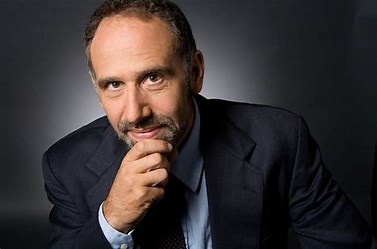
Dean Baker is senior economist at the Center for Economic and Policy Research in Washington, DC. He is frequently cited in economics reporting in major media outlets, including the New York Times, Washington Post, CNN, CNBC, and National Public Radio. He writes a weekly column for the Guardian Unlimited (UK), the Huffington Post, TruthOut, and his blog, Beat the Press, features commentary on economic reporting. His analyses have appeared in many major publications, including the Atlantic Monthly, the Washington Post, the London Financial Times, and the New York Daily News. He received his Ph.D in economics from the University of Michigan.

Recommended reading

Mark Zuckerberg apologized. Now he has to fix Facebook for real

Mark Zuckerberg takes on his Facebook Frankenstein Monster

Stephen Gottlieb: Zuckerberg, Facebook and the responsibility of publishers

Related Posts

Photo above: Carl Fredrik Reuterswärd’s Non-Violence outside UN Headquarters in New York. Kirill Levin, CC BY-NC-SA 2. Jan Oberg November 3, 2026 I am happy to be published in Horizons which is produced by the Center for International Relations and Sustainable Development, CIRSD, in Belgrade. My contribution brings out a radical re-thinking of what concepts such as defence, security, deterrence – and peace – may mean if we want to create a more peaceful world. It also summarises a few things I have been working with the last few decades. Please read it here Og her er den på dansk, takket være Johnny Baltzersens lynhurtige oversættelse
Below are TFF-related media mentions, comments, videos and social media posts published elsewhere but not on this homepage. We happen to catch and list only a fraction. Regarding video comments and debates, we recommend that you go to the TFF Video Channel on Substack where many of them are reproduced. Jan Oberg is a contributor to China Daily – 52 million daily clicks – and Global Times, CGTN and CCTV (the national television), China Investment, Xinhua News Agency and several others. Articles and videos on these media very often multiply into countless Chinese (and Western media) that re-post them from these main media. Thanks to The China Academy, his analyses, interviews and comments are frequently posted on YouTube channels such as Thinkers Forum and Wave Media. These videos are often re-posted on Bilibili (China’s YouTube), the China Content Center on TikTok, and on the Chinese edition of TikTok, Douyin.com. This means reaching hundreds of millions of viewers worldwide over a year. While there are too many to catch on all these...
Tony Robinson October 4, 2026 Violence is easy to recognise when someone is being beaten, shot or killed. It becomes more difficult when nobody is holding a weapon. Poverty, discrimination, exploitation and repression can restrict a human life just as effectively, although they do so in very different ways and with very different consequences. Simply adding more categories to an ever-growing list of forms of violence does not really solve the problem. The more interesting question is what all these different situations have in common and why it makes sense to describe them using the same word. Human beings do not simply react to what happens around them. They remember the past, imagine things that do not yet exist, make plans and undertake projects. Workers organise because they imagine different working conditions; people migrate because they imagine another life somewhere else; social movements emerge because people refuse to accept the...

Recent Articles

Photo above: Carl Fredrik Reuterswärd’s Non-Violence outside UN Headquarters in New York. Kirill Levin, CC BY-NC-SA 2. Jan Oberg November 3, 2026 I am happy to be published in Horizons which is produced by the Center for International Relations and Sustainable Development, CIRSD, in Belgrade. My contribution brings out a radical re-thinking of what concepts such as defence, security, deterrence – and peace – may mean if we want to create a more peaceful world. It also summarises a few things I have been working with the last few decades. Please read it here Og her er den på dansk, takket være Johnny Baltzersens lynhurtige oversættelse
UNITE-tillid, DREAM-velstand og andre konstruktive komponenter Normally we publish articles in English here. But this is a translation of a very important TFF document that should reach as many as possible in Denmark since this country’s government has been one of the most hardline in Europe and, up till now at least, has refused to use diplomacy and, instead, spent tremendous sums on arming Ukraine with the express goal of defeating Russia. Thus this – unique – article is in Danish. Vi er Johnny Baltzersen og hans Fælles Sikkerhed – Fælles Fremtid på Substack overmåde taknemmelige for at have oversat og publiceret TFF’s 2025-portfølje for fredsidéer med henblik på Ukraines fremtid. Vi håber den nu kan nå mange flere danskere – som også vil sprede den og skabe debat – nu den danske regerings og folketingspartiernes politik på dette område siden 2022 står nu – forudsigeligt – ved vejs ende....
Jan Oberg TFF director October 28, 2026 Exactly one month has now passed since I published my criticism of the introduction to the special issue on Johan Galtung published by the Journal of Global Security Studies, JoGSS, and of Tor Egil Førland’s chapter about Galtung which serves as a preview to his forthcoming biography of Galtung to be published by PRIO. See the original on The Transnational here and the same article on TFF Substack with many general and critical comments and, in particular, the people who decided to withdraw from the biography project in protest. The special issue itself was extraordinary. It was devoted to the intellectual legacy of one of the founders of peace research and contained a number of strong assessments of his personality, scholarship, intellectual trajectory, and public role. Such assessments are, of course, entirely legitimate. No scholar is beyond criticism, and neither was Johan Galtung....

TFF on Substack

Discover and subscribe to more peace materials on TFF Substack

Most Popular

Photo above: Carl Fredrik Reuterswärd’s Non-Violence outside UN Headquarters in New York. Kirill Levin, CC BY-NC-SA 2. Jan Oberg November 3, 2026 I am happy to be published in Horizons which is produced by the Center for International Relations and Sustainable Development, CIRSD, in Belgrade. My contribution brings out a radical re-thinking of what concepts such as defence, security, deterrence – and peace – may mean if we want to create a more peaceful world. It also summarises a few things I have been working with the last few decades. Please read it here Og her er den på dansk, takket være Johnny Baltzersens lynhurtige oversættelse
UNITE-tillid, DREAM-velstand og andre konstruktive komponenter Normally we publish articles in English here. But this is a translation of a very important TFF document that should reach as many as possible in Denmark since this country’s government has been one of the most hardline in Europe and, up till now at least, has refused to use diplomacy and, instead, spent tremendous sums on arming Ukraine with the express goal of defeating Russia. Thus this – unique – article is in Danish. Vi er Johnny Baltzersen og hans Fælles Sikkerhed – Fælles Fremtid på Substack overmåde taknemmelige for at have oversat og publiceret TFF’s 2025-portfølje for fredsidéer med henblik på Ukraines fremtid. Vi håber den nu kan nå mange flere danskere – som også vil sprede den og skabe debat – nu den danske regerings og folketingspartiernes politik på dette område siden 2022 står nu – forudsigeligt – ved vejs ende....
Jan Oberg TFF director October 28, 2026 Exactly one month has now passed since I published my criticism of the introduction to the special issue on Johan Galtung published by the Journal of Global Security Studies, JoGSS, and of Tor Egil Førland’s chapter about Galtung which serves as a preview to his forthcoming biography of Galtung to be published by PRIO. See the original on The Transnational here and the same article on TFF Substack with many general and critical comments and, in particular, the people who decided to withdraw from the biography project in protest. The special issue itself was extraordinary. It was devoted to the intellectual legacy of one of the founders of peace research and contained a number of strong assessments of his personality, scholarship, intellectual trajectory, and public role. Such assessments are, of course, entirely legitimate. No scholar is beyond criticism, and neither was Johan Galtung....
Read More
knotted gun
Photo above: Carl Fredrik Reuterswärd’s Non-Violence outside UN Headquarters in New York. Kirill Levin, CC BY-NC-SA 2. Jan Oberg November 3, 2026 I am happy to be published in Horizons which is produced by the Center for International Relations and Sustainable Development, CIRSD, in Belgrade. My contribution brings out a radical re-thinking of what concepts such as defence, security, deterrence – and peace – may mean if we want to create a more peaceful world. It also summarises a few things I have been working with the last few decades. Please read it here Og her er den på dansk, takket være Johnny Baltzersens lynhurtige oversættelse
TFFPortfolioVign
UNITE-tillid, DREAM-velstand og andre konstruktive komponenter Normally we publish articles in English here. But this is a translation of a very important TFF document that should reach as many as possible in Denmark since this country’s government has been one of the most hardline in Europe and, up till now at least, has refused to use diplomacy and, instead, spent tremendous sums on arming Ukraine with the express goal of defeating Russia. Thus this – unique – article is in Danish. Vi er Johnny Baltzersen og hans Fælles Sikkerhed – Fælles Fremtid på Substack overmåde taknemmelige for at have oversat og publiceret TFF’s 2025-portfølje for fredsidéer med henblik på Ukraines fremtid. Vi håber den nu kan nå mange flere danskere – som også vil sprede den og skabe debat – nu den danske regerings og folketingspartiernes politik på dette område siden 2022 står nu – forudsigeligt – ved vejs ende....
JoGSS-Silent
Jan Oberg TFF director October 28, 2026 Exactly one month has now passed since I published my criticism of the introduction to the special issue on Johan Galtung published by the Journal of Global Security Studies, JoGSS, and of Tor Egil Førland’s chapter about Galtung which serves as a preview to his forthcoming biography of Galtung to be published by PRIO. See the original on The Transnational here and the same article on TFF Substack with many general and critical comments and, in particular, the people who decided to withdraw from the biography project in protest. The special issue itself was extraordinary. It was devoted to the intellectual legacy of one of the founders of peace research and contained a number of strong assessments of his personality, scholarship, intellectual trajectory, and public role. Such assessments are, of course, entirely legitimate. No scholar is beyond criticism, and neither was Johan Galtung....
Screenshot 2026-10-26 115647
An aspect of Iran’s culture and civilisation you’ve probably never heard about. Don’t be surprised if the US and Israel also try to bomb them. Jan ObergTFF director October 26, 2026 Today – under the “USraeli” threat of new “annihilating” bombings – opens the 7th International Conference on Peace and Conflict Resolution at Tehran’s University. As far as I can tell, this is the only permanent, advanced peace research institution in West Asia/the Middle East. Perhaps more countries in that region could be inspired? I mean, how many military “security” institutes and military academies do they have? Many peace research institutes and university departments have been established since the 1950s in the West. They are now all under attack; some have closed down, some have gone mainstream, yet others kept the name but do nothing to research peace and disseminate results or advice; instead, they cooperate with militarism’s platforms such...
Screenshot 2026-10-15 141837
Let’s discuss using AI to create peace – in contrast to boring geopolitics devoid of creative healing and visions. Jan Oberg TFF director October 15, 2026 I asked VEED to create a short video exemplifying how peace is preferable to war, then chose the lady as a template. Simple as that. In less than a minute, it produced this video, which any peace-loving person would appreciate. The only problem is that human intelligence (HI), at least the one that exists among Western decision-makers, isn’t half as moral or smart as AI. I have used AI to dialogue about peace and peace plans, creative conflict resolution and visions of a better future for humankind. It so happens that I am having more stimulating, intelligent, creative and moral discussions with AI than I could possibly have with any EU or NATO leader today. Yes, AI has very problematic and dangerous aspects; used...
girl-5894831_1280
Below are TFF-related media mentions, comments, videos and social media posts published elsewhere but not on this homepage. We happen to catch and list only a fraction. Regarding video comments and debates, we recommend that you go to the TFF Video Channel on Substack where many of them are reproduced. Jan Oberg is a contributor to China Daily – 52 million daily clicks – and Global Times, CGTN and CCTV (the national television), China Investment, Xinhua News Agency and several others. Articles and videos on these media very often multiply into countless Chinese (and Western media) that re-post them from these main media. Thanks to The China Academy, his analyses, interviews and comments are frequently posted on YouTube channels such as Thinkers Forum and Wave Media. These videos are often re-posted on Bilibili (China’s YouTube), the China Content Center on TikTok, and on the Chinese edition of TikTok, Douyin.com. This means reaching hundreds of millions of viewers worldwide over a year. While there are too many to catch on all these...




