US politics

Category

Year

Author / Contributor

Region

Sort by

Showing 1-10 of 258 stories

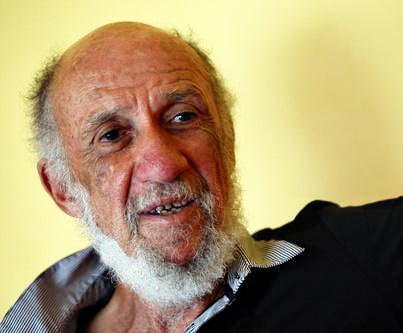
RichardFalk20141
Prefatory Note: What follows is a modified version of the Morton-Kenney annual public lecture given at the University of Southern Illinois in Carbondale on November 18, 2015 under the joint sponsorship of the Department of Political Science and the Paul Simon Public Policy Institute. The Failure of U.S. Foreign Policy in the Middle East While focusing on the ‘failure’ of American foreign policy in the Middle East it is relevant to acknowledge that given the circumstances of the region failure to some degree was probably unavoidable. The argument put forward here is that the degree and form of failure reflected avoidable choices that could and should have been corrected, or at least mitigated over time, but by and large this has not happened and it is important to understand why. This analysis concludes with a consideration of three correctible mistakes of policy. It is also true that the Middle East...
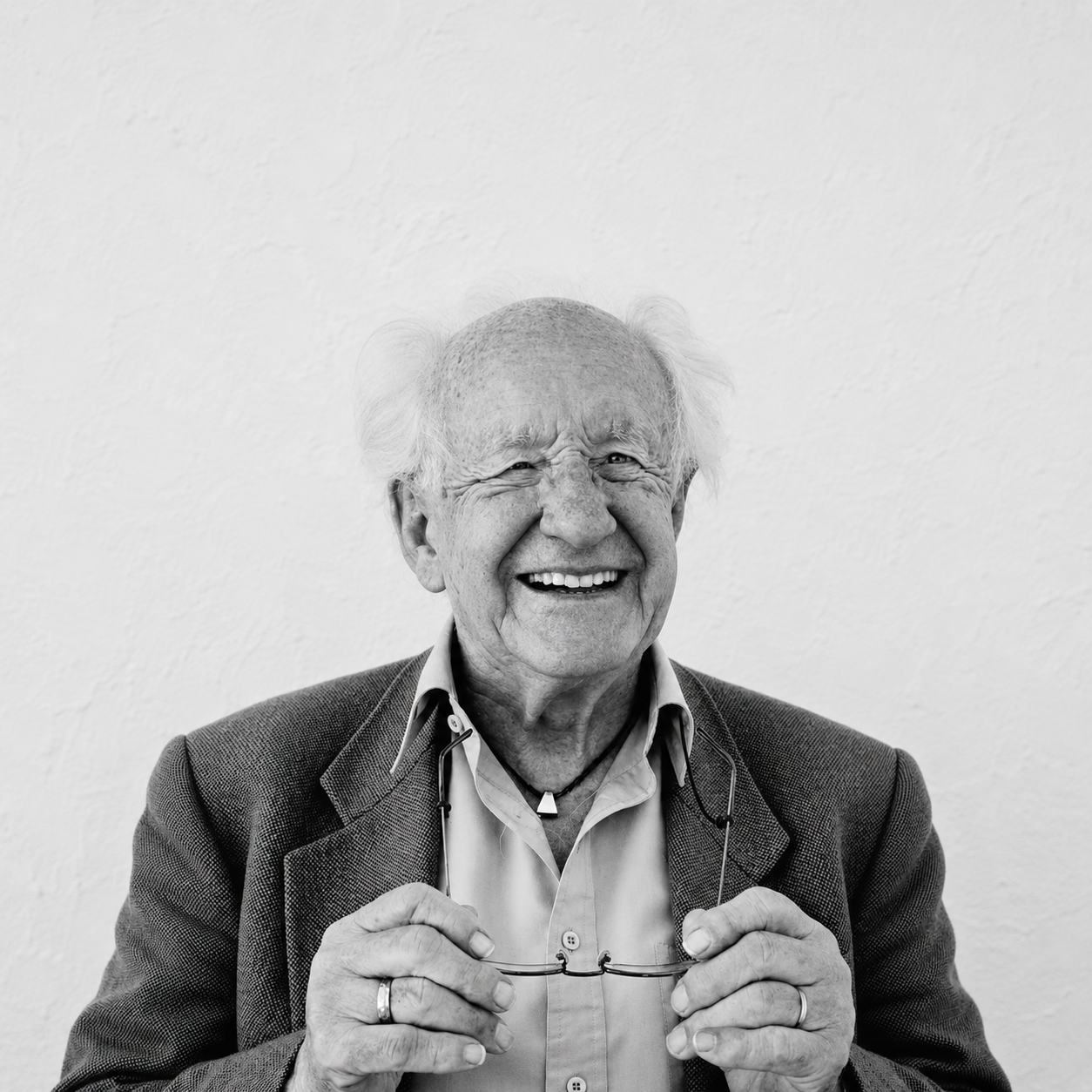
johangaltung
We have war and peace, theory and practice. And deeper down cultures of war and peace, notions of what the world is or could be. The latter is not necessarily peace, could also mean removing obstacles to war. Timothy Snyder, “Hitler’s World” (NY Review of Books, 24 Sep 2015) and Greg Grandin, “The Kissinger Effect: The relentless militarism of the national-security state and its perverse justification begin with Henry Kissinger” (The Nation, 28 Sep 2015) are both on that line. Hitler’s World derives from Darwinist struggle for niches, with survival of the fittest. His niche is not the whole world but what is needed to feed the German people, and here Ukraine plays a major role. The food chain is key to the image, with humans on top, eating animals and plants, but not eaten by them. So also for the human species, divided in races with the Aryan race...

johangaltung
The Oregon community college was “the 45th school shooting this year in America; the 142nd school shooting since the Newton massacre in 2012”, Matthew Albracht–Peace Alliance–who adds: 25% of women experience domestic violence, 6 million children witness it every year, 28% of children are bullied during the year and they are 2 to 9 times more likely to commit suicide. What can be done? Here 10 points: Gun control, of course. But the point is not only sales control but possession control with very strict laws for possession and making illegal possession a federal crime. With an average of at least one lethal weapon per citizen, there are enough arms to continue shootings; sales control is insufficient. States and municipalities can endorse this ahead of time for Weapons Free Zones in America, as places where life is safer. There will still be armed police around. Less violent foreign policy, of...
ChatGPT Image 9 jun 2026, 11_11_33
American foreign policy makers often wonder aloud why it is that much of the world has such an anti-American reflex. Why the “Ugly American”? Graham Greene would never have written a novel entitled the “Ugly Russian” or even the “Ugly German”. It is not just Iran that considers the US as the “Great Satan”. Remember that day at the UN General Assembly when the late Venezuelan president, Hugo Chavez, accused President George W. Bush of belching sulphureous fumes, and most of the chamber chuckled. When the Russian government denies that they switched their publicly announced mission of deploying planes to Syria to fight ISIS and have instead concentrated on bombing the redoubts of groups engaged in the civil war against the government of President Bashar al-Assad a majority of the world’s governments seemingly accepts the denial, despite the contrary evidence. When the US bombs a hospital in Afghanistan killing many...
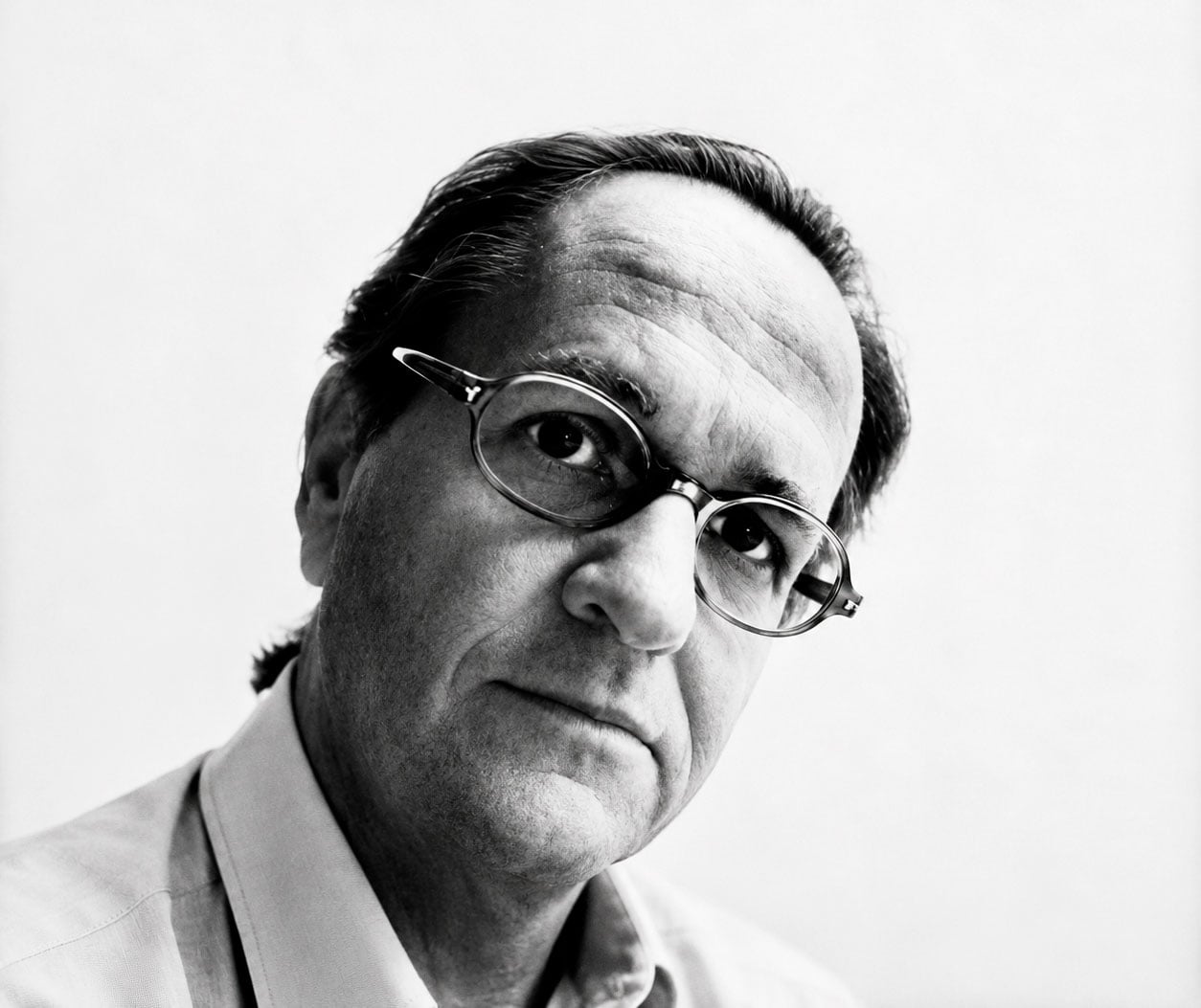
ObergPhoto2cmB-W-3
. We think that it’s 30th Anniversary is a fitting occasion to reflect on what has happened in the big world and in our lives with the foundation. It is also a piece of Lund’s research history in general and of peace research and education in particular. Part 2 Weak aspects of TFF • Being outside many networks and institutions – it has become more and more difficult to influence the world if you are small, independent and don’t accept governmental and corporate funds. • A perception that the interest/commitment of TFF is out of sync with the sentiments of times, of the Zeitgeist. In spite of that we maintain the fundamental belief that peace is essential and that we can forget about the rest if major wars or nuclear exchanges take place. • Too ‘academic’/theoretical to forge deeper, permanent links with public opinion and movements. • Too ‘radical’ or...
ObergPhoto2cmB-W-3
. We think that it’s 30th Anniversary is a fitting occasion to reflect on what has happened in the big world and in our lives with the foundation. It is also a piece of Lund’s research history in general and of peace research and education in particular. Motivation The 1980s was a decade of gross changes in Europe, the struggle against nuclear weapons in particular. Lund University was predominantly about education and single research projects – while TFF could be more of an experimental playground. We wanted to do truly free research and not negotiate with higher levels at, say, the university what to do where, in which countries to work and what to say to the media. Peace has always been controversial and there were – and remain – enough examples of places that become ‘mainstream’ and routine – rather than experimental and radically ’alternative.’ What we did not...
RichardFalk20141
We white people have lots to learn about racism in America no matter how progressive our attitudes toward race. I realized this some years ago when I found Toni Morrison’s Beloved so grimly illuminating in depicting the cruelty experienced after the abolition of slavery by our African American fellow citizens left in a malicious shadow land of unknowing, a reflection of white indifference. It made me abruptly realize that I had never effectively grasped the intensities of hurt and pain of even close black friends afflicted or threatened with affliction as a result of societal attitudes of hatred and fear that lie just below the surface, behavior socially conditioned to be ‘politically correct.’ White consciousness was preoccupied with the condemnation of hideous events that capture national attention, but remain largely unaware of the everyday racism that is the price African Americans of talent and privilege pay for ‘success’ when penetrating...
johangaltung
The game is dirty and has lasted 70 years. It came with the idea of development as imitating, but not catching up, with the West, for all states, including the deluge of states due to decolonization. The formula for big profit is simple: give credit to a country poor enough not to be able to pay it off quickly, yet not so poor that it cannot go on servicing the loan for years. To be worthwhile the project must be capital-intensive, like (air)ports and highways to the (air)ports for import-export, assembling cars–something for the rich. Investment to lift up people in misery, or ravished nature, makes no sense: the poor need very little capital and can only pay back in labor, whereas nature pays back but is not capitalized. Ideally, the country asks for more credit to service the first, and a second, third loan is then offered at higher...
farhangjahanpour
By Farhang Jahanpour On the anniversary of the first use of nuclear weapons on Hiroshima and Nagasaki it is important to look back at the reasons for those barbaric acts and to look forward to what needs to be done. The First and the Second World Wars were the most devastating wars ever waged in history. Nevertheless, although those wars killed tens of millions of human beings and destroyed many cities, the end of the Second World War witnessed the use of a new category of weapons by the United States that have the potential to end human civilization as we know it. Grotesquely called ‘Little Boy’, the bomb that flattened Hiroshima on 6 August 1945, was a uranium bomb that killed between 130,000-140,000 civilians instantly, and many thousands later. ‘Fat Man’ that blasted Nagasaki three days later, was a plutonium bomb and killed about 70,000 people instantly. There has...
ObergPhoto2cmB-W-3
By Jan Oberg It’s absolutely necessary to remember what happened 70 years ago in Hiroshima and Nagasaki, see the movies from then, listen to the survivors, the hibakusa. But it isn’t enough for us to rid the world of these crimes-against-humanity weapons. And that we must. Hiroshima and Nagasaki is history and it is also the essence of the age you and I live in – the nuclear age. If the hypothesis is that by showing these films, we create opinion against nuclear weapons, 70 years of every more nuclearism should be enough to conclude that that hypothesis is plain wrong. There is a need for a frontal attack on not only the weapons but on the nuclearism – the thinking/ideology on which they are based and made to look ‘necessary’ for security and peace. Nuclear weapons – only for terrorists At its core, terrorism is about harming or killing...
ChatGPT Image 9 jun 2026, 11_11_33
in 1914 the Europeans conquered 84% of the globe. The puzzle is why did they rise to the top when for centuries the Chinese, Japanese, Ottomans and South Asians were far more advanced? The short answer, as Mao Zedong once said, is that “Power grows out of the barrel of a gun”. Europeans were at the forefront of gunpowder technology for 200+ years. This may seem odd since firearms and gunpowder originated in China and the rocket in India. Yet by the late 17th century Chinese, Japanese and Ottoman military technology was lagging behind Europe’s. War was what monarchs did in Europe.
imgres
By Gareth Porter* I’m glad that the United States and Iran reached an agreement in Vienna after nearly two years of negotiations and 35 years of enmity. A failure to do so under present political conditions would certainly have left a festering conflict with unpredictably bad consequences. And the successful negotiation of such a far-reaching agreement in which both sides made significant concessions should help to moderate the extreme hostility that has been building up in the United States over the years. But my enthusiasm for the agreement is tempered by the fact that the US political process surrounding the Congressional consideration of the agreement is going to have the opposite effect. And a big part of the problem is that the Obama administration is not going to do anything to refute the extremist view of Iran as determined to get nuclear weapons. Instead the administration is integrating the idea...
Categories

Year

Author / Contributor

Region