
PressInfo #335 – Greek debt and West-Russia-China-Japan

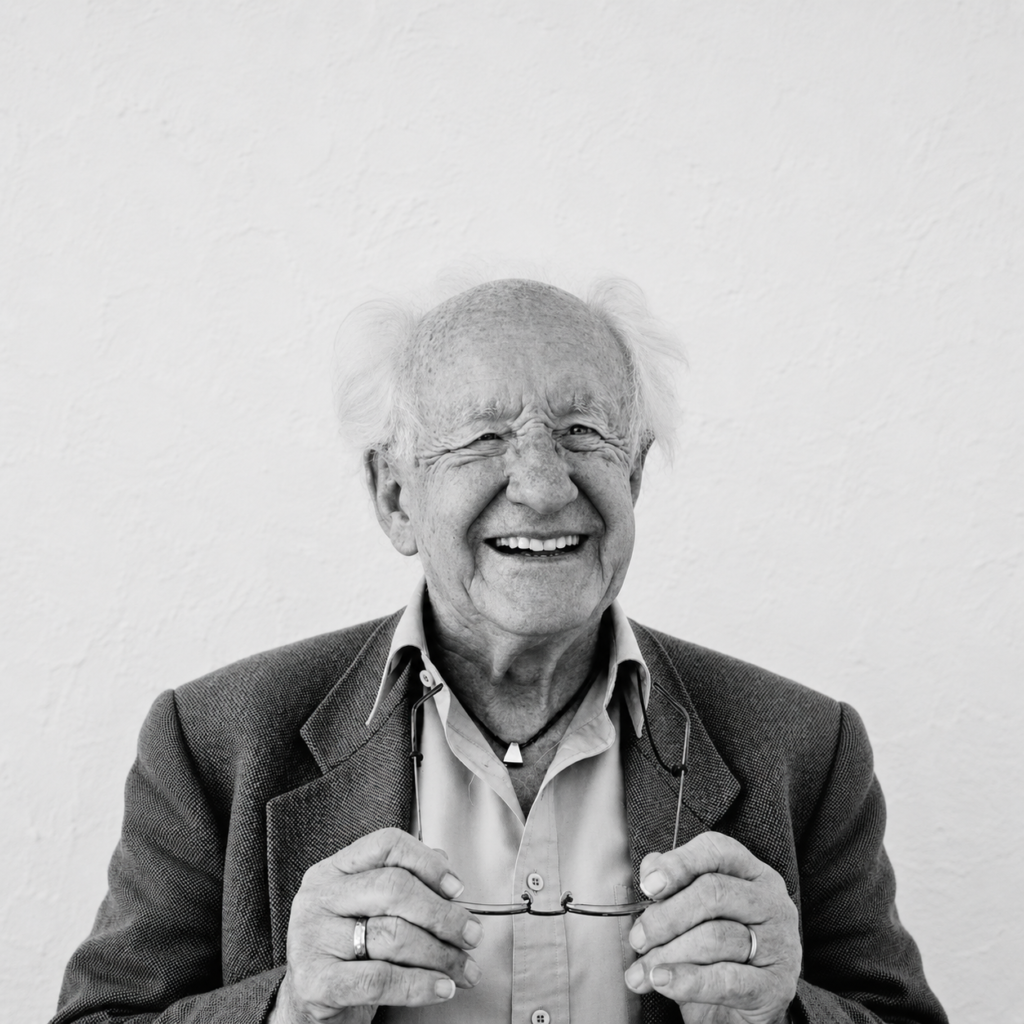
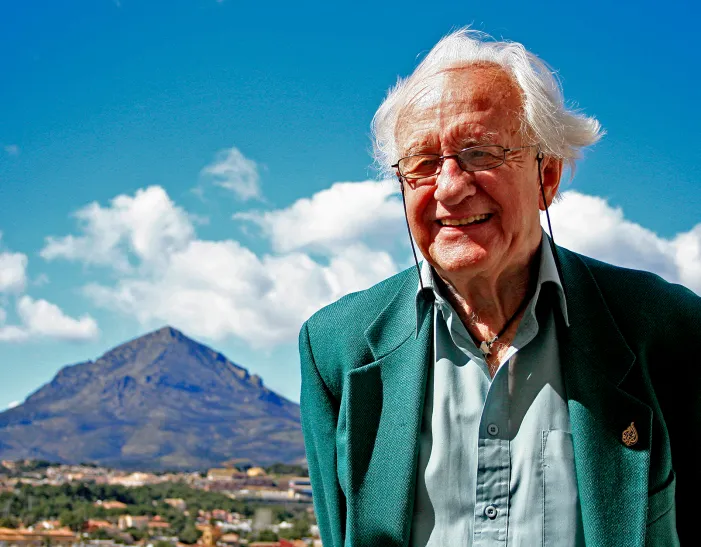
johangaltung

The game is dirty and has lasted 70 years. It came with the idea of development as imitating, but not catching up, with the West, for all states, including the deluge of states due to decolonization.

The formula for big profit is simple: give credit to a country poor enough not to be able to pay it off quickly, yet not so poor that it cannot go on servicing the loan for years. To be worthwhile the project must be capital-intensive, like (air)ports and highways to the (air)ports for import-export, assembling cars–something for the rich. Investment to lift up people in misery, or ravished nature, makes no sense: the poor need very little capital and can only pay back in labor, whereas nature pays back but is not capitalized.

Ideally, the country asks for more credit to service the first, and a second, third loan is then offered at higher interest. Till the debt is non-sustainable; the debtor country is then squeezed dry.

Then comes the time for debt relief, provided the profit made on investment in debt exceeds the debt forgiven.

From Agence France Presse comes a study: Germany made € 100 billion on the Greek crisis since 2010 – amounting to 3% of the GDP – on the difference between interests paid to German banks and the interest they paid; from German banks to ECB 1%, to German banks from debtors, say, 6%.

Germany’s share of the total bailout package to Greece – with the latest for payment due August 20 – is € 90 billion, meaning a € 10 billion profit if Greece cannot be squeezed further. The money flowing into Greece is to keep banks, not people, afloat. And to benefit USA, France and the Netherlands, but to a lesser extent than Germany.

This is the way the Third World has been treated by the USA-based IMF and the World Bank; what is new is EU treating a fellow EU member like a Third World country (or worse).

Next in line is Ukraine, divided by the same deep European faultline between Catholic-Protestant and Orthodox countries that puts Greece on the wrong side.

Hence the strong reaction when Russia took back Crimea, the 1954 gift, and supported the Orthodox Eastern part fighting for autonomy, with troops and arms like the USA does for the Catholic part. That part is hopelessly corrupt, drowning in debt already, and the idea was that the richer Eastern part would pay.

However, with Kiev losing Crimea and Donetsk, efficient, industrialized Ukraine’s debt is no longer sustainable. Off they went and the West is left with the debt, and the meager comfort of punishing Russia with sanctions also hitting themselves.

Thus, the West itself becomes less sustainable.

How about Russia?

No doubt sanctions hit, no doubt there is a sense of isolation. The alliance with China does not compensate, Russians and Chinese feel uneasy about each other at the personal level (“lazy drunkards” and “swarming all over”). Nevertheless, the economic, political and military ties are there and they are strong. The gas deal of the century.

In addition, Russia is playing a peace game, and a war game.

Pay attention to the parties invited to St Petersburg and other places for solving conflicts; right now the Syrian crisis, following one after the other, guided by the very competent Russian foreign minister Lavrov. Not long ago there was a big conference devoted to BRICS economy in general, and to a mixed world currency in particular. An image of peace-maker as opposed to the image of the USA as war-maker.

Add to that Russian electronic technology paralyzing Western navigation and fighting systems, including F-35!, catching up with US-NATO capability (Aftenposten 14 Aug 15); with NATO deeply split on Ukraine.

Much of the technology hitting enemy communication is Chinese, not strange given the general Chinese approach through infrastructure, for transportation all over (“silk road”), and for communication.

Russia is suffering; but Orthodoxy gives reason for optimism “in the long run”; China is based on the idea that there are forces and counter-forces in everything, also in their boom. Philosophically they are both better prepared for “non-sustainable” than the West.

How about China, the Chinese stock market?

One interpretation: massive launching attracted huge excess liquidity in Chinese society, much from corruption and saving “just in case”, given the weak Chinese safety net. Super-demand drove prices up; the stock bubble started bursting before controls became effective. Then came devaluation of the currency–the approach denied Greece–to become more competitive, with even lower prices for “Made in China” to their own and Walmart’s benefit (now the richest US family). Let us see if and how it works.

This may also have been an adjustment to the new currency profile on which BRICS is working as an alternative, or in addition, to the US $. The USA-CIA is doing its best to weaken all five but with SCO-Shanghai Cooperation Organization members, they exceed 50% of humanity. Plus, China has many cards in its deck.

How about Japan?

PM Shinzō Abe opts for:

– even more periphery status under the USA by joining the anti-China economic bloc TPP-Trans-Pacific Partnership, and

– even more military clientelism by eroding the anti-war A9 article with collective self-defense, CSD.

Both were avoided in Abe’s 14 August communiqué; his focus was on how wrong was Japan and how right was and is the USA, with “profound regret”.

Smart use of the perennial apology issue, for and against, to conceal Japan’s TPP-CSD suicide.

Greece: the debt will not be paid; civil war with US intervention and fascist coup.

Ukraine: the debt will not be paid; civil war on, neither will win, federation is the only option.

The West: end of the credit game makes it less sustainable.

The USA: itself a bubble.

Russia and China: survival, alone and together.

Japan: down alongside the USA unless it wakes up, looks at the map, and joins its neighbors.

The IMF is right in one thing: sustainability is not forever.

First published by Transcend Media Service here.
Related Posts

The agreement is catastrophic both because of what it says and what it doesn’t mention. It reduces further the major asset of security policies: Freedom of action. Jan Oberg TFF director September 25, 2026 A couple of hours before the agreement was signed on September 22, 2026, I published the following 13 hypotheses about what it would most likely contain on TFF Substack (in English). I was wrong on only the first point. Contrary to what Trump had written on his Truth Social platform, it does not appear to come into force immediately. In fact, it turned out to be worse than even I had anticipated. After these hypotheses now come a number of reflections in light of what the agreement actually contains, and does not contain, as well as the way in which it has generally been presented by major media outlets and by the public-service broadcaster DR. My...
A friendly quarrel while we agree that the US sanctions are a weapon of mass destruction and kill more people than wars do. And that we must talk much more about sanctions than we have so far. Jan Oberg, TFF director March 16, 2026 John Mearsheimer recently stated that U.S. sanctions murdered around 38 million people between 1971 and 2021 – see the video below. It is a dramatic figure, and it has spread quickly because it captures, in one sentence, the enormous human cost of modern sanctions. I share his concern about the destructive effects of economic coercion. But the specific number he cites — and the way he attributes it — deserves a friendly academic clarification. The figure comes from a 2023 Lancet Global Health article estimating the mortality effects of unilateral U.S. and EU sanctions over the past half‑century. This is the first point where Mearsheimer’s shorthand diverges from the text: the study...
Photos © TFF 2000 Read PressInfo 90 “Lift the Sanctions and Bring More Aid to Yugoslavia” See Pictures from Belgrade © TFF 2000 Please reprint, copy, archive, quote or re-post this item, but please retain the source.

Recent Articles

Below are TFF-related media mentions, comments, videos and social media posts published elsewhere but not on this homepage. We happen to catch and list only a fraction. Regarding video comments and debates, we recommend that you go to the TFF Video Channel on Substack where many of them are reproduced. Jan Oberg is a contributor to China Daily – 52 million daily clicks – and Global Times, CGTN and CCTV (the national television), China Investment, Xinhua News Agency and several others. Articles and videos on these media very often multiply into countless Chinese (and Western media) that re-post them from these main media. Thanks to The China Academy, his analyses, interviews and comments are frequently posted on YouTube channels such as Thinkers Forum and Wave Media. These videos are often re-posted on Bilibili (China’s YouTube), the China Content Center on TikTok, and on the Chinese edition of TikTok, Douyin.com. This means reaching hundreds of millions of viewers worldwide over a year. While there are too many to catch on all these...
Jan Oberg TFF director October 13, 2026 According to Alfred Nobel’s will, the Nobel Peace Prize shall be awarded: ”to the person who has done the most or best to advance fellowship among nations, the abolition or reduction of standing armies, and the establishment and promotion of peace congresses.” Further down, he also expresses how the prize for the “champions of peace” shall be decided: “that for champions of peace by a committee of five persons to be selected by the Norwegian Storting. Alfred Nobel’s will is remarkably short and clear. But few seem to have read it. Nobel did not say that the committee itself should consist of members of parliament. He entrusted the Storting with appointing five persons. In principle, it could have selected diplomats, mediators, peace researchers, conflict-resolution specialists, or other individuals with recognised expertise in matters of peace from around the world. Instead, the Storting gradually...
The Quest for Humane Survival Richard Falk Professor emeritus, Princeton UniversityTFF Associate since 1986October 12, 2026 After decades of teaching and writing about international law in academic frameworks that were not institutionally situated within law school environments—at Princeton and the University of California, Santa Barbara—I found myself most receptive to the TWAIL outlook. It has been especially illuminating in clarifying the extent to which international law evolved as a dialogical critique of Europe’s efforts to legitimize its colonial undertakings. In particular, TWAIL has exposed how international law has functioned to legalize the subjugation of Third World peoples, securing conditions for exploitative investment and trade relations, the coercive enforcement of public debts, and an ideology of cultural superiority. TWAIL’s exposure of these economic legacies of colonialism has influenced my understanding of the history and development of international law, broadly conceived, as an ideological project of the Western sub-system of the world...

TFF on Substack

Discover and subscribe to more peace materials on TFF Substack

Most Popular

Below are TFF-related media mentions, comments, videos and social media posts published elsewhere but not on this homepage. We happen to catch and list only a fraction. Regarding video comments and debates, we recommend that you go to the TFF Video Channel on Substack where many of them are reproduced. Jan Oberg is a contributor to China Daily – 52 million daily clicks – and Global Times, CGTN and CCTV (the national television), China Investment, Xinhua News Agency and several others. Articles and videos on these media very often multiply into countless Chinese (and Western media) that re-post them from these main media. Thanks to The China Academy, his analyses, interviews and comments are frequently posted on YouTube channels such as Thinkers Forum and Wave Media. These videos are often re-posted on Bilibili (China’s YouTube), the China Content Center on TikTok, and on the Chinese edition of TikTok, Douyin.com. This means reaching hundreds of millions of viewers worldwide over a year. While there are too many to catch on all these...
Jan Oberg TFF director October 13, 2026 According to Alfred Nobel’s will, the Nobel Peace Prize shall be awarded: ”to the person who has done the most or best to advance fellowship among nations, the abolition or reduction of standing armies, and the establishment and promotion of peace congresses.” Further down, he also expresses how the prize for the “champions of peace” shall be decided: “that for champions of peace by a committee of five persons to be selected by the Norwegian Storting. Alfred Nobel’s will is remarkably short and clear. But few seem to have read it. Nobel did not say that the committee itself should consist of members of parliament. He entrusted the Storting with appointing five persons. In principle, it could have selected diplomats, mediators, peace researchers, conflict-resolution specialists, or other individuals with recognised expertise in matters of peace from around the world. Instead, the Storting gradually...
The Quest for Humane Survival Richard Falk Professor emeritus, Princeton UniversityTFF Associate since 1986October 12, 2026 After decades of teaching and writing about international law in academic frameworks that were not institutionally situated within law school environments—at Princeton and the University of California, Santa Barbara—I found myself most receptive to the TWAIL outlook. It has been especially illuminating in clarifying the extent to which international law evolved as a dialogical critique of Europe’s efforts to legitimize its colonial undertakings. In particular, TWAIL has exposed how international law has functioned to legalize the subjugation of Third World peoples, securing conditions for exploitative investment and trade relations, the coercive enforcement of public debts, and an ideology of cultural superiority. TWAIL’s exposure of these economic legacies of colonialism has influenced my understanding of the history and development of international law, broadly conceived, as an ideological project of the Western sub-system of the world...
Read More
girl-5894831_1280
Below are TFF-related media mentions, comments, videos and social media posts published elsewhere but not on this homepage. We happen to catch and list only a fraction. Regarding video comments and debates, we recommend that you go to the TFF Video Channel on Substack where many of them are reproduced. Jan Oberg is a contributor to China Daily – 52 million daily clicks – and Global Times, CGTN and CCTV (the national television), China Investment, Xinhua News Agency and several others. Articles and videos on these media very often multiply into countless Chinese (and Western media) that re-post them from these main media. Thanks to The China Academy, his analyses, interviews and comments are frequently posted on YouTube channels such as Thinkers Forum and Wave Media. These videos are often re-posted on Bilibili (China’s YouTube), the China Content Center on TikTok, and on the Chinese edition of TikTok, Douyin.com. This means reaching hundreds of millions of viewers worldwide over a year. While there are too many to catch on all these...
Nobel-Prize-Plaque
Jan Oberg TFF director October 13, 2026 According to Alfred Nobel’s will, the Nobel Peace Prize shall be awarded: ”to the person who has done the most or best to advance fellowship among nations, the abolition or reduction of standing armies, and the establishment and promotion of peace congresses.” Further down, he also expresses how the prize for the “champions of peace” shall be decided: “that for champions of peace by a committee of five persons to be selected by the Norwegian Storting. Alfred Nobel’s will is remarkably short and clear. But few seem to have read it. Nobel did not say that the committee itself should consist of members of parliament. He entrusted the Storting with appointing five persons. In principle, it could have selected diplomats, mediators, peace researchers, conflict-resolution specialists, or other individuals with recognised expertise in matters of peace from around the world. Instead, the Storting gradually...
law-419057_1280
The Quest for Humane Survival Richard Falk Professor emeritus, Princeton UniversityTFF Associate since 1986October 12, 2026 After decades of teaching and writing about international law in academic frameworks that were not institutionally situated within law school environments—at Princeton and the University of California, Santa Barbara—I found myself most receptive to the TWAIL outlook. It has been especially illuminating in clarifying the extent to which international law evolved as a dialogical critique of Europe’s efforts to legitimize its colonial undertakings. In particular, TWAIL has exposed how international law has functioned to legalize the subjugation of Third World peoples, securing conditions for exploitative investment and trade relations, the coercive enforcement of public debts, and an ideology of cultural superiority. TWAIL’s exposure of these economic legacies of colonialism has influenced my understanding of the history and development of international law, broadly conceived, as an ideological project of the Western sub-system of the world...
images-2
Advocates of nuclear disarmament are regularly dismissed by the champions of nuclear deterrence as naïve and unrealistic, utopian or even irresponsible. Yet this ‘doctrine’ of deterrence, regarded by France as the ‘cornerstone’ of its national security, is based on quasi-religious beliefs, a theory that cannot be proven, risky gambles and fragile assumptions. So much so that one might legitimately ask which side the ‘Care Bears’ are on. Marc FinaudVice-President of Initiatives for Nuclear Disarmament (IDN) October 9, 2026 This article was originally published on Pressenza When it comes to these things being treated as religious concepts, look here. Idealists and realists It was Hubert Védrine, François Mitterrand’s former Foreign Minister, who repeatedly coined the phrase: ‘Europeans are a sort of Care Bears who don’t realise they’re living in Jurassic Park’. He applies this reference to the cartoon for well-behaved children not only to what he regards as weakness or idealism...
8824b09f-33a5-43f9-9fd0-550f28cda24d_1536x1024
What the West Borrowed from Asia and What It Left Behind Jan Krikke October 8, 2026 The article was originally published here In the late 1960s, the musical Hair announced that the Age of Aquarius was dawning. Its opening anthem promised a transformation of human consciousness: an era of peace, harmony and understanding. Half a century later, a familiar echo of that promise is a meditation app offered by your employer. You can find it in the same list of benefits as the pension plan and the gym discount. How did a spiritual revolution become an employee benefit? The answer lies in the history of the movement known as New Age: where it came from, what it borrowed from Asia, and why the meaning of what it borrowed changed in the process. Two definitions will help. New Age is a loose label for a wide range of spiritual practices and...
Screenshot 2026-10-04 210142
Small and different + among the 10% most active + 9,000 texts + 150 Associates + 60 000 a day — and a stubborn belief that peace is smarter and must be secured by peaceful means. In 2026, the Transnational Foundation for Peace and Future Research (TFF) turns 40. On Monday, October 5, 2026, a new TFF homepage will go live — a new gateway to more than 9,000 articles, analyses, research papers and other contributions produced over four decades of independent peace research. But this is not simply a new website. For four decades, TFF has worked from a simple conviction: peace is smarter than militarism and can be brought about by peaceful means. This is not merely an aspiration. It is the principle expressed in the UN Charter and the Gandhian tradition that has guided our work from the beginning. TFF is a research-based, independent and people-financed foundation....





