US Empire/West Decline

Category

Year

Author / Contributor

Region

Sort by

Showing 1-10 of 272 stories

image_551d8f68
Image Credit: The Watson Institute for International and Public Affairs April 8, 2021 The Brown Political Review is a non-partisan political publication that seeks to promote ideological diversity. All of the views reflected in BPR’s content are views held by authors and not reflective of the views held by the wider organization or the Executive Board. This conversation was published by the Brown Political Review on March 31, 2021 Sam Kolitch Ambassador Chas Freeman is a retired career diplomat who served as Assistant Secretary of Defense for International Security Affairs from 1993-1994, Ambassador to Saudi Arabia from 1989-1992 during operations Desert Shield and Desert Storm, Principal Deputy Assistant Secretary of State for African Affairs from 1986-1989 during the Cuban troop withdrawal from Angola and the U.S. mediation of Namibian independence from South Africa, Deputy Chief of Mission and Chargé d’Affaires in the American embassies at Bangkok from 1984-1986 and at...
Ablinken
Edward Lozansky April 8th, 2021 Apology and humanitarian help are a better start In his recent speech outlining the new U.S. foreign policy vision Secretary of State Antony J. Blinken made a really sensational statement: “We will not promote democracy through costly military interventions or by attempting to overthrow authoritarian regimes by force. We have tried these tactics in the past. However well intentioned, they haven’t worked.”  Originally posted on US-Russia.org’s website on March 15th, 2021 After hearing this from someone who not only enthusiastically supported the wars in Iraq, Libya, Syria and Ukraine, I had to reread his speech a couple of times to make sure that I wasn’t hallucinating.  Some skeptics, after seeing in this speech the usual lines about “renewing America’s strength” and that only the United States can “lead” the world, shrugged off Mr. Blinken’s disavowing many decades of U.S. forceful changes of unsuitable foreign regimes.  For...
mosul2_2.jpg
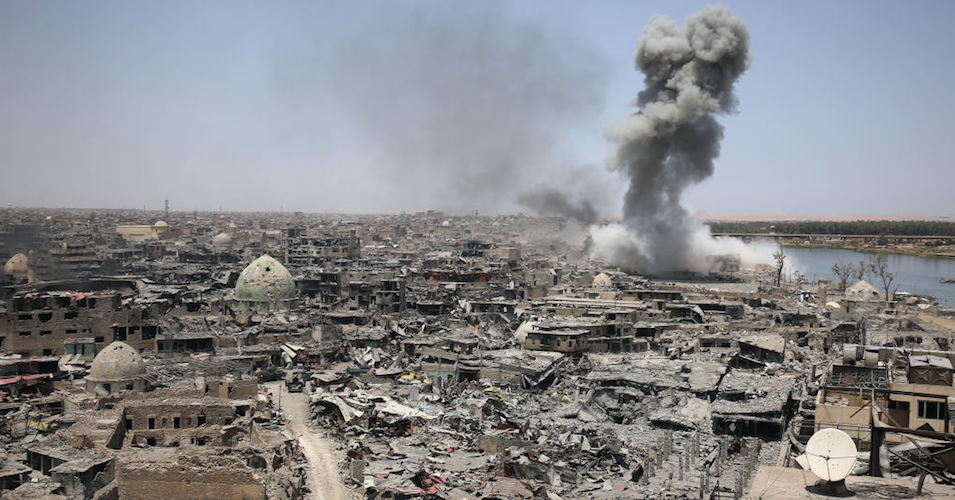
U.S. bombs and bullets have claimed at least hundreds of thousands of civilian lives this century. Here, a U.S. airstrike against Islamic State militants in densely-populated Mosul, Iraq on July 9, 2017 is shown. (Photo: Ahmad Al-Rubaye/AFP/Getty Images) March 29, 2021 Medea Benjamin, Nicolas J.S. Davies Unbeknownst to many Americans, the U.S. military and its allies are engaged in bombing and killing people in other countries on a daily basis.  On February 25th, President Biden ordered U.S. air forces to drop seven 500-pound bombs on Iraqi forces in Syria, reportedly killing 22 people. The U.S. airstrike has predictably failed to halt rocket attacks on deeply unpopular U.S. bases in Iraq, which the Iraqi National Assembly passed a resolution to close over a year ago.  The Western media reported the U.S. airstrike as an isolated and exceptional incident, and there has been significant blowback from the U.S. public, Congress and the world community, condemning the strikes...
Increased Security Remains Around Capitol Hill In Washington, DC
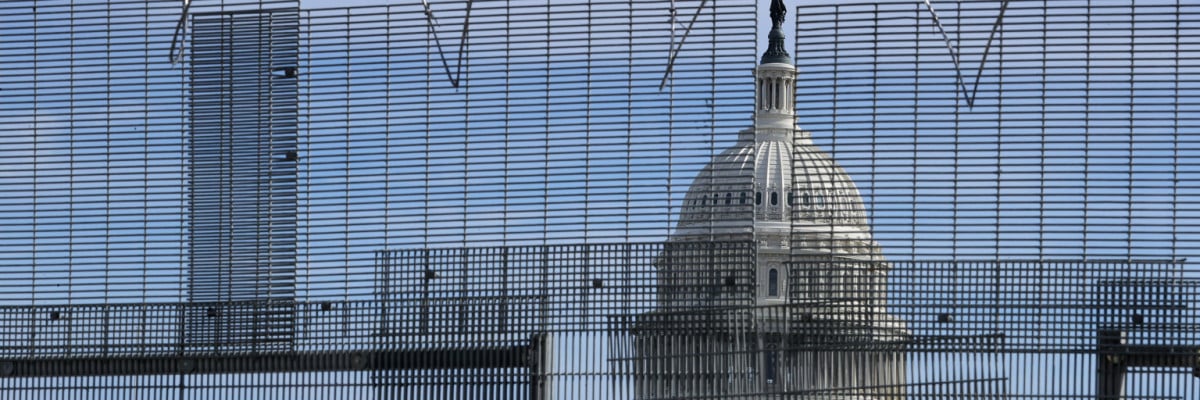
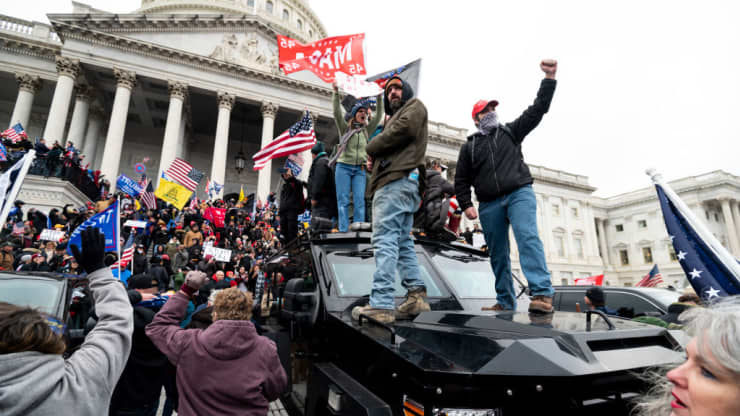
It’s no coincidence that, after years of fighting abroad, the United States is beset with paranoia, loss of trust, and increasingly bitter divisions Stephen M. Walt March 16, 2021 “Fortress America” is a derogatory term that usually refers to extreme forms of isolationism. Last week, however, CNN anchor Fareed Zakaria gave the idea a new and equally disturbing twist. In a thought-provoking column in the Washington Post, Zakaria described how excessive concerns for security are making the United States more “imperial” in appearance than the old colonial empires, with embassies, public buildings, and even the U.S. Capitol itself surrounded by barricades, moats, or fortifications. Instead of presenting a welcoming visage to the outside world and to the American people, one that conveys confidence, strength, and openness, America’s public face appears uncertain, vulnerable, fearful, and distant. Originally published at Eurasia News Online According to Zakaria, such concerns have also encouraged an excessive regard for secrecy,...

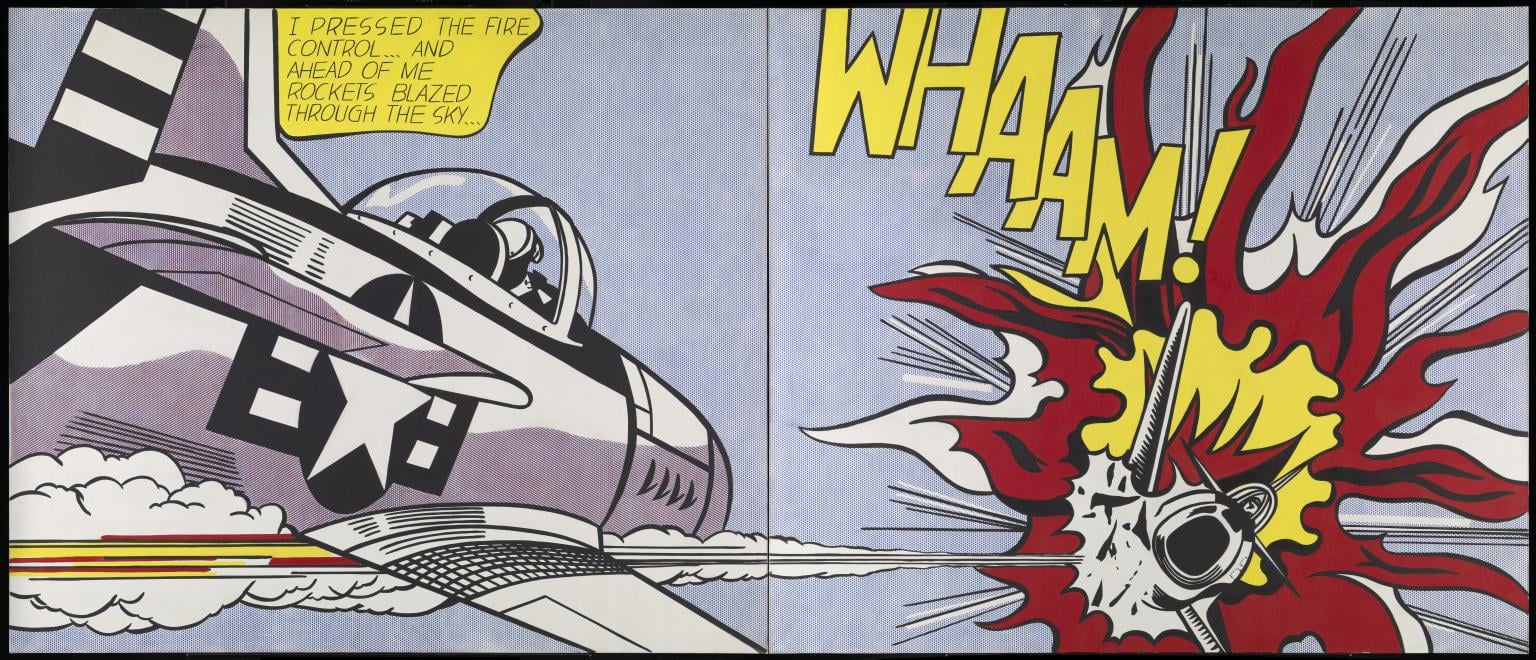
Whaam! 1963 by Roy Lichtenstein 1923-1997
Whaam! 1963 is a large, two-canvas painting by the American pop artist Roy Lichtenstein that takes its composition from a comic book strip. What would the world be like if the U.S. lost control globally? Chalmers Johnson (1931-2010) March 17, 2021 In 1962, the historian Barbara Tuchman published a book about the start of World War I and called it The Guns of August. It went on to win a Pulitzer Prize. She was, of course, looking back at events that had occurred almost 50 years earlier and had at her disposal documents and information not available to participants. They were acting, as Vietnam-era Secretary of Defense Robert McNamara put it, in the fog of war. So where are we this August of 2010, with guns blazing in one war in Afghanistan even as we try to extricate ourselves from another in Iraq?  Where are we, as we impose sanctions on Iran...
coronavirus
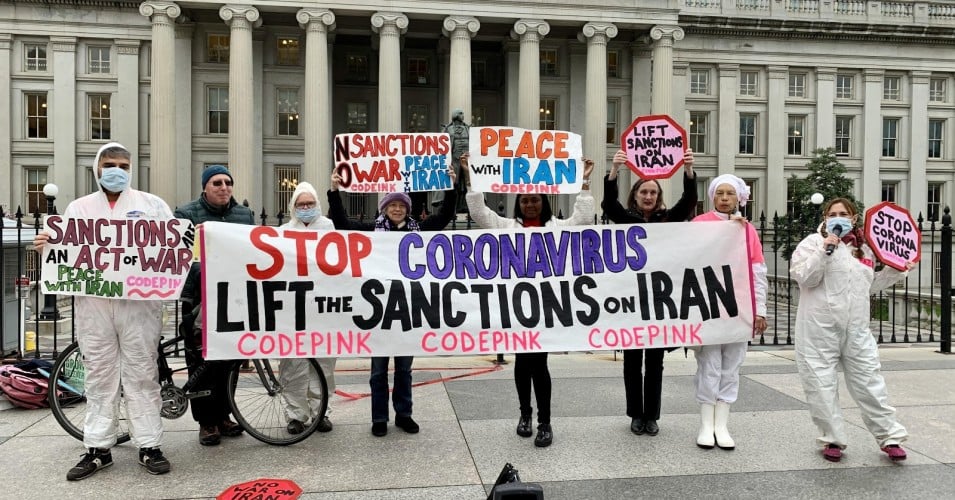
Negar Mortazavi and Sina Toossi February 25, 2020 Iranians’ stories reflect the devastating human costs of US economic sanctions that are often ignored by Washington’s foreign policy elite Originally posted on Global Research on December 8th, 2020 “My young cousin passed away last week,” an Iranian Twitter user recently lamented. “She needed medication for her cancer that doctors said can’t be found.” The tweet tragically went on: “Maybe she’d be alongside her little daughter now if she had this medicine and not under a pile of cold dirt.” These heartbreaking words are from journalist Katayoon Lamezadeh, one of thousands of Iranians who have taken to social media to speak of how sanctions have upended their lives. Their stories reflect the devastating human costs of US economic sanctions that are often ignored by Washington’s foreign policy elite and largely unknown to the American public. The assassination of Iranian scientist Mohsen Fakhrizadeh is the latest in a long-running pressure...
decline-and-fall-of-the-american-empire
(Photo credit: iai.tv) By Tom Engelhardt February 1, 2021 We’re now living in an age of opacity, as Rudy Giuliani pointed out in a courtroom recently. Here was the exchange: “‘In the plaintiffs’ counties, they were denied the opportunity to have an unobstructed observation and ensure opacity,’ Giuliani said. ‘I’m not quite sure I know what opacity means. It probably means you can see, right?’ “‘It means you can’t,’ said U.S. District Judge Matthew Brann. “‘Big words, your honor,’ Giuliani said.” Big words indeed! And he couldn’t have been more on the mark, whether he knew it or not. Thanks in part to him and to the president he’s represented so avidly, even as hair dye or mascara dripped down his face, we find ourselves in an era in which, to steal a biblical phrase from Swedish film director Ingmar Bergman, all of us see as if “through a glass darkly.” Originally published...
shutterstock_1158237289
Credit: amagnawa1092/Shutterstock Andrew J. Bacevich February 1, 2020 A new essay casts doubt on the China threat as promulgated by our nation’s ruling elite. Writing in the journal Palladium, Richard Hanania has produced the first must-read essay of 2021. A research fellow at Columbia University’s Saltzman Institute of War and Peace Studies, Hanania is part of an emerging generation of young scholars who reject the increasingly dubious verities of the Cold War and post-Cold War eras. Their arrival comes not a moment too soon. Originally published by The American Conservative on January 4, 2021 The title of Hanania’s piece is “China’s Real Threat is to America’s Ruling Ideology.” In this context, ideology refers not only to a belief system – liberal democratic capitalism, in our case – but also to a theory of history. Hanania’s real subject is delusion: Washington’s insistence despite abundant evidence to the contrary that the American way of life defines the...
capitol-hill
“It happened that a fire broke out backstage in a theater. The clown came out to inform the public. They thought it was a jest and applauded. He repeated his warning. They shouted even louder. So I think the world will come to an end amid the general applause from all the wits who believe that it is a joke.” Søren Kierkegaard’s quote is the first thought that comes to mind while thinking of the developments on the global scene and simultaneously trying to figure out the place where the Macedonian part of the puzzle fits the best. Or maybe this thought is more appropriate to describe the current dilemma the majority is facing: “There are two ways to be fooled. One is to believe what isn’t true; the other is to refuse to believe what is true.” Let’s start with the alleged fascist attempt of coup d’état and/or terrorist...
0406davideforweb
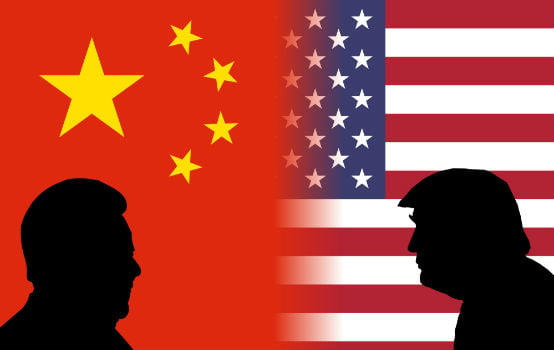
 Jeff J. Brown and Jeremy Kuzmarov 15 December, 2020 On July 4, 2020, the U.S. Navy dispatched an unprecedented two aircraft carriers and four other warships to the South China Sea for naval manoeuvres in waters claimed by China. Secretary of State Mike Pompeo subsequently broke with the official U.S. policy of neutrality in territorial conflicts in the South China Sea and declared that China’s claims to most of the Sea were “completely unlawful,” though many of the disputed territories had been part of China prior to being taken over by Japan in the 1895 Sino-Japanese War.[1] World War III nearly erupted on August 25, 2020, when a U.S. spy plane flew into Chinese air space while the People’s Liberation Army (PLA) was conducting drills.[2] Conversely, in 1963 and 1965, China shot down U2 spy planes, while capturing and imprisoning the pilots, though this time, with the international stakes much higher,...
PutinxiRou
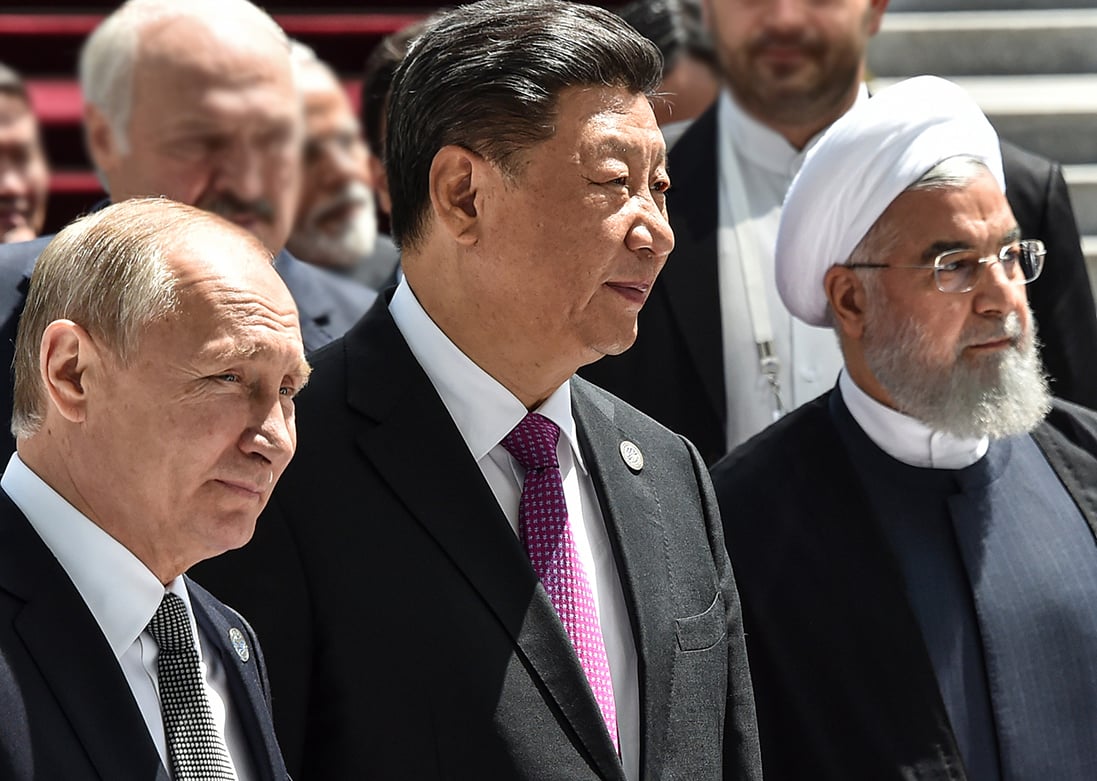
Photo credit: Flickr/ Nick Taylor By Seyed Hossein Mousavian December 12, 2020 Over the past few months, Iran  has been working with China on a sweeping long-term political, economic, and security agreement that would facilitate hundreds of billions of dollars of investments in the Iranian economy. It is also pursuing a long-term partnership with Russia. Politicians in Tehran see the agreements as a necessary means of combating U.S. hegemony and hostility. Iran’s new policy of a “Pivot to the East” involves cultivating strong economic, political, military, and security ties with the giants of the Asian continent, namely, China and Russia. This policy has gained all the more credibility among Iranian officials after the United States’ ill-advised move to withdraw from the Joint Comprehensive Plan of Action (JCPOA, colloquially known as the Iran nuclear deal) and pursue a “maximum pressure” strategy. Originally published at The Diplomat The JCPOA was an international agreement between Iran and...
millions-of-new-poor
Photo credit: wsimag.com By Roberto Savio December 5, 2020 The recent meeting of the G20 – scheduled to take place in Riyadh but held virtually due to the Coronavirus pandemic – has been an eloquent example of how the world is drifting, in a crisis of leadership. It was, in a sense, a showcase. Everybody had to accept the view that the host of the meeting, the ailing King Salman of Saudi Arabia, was accompanied on TV screens by his apparent heir, Prince Mohamed bin Salman, who is clearly the mastermind of the brutal assassination, dismembering and disappearance of the body of dissident Saudi journalist Jamal Khashoggi. Originally published at the Wall Street International Mohamed bin Salman got away with it, also because of the support of Donald Trump who, in his video intervention said, among other pearls, that nobody in US history had done as much as he had...
Categories

Year

Author / Contributor

Region