United States – Empire and domestic

Category

Year

Author / Contributor

Region

Sort by

Showing 1-10 of 477 stories

RichardFalk
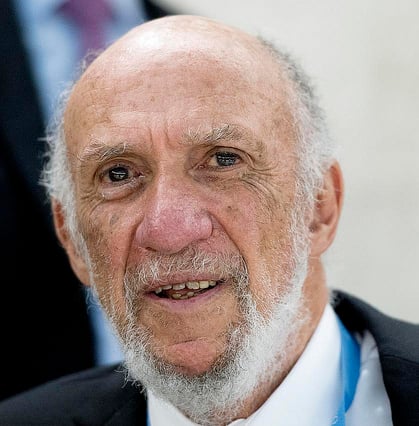
By Richard Falk Not surprisingly, my sixth visit to Vietnam stirred many memories, among them, a recognition of the parallels between the Vietnamese and Palestinian experiences, two peoples who have meant so much to me over the course of my adult lifetime. I visited Hanoi in 1968 in the midst of the American war that was devastating the country and its population, causing more than three million deaths and deliberately injuring the environment and its human surrounding by using vast quantities of Agent Orange, containing the highly toxic chemical Dioxin. Agent Orange was being used to defoliate large areas of the countryside in the South as a tactic against revolutionary Vietnamese forces who were taking advantage of the wooded countryside to mount their attacks. The legacy of Agent Orange continues grimly to remind people of the war, giving rise to anguished societal suspicions of current contamination that seems confirmed by...
girl-with-baby-l-300x245
Special Report: Many Americans simply view North Korea and its leaders as “crazy,” but the history behind today’s crisis reveals of a more complex reality that could change those simplistic impressions, as historian William R. Polk explains. Via consortiumnews.com By William R. Polk The U.S. and North Korea are on the brink of hostilities that if begun would almost certainly lead to a nuclear exchange. This is the expressed judgment of most competent observers. They differ over the causes of this confrontation and over the size, range and impact of the weapons that would be fired, but no one can doubt that even a “limited” nuclear exchange would have horrifying effects throughout much of the world including North America. So how did we get to this point, what are we now doing and what could be done to avoid what would almost certainly be the disastrous consequences of even a...
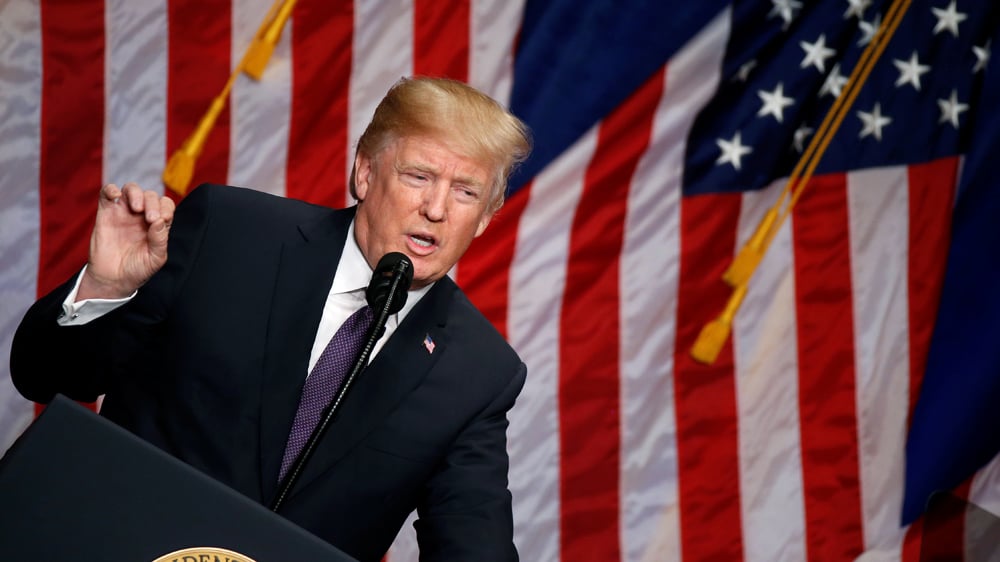
U.S. President Donald Trump delivers remarks regarding the Administration's National Security Strategy at the Ronald Reagan Building and International Trade Center in Washington D.C.
  By Donald Trump • President Donald Trump delivers his first strategy plan on protecting the United States from ‘rivals’ and enemies. December 18, 2017 Via aljazeera.com The following is a White House transcript of US President Donald Trump’s speech on Monday on his administration’s national security strategy: We’re here today to discuss matters of vital importance to us all: America’s security, prosperity, and standing in the world. I want to talk about where we’ve been, where we are now, and, finally, our strategy for where we are going in the years ahead.
ChatGPT Image 9 jun 2026, 11_11_33
  • The nuclear weapon missile business is contradictory, full of missteps, highly dangerous and prepared in its madness (Mutually Assured Destruction, aka MAD, they used to call it in Cold War days) to plunge the world into a nuclear war that will reduce most of the world to dust. A new book, “The Doomsday Machine” by Daniel Ellsberg tells the whole nuclear bomb story in detail. No one has done it better. The only rival is the movie, “Dr Strangelove”, that got the essentials right without being privy to much of the Ellsberg’s knowledge. Ellsberg is the legendary whistle-blower who revealed the Pentagon papers, an expose of the US role in the Vietnam War. In this book he tells of his time in the 1960s as consultant to the Department of Defence and the White House. He drafted Robert McNamara’s plans for nuclear war- McNamara was secretary of defence...
ObergPhoto2cmB-W-3
  • The US’ only answer to terrorism is violence against violence, but that’s like trying to eradicate diseases 32-invasion-war-africa-us/” target=”_blank” rel=”noopener”>Via rt.com A report released under the Freedom of Information Act shows the US has been simulating an invasion of West Africa in response to an imaginary terror attack on American soil. The latest Pentagon project was designed to train those who will manage future American wars. The terror attack scenario was played last year as part of the simulated exercise by students from the US military’s war colleges. RT:  Do you have any issues with the US simulating a New York terror attack to invade Africa? Jan Oberg: No. First of all, this is a kind of a war game. … People are thinking about what the future will be like. What is really interesting is that it ends with getting stuck in Africa too, like everywhere else...
5184
  • The UN’s Philip Alston is an expert on deprivation – and he wants to know why 41m Americans are living in poverty. The Guardian joined him on a special two-week mission into the dark heart of the world’s richest nation. By Ed Pilkington “You got a choice to make, man. You could go straight on to heaven. Or you could turn right, into that.” We are in Los Angeles, in the heart of one of America’s wealthiest cities, and General Dogon, dressed in black, is our tour guide. Alongside him strolls another tall man, grey-haired and sprucely decked out in jeans and suit jacket. Professor Philip Alston is an Australian academic with a formal title: UN special rapporteur on extreme poverty and human rights. His fact-finding mission into the richest nation the world has ever known has led him to investigate the tragedy at its core: the 41...
f-35-gen-iii_575
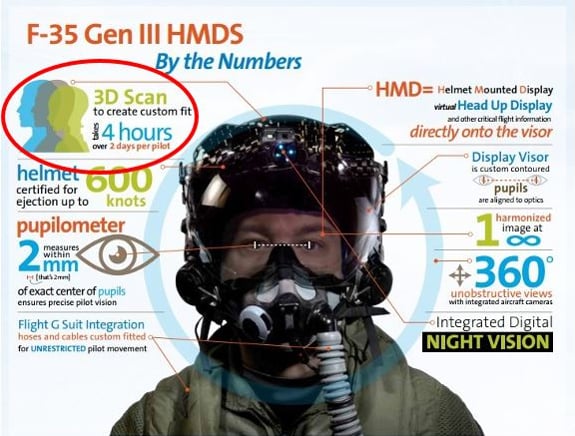
By Dan Grazier • A new Government Accountability Office report, released in October 2017, details problems the services are having keeping the F-35 fleet ready for combat. One problem it highlighted was that, at a time when the Pentagon is desperate to ramp up production of new aircraft, the services have to wait an average of 172 days—nearly six months—to repair components for the F-35 Joint Strike Fighter (JSF), when it should only take between 60 and 90 days. While this aspect of the report garnered most of the headlines, the report reveals a much more fundamental and systemic problem involving most of the latest high-tech weapon systems: Defense contractors are creating complicated support systems for the increasingly complex weapon systems the Pentagon buys, which allows the contractors to secure long-term contracts for which they have no competition from other companies. Via pogo.org The F-35 serves as the ultimate example...
DoomsdayMachine
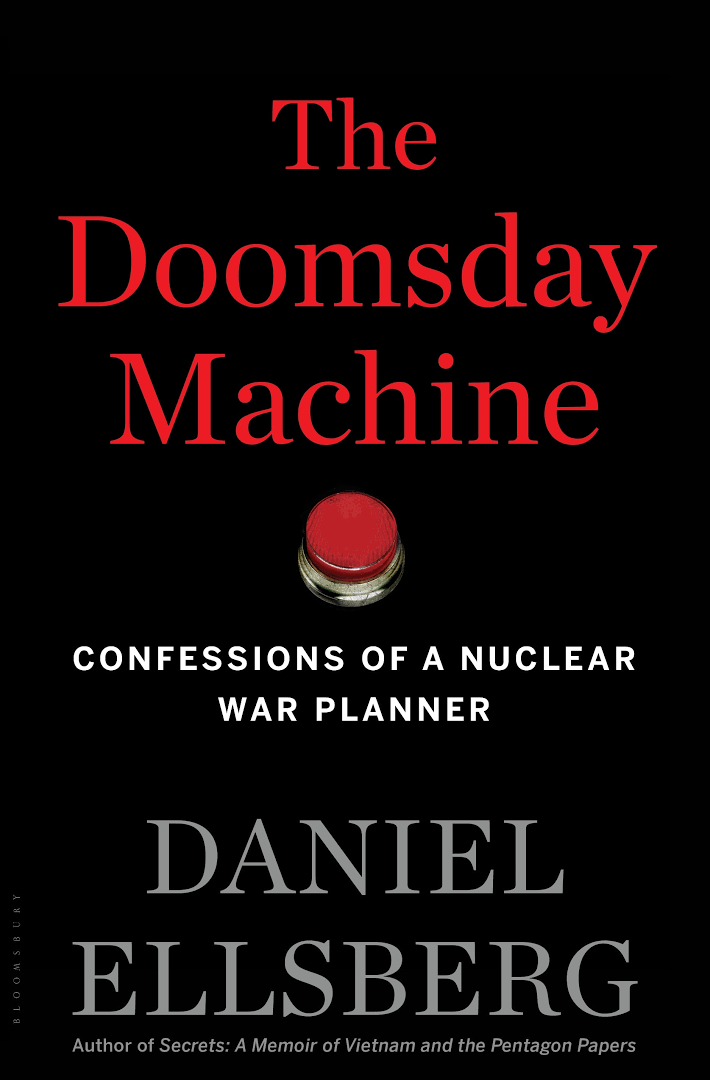
  By Daniel Ellsberg • From the legendary whistle-blower who revealed the Pentagon Papers, an eyewitness exposé of the dangers of America’s Top Secret, seventy-year-long nuclear policy that–chillingly–continues to this day. Here, for the first time, former high level defense analyst Daniel Ellsberg reveals his shocking first-hand account of America’s nuclear program in the 1960s. From the remotest air bases in the Pacific Command, where he discovered that the authority to initiate use of nuclear weapons was widely delegated, to the secret plans for general nuclear war under Eisenhower, which, if executed, would cause the near-extinction of humanity, Ellsberg shows that the legacy of this most dangerous arms buildup in the history of civilization–and its proposed renewal under the Trump administration–threatens our very survival. No other insider with high level access has written so candidly of the nuclear strategy of the late Eisenhower and early Kennedy years, and nothing has...
ObergPhoto2cmB-W-3
• In this episode of On the News Line: Pentagon held hostage to military contractors – Video Comments by, among other, TFF director, Jan Oberg The United States Defense Department spends hundreds of billions of dollars of taxpayers’ money annually on military programs. The Pentagon heavily depends on military contractors to acquire various types of weapons, hardware and support services. Major contractors like Lockheed Martin, Raytheon, General Dynamics and Northrop Grumman are constantly competing for lucrative contracts. Such weapons manufacturers have powerful lobbies in the Congress and in the highest levels of US government. The major arms companies are even believed to influence US foreign policy to make sure their business always remains booming. The chain of arms manufacturers, their lobbyists and links in the government have come to be known as the Military Industrial Complex. A US Government Accountability Office report has revealed that the powerful contractors are even...
4_1
Via gwu.edu Washington D.C., December 12, 2017 – U.S. Secretary of State James Baker’s famous “not one inch eastward” assurance about NATO expansion in his meeting with Soviet leader Mikhail Gorbachev on February 9, 1990, was part of a cascade of assurances about Soviet security given by Western leaders to Gorbachev and other Soviet officials throughout the process of German unification in 1990 and on into 1991, according to declassified U.S., Soviet, German, British and French documents posted today by the National Security Archive at George Washington University ( http://nsarchive.gwu.edu). The documents show that multiple national leaders were considering and rejecting Central and Eastern European membership in NATO as of early 1990 and through 1991, that discussions of NATO in the context of German unification negotiations in 1990 were not at all narrowly limited to the status of East German territory, and that subsequent Soviet and Russian complaints about being...
4_1
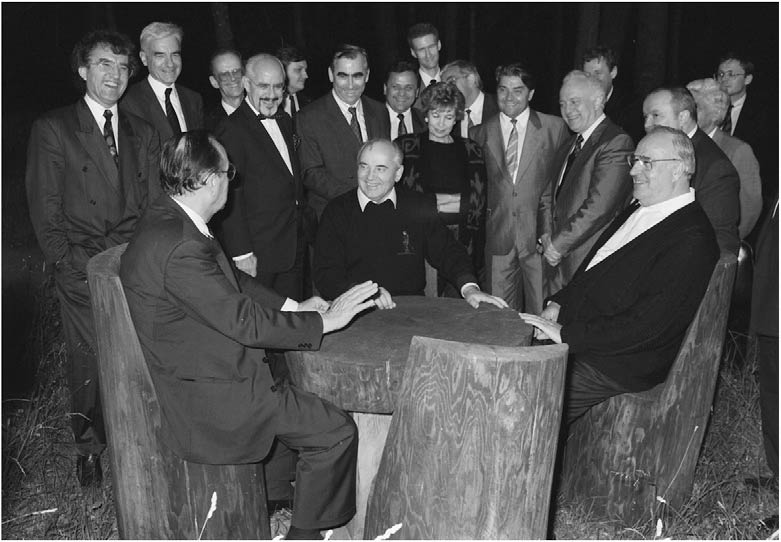
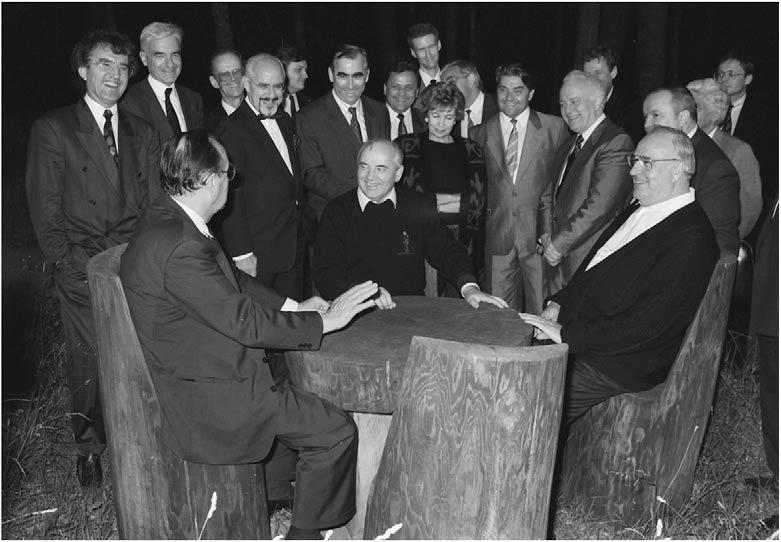
Michail Gorbachev discussing German unification with Hans-Dietrich Genscher and Helmut Kohl in Russia, July 15, 1990. Photo: Bundesbildstelle / Presseund Informationsamt der Bundesregierung. By Svetlana Savranskaya and Tom Blanton January 7, 2022 Declassified documents show security assurances against NATO expansion to Soviet leaders from Baker, Bush, Genscher, Kohl, Gates, Mitterrand, Thatcher, Hurd, Major, and Woerner. Slavic Studies Panel Addresses “Who Promised What to Whom on NATO Expansion?” Washington D.C., December 12, 2017 – U.S. Secretary of State James Baker’s famous “not one inch eastward” assurance about NATO expansion in his meeting with Soviet leader Mikhail Gorbachev on February 9, 1990, was part of a cascade of assurances about Soviet security given by Western leaders to Gorbachev and other Soviet officials throughout the process of German unification in 1990 and on into 1991, according to declassified U.S., Soviet, German, British and French documents posted today by the National Security Archive at George Washington...

RichardFalk
By Richard Falk* • Those who speak on behalf of Israel like to defend Donald Trump’s provocative decision of December 6th to recognize Jerusalem as the capital of Israel with this contention: “Israel is the only state in the world that is not allowed to locate its capital in a national city of its choice.” It seems like an innocent enough proclamation, and even accurate pushback against global double standards, until one considers the political, moral, and legal dimensions of the actual situation. With the benefit of just a moment’s reflection, a more thoughtful formulation of the issue would be: “Israel is the only state in the world whose government dares to locate its capital in a city located beyond its sovereign borders and subject to superior competing claims.” Granted, Israel has declined to date to define its borders for purposes of international law, presumably to leave room for its...
Categories

Year

Author / Contributor

Region