Sociology

Category

Year

Author / Contributor

Region

Sort by

Showing 1-10 of 76 stories

ChatGPT Image 9 jun 2026, 11_11_33
Can we be happier? All of us probably experience grave unhappiness at some point in our lives- a bereavement of someone close, a job loss, a bad illness, a vindictive boss, a drop in income or status, a loss of love for or from one’s partner, even a divorce, a standard of living when ends can hardly be met. Every reader can add their own woes to this list. Yet the world as a whole does appear to be getting happier, except in a few countries where war or fighting has taken over- Syria, Iraq, Afghanistan, Burundi and Sudan, for example. Indeed the lessening of war is one reason for rising happiness around the world. Another is the rapid decline in infant and maternal mortality- don’t ever think that a big Indian or African family today or a 19th century European family doesn’t or didn’t feel immense pain if a...
trump
What’s the use of intellectual arguments? Reference to concepts and theories – and the need for being just a bit clear about their definition? What’s the use of pointing out the degree to which populist parlance, fake and omission has undermined public discussions and media reporting about international affairs? What’s the use of arguing for peace and nonviolence in these “interesting times” when we are closer to world annihilation than perhaps ever since 1945 – thanks to the dangerous combination of anti-intellectualism and militarism (“I am the biggest and strongest and therefore I don’t have to know, think or argue…”)? What’s the point in commenting on global affairs in a moment of Western multi-crisis where democracy is post-literate and threatens to slide into the darkness of kakistocracy? I think about that every single day these years. I didn’t before, since I began participating as a peace researcher in public debates...
rsz_ussrnations
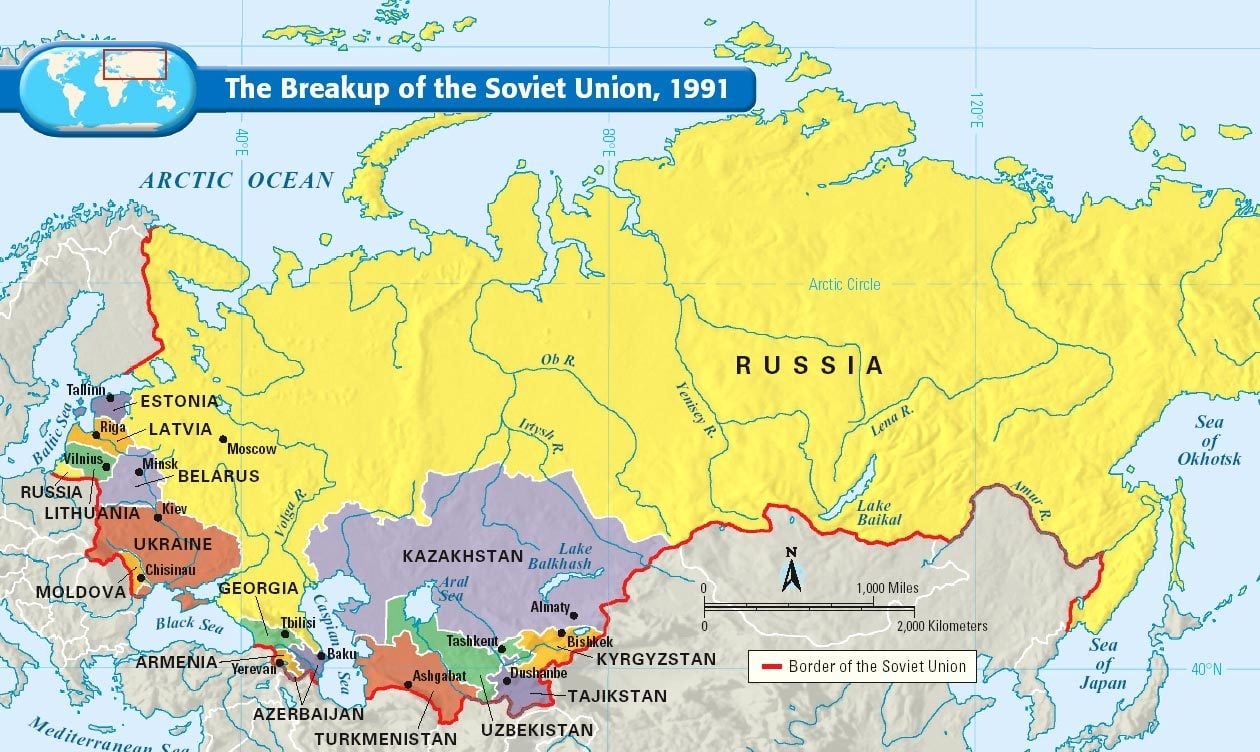
By Jan Oberg November 7, 2019 2019 Introduction The text below is 27 years old, written from 1992. It was the last chapter in a book edited by Jan Oberg, Nordic Security In the 1990s. Options In The Changing Europe (Pinter Publishers & TFF, London/Lund, 1992, 325 pages). In other words, it was written shortly after the euphoria/Europhoria created by the fall of the Berlin Wall on November 9, 1989, and the revolutionary changes in the Eastern system that ended with the dissolution of the Soviet Union on December 26, 1991. A group of international scholars had been gathered by TFF to create this project through extensive discussion and then put it all into book form. They were Håkan Wiberg, Ole Wæver, Pertti Joenniemi, Barry Buzan, Johan Galtung, Clive Archer, Jyrki Käkönen, Sverre Lodgaard and, as mentioned, Jan Oberg. You may read more about it on Goodreads – where you...

DSC_8592
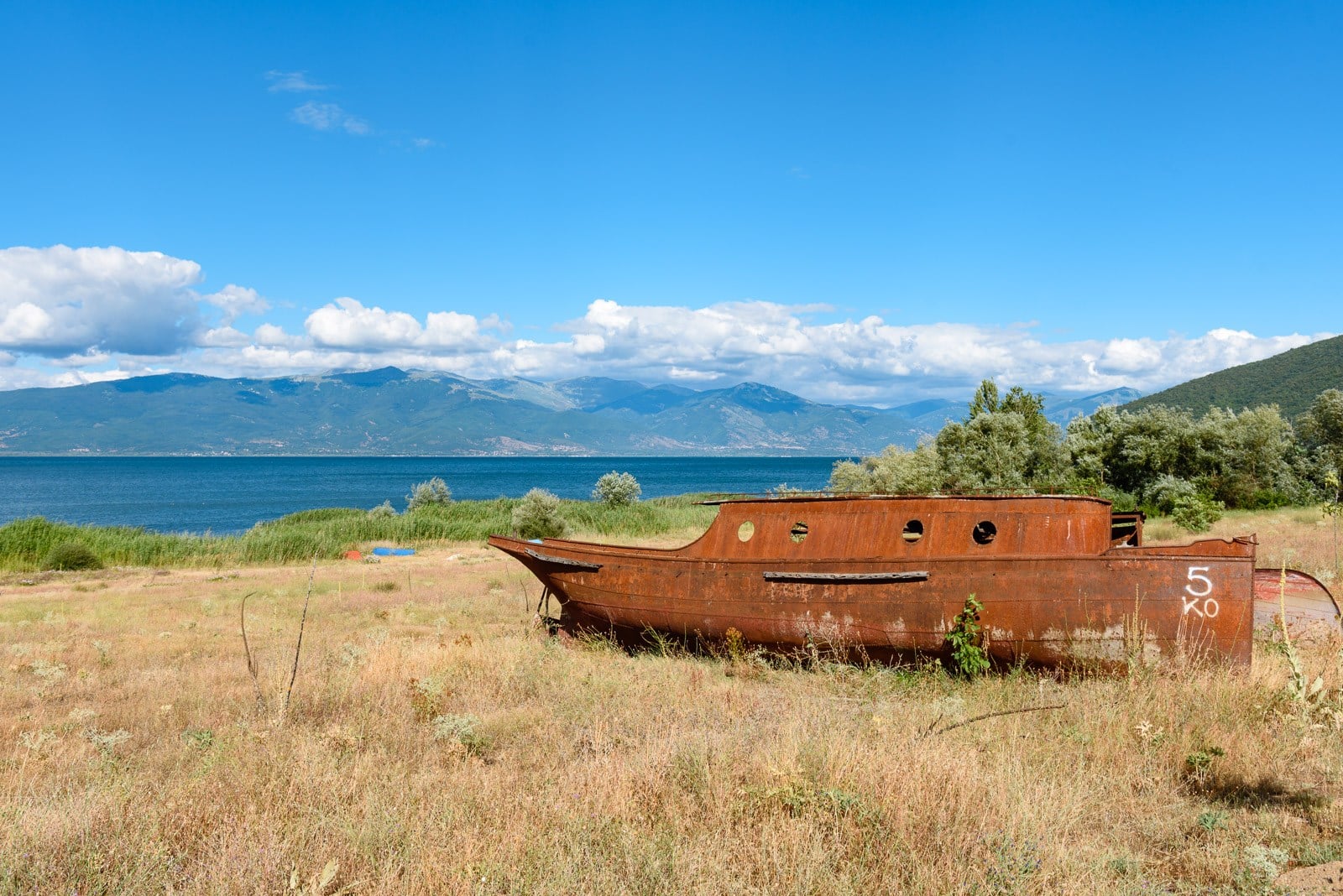
Lake Prespa in Macedonia Abstract The Prespa Agreement (PA) between Athens and Skopje was meant to be a final solution to the ‘name issue’. Yet the dispute has never been only about the state name, which is proved by the 20-pages long text. A plethora of other provisions is to be implemented erga omnes (internationally and domestically). Despite the insistence of the external mediators that the name dispute has never concerned the issues of ethnicity, nationality, culture, and language, these issues indeed appear to be simultaneously central as well as the Achilles heel of the deal. This paper does not deal with conceptual and theoretical aspects of ethnicity and nationality; yet its focus is on the fact that the Agreement indeed regulates identity issues, i.e. it represents a legal intervention in spheres pertaining to both ethnicity and national identity with implications for each. The basic premise is that instead of...
Islamophobia
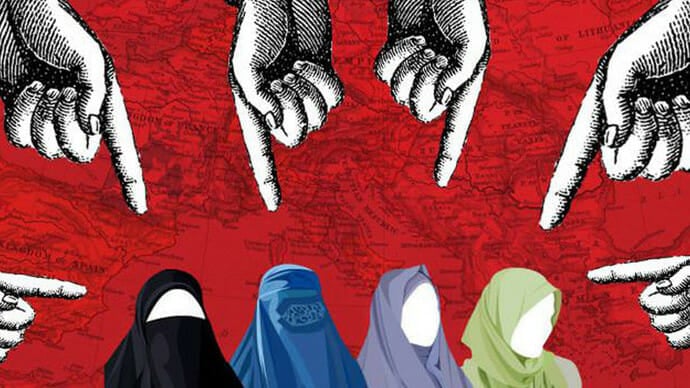
Islamophobia can be said to refer to the way Islam is being alienated in society by other cultures through fear and distrust against people belonging to the Islamic faith. Muslims are often portrayed in an increasingly negative context as witnessed in media, legislation and public debates. By Idriss Jazairy June 1, 2019 Islam is often presented as an ‘isolated culture’ with its own distinct features, which are allegedly incompatible with certain values upheld in Western societies. It is the rise of such a polarizing context that results in growing fear against Muslims, prejudice of other cultures and the ‘us versus them’ paradigm. Originally published human-wrongs-watch.net Although Arabs are a Semitic people like the Jews themselves, the media know that anti-Semitism is banned for the latter but tolerated for the former in the name of freedom of expression. Following the 9/11 terrorist attacks in the US by individuals – who were...
ChatGPT Image 9 jun 2026, 11_11_33
Traditionally old men have sent young men to fight the wars they have started. Today it may be somewhat different. Old men may be shying away from war while young men are still beholden to it. The world, as never before, is becoming demographically lopsided, with older people concentrated in rich countries and the young in not-so-rich countries. These older societies are becoming less warlike, as the influence of the experienced and the wise filters down into the body politic. There are a number of well-regarded studies that show how so-called “youth bulges” contribute to violence and conflict within states. Countries that have a high ratio of people aged 15-24 among the adult population have an increased likelihood of domestic terrorism and civil war. A new study takes this further. In the latest issue of Harvard’s “International Security”, a group of academics examine whether “youth bulges” alter the probability of...
ChatGPT Image 9 jun 2026, 11_11_33
Let’s make America great again! Or as the prime minister of France said: Let’s make France great again. Or, as President Donald Trump conceded, let every nation in the world announce that they are going to be great again. But what makes for greatness? Over that there is a big dispute. Strategists say that power has to be measured carefully because “the balance of power is the motor of world politics, playing a role as central as the role of energy in physics and money in economics”, as writes Professor Michael Beckley of Tufts University, in his analysis The Power of Nations. Measuring what really matters. “Power is like love, it is easier to define than measure. Just as one cannot say, ‘I love you 3.6 times more than her,’ scholars cannot calculate the balance of power precisely, because power is largely unobservable and context-dependent”. So what can scholars do? ...
war_memorial
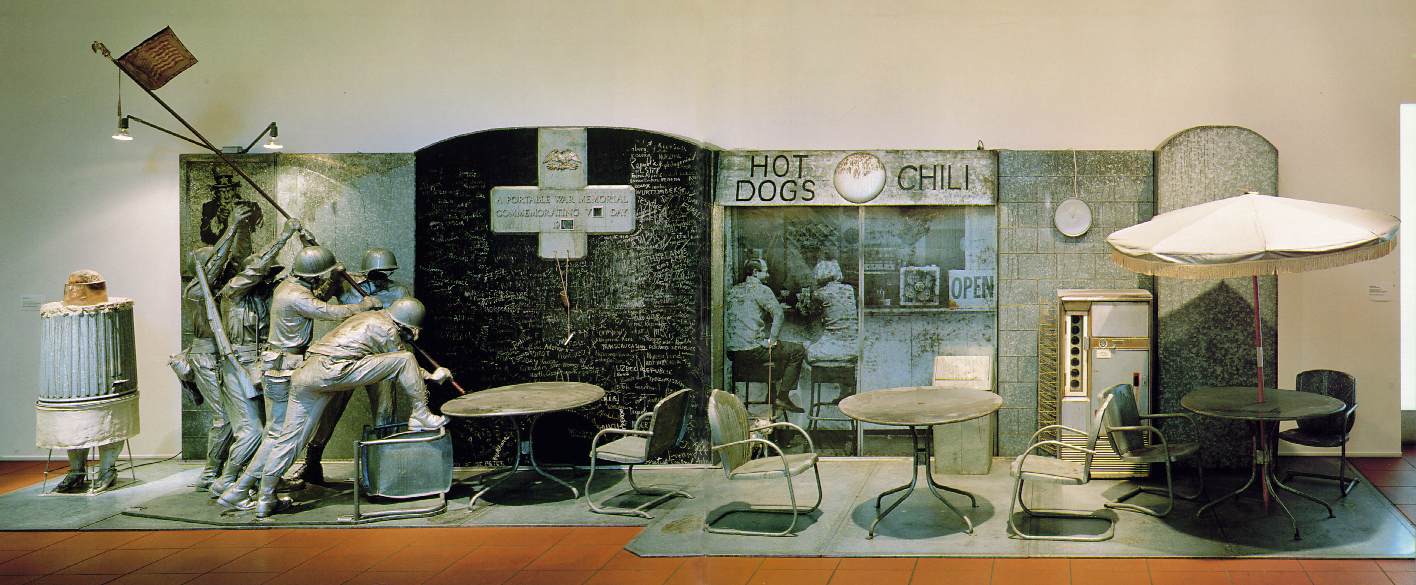
, the US taxpayers are paying US $ 32 million. That is now close to US$ 5000 billion in total! Add to that the tragedy of the absurd: from Vietnam to Syria, 1955 till today or 64 years, there is no documentable evidence that all of its wars, interventions, occupations, meddlings, regime changes have been anything but failures. There is no evidence either that today’s world is a better place than it would have been without these wars, alliances, deterrence and confrontational policies. But there is plenty of hard evidence that the United States of America is in relative decline as a world power. Plenty of facts to show that others – who spend much less on their military and have no Empire – are growing and destined to surpass the US on fundamental indicators in just a few years. As the largest military machine in human history, it has...
Hamid-Dabashi1-1
  There is a widely accepted idea among some Americans that Trump does not reflect American values. They are wrong   By Hamid Dabashi In an erudite and timely piece for the New York Times, published just a few days before the midterm elections in early November 2018, my distinguished Columbia University colleague Andrew Delbanco wrote a poignant essay about “The Long Struggle for America’s Soul.” In this learned piece, Professor Delbanco writes passionately about the long US history of human suffering that had come before the cruel behaviours and policies of the democratically elected President Donald Trump, focusing specifically on slavery. “Even free black people in the North …” we learn in this piece, “found their lives infused with terror of being seized and deported on the pretext that they had once belonged to someone in the South. The Fugitive Slave Act forced them to dread every footstep on the...
Imperialism_16
    From ancient Greece onward, the West has used the Eastern other as an enemy through which to identify itself.   Marco Carnelos August 22, 2018 US President Donald Trump’s administration seems to be intent on confronting the rest of the world. With a few exceptions, such as Russia (as far as Trump himself is concerned), Israel and Saudi Arabia, almost every other nation in the world has felt the rage and contempt of the current American president. Originally published on middleeasteye.net August 17, 2018 Bonds with traditional US allies have been questioned and the many principles, pillars, and rules of the liberal world order, itself conceived and shaped by the United States, are now disowned.   Little knowledge These developments can’t simply be attributed to Trump and Trump alone. The president’s thinking is shared by a significant section of the American people, who have little knowledge of the...
2
  By Tibor Várady April 19, 2018 Some introductory remarks concerning the use of the term “populism” The term “populism” is becoming increasingly popular in public discourse. It is difficult to deny – and I have no intention to try to deny – that the designation tackles (or tries to tackle) a serious problem. But wide use has made it more and more difficult to discern what ground is actually covered by this term. The question also arises, whether more coherent (even if contested) notions framed in social sciences may succeed in reining in careless use of the term “populism” in public discourse. A couple of years ago I was noting various contexts in which the term “populism” was used – particularly in the press. For instance, the Hungarian Népszabadság on May 2, 2009, cites the Slovak “SME” comparing the Czech and Hungarian government crisis, and concludes that “What is...
od960_logo@2x
By Edmund Fawcett Originally published by Open Democracy on April 7, 2018 here on   Unlike the hard right I have not conjured up an imaginary Other, but identified a genuine adversary in a struggle over democratic liberalism that is already engaged.   28 March 2018, Germany, Berlin: Olaf Scholz, Federal Minister of Finance (SPD), and German Chancellor Angela Merkel (CDU) attend a cabinet meeting at the Federal Chancellery. Gregor Fischer/Press Association. All rights reserved. To fix the topic, recall 18 months of recent electoral shocks, in reverse order. Last autumn in Germany’s national elections, the Alternative für Deutschland broke out from the fringes and won 94 seats in the federal parliament, a seventh of the total. Not since the early 1950s has Germany’s hard right won national representation and never in such strength. A year ago, Marine Le Pen at the head of the National Front advanced to the...
Categories

Year

Author / Contributor

Region