Sociology

Category

Year

Author / Contributor

Region

Sort by

Showing 1-10 of 76 stories

Eclecticism_90cm_300dpi_1200_100dpi
Photo © Jan Oberg “Eclecticism” 2019 Johan Galtung 2015 February 29, 2024 A theory serves comprehension, prediction and identification of conditions for change. Seven such historical-cultural pointers will be indicated for China; using the West in general, and the USA in particular, for comparisons. The presentation draws on countless dialogues in China over 40 years, since 1973. Published by Counterpunch in 2015 China: in time, as dynasties; West: in space as empires. Look at a histomap combining world history and geography, time and space: China shows up through 4,000 years as relatively coherent dynasties with complex transitions – and the West as empires–birth-growth-peaking-decline-fall, like the Roman, UK and now the US empire – duration vs bubbles that burst; as China-centric vs Western hegemonic. Chinese space: Barbarian; US time: to create, past irrelevant. China marginalized space peopled by South-West-North-East barbarians – outside the “Chinese pocket” between Himalayas-Gobi desert-Tundra-Sea–except for Silk roads...
fred-ger
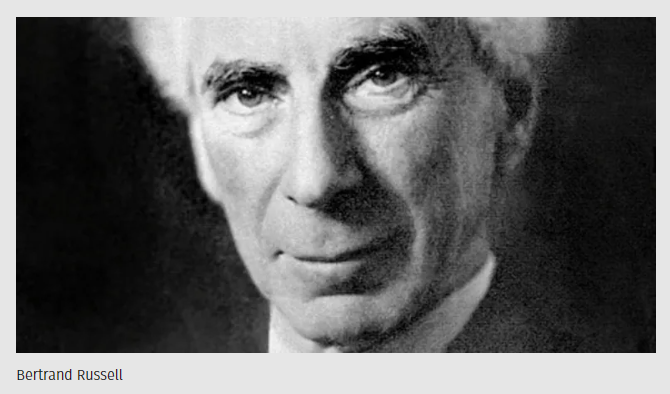
Maria Popova October 19, 2023 “To be a good human being is to have a kind of openness to the world, an ability to trust uncertain things beyond your own control,” philosopher Martha Nussbaum concluded in considering how to live with our human fragility. And yet in the face of overwhelming uncertainty, when the world seems to splinter and crumble in the palm of our civilization’s hand, something deeper and more robust than blind trust is needed to keep us anchored to our own goodness — something pulsating with rational faith in the human spirit and a profound commitment to goodness. Originally published at The Marginalian That is what Bertrand Russell (May 18, 1872–February 2, 1970) explores in the out-of-print treasure New Hopes for a Changing World (public library), composed a year after he received the Nobel Prize, while humanity was still shaking off the dust and dread of its Second World War and already shuddering with the catastrophic...
orwelllllll
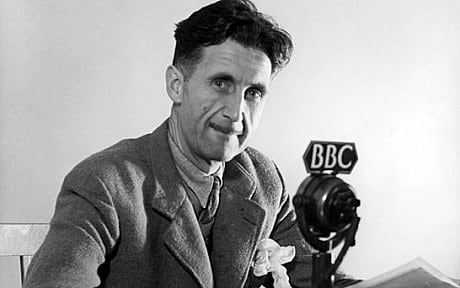
Peter Ross From invading Afghanistan to dismantling Confederate monuments, George Orwell has been pressed into the service of all sorts of causes. But the real Orwell remains unknown. August 31, 2023 “It was a bright cold day in April,” said Richard Blair, “and the clocks were striking thirteen.” Blair is seventy-three and the son of George Orwell. To witness him stand at a lectern and read the opening line of his father’s great final novel, 1984, is to experience a sense of completion, an equation solved. We were in Senate House, now part of the University of London, for 1984 Live. For the first time in the United Kingdom, the book was to be read aloud publicly from start to finish. It had been estimated that it would take sixty or so readers—well-known journalists, academics, actors, activists—thirteen hours, that Orwellian number, to get from the bright cold day to the gin-scented tears. “All...
the-starry-night
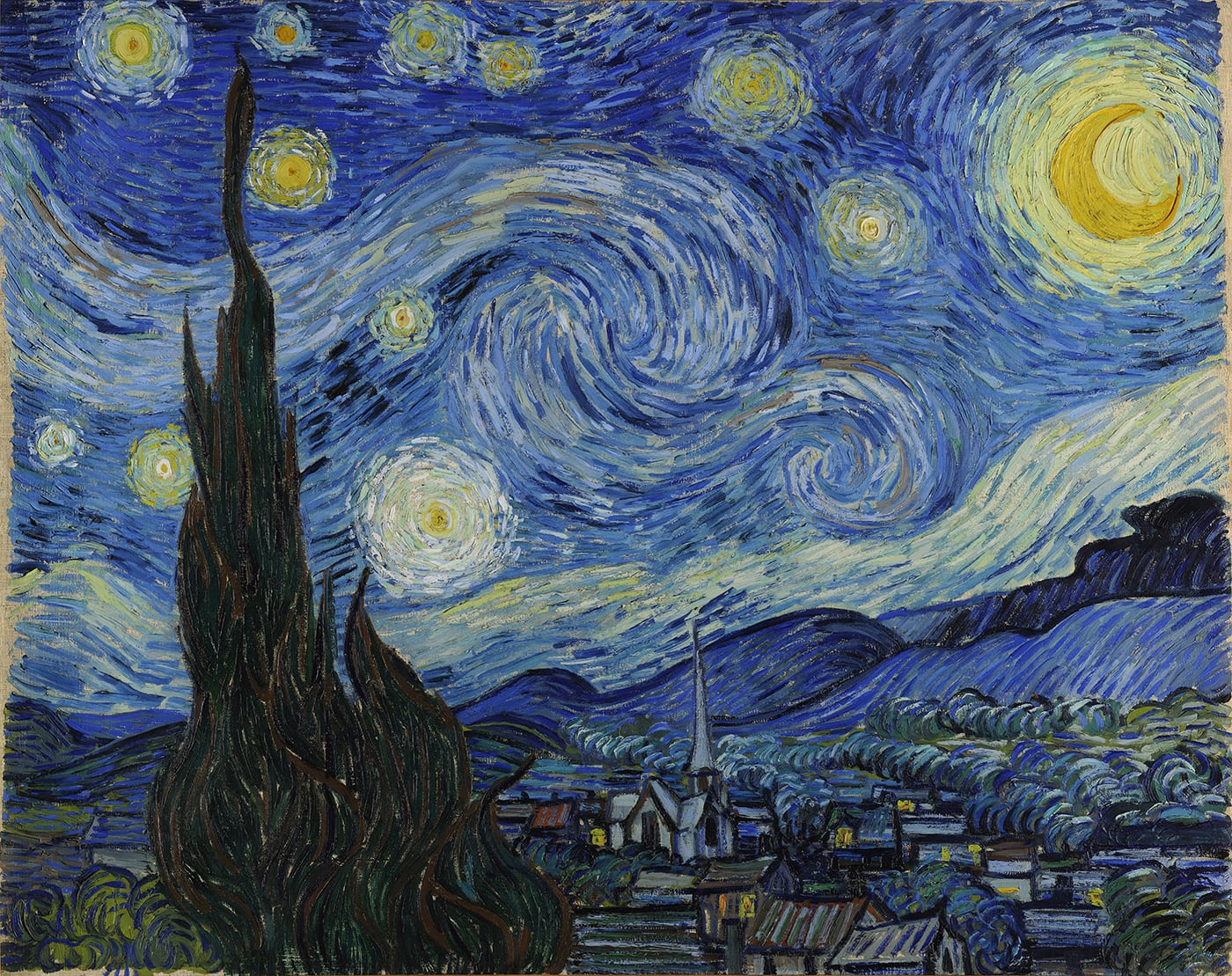
The Starry Night by Vincent van Gogh, 1889 Edward J. Curtin, Jr. August 29, 2023 Originally published on Curtin’s homepage on August 11, 2023 Because there is so much personal anguish, unhappiness, and human mental and physical suffering in the world, many people often wonder how they might personally change to find happiness, contentment, or some elusive something. Or even how to change other people, as if that arrogant illusion could ever work. This question of significant personal change is usually couched within the context of narrow psychological analyses.  This is very common and is a habit of mind that grows stronger over the years.  People are reduced to their family upbringings and their personal relationships, while the social history they have lived through is dismissed as irrelevant. The United States is very much a psychological society.  Sociological and historical analyses are considered insignificant to people’s identities.  It’s as if...
cherry-laithang-NmPpz1jA_JE-unsplash
Photo by Cherry Laithang on Unsplash Maria Popova August 3, 2023 “This is an extraordinary time full of vital, transformative movements that could not be foreseen. It’s also a nightmarish time. Full engagement requires the ability to perceive both.” “There is no love of life without despair of life,” wrote Albert Camus — a man who in the midst of World War II, perhaps the darkest period in human history, saw grounds for luminous hope and issued a remarkable clarion call for humanity to rise to its highest potential on those grounds. It was his way of honoring the same duality that artist Maira Kalman would capture nearly a century later in her marvelous meditation on the pursuit of happiness, where she observed: “We hope. We despair. We hope. We despair. That is what governs us. We have a bipolar system.” In my own reflections on hope, cynicism, and the stories we tell ourselves, I’ve considered...
Peaceful-Societies
David SwansonWorld Beyond War & TFF Associate June 12, 2023 For any given war, one can examine the months or years or decades during which one or both sides worked diligently to make it happen, and both sides conspicuously failed to develop peaceful alternatives. Even in the moment of greatest violence, one can consider the unarmed-resistance alternatives that are carefully kept out of consideration. But even if you can explain away all justification for every side of every particular war — yes, even that one, there remains the false claim that war is somehow simply part of “humanity.” If ants were to stop waging wars, nobody would bat an eye, but such a feat is deemed simply beyond the intelligence of homo sapiens. There is a problem for this nonsense. It is the problem of peaceful human societies. We know that many, if not most, hunter-gatherer groups of humans engaged...
Terchanik-baltimore-oriole-2000x900-1
Edward Curtin May 30, 2023 By the lake’s lapping shore above the town and the railroad tracks, my wife and I stopped and marveled, struck stone silent by two dazzling Baltimore Orioles, clawed together as they tumbled, wrestling in the green morning breeze above our heads. They perched upon a branch and sang a morning hymn, an ode to joy and the spring’s morning glory. Their black and orange throats vibrated amid the green quaking aspen’s leaves as the lake’s low lapping sounds lent counterpoint. They were sublime. Originally published at Off Guardian on May 14, 2023 I too felt a quake, a shiver down my spine as associations tumbled through my mind. Poems, songs, memories of other early morning walks in spring. Intoxication, elation, the horripilation that accompanies spring’s rising, the sexual excitement. Hope, and the loose feeling of being forever young. No solution to anything, just reverence for existence. Nothing changed, except a few years....

quote-civilizations-i-believe-come-to-birth-and-proceed-to-grow-by-successfully-responding-arnold-j-toynbee-75-80-98
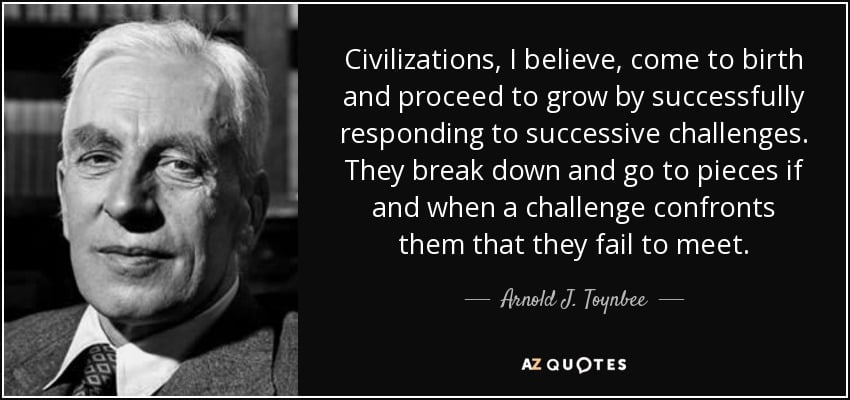
Christopher Quigley April 28, 2023 Very few people today know that between 1934 and 1961 the British historian Arnold Toynbee wrote A Study of History describing the rise and fall of the 23 civilizations he had identified in human history. In contrast to Oswald Spengler, who thought that the rise and fall of civilizations was inevitable, Toynbee maintained that the fate of civilizations is determined by their response to the challenges facing them. In fact the unifying theme throughout the book is challenge and response. One of the ground-breaking discoveries by Toynbee is the fact that there have been so many highly developed civilizations. Understandably in the West, our history lessons focus on our own civilization with its roots in Greek and Roman cultures, but in addition, there have been Chinese, Indian, Mayan, Islamic, Sumerian and Orthodox civilizations, to name but a few. According to Toynbee, civilizations start to decay...
PravdaC_Bristle
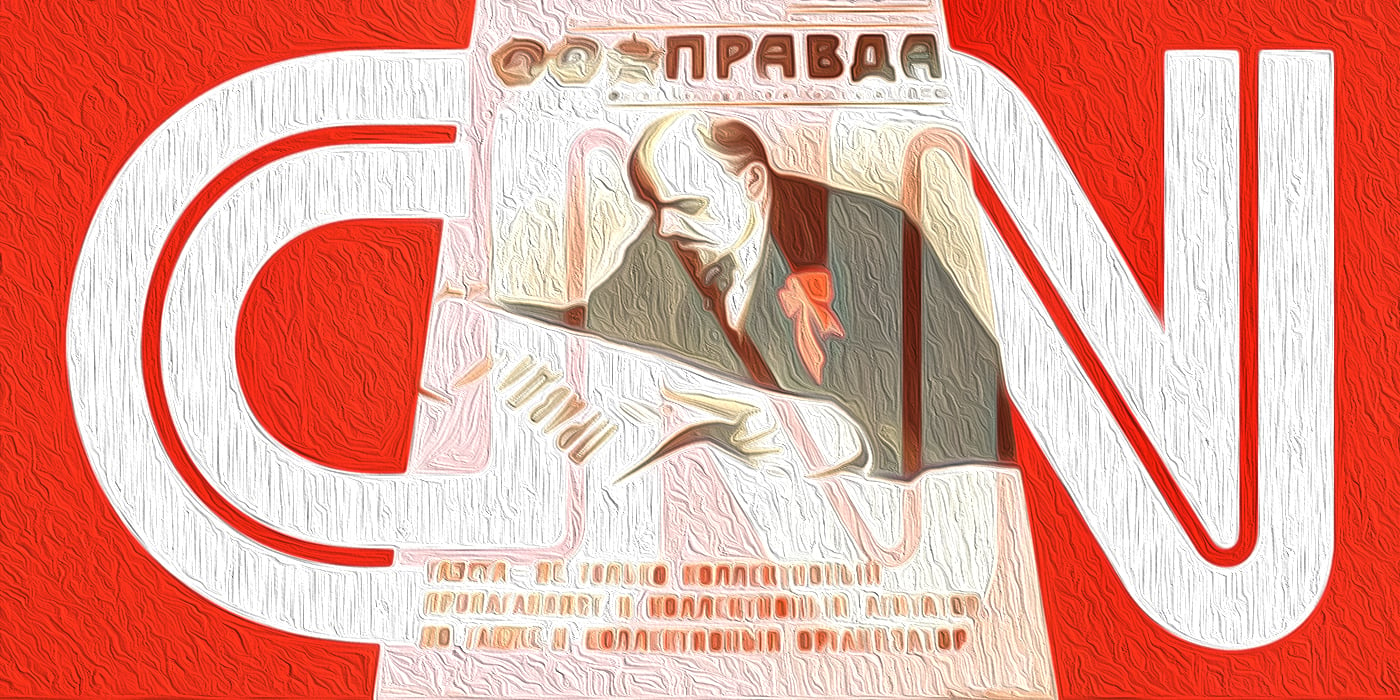
Collage © Jan Oberg 2023 A list to be updated if and when Jan Oberg March 16, 2023 The human right to freely seek information is laid down in the American Convention on Human Rights from 1968. Article 13 states that “Everyone has the right to freedom of thought and expression. This right includes freedom to seek, receive, and impart information and ideas of all kinds.” The Universal Declaration of Human Rights from 1948 states in Article 19 that: “Everyone has the right to freedom of opinion and expression; this right includes freedom to hold opinions without interference and to seek, receive and impart information and ideas through any media and regardless of frontiers.” The International Covenant on Civil and Political Rights of 1966 states in Article 19 that: “1) Everyone shall have the right to hold opinions without interference. 2) Everyone shall have the right to freedom of expression;...
Build-Trust
Image from searchwizards This rather long text was written on the invitation of the distinguished “China Investment” magazine, which is sponsored by China’s National Development and Reform Commission. In spite of its name, it has consistently asked me to write on subjects that are not often connected with economics in general and investment issues in particular. I find that – much broader – approach to economics very interesting, and I am very pleased to cooperate with such broad-minded people. Here is the original version – a cover story – in both English and Chinese Introduction – The enigma of good things Like many other positive things in this world, there is little research available on what trust is and how it works. Human beings study war and other violence much more than nonviolence and peace; evil more than goodness; aggression more than forgiveness and reconciliation. It is quite strange because...
sheep
Evil is easy to identify and fight against; not so with stupidity. Key Takeaways Jonny Thomson January 28, 2023 There’s an internet adage that goes, “Debating an idiot is like trying to play chess with a pigeon — it knocks the pieces over, craps on the board, and flies back to its flock to claim victory.” It’s funny and astute. It’s also deeply, depressingly worrying. Although we’d never say so, we all have people in our lives we think of as a bit dim — not necessarily about everything, but certainly about some things. Most of the time, we laugh this off. After all, stupidity can be pretty funny. When my friend asked a group of us recently what Hitler’s last name was, we laughed. When my brother learned only last month that reindeer are real animals — well, that’s funny. Good-natured ribbing about a person’s ignorance is an everyday part...
zens
Martin Jacques December 28, 2022 The West could learn a great deal from China’s system of governance. It is highly unlikely this will happen, at least anytime soon. On the contrary, the West believes that its governance system is the best in the world, cannot be improved upon, and is incomparably superior to that of China. Why then is the West in rampant decline? And why has China, in contrast, enjoyed a dramatic rise over the last four decades. Have these contrasting fortunes got nothing to do with their respective governing systems? Are national success and the system of governance utterly disconnected from each other? Is the system of governance little more than an ornament of decoration, with little bearing on the performance of a nation? This is obviously nonsense. The quality of governance is fundamental to the success or failure of a country. If a country is doing well, then...
Categories

Year

Author / Contributor

Region