
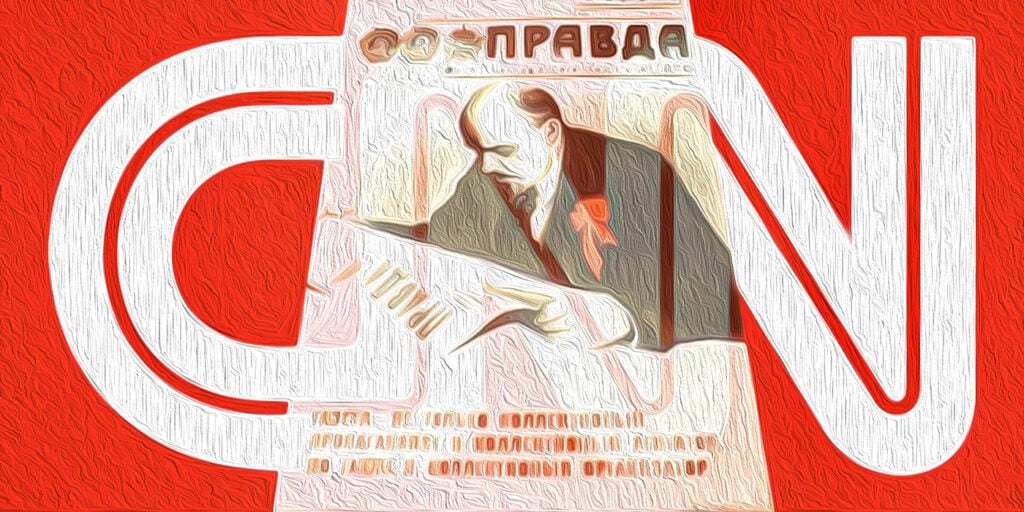
It’s your human right: Access Russian news and analyses sites in English if you want

Collage © Jan Oberg 2023

A list to be updated if and when

Jan Oberg

March 16, 2023

The human right to freely seek information is laid down in the American Convention on Human Rights from 1968. Article 13 states that “Everyone has the right to freedom of thought and expression. This right includes freedom to seek, receive, and impart information and ideas of all kinds.”

The Universal Declaration of Human Rights from 1948 states in Article 19 that: “Everyone has the right to freedom of opinion and expression; this right includes freedom to hold opinions without interference and to seek, receive and impart information and ideas through any media and regardless of frontiers.”

The International Covenant on Civil and Political Rights of 1966 states in Article 19 that: “1) Everyone shall have the right to hold opinions without interference. 2) Everyone shall have the right to freedom of expression; this right shall include freedom to seek, receive and impart information and ideas of all kinds, regardless of frontiers, either orally, in writing or in print, in the form of art, or through any other media of his choice.”

Note above the words freedom to and no interference.

I’m not a lawyer, but common sense compels me to believe that such high-level human rights declarations are violated when Western politicians actively prevent you from accessing certain leading Russian media such as RT (Russia Today) and Sputnik.

It’s would seem also to be an interference in your free search for information when you are constantly told that Russia is one big disinformation machine (and comparative studies of NATO countries and their disinformation and disinformation budgets are never conducted) – which is meant to make you doubt anything coming out of Russia

There is also the putting up descriptions – e.g. on Facebook – that point out that this is a Russia state media – implicitly meaning, therefore, less trustworthy. The proxy server/VPN Surfshark has even tried to put up red warnings against what it determined to be fake news. When a number of platforms does the same – such as Flipboard, so you cannot flip certain articles – it’s also an interference in your freedom to seek and evaluate information yourself.

Furthermore, search engines contribute too. It’s six years ago that I pointed to Google’s complicity in censorship, not the least by “de-ranking” sites it doesn’t like – or, rather, those it serves do not like.

In short, they participate in a media war.

And since TFF and I work for the UN Charter norm – Article 1 – that peace shall be established by peaceful means – it’s natural and logical to be extremely critical of those who participate in media wars and do so in ways which violate provisions laid down in fundamental declarations and covenants of human rights like those above.

In addition, one comes to suspect – easily – that those who cancel access to the opinions of the other side in a conflict do not really believe that their own arguments are valid, reliable and convincing.

A reader or two may now think: “Yeah, but so does Russia, China, Iran and all the other ‘authoritarian’ countries. You have, for instance, to use a proxy server when visiting or living in these countries.” This is true – at least to some extent, but three arguments can be brought forward for them to ponder:

a) the people living in these countries know much much more about the West than vice-versa – so somehow they have access to Western sources;

b) RT as well as leading Chinese media – which I visit daily – have a decent coverage of what the US or other Western countries do and argue than Western media have of their deeds and arguments;

c), it is the US/NATO/EU countries that pride themselves of and champion – without or with violence – the normative universalisation and export of the ideas of freedom of expression, information seeking, opnion-formation, etc.

To not adhere oneself to what one preaches, or advocates, is untrustworthy and smacks double standards: there is one standard for ‘us’ and another for ‘you’. It also smacks psycho-political projection of one’s own darker sides unto the other side: Yes, we may not be perfect but you are much worse…

So, in order to be helpful to our readeers – and produce a bit of fairness – we have compiled a list of English-language Russian sites with analyses of Russian affairs and Russia’s international relations. It includes platforms produced in the West that monitor Russian media and Russian afffairs – such as Johnson’s Russia List.

It is not exhaustive and we have made no evaluation of the quality of each media – that is up to our readers to judge without our interference. You are welcome to suggest other sources to us at TFF@transnational.org and, finally, the list is not meant to express any priorities:

President of Russia

The Russian Government

The State Duma

The Russian Ministry of Foreign Affairs

The Russian Ministry of Defence

TASS – New Agency

The Moscow Times

Russia In Global Affairs

Pravda.ru

Russia Matters

Johnson’s Russia List

Irrussionality

Russia Insider

Interfax

Institute of World Economy and International Relations of the Russian Academy of Sciences (IMEMO)

Russia International Affairs Council (RIAC)

The Gorbachev Foundation for Socio-Economic and Political Studies

English Russia

RT (Russia Today) – you may need a VPN

Sputnik International – you may need a VPN – explained here by Sputnik

Aljazeera on Russia

VK – leading social network à la Facebook

Wikipedia Russia Portal

The Author

Here in an AI-generated version

All about Jan Oberg here.

He is also the editor of The Transnational.

Jan Oberg • Life • Peace • Art

Peace & future researcher + ‌Art Photographer

3 Responses

  1. Thank you very much Jan, you got to the heart of the matter once more! One out of thousands of times. Pointing at the American Convention on Human Rights and The Universal Declaration of Human Rights and so on is obvious, it’s of course following a clear logic. Yet, the logic is very seldom put into the equation, at least not anymore. Things are changing, basic human rights are disappearing, and all too many people in the West accept it. The MIMAC tactics is clearly working. So we that are more enlightened and clearheaded must act as for instance some Danish people did during the later years of the German occupation of Denmark 1940-45. Meet in public local community houses to sing the beloved songs of the fatherland, listen to speeches of brave men and women like Hal Koch and Bodil Koch. The latter by the way, one of only a few honest Danish politicians that dared to speak her mind, even to the face of the powerful minister of foreign affairs John Foster Dulles. That sort of politicians does not exist anymore. So thank you Jan, for singing these songs of freedom again and again. Thanks for your persistence, high moral standard and diligence! We are listening.

  2. I am in France and of course also in the EU so am doubly restricted. No RT, no Rumble items, no strategic-culture which I have subscribed to for many years. Is the EU some sort of religious icon who knows all and can tell us another site is “fake news” or propaganda? I occasionally see TV news or read “Le Figaro” full of articles I know are false!!! Who is to decide if I as an experienced educated adult cannot make a choice?

  3. Thank you Jan! – it is about time to turn the issue of “the right to freedom of opinion and expression” on its head, and to highlight that it “includes freedom to hold opinions without interference and to seek, receive and impart information and ideas through any media and regardless of frontiers”. Despite repeated conventions in recent years, American and International, virtually nobody knows about or honor these rights, and the ignorance are preposterous. The victims are all of us!

Related Posts

Below are TFF-related media mentions, comments, videos and social media posts published elsewhere but not on this homepage. We happen to catch and list only a fraction. Regarding video comments and debates, we recommend that you go to the TFF Video Channel on Substack where many of them are reproduced. Jan Oberg is a contributor to China Daily – 52 million daily clicks – and Global Times, CGTN and CCTV (the national television), China Investment, Xinhua News Agency and several others. Articles and videos on these media very often multiply into countless Chinese (and Western media) that re-post them from these main media. Thanks to The China Academy, his analyses, interviews and comments are frequently posted on YouTube channels such as Thinkers Forum and Wave Media. These videos are often re-posted on Bilibili (China’s YouTube), the China Content Center on TikTok, and on the Chinese edition of TikTok, Douyin.com. This means reaching hundreds of millions of viewers worldwide over a year. While there are too many to catch on all these...
Jan Oberg TFF director October 13, 2026 According to Alfred Nobel’s will, the Nobel Peace Prize shall be awarded: ”to the person who has done the most or best to advance fellowship among nations, the abolition or reduction of standing armies, and the establishment and promotion of peace congresses.” Further down, he also expresses how the prize for the “champions of peace” shall be decided: “that for champions of peace by a committee of five persons to be selected by the Norwegian Storting. Alfred Nobel’s will is remarkably short and clear. But few seem to have read it. Nobel did not say that the committee itself should consist of members of parliament. He entrusted the Storting with appointing five persons. In principle, it could have selected diplomats, mediators, peace researchers, conflict-resolution specialists, or other individuals with recognised expertise in matters of peace from around the world. Instead, the Storting gradually...
The Quest for Humane Survival Richard Falk Professor emeritus, Princeton UniversityTFF Associate since 1986October 12, 2026 After decades of teaching and writing about international law in academic frameworks that were not institutionally situated within law school environments—at Princeton and the University of California, Santa Barbara—I found myself most receptive to the TWAIL outlook. It has been especially illuminating in clarifying the extent to which international law evolved as a dialogical critique of Europe’s efforts to legitimize its colonial undertakings. In particular, TWAIL has exposed how international law has functioned to legalize the subjugation of Third World peoples, securing conditions for exploitative investment and trade relations, the coercive enforcement of public debts, and an ideology of cultural superiority. TWAIL’s exposure of these economic legacies of colonialism has influenced my understanding of the history and development of international law, broadly conceived, as an ideological project of the Western sub-system of the world...

Recent Articles

Below are TFF-related media mentions, comments, videos and social media posts published elsewhere but not on this homepage. We happen to catch and list only a fraction. Regarding video comments and debates, we recommend that you go to the TFF Video Channel on Substack where many of them are reproduced. Jan Oberg is a contributor to China Daily – 52 million daily clicks – and Global Times, CGTN and CCTV (the national television), China Investment, Xinhua News Agency and several others. Articles and videos on these media very often multiply into countless Chinese (and Western media) that re-post them from these main media. Thanks to The China Academy, his analyses, interviews and comments are frequently posted on YouTube channels such as Thinkers Forum and Wave Media. These videos are often re-posted on Bilibili (China’s YouTube), the China Content Center on TikTok, and on the Chinese edition of TikTok, Douyin.com. This means reaching hundreds of millions of viewers worldwide over a year. While there are too many to catch on all these...
Jan Oberg TFF director October 13, 2026 According to Alfred Nobel’s will, the Nobel Peace Prize shall be awarded: ”to the person who has done the most or best to advance fellowship among nations, the abolition or reduction of standing armies, and the establishment and promotion of peace congresses.” Further down, he also expresses how the prize for the “champions of peace” shall be decided: “that for champions of peace by a committee of five persons to be selected by the Norwegian Storting. Alfred Nobel’s will is remarkably short and clear. But few seem to have read it. Nobel did not say that the committee itself should consist of members of parliament. He entrusted the Storting with appointing five persons. In principle, it could have selected diplomats, mediators, peace researchers, conflict-resolution specialists, or other individuals with recognised expertise in matters of peace from around the world. Instead, the Storting gradually...
The Quest for Humane Survival Richard Falk Professor emeritus, Princeton UniversityTFF Associate since 1986October 12, 2026 After decades of teaching and writing about international law in academic frameworks that were not institutionally situated within law school environments—at Princeton and the University of California, Santa Barbara—I found myself most receptive to the TWAIL outlook. It has been especially illuminating in clarifying the extent to which international law evolved as a dialogical critique of Europe’s efforts to legitimize its colonial undertakings. In particular, TWAIL has exposed how international law has functioned to legalize the subjugation of Third World peoples, securing conditions for exploitative investment and trade relations, the coercive enforcement of public debts, and an ideology of cultural superiority. TWAIL’s exposure of these economic legacies of colonialism has influenced my understanding of the history and development of international law, broadly conceived, as an ideological project of the Western sub-system of the world...

TFF on Substack

Discover and subscribe to more peace materials on TFF Substack

Most Popular

Below are TFF-related media mentions, comments, videos and social media posts published elsewhere but not on this homepage. We happen to catch and list only a fraction. Regarding video comments and debates, we recommend that you go to the TFF Video Channel on Substack where many of them are reproduced. Jan Oberg is a contributor to China Daily – 52 million daily clicks – and Global Times, CGTN and CCTV (the national television), China Investment, Xinhua News Agency and several others. Articles and videos on these media very often multiply into countless Chinese (and Western media) that re-post them from these main media. Thanks to The China Academy, his analyses, interviews and comments are frequently posted on YouTube channels such as Thinkers Forum and Wave Media. These videos are often re-posted on Bilibili (China’s YouTube), the China Content Center on TikTok, and on the Chinese edition of TikTok, Douyin.com. This means reaching hundreds of millions of viewers worldwide over a year. While there are too many to catch on all these...
Jan Oberg TFF director October 13, 2026 According to Alfred Nobel’s will, the Nobel Peace Prize shall be awarded: ”to the person who has done the most or best to advance fellowship among nations, the abolition or reduction of standing armies, and the establishment and promotion of peace congresses.” Further down, he also expresses how the prize for the “champions of peace” shall be decided: “that for champions of peace by a committee of five persons to be selected by the Norwegian Storting. Alfred Nobel’s will is remarkably short and clear. But few seem to have read it. Nobel did not say that the committee itself should consist of members of parliament. He entrusted the Storting with appointing five persons. In principle, it could have selected diplomats, mediators, peace researchers, conflict-resolution specialists, or other individuals with recognised expertise in matters of peace from around the world. Instead, the Storting gradually...
The Quest for Humane Survival Richard Falk Professor emeritus, Princeton UniversityTFF Associate since 1986October 12, 2026 After decades of teaching and writing about international law in academic frameworks that were not institutionally situated within law school environments—at Princeton and the University of California, Santa Barbara—I found myself most receptive to the TWAIL outlook. It has been especially illuminating in clarifying the extent to which international law evolved as a dialogical critique of Europe’s efforts to legitimize its colonial undertakings. In particular, TWAIL has exposed how international law has functioned to legalize the subjugation of Third World peoples, securing conditions for exploitative investment and trade relations, the coercive enforcement of public debts, and an ideology of cultural superiority. TWAIL’s exposure of these economic legacies of colonialism has influenced my understanding of the history and development of international law, broadly conceived, as an ideological project of the Western sub-system of the world...
Read More
girl-5894831_1280
Below are TFF-related media mentions, comments, videos and social media posts published elsewhere but not on this homepage. We happen to catch and list only a fraction. Regarding video comments and debates, we recommend that you go to the TFF Video Channel on Substack where many of them are reproduced. Jan Oberg is a contributor to China Daily – 52 million daily clicks – and Global Times, CGTN and CCTV (the national television), China Investment, Xinhua News Agency and several others. Articles and videos on these media very often multiply into countless Chinese (and Western media) that re-post them from these main media. Thanks to The China Academy, his analyses, interviews and comments are frequently posted on YouTube channels such as Thinkers Forum and Wave Media. These videos are often re-posted on Bilibili (China’s YouTube), the China Content Center on TikTok, and on the Chinese edition of TikTok, Douyin.com. This means reaching hundreds of millions of viewers worldwide over a year. While there are too many to catch on all these...
Nobel-Prize-Plaque
Jan Oberg TFF director October 13, 2026 According to Alfred Nobel’s will, the Nobel Peace Prize shall be awarded: ”to the person who has done the most or best to advance fellowship among nations, the abolition or reduction of standing armies, and the establishment and promotion of peace congresses.” Further down, he also expresses how the prize for the “champions of peace” shall be decided: “that for champions of peace by a committee of five persons to be selected by the Norwegian Storting. Alfred Nobel’s will is remarkably short and clear. But few seem to have read it. Nobel did not say that the committee itself should consist of members of parliament. He entrusted the Storting with appointing five persons. In principle, it could have selected diplomats, mediators, peace researchers, conflict-resolution specialists, or other individuals with recognised expertise in matters of peace from around the world. Instead, the Storting gradually...
law-419057_1280
The Quest for Humane Survival Richard Falk Professor emeritus, Princeton UniversityTFF Associate since 1986October 12, 2026 After decades of teaching and writing about international law in academic frameworks that were not institutionally situated within law school environments—at Princeton and the University of California, Santa Barbara—I found myself most receptive to the TWAIL outlook. It has been especially illuminating in clarifying the extent to which international law evolved as a dialogical critique of Europe’s efforts to legitimize its colonial undertakings. In particular, TWAIL has exposed how international law has functioned to legalize the subjugation of Third World peoples, securing conditions for exploitative investment and trade relations, the coercive enforcement of public debts, and an ideology of cultural superiority. TWAIL’s exposure of these economic legacies of colonialism has influenced my understanding of the history and development of international law, broadly conceived, as an ideological project of the Western sub-system of the world...
images-2
Advocates of nuclear disarmament are regularly dismissed by the champions of nuclear deterrence as naïve and unrealistic, utopian or even irresponsible. Yet this ‘doctrine’ of deterrence, regarded by France as the ‘cornerstone’ of its national security, is based on quasi-religious beliefs, a theory that cannot be proven, risky gambles and fragile assumptions. So much so that one might legitimately ask which side the ‘Care Bears’ are on. Marc FinaudVice-President of Initiatives for Nuclear Disarmament (IDN) October 9, 2026 This article was originally published on Pressenza When it comes to these things being treated as religious concepts, look here. Idealists and realists It was Hubert Védrine, François Mitterrand’s former Foreign Minister, who repeatedly coined the phrase: ‘Europeans are a sort of Care Bears who don’t realise they’re living in Jurassic Park’. He applies this reference to the cartoon for well-behaved children not only to what he regards as weakness or idealism...
8824b09f-33a5-43f9-9fd0-550f28cda24d_1536x1024
What the West Borrowed from Asia and What It Left Behind Jan Krikke October 8, 2026 The article was originally published here In the late 1960s, the musical Hair announced that the Age of Aquarius was dawning. Its opening anthem promised a transformation of human consciousness: an era of peace, harmony and understanding. Half a century later, a familiar echo of that promise is a meditation app offered by your employer. You can find it in the same list of benefits as the pension plan and the gym discount. How did a spiritual revolution become an employee benefit? The answer lies in the history of the movement known as New Age: where it came from, what it borrowed from Asia, and why the meaning of what it borrowed changed in the process. Two definitions will help. New Age is a loose label for a wide range of spiritual practices and...
Screenshot 2026-10-04 210142
Small and different + among the 10% most active + 9,000 texts + 150 Associates + 60 000 a day — and a stubborn belief that peace is smarter and must be secured by peaceful means. In 2026, the Transnational Foundation for Peace and Future Research (TFF) turns 40. On Monday, October 5, 2026, a new TFF homepage will go live — a new gateway to more than 9,000 articles, analyses, research papers and other contributions produced over four decades of independent peace research. But this is not simply a new website. For four decades, TFF has worked from a simple conviction: peace is smarter than militarism and can be brought about by peaceful means. This is not merely an aspiration. It is the principle expressed in the UN Charter and the Gandhian tradition that has guided our work from the beginning. TFF is a research-based, independent and people-financed foundation....





