Psychology – war and peace

Category

Year

Author / Contributor

Region

Sort by

Showing 1-10 of 95 stories

DSC_9457-1000_72
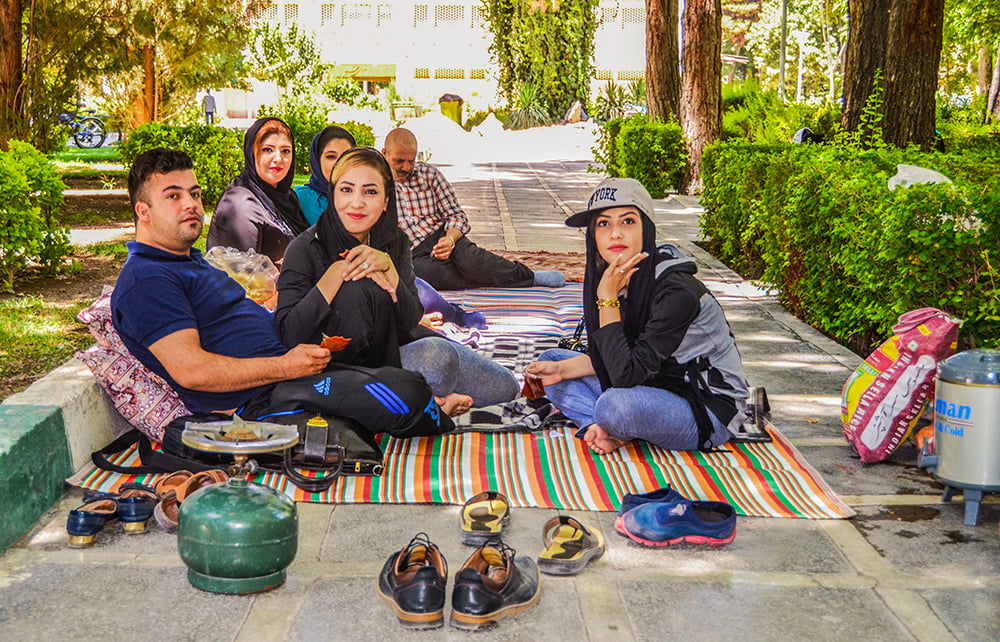
© Jan Oberg – How much longer shall the Iranian people suffer? And shall they also be bombed? NEW – Listen to this article here Jan Oberg March 1, 2021 The West-Iran conflict is extremely a-symmetric. It’s the West that has, historically, sought to influence, change, threaten, demanded obedience from, punished (with sanctions and more), liquidated high-level politicians and scholars, shot down a civilian plane, demonised and excluded Iran. Not to speak of giving Saddam Hussein the chemical weapons and the green light for his war on Iran in 1980. Iran has not done similar harm to the West. Originally published by Transcend Media Service, TMS The conflict’s roots go back to 1953 when the US’s CIA and the UK’s MI6 orchestrated a coup d’etat, or regime-change, in Tehran and deposed the democratically elected Prime Minister, Dr Mohammad Mossadegh and installed the Shah and made Iran the most militarized country...

Shibuya-Crossing-in-Tokyo-Japan
The Shibuya Crossing in Tokyo – what would Gandhi think and say today? Ayako Uno February 17, 2021 Since 2000, I have been teaching courses such as “History of South Asia” as a part-time lecturer at the International Christian University (ICU), my alma mater which was founded after the WWII in order to raise peacebuilders in war-devastated Japan, and I always introduce Gandhiji in my courses. Gandhiji is well known and respected in Japan as “the Father of the Nation of India” who successfully led the non-violent struggle for independence. So young people in Japan that I teach usually have learned something about Gandhiji before. But when I introduce Gandhiji’s life and thinking, many of the students are surprised to learn that his life-long dream of realizing Swaraj or “self-rule” was shattered by Partition. When I invite the students to read Gandhiji’s writings, such as parts of his Autobiography and...
AleppoTank2020_1180-72dpi
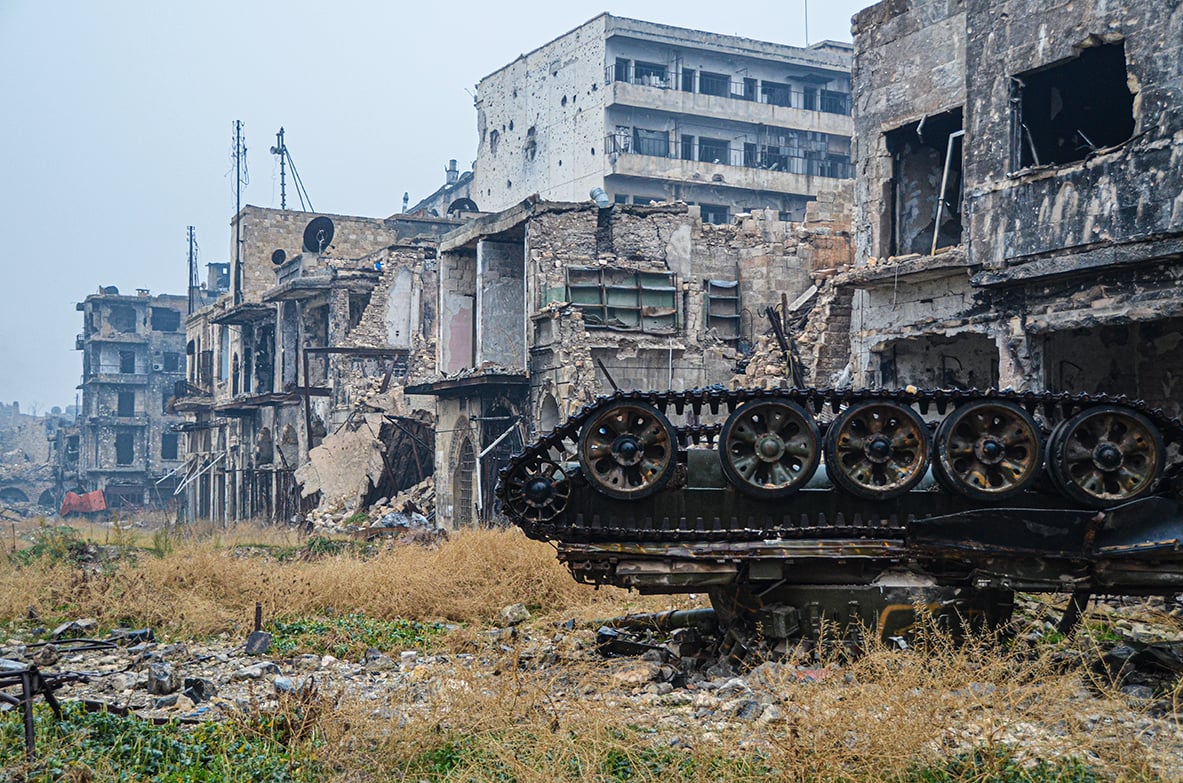
Photo – Aleppo December 2016 © Jan Oberg Against the Institution of War – announcing the publication of the book, The Ecological Impact of Militarism John Scales Avery November 27, 2020 As we start the 21st century and the new millennium, our scientific and technological civilization seems to be entering a period of crisis. Today, for the first time in history, science has given to humans the possibility of a life of comfort, free from hunger and cold, and free from the constant threat of infectious disease. At the same time, science has given us the power to destroy civilization through thermonuclear war, as well as the power to make our planet uninhabitable through pollution and overpopulation. The question of which of these alternatives we choose is a matter of life or death to ourselves and our children. The crisis of civilization, which we face today, has been produced by...
RichardFalk
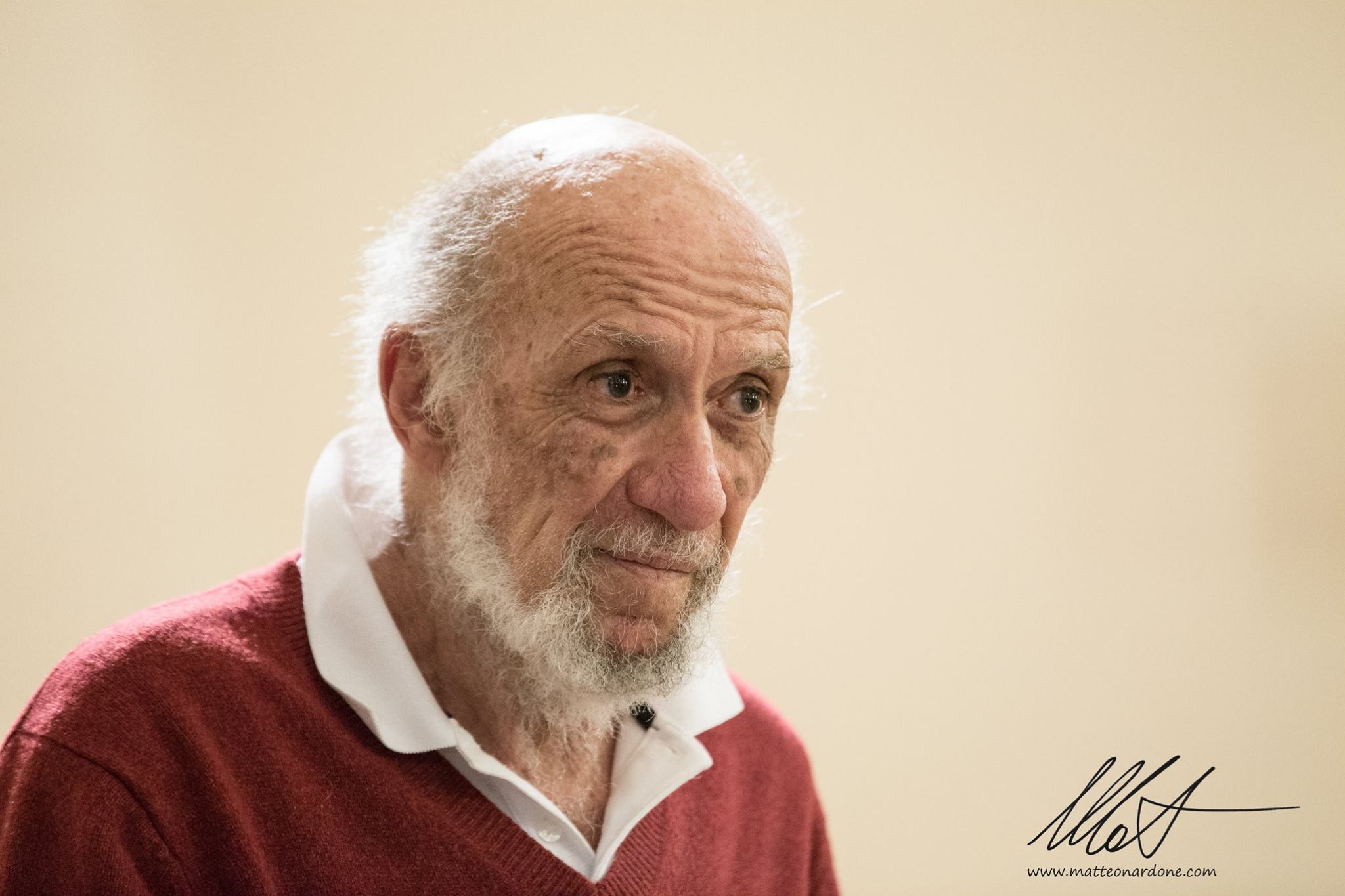
TFF celebrates the world-renowned international law professor, activist, writer, TFF Associate and dear friend By Jan Oberg November 13, 2020 At TFF, we are blessed by having a number of peace and future scholars, world-leading in their professions, who have followed world events over many decades and continue to be committed to world order change and public education. I say “blessed” because I assume that the reader share my reverence for high age and the sharing of long life experience as well as the wisdom that may accompany it in the midst of the youth-worshipping which characterises the ageing and increasingly grumpy West itself – also sometimes called age discrimination. Last month we celebrated Johan Galtung at 90. And today, Richard Falk at 90 – both world-renowned mega-productive scholars restlessly seeking ways to make the world a more peaceful place. And both TFF Associates, mentors and friends of the founders...
osama-750_1439889739_725x725
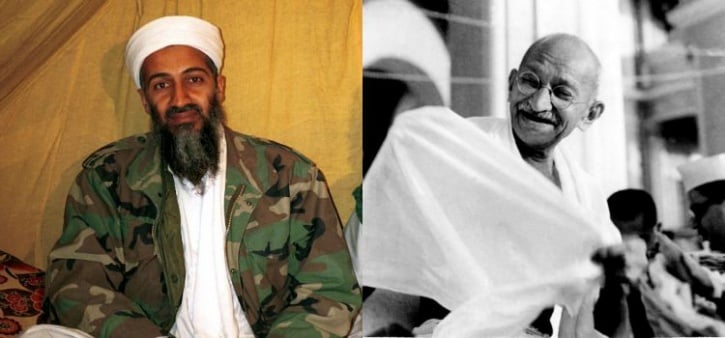
By Bhikhu Parekh November 5, 2020 If he were alive today, how might Mahatma Gandhi, the greatest apostle of non-violence, challenge Osama Bin Laden’s worldview? Bhikhu Parekh is Vice-President of The Gandhi Foundation, a professor of political philosophy, a Labour peer, and the author of three books on Gandhi. This article first appeared in Prospect Magazine in April 2004. Originally published at Gandhifoundation.org Bhikhu Parekh’s preface Like millions around the world, I found the atrocities of 9/11 abhorrent and utterly condemn such acts of terror. Despite the war against terror, we continue to see more horrors such as that in Madrid. What drives the bombers? How do they live with their deeds? Is there no alternative to the cycle of violence? No one is better qualified to advise on this than Mahatma Gandhi, the great apostle of non-violence. My imaginary exchange between him and Bin Laden tries to do two things: to comprehend...
420836_1_En_1_Fig7_HTML
Louis Kriesberg October 21, 2020 Louis Kriesberg This post also appears on the  Beyond Intractability website.  The blog is the Constructive Conflict Initiative / COVID-19 Blog and Lou’s essay is here.   We Americans are beset by many awful circumstances in our country and in the world. As analysts and sometimes as activists we examine such developments, analyzing why they are bad and how they have happened. So many bad things are occurring every day, it is hard to fight against any one of them, as new ones distract us. Below, I sketch out an approach to taking actions that have a good chance to be effective and satisfying in overcoming objectionable circumstances. First, we should select three or four matters that we believe should be bettered. We can each choose those matters that particularly concern us. The matters may or may not be connected and they will vary in...
CrystalOpalescent_2020_1200_100
“Crystal Opalescent” by Jan Oberg 2020 Jan Oberg October 8, 2020 The discourse about, or for, peace has mostly disappeared over the last 2-3 decades. It applies to research (and its non-governmental funding possibilities), to politics in general and to the media.  In foreign and security politics, the intellectual level is now such that it does not even seem strange to decision-makers that they never obtain peace advice or consult peace experts. The fantasy-assumption is that if only there is enough military’ security’ means applied to enough societal problems, peace will automatically come about.  I can’t remember having heard a parliamentarian or minister mention or conceptualise peace beyond the level of the state dinner speech – that is, devoid of theoretical and factual content as well as of meaning.  Originally published as an editorial on the Transcend Media Service, TMS. The mainstream media have no one who can focus on...
ObergComment_OnSite
In times of fake and omission – not to speak of deliberate deception and lies – society’s very foundation is shaken: What can we believe? Who can we trust? What is reliable and truthful information – and how do I know? Tragically, substantial knowledge with complex reasoning about our complex world and its problems has been overwhelmed by marketing, smart soundbites, tweets and ignorance. Diversity has been substituted by uniformity, political correctness and, more recently, the awfully destructive cancel culture and its close companion, self-censorship. People read less, and less and less the long argument – such as (good) books about global problems. Perhaps because we think we are so busy? Whatever the reason, the attention span has shrunk and many have a comfort zone the size of a pinhead. It bodes ill – no matter the kind of social body in which this disease takes root. It spread like...
mahatma-gandhi-1
Human nature, Gandhi said, “will only find itself when it fully realises that to be human it has to cease to be beastly or brutal”. (Illustration: C R Sasikumar) Charles P. Webel with Sofia Khaydari July 28, 2020 The UN’s peacekeeping mission is premised on the Declaration of Universal Human Rights, based on the assumptions that nonviolent means of conflict resolution are preferable to violence, and that all nations and trans-national organizations need to affirm and institutionalize global values. Unfortunately, despite the UN, humanity is far from being delivered from its bellicosity, and a “global ethics” in general, with nonviolence at its core, is far from realization. To understand the desirability but seeming fancifulness of a “Global Ethics” with nonviolence as one of its cardinal values, it is helpful to examine the theoretical and empirical foundations, as well as the possible shortcomings, of global values in general and nonviolence in...
2014-10-29-Peace
60 years of peace theory and peace practice can be summarized in:                                                 EQUITY x HARMONY                              PEACE =   ——————————-                                                 TRAUMA x CONFLICT Four theory foci, four policy tasks, and four education topics. Any true education should prepare for practice, guided by general theory. Moving from denominator right to numerator left, this means: Mediation is verbal, based on dialogues with the parties, but the four tasks are very concrete, practical.  For doers not only talkers; for practical people like officers.  Hence the Big Question: Is peace theory-practice-education compatible with the military mind – however defined, and there are many military cultures in the world – or not? Originally published at TRANSCEND Thinkers so diverse as Nietzsche and Gandhi saw the military as exemplary because of the ésprit de corps and willingness to sacrifice, even their own lives. For Gandhi the kshatriya (military) caste was a model: he wanted non-violent warriors, with the same perseverance, also indispensable...
floyd
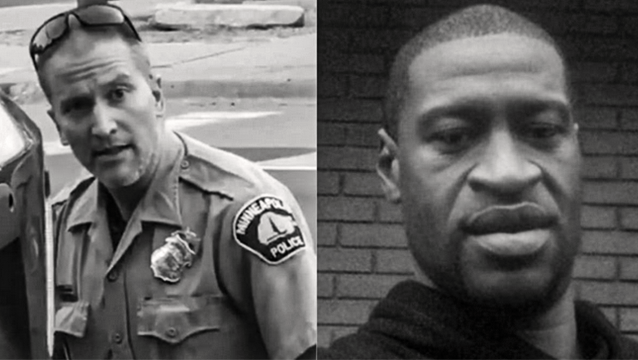
June 10, 2020 Jan Oberg The horrific police murder of the black American George Floyd is, of course, not the first, neither will it be the last. Fortunately, it has set in motion significant protests not only in the United States but around the world – on top of the Corona Crisis. And it has created an opportunity for people to do symbolic acts such as taking a knee, criticising President Trump’s Bible Show after he had – classical dictatorship-style – used violence on peaceful demonstrators, etc. And people posted black images on Instagram. These are individual protests in response to an individual being killed in a single event. They are very human, noble and understandable, indeed, necessary – as markers that enough is enough. But where will it go from that first reaction? The comprehensive perspective To approach and answer, read carefully this statement by Martin Luther King, Jr.:...
Buddha-3
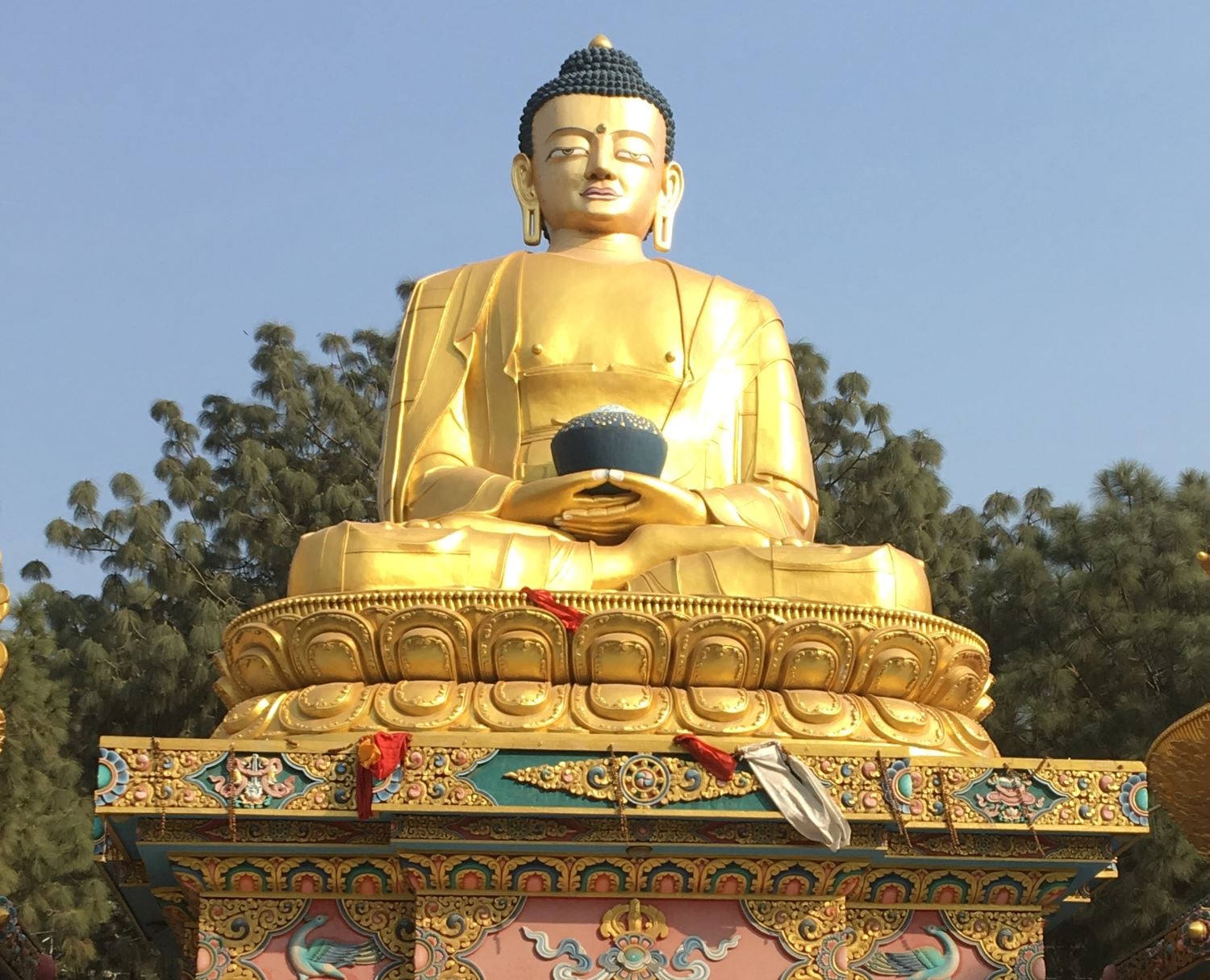
May 26, 2020 By David Loy Maybe every modern generation feels confronted by some crisis that will affect the fate of the world, but unless your head is buried in the sand (or some Buddhist equivalent) it’s impossible to be ignorant of the extraordinary planetary emergency that confronts us today. The recent IPCC report states clearly that ecological collapse no longer merely threatens — we are well into it. It’s become apparent that civilization as we know it is about to be transformed in some very uncomfortable ways by climate breakdown, mass extinction of species, resource depletion and various types of pollution — perhaps including some kinds we don’t even know about yet. Originally published at Huffington Post Although our globalizing economic system is a wholly-owned subsidiary of the biosphere, most of the CEOs who supervise it (as much as anyone controls it) can’t seem to plan much further than...
Categories

Year

Author / Contributor

Region