

The Shibuya Crossing in Tokyo – what would Gandhi think and say today?

Ayako Uno
February 17, 2021
Since 2000, I have been teaching courses such as “History of South Asia” as a part-time lecturer at the International Christian University (ICU), my alma mater which was founded after the WWII in order to raise peacebuilders in war-devastated Japan, and I always introduce Gandhiji in my courses.
Gandhiji is well known and respected in Japan as “the Father of the Nation of India” who successfully led the non-violent struggle for independence. So young people in Japan that I teach usually have learned something about Gandhiji before. But when I introduce Gandhiji’s life and thinking, many of the students are surprised to learn that his life-long dream of realizing Swaraj or “self-rule” was shattered by Partition.

When I invite the students to read Gandhiji’s writings, such as parts of his Autobiography and Hind Swaraj or Indian Home Rule which are translated to Japanese, often they become perplexed and find it very difficult to understand how the people of India were able to follow Gandhiji’s call for non-violence, inviting everyone to serve selflessly for the Sarvodaya or uplift of all, especially the most downtrodden and poor people of India. Gandhiji’s insistence on non-violence and truthfulness in all spheres of life seems to the young Japanese students to be impossible to follow. “How could so many people of India have joined the great non-violent struggle for Swaraj sacrificing their lives, following the call of Gandhiji?” is a question that students I meet often put up. Together in the classroom, we ponder on the bravery and non-fearing, self-less sacrifice of the people of India and Gandhiji.
My students are perplexed because the young people in Japan today are educated and encouraged to be successful in life’s competition and to be rich in this world, as all the other major nations are striving to be today. But what about those who could not be successful in the various types of competition? There are even some trendy words in Japanese to describe those who are the “winners” and the “losers”: what a terrible way to divide our people!
The world is led by selfish leaders, not self-less ones. It is so common that we are no longer surprised to learn that our leaders are often so neglectful of being truthful. There are young Japanese who sometimes criticize and frown upon these situations but most of them basically accept these as the “reality” in which they have to live today.
So, what Gandhiji lived to teach through his life, to live self-lessly serving the others in constant search for Truth or God, is not something that go along the line of what young people are taught at schools and by our societies today.
However, for a baby to grow up he/she must have been given abundant self-less love from its family and surrounding people as well as countless gifts showered from Nature. Thus, the young people know instinctively the true worth of self-less love but often they are bewildered and become confused with the messages of the mainstream world.
To learn to live givingly could be taught only through the living example. To be content and thankful with what is given as gifts from the above and not to be coveting what others have, has been taught to ordinary simple people in Japan over the ages. For example, with what we call “chi-soku no seishin” in Japanese. This teaching resonates with what Gandhiji came to understand as the “essence of Hinduism”, the first verse of the Ishopanishad: Gandhiji explained it in his own words in 1937, “All this that we see in this great Universe is pervaded by God” so “renounce it and enjoy it” or “enjoy what He gives you,” and then the final part “Do not covet anybody’s wealth or possession.” (Collected Works of Mahatma Gandhi, Vol.64 p. 259; “Speech at Quilon”, on January 16, 1937).
Such ancient wisdoms may have survived among ordinary Japanese people till recent times, but now are more or less overlooked and forgotten.
Today the economy system urges us to buy more, and as the result we have so many things but still crave for more, and many of us live in fear of losing what we have. We have become so greedy that we have forgotten the values of helping each other and sharing whatever we have with others. Almost every day in Japan we hear of horrible news of killing each other even among family members, and fightings among nations and people, so much that our nerves have numbed. This is the crazy world we are in today.
When the terrible Great Earthquake hit the Eastern and Northern part of Japan on March 11th, 2011, which took so many lives and shattered the normal lifestyle of so many people, there were so much suffering and destruction in front of us. This led many to seek for re-establishment of older ethical values of Japan, such as the intimate community of people ready to help each other without seeking rewards. And many people became eager to strengthen the ties of the family where people would care for each other selflessly.
But once lost, to rebuild these takes a long time and continuous efforts of the people.
The Great Earthquake had grave effects even in Tokyo, too, and especially the devastating damages caused by the destruction of nuclear power plants in Fukushima led many to question our consumerism-centered economy and self-centered ways of living as being so fragile and without any real foundations.
Since the Earthquake, among some people who felt the need to change their ways of life and also among those who were thrown down in despair who did not know how to recover their physical and psychological losses and felt utterly helpless, their intense sufferings and yearnings led to publications of books related to Gandhiji in Japan.
Although it is difficult to say if these publications had any lasting impacts on Japanese people in general, the fact that life and thinking of Gandhiji was sought as meaningful to many Japanese today to overcome their sufferings shows that Gandhiji’s message has a universal meaning, related to our own ancient wisdom and ways of living which we have lost touch with due to modernization.
This trend is still more or less quietly continuing, and there are few but constant publications that introduce Gandhiji in Japan. But I have grave doubts about whether we are really trying to understand the basis of Gandhiji. For example, there is a book in Japanese by a certain economic analyst with entitled (in translation) Gandhi’s Economy and the End of the Global Capitalism from August 2020. The message on the book-cover gives the impression that the book will discuss Gandhian economic thinking in order to save humanity and Earth in this age of global crisis.
But actually, I found that the author’s intention was not to promote any understanding of what Gandhiji thought about economics, but the author just wanted to criticize the present global economy with his own ideas, giving just a few pages to introduce Gandhiji’s ideas on the economy which the author sums up to something like “a good balance between Capitalism and Marxism” urging people to choose to buy what is produced by their neighbours; the author seems to see that as part of what he calls “ethical consumerism”.
Is this really Swadeshi or righteous economy that Gandhiji worked so hard for? The author does not even bother to introduce anything written by Gandhiji. Reading such a book makes me think that we have to be really careful to delve deeper to see the basis of Gandhiji’s way of life and thinking which calls us to bring radical changes in our outlook of life. This is not easy for us who are so deeply submerged in modern life. We cannot just borrow some “good” ideas from Gandhiji to amend our way of life just a little bit here or there.
Now let me get to my story of a small group of seekers in Japan trying to learn and imbibe the message of Swaraj.
Gandhiji is the “voice of sanity” calling each of us to wake up from our deep slumber in the world today saturated with violence and greed. This understanding of Gandhiji may be rather unique, but it is the starting point that members at the ICU Gandhi Study Group share as we continue to attempt to learn together from Gandhiji.
Since we are brought up and educated in the contemporary modern system, this world now seems to be the “normal” situation, and we have little chance to realize that the world is going insane as long as we do not listen to such a “voice of sanity”. Gandhiji has been a forerunner in this tremendous battle to wake up humanity to sanity, calling us to listen to the still small voice within ourselves, to start walking one step at a time to realize each one’s Swaraj, or self-rule, here and now.
Undoubtedly, Gandhiji is the great leader who led the people of India to Independence and as a historian, I find we have much to learn from him. However, if we see him just as a “great historical figure”, to many ordinary people of Japan Gandhiji might have little relevance to their daily lives today. No, after more than thirty years of our humble efforts to learn from Gandhiji, I find that Gandhiji’s message calling us to wake up to Swaraj – self-governance, “self-rule” or “home-rule” has the universal significance today, not only to the people of India but globally.
This understanding of Gandhiji, I have learned through years of dialogue with my mentors, Professor Minoru Kasai, now Professor Emeritus of ICU, and his dear mentor and friend, the late Professor A. K. Saran, an Indian sociologist speaking for traditional thought, who came to Japan to teach at our university in 1983 and 1991 to 1992. In 1983 Professor Kasai and Professor Saran led me to read for the first time Gandhiji’s Hind Swaraj or Indian Home Rule, the most radical manifesto of Gandhiji written in 1909. I have been continuously pondering on Gandhiji’s message since then.
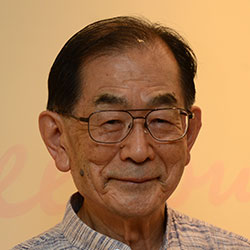
Minoru Kasai 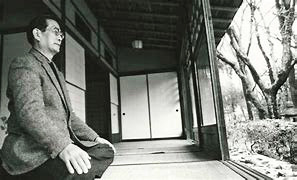
Minoru Kasai
At first, since I was a young student who had been educated in modern Japan, I could not accept Gandhiji’s radical critique of modernity at all. As a young Japanese, I had no sensitivity to see from what point Gandhiji was criticizing modernity. This is the common response that I find in my students today when they learn of Gandhiji’s critique of modernity.
When we look back in the history of Japan, since Meiji Restoration in 1868, we Japanese have been eagerly seeking modernization. In order to succeed in the international competition of modernity, we have willingly thrown out our ancestors’ faith and wisdom. Today it seems modernity rules the Japanese mind from top to bottom. Nowadays when we hear some horrifying news of crimes or scandals occurring in Japan, we feel perhaps we have lost too much of our morality, and too many Japanese have come to worship money as God, as Gandhiji had pointed out as characteristic of modern civilization in Hind Swaraj.
Still, the majority of Japanese have little doubt as to the beneficial effects of modern civilization. It is only when we listen to the voiceless voices of those who suffer, the victims of violence of modernity, that we may see the glimpse of the real nature of our present predicaments and find that Gandhiji was the exceptional forerunner to see it. This understanding of Gandhiji I have learned through the dialogue with Professor Kasai and Professor Saran.
Now we need to get to the root of Gandhiji’s point of view in order to understand his message. Let us see what is the most crucial point in Gandhiji’s critique of modernity. As is well known, Gandhiji wrote in Hind Swaraj (Ch.8) about the situation of India at that time being so sorrowful and heart-breaking. He wrote:
“It is a sad condition. In thinking of it, my eyes water and my throat gets parched. I have grave doubts whether I shall be able sufficiently to explain what is in my heart. It is my deliberate opinion that India is being ground down not under the English heel but under that of modern civilization. It is groaning under the monster’s terrible weight. There is yet time to escape it, but every day makes it more and more difficult. Religion is dear to me, and my first complaint is that India is becoming irreligious. Here I am not thinking of the Hindu, the Mahomedan, or the Zoroastrian religion, but of that religion which underlies all religions. We are turning away from God.” (Chapter 8 “The Condition of India”)
In Hind Swaraj, Gandhiji criticized modern civilization as being immoral and Godless, leading people to lose self-control, and even the English people were no exceptions. Gandhiji saw that in India at that time (1909) the majority of people in the villages were still not affected by modern civilization, but he saw that time was running out, since the leaders and upper-class people who received a Western education and urbanized themselves were finding modern civilization attractive and good. Gandhiji posed the crux of the problem as I have quoted above: “We are turning away from God.” What does this mean?
As I learned more about the life of Gandhiji, I realized that his awareness of, and faith in, this “religion which underlies all religions”, or his ardent search for Truth, was the source of all his action and thus the key to understanding him, but still, that was something which seemed almost alien to me.
It has required more than information and knowledge to overcome my insensitivity to this awareness. I had to have my heart open to have a sense of this, which takes time to grow and needs forerunners (teachers) who live this very reality as well as a group of friends who share the yearning, a small intimate community. It is through meeting sincere people face to face, forming a trusting relationship, and learning from each other humbly that this awareness has grown.
Through this common endeavour, we learned that modern civilization is spreading darkness everywhere in this world causing so much suffering and pain because we are turning ourselves away from the true light. In midst of this darkness, Gandhiji lived as the light encouraging and inviting people of India and the world to follow his way fearlessly, with faith, as a pilgrim towards the Light. In this pilgrimage, where Gandhiji used to sing “One step is enough”, the means (ahimsa or nonviolence or love) is solely important, leaving the result in God’s hands.
Where does this faith, this strength to live as a pilgrim following the distant star, come from? I found some hints in a writing of N. K. Bose, a famous anthropologist from Bengal who walked with Gandhiji in 1946 in his pilgrimage at Noakhali in midst of communal rage tearing India apart.
Bose wrote his “Gandhi and Lenin,” a momentous article in prison in 1932 after taking part in the Salt Satyagraha (originally published in 1933, later published in Studies in Gandhism, Navajivan Publishing House, 1972, pp300-6). In this essay, Bose presents both Gandhi and Lenin as great leaders of the world who are fighting the battle for the poor and oppressed, but when it comes to the means and the outlook of life, they are dramatically different from each other.
To Lenin, a warrior who justifies violent bloody revolution in order to bring about the promised millennium, ends justifies the means; while to Gandhi, as a pilgrim, walking step by step, looking up to the light of the star, the means – that is non-violence and love – is everything which matters in his endeavour to live as a lump of clay in the hands of God, with no fear, only faith.
Bose who was himself a witness working in midst of the Satyagraha movement in India, questions, why would so many people of India follow Gandhiji’s difficult path full of thorns? Bose writes of Gandhiji:
“A lone man marching with set purpose upon the road of God; whose heart beats in unison with every sorrow in the human breast: determined to share all suffering and degradation, and ready to sacrifice himself in the effort to eradicate all that oppresses human life; but who is never prepared to betray the sacred trust of human unity even for the sake of temporary gain; such a character holds an appeal and an encouragement far greater than the cold star of truth towards which the pilgrim may be marching himself. It is only when the light of the stars shines forth through the life of a man that we can feel its glow and light our own life’s path by means of its radiance.” (p.306)
This description helps us to understand how people in India saw the light through the presence of Gandhiji. It is important to note that Bose saw himself as a non-religious person, a scientist dedicated to search for truth, and Gandhiji told him that is enough to work with Gandhiji. So, from Gandhiji’s point of view, what matters is not whether a person belongs to one religion or another; what matters is if “religion which underlies all religions” is alive in that person.
When we look around in Japan today, we hardly find people who are living in the manner of Gandhiji, but does that mean that we are not following his path? We must look at the root of Gandhiji’s thoughts. As Bose writes above, that Gandhiji is never prepared to betray “the sacred trust of human unity” helps us to understand what Gandhiji meant when he said that “means and ends are really one as the two sides of a coin.”
This is the crucial point but difficult to understand. I found a hint in what Thomas Merton, an American Catholic monk, wrote in “Gandhi and the One-Eyed Giant” as the introduction to Gandhi on Nonviolence which he edited (New Direction, 1965, p.6). Merton writes:
“In Gandhi’s mind, non-violence was not simply a political tactic which was supremely useful and efficacious in liberating his people from foreign rule, in order that India might then concentrate on realizing its own national identity. On the contrary, the spirit of non-violence sprang from an inner realization of spiritual unity in himself. The whole Gandhian concept of non-violent action and Satyagraha is incomprehensible if it is thought to be a means of achieving unity rather than as the fruit of inner unity already achieved.” (italics by Merton, also found in I Have Seen What I Was Looking For here)
Gandhiji’s pilgrim’s progress started from his awakening to the unity in himself. From here his “experiments with truth” which seeks one goal begins. Gandhiji writes in “Introduction” to his Autobiography, “What I want to achieve—what I have been striving and pining to achieve these thirty years—is self-realization, to see God face to face, to attain moksha. (salvation).”
Thus, the one goal which he strives towards is the realization of the Unity, which is God, which includes all of us, here and now, overcoming all the differences of humanity and including all in nature. For such a person who has awakened to the unity, no matter what the situation may be, the only means to take is non-violence or love.
In Japan today, this sensitivity seems to be forgotten and neglected. How to revive such sensitivities?
In modern universities we students always want to know the right questions and right answers, what would be the right formula, etc., but what Professor Saran tried to do was to question the questions themselves carefully through dialogue and open our eyes to the need to “unlearn” what modern education taught us.
We were encouraged by Professor Kasai and other forerunners to listen to the call from the root within, in communion with Nature, in deep silence shared, giving us the yearning for Truth, which I found after many years, was already here inside myself, waiting to be discovered. This is not just for myself, but for everyone, since I am also only a part of the sacred unity.
This is what I would like to call Swaraj awareness, open to everyone, is for me, of course, still only a glimpse, and everyone of us are invited to proceed everyday step by step towards our Swaraj. This realization is, from my point of view, a precious gift from India, and I am deeply thankful to the people of India for sharing the secret.
After Professor Kasai retired from ICU in 2000 our study group had to disperse, but we continued to meet from time to time irregularly. It was in 2010 that we re-started our common endeavor as the ICU Gandhi Study Group. We started by reading Professor Saran’s papers, for example his Hinduism in Contemporary India (Samyag-Vak Special Series -X, Central Institute of Higher Tibetan Studies, 2007) and then we have been reading together the late Shri Narayan Desai’s 4-volume biography of Gandhiji, My Life is My Message (originally written in Gujarati, English translation published in 2009 by Orient Blackswan). This biography, beautifully written by Shri Narayan who himself was walking as Gandhiji did, is the story of how Gandhiji struggled to live as a pilgrim on the way to Truth, inviting all including us here in Japan, to follow him in his steps to realize Swaraj today.
One crucial event which led us to re-start our common endeavour to learn from Gandhiji was the “Hind Swaraj Centenary International Conference” held in Delhi in 2009 to which Professor Kasai was invited, organized by Swaraj Peeth Trust, a Gandhian Centre for nonviolence and peace. Swaraj Peeth Trust was founded by Shri Rajiv Vora and Dr Niru Vora. Their pursuit to re-discover the Swaraj awareness among different groups of people in India, by meeting them face to face, reading Hind Swaraj together in what is called Swaraj Camps, listening to each other sincerely, is a source of great inspirations for us. (More information on Swaraj Peeth Trust here).
I made mention here of Swaraj Peeth Trust because our endeavor in Japan has been closely related to theirs. We are learning so much from their experiments rediscovering that Swaraj is meaningful and alive for the common people of India today. Let us continue to learn from the universal significance of Gandhiji’s message of Swaraj and devote ourselves to each one’s small steps in the right direction toward its realization, as Gandhiji himself did.
I would like to end my essay with my deep gratitude to Gandhiji who continues to live as the light in darkness, not only for the people of India, but for all humanity. It is my heartfelt prayers that we may be given the courage to proceed step by step with faith toward the Light starting now, from where we are, receiving everything as the gift from Above, and to be a bearer of the light ourselves.
Thank you.
About the author & a little background
Dr Ayako Uno
Research Fellow, Institute of Asian Cultural Studies, International Christian University, ICU, Tokyo, Japan.
The article above has been adapted from a presentation she made at the Webinar to Celebrate the 150th Birth Anniversary of Mahatma Gandhi organized by the Central University of Jammu: “Relevance of Mahatma Gandhi’s Thought in Contemporary Times”, September 20th Sunday, 2020.
As the editor of The Transnational, I would like to add that Ayako Uno was one of my unforgettable students when I taught back in 1990-1991 at the International Christian University; she was then a student but also an omnipresent helper at seminars and at organizing the Gandhi Study Group we had at the time and its meetings – not the least those under those lovely cherry trees on campus – together with my mentor there, Professor Minoru Kasai – unforgettable too.
We took up contact again now 30 years later because of the article I wrote about UN reform in 2020 when the UN turned 75 and non-violence which grew out of a seminar at ICU initiated specifically for me by professor Kasai.
Like Ayako-Sensei, I’d like to express my gratitude to her, to Minoru-Sensei, to my students and research colleagues at ICU at the time. May you all stay well many years ahead and continue your devotion to nonviolence in general and Gandhiji in particular.
Recommended
Thomas Weber, TFF Associate, and Akira Hayashi, Mahatma Gandhi: The Japanese Connection





