Nuclear

Category

Year

Author / Contributor

Region

Sort by

Showing 1-10 of 379 stories

and0310color-for-slider_0
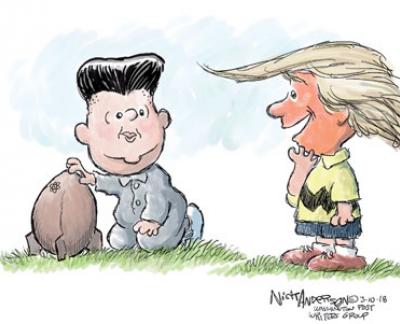
  Elisabeth Eaves of Bulletin of the Atomic Scientists talks with Siegfried Hecker, one of the most well-informed experts on the US-Korean nuclear issues.   Via thebulletin.org It was an extraordinary week in North Korean nuclear affairs. First, high-level South Korean envoys met with the North’s leader Kim Jong-un, returning to Seoul with promises of an inter-Korean summit and other seemingly conciliatory statements. That news was quickly eclipsed, though, when later in the week, one of the South Korean envoys turned up in Washington with a personal invitation from Kim Jong-un to US President Donald Trump to meet him in Pyongyang. Trump agreed to meet “at a place and time to be determined.” It would be the first-ever meeting between a sitting US president and a North Korean head of state. But just as everyone was getting their heads around the idea that these two leaders – who just last...
3727
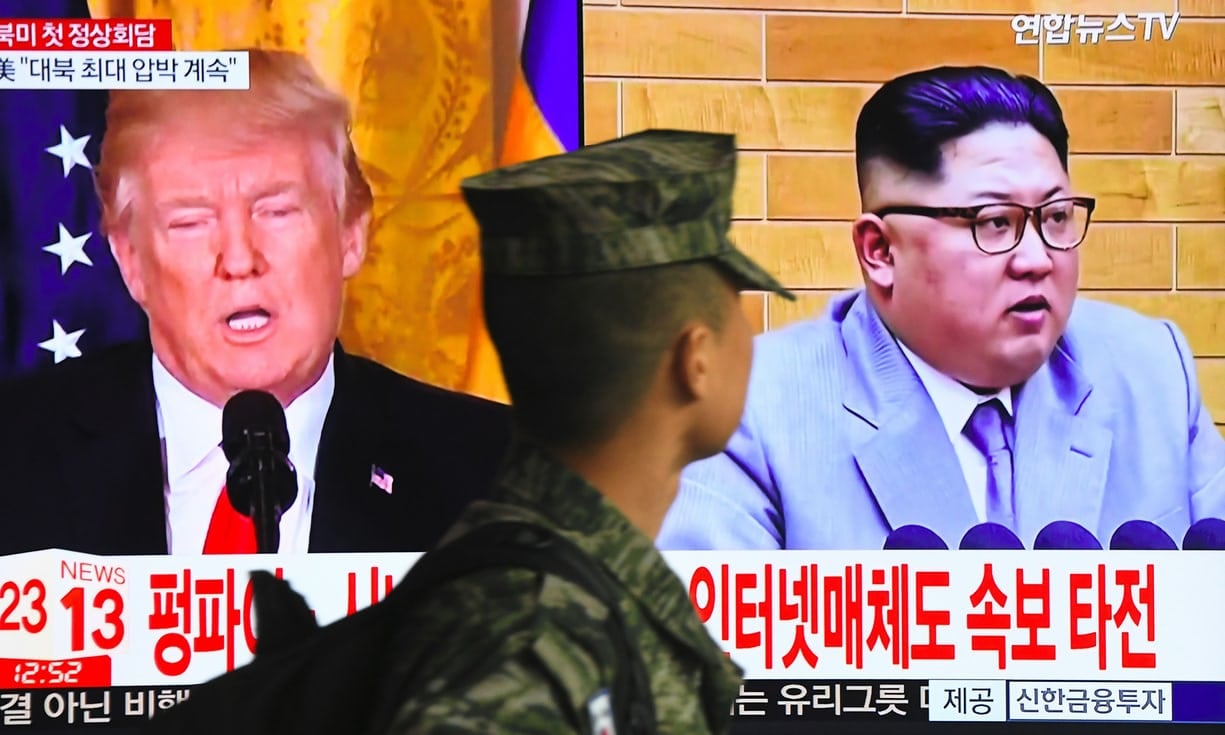
”En häpnadsväckande utveckling”, skriver brittiska The Guardian om beskedet att Donald Trump och Kim Jong-un ska mötas vid ett toppmöte i maj. Nu är det diplomati som gäller, inte kärnvapenhot. Beskedet om att Nordkoreas Kim Jong-un ska möta Donald Trump på ett toppmöte i maj var fredagens stora glädjande nyhet, en total kontrast mot höstens eskalerande utveckling mot ett tänkbart kärnvapenkrig mellan två konfliktanalfabeter. Först tryckt här på Kultur-Sörens blogg – en av Sveriges absolut mest läsvärda Brittiska The Guardian skriver engagerat om  ”a stunning development following months of tension and mutual sabre-rattling …” och det är lätt att instämma och glädjas. Amerikanska The New Yorker uttrycker sig på liknande vis: ”In a breathtaking gambit that surprised his closest advisers, President Trump, almost impulsively, accepted an invitation on Thursday to meet the North Korean leader Kim Jong Un … I höstas genomförde Nordkorea en rad kusliga tester med missiler som kan bära...
GarethPorter-e1540558470864
March 3, 2018 The CIA’s “Operation Merlin,” which involved providing Iran with a flawed design for a nuclear weapon and resulted in an alleged whistleblower going to prison, was the perfect example of creating intelligence in order to justify operations, reports Gareth Porter. Originally published by ConsortiumNews here By Gareth Porter Jeffrey Sterling, the case officer for the CIA’s covert “Operation Merlin,” who was convicted in May 2015 for allegedly revealing details of that operation to James Risen of the New York Times, was released from prison in January after serving more than two years of a 42-month sentence. He had been tried and convicted on the premise that the revelation of the operation had harmed U.S. security. The entire case against him assumed a solid intelligence case that Iran had indeed been working on a nuclear weapon that justified that covert operation. But the accumulate evidence shows that the...
b0eedfc8574df27573797d54acb9f9512602e4c4
Image credit below   Introduction TFF believes it is of utmost importance to abolish nuclear weapons. While some may maintain that the risk that nuclear weapons will be used is small, others will argue that the consequences – no matter the risk – would be catastrophic beyond imagination and morally unacceptable and that no political goal can legitimate their use. Therefore, its an imperative to educate ourselves about these things – the media in generally having abdicated their responsibility to provide public education about this and other controversial themes. No matter what knowledge and opinion each of us has, there is no doubt that the risk of nuclear weapons use has increased in 2017-2018 due to a series of developments and political statements that must be judged to be grossly irresponsible and could, whether intended or not, lead to catastrophic misinterpretations, fear and panic reactions. If you use the Search...
1719099
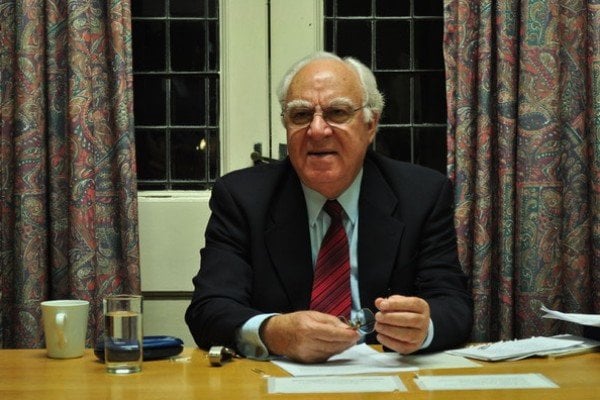
TEHRAN – Farhang Jahanpour, an adjunct professor in the Department of Continuing Education at the University of Oxford and a Middle East expert, says that all other signatories to the JCPOA, including the European Troika (the UK, France and Germany) have stated that they are for the nuclear accord, since Iran has remained committed to the deal. (JCPOA = Joint Comprehensive Plan of Action = the deal about nuclear technology between Iran and the five UN Security Council members + Germany + EU. You can read it here.) “Nevertheless, EU countries are in a difficult position with the American demands,” Jahanpour tells the Tehran Times in an exclusive interview. Jahanpour, also a former senior research fellow at Harvard University and TFF Board member, says that Europe is playing a double game with Iran. “On the one hand, they [European countries] have stated openly that they support the JCPOA and have...

NukeNPR_WordCloud
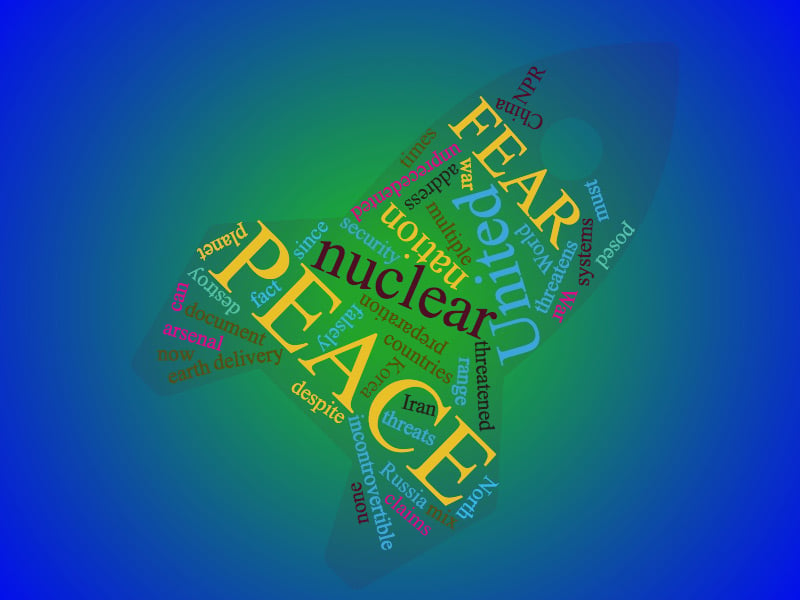
  Robert J. Burrowes February 18, 2018 • The United States Department of Defense released its latest ‘Nuclear Posture Review 2018’ (NPR) on 2 February, updating the last one issued in 2010 during the previous administration. See ‘Nuclear Posture Review 2018’. The Executive Summary of the NPR is also available, if you prefer. See ‘Nuclear Posture Review 2018 Executive Summary’. Several authors have already thoughtfully exposed a phenomenal variety of obvious lies, invented threats, strategic misconceptions and flaws – such as the fallacious thinking behind ‘deterrence’ and significantly increased risk of nuclear war given the delusional ‘thinking’ in the document – as well as the political fear-mongering in the NPR. For example, eminent scholar Professor Paul Rogers has pointed out: ‘The risk now is that we are on a slippery slope towards “small nuclear wars in far-off places”, which themselves could either escalate or at the very least break the...
CostNukeModern
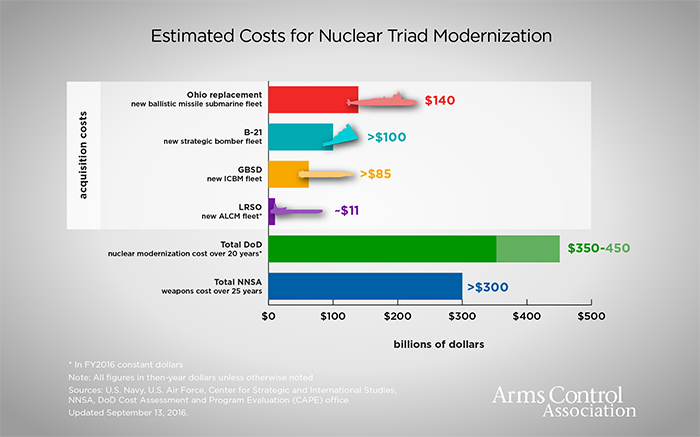
  By Gunnar Westberg February 16, 2018   This is how I would summarize the new US Nuclear Posture Review, issued last week by the Trump administration: • We can fight and win a nuclear exchange • We are prepared to use nuclear weapons against a conventional attack, e.g. a cyberattack • We may consider using nuclear weapons against a nuclear-weapons-free country • We care not to mention our obligations under NPT Art VI • We have never heard of the climate effects of nuclear war.   In January 2017, President Donald Trump ordered a new Nuclear Posture Review (NPR). The report is now available. It is 75 pages long. Most of the material repeats earlier NPRs. I will here concentrate on the new aspects.   “Escalate to de-escalate” Russian military writers have discussed the possibility of using “small” nuclear weapons if the country is attacked by an adversary with...
hiroshima
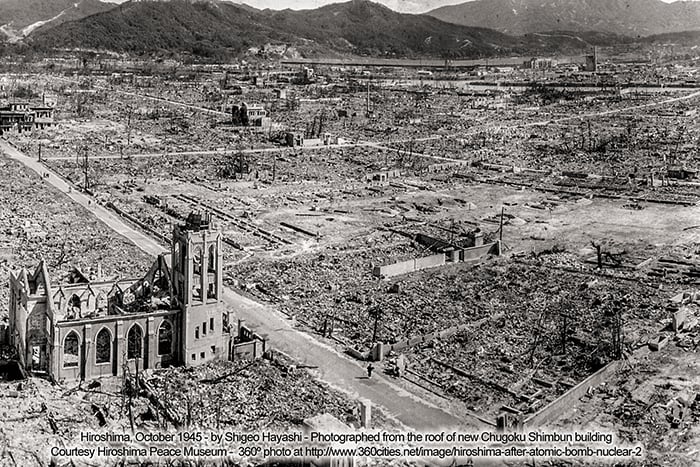
  Paul Rogers   8 February 2018   The what, when, where of nuclear danger – and the good news about dispelling it.   In the past couple of weeks, the details of the new United States nuclear posture have been published, Trump has delivered a belligerent state-of-the-union address and, most significant of all, the authoritative Bulletin of the Atomic Scientists has moved the minute hand of the Doomsday Clock to two minutes to midnight. Originally published at openDemocracy   This is the closest the clock has been to “doomsday” since the US and Soviet Union started testing immensely destructive H-bombs in the early 1950s. Now, after thirty years of an apparent easing of nuclear tensions since the end of the cold war, fear of nuclear war is real and pressing. In recent months I’ve written some specific pieces on the nuclear issue for openDemocracy, mostly related to North Korea...
Screenshot
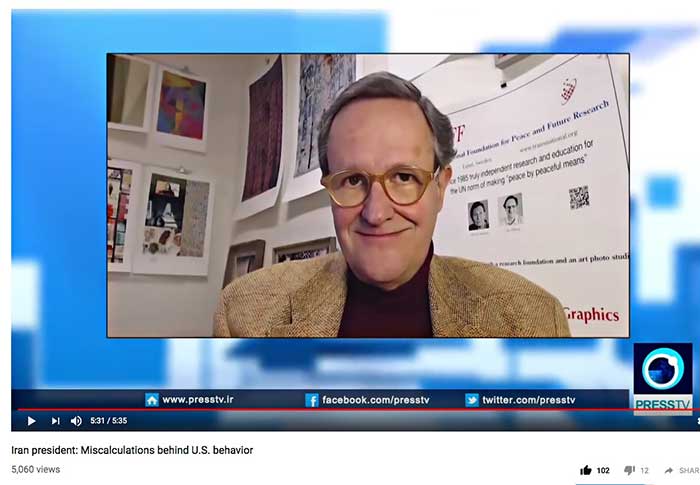
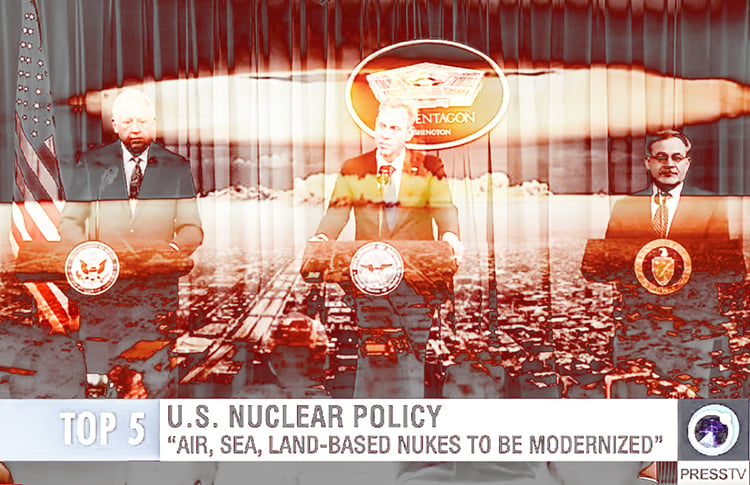
  By Jan Oberg Commenting on PressTV – also on how the Western mainstream press that publishes any piece of hysteria about Russia and China keep virtually silent about this and also the equally dangerous US National Defence Strategy that appeared a few days before this. Photo collage above © Jan Oberg 2018        
nuclearism
  No it didn’t. The mainstream media are totally irresponsible in their priorities. At the moment of writing, five hours after the world’s most dangerous document was presented, no major Western media has featured it prominently. This means it won’t be. No chance it would go viral. The increasing risk of nuclear war isn’t important. While people talk about fake, a much larger issue is omission: What is hidden to you? What world order issues are deliberately down-graded? What threats to humanity end up at the bottom of page 38 after 10 pages of sports, entertainment and celebrity stories. Another technique is cover-up, talking about something else such as the ever convenient North Korean “threat” or Russia’s latest evil plot. It’s not only ignorance. There are media and other power elites who know exactly what to hand out to you and how. And what to fake, omit and cover up...
512px-Doomsday_clock_2_minutes.svg_
By Paul Rogers 30 January 2018 Summary North Korea and Russia may be the focus of contemporary Western fears of imminent nuclear-armed conflict but development and deployment of “useable” nuclear weapons has been a constant throughout the atomic age and by all nuclear-armed states. Current revision of the United States’ declared nuclear posture is only the most visible manifestation of adjustments to all the main nuclear arsenals, with the UK at the vanguard of deploying technologies potentially calibrated for pre-emptive rather than retaliatory strike.   Introduction The August 2017 briefing in this series, Limited Nuclear Wars – Myth and Reality, focused on the common misconception that nuclear weapons exist as ultimate deterrents against catastrophic attack and that by maintaining the ability to retaliate they therefore deter the initial aggression. Some of the emphasis of the briefing was on the UK’s position following the Prime Minister’s firm declaration to Parliament that...
Categories

Year

Author / Contributor

Region