Militarism (MIMAC)

Category

Year

Author / Contributor

Region

Sort by

Showing 1-10 of 229 stories

china-sep2020-845x550-1-720x469-1
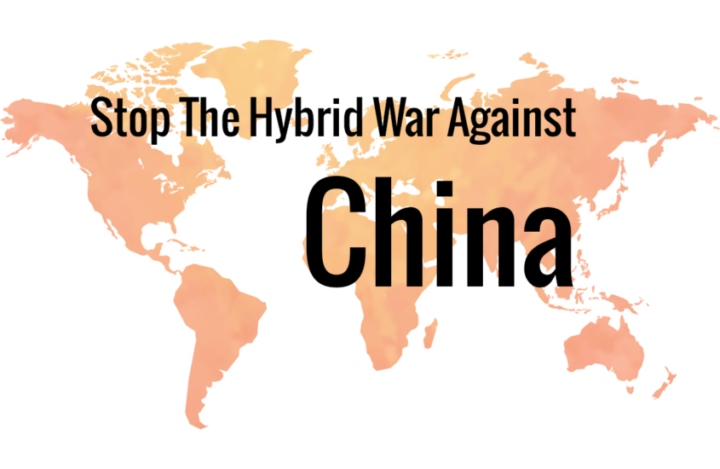
Image by Stock File Madison Tang and Jodie Evans May 23, 2021 U.S. President Joe Biden’s budget proposal for the next fiscal year was recently announced, and it requests $715 billion for his first Pentagon budget, 1.6 percent more than the $704 billion enacted under Trump’s administration. The outline states that the primary justification for this increase in military spending is to counter the threat of China, and identifies China as the U.S.’s “top challenge.” Within the proposal is an endorsement of U.S. Indo-Pacific Command head Admiral Philip Davidson’s request for $4.7 billion for the “Pacific Deterrence Initiative,” which will increase U.S. military capabilities in Guam and the surrounding region. The Indo-Pacific Command is also requesting $27 billion in additional spending between 2022 and 2027 to build a network of precision-strike missiles along the islands surrounding Beijing. This article was originally published at Pressenza The U.S.’s unilateral aggression toward China—in...
CCTV
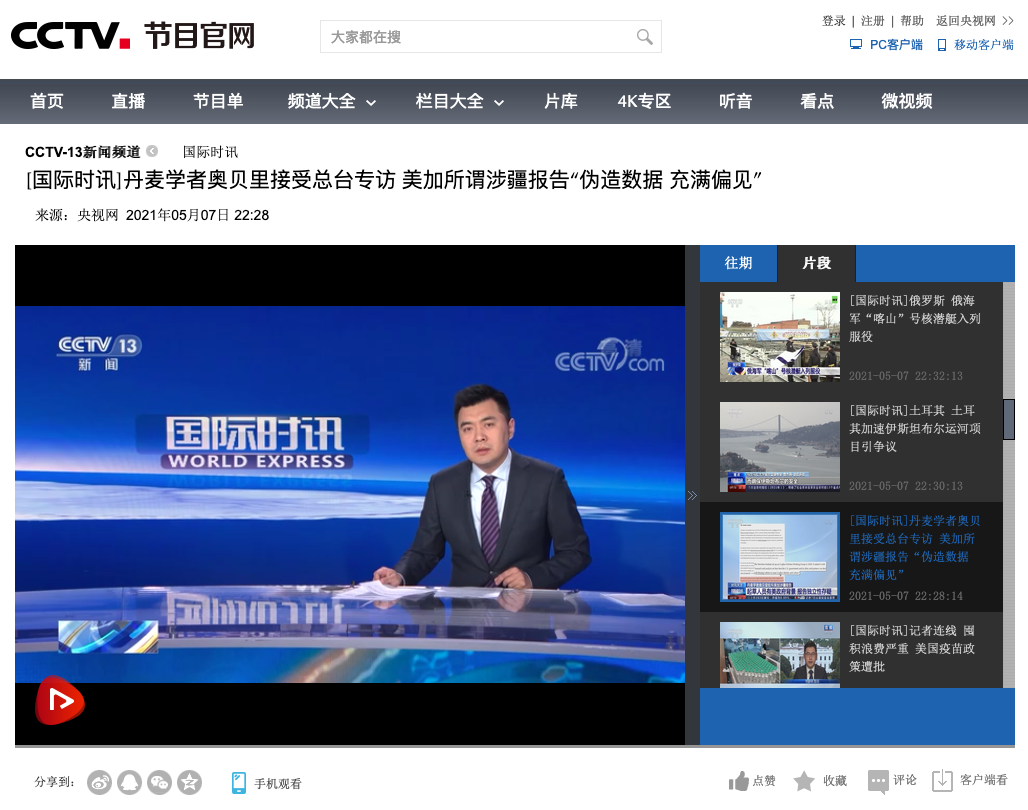
Or – it isn’t every day you address several hundred million people The TFF report “The Xinjiang Genocide Determination As Agenda” has reached more people in more countries than virtually anything else we have produced the last few years. That is, outside the West, in Asia in general and in China in particular. All leading Chinese media have paid substantial attention to it in both their Chinese and English editions. It is as if there was a need for a substantial – not political – scholarly examination of the empirical basis of the accusation, or “determination,” that Western governments have issued spearheaded, of course, by the Trump and Biden Administrations. In the report we reveal that the documentation is very weak, the scholarly work biased and bordering on the anti-academic and that those who have brought the documentation are anything but independent. Instead, many of those who have provided the...
peace-force
William Astore May 6, 2021 Introduction to the article Once upon a time, the Europeans had the copyright on naming lengthy wars: the Hundred Years’ War, the Eighty Years’ War, the Thirty Years’ War. I suspect, however, that it’s past time for the U.S. to enter that competition. After all, soon after we arrive at September 11, 2021, barring a genuine surprise, this country will have been fighting its twenty-first-century wars unsuccessfully for two decades. In other words, the conflict launched as the Global War on Terror in the days after the 9/11 attacks (the one that then-Secretary of Defense Donald Rumsfeld imagined targeting terror networks in up to 60 countries) has never either faintly succeeded or ended. It’s only spread to ever newer realms of death and disaster in distant lands (while bouncing back on this country in ever stranger ways), even as trillions and trillions of taxpayer dollars went down the drain. Shouldn’t the increasingly riven citizens of...
RayMcGovern
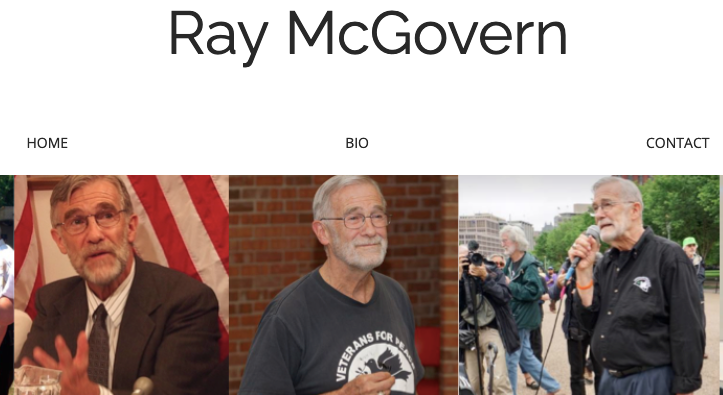
Ray McGovern May 4, 2021 “Ukraine For Dummies” is the title I gave to a piece I published a year and a half ago ( See: https://consortiumnews.com/2019/11/14/ray-mcgovern-ukraine-for-dummies/ ) to provide some background for those wondering why the news was full of Ukraine and the pundits were full of something else. Originally published on Ray McGovern’s homepage on May 2, 2021 On Friday, April 30, I was interviewed by an independent Dutch researcher and journalist Elze van Hamelen for what I might describe as a sequel to “Ukraine For Dummies” — a sort of Cliff’s Notes regarding Ukraine as the center of the storm in recent weeks — a summary with some relevant colour for the non-expert. It was a happily relaxed conversation, during which I could elaborate freely on recent postings like these three: https://original.antiwar.com/mcgovern/2021/04/21/putin-isnt-bluffing-on-ukraine/ https://original.antiwar.com/mcgovern/2021/04/14/biden-and-blinken-blink-on-ukraine/ https://raymcgovern.com/2021/02/04/most-blatant-coup-in-history/ Reviewing the chronology of events over the past five tense weeks, it became...
Ablinken
Edward Lozansky April 8th, 2021 Apology and humanitarian help are a better start In his recent speech outlining the new U.S. foreign policy vision Secretary of State Antony J. Blinken made a really sensational statement: “We will not promote democracy through costly military interventions or by attempting to overthrow authoritarian regimes by force. We have tried these tactics in the past. However well intentioned, they haven’t worked.”  Originally posted on US-Russia.org’s website on March 15th, 2021 After hearing this from someone who not only enthusiastically supported the wars in Iraq, Libya, Syria and Ukraine, I had to reread his speech a couple of times to make sure that I wasn’t hallucinating.  Some skeptics, after seeing in this speech the usual lines about “renewing America’s strength” and that only the United States can “lead” the world, shrugged off Mr. Blinken’s disavowing many decades of U.S. forceful changes of unsuitable foreign regimes.  For...
b9e1865d-5142-4f61-aa02-fd6c1ab14ed8
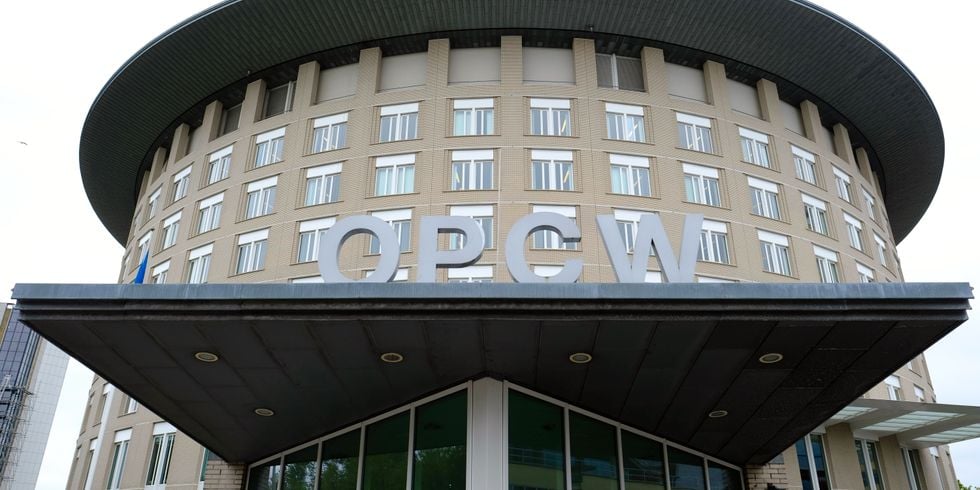
Statement of concern – concerning the OPCW – Organisation for the Prohibition of Chemical Weapons‘ – investigation of alleged chemical weapons use in Douma, Syria in early April 2018. Here NBC News’ coverage of the alleged attack and President Trump’s decision to strike in response to it. We wish to express our deep concern over the protracted controversy and political fall-out surrounding the OPCW and its investigation of the alleged chemical weapons attack in Douma, Syria, on 7 April 2018. Since the publication by the OPCW of its final report in March 2019, a series of worrying developments has raised serious and substantial concerns with respect to the conduct of that investigation. These developments include instances in which OPCW inspectors involved with the investigation have identified major procedural and scientific irregularities, the leaking of a significant quantity of corroborating documents, and damning statements provided to UN Security Council meetings. It...
burns1
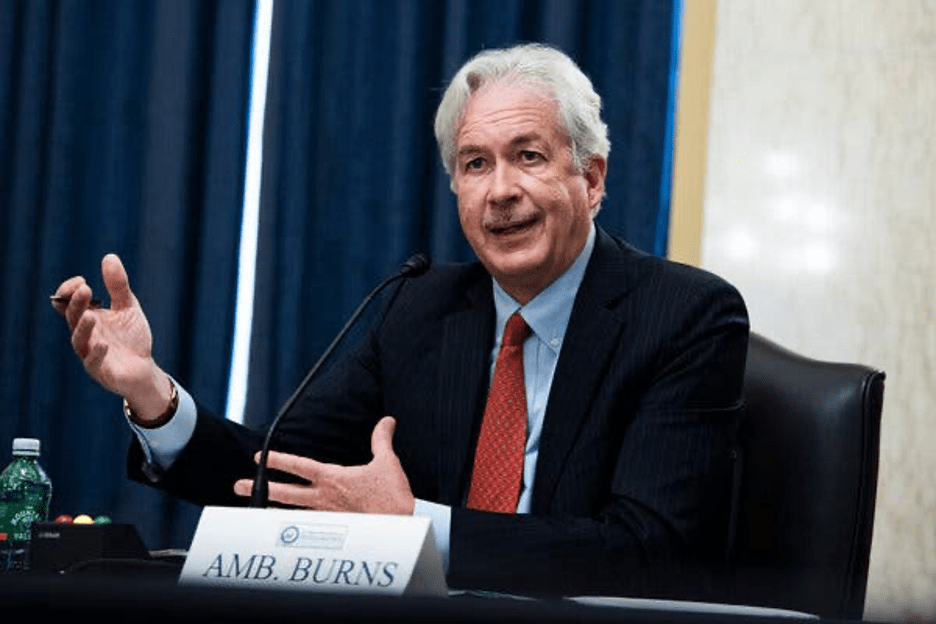
William J. Burns, President Biden’s nominee to run the CIA, speaks at his confirmation hearing on February 23rd. [Source: nytimes.com] March 30, 2021 Jeremy Kuzmarov William J. Burns’ appointment offers little more than an image makeover for the agency. As a diplomat, Burns supported U.S. military interventions in Iraq, Kosovo, Afghanistan, Libya and Syria and is now stoking the coals against Russia and China. William J. Burns was confirmed by a unanimous vote in the Senate on Thursday, March 18th, becoming the first former diplomat to become CIA director. At his confirmation hearing on February 26th, Burns continued a long agency tradition of playing up the threat from Russia and China along with North Korea, and said that Iran should not be allowed to get a nuclear weapon. Burns’s testimony signaled a continuation of business as usual for the agency in its promotion of alarmist rhetoric and ruthless geopolitical competition and...
mosul2_2.jpg
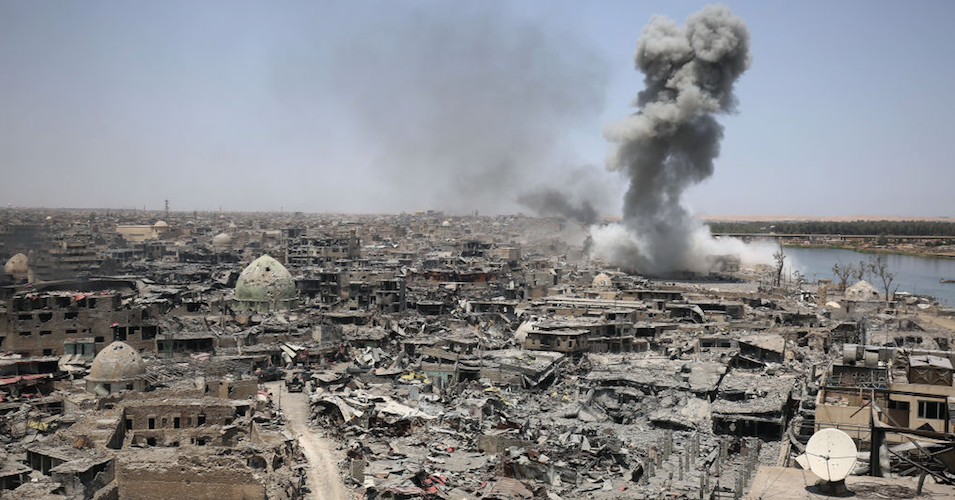
U.S. bombs and bullets have claimed at least hundreds of thousands of civilian lives this century. Here, a U.S. airstrike against Islamic State militants in densely-populated Mosul, Iraq on July 9, 2017 is shown. (Photo: Ahmad Al-Rubaye/AFP/Getty Images) March 29, 2021 Medea Benjamin, Nicolas J.S. Davies Unbeknownst to many Americans, the U.S. military and its allies are engaged in bombing and killing people in other countries on a daily basis.  On February 25th, President Biden ordered U.S. air forces to drop seven 500-pound bombs on Iraqi forces in Syria, reportedly killing 22 people. The U.S. airstrike has predictably failed to halt rocket attacks on deeply unpopular U.S. bases in Iraq, which the Iraqi National Assembly passed a resolution to close over a year ago.  The Western media reported the U.S. airstrike as an isolated and exceptional incident, and there has been significant blowback from the U.S. public, Congress and the world community, condemning the strikes...
Increased Security Remains Around Capitol Hill In Washington, DC
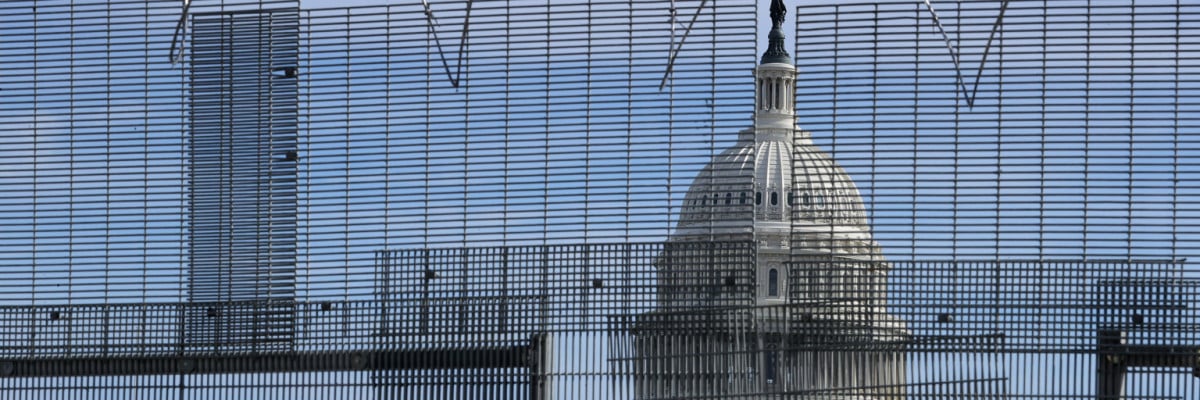
It’s no coincidence that, after years of fighting abroad, the United States is beset with paranoia, loss of trust, and increasingly bitter divisions Stephen M. Walt March 16, 2021 “Fortress America” is a derogatory term that usually refers to extreme forms of isolationism. Last week, however, CNN anchor Fareed Zakaria gave the idea a new and equally disturbing twist. In a thought-provoking column in the Washington Post, Zakaria described how excessive concerns for security are making the United States more “imperial” in appearance than the old colonial empires, with embassies, public buildings, and even the U.S. Capitol itself surrounded by barricades, moats, or fortifications. Instead of presenting a welcoming visage to the outside world and to the American people, one that conveys confidence, strength, and openness, America’s public face appears uncertain, vulnerable, fearful, and distant. Originally published at Eurasia News Online According to Zakaria, such concerns have also encouraged an excessive regard for secrecy,...

echo-grid-BefmnpXPZ80-unsplash
Dr. Gary G. Kohls February 9, 2021 A half-century ago, The New York Times accused Martin Luther King Jr. of “slander” for decrying the Vietnam War and The Washington Post detected “unsupported fantasies” in his speech, recalled more favourably by Gary G. Kohls. Originally published on Jan. 19, 2014; slightly edited for the time element. Originally posted on Consortium News on January 19, 2021 Martin Luther King Jr.’s Riverside Church speech was titled “Beyond Vietnam: A Time to Break Silence.” It was delivered exactly one year before his April 4, 1968 assassination in Memphis. In the speech, King declared, “A nation that continues year after year to spend more money on military defense than on programs of social uplift is approaching spiritual death.” The people who heard that speech recognized it as one of the most powerful speeches ever given articulating the immorality of the Vietnam War and its destructive impact...
11-17-john-f-kennedy-ftr
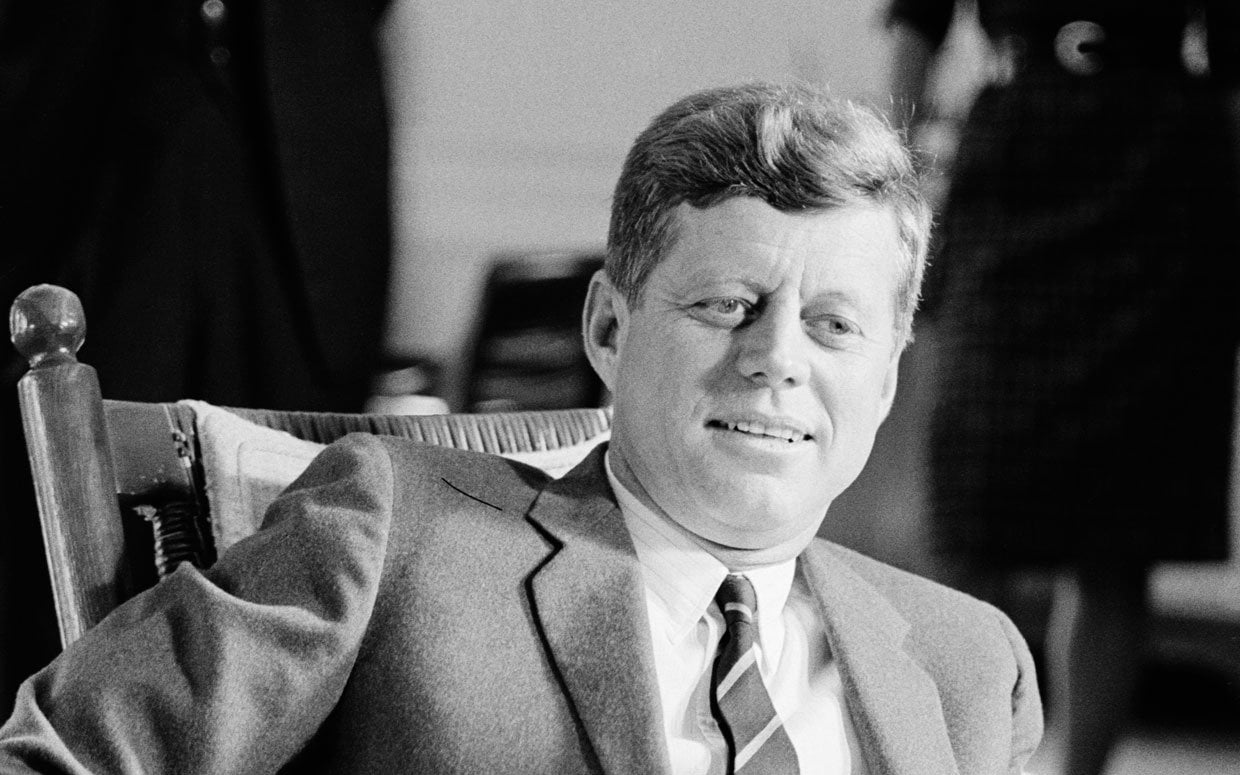
Jan Oberg February 4, 2021 At a time when the intellectual level of much politics has decreased dangerously, it may be useful to remember politicians who earlier on were leaders, visionaries, intellectually alert and able to communicate their message in ways that caught the attention of wide audiences. The Transnational has many student visitors, and if you are 20-25 today you may not have had many chances to experience the mentioned qualities. So we bring you this speech to offer an opportunity to establish some comparative standard and for you to ponder the question: Why is it that politics has become so boring? Why do today’s young people not queue up to participate in their country’s political work? And why are there so few, as it seems, who have the sense of duty that JFK expressed so eloquently in his inauguration speech: “Ask not what your country can do for...
Albert_Gyorgy-Emptiness
Albert Györgi’s sculpture, “Emptiness,” at Lake Geneva TFF Associate In war, there are no unwounded soldiers. —José Narosky War is hell, and today more than ever. Although high-tech weapons make it a videogame for some, those same weapons make it unbelievably destructive for everyone else. Whatever valor was once associated with hand-to-hand combat has long since disappeared due to gunpowder, and the massive slaughters of the twentieth century have made it increasingly difficult to romanticize the death and misery war causes. Nonetheless it continues and we have learned, if not to accept it, to take it for granted. Obviously, not everyone loathes it. The U.S. economy would collapse without the obscene amount spent on the military-industrial complex, now well over $600 billion a year according to some calculations. It’s hard to rationalize such a sum without a war once in a while. That’s why the end of the Cold War...
Categories

Year

Author / Contributor

Region