Middle East conflict formation

Category

Year

Author / Contributor

Region

Sort by

Showing 1-10 of 118 stories

GarethPorter-e1540558470864
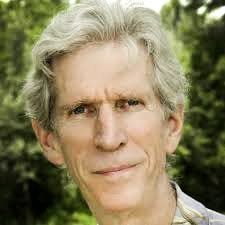
By Gareth Porter Via truth-out.org A portion of Golan is currently occupied by Israel, which took it from Syria in 1967. It was annexed by Israel in 1981 and populated with Israeli settlers roughly equal in numbers to its original Syrian population. Israel has expressed the fear that Syria’s recent moves could threaten Israel’s occupation in Golan. IDF Chief of Staff Gadi Eizenkot declared in January that Israel “can’t ignore the fact that Hezbollah, the Shiite militias and Iran perceive themselves on the winning side in Syria, together with Bashar Assad, and share his desire to return to the Golan Heights.” Israeli officials have expressed a determination to establish de facto Israeli control in what they have called a “buffer zone” or “safe zone” covering much of the Syrian Golan. Israel had already begun laying the groundwork two years ago by arming anti-Assad opposition groups only to see much of their progress reversed by more recent Syrian military advances. The buffer zone objective...
Screenshot
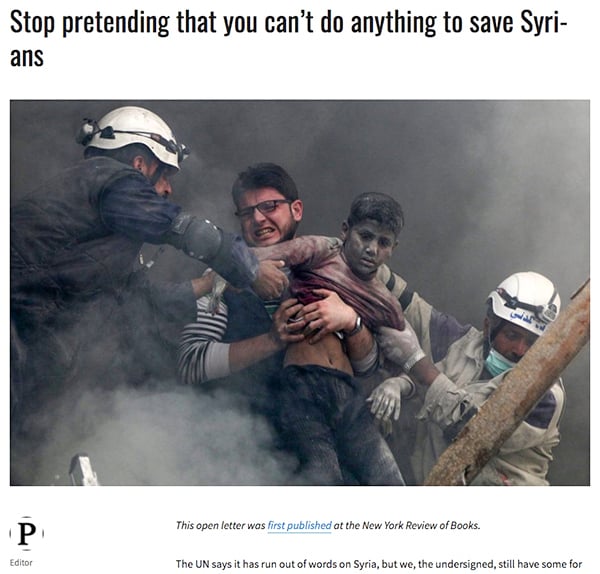
  /02/27/the-world-must-act-now-on-syria/”>New York Review of Books has published an Open Letter headlined “The World Must Act Now on Syria”  – and about 200 people from the world of culture and academia, from Syria and the rest of the world, have signed. It’s also published by PulseMedia here – on February 27, 2018. The immediate event that compels the authors of this Open Letter is the terrible fighting and humanitarian emergency in Ghouta at the outskrits of Damascus. Both articles carry on top the standard images of some men saving children out of ruins (see above, the White Helmets).   May I suggest you read the Open Letter now and then return to this page so it is clear to you why I write what I do.   What follows is a short argumentative analysis that shows how the surely good intentions behind the Open Letter are based on dubious assumptions...
papadopoulos
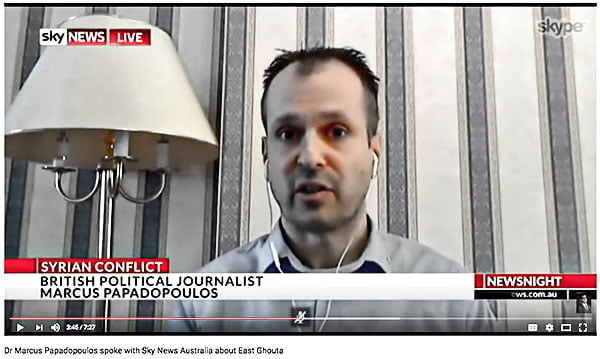
  By Jan Oberg Right after the very heavy fighting about East Ghouta and the UN Security Council’s ceasefire resolution, Dr. Marcus Papadopoulos is given what must be perceived as a very rare opportunity by a mainstream media  – skyNews Australia – to present a completely different perspective. You do not have to agree with every word, the important thing is that you listen carefully to an obviously knowledgeable person who makes an interesting analysis totally different from the one you are usually presented with. In a few minutes he basically undermines, in a superbly clear and eloquent manner, the Western manufactured narrative that has been repeated to such an extent that, fortunately, more and more people begin to ask two set of questions: 1. Why is it that Western mainstream media’s coverage is so uniform – same angles, same words, same accusations, same images, same videos, same human stories?...

Gregory-Shupak-262x264
  Reuters, Vice and LA Times write about Israeli “retaliation.”   By Gregory Shupak February 21, 2018   Originally published by FAIR – Fairness And Accuracy In Reporting here Israel claimed that it intercepted an Iranian drone in Israeli airspace on Saturday, February 10; Iran denied that it had a drone there. Israel then bombed a Syrian airbase, saying it was the command-and-control center from which Iran had launched the drone. The Syrian government shot down an Israeli jet that had bombed the base, and Israel subsequently launched more airstrikes against Syria. Reuters (2/13/18) described the latter airstrikes as Israel having “retaliated” for the downing of its aircraft. Vice (2/13/18) too characterized them as “retaliatory”; the Los Angeles Times (2/11/18) did the same three times. These word choices wrongly imply that Israel was acting defensively, when it was Israel who fired the first shots in the weekend’s exchanges: These outlets...
Russia-Saudi-meet-630x378
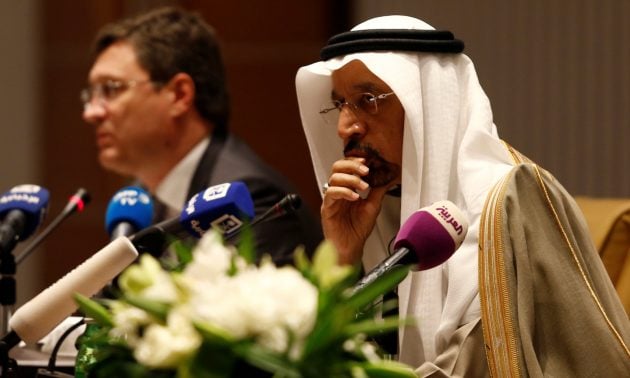
Hardly 10 months after honoring the visiting US president, the Saudis are open to a Russian-Chinese consortium investing in the upcoming Aramco IPO*   By M. K. Bhadrakumar February 16, 2018 In the slideshow that is Middle Eastern politics, the series of still images seldom add up to make an enduring narrative. And the probability is high that when an indelible image appears, it might go unnoticed – such as Russia and Saudi Arabia wrapping up huge energy deals on Wednesday underscoring a new narrative in regional and international security. Originally published by Asia Times here The ebb and flow of events in Syria – Turkey’s campaign in Afrin and its threat to administer an “Ottoman slap” to the United States, and the shooting down of an Israeli F-16 jet – hogged the attention. But something of far greater importance was unfolding in Riyadh, as Saudi and Russian officials met...
SyriaPlusMap
  By Paul Rogers February 15, 2018 • The Israel-Iran antagonism risks fusing with the Russia-United States one.       Israel’s aerial strike against Iranian and regime targets in Syria on 10 February reinforces concern that a new front is opening in the Middle East’s many-sided conflicts.The risk of outright confrontation between Israel and Iran has increased, even as Turkey, Russia, Kurdish forces, and the United States are engaged in further action to the north.That so many combatants are involved, with different agendas, means that further escalation is an ever present possibility. Originally published by Open Democracy here The details of the Israel-Iran episode show how unsteady the strategic situation now is. It began when Iranian Revolutionary Guard Corps (IRGC) forces launched a drone from Tiyas airbase, which is about 100 kilometres east of Homs in west-central Syria. The drone was tracked across the Israeli border, then shot down...
Imagen-thumbnail-The-Transnational
By Uri Friedman The next phase of a seven-year conflict has begun. Consider the stunning events that have occurred in the last three weeks alone: Last month, Turkey, with Russian approval, launched a military offensive in northwestern Syria against Kurdish fighters it views as terrorists and America views as counterterrorism allies. From The Atlantic here Last week, the United States killed numerous Russian mercenaries who were advancing on a U.S.-Kurdish base in eastern Syria. Last weekend, Israel intercepted an Iranian drone in Israeli airspace and struck Iranian and Syrian military targets in Syria, prompting Syria to shoot down an Israeli fighter jet and Russia to reportedly pressure the Israelis into holding their return fire—for the time being at least. This isn’t just another spasm of violence in a seemingly never-ending war. This is about confrontation between the world’s two largest military powers, America and Russia; between two NATO members, America...
mousavian
  By Seyed Hossein Mousavian The conflict between Saudi Arabia and Iran marks a deepening division between regional powers and international hegemons in the Persian Gulf. The Saudis and Iranians have to learn to cooperate or risk further confrontation.   Via thecairoreview.com New regional and international coalitions are forming with respect to the Middle East and Persian Gulf. An alliance of Donald Trump-led America, Israel, Saudi Arabia, and the United Arab Emirates faces a new coalition of Iran, Russia, Iraq, Bashar Al-Assad controlled-Syria, Hezbollah and grassroots regional forces such as the Popular Mobilization Forces in Iraq and the Syrian Defense Forces. The geopolitical competition between these opposing sides can more specifically be described as between the regional states seeking U.S. security guarantees and the creation and consolidation of a U.S.-led regional security order, and those states – such as Iran, Russia, and Syria – who despite their interests not wholly...
C-Span
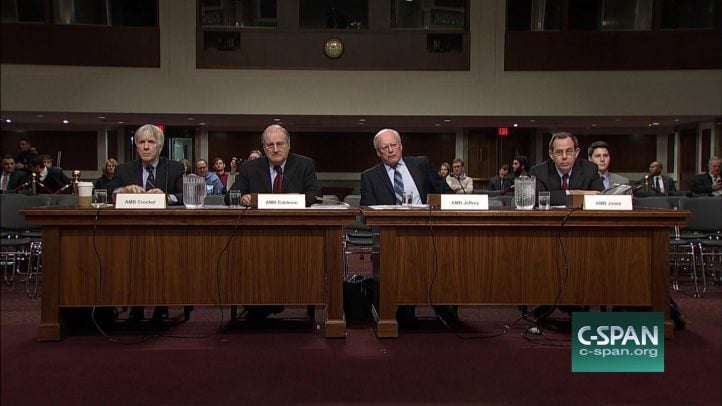
The U.S. foreign policy elite still wants the Middle East for its oil and its strategic location. By Edward Hunt, January 19, 2018. Originally published by Foreign Policy In Focus here • In recent testimony before the Senate Armed Services Committee, four former U.S. diplomats provided remarkably candid commentary on recent U.S. involvement in the Middle East, revealing a number of the most closely guarded secrets of U.S. diplomacy. The four former diplomats emphasized the importance of the region’s oil, spoke critically about the weaknesses of U.S. strategy, made a number of crude comments about U.S. partners, displayed little concern about ongoing violence, and called for more “discipline” throughout the region. One of the former diplomats, James Jeffrey, criticized the Obama administration for withdrawing U.S. forces from Iraq in 2011 rather than going through with a secret deal to maintain a secret network of military bases in the country. Even...
Tillerson
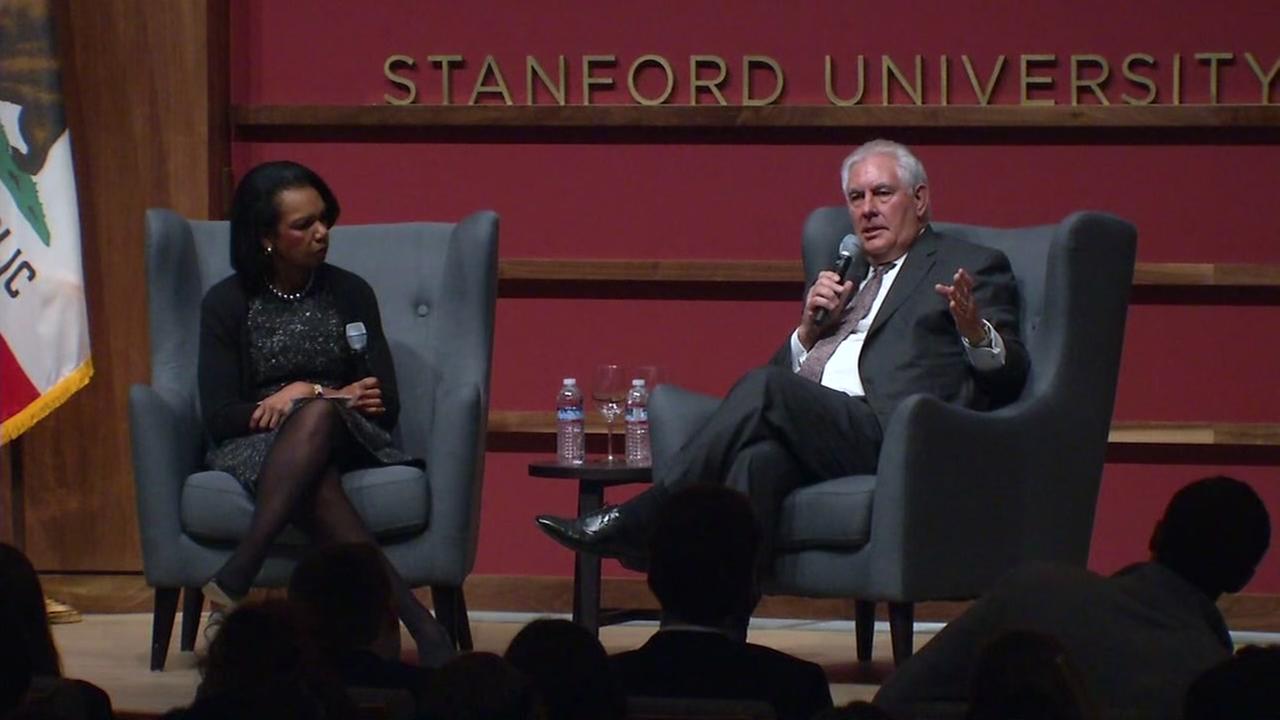
Most media covering the speech that US Secretary of State, Rex Tillerson, gave at the Hoover Institution on January 17, 2018 merely points out that he said that the United States would stay in Syria – open-ended – in the future and until President Bashar al-Assad has left the scene. Read the full speech here. Reuters even twists it all to mean that the US is now more patient about Assad’s removal. Before I continue it is a significant sign of the Western crisis, including moral and legal decay, that it raises few eyebrows – and none in NATO circles – that a top official of the leader of the Western world: a) expresses no regrets about anything done so far in this conflict or in the larger Middle East, b) states clearly that it will continue what must in legal terms be characterized as foreign military aggression and presence...
IranColoured
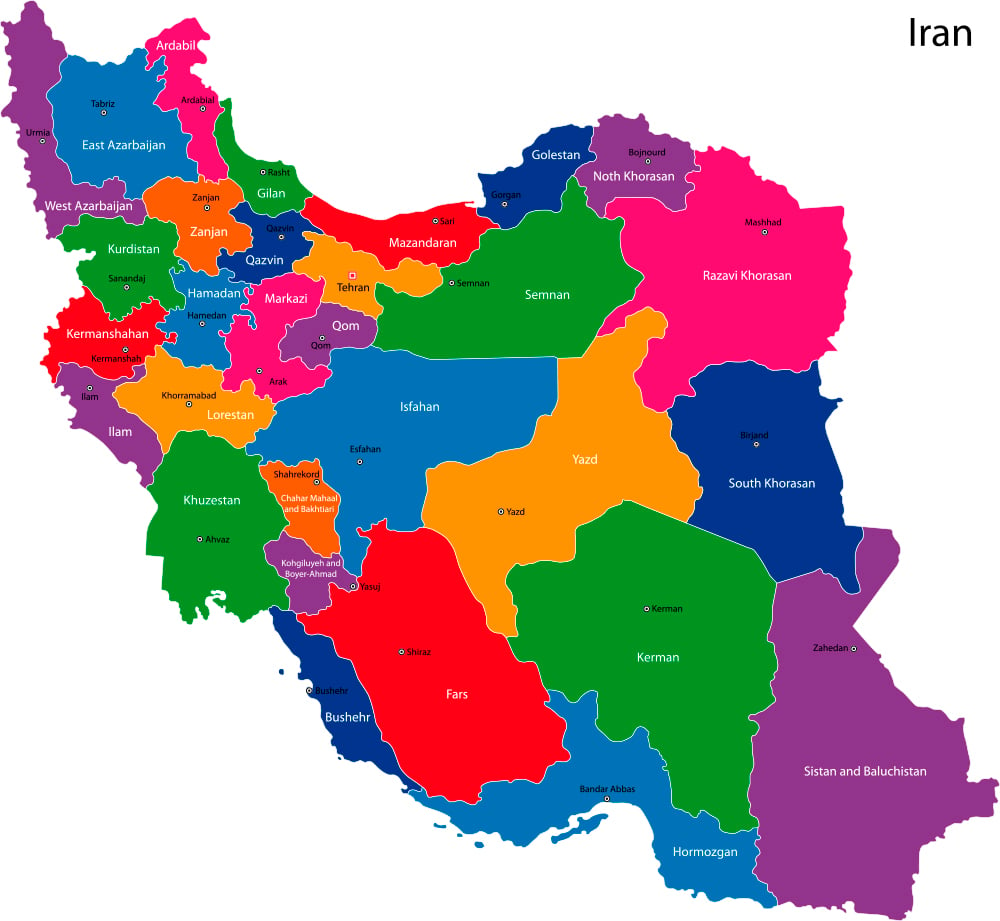
/01/16/the-islamic-republic-of-hysteria-iran-middle-east-trump/”>Stephen M. Walt’s “The Islamic Republic of Hysteria” published in Foreign Policy on January 16, 2018 is the one you should choose. Here is how Walt’s starts out – “In October, the White House announced that moving forward, the official U.S. policy is aimed at “neutralizing Iran’s destabilizing influence and constraining its aggression.” … “Yet this ongoing full-court press against Iran makes little sense because it is nowhere close to being a regional hegemon. If anything, the willingness of pundits and politicians to embrace this alarmist fantasy says more about the cavalier nature of U.S. strategic discourse than it does about the actual challenge Iran may pose.” And here is Walt’s conclusion – “The bottom line is that an all-out campaign to counter an Iranian hegemon is unnecessary. Unfortunately, there is little reason to think the Trump administration will recognize this and adopt the sensible course outlined here. If it...
IranFlag
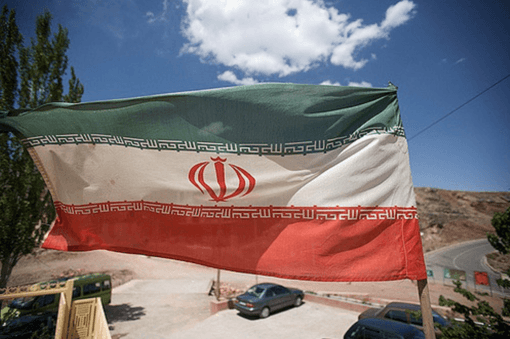
By Mike Whitney January 16, 2018   The Trump administration has settled on a plan for sabotaging the Iranian Nuclear deal that does not explicitly violate the terms of the agreement. Trump will continue to suspend sanctions, as is required under the terms of the deal, but at the same time, he will warn that if the agreement isn’t changed to meet his specific demands,  he will terminate it unilaterally. “If at any time I judge that such an agreement is not within reach, I will withdraw from the deal immediately,” Trump said. We can expect Trump to continue to issue these same threats in the months ahead as it helps to maximize the uncertainty as to whether the agreement will survive or not. As a businessman and investor,  Trump  knows that uncertainly is nearly as effective as sanctions when it comes to dampening foreign investment in the country’s businesses...
Categories

Year

Author / Contributor

Region