Global Development

Category

Year

Author / Contributor

Region

Sort by

Showing 1-10 of 75 stories

war_1-America
Former president says peaceful China ‘ahead of us in almost every way’. By Brett Wilkins May 13, 2019 The only US president to complete his term without war, military attack or occupation has called the United States “the most warlike nation in the history of the world.” During his regular Sunday school lesson at Maranatha Baptist Church in his hometown of Plains, Georgia, Jimmy Carter revealed that he had recently spoken with President Donald Trump about China. Carter, 94, said Trump was worried about China’s growing economy and expressed concern that “China is getting ahead of us.” Originally published at commondreams.org Carter, who normalized diplomatic relations between Washington and Beijing in 1979, said he told Trump that much of China’s success was due to its peaceful foreign policy. Carter then referred to the US as “the most warlike nation in the history of the world,” a result, he said, of...
pic-
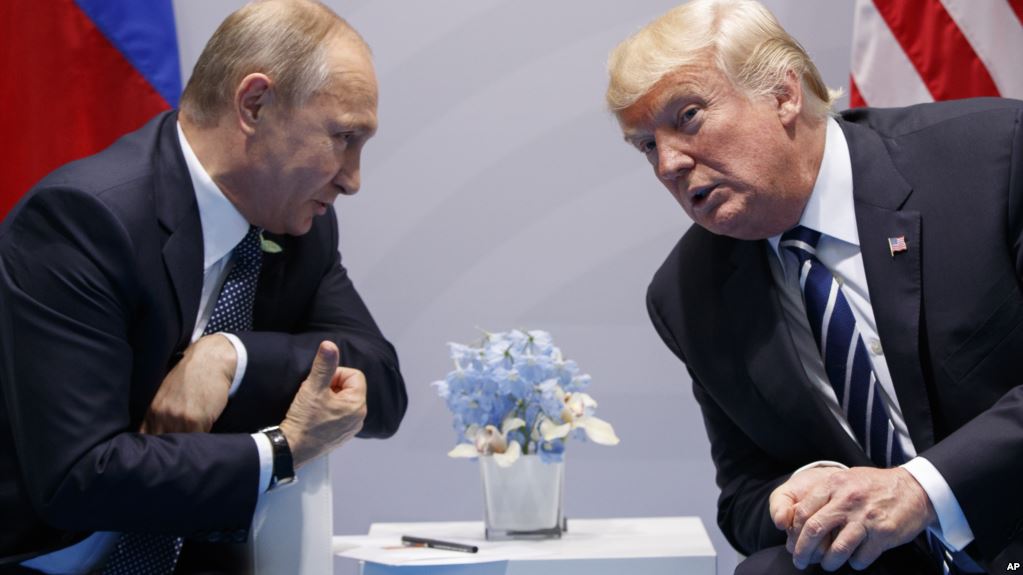
By us-russia.org April 18, 2019 The Sunday, February 24 edition of Russian state television’s flagship program News of the Week with Dmitry Kiselyov provided a detailed description of the “mirror like” response that Russia will take to any US installations of land based cruise missiles directed against Moscow following termination of the Intermediate-Range Nuclear Force (INF) Treaty. Originally published at us-russia.org The scenario focused on the new hypersonic Zircon missile system which can be launched from existing Russian submarines carrying the “normal” Tomahawk-like cruise missiles called Kalibr and which were used successfully in the recent operations against ISIL in Syria. We were told that the Russians are prepared to station such submarines holding 40 Zircons each just outside the territorial waters of the US economic zone, at perhaps 250 miles from the American East and West coasts. That would give them a 5 minute flight time to precision attack all...
eurasia-
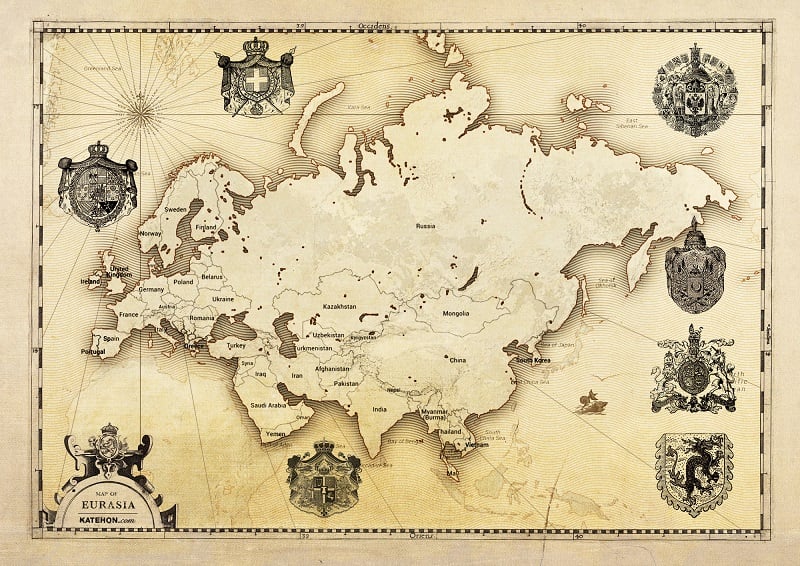
By Pepe Escobar April 16, 2019 Russia is keen to push economic integration with parts of Asia and this fits in with China’s Belt and Road Initiative The concept of Greater Eurasia has been discussed at the highest levels of Russian academia and policy-making for some time. This week the policy was presented at the Council of Ministers and looks set to be enshrined, without fanfare, as the main guideline of Russian foreign policy for the foreseeable future. President Putin is unconditionally engaged to make it a success. Already at the St Petersburg International Economic Forum in 2016, Putin referred to an emerging “Eurasian partnership”. Originally published at eurasia-news-online.com I was privileged over the past week to engage in excellent discussions in Moscow with some of the top Russian analysts and policymakers involved in advancing Greater Eurasia. Three particularly stand out: Yaroslav Lissovolik, program director of the Valdai Discussion Club...
71de2133-5ae9-45ef-80a0-c1b5d0bb5ec0
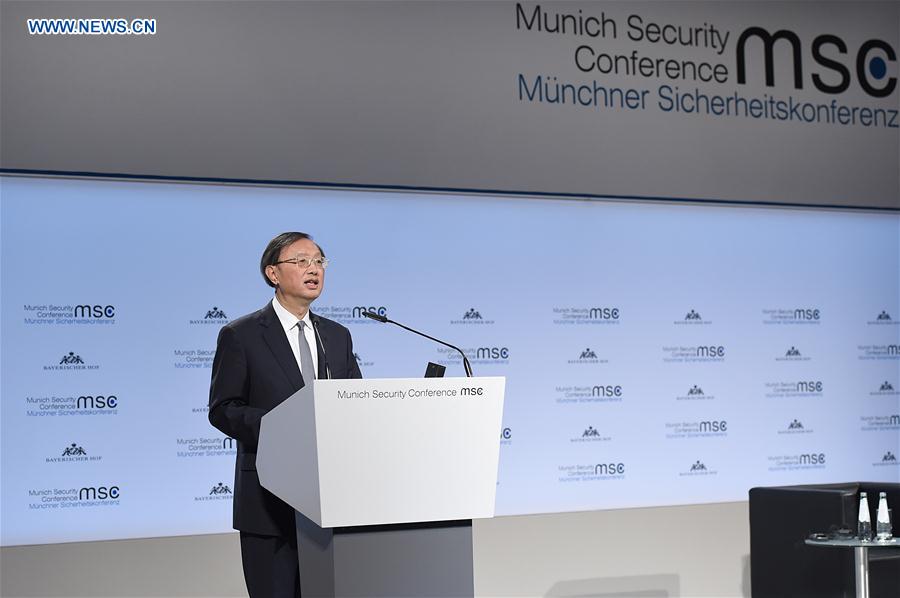
“Working for a Community with a Shared Future for Mankind by Promoting International Cooperation and Multilateralism” By Yang Jiechi February 18, 2019 MUNICH, Germany, Feb. 16 (Xinhua) – Yang Jiechi, a member of the Political Bureau of the Communist Party of China (CPC) Central Committee, Director of the Office of the Central Commission for Foreign Affairs, delivered China’s keynote speech on February 16, 2019 at the 55th Munich Security Conference. Italics added by The Transnational for pedagogical, easier-read reasons. This is the English translated version of the speech reprinted from China Org. cn here: Mr. Wolfgang Ischinger, Chairman of the Munich Security Conference, Ladies and Gentlemen, It is my great pleasure to join you at this year’s Munich Security Conference (MSC). As a global forum on security policy, the MSC provides an important platform for people around the world to express views and share insights on major issues concerning world...
Portable-War-Memorial
By Dragana Maksimovic January 28, 2019 The author, MA student at University of Belgrade, become a TFF Associate in 2018. More here. There is one thing about which many peace researchers disagree and constantly debate: Are we really living in the most peaceful era ever, or are we facing a dangerous era of conflicts and struggles for global supremacy – very often masked as a fight for human rights but which can lead to a global war? There are those who agree with Steven Pinker when he claims that “today we are living in a most peaceful time in our species’ existence” (1) or with Barack Obama, the 44th president of The United States, who wanted to highlight how “worth it is reminding ourselves of how lucky we are to be living in the most peaceful, most prosperous, most progressive era in human history.’’ (2) Trying to validate his claims,...
3943
Photograph: Bloomberg via Getty Images The world’s 26 richest people now own as much as poorest 50%. It creates huge problems, misery and conflicts. And it is caused by the West’s version of capitalism and is neither sustainable nor morally defensible, says Jan Oberg. By Oxfam  21 January 2019 Billionaire fortunes increased by 12 percent last year – or $2.5 billion a day – while the 3.8 billion people who make up the poorest half of humanity saw their wealth decline by 11 percent, reveals a new report from Oxfam today. The report is being launched as political and business leaders gather for the World Economic Forum in Davos, Switzerland. ‘Public Good or Private Wealth’ shows the growing gap between rich and poor is undermining the fight against poverty, damaging our economies and fuelling public anger across the globe.  It reveals how governments are exacerbating inequality by underfunding public services, such as healthcare and...
JeffSachs
January 19, 2019 “The naive and dangerous idea that the U.S. is exceptional has made us a danger to ourselves.” Jeffrey Sachs sits down with Rob Johnson to discuss his new book, A New Foreign Policy: Beyond American Exceptionalism, Columbia University Press, 2018.
Iran-news-999424
(Photo credit: Iran News) By Seyed Hossein Mousavian November 4, 2018 The next round of economic sanctions on Iran, which will start going into effect on Nov.4, will mainly target the country’s oil and gas industries. These sanctions were eased after the 2015 signing of the Joint Comprehensive Plan of Action (JCPOA), commonly known as the Iran nuclear deal, but are being phased back in following President Donald Trump’s decision to withdraw from the accord six months ago. Trump’s goal in reinstituting the sanctions is to kill the nuclear deal, to bring Iran’s economy to the point of total collapse, to contain Iran’s regional involvement in Syria, Iraq and Yemen, and, in spite of Washington’s denials, presumably to celebrate the collapse of Iran’s ruling regime. The White House’s official position is that, by increasing economic and political pressure, it aims to bring Iran back to the negotiating table in order...

China-Jan-Oberg
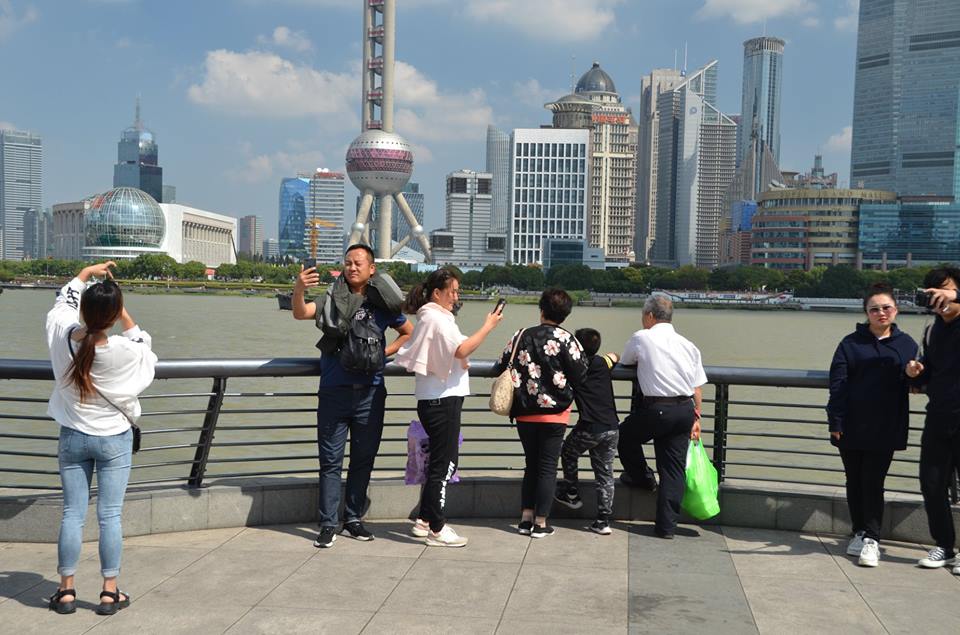
Photo from Shanghai by Jan Oberg 2018   By Cecily Liu in London from China Daily October 22, 2018 Esteemed author says nation’s development model can be a blueprint for emerging economies China’s rapid growth since the reform and opening-up process began in 1978 has not only been an economic miracle for the nation, but it has also offered a new development model for other emerging economies, said Martin Jacques, author of the global bestseller When China Rules the World. In doing so, China has proved the inaccuracy of the previous consensus that the Western model of development was the only path to success. Effectively, Jacques said, China has inspired other emerging countries to explore development paths that are suitable for their own situations. Originally published by chinadaily.com “The achievements of China’s reform and opening-up are very simple: one, the transformation of China; two, the transformation of the world,” said...
od960_logo@2x
By Edmund Fawcett Originally published by Open Democracy on April 7, 2018 here on   Unlike the hard right I have not conjured up an imaginary Other, but identified a genuine adversary in a struggle over democratic liberalism that is already engaged.   28 March 2018, Germany, Berlin: Olaf Scholz, Federal Minister of Finance (SPD), and German Chancellor Angela Merkel (CDU) attend a cabinet meeting at the Federal Chancellery. Gregor Fischer/Press Association. All rights reserved. To fix the topic, recall 18 months of recent electoral shocks, in reverse order. Last autumn in Germany’s national elections, the Alternative für Deutschland broke out from the fringes and won 94 seats in the federal parliament, a seventh of the total. Not since the early 1950s has Germany’s hard right won national representation and never in such strength. A year ago, Marine Le Pen at the head of the National Front advanced to the...
famine
  January 27, 2018 Mass starvation killed more than three million people in Stalin-era Ukraine in the 1930s and more than 18 million in China during Mao Zedong’s Great Leap Forward in the late 1950s and early 1960s. Yet by the start of this century, famines like those were all but eliminated, Alex de Waal says in his new book, Mass Starvation: The History and Future of Famine. The number of people dying in famines around the world has dropped precipitously, particularly over the last thirty to fifty years. Via phys.org Those gains, though, are fragile, and could be starting to be reversed, says de Waal, who is the executive director of the World Peace Foundation and a research professor at the Fletcher School. For his book, he compiled the best available estimates of global famine deaths from 1870 to 2010, and used that data to analyze trends. Tufts Now...
earth-as-an-exploding-bomb-720x510
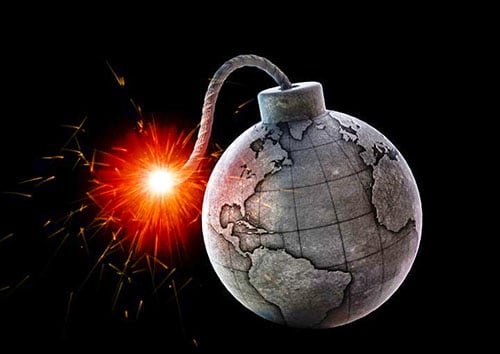
By William Bowles • Before I began this essay I read through some of my past forays that mentioned climate change and capitalism, the first I think, being in 2006 where I opined in a piece on the ‘War on Terror’: Perhaps the impending climate catastrophe as well as the genocidal actions of the US will force us to finally start thinking and acting ‘outside of the box’ but without a clear idea of where we are heading or how to get there, currently the situation looks dire. — WOT is to be done? 2 November, 2006 In the intervening years, things have gotten even more dire on pretty much every front. It appears that the world’s political and business elite are even more entrenched inside their box. Except, we do know what has to be done, so why, in the face of the obvious, do we not act to forestall catastrophe? Original posted...
Categories

Year

Author / Contributor

Region