Europe outside EU

Category

Year

Author / Contributor

Region

Sort by

Showing 1-10 of 48 stories

ChatGPT Image 9 jun 2026, 11_11_33
Before there was Brexit there was Amexit – when the Americans in 1776 decided to revolt against Britain’s King George and unilaterally secede to establish their own independent republic. In retrospect it was a strangely negative thing to do and one that took a long time to put right. As Voltaire who was living in London around that time observed, Britain was the most liberal of all the big nations – there was more freedom of speech and press and a bigger role for parliament than elsewhere in the world. Britain was also fighting hard against the slave trade and was highly critical of how the then independent southern states treated their black inhabitants.  In short, the American Revolution was very much a conservative phenomenon. The newborn America intent on integrating the southern and western parts of North America ended up tolerating slavery in its south, but, thankfully, not for...
ChatGPT Image 9 jun 2026, 11_11_33
It’s time overdue for the West to make up with Russia. The contretemps over Ukraine, now played out over five years, is too long. As the world goes it doesn’t deserve so much attention. Ukraine in landmass may be a big country but it’s population is only 44 million and its national income per head a quarter of Russia’s. The Ukrainian puppy’s tail has been wagging the West’s dog. It’s part of the West’s human rights commitment to stand up for the little man, but the Ukraine government’s behavior at the time of its great upheavals didn’t deserve the large amount of support it was given. Yes, it was bad that President Vladimir Putin sent his (disguised) troops into western and southern Ukraine. And equally wrong that Putin organized so fast a referendum in the Crimea on withdrawal from Ukraine that broke the norms of international law (the way the...
ChatGPT Image 9 jun 2026, 11_11_33
Insurgencies may not die, but at least, like old soldiers, they usually fade away. Well, that seemed to be the case with the Kurdistan Workers’ Party, the PKK. For the best part of five years between 2000 and 2005 there was a truce in Turkey’s bitter and savage civil war. But it did not last. The Kurdish “problem” goes back to the Ottoman Empire. The rugged mountains where Turkey, Iraq and Iran meet have been called Kurdistan since the early 13th century, and the Kurds’ roots can be traced back at least 2,000 years. Most of the world’s 20m Kurds live in the region, although well over a million have emigrated to Istanbul, Baghdad, Tehran and Beirut, often assimilating well with the local people. Turkish President Recip Tayyip Erdogan blames the PKK for its provocations. However, it is the army that often has done the provoking, even on occasion using...

ChatGPT Image 9 jun 2026, 11_11_33
In her famous decree in 1767 Empress Catherine the Great proclaimed Russia to be a European power. She wanted Russia to be a major player in European politics. She compelled the Europeans to accept Russia as a great power as a condition for doing business. In 1815 Russia was considered an equal in the 1815 Concert of Europe. In contrast, Imperial China at that time was self-sufficient and inward looking. It basked in its own superior culture. It did not want to open up trade relations with Europe and the emperor questioned the ability of the British who were knocking on the door to “acquire the rudiments” of Chinese civilization. Fast forward to the twenty-first century, what have we? The heart of Russia, economically, politically, scientifically, culturally and educationally is west of the Ural mountains. This part would like to be European and at one time there was talk from...
Iran-news-999424
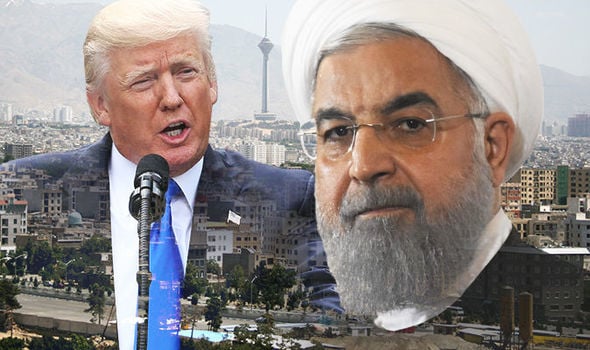
August 3, 2019 By Prabir Purkayastha The U.S. plans for a naval armada in Hormuz will run against the Laws of Seas and Iran’s sovereignty over its territorial waters. We are now sleepwalking to a new war in the region with disastrous consequences. The stage is now set for a disastrous collision between the U.S.-UK navies and Iran in the busy waters of the Strait of Hormuz. The Strait connects the Persian Gulf to the Arabian Sea and makes up the world’s major oil choke point, carrying about 30-35 percent of total traded oil. The latest move of the U.S. and UK—to provide “protection” with their warships to merchant vessels in the Strait of Hormuz—is an assertion of imperial rights over Iran’s territorial waters. In other words, this is what would have been called, in an earlier era, gunboat diplomacy. Iran will not accept this. Originally published at citizentruth.org This...
SilkRoadMapOKS_big_Improved
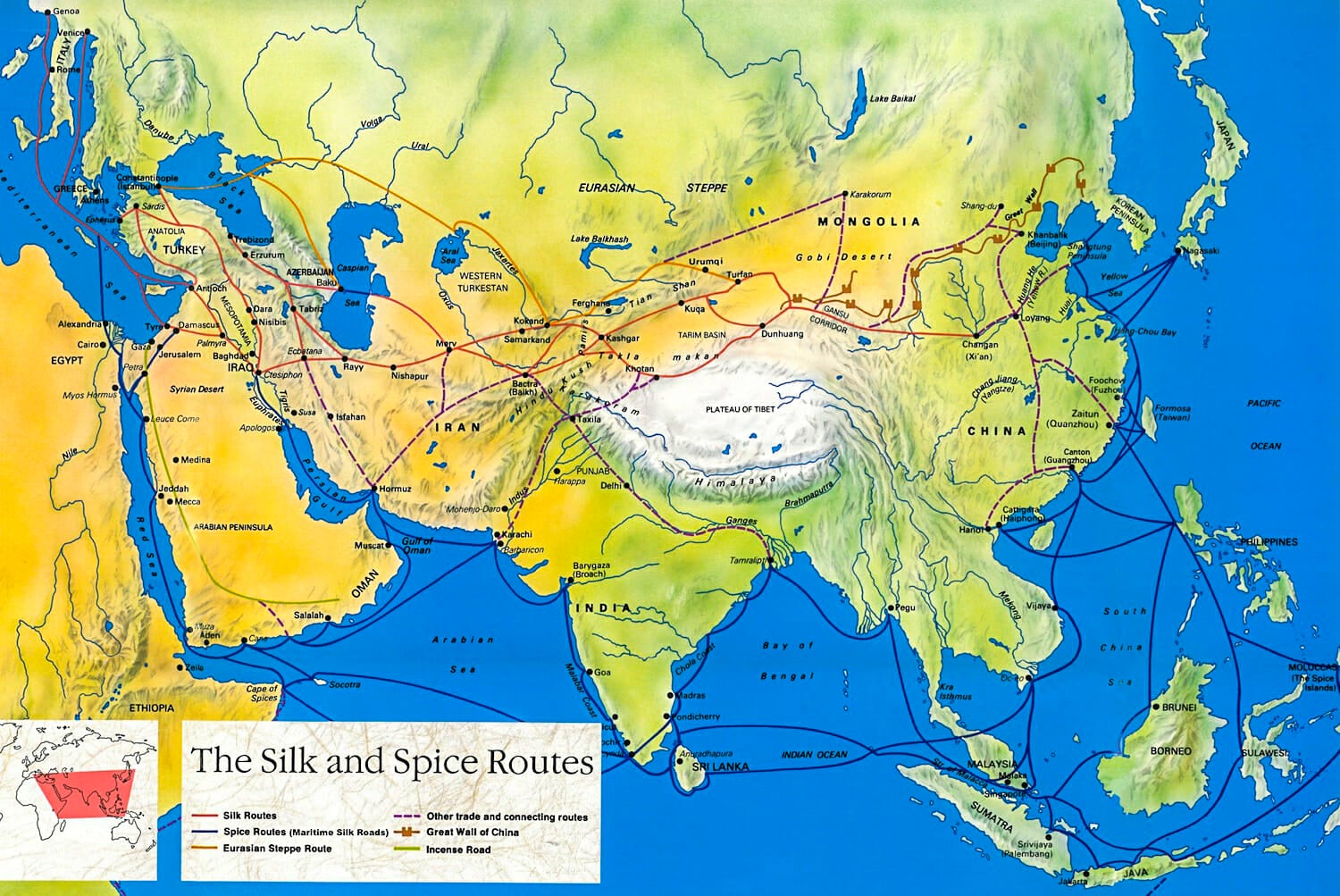
By Gordon M. Hahn April 26, 2019 Three almost uninterrupted centuries of Russian self-comparison, self-assessment, self-identification with the West and ever deeper involvement in the intra-Western geopolitical and imperial competition have come to an end. Harsh lessons Russians have drawn from its three centuries of intimate interaction with the West — its Occidental Era — were reinforced by the post-Cold War failure to create a ‘common European home’ from Vancouver to Vladivostok, leading to the conclusion that Russia had betrayed the meaning of its national seal – the double-headed eagle looking both west and east. Although Russia still references the West as a competitor as well as standard in some respects, Vladimir Putin’s Russia now rejects the post-modernist West and its neo-imperial civilizational, indeed, ‘civilizationalist’ ambitions in Russia’s neighborhood. Instead of seeking to be part of the West or defeat the Western geopolitical paradigm, it seeks along with China and,...
eurasia-
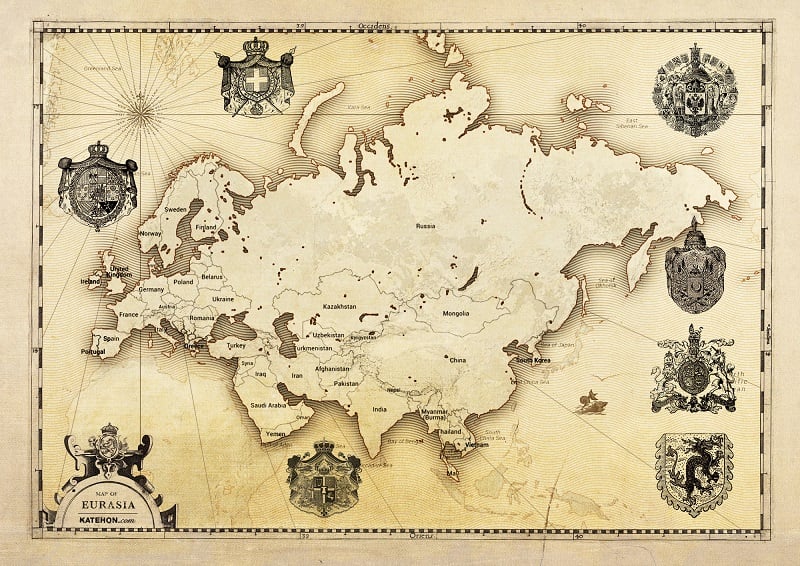
By Pepe Escobar April 16, 2019 Russia is keen to push economic integration with parts of Asia and this fits in with China’s Belt and Road Initiative The concept of Greater Eurasia has been discussed at the highest levels of Russian academia and policy-making for some time. This week the policy was presented at the Council of Ministers and looks set to be enshrined, without fanfare, as the main guideline of Russian foreign policy for the foreseeable future. President Putin is unconditionally engaged to make it a success. Already at the St Petersburg International Economic Forum in 2016, Putin referred to an emerging “Eurasian partnership”. Originally published at eurasia-news-online.com I was privileged over the past week to engage in excellent discussions in Moscow with some of the top Russian analysts and policymakers involved in advancing Greater Eurasia. Three particularly stand out: Yaroslav Lissovolik, program director of the Valdai Discussion Club...
pence-montenegro-markovic-ap-img
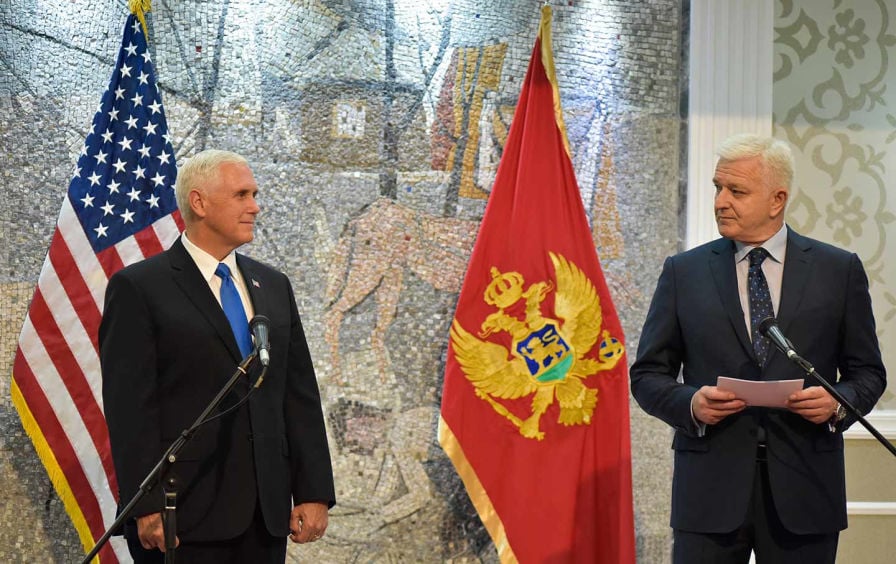
U.S Vice President Mike Pence, left, joined by Montenegro’s Prime Minister Dusko Markovic during a joint press conference in Villa Gorica in Podgorica, Montenegro on August 2, 2017. (AP Photo / Risto Bozovic)   Did Montenegro’s NATO accession increase the collective defense of the West or merely protect a corrupt regime? When Fox News host Tucker Carlson recently asked President Donald Trump why the United States should defend Montenegro, Trump responded by saying that if Montenegrins decided to “get aggressive.… Congratulations, you’re in World War III.” The subsequent outcry was predictable; a New York Times editorial quickly attacked Trump’s comments as revealing “another facet of his ignorance of and disdain for America’s historic place in the world and its alliances.” Yet Trump’s comments—inarticulately expressed as they were—were in fact in line with the thinking of past American presidents leery of getting the country involved in foreign problems with no bearing...
1-1
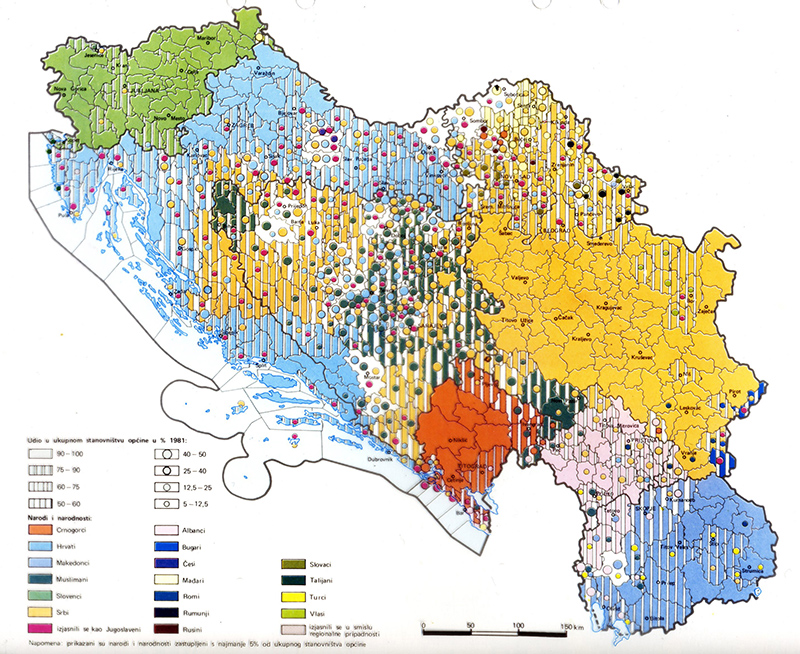
The ethnic map few understood. Should make it clear that cutting up Yugoslavia in independent republics could not be done without bloodshed. (1) Yellow = Serbs, Dark Green = Muslims, Light Blue = Croats,  Light Green = Slovenes, Orange = Montenegrins, Pink = Albanians, Darker Blue = Macedonians   , marks the 19th anniversary of NATO illegal and illegitimate bombing of Yugoslavia, Serbia and its Kosovo, province during 78 days. It has – one is tempted to say: of course – been conveniently forgotten by the West itself. It was masterminded by the United States under Bill Clinton and Secretary of State Madeleine Albright after the so-called negotiations between Serbs and Albanians in Rambouillet outside Paris (the parties never met face-to-face) While Clinton may be best remembered for his relations with Monica Lewinsky and his wife, Hillary Clinton, some of us also remember him (and Albright) for bombing Afghanistan, Sudan,...
RichardFalk
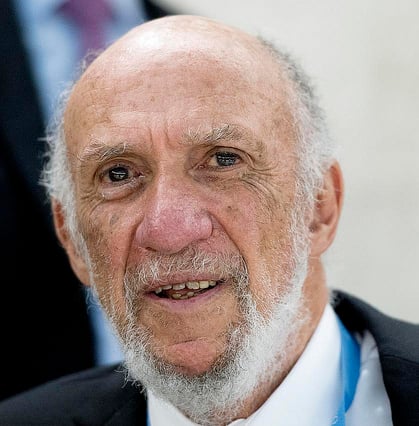
  By Richard Falk • More than 25 years ago I took part in a major conference in Kuala Lumpur affirming the importance of human rights. At the end of the second day, the convener of the conference, Chandra Muzaffar, a leading advocate of human rights and democracy in Malaysia, arranged for a few of the speakers to meet with the controversial leader of the country, Prime Minister, Mahathir. I was the only Westerner among the 4 or 5 of us given this opportunity. As soon as we entered the room, Mahathir looked straight at me while posing a rhetorical question: “Why do Western human rights NGOs and experts look only at our performance with respect to civil and political rights when our natural preoccupation is the promotion of economic and social rights?” Of course, his assertion was meant to challenge the complacent Orientalizing conventional wisdom, reducing the practice of...
biljanavankovska
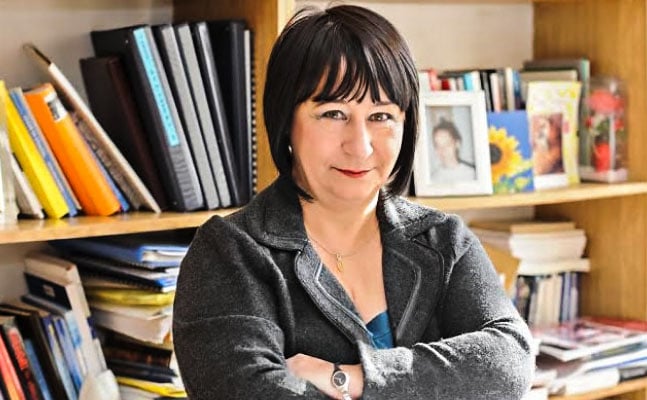
  By Biljana Vankovska Interview with Asahi Shimbun, Tokyo   • Do you support the idea of having the accord with Greece over the disputes on the country’s name? If yes/no, please tell us the reason. It is hard to support an irrational dispute, only because one has a nationalistic idea that the name Macedonia implies irredentism. Apart from that, it is highly asymmetric dispute because Greece has nothing to gain or lose in substantial terms, while the Republic of Macedonia may lose not only its right on self-identification, identity but also to open a Pandora’s box of internal political and ethnic strife. The dispute has never been only over the name of the state (although a state’s name is a part of its international legal identity). All proposals of Matthew Nimetz has been so-called “ a set of ideas”, containing a range of aspects that directly affect the name...
4_1
Via gwu.edu Washington D.C., December 12, 2017 – U.S. Secretary of State James Baker’s famous “not one inch eastward” assurance about NATO expansion in his meeting with Soviet leader Mikhail Gorbachev on February 9, 1990, was part of a cascade of assurances about Soviet security given by Western leaders to Gorbachev and other Soviet officials throughout the process of German unification in 1990 and on into 1991, according to declassified U.S., Soviet, German, British and French documents posted today by the National Security Archive at George Washington University ( http://nsarchive.gwu.edu). The documents show that multiple national leaders were considering and rejecting Central and Eastern European membership in NATO as of early 1990 and through 1991, that discussions of NATO in the context of German unification negotiations in 1990 were not at all narrowly limited to the status of East German territory, and that subsequent Soviet and Russian complaints about being...
Categories

Year

Author / Contributor

Region