Dialogue

Category

Year

Author / Contributor

Region

Sort by

Showing 1-10 of 31 stories

richard-falk-cropped-internal
I make no claim to approach this book with an open mind. Making a fuller disclosure, I acknowledge with some pride that I have endorsed Justice for Some even before it was published, and my blurb appears on its back cover. Beyond this, two months ago I took part in a book launch at George Mason University where Noura Erakat is on the faculty. My effort in this review is not to make a calm appraisal of the book’s strengths and weaknesses, but rather to celebrate it as a major scholarly contribution to the critical literature devoted to resolving the Israel/Palestine struggle in line with the dictates of justice rather than by a continuing reliance on muscular weight of subjugation as augmented by geopolitics. And, accordingly, to seize this opportunity to urge a careful reading of Justice for Some by all those interested in the Palestinian struggle as well as those...
richard-falk-cropped-internal
On July 9, 2004 the International Court of Justice (ICJ) in The Hague issued an Advisory Opinion by a vote of 14-1, with the American judge the lone dissenter, as if there would have been any doubt about such identity even if not disclosed. The decision rendered in response to a question put to it by a General Assembly resolution declared the separation wall unlawful, and that compliance with international law would require it to be dismantled and Palestinian communities and individuals compensated for harm incurred. As with the identity of the dissenting judge, the failure of Israel to comply with the decision was as predictable as the time of tomorrow’s sunrise. Originally published at richardfalk.wordpress.com Only slightly less anticipated was the American government response, which adopted its customary hegemonic tone, to instruct the parties that such issues should be resolved by politicalnegotiation, which even if heeded would end up...
kennedy_sotu1-P
By Dr. Lawrence Wittner June 5, 2019 In late April, the highly-respected Stockholm International Peace Research Institute reported that, in 2018, world military expenditures rose to a record $1.82 trillion. The biggest military spender by far was the United States, which increased its military budget by nearly 5 percent to $649 billion (36 percent of the global total). But most other nations also joined the race for bigger and better ways to destroy one another through war. Originally publishes on Counterpunch.org on May 29th, 2019 here This situation represents a double tragedy. First, in a world bristling with weapons of vast destructive power, it threatens the annihilation of the human race. Second, as vast resources are poured into war and preparations for it, a host of other problems―poverty, environmental catastrophe, access to education and healthcare, and more―fail to be adequately addressed. But these circumstances can be changed, as shown by...

US-sanctions
April 4, 2019 By Medea Benjamin Trump’s economic strangulation is having devastating people on the Iranian people. On a recent delegation to Iran, we experienced first-hand the legendary Iranian hospitality. Iranians are particularly thrilled to meet Americans, but as we discovered, our government’s policies are hurting the very people who want to be our friends. As our 28-person delegation traveled through the country wearing messages on our jackets proclaiming “Peace with Iran” in English and Farsi, we were surrounded by people – from schoolchildren to storekeepers – who wanted to practice their English and talk to us. Their eyes lit up when they heard we were from America. We were constantly posing for photos and exchanging Instagram accounts. We were offered endless cups of sweet tea and showered with more gifts than we could fit in our suitcases. Originally published on March 11, 2019 by Common Dreams.org A frequent refrain...
ChatGPT Image 9 jun 2026, 11_11_33
The number of nuclear weapons possessed by the US and Russia is a fraction of what it was during the height of the Cold War. Successive presidents on both sides, since the time of John F.  Kennedy and Nikita Khrushchev, have feared their destructive power. Their supposed value, so called Mutually Assured Destruction, known by its capitals, MAD, is in fact valueless. They cannot be used, and nearly everyone accepts that. Yet they continue to exist and, as President Mikhail Gorbachev and his ally in nuclear arms control, President Ronald Reagan, both said, there  is the fear of a false alarm or two errant officers in the silo entering simultaneously their keys which allows the firing  of the rocket. Yet here we are in 2019 with a new American nuclear initiative just announced last weekend. (I doubt that president Donald Trump is in the clutches of Russia. Otherwise, why would...
Skaermbillede-4
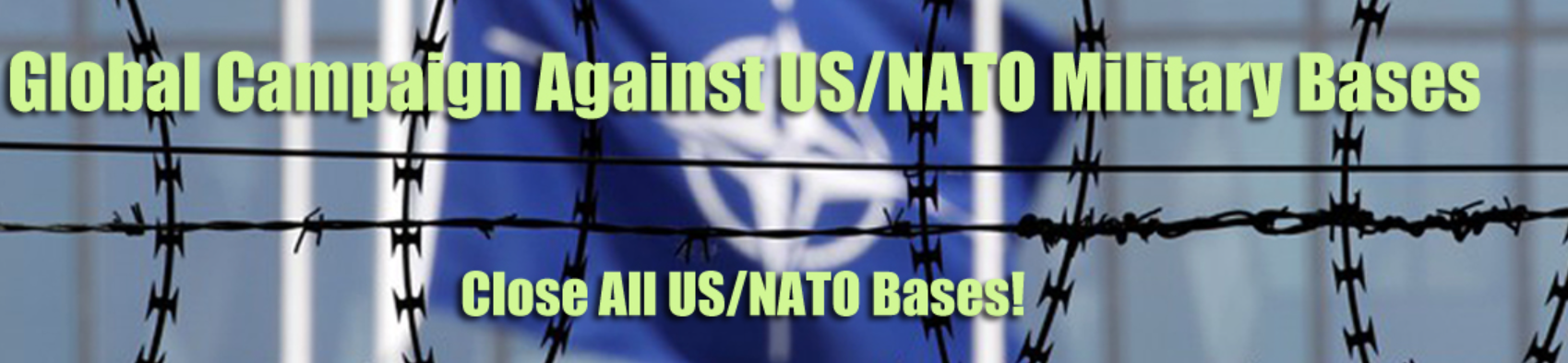
Photocredit: nousnatobases.org   By Mairead Maguire, Nobel Peace Laureate and TFF Associate Presented at the International Conference against US/NATO Military Bases, 16-18 Nov 2018, Dublin, Ireland. November 27, 2018   Dear Friends, It is good to be here with you all. I would like to thank the organizers for inviting me to address the conference. Firstly I thank you all for your work for peace. It is good that we will have an opportunity in the next few days to get to know each other and together discuss what kind of a world we want to live in? There will be many different perspectives on this and the way forward, but let us agree to respect each other and to engage in deep listening and conversation no matter how hard and where the dialogue might take us! Originally published at transcend.org Let us be encouraged by the fact that we have made...
Imagen-thumbnail-The-Transnational
By Milad Jokar • Those who ideologically opposed the negotiations with Iran on the nuclear issue have been proven wrong. Diplomacy works and the results are a clear success for the Non Proliferation Treaty, the region which desperately needs a new approach, the Iranian people who have been under crippling sanctions for over a decade and the rest of the world which is now free to reengage in economic and financial relations with Iran. We need to learn several key lessons from this historic deal. First, diplomacy is strength not weakness. Very few people believed that choosing the path of de-escalation and dialogue would prevent a military confrontation and successfully lead to a peaceful resolution of the nuclear crisis. The negotiations that took place between Iran and the P5+1 (the five permanent members of the United Nations Security Council plus Germany) have been tough but the tremendous political capital invested...
Categories

Year

Author / Contributor

Region