Development

Category

Year

Author / Contributor

Region

Sort by

Showing 1-10 of 191 stories

futurism_landing_depero
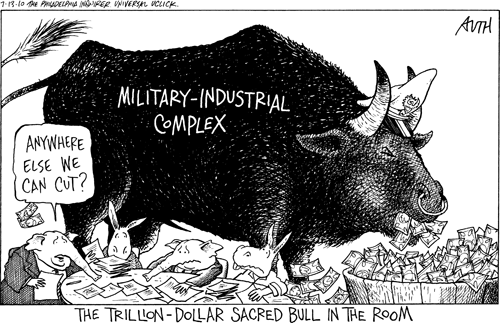
Introduction Below is a long interview from Konrad Stachnio with Richard Falk – TFF Associate – on a wide-ranging set of questions, which stretched by knowledge past its breaking point, especially in assessing where the technological innovations on the horizons will lead us.It is one of 17 conversations published by Clarity Press under the title, Civilization in Overdrive: Conversations at the Edge of the Human Future.Preface by Stachnio after interview.The book is recommended strongly.It can be ordered here Originally published on Richard Falks blog on September 12, 2020 Civilization in Overdrive, edited by Konrad Stachnio “If a digital Fukuyama tells the world that ‘the end of history’ has been reached, he should be scorned this time around.” KONRAD STACHNIO: Do you know what is the role of the so-called Black Budget in building the power of the USA as a global security state? RICHARD FALK: It is not possible for someone without access...
Skaermbillede-2020-09-27-133259
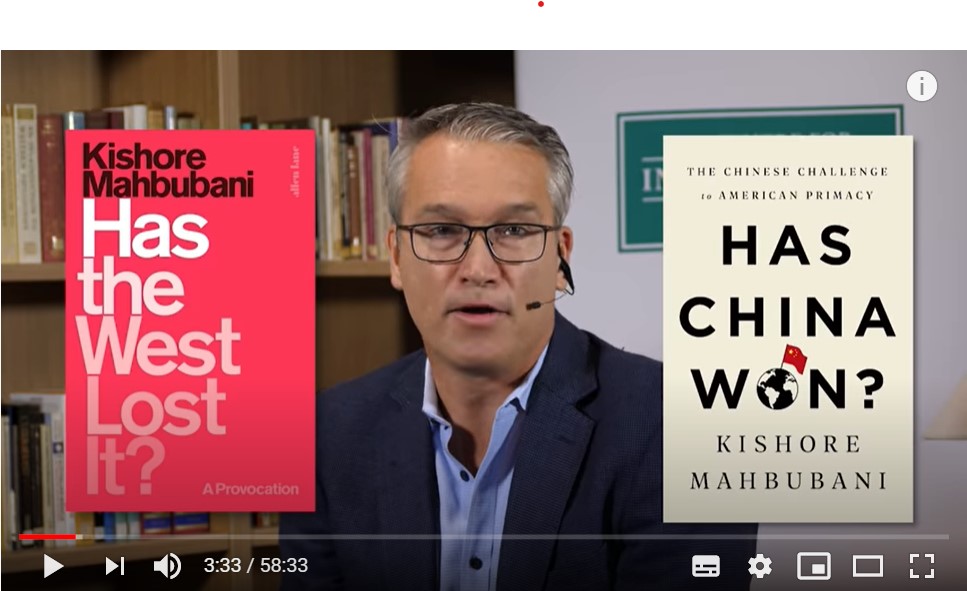
Tom Switzer September 25, 2020 CIS Executive Director, Tom Switzer interviews John Mearsheimer and Kishore Mahubani to ask Has China Won? At a time when tensions are running high, CIS Executive Director Tom Switzer asked Has China Won? Our debate between John Mearsheimer and Kishore Mahbubani, two of the world’s leading foreign policy intellectuals. Covid-19 has greatly raised tensions between China and the West. Washington and its allies express outrage at the Communist regime’s opacity concerning the outbreak of the coronavirus. Meanwhile, fears are growing that a pandemic that began in the Chinese city of Wuhan may end by increasing Beijing’s international influence and power. Kishore Mahbubani is author of Has China Won? The Chinese Challenge to American Primacy (just out, PublicAffairs) A former Singaporean ambassador to the United Nations (twice), he was the founding dean of the Lee Kuan Yew School of Public Policy. He was a guest of...
Dignism_3
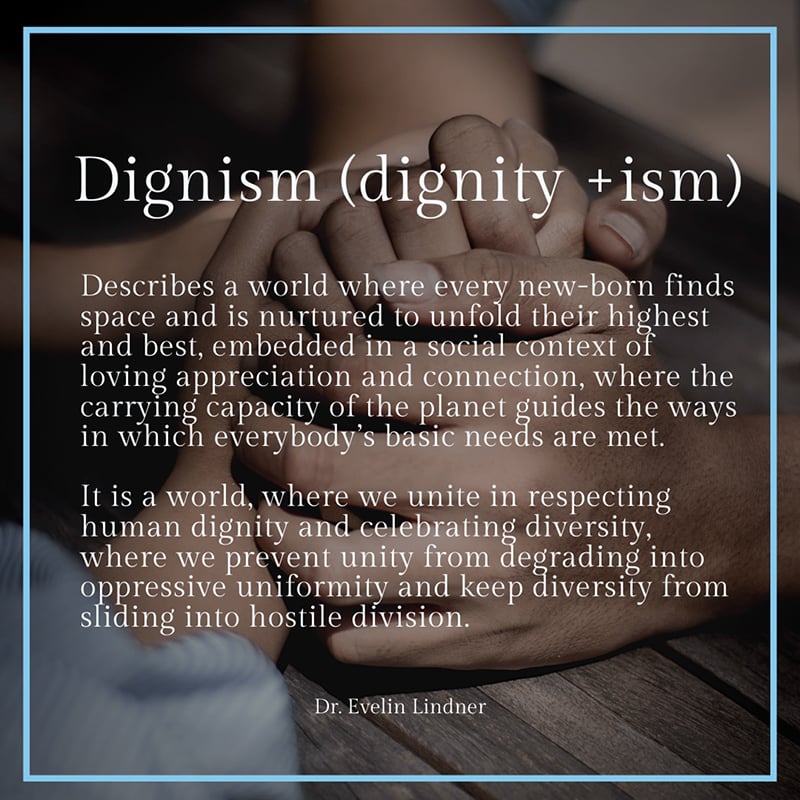
Evelin Lindner TFF Associate September 21, 2020 What We Can Do We humans have dug ourselves into a multitude of perilous crises, both despite of and because of what we call progress. Still, few people seem to realize that we live in a historic moment of unparalleled promise. For the first time, humankind has the capacity to bring about the changes we need for a Great Transition. Unlike our forebears, we have the privilege of growing awareness of the planet-as-a-whole and the understanding that we humans are one species living on one tiny planet. The conditions are in place for nurturing mutual trust and solidarity as a global species, and acting to humanize globalization and reap the benefits that flow from our interdependence. What We Do Instead of realizing this potential, we continue to shred our relations with our habitat and with each other—ecocide and sociocide. We degrade our sociosphere and our...
0-1-4
Erni & Ola FriholtTFF Associerade och Fredsrörelsen på Orust 26:e augusti 2020 Obesvärat av coronatidens bromskrafter ökar historiens tåg farten. Vi märker i våra kupéer hur det förbisusande landskapet ändrar karaktär, med torra brandhärjade slätter och skogar, avlösta av slagregn och översvämningar under en blixtrande mörk himmel. I skrivande stund står en tredjedel av Bangladesh under vatten, ett land med 150 miljoner invånare. Människor på flykt söker skydd där de kan, här och där undsatta av stater som samarbetar för allas säkerhet. Samtidigt rapporterar den holländske journalisten Geert Mak om hatfyllda utfall från USAs ledande militärer, som pekar ut de skyldiga i Ryssland, Mellanöstern och allra mest Kina. Han talar om vikten av att hålla samman ett insiktsfullt, fredligt EU som motor i en utveckling i fred och samarbete. Vi sitter alla i historiens framrusande tåg, en del med gardinerna fördragna i hopp om att kunna stiga av i en...
ChatGPT Image 9 jun 2026, 11_11_33
Africa is suffering a double whammy after many years of success. The Coronavirus, while not taking down great numbers of people like in Europe, Asia and the Americas, has had a severe impact by curbing its exports in the face of the formers’ severe economic depression. For example, flowers grown in Kenya and Ethiopia have been particularly hit. Kenya’s flower industry employs up to 70,000 people. Ethiopia’s horticulture provides 180,000 jobs. Kenya’s overnight exports of cut flowers to Europe have been worth almost 770,000 US dollars a year, up from 134 million in 2000. Now sales are on their way to rock-bottom. At the same time parts of East Africa have been hit by plagues of locusts, the likes of which have not been seen for over 70 years. They eat everything that comes their way. For the first time in a decade in Africa, many people are going hungry...
96f258eb81837d6ccb7088f100f6aebd
May 25, 2020 Dr. Lawrence Wittner Decades ago, when I began teaching international history, I used to ask students if they thought it was possible for nations to end their fighting of wars against one another. Their responses varied. But the more pessimistic conclusions were sometimes tempered by the contention that, if the world’s nations faced a common foe, such as an invasion from another planet, this would finally pull them together. Originally published on Counterpunch on April 14, 2020 here I was reminded of this on March 23, when the UN Secretary-General, António Guterres, called for “an immediate global ceasefire.” The time had come, he said, to “end the sickness of war and fight the disease that is ravaging our world.” A UN summary noted that the Secretary-General had “urged warring parties across the world to lay down their weapons in support of the bigger battle against COVID-19: the...
gandhi-writing-letter
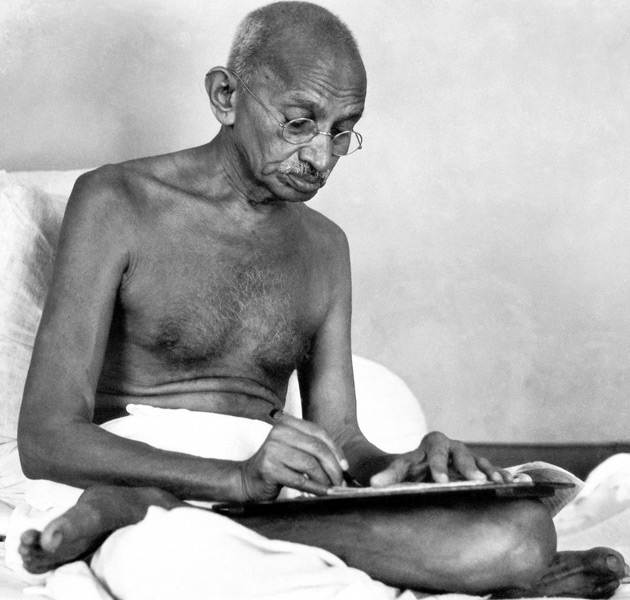
May 18, 2020 Steven Youngblood When asked to describe Mahatma Gandhi, most would say he was an Indian independence leader, human rights defender, and spiritual guide. However, “People don’t think of him as a journalist” even though “he was a journalist from an early age, and died as a journalist.” Originally posted on The Peace Journalist magazine, published by the Center for Global Peace Journalism on February 6, 2020, here This is according to professor, historian, and author Rajmohan Gandhi, the grandson of Mahatma Gandhi. Professor Gandhi was the featured speaker at a program titled “Gandhi: The First Peace Journalist,” held at Park University on Aug. 26. The evening began with a presentation by Gandhi documentarian, Cynthia Lukas, about Gandhi’s background as a journalist. Gandhi was a prolific journalist and editor who was well-known in India for his articles stressing social justice in such publications as Indian Opinion, Young India,...

Xi-Jinping
China has learned from its own rich history and is applying those lessons to re-emerge as a major 21st century power May 20, 2020 Pepe Escobar With hybrid warfare 2.0 against China reaching fever pitch, the New Silk Roads, or Belt and Road Initiative, will continue to be demonized 24/7 as the proverbial evil communist plot for economic and geopolitical domination of the “free” world, boosted by a sinister disinformation campaign.  It’s idle to discuss with simpletons. In the interest of an informed debate, what matters is to find the deeper roots of Beijing’s strategy – what the Chinese learned from their own rich history and how they are applying these lessons as a re-emerging major power in the young 21st century.  Originally published by Asia Times on May 11, 2020, here Let’s start with how East and West used to position themselves at the center of the world.  The first...
ChatGPT Image 9 jun 2026, 11_11_33
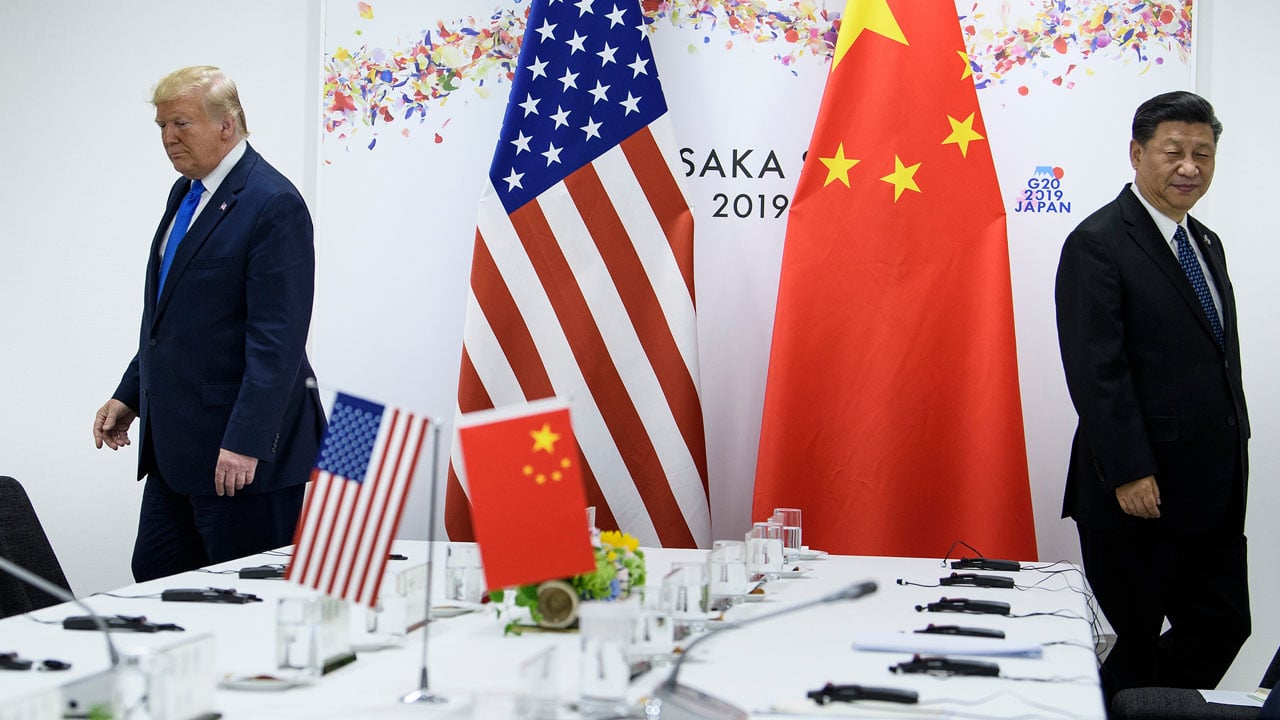
The world is supposed to be pulling together to defeat the Coronavirus and to some extent it is. Earlier on Russia sent special equipment to the US and recently the US has sent some to Russia. China has aided Italy and Africa with doctors and equipment. Tiny Cuba, with its deep pool of doctors, has also helped Africa. Around the world there is a sense of “we are all in this together” and that this is a bigger problem than the ones the world has faced since World War 2. The last two days the World Health Organization has brought all the world’s countries together to discuss how to go forward. Both the US and China, to a degree, have messed things up. President Donald Trump has been vicious in his attacks, suggesting Chinese culpability for spreading the virus. (He’s forgotten how the US incubated AIDS, an even greater killer....
JOAtInstallation_1000_72dpi
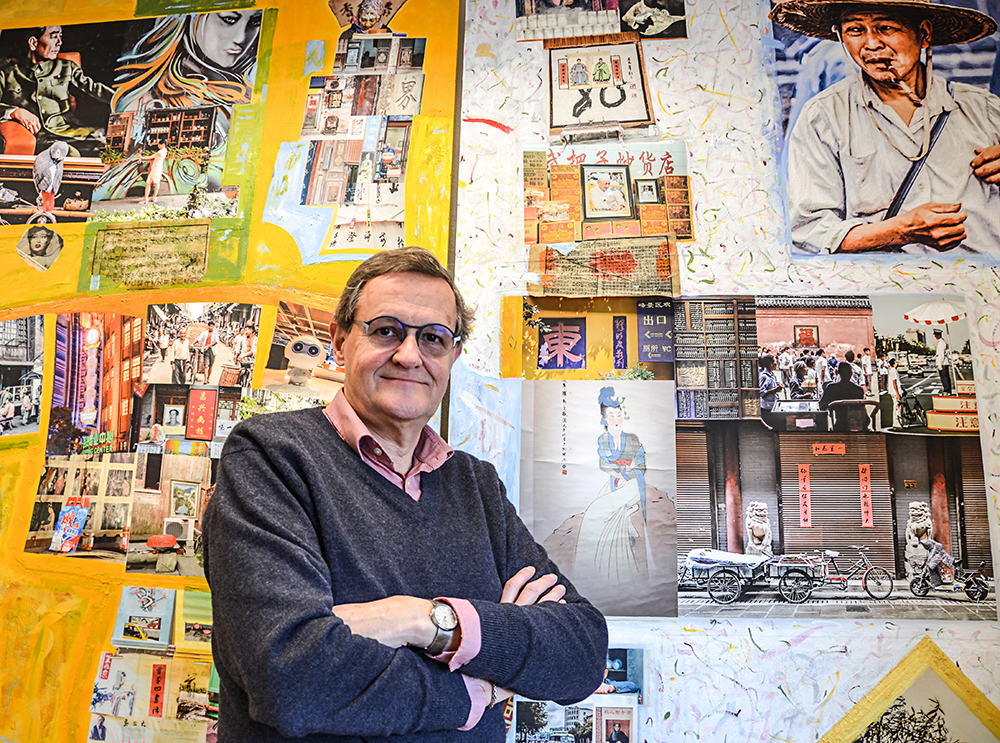
The author in front of a part of his photo-based, multi-media installation, “Silk Peace Art Road – SPAR” which was exhibited at the Venice Biennale 2019 and will be shown in China 2020. Yesterday, The Necessary Teacher Training College, DNS, in Denmark held its annual conference on peace and justice. As a couple of times before, I had the honour of being invited to be the keynote speaker. Because of the Coronavirus, it was online and not onsite – and I had produced the lecture in advance and then there was a Q&A session in the afternoon via Zoom. The two-part lecture is now on TFF’s Vimeo Channel here: Part 1 Part 2 The discussion that followed after group work If you found this lecture interesting or useful, please help us do more in the future. Remember, TFF is 100% people-financed and therefore completely independent of the government and corporate...
ChatGPT Image 9 jun 2026, 11_11_33
It might seem that the world is going to pot in a hand-basket. Not quite true. There are ways out. Asia has shown how to deal with the Coronavirus and how to stay politically stable. Europe, with the exception of wise Sweden, has muddled along, following belatedly the conventional wisdom of its scientific community. As for the United States, President Donald Trump has made a fool of himself and his country, ending up with the highest death rate in the world. No longer can the West rely on the US to be its leader. Even if Trump is deposed in the November election, the Europeans, the Canadians and Japanese should not let it return to being treated as the number one. It is too beholden to the military/legislative/industrial/academic complex. The consensus appears to be that confronting China and Russia is the right thing to do. The Coronavirus has shown up...
pic-from-ecohustler-1080x675-1
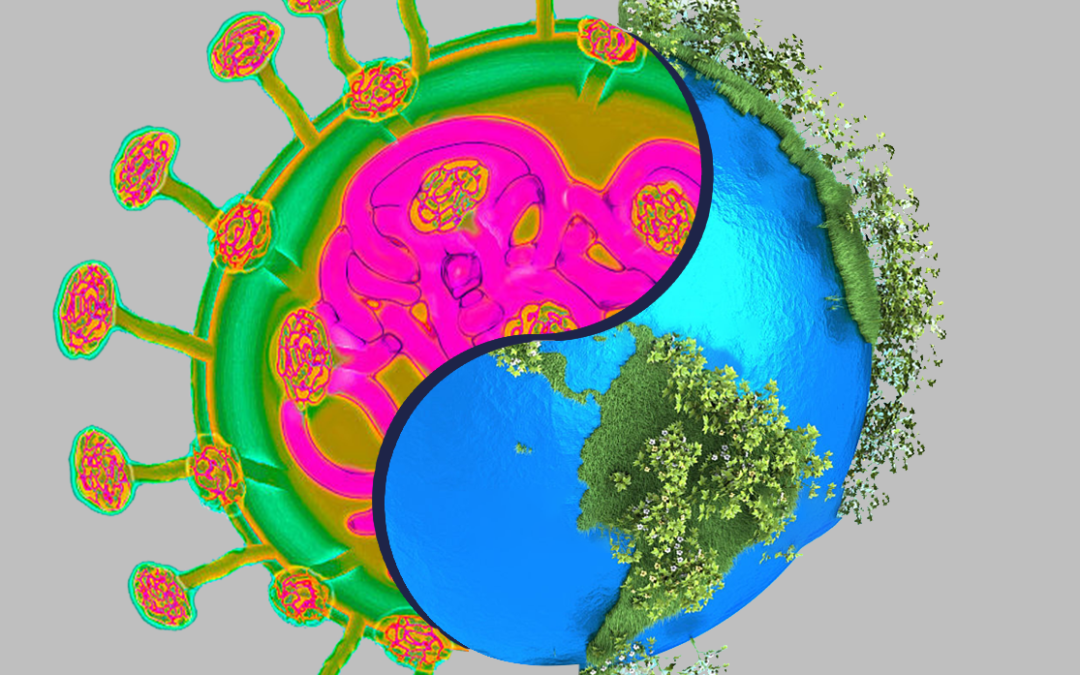
Imagine, it is the year 2050 and we are looking back to the origin and evolution of the coronavirus pandemic over the last three decades.  Extrapolating from recent events, we offer the following scenario for such a view from the future. As we move into the second half of our twenty-first century, we can finally make sense of the origin and impact of the coronavirus that struck the world in 2020 from an evolutionary systemic perspective. Today, in 2050, looking back on the past 40 turbulent years on our home planet, it seems obvious that the Earth had taken charge of teaching our human family. Our planet taught us the primacy of understanding of our situation in terms of whole systems, identified by some far-sighted thinkers as far back as the mid-nineteenth century.  This widening human awareness revealed how the planet actually functions, its living biosphere systemically powered by the...
Categories

Year

Author / Contributor

Region