May 18, 2020

Steven Youngblood

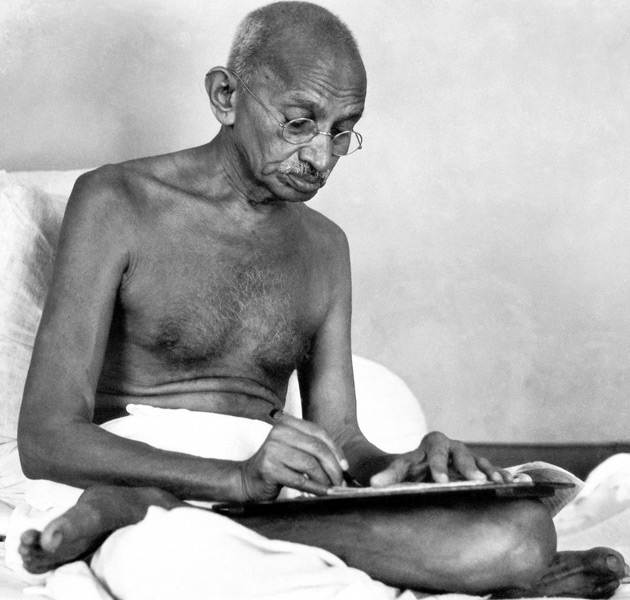
When asked to describe Mahatma Gandhi, most would say he was an Indian independence leader, human rights defender, and spiritual guide. However, “People don’t think of him as a journalist” even though “he was a journalist from an early age, and died as a journalist.”

Originally posted on The Peace Journalist magazine, published by the Center for Global Peace Journalism on February 6, 2020, here

This is according to professor, historian, and author Rajmohan Gandhi, the grandson of Mahatma Gandhi. Professor Gandhi was the featured speaker at a program titled “Gandhi: The First Peace Journalist,” held at Park University on Aug. 26.

The evening began with a presentation by Gandhi documentarian, Cynthia Lukas, about Gandhi’s background as a journalist. Gandhi was a prolific journalist and editor who was well-known in India for his articles stressing social justice in such publications as Indian Opinion, Young India, and Navajivan (A New Life). Lukas said his writing avoided inflammatory, “poisonous journalism” (as Gandhi termed it). Instead, Mahatma Gandhi emphasized civility and politeness in his articles, striving always to “step into the shoes of our opponents.”

Professor Gandhi agreed, adding that it is “certainly correct to describe Gandhi as a journalist.” His grandson said Gandhi was a staunch defender of the free press who nonetheless understood the need to avoid inflammatory rhetoric, to “put a curb on his own pen.”

My presentation followed, and supported the premise that Gandhi was indeed a peace journalist. I listed several characteristics shared by Gandhian and peace journalism. These include rejecting “us vs. them” narratives; journalism as public service; media as a tool to de-escalate conflicts; using journalism as a means to foster reconciliation; carefully choosing one’s words to avoid sensationalism; giving a voice to the voiceless; and emphasizing facts and truth.

Regarding language, I shared a quote with the audience. Writing about the “Indian Opinion” journal, Gandhi said, “I cannot recall a word in those articles set down without thought or deliberation, or a word of conscious exaggeration, or anything merely to please…”

The truth, and facts, had no more strident champion than Gandhi. I presented this telling quote from 1926: “The way to peace is the way of truth. Truthfulness is even more important than peacefulness. Indeed, lying is the mother of violence. The truth of a few will count; the untruth of millions will vanish even like chaff before a whiff of wind.”

Professor Gandhi agreed with my assessment that Mahatma Gandhi was indeed a peace journalist. He cited an incident where the Mahatma called out those who had labeled an opponent a snake. “To liken someone to a snake…is a degrading performance,” the professor quoted his grandfather.

The final speaker was Park professor Abhijit Mazumdar, who discussed inflammatory and often hate-filled speech in South Asian media. He cited examples from social media, including hash tags like #HatePakLovers, as well as inflammatory name-calling on Indian TV like “shrieking raccoon” and venomous snake.” In addition, he noted many examples of false news that have been reported by Indian television. Professor Gandhi added that Indian media often spread “toxicity.”

“The way to peace is the way of truth. Truthfulness is even more important than peacefulness. Indeed, lying is the mother of violence. The truth of a few will count; the untruth of millions will vanish even like chaff before a whiff of wind.”

The event was sponsored by Park University’s Center for Global Peace Journalism, which also arranged Prof. Gandhi’s appearances in several Park University classes.

The students were thrilled. “A once in a lifetime opportunity…A class I’ll never forget…Inspiring…” were among the avalanche of positive comments from Park University students who met and were inspired by Prof. Gandhi.

In the peace journalism class, Prof. Gandhi addressed the shortcomings of media, but left the students hopeful that media can become more responsible. He said he was impressed by the work that many U.S. journalists do, and the “commitment and quality of social journalists.”

Prof. Gandhi said he was depressed because of a “lack of substance,” media bias, and the media’s desire to “keep viewers glued to the screen” through sensationalism.

He was critical of Fox News’ “unfortunate bias” that supports the “curious notion” of white supremacy that suggests that only whites are the rightful owners of the U.S. “The way to confront them (white nationalists) is with the real American ideal” upon which the country was founded. “The U.S. has stood for justice and equality. We have to remind America of this,” he said.

The discussion about nationalism in the U.S. and elsewhere continued in Intro to Peace Studies class. Gandhi said that nationalism in the U.S. means ”reclaiming” of the country for whites; and in India, “reclaiming” the country for Hindus, despite Mahatma Gandhi’s lifelong struggle trying to build bridges between Hindus and other religions.

Prof. Gandhi also answered a question about the viability of non-violent approaches to peace. While he acknowledged that these tactics haven’t always worked, he said it is an unassailable fact that “violence hasn’t brought peace.” Gandhi further defended non-violence with the logic that violence begets violence, leaving non-violence as the only viable option.

In both of his classroom stops at Park, Prof. Gandhi discussed the current crisis in Kashmir, where 2,000 people have been arrested, the internet and phone service shut off, and over 400,000 Indian troops are deployed.

He mentioned – repeatedly – that the recent Indian government decision to strip Kashmir of its special limited sovereignty status was made “without consulting even one Kashmiri.” He firmly believes in the right of self-determination for Kashmiris, a right he said has been trampled by the current Indian government.

Park University students were thrilled to meet and be inspired by Prof. Gandhi. “I was impressed by the transmission of calmness and knowledge when he talks,” said Marcelo Aquino. International student from India Aadarash Chandan noted, “His views about the events are realistic, practical, and yet polite. His audacity is unmatched.” Destiny Webb spoke for many students when she commented, “He gave good advice and a better outlook on a non-violent society. His words were extremely wise.”

Finally, Nathan Moore said, “His views and thoughts on peace were very informative and got me to thinking about peace in my community.”

I know I speak for my students when I say we were truly honored by his presence and his wisdom.

If you enjoyed your visit on this website, please consider donating a dollar or five…

Steven Youngblood is the founding director of the Center for Global Peace Journalism at Park University in Parkville, Missouri USA, where he is a communications professor. He has organized and taught peace journalism seminars and workshops in 27 countries/regions.
Youngblood is the author of Peace Journalism: Principles and Practices and Professor Komagum (2013). He edits The Peace Journalist magazine, and writes and produces the Peace Journalism Insights blog. He has been recognized for his contributions to world peace by the U.S. State Department, Rotary International, and the UN Association of Kansas City.

Recommended further reading

Mahatma Gandhi and mass media

The Journalism Notebook – on Gandhi

Gandhi Sevagram Ashram

M. K. Gandhi as author

Gandhi – Journalist and editor

Related Posts

Tony Robinson October 4, 2026 Violence is easy to recognise when someone is being beaten, shot or killed. It becomes more difficult when nobody is holding a weapon. Poverty, discrimination, exploitation and repression can restrict a human life just as effectively, although they do so in very different ways and with very different consequences. Simply adding more categories to an ever-growing list of forms of violence does not really solve the problem. The more interesting question is what all these different situations have in common and why it makes sense to describe them using the same word. Human beings do not simply react to what happens around them. They remember the past, imagine things that do not yet exist, make plans and undertake projects. Workers organise because they imagine different working conditions; people migrate because they imagine another life somewhere else; social movements emerge because people refuse to accept the...
It’s a matter of principles, courage, vision and pulling together – while the militarist world is falling apart… Peter Langille October 3, 2026 “Here, then, is the problem which we present to you, stark and dreadful and inescapable: Shall we put an end to the human race; or shall mankind renounce war?”The Bertrand Russell—Albert Einstein Manifesto, July 9, 1955 ⁕ The forecast for what’s ahead is worrisome. The sharp rise in armed conflicts over the past three years is adding to what was already the highest level in over seventy years. Genocides, which should be prevented are supported. A shared climate emergency that jeopardises survival is ignored. Diverse polls now suggest that people are war-weary, worried and interested in a more effective United Nations. And, there are viable policy options for a more secure world! Yet governments are doubling-down, betting on more war and investing heavily. If current trends persist,...
Johan Galtung 1930-2024October 2015 Published here on October 3, 2026 Let us focus on Civilization for conflict analysis and remedies. Major forms of disorder use violence; war is state organized violence. The most belligerent states are the United States of America and Israel, both with civilization roots. National Evangelism, the US Protestant Christian civilization– more national than evangelical–justifies US warfare as exceptionalism of a people chosen by God, with a manifest destiny to run the world. Orthodox Judaism justifies Israeli warfare to conquer and expand from Nile to Euphrates as a religious right and duty to the Eternal One. The third most belligerent country, the UK, no longer believes it is God-chosen but chosen by the USA; not quite the same but something. But the root cause of global disorder lies in the Occident–with Islam–seeing itself as the single, universal civilization valid for all at all times, all others being...

Recent Articles

Tony Robinson October 4, 2026 Violence is easy to recognise when someone is being beaten, shot or killed. It becomes more difficult when nobody is holding a weapon. Poverty, discrimination, exploitation and repression can restrict a human life just as effectively, although they do so in very different ways and with very different consequences. Simply adding more categories to an ever-growing list of forms of violence does not really solve the problem. The more interesting question is what all these different situations have in common and why it makes sense to describe them using the same word. Human beings do not simply react to what happens around them. They remember the past, imagine things that do not yet exist, make plans and undertake projects. Workers organise because they imagine different working conditions; people migrate because they imagine another life somewhere else; social movements emerge because people refuse to accept the...
It’s a matter of principles, courage, vision and pulling together – while the militarist world is falling apart… Peter Langille October 3, 2026 “Here, then, is the problem which we present to you, stark and dreadful and inescapable: Shall we put an end to the human race; or shall mankind renounce war?”The Bertrand Russell—Albert Einstein Manifesto, July 9, 1955 ⁕ The forecast for what’s ahead is worrisome. The sharp rise in armed conflicts over the past three years is adding to what was already the highest level in over seventy years. Genocides, which should be prevented are supported. A shared climate emergency that jeopardises survival is ignored. Diverse polls now suggest that people are war-weary, worried and interested in a more effective United Nations. And, there are viable policy options for a more secure world! Yet governments are doubling-down, betting on more war and investing heavily. If current trends persist,...
Johan Galtung 1930-2024October 2015 Published here on October 3, 2026 Let us focus on Civilization for conflict analysis and remedies. Major forms of disorder use violence; war is state organized violence. The most belligerent states are the United States of America and Israel, both with civilization roots. National Evangelism, the US Protestant Christian civilization– more national than evangelical–justifies US warfare as exceptionalism of a people chosen by God, with a manifest destiny to run the world. Orthodox Judaism justifies Israeli warfare to conquer and expand from Nile to Euphrates as a religious right and duty to the Eternal One. The third most belligerent country, the UK, no longer believes it is God-chosen but chosen by the USA; not quite the same but something. But the root cause of global disorder lies in the Occident–with Islam–seeing itself as the single, universal civilization valid for all at all times, all others being...

TFF on Substack

Discover and subscribe to more peace materials on TFF Substack

Most Popular

Tony Robinson October 4, 2026 Violence is easy to recognise when someone is being beaten, shot or killed. It becomes more difficult when nobody is holding a weapon. Poverty, discrimination, exploitation and repression can restrict a human life just as effectively, although they do so in very different ways and with very different consequences. Simply adding more categories to an ever-growing list of forms of violence does not really solve the problem. The more interesting question is what all these different situations have in common and why it makes sense to describe them using the same word. Human beings do not simply react to what happens around them. They remember the past, imagine things that do not yet exist, make plans and undertake projects. Workers organise because they imagine different working conditions; people migrate because they imagine another life somewhere else; social movements emerge because people refuse to accept the...
It’s a matter of principles, courage, vision and pulling together – while the militarist world is falling apart… Peter Langille October 3, 2026 “Here, then, is the problem which we present to you, stark and dreadful and inescapable: Shall we put an end to the human race; or shall mankind renounce war?”The Bertrand Russell—Albert Einstein Manifesto, July 9, 1955 ⁕ The forecast for what’s ahead is worrisome. The sharp rise in armed conflicts over the past three years is adding to what was already the highest level in over seventy years. Genocides, which should be prevented are supported. A shared climate emergency that jeopardises survival is ignored. Diverse polls now suggest that people are war-weary, worried and interested in a more effective United Nations. And, there are viable policy options for a more secure world! Yet governments are doubling-down, betting on more war and investing heavily. If current trends persist,...
Johan Galtung 1930-2024October 2015 Published here on October 3, 2026 Let us focus on Civilization for conflict analysis and remedies. Major forms of disorder use violence; war is state organized violence. The most belligerent states are the United States of America and Israel, both with civilization roots. National Evangelism, the US Protestant Christian civilization– more national than evangelical–justifies US warfare as exceptionalism of a people chosen by God, with a manifest destiny to run the world. Orthodox Judaism justifies Israeli warfare to conquer and expand from Nile to Euphrates as a religious right and duty to the Eternal One. The third most belligerent country, the UK, no longer believes it is God-chosen but chosen by the USA; not quite the same but something. But the root cause of global disorder lies in the Occident–with Islam–seeing itself as the single, universal civilization valid for all at all times, all others being...
Read More
Living-Peace-Sign-Budapest-copy
Tony Robinson October 4, 2026 Violence is easy to recognise when someone is being beaten, shot or killed. It becomes more difficult when nobody is holding a weapon. Poverty, discrimination, exploitation and repression can restrict a human life just as effectively, although they do so in very different ways and with very different consequences. Simply adding more categories to an ever-growing list of forms of violence does not really solve the problem. The more interesting question is what all these different situations have in common and why it makes sense to describe them using the same word. Human beings do not simply react to what happens around them. They remember the past, imagine things that do not yet exist, make plans and undertake projects. Workers organise because they imagine different working conditions; people migrate because they imagine another life somewhere else; social movements emerge because people refuse to accept the...
b54a1f10-8c65-4f0b-9dd5-4abc0a7d04cc_2659x2659
It’s a matter of principles, courage, vision and pulling together – while the militarist world is falling apart… Peter Langille October 3, 2026 “Here, then, is the problem which we present to you, stark and dreadful and inescapable: Shall we put an end to the human race; or shall mankind renounce war?”The Bertrand Russell—Albert Einstein Manifesto, July 9, 1955 ⁕ The forecast for what’s ahead is worrisome. The sharp rise in armed conflicts over the past three years is adding to what was already the highest level in over seventy years. Genocides, which should be prevented are supported. A shared climate emergency that jeopardises survival is ignored. Diverse polls now suggest that people are war-weary, worried and interested in a more effective United Nations. And, there are viable policy options for a more secure world! Yet governments are doubling-down, betting on more war and investing heavily. If current trends persist,...
010
Johan Galtung 1930-2024October 2015 Published here on October 3, 2026 Let us focus on Civilization for conflict analysis and remedies. Major forms of disorder use violence; war is state organized violence. The most belligerent states are the United States of America and Israel, both with civilization roots. National Evangelism, the US Protestant Christian civilization– more national than evangelical–justifies US warfare as exceptionalism of a people chosen by God, with a manifest destiny to run the world. Orthodox Judaism justifies Israeli warfare to conquer and expand from Nile to Euphrates as a religious right and duty to the Eternal One. The third most belligerent country, the UK, no longer believes it is God-chosen but chosen by the USA; not quite the same but something. But the root cause of global disorder lies in the Occident–with Islam–seeing itself as the single, universal civilization valid for all at all times, all others being...
Screenshot 2026-10-02 011738
Jan ObergPhD, director, The Transnational Foundation for Peace and Future Research, TFFLund, Sweden October 2, 2026 This is my full original manuscript. The Chinese Academy of Social Science, CASS, makes two publications out if it. 1. China’s Five-year plan emphasized the capabilities of basic research and original innovation. It is regarded as the goal of the future social development, which, as required, should be significantly enhanced. Can you comment on the importance of original innovation in research and academic study? I believe it is easier to define “original innovation” in the natural sciences than in social sciences. The breaking points of what constitutes something new, or innovative, are not quite as sharp in the latter. But in both fields it is about opening up something that was closed, unseen, unexplored before – making manifest what was earlier latent. Innovations come in many forms and shapes – naming something that was not...
arctic-circle-map
The agreement is catastrophic both because of what it says and what it doesn’t mention. It reduces further the major asset of security policies: Freedom of action. Jan Oberg TFF director September 25, 2026 A couple of hours before the agreement was signed on September 22, 2026, I published the following 13 hypotheses about what it would most likely contain on TFF Substack (in English). I was wrong on only the first point. Contrary to what Trump had written on his Truth Social platform, it does not appear to come into force immediately. In fact, it turned out to be worse than even I had anticipated. After these hypotheses now come a number of reflections in light of what the agreement actually contains, and does not contain, as well as the way in which it has generally been presented by major media outlets and by the public-service broadcaster DR. My...
girl-5894831_1280
Below are TFF-related media mentions, comments, videos and social media posts published elsewhere but not on this homepage. We happen to catch and list only a fraction. Regarding video comments and debates, we recommend that you go to the TFF Video Channel on Substack where many of them are reproduced. Jan Oberg is a contributor to China Daily – 52 million daily clicks – and Global Times, CGTN and CCTV (the national television), China Investment, Xinhua News Agency and several others. Articles and videos on these media very often multiply into countless Chinese (and Western media) that re-post them from these main media. Thanks to The China Academy, his analyses, interviews and comments are frequently posted on YouTube channels such as Thinkers Forum and Wave Media. These videos are often re-posted on Bilibili (China’s YouTube), the China Content Center on TikTok, and on the Chinese edition of TikTok, Douyin.com. This means reaching hundreds of millions of viewers worldwide over a year. While there are too many to catch on all these...