Conflict – violence and war

Category

Year

Author / Contributor

Region

Sort by

Showing 1-10 of 206 stories

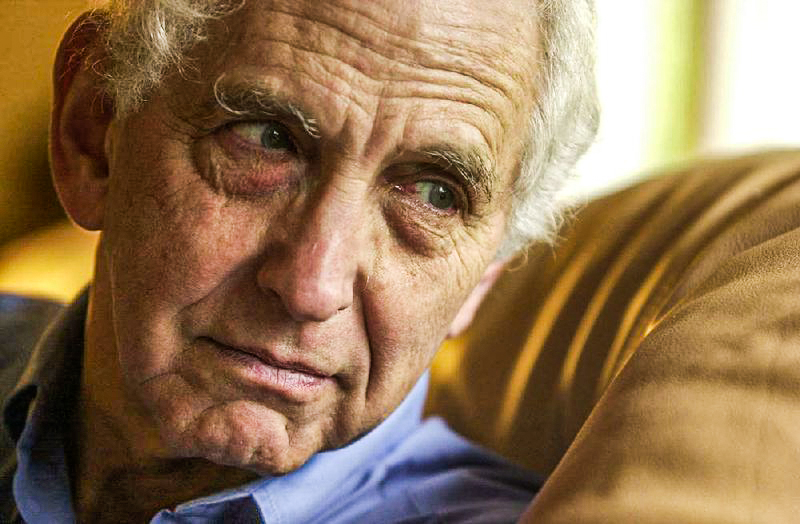
resized_272427-daniel-ellsberg-0119_69-24152_t800
The famed source of the Pentagon Papers, Daniel Ellsberg, has made another unauthorized disclosure — and wants to be prosecuted for it. By Charlie SavagePublished May 22, 2021 • Updated May 23, 2021 • 阅读简体中文版閱讀繁體中文版 WASHINGTON — When Communist Chinese forces began shelling islands controlled by Taiwan in 1958, the United States rushed to back up its ally with military force — including drawing up plans to carry out nuclear strikes on mainland China, according to an apparently still-classified document that sheds new light on how dangerous that crisis was. American military leaders pushed for a first-use nuclear strike on China, accepting the risk that the Soviet Union would retaliate in kind on behalf of its ally and millions of people would die, dozens of pages from a classified 1966 study of the confrontation show. The government censored those pages when it declassified the study for public release. The document...
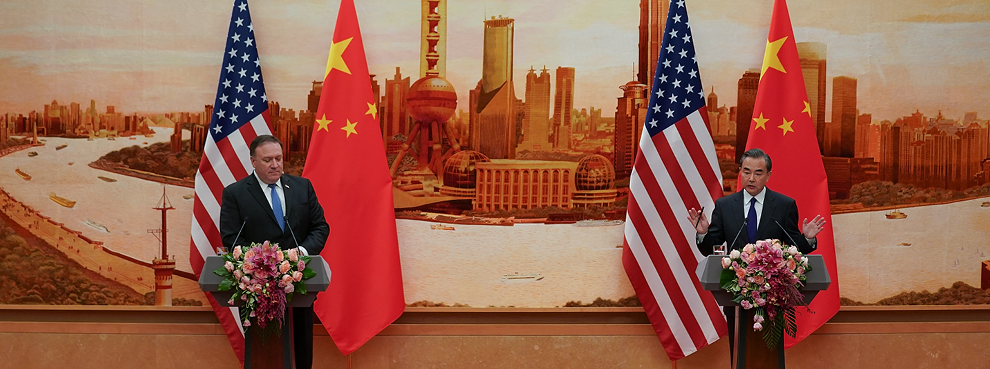
feature_pompeo_china
Jan Oberg May 15, 2021 The conflict between the US/West and China will shape humanity’s future more than any other conflict. Therefore, it is not a bilateral issue but a global concern. I believe it ought to be on top of the agenda at the peace research institutions that have not turned state-dependent and/or US-mainstreamed.Both the Trump and the Biden Administrations have determined that what is going on in Xinjiang in China is a genocide and lots of mainstream media, editorials, policy statements and experts have spread this ”determination” as the truth. However, not one has checked the accusation’s documentation, the stated “independence” of the producing institutes or the experts’ ideological connections. This was originally posted as an editorial on Transcend Media Service, TMS, on May 3, 2021 here The world has a right to expect that the extremely serious genocide accusation is based on rock-solid evidence. To find out...
FreeComposition_1_1200_100dpi
En kritisk analys av en rapport från Newlines Institute och Raoul Wallenberg Center Gordon Dumoulin, Jan Oberg och Thore Vestby Transnationella Stiftelsen för Freds- och Framtidsforskning, TFF, Lund, Sverige TFF@transnational.org • The Transnational • Ph +46 (0) 738 525200 Översättning av engelska utgåvan: Rolf Nilsson Den 5. maj, 2021 Den 8 mars 2021 publicerade Newlines Institute for Strategy and Policy i Washington en rapport, The Uyghur Genocide: An Examination of China’s Breaches of the 1948 Genocide Convention i samarbete med Raoul Wallenberg Centre for Human Rights i Montreal. Den säger att ”Denna rapport är den första oberoende experttillämpningen av folkmordskonventionen från 1948 för den pågående behandlingen av uigurerna i Kina. Det genomfördes av Newlines Institute for Strategy and Policy, i samarbete med Raoul Wallenberg Center for Human Rights, som svar på framväxande redogörelser för allvarliga och systematiska grymheter i Xinjiang-provinsen, särskilt riktade mot uigurerna, en etnisk minoritet, för att fastställa...
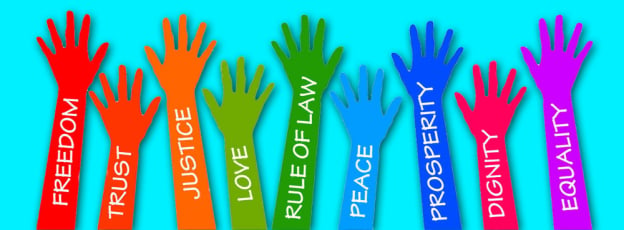
human-rights-hands
The United States, Britain and European nations have a history of ‘weaponising’ human rights in foreign policy. Throughout late imperial history, China has rarely blamed other nations, their religion or race, for domestic problems. Martin PowersAn opinion piece in South China Morning PostMarch 4, 2021 The term “human rights” is properly a feature of the modern world, but people have been calling out cruelty for centuries. Who gets blamed for human tragedy reveals a lot about how a nation values human life. Western nations, chief among them the United States, have long assumed the promotion of human rights as one of their natural duties, but in recent years some have questioned their qualifications for doing so. Last Fall in the journal Foreign Affairs James Goldgeier and Bruce W. Jentleson itemised the failures of America’s “tarnished model”, taking note of that “internationally controversial war in Iraq” and a major financial crisis in 2008. Following a...
Qianlong-Emperor-and-Lord-Macartney
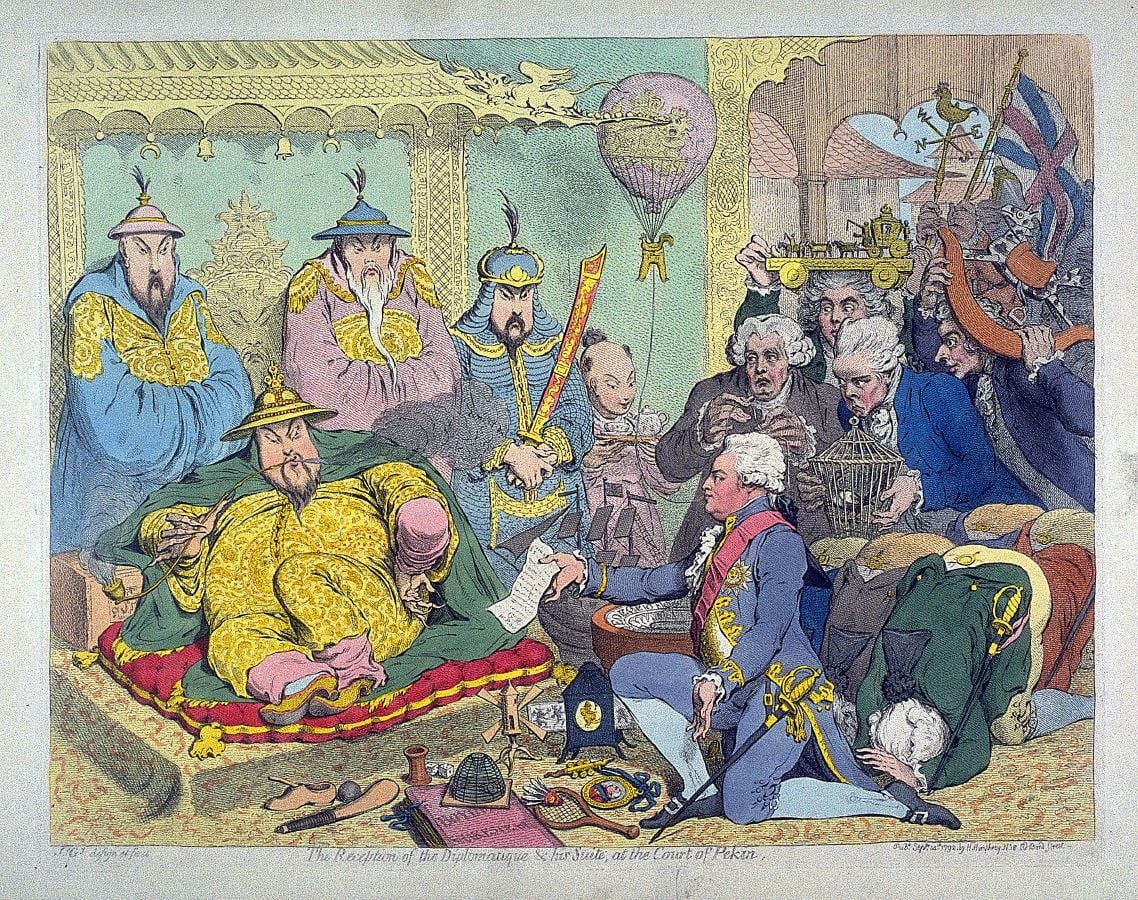
James Carter February 25, 2020 In popular understanding, the Qianlong Emperor’s rejection of Lord Macartney and King George III was an act of hubris, a failure to recognize the military might of Britain and the West, the last prideful act of a waning empire before a “century of humiliation.” But what if our understanding is all wrong? Originally posted on SupChina on September 9, 2020 “Our Celestial Empire possesses all things in prolific abundance and lacks no product within its borders. There was therefore no need to import the manufactures of outside barbarians in exchange for our own produce.” This was the Qianlong Emperor’s response, in part, to British Lord Macartney in September 1793. For a century, the British, like other seafaring Europeans, had been restricted by the “Canton System” that permitted commerce only at the port of Guangzhou (Canton), through official government monopolies, and during a certain season. Industrialists...

echo-grid-BefmnpXPZ80-unsplash
Dr. Gary G. Kohls February 9, 2021 A half-century ago, The New York Times accused Martin Luther King Jr. of “slander” for decrying the Vietnam War and The Washington Post detected “unsupported fantasies” in his speech, recalled more favourably by Gary G. Kohls. Originally published on Jan. 19, 2014; slightly edited for the time element. Originally posted on Consortium News on January 19, 2021 Martin Luther King Jr.’s Riverside Church speech was titled “Beyond Vietnam: A Time to Break Silence.” It was delivered exactly one year before his April 4, 1968 assassination in Memphis. In the speech, King declared, “A nation that continues year after year to spend more money on military defense than on programs of social uplift is approaching spiritual death.” The people who heard that speech recognized it as one of the most powerful speeches ever given articulating the immorality of the Vietnam War and its destructive impact...
US-ChinaCoop
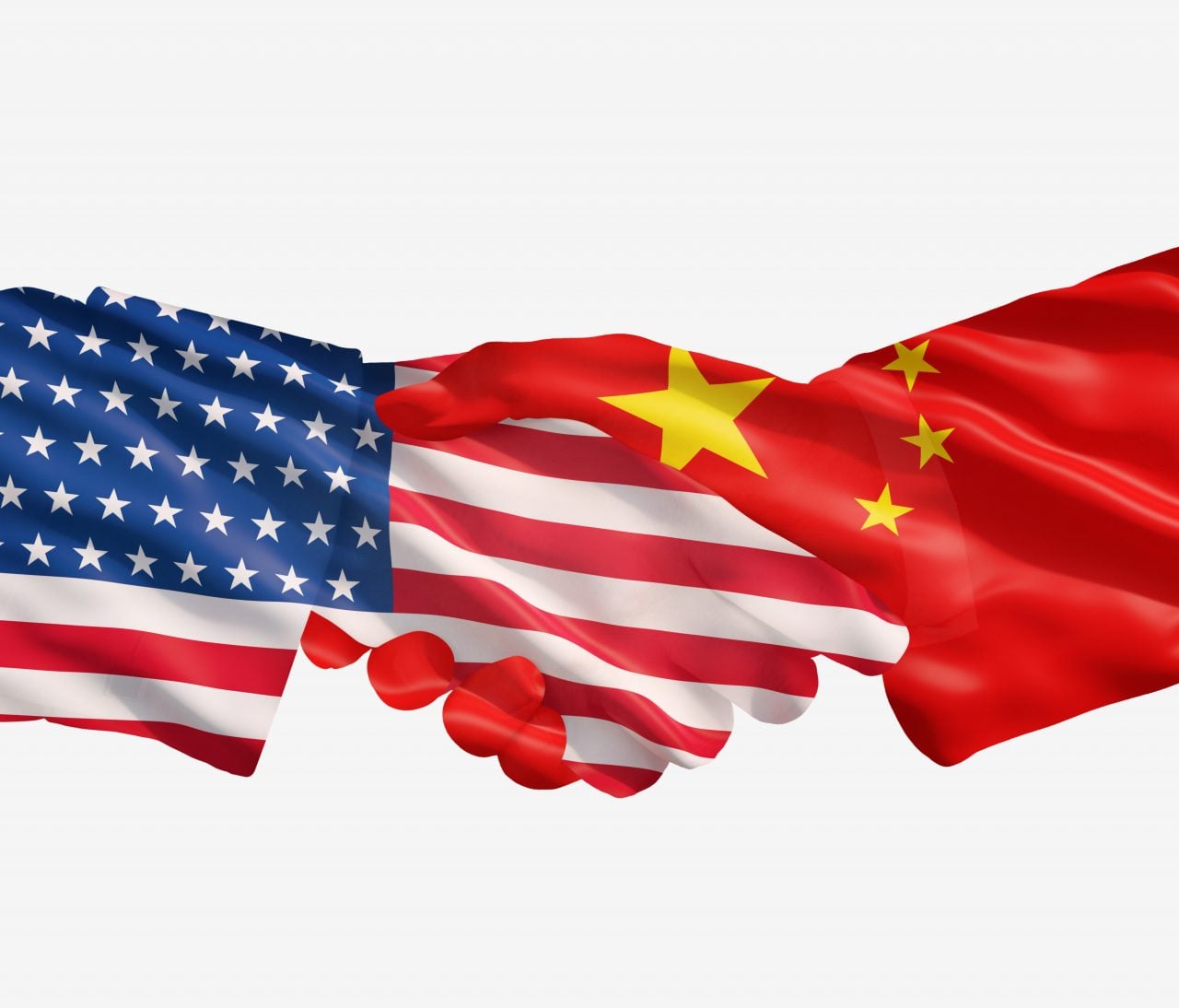
Cooperation would be much better for all, more desirable and perfectly possible. But some want confrontation. Roberto Savio February 2, 2020 It will be quite different from the Cold War with the Soviet Union… While the Coronavirus has rightly taken much of our attention, a fundamental geopolitical realignment has been taking shape in the world, and it will become clearer in 2021. The realignment is the start of a Second Cold War, which hopefully will not become a ‘hot’ war. The new Cold War will be between China and the West, but it will be quite different from the one with the Soviet Union. The world has changed significantly since 1989, the year of the fall of the Berlin Wall. Originally posted on Wall Street International, December 29, 2020 The gap between the two opposing camps is now much smaller. The Soviet Union, a military giant with little industrial development,...
Albert_Gyorgy-Emptiness
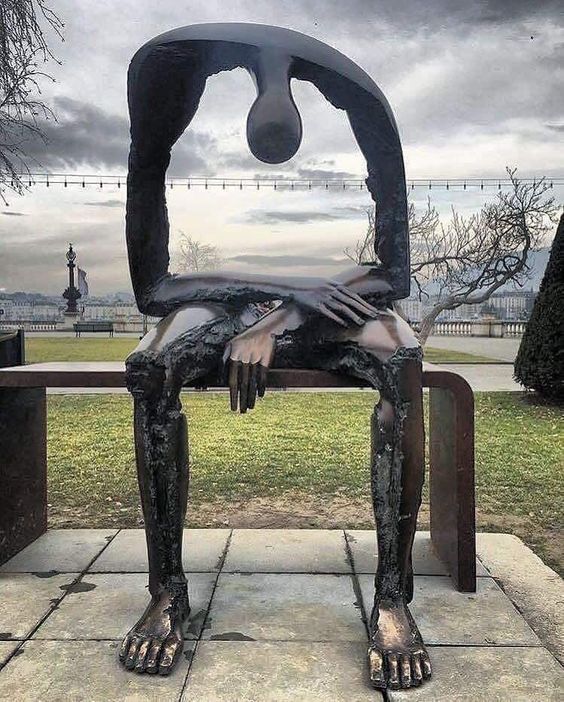
Albert Györgi’s sculpture, “Emptiness,” at Lake Geneva TFF Associate In war, there are no unwounded soldiers. —José Narosky War is hell, and today more than ever. Although high-tech weapons make it a videogame for some, those same weapons make it unbelievably destructive for everyone else. Whatever valor was once associated with hand-to-hand combat has long since disappeared due to gunpowder, and the massive slaughters of the twentieth century have made it increasingly difficult to romanticize the death and misery war causes. Nonetheless it continues and we have learned, if not to accept it, to take it for granted. Obviously, not everyone loathes it. The U.S. economy would collapse without the obscene amount spent on the military-industrial complex, now well over $600 billion a year according to some calculations. It’s hard to rationalize such a sum without a war once in a while. That’s why the end of the Cold War...
Non-existence
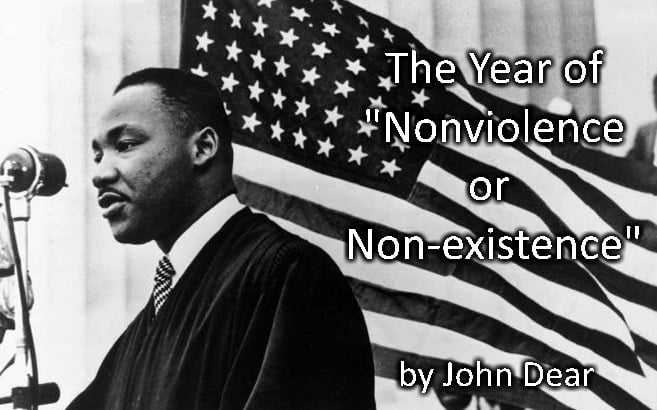
Photo credit: Poster art courtesy paceebene.org John Dear January 20, 2021 It was early 1968. Since the previous spring Martin Luther King, Jr. had been pursuing a course that for many was unthinkable. He had deliberately connected the dots between the movement for civil rights and the struggle to end the war in Vietnam, and had paid the price. He was roundly criticized by the Johnson administration and the media, as well as by people in his own movement. From the right he was attacked for having the gall to question US foreign policy. From the left he was lambasted for losing focus and not keeping his eyes on the prize. Originally published at Satyagrahafoundation He even got it from a childhood friend who stopped by the house one afternoon to vent. “Why are you speaking out against the Vietnam War?” he carped. King put aside his customary oratory. “When I speak about nonviolence,” he patiently explained, “I mean nonviolent all the way.” As David Garrow’s classic biography of King reports, [Bearing the Cross, New York: Harper Collins, 1986], King went on...
saltwater-crop-technology-food-security-1440x1067-1
There is no security without food security. Geoff Tansey argues that meeting the real security needs of humanity necessitates the progressive redistribution of military budgets toward ending hunger and achieving sustainable development. Geoff Tansey December 13, 2020 As Covid-19 exacerbates inequalities nationally and globally, more and more people are becoming food insecure in both richer and poorer countries. According to the UN’s 2020 report on the State of Food Security and Nutrition in the World almost 690 million people went hungry in 2019. And the number of hungry people has been rising since 2014, well before the pandemic hit. COVID-19 could push over 130 million more people into chronic hunger, it says. That means one in every nine humans going hungry most of the time. Originally posted on Rethinking Securityon November 5th, 2020 here This matters for both human security and physical security. Last month saw the 75th anniversary of the founding of...
Screenshot
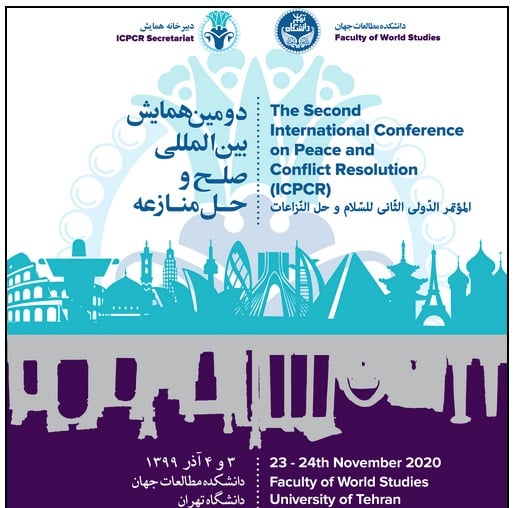
November 23 and 24, 2020, marks an important event in the international academic/university history of peace and conflict research. The reason is that the Faculty of World Studies at Tehran University holds a large – online – conference – “International Conference on Peace and Conflict Resolution (ICPCR)”. My colleague and friend there, associate professor Ali Akbar Alikhani, is the dynamic pioneer of this important endeavour which includes an international Master’s program in peace and conflict studies. It comes in the wake of a lecture I gave at the Faculty 6 years ago about peace and conflict research. As far as I’m informed, Iran is the second country in the Muslim world to establish a fill program of academic peace and conflict studies (Malaysia the first), and this conference marks the opening of this new academic field. Iran’s bustling capital also hosts an interesting, very lively, Tehran Peace Museum – but...
osama-750_1439889739_725x725
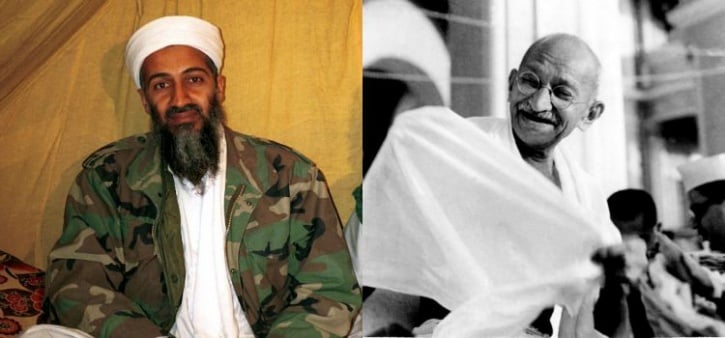
By Bhikhu Parekh November 5, 2020 If he were alive today, how might Mahatma Gandhi, the greatest apostle of non-violence, challenge Osama Bin Laden’s worldview? Bhikhu Parekh is Vice-President of The Gandhi Foundation, a professor of political philosophy, a Labour peer, and the author of three books on Gandhi. This article first appeared in Prospect Magazine in April 2004. Originally published at Gandhifoundation.org Bhikhu Parekh’s preface Like millions around the world, I found the atrocities of 9/11 abhorrent and utterly condemn such acts of terror. Despite the war against terror, we continue to see more horrors such as that in Madrid. What drives the bombers? How do they live with their deeds? Is there no alternative to the cycle of violence? No one is better qualified to advise on this than Mahatma Gandhi, the great apostle of non-violence. My imaginary exchange between him and Bin Laden tries to do two things: to comprehend...
Categories

Year

Author / Contributor

Region