Cold War – Old and New

Category

Year

Author / Contributor

Region

Sort by

Showing 1-10 of 177 stories

maidan
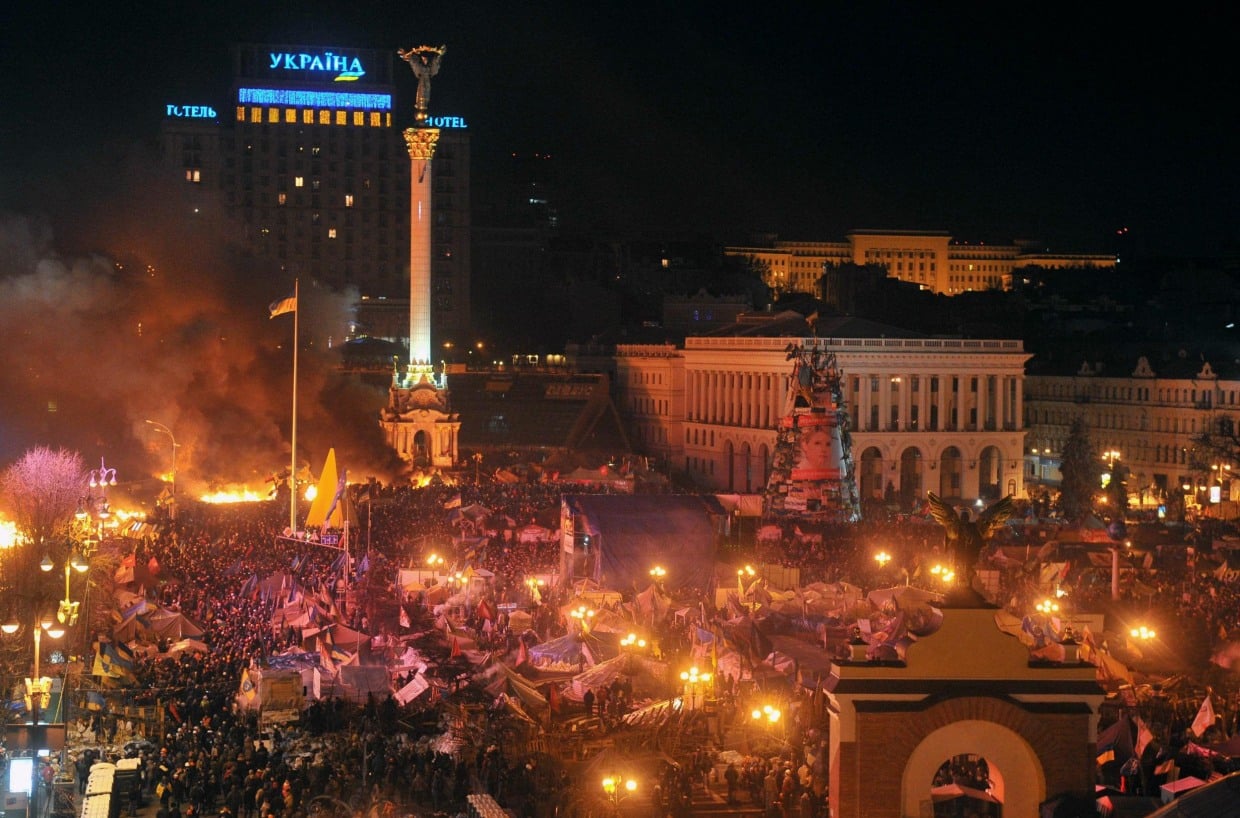
Maidan protests in 2014 in Kiev. GENYA SAVILOV / AFP – Getty Images Bryce Greene March 29, 2022 The history of U.S. involvement in Ukraine is rarely analyzed by corporate media. The desire to open Ukraine to finance capital, the 2014 U.S. backed coup, and the drive to expand NATO all played a role in creating the current crisis. As tensions began to rise over Ukraine, US media produced a stream of articles attempting to explain the situation with headlines like “Ukraine Explained” (New York Times, 12/8/21 ) and “What You Need to Know About Tensions Between Ukraine and Russia” (Washington Post, 11/26/21 ). Sidebars would have notes that tried to provide context for the current headlines. But to truly understand this crisis, you would need to know much more than what these articles offered. These “explainer” pieces are emblematic of Ukraine coverage in the rest of corporate media, which almost universally gave a pro-Western...
wesdftfgwerrf
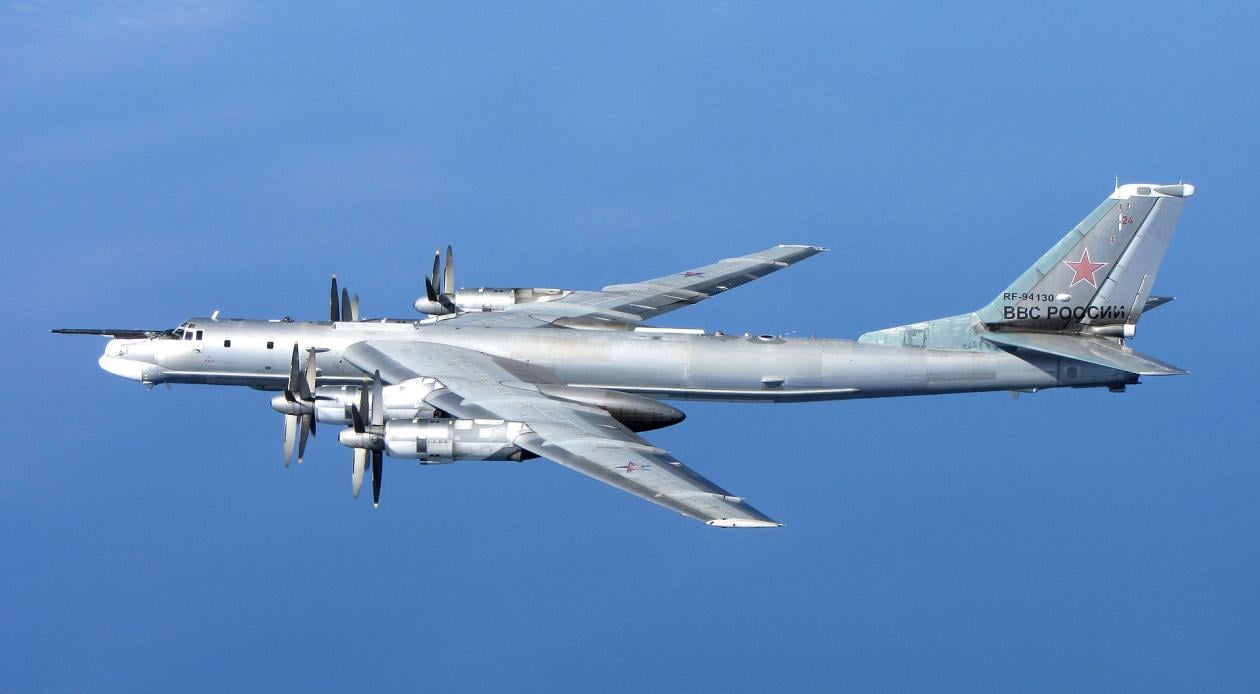
Image Credit: Creative Commons. Dave Majumdar March 18, 2022 The ultimate what-if? As strange as it seems, in 1954 when the United States and the Soviet Union were settling into a pattern of Cold War hostilities, the Kremlin actually proposed to join the NATO alliance on March 31 of that year.  The Soviets made the pitch for NATO membership after the Kremlin’s proposal for a pan-European collective security treaty at the Berlin Conference of Foreign Ministers in February 1954 was shot down by Western powers. While the Soviets expected to be rejected – and they were – Moscow considered it to be a win-win proposition. Originally published at The National Interest “Most likely, the organizers of the North Atlantic bloc will react negatively to this step of the Soviet government and will advance many different objections. In that event the governments of the three powers will have exposed themselves, once...
pic-tff-ukraine
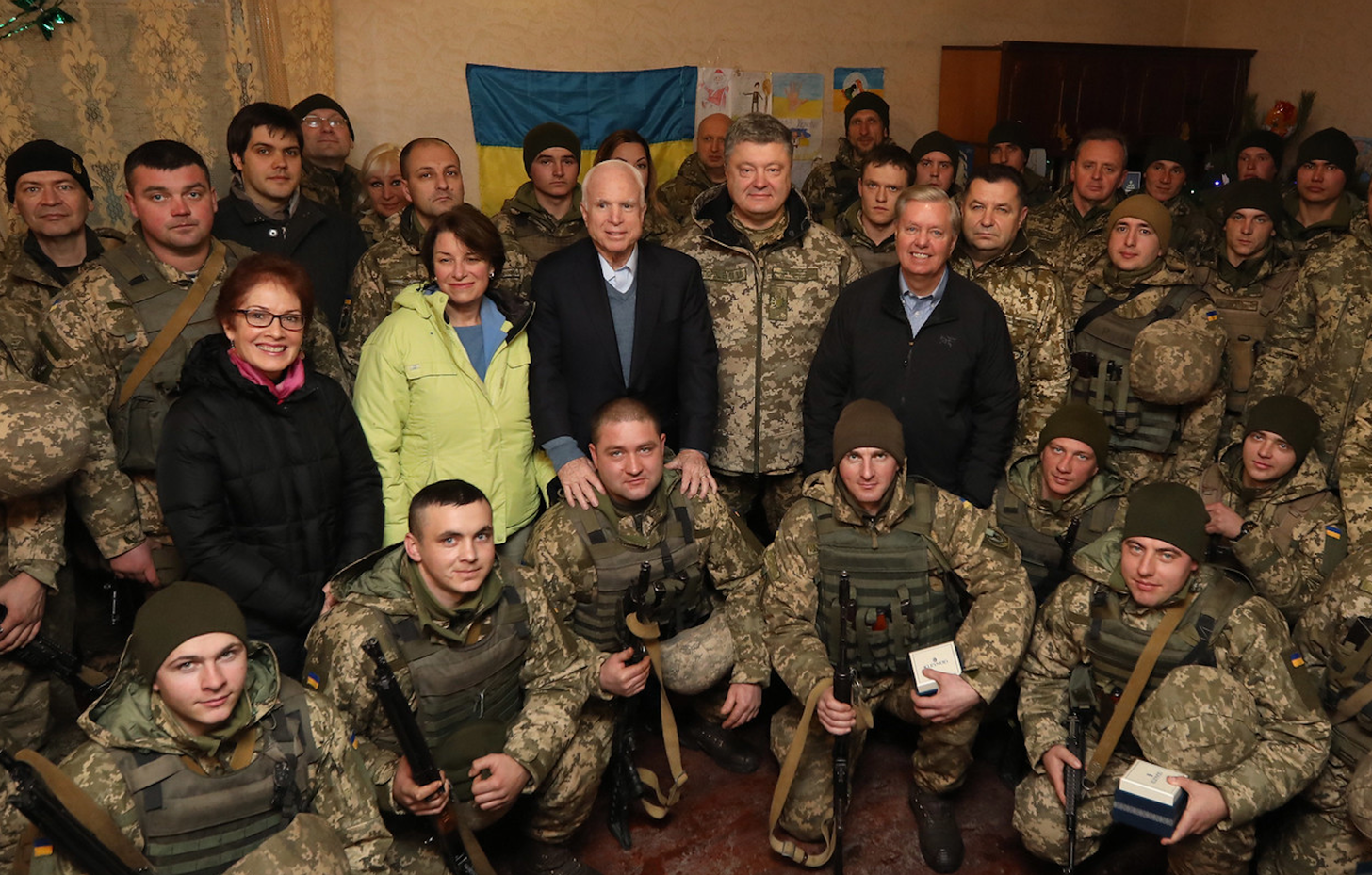
Aaron Maté March 18, 2022 After backing a far-right coup in 2014, the US has fueled a proxy war in Eastern Ukraine that has left 14,000 dead. Russia’s invasion is an illegal and catastrophic response. “The United States aids Ukraine and her people,” Adam Schiff declared in January 2020, “so that we can fight Russia over there, and we don’t have to fight Russia here.” Schiff made this statement during the opening of Donald Trump’s first impeachment trial, where the Democratic Party’s bid to ensure unimpeded US weapons sales to Ukraine was presented, and widely accepted, as a valiant defense of US democracy and national security. Originally published at mate.substack.com Two years later, the US use of Ukraine to “fight Russia over there” has reached its logical end-game: illegally, murderously, and catastrophically, Russia has invaded Ukraine to end the fight. The Russian invasion of Ukraine is a violation of the UN Charter. Without UN authorization, states...

Kremlin Moscow at Sunset Panorama Twilight Russia
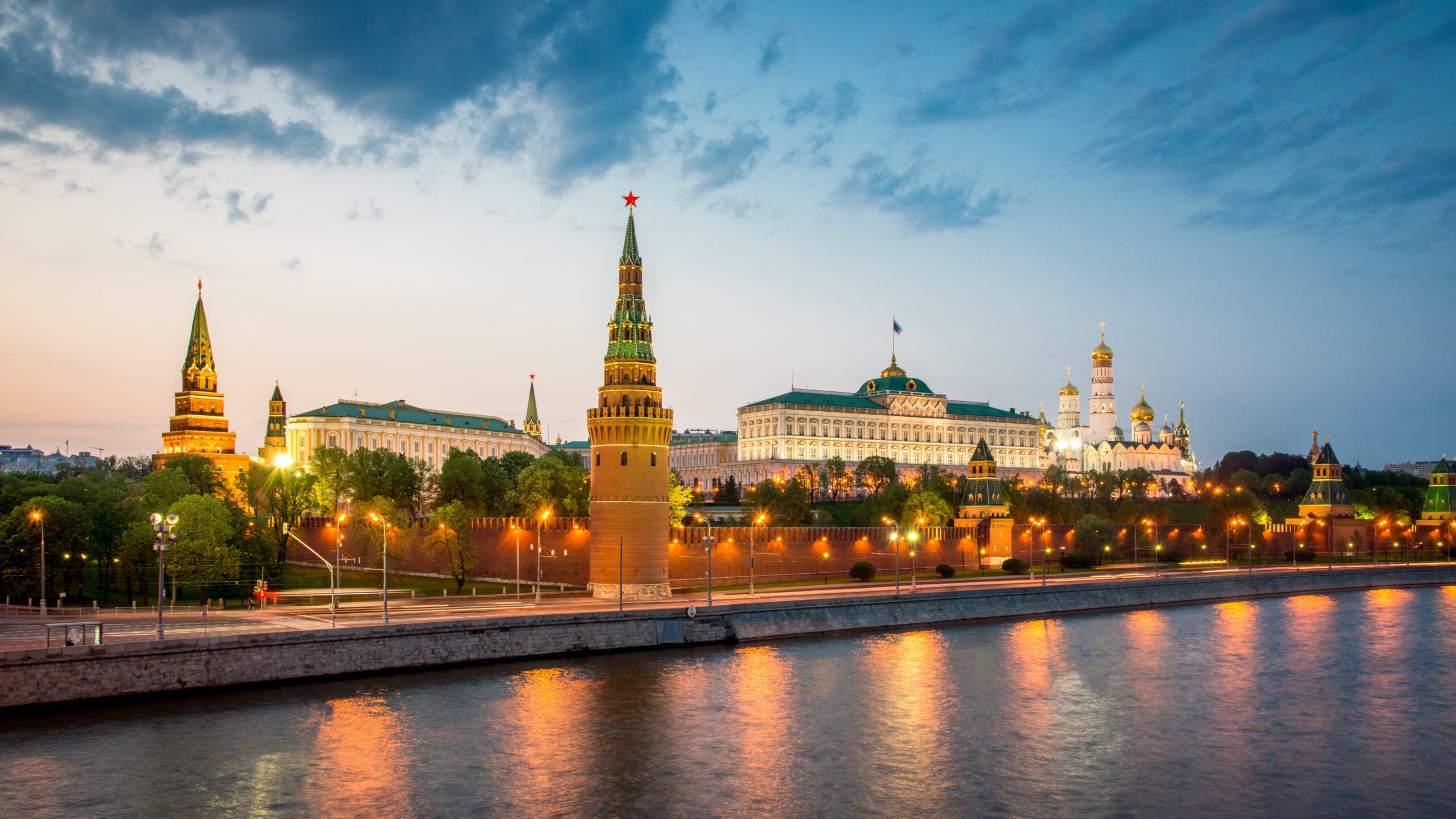
Jan Oberg March 18, 2022 A few quotes first… • “A report that comprehensively examines nonviolent, cost-imposing options that the United States and its allies could pursue across economic, political, and military areas to stress—overextend and unbalance – Russia’s economy and armed forces and the regime’s political standing at home and abroad.” • “Today’s Russia suffers from many vulnerabilities—oil and gas prices well below peak that have caused a drop in living standards, economic sanctions that have furthered that decline, an aging and soon-to-be-declining population, and increasing authoritarianism under Vladimir Putin’s now-continued rule. Such vulnerabilities are coupled with deep-seated (if exaggerated) anxieties about the possibility of Western-inspired regime change, loss of great power status, and even military attack.” • “Providing lethal aid to Ukraine would exploit Russia’s greatest point of external vulnerability. But any increase in U.S. military arms and advice to Ukraine would need to be carefully calibrated to...
NATO-Expansion-1024x605-1
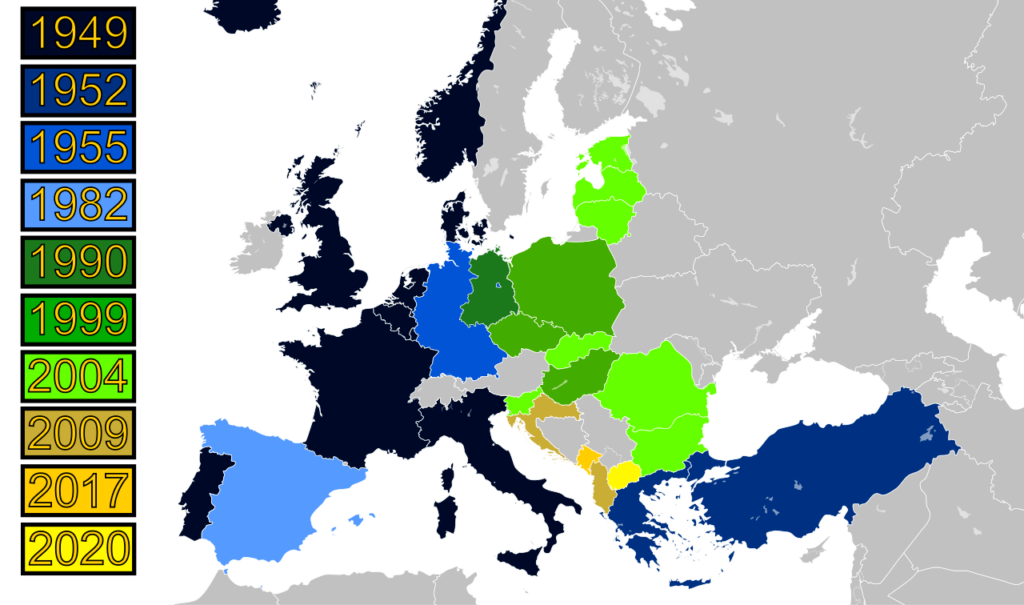
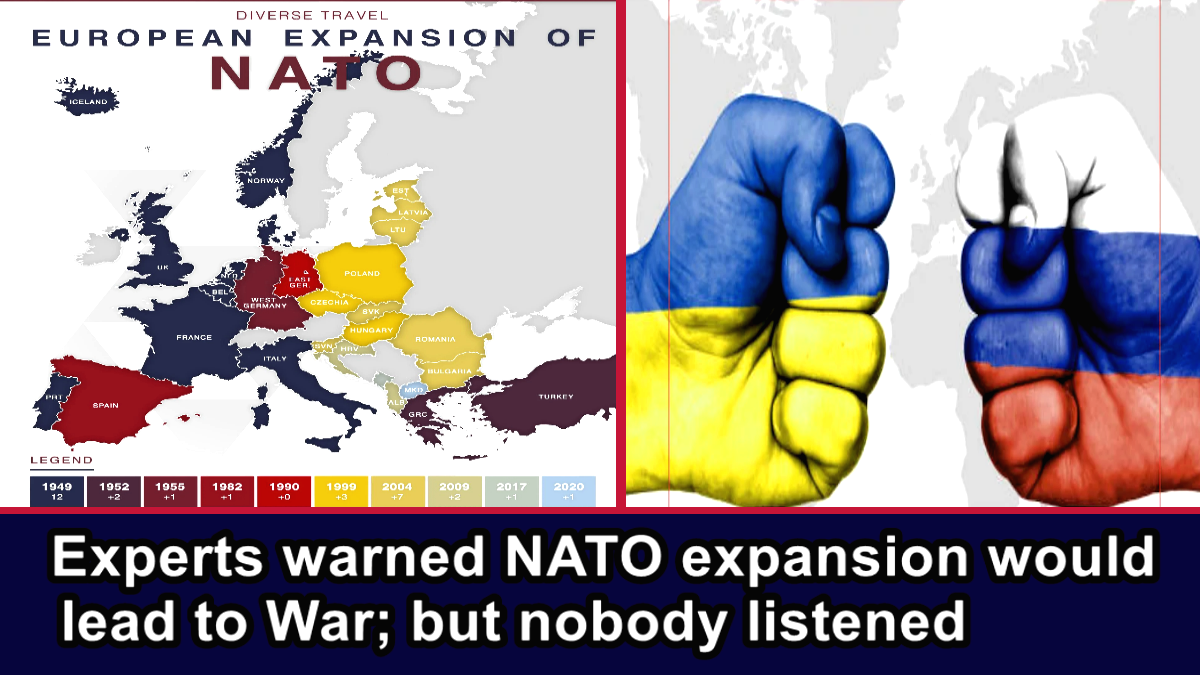
Wikimedia map of NATO expansion since 1949 created by Patrickneil.  Bryce Greene March 18, 2022 Originally posted on FAIR.org on March 4, 2022 Many governments and media figures are rightly condemning Russian President Vladimir Putin’s attack on Ukraine as an act of aggression and a violation of international law. But in his first speech about the invasion, on February 24, US President Joe Biden also called the invasion “unprovoked.” It’s a word that has been echoed repeatedly across the media ecosystem. “Putin’s forces entered Ukraine’s second-largest city on the fourth day of the unprovoked invasion,” Axios (2/27/22) reported; “Russia’s unprovoked invasion of Ukraine entered its second week Friday,” said CNBC (3/4/22). Vox (3/1/22) wrote of “Putin’s decision to launch an unprovoked and unnecessary war with the second-largest country in Europe.” The “unprovoked” descriptor obscures a long history of provocative behavior from the United States in regards to Ukraine. This history is important to understanding how we got here, and what...
5e6cb56f-d22b-49f7-95fc-a84f0ee5f3cd
China’s prestigious “Global Times” interviews Jan Oberg and several topical themes are touched upon. Among them, he comments on China’s new higher military expenditures and says that China would be loved by the world if it proposes a new global system to replace NATO’s outdated and dangerous paradigm. Read the interview here.
nato-war
Gordon M Hahn March 9, 2022 One of the ideational-cultural causes of the NATO-Russian crisis is what one author has called American hubris. This is a neo-imperial attitude engendered in the U.S. as a result of America’s post-Cold War status, now waning, as the lone superpower. Originally posted on Gordon Hahn’s homepage on March 3rd, 2022 A classic example of such hubris is the American view that Russia has no ‘right’ to a sphere of influence. The deception attached to this is that there is no threat to Russia from NATO expansion, a policy that will deprive Russia of a sphere of influence along its western borders. Of course, possession of a sphere of influence – which the U.S. actually claims globally – is not a right that one is given by God or fate, but it is won by the exercise of power and effective diplomacy. Ambition to a...
Meet-the-11-representatives-of-Russia-and-Ukraine-at-the-new-meeting-for-the-
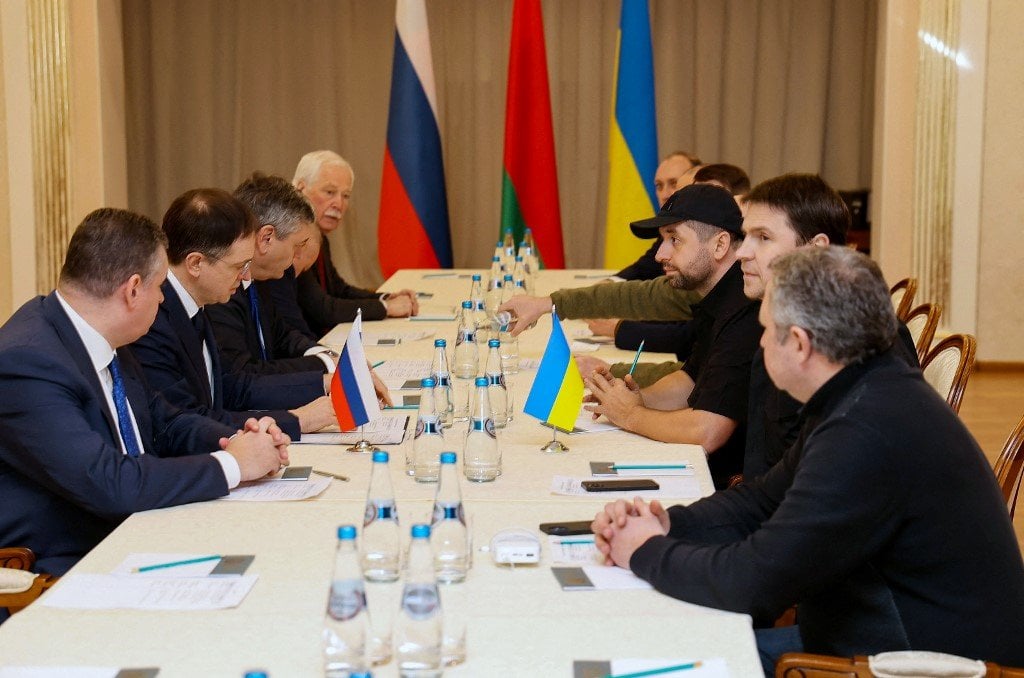
Anatol Lieven March 7, 2022 For those who understand Moscow’s establishment and view of their country’s vital interests, none of this should be a surprise. The illegal Russian invasion of Ukraine has shocked the West and many ordinary Russians. But for those who understand the Russian establishment and its view of Russia’s vital interests, it should not have come as a complete surprise. Since NATO expansion first began in the mid-1990s, Russian officials and other establishment figures have been warning that if the West tried to turn Ukraine into an ally against Russia, this would lead to confrontation and quite possibly war. As the great international relations scholar Hans Morgenthau taught, to craft a viable U.S. policy towards other major states, it is essential to understand from within how they see the world and their country’s place in it. Today, we need to do this if we are to craft a policy...
78th Anniversary Of The Founding Of The Ukrainian Insurgent Army
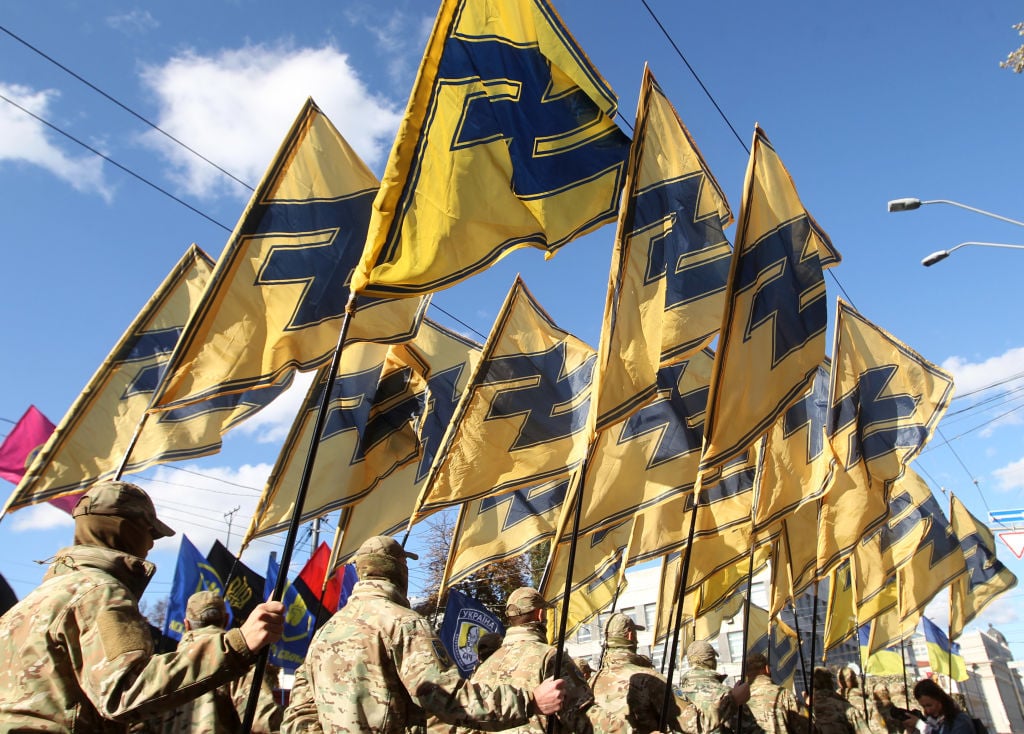
Members of the neo-Nazi Azov Regiment take part in a march to mark the anniversary of the founding of the Ukrainian Insurgent Army in Kyiv in 2020. (STR/NurPhoto via Getty Images) Branko Marcetic February 25 2022 The CIA has been secretly training anti-Russian groups in Ukraine since 2015. Everything we know points to the likelihood that includes neo-Nazis inspiring far-right terrorists across the world. Originally posted on JACOBIN’s official website on January 15, 2022 here The US government has a well-documented history of backing extremist groups as part of a panoply of foreign policy misadventures, which inevitably end up blowing up in the American public’s face. In the 1960s, the CIA worked with Cuban anti–Fidel Castro radicals who turned Miami into a hub of terrorist violence. In the 1980s, the agency supported and encouraged Islamic radicals converging in Afghanistan, who would go on to orchestrate the September 11 attack. And, in the 2010s, Washington backed Syria’s not-so-“moderate”...
KievPix
Robin Edward Poulton February 11, 2022 1 Feb 2022 – Secretary of State Blinken’s statement on January 26th was a disaster: a statement pleading for peace in Ukraine that was laden with aggression against Russia. The statement suffered from the lack of imagination we associate with U.S. imperialism, and a wanton refusal to understand how and why Russia feels threatened by NATO and the USA. Originally published at Transcend Media Service (TMS) Ukraine is a buffer state between Russia and Germany/Europe/NATO. And we need buffer states. Buffer States are often necessary for stable peace. No less a person than the Secrétaire Permanente de l’Académie Française – Madame Hélène Carrère d’Encausse – commented recently that Helmut Kohl and James Baker had promised Mikael Gorbachev that NATO would not expand eastwards…. which it then did, now expanded to 30 member states. Madame Hélène Carrère d’Encausse was born in Russia. Her magisterial book L’Empire Eclaté described the break-up of the Soviet...
russ-georg
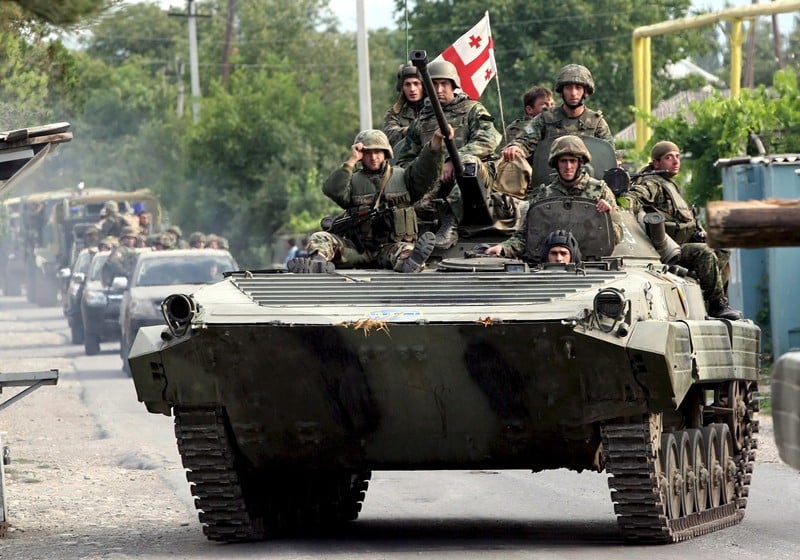
Thomas De Waal February 3, 2022 Many people are trying to rewrite the history of the 2008 Georgia-Russia War in the light of the Ukraine crisis. The EU’s report on the war is still a useful baseline and a reminder of how different the two conflicts are. Originally published at Carnegiemoscow Six years ago, on September 30, 2009, the European Union made a bold and mostly successful attempt to deal with recent history. The report on the Georgia-Russia war of 2008—known informally as the “Tagliavini Report” after its team-leader, Swiss diplomat Heidi Tagliavini—came out little more than a year after the events themselves. The idea of the “Report of the Independent International Fact-Finding Mission on the Conflict in Georgia,” was to separate truth from fiction in the information war which both sides had waged and in particular to explain how the conflict started. It would be wrong to simplify the...
Ukraine-flag
By Ted Snider January 19, 2022 On January 10, American and Russian officials met to discuss Putin’s proposal on mutual security guarantees. Western media and political analysts have cast Putin’s demands that NATO not expand further east to Ukraine and that NATO not establish military bases in former Soviet states nor use them to carry out military activity as bold and impossible. Here are six crucial pieces of background that the western media will not tell you. Originally published at Antiwar.com The NATO Promise Putin’s demands are only bold if it is bold to ask NATO to keep its promises; his demands are only impossible if it is impossible for NATO to keep its promises. On February 9, 1990, Secretary of State James Baker assured Gorbachev that if NATO got Germany – a huge concession – NATO would not expand one inch east of Germany. The next day, West German Foreign...
Categories

Year

Author / Contributor

Region